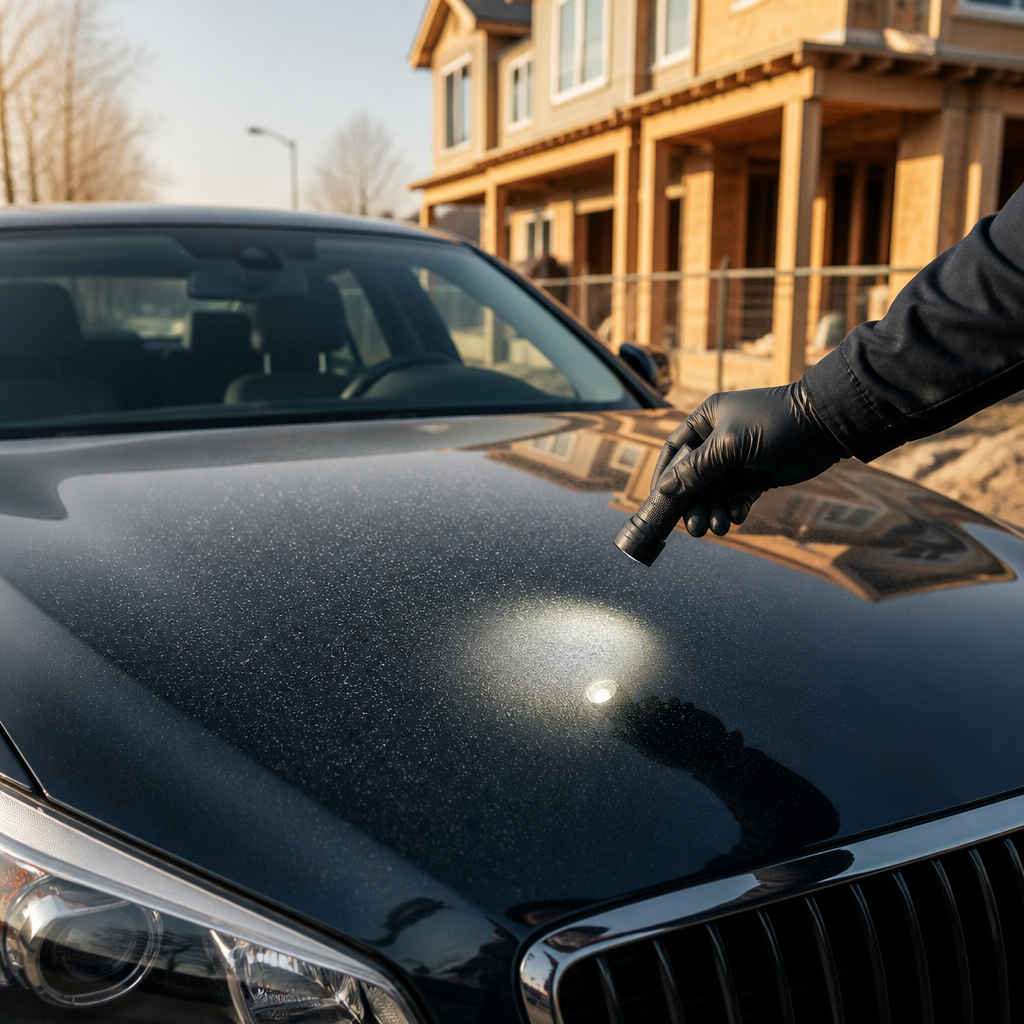
Park a dark sedan near a building going up in Glendale Heights or Wheaton, and within a week you may see a fine speckle of construction fallout across the hood and roof. At first it looks minor, a few gray or white dots that seem to wipe off. But fallout is often sealer, paint mist, or tar that bonds to clear coat. The longer it sits through rain, heat, and a few wash cycles, the more it etches into the finish. Here is how we approach construction fallout car paint damage at Hersheys Detailing, what works, and what makes it worse.
Table of Contents
- Quick Takeaways
- What Construction Fallout Actually Is
- Where Fallout Hits Suburban Vehicles
- Identifying the Fallout Before You Touch the Paint
- Safe Removal Methods That Protect the Clear Coat
- Comparing Removal Approaches for Different Types of Fallout
- Protecting the Paint After Removal
- Ongoing Protection During Active Construction Season
- Frequently Asked Questions
- References
Quick Takeaways
| Key Insight | Explanation |
|---|---|
| Fallout bonds to clear coat within days | Rain and sun cure the material and harden its grip. Remove it in the same week you notice it. |
| Identify the material before picking a product | Overspray, asphalt tar, concrete sealer, and road striping each respond to different products. |
| Never dry wipe or scrape a spot | Grit trapped under a towel or a blade causes the swirl marks you were trying to avoid. |
| Test every chemical on a hidden panel | A lower rocker panel or the inside of a door jamb shows you the reaction before you work the visible paint. |
| Decontaminate before you polish | Polishing over embedded particles grinds them deeper and can leave a hazy patch. |
| Coat after correction, not before | Sealing contamination under a coating locks the defect in place. |
| Inspect weekly while work is active | Projects keep producing fallout for months, so a regular check beats one deep clean at the end. |
What Construction Fallout Actually Is
Construction fallout is any material that leaves a work site and lands on nearby surfaces. In our shop, the list we see most often includes latex and alkyd paint overspray, concrete and masonry sealers, asphalt and roofing tar, road striping, stucco and mortar splatter, and fine dust that mixes with moisture into a crust. Each one behaves differently on paint.
The problem is not that the material is foreign. Many of these compounds are designed to bond aggressively to hard surfaces. A sealer is supposed to stick to concrete, and once it lands on clear coat, the same chemistry starts working on your finish.
Why Fresh Fallout Is Easier to Remove
Fresh overspray is still soft and often comes off with a proper wash and light claying. After a few days of sun, it cures. Rain, pollen, and road grime settle on top, and the spot becomes a hard bump under your fingertip. That is the point where a wash stops working and the job moves into decontamination.
How Fallout Grips Clear Coat
Clear coat is a cured polymer film, and many fallout materials are solvent-borne or cure into a film of their own. When a solvent-based material lands on clear coat, it can soften the top layer slightly, which lets it grip. That is why aggressive removal can mark the paint even when the fallout itself is gone. Gentle, lubricated methods are not a matter of preference. They are how you avoid creating a second problem.
The most expensive fallout is the one you noticed on Monday and planned to deal with on Saturday.
Most owners wait because the spot looks small. Small spots are the cheapest to fix, and they stay cheap only for a short window. Treat every new speckle as a job with a deadline.
Where Fallout Hits Suburban Vehicles
Fallout does not land evenly. Vehicles parked closest to the active work take the most, and the damage often shows on the side facing the site. Cars left in driveways, office lots, or curbside near a renovation are the typical victims. Owners who park in a garage most nights often discover the damage only after a weekend away.
Commuter Lots and Office Parking
Office lots next to new buildings collect fallout from crews spraying exteriors or sealing parking decks. Many of our clients only notice the problem when the sun catches the paint at a certain angle. Ask the property manager whether spraying or sealing is scheduled, because they often know and will tell you if you ask directly.
Driveways and Curbside Parking Near Renovations
Homeowners in established neighborhoods, especially where a house is being torn down and rebuilt next door, face repeated exposure over months. Demolition dust mixes with spray and settles on everything nearby. When a project starts within sight of your home, photograph the paint on the day work begins and again every week after that.
Luxury Finishes Show Fallout Faster
Dark metallic and high-gloss paint makes fallout obvious, and it also shows every swirl mark from careless removal. A lighter daily driver might hide a speckle that a black sedan reveals immediately. That visibility is a reason to act early, not a reason to panic, because early action is usually the difference between a quick wash and a paint correction.
Identifying the Fallout Before You Touch the Paint
The most important step happens before any product comes out. You need to know what landed on the paint. Using the wrong chemical is how a fixable problem turns into a repaint conversation, and it is the mistake we see most often from owners who try to help themselves.
Overspray Versus Tar and Road Striping
Overspray usually appears as a fine, fairly uniform speckle, often with a few harder dots mixed in. Tar and asphalt sealant look like dark smears that drag across the surface and often carry road grit with them. Road striping paint can leave a line with a crisp edge, typically in white or yellow, that follows the path of a vehicle or a roller.
Simple Tests That Tell You What You Are Dealing With
Start with a gentle wash using plenty of lubricant. If a spot stays after washing and feels raised, it has cured or bonded. Press a small piece of painter's tape over a dot and lift it. If the dot comes away cleanly, it was surface residue. For a stubborn spot, a small amount of isopropyl alcohol on a clean microfiber towel can show whether the material softens, but run that test on a hidden panel first.
Recognizing Damage That Is Already Etched
Sometimes fallout has been there long enough that the clear coat shows a faint outline, a dull halo, or a light etch. At that point you are no longer removing a stain. You are assessing the finish, and the fix usually involves a controlled polish after decontamination. Ignoring a halo does not make it disappear. It only gives the etch more time to spread.
Safe Removal Methods That Protect the Clear Coat
Our process for fallout follows a sequence, and skipping steps is where most paint damage happens. We wash first to remove loose grit. Then we decontaminate, test our products, and only after that do we move to anything that touches the paint with any force.
Wash, Rinse, and Lubricate Before Anything Else
Grit that rides under a towel becomes sandpaper. A two-bucket wash, a thorough rinse of the lower panels, and a foam pre-soak remove most loose material. Keep the paint wet at every stage, because a surface that dries mid-process is a surface that can scratch.
Clay and Dedicated Overspray Removers
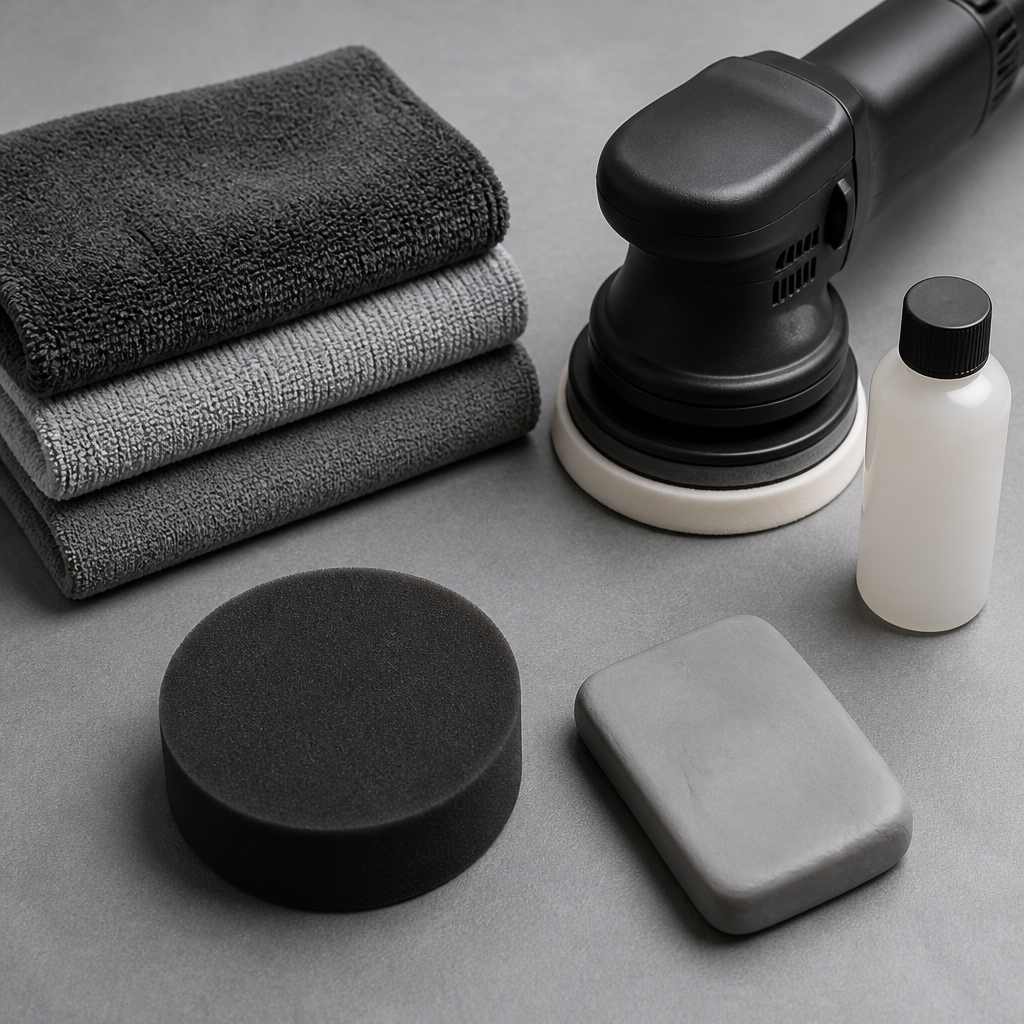
A fine-grade clay bar with plenty of lubricant pulls embedded particles out of the paint. For overspray that resists clay, a remover made for automotive paint does the work. Apply it to the spot, allow only the brief dwell time the label describes, wipe with a clean plush towel, and rinse thoroughly. Never let any remover dry on the surface.
Pro tip: Test every product on a hidden panel, such as a lower rocker panel or the inside of a door jamb, for about a minute before you work the visible paint. If the test area shows haze, softening, or color change, stop and reassess.
What Not to Do
Do not scrape with a razor blade, a metal scraper, or a fingernail. Do not use strong solvents such as acetone or lacquer thinner on painted surfaces, plastic trim, or rubber seals. And do not use a dry towel on a spot you think is just dust. These three shortcuts create most of the repaint estimates we see from fallout jobs.
Pro tip: Work in shade and never on a hot panel. Heat speeds evaporation, which can leave residue behind and makes solvents act unevenly across the surface.
Comparing Removal Approaches for Different Types of Fallout
No single method fits every spill. The table below compares the three approaches we use most often, along with the risk each one carries if it is applied to the wrong type of fallout or without enough care.
| Approach | Best Suited For | Risk to Paint |
|---|---|---|
| Clay bar with dedicated lubricant | Fresh overspray and dust embedded in the top layer | Low when well lubricated, high if used dry or on a dropped clay |
| Automotive overspray remover | Cured overspray and road striping spots | Moderate, can dull clear coat if left to dwell or used on hot paint |
| Machine polishing after decontamination | Etched fallout marks and haze left behind | Moderate to high, removes a thin layer of clear coat and requires skill |
Why the Order Matters
Clay and remover work on the surface, so they should always come first. Machine polishing removes a measurable layer of clear coat, so it belongs at the end of the process, and only when a spot has etched. Reversing that order is how a small stain becomes a permanent thin spot in the finish.
Our rule is to use the least aggressive method that clears the spot. Most fresh fallout never needs polishing, and owners who run a machine over a surface that only needed a remover are paying for a correction they did not need.
Protecting the Paint After Removal
Once fallout is removed, the finish needs protection. Coating paint before the surface is clean is a common mistake, because a coating sealed over contamination keeps the defect in place under a layer that should have been clear.
Why Decontamination Comes Before Coating
Bonded particles underneath a coating stay trapped. Over time they can show as a rough spot, a dull haze, or a flaw that refuses to polish out cleanly. At Hersheys Detailing, no coating goes on until the paint feels smooth to the back of the hand and shows no bonded residue under a light.
Nano-Ceramic SiO2 Coatings and Fallout Resistance
Our professional ceramic coatings use nano-ceramic SiO2 chemistry. A slick, cured coating makes future fallout easier to lift because contaminants release more readily from the surface. A coating does not make paint immune, though. It buys time, so a single afternoon of careful washing removes what would otherwise etch into bare clear coat.
Warranties and Realistic Expectations
Our ceramic coatings come with 5-8 year warranties, but a warranty does not replace maintenance. Sticky fallout still needs to come off promptly, even on coated paint, and it should be removed with products that are safe for coatings. Ask us to show you the maintenance routine during your consultation so you know what to expect after the car leaves our bay.
Ongoing Protection During Active Construction Season
Construction does not stop when the weather turns. In October, many exterior trades are finishing work before winter, which means fallout risk stays high through the fall in the Chicago suburbs. Plan your inspections around the project calendar instead of the calendar on your wall.
A Monthly Inspection Routine
Check the side of the vehicle that faces the site, the roof if you park under a crane or near scaffolding, and the lower panels, which collect road spray and tar. Photograph anything new with a date in the frame. Those photos help you track whether a spot is fresh or has been sitting for weeks.
Working With Property Managers and Contractors
Ask whether spraying or sealing is scheduled near your parking spot. Contractors are more cooperative when you give them a specific location and a clear description of the issue. Keep your documentation factual, with timestamped photos and the names of the people you spoke with, rather than assuming anyone will cover the cost.
When to Book a Professional Visit
Book a visit if a spot has sat through rain and sun for more than a week, or if you see haze after a normal wash. Those are signs the material has bonded, and a professional can test the paint before recommending a method. We have 7 years of experience and more than 500 vehicles detailed, so we know how these situations usually develop.
Frequently Asked Questions
How long can construction fallout sit on paint before it causes damage?
There is no universal number, but fresh overspray usually lifts with a wash and light claying. Once it has cured through several days of sun and rain, it often needs a dedicated remover, and etching can begin within weeks. Remove it as soon as you notice it.
Can I use a household cleaner to remove overspray?
Avoid household degreasers and all-purpose cleaners on painted surfaces. They can strip wax and sealant and may dull clear coat. Use a product made for automotive paint, and test it on a hidden panel first.
Will a ceramic coating prevent construction fallout damage?
A coating makes the surface slicker and easier to clean, but it does not make paint immune. Fallout that sits on a coated surface still needs to come off promptly, and coating over contamination traps it underneath.
Does construction fallout always require polishing?
No. Many spots lift with decontamination alone. Polishing is only needed when fallout has etched the clear coat or left a haze that remains after decontamination.
What should I do if construction work damaged my car?
Photograph the damage with dates and the location of the vehicle, then contact the contractor and property manager in writing. Keep receipts for any detailing or correction work. If the damage is significant, speak with your insurance provider or an attorney before you agree to any settlement.
Have you dealt with fallout from a nearby job site, and what actually worked on your paint? Tell us what you tried and how the finish responded.