A freshly repainted car looks finished, but the paint underneath is still settling. Solvents are still leaving the film, the clear coat is still hardening, and the surface is far more vulnerable to swirls, staining, and adhesion problems than it looks. Yet many owners book a full detail the week they pick up the car from the body shop, and that is where repainted cars get damaged. If you are searching for detailing a repainted car in Illinois, this guide covers what to ask for, what to avoid, and when a professional should touch new paint for the first time. We detail vehicles across the Chicago suburbs, and timing questions come up on almost every repaint we see.
Table of Contents
- Quick Takeaways
- Why Fresh Paint Is Not Finished Paint
- How Long to Wait Before Machine Work
- What to Ask Before You Book
- Paint Correction on New Paint
- Ceramic Coating Over Fresh Paint
- Choosing a Protection Path
- First-Year Care in Chicago Weather
- Common Booking Mistakes
- Frequently Asked Questions
- References
Quick Takeaways
| Key Insight | Explanation |
|---|---|
| Do not book a wash and wax the week you get the car back | Most shops advise at least two weeks without washing, and the paint is still soft during that window. |
| Get the shop's cure timeline in writing | Cure time depends on the paint system, film build, and temperature, so the shop's number beats any generic rule. |
| Machine polishing waits longer than a hand wash | Polishing fresh paint before it has hardened can cause haze, marring, or swirls that must be corrected a second time. |
| Coat the paint only after full cure is confirmed | Coating over paint that is still releasing solvent can trap moisture and cause hazing or adhesion trouble. |
| Add time for fall and winter cure | Cool, damp air slows hardening, so a timeline that worked in July may need several extra weeks in the Chicago suburbs this season. |
| Inspect edges and overspray before any prep | Masking lines and dry spots near panel edges are easy to miss and easy to make worse with aggressive tools. |
Why Fresh Paint Is Not Finished Paint
When a body shop hands back a repainted car, the color is usually right and the panels line up. What you cannot see is that the paint film is still losing solvent and hardening over days and weeks. The base coat, the clear coat, and the flash time between layers all need that window to set properly.
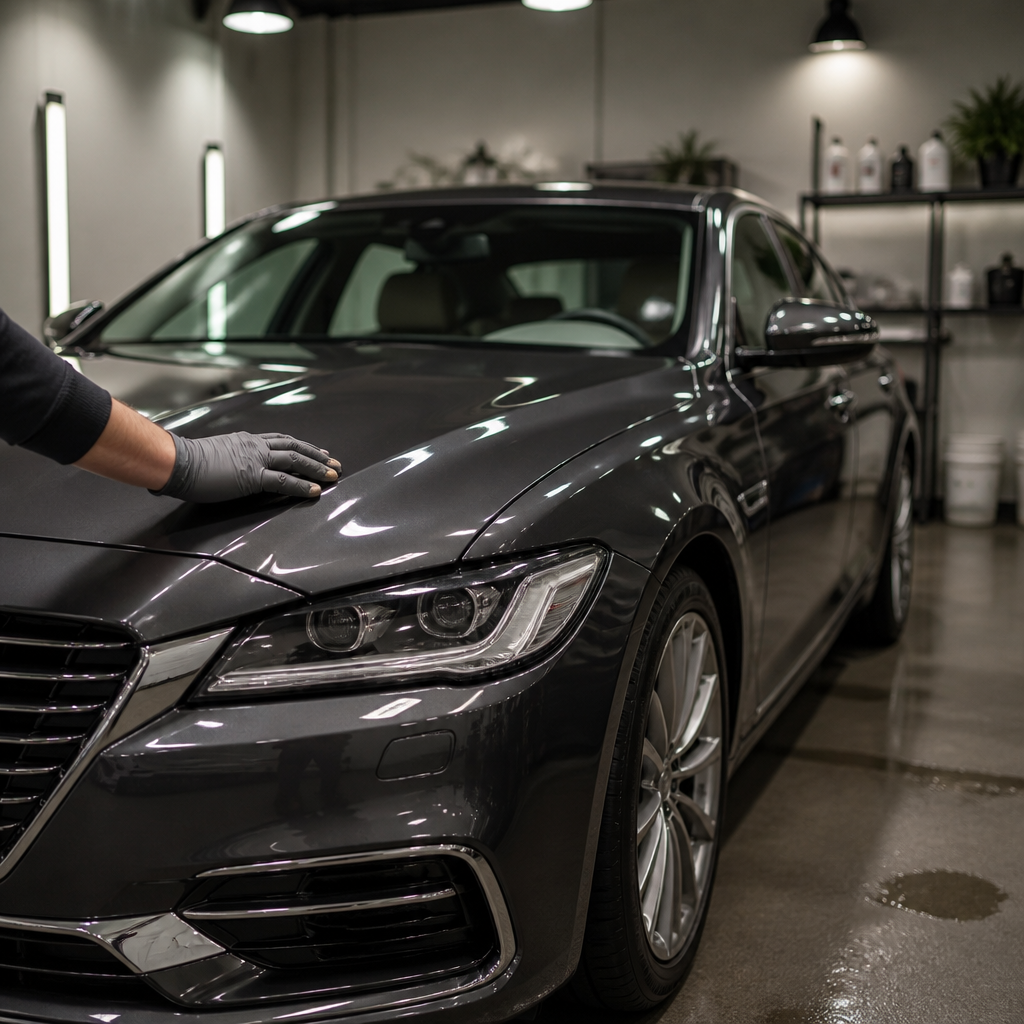
Your first detail is the wrong place to discover whether that process worked. Many repaint defects, including dull spots, haze, and early swirling, only show up after the first few washes or the first machine pass. A careless detailer at this stage can turn a small cure issue into a panel repaint.
What Happens Inside the Paint During Curing
Most automotive finishes harden through a mix of solvent release and chemical curing. The early phase, where the surface feels dry to the touch, is not the same as full hardness. A panel can look ready and still be soft enough to mark under a towel or a pad.
In practice, the soft period is the risk window. A microfiber towel that is perfectly safe on a fully cured car can leave micro-marring on fresh clear. Pollen, road grime, and sap also embed more easily while the surface is still giving.
Why Chicago Autumn Changes the Clock
Cure speed depends heavily on temperature. Cool, damp air slows solvent release, so a repaint that would have been ready in a few weeks during a warm summer can need considerably longer once October nights start dropping toward freezing. We see this every fall, when cars arrive from body shops that quoted a timeline written for July.
Ask the shop what temperature and humidity it assumed for drying and cure. If the car went through a heated booth but now sits outdoors through cold nights in Bloomingdale or Carol Stream, the curing conditions have changed, and the timeline should change with them.
Pro tip: Write the shop's cure guidance on your work order or invoice. A verbal "you are fine after a couple of weeks" is easy to forget, and it is the first thing a detailer will ask for before deciding what to do.
How Long to Wait Before Machine Work
The most repeated rule is that a new paint job should not be washed for at least two weeks. A collision repair shop's care guide makes this point directly, warning that washing too early can leave swirl marks, scratches, or even peeling on paint that is still soft. That is a reasonable floor for a gentle wash, but it is not a finish line for a detailer.
The Two-Week Wash Rule
Treat the two-week rule as the earliest possible date, not the default. Until the shop confirms the cure is complete, keep the car to a gentle rinse with plenty of water and let it air dry where you can. Avoid wiping dust off with a dry cloth, because that is exactly how fine marring gets started.
If the car must be cleaned for a special event, ask for a waterless touch-up limited to light dust, and keep the towel strokes minimal. Anything more aggressive should wait until the paint has been checked.
Why Polishing Waits Longer
Machine polishing is more aggressive than washing because it removes a thin layer of clear coat to level defects. Running that process on paint that has not finished curing can cause haze, dusty marring, or uneven gloss that looks fine indoors but shows up in direct sun. Once a shop has confirmed cure, we still prefer to give fall and winter paint extra weeks before any correction, because waiting an extra month is cheaper than polishing a panel twice.
Fresh paint rarely fails on the first wash. It fails on the second or third pass, when someone assumed the first one was harmless.
Pro tip: If the car needs correction for swirls that appeared after the repaint, ask the detailer to test one low, hidden area first, such as a lower rear quarter panel. A small test shows you how the clear responds before you commit the whole car.
What to Ask Before You Book
Most of the problems we fix on repainted cars trace back to a missing conversation, not a bad tool. Before you schedule anything, get specific answers from the body shop and from the detailer. Vague answers are a warning sign, and they usually mean nobody has planned the timeline.
Questions for the Body Shop
Ask what paint system was used, whether the car received a clear coat, and how long the shop expects full cure to take. Ask whether any post-paint treatment was applied, and whether the warranty covers defects that appear during the cure period. Those answers tell you whether your detail should happen in two weeks or two months.
Also ask whether the shop polished the paint before delivery. Many shops remove dust nibs and orange peel as part of the job, and that changes how much correction the car needs right now.
Questions for the Detailer
Ask the detailer whether they have worked on fresh paint and how they decide when it is ready. A solid answer names specific checks, such as a light touch test on a low panel, a paint thickness reading, and an inspection under angled light. An answer that amounts to "we can handle it" tells you very little.
Confirm which products they will use on the first wash. Ask about pH-neutral shampoo, whether they use a foam pre-wash, and how they dry the car. Those choices matter far more than the brand name on the bottle.
Paint Correction on New Paint
Paint correction on fresh paint is a different job from correcting a five-year-old daily driver. A repainted panel has no factory history to tell you how much clear coat is left, so every pass of a cutting pad matters. You cannot put removed material back.
Checking Edges and Overspray
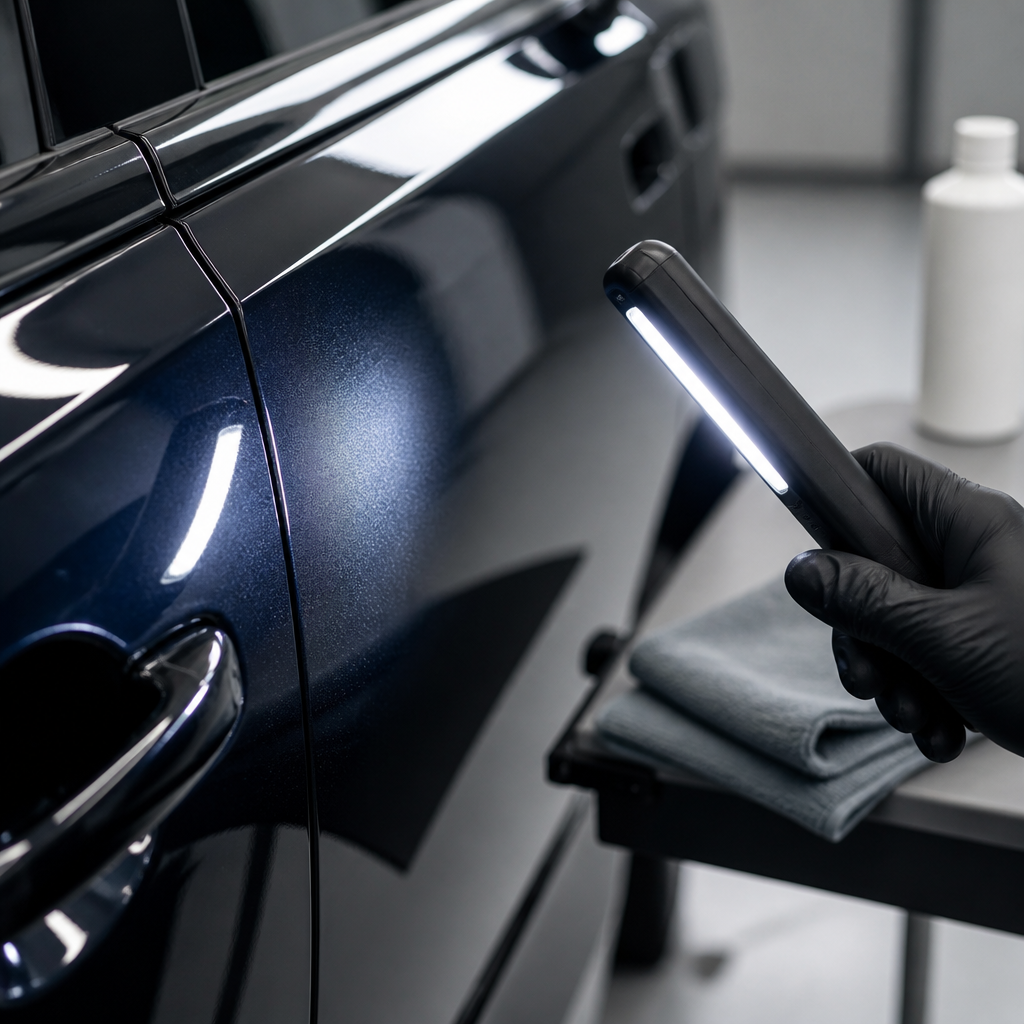
Before any machine touches the car, inspect panel edges, gaps, door jambs, and the lower body where overspray tends to collect. Masking lines, dry spray, and dust nibs are easy to miss in a bright garage and easy to make worse with an aggressive pad. Edge defects are one of the most common reasons a repaint comes back for a second visit.
Use angled light instead of relying only on overhead fluorescent tubes. Walk the car in the sun or work with a strong LED flashlight held low across the panel. Defects that disappear under shop lights often jump out in the afternoon sun.
Choosing Polish and Pads on Soft Clear
On fresh clear, we start with the least aggressive combination that shows progress. A fine polish on a soft finishing pad, used with light pressure and slow passes, often removes what is needed without stripping gloss. Heavier compounds and cutting pads belong only on defects that clearly need them, on paint that has been confirmed ready.
Check the surface after every section and keep the pad clean. Heat builds quickly on soft paint, and a pad that is hot to the touch is already removing material you wanted to keep.
Ceramic Coating Over Fresh Paint
A fresh paint job is one of the best times to apply a professional ceramic coating, because the paint is clean, unmarked, and free of years of old wax and contamination. The coating bonds to the clear coat, so the condition of the surface underneath matters as much as the product itself. Coating too early is the mistake we see most often.
Timing the Coating Application
Do not coat paint that is still releasing solvent. Trapped solvent and moisture can cause hazing, adhesion problems, or uneven curing under the coating, and those flaws are expensive to correct. Wait until the shop confirms full cure and the paint has spent a few stable weeks in its final environment, then coat.
Our nano-ceramic SiO2 coatings come with 5 to 8 year warranties. Any coating warranty depends on a clean, cured, and properly prepared surface, so that is the standard we hold every fresh-paint job to before we apply anything.
Prep That Keeps the Bond Clean
Prep for a coating on fresh paint is gentler than prep for an older finish, but it still matters. Chemical decontamination removes overspray and embedded fallout without cutting into the clear. Clay should be used only if the shop has confirmed the paint can take it, and a single light polish pass can clean up any remaining haze before the final wipe.
A panel wipe with an appropriate prep solvent then removes polishing oils and residue before the coating goes on. Skipping this step is one of the quickest ways to get uneven gloss under a new coating.
Pro tip: Record two dates: the day the car left the body shop and the date you plan to coat. Those dates tell your detailer whether the paint is ready, and they make any warranty conversation much simpler later.
Choosing a Protection Path
Once the paint is cured, there are three realistic ways to protect it. Each suits a different owner and each has its own timing window. The table below compares them for a repainted car specifically, not for a vehicle you have owned for years.
| Approach | Best Time to Start | Main Trade-off |
|---|---|---|
| Hand wash with a spray sealant | After the shop confirms cure, usually several weeks out | Good gloss, but sealant wears down in months and needs regular reapplication |
| Paint correction followed by ceramic coating | After full cure and a test area, often a month or more out | Higher cost and a longer appointment, but the most durable finish |
| Paint protection film on high-impact areas | After cure, on the front bumper, hood edge, and mirror caps | Guards where chips happen, but does not cover the whole car |
For most repainted cars we see, the answer is a combination. Correct any defects first, coat the full car once cure is confirmed, and add film to the front end if the car sees gravel roads or regular highway driving. Sealant alone is the cheapest route, but it asks you to reapply it every few months, and many owners quietly stop doing that.
First-Year Care in Chicago Weather
The first year after a repaint matters more than the first two weeks. Chicago suburban winters bring road salt, slush, and long stretches in the garage or under a cover. Each of those conditions tests paint that is still settling into its final hardness.
Road Salt and the Winter Wash
Road salt is the biggest threat to a repainted car in the Chicago area during winter. Salt and brine cling to lower panels, wheel wells, and rocker areas, which is where fresh paint and new edges are most exposed. Rinse the lower body after snow events, even when the car looks clean, and keep high-pressure wand work away from fresh edges.
Once the car is cured, a pH-neutral wash with a microfiber mitt is the right routine. Dry the car with a clean towel rather than letting it air dry in the cold, because salt residue left on the surface can cause etching if it sits.
Parking, Sap, and Bird Droppings
Parking is the other major variable. A garage protects against UV and falling debris, while a driveway exposed to winter sun and summer heat is harder on fresh clear. Tree sap, bird droppings, and insect residue can etch soft paint quickly, so remove them as soon as you see them using a quick detailer and a soft towel rather than dry wiping.
Avoid parking under trees that drop sap during the first season if you have another option. A few weeks of sap exposure can leave marks that require polishing to remove.
Common Booking Mistakes
Most problems we see come from a short list of booking habits. Each one looks harmless on a calendar and costs real money on the paint. Avoid these and you will be ahead of most owners.
Booking the Detail the Week You Pick Up the Car
Owners often book a full detail right away because they want the car to look perfect for a photo or a family event. The result is a wash on soft paint and sometimes machine work on paint that was never ready. Schedule the first visit for after cure is confirmed, not for the first open slot on your calendar.
If you need the car right away, ask for a gentle rinse and an inspection instead of a full service. That gives you a clean car and a clear read on the paint without pushing correction work forward too early.
Treating a Wash as Prep
A wash removes dirt. It does not remove the contamination bonded to paint, and it does not reveal the swirl or edge defects that matter before a coating. Owners who believe a wash is enough prep often end up with a coating sealed over problems that should have been corrected first.
Proper prep for a repainted car includes decontamination, inspection under angled light, and a clean-surface check before anything is applied. Those steps take longer than a wash, and they are the reason the finished result holds up.
Frequently Asked Questions
How soon after a repaint can I wash my car?
Most body shops advise waiting at least two weeks before the first wash, but that is a minimum. Ask the shop for its cure guidance in writing, and expect a longer wait during cold weather.
Can I get a ceramic coating right after a repaint?
Usually not right away. Wait until the shop confirms full cure, then have the surface inspected, decontaminated, and prepped before the coating is applied.
Is machine polishing safe on fresh paint?
It can be, but only after the paint has fully cured and the detailer has tested a hidden area. Light polishing on a soft pad is much safer than compounding, and aggressive correction should wait until there is a clear read on the clear coat.
Does a repainted car need a special wash soap?
A pH-neutral car shampoo is the safe default. Avoid household detergents, degreasers, and dish soap, which can strip protection and dull the clear coat over time.
What should I do about tree sap or bird droppings on new paint?
Remove them as soon as you can with a quick detailer and a soft microfiber towel. Do not scrub, and do not let them bake in the sun.
Will a coating warranty cover problems that existed before the coating?
Coating warranties usually assume the surface was clean, cured, and prepped properly, so the terms matter. Read them before you book, and ask what the warranty expects from the surface before coating.
If you have had a car repainted recently, tell us how long the cure took and what your first wash looked like, because real Illinois experiences are what keep this advice honest.
We would love your feedback and any insights you would share with others. What perspective would you add?