If your household runs three or four vehicles, paint correction stops being a single appointment and becomes a logistics problem. A spouse's crossover, a teenager's sedan, and a weekend sports car rarely share the same paint history, and each one picks up swirl marks and water spotting on its own schedule. Many owners in Glendale Heights, Carol Stream, Bloomingdale, and Wheaton book the first car, love the result, then let the rest drift. Good multi-vehicle detailing Illinois households can rely on starts with planning the whole garage at once.
Table of Contents
- Quick Takeaways
- Why Multi-Vehicle Households Need a Different Paint Plan
- Inspecting Each Vehicle Before Correction
- Scheduling Correction Across the Garage
- Ceramic Coatings for a Household Fleet
- Comparing Multi-Car Correction Approaches
- Maintenance Programs That Hold Results
- Pricing Multi-Car Paint Correction
- Common Mistakes With Household Paint Work
- Frequently Asked Questions
- References
Quick Takeaways
| Key Insight | Explanation |
|---|---|
| Inspect every car before quoting | A daily driver, a garage car, and a winter-driven SUV each need a different correction depth. Quoting one flat scope for all of them usually means under-correcting some and over-correcting others. |
| Group the work into one block | Correcting cars across a short window keeps lighting, pad choice, and polish selection consistent. Scattered appointments tend to produce panels that look different from car to car. |
| Correct before you coat | A coating locks in whatever condition the paint is in. Bring every vehicle to the same correction level before the coating goes on. |
| Match the coating to how each car lives | A car parked in the open through Chicago winters has different priorities than a covered weekend car. Choose coating and maintenance per vehicle, not per household. |
| Get a written scope for each vehicle | A scope sheet for each car records the paint condition, the correction stages planned, and the warranty conditions. It prevents disputes when the cars come home. |
| Set maintenance intervals by use | Wash and decontamination frequency should follow mileage, parking, and exposure to road salt, not a single calendar rule for the whole garage. |
| Stop pricing by the car alone | Multi-car work has shared setup, shared lighting, and shared transport, so the price structure should reflect the total job and each vehicle's condition. |
Why Multi-Vehicle Households Need a Different Paint Plan
Most households do not have one paint problem. They have three or four separate ones, each shaped by how the car is driven, where it sleeps at night, and who washes it. A single correction plan applied to all of them usually fails because the starting points are so different.
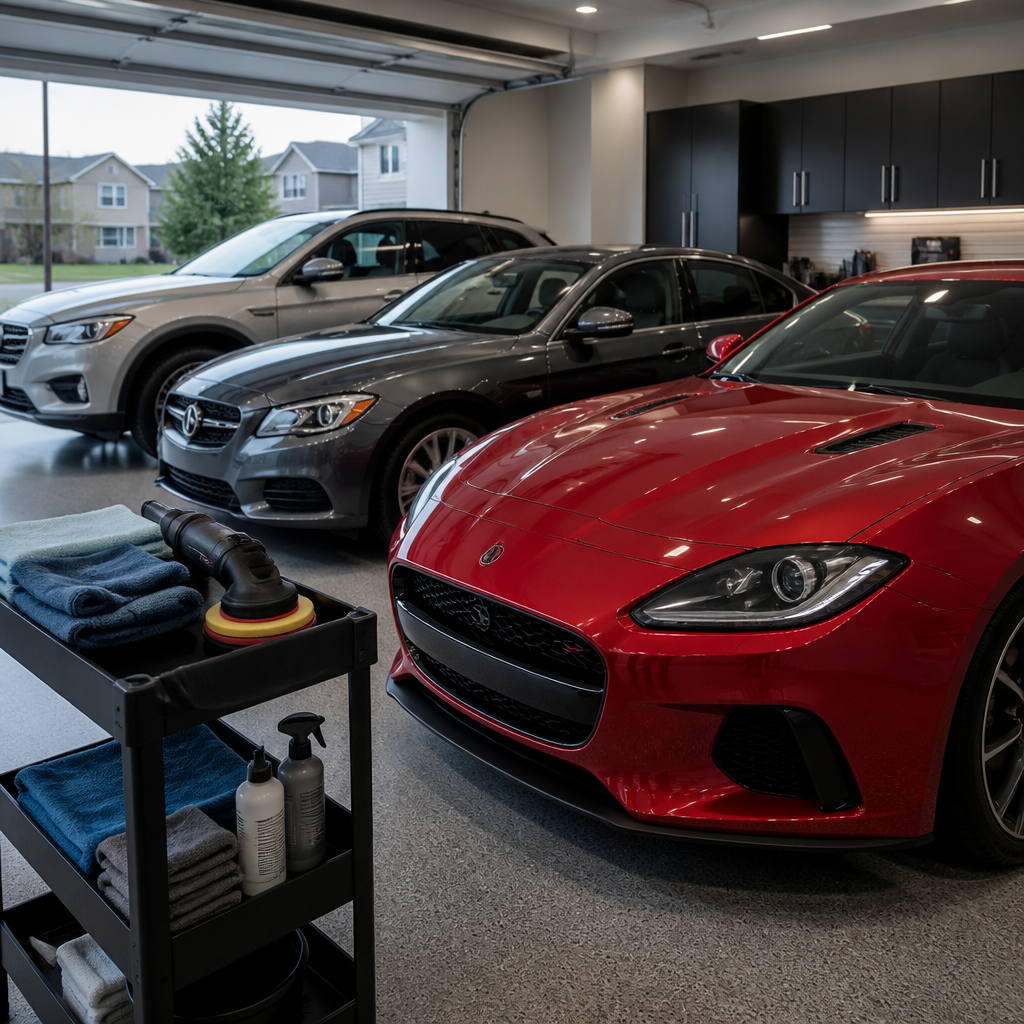
In practice, the car that gets the most attention is the one the owner drives daily. It collects highway grit, drive-through wash damage, and parking lot contact. The garage car looks cleaner on the surface but often has older oxidation, dull clear coat, or water spotting that developed during long idle periods. Treating these two cars the same wastes time on one and misses problems on the other.
Different Cars, Different Damage Patterns
Daily drivers tend to show fine swirls and light scratches concentrated on the horizontal panels: hood, roof, and the top of the rear deck. Garage cars usually show less swirling but more clear coat haze, especially on the north-facing and rear-facing surfaces that see the most sun over years. A winter SUV adds lower-body issues that rarely appear on sedans, including road film and salt residue on the rocker panels and lower doors.
Knowing these patterns before you touch a polisher lets you plan pad choice, compound aggression, and inspection time for each vehicle. It also helps you explain to the owner why two cars in the same driveway need different work.
Why Consistency Across the Garage Matters
Owners often notice when one car looks better than another, and they are right to. Paint that has been corrected with a different product, under different lighting, or to a different stage will reflect light differently in daylight. Keeping a consistent finish across the household means setting one reference standard and holding every car to it.
Inspecting Each Vehicle Before Correction
An inspection is where most multi-car jobs are won or lost. Before any machine polisher is started, every panel should be checked under strong, angled light, and the findings should be written down by car. Skipping this step is how a household ends up with one car over-polished and another still showing scratches.
Mapping Defects Panel by Panel
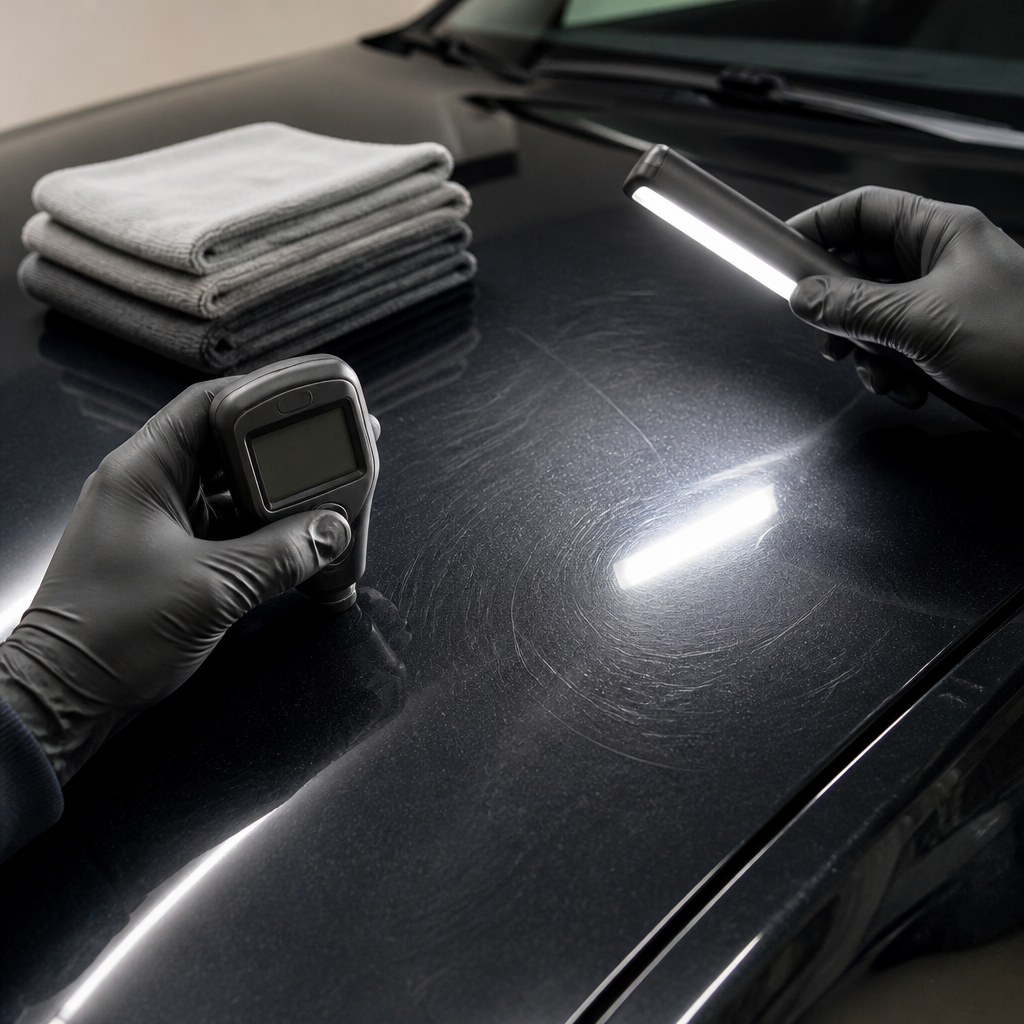
Walk each car with a light and note where the paint is worst. Record swirl density, depth of scratches, areas of oxidation, and any previous repairs or mismatched panels. A paint thickness gauge helps on cars with a history of repaints or body work, because removing too much clear coat is permanent.
Pro tip: Photograph each panel under the same light before correction starts. The before photos are what let you show the owner a real change, and they make it easy to compare cars in the same household.
Why Garage Cars Still Need a Full Inspection
It is tempting to treat a car that rarely leaves the garage as low priority. In practice, these cars often hide haze and contamination that only show up once the surface is cleaned. Bonded contamination from years of stored dust, bird droppings left too long, or water spotting on a dark color can be more stubborn than the road grime on the daily driver. A proper inspection catches this before the owner expects a quick wash-and-wax.
Scheduling Correction Across the Garage
Scheduling is where multi-vehicle work either runs smoothly or drags on for weeks. Spreading each car across separate appointments adds setup time, causes product and lighting changes, and makes it harder to hold a consistent finish. A tighter block of days is usually the better choice.
Grouping Vehicles Into One Working Block
For two to four vehicles, a block of two to three working days is typical, depending on the condition of the paint and whether a full multi-stage correction is planned. Grouping cars this way lets the same polisher setup, pads, and lighting carry across the whole job. Owners also get their vehicles back in a shorter window, which matters when the household depends on those cars for work and school runs.
Some households need staggered returns. A reasonable approach is to finish the vehicle that is needed first, then complete the rest in the same block. Mixing unrelated sessions across several weeks is the pattern that tends to produce uneven results.
Staging Products and Lighting Across Cars
Set up the workspace once and keep it stable. Use the same pad types, the same polish progression, and the same inspection light for every car. Changing products mid-block is a common cause of mismatched gloss between two vehicles that were supposed to look alike.
Ceramic Coatings for a Household Fleet
Coatings are often the reason a household starts thinking about multi-car detailing. Once one car has a ceramic coating, the others tend to be next. This is where the planning details matter most, because a coating only performs as well as the surface underneath it.
Our nano-ceramic SiO₂ coatings carry 5 to 8 year warranties, but the terms depend on the vehicle's condition at application and on following the maintenance guidance. We will not coat a car that still has active swirls or oxidation, because the coating will simply hold those defects in place. For households, that means every car in the garage needs to pass the same readiness check before it goes under the coating.
Matching Coating Choice to Each Vehicle
Not every car in the household needs the same coating approach. A winter-driven vehicle that sees road salt and slush benefits from a coating that makes it easier to rinse off residue between washes. A covered weekend car may get more out of a focus on gloss and a maintenance schedule that keeps it looking fresh between events. Looking at each car's use is more useful than assuming one product fits all.
A published comparison from Chemical Guys describes ceramic coatings as strong for ease of application, proven durability, and cold-weather performance, while noting graphene has an edge in hot climates and scratch flexibility. Chicago's cold winters and salted roads make the cold-weather argument relevant for most local households, but a car that spends long summers in direct sun deserves a closer look at the options.
Why Correction Must Come First
A coating does not hide defects, it preserves them. If a daily driver has visible swirls and the coating goes on without correction, those swirls will be sealed under the coating and will show in every light. For multi-car households, this means the correction stage is not optional, even on the cars that look good at first glance.
Comparing Multi-Car Correction Approaches
Households usually arrive at one of three approaches. Each works, but each has a different tradeoff, and the right choice depends on how many cars are involved and how much consistency matters to the owner.
The table below compares the approaches we see most often in the Chicago suburbs. The fit column reflects what tends to work in practice rather than a universal rule.
| Approach | Best Fit | Main Tradeoff |
|---|---|---|
| Single-vehicle sequential booking | Owners who want to test the process on one car first | Later cars often end up with different products, lighting, or scope, so the finish drifts across the garage. |
| Bundled multi-car block | Households with two to four vehicles that want consistent results | Requires vehicles to be off the road for a few days, and the scheduling must be planned in advance. |
| Bundled block plus recurring maintenance | Households that want correction to last and plan to coat several cars | Carries ongoing cost and depends on the owner keeping to the wash method and intervals. |
In our experience, the bundled block is the approach that most reliably produces matching results. The recurring maintenance layer is what keeps those results from fading in the second year.
Maintenance Programs That Hold Results
Paint correction removes defects, but the car starts collecting new ones the day it goes back on the road. A maintenance program is what keeps the household's paint from sliding back to where it started.
For most owners, the program should be built around how each car is used rather than a single calendar date. A daily driver that sees highway miles and frequent parking lots needs more frequent washing and decontamination than a garage car that moves twice a month. Setting intervals per vehicle is the simplest way to avoid both over-maintenance and neglect.

Setting Intervals by Vehicle Use
Write a short maintenance note for each car. It should list how often the car is washed, what method is used, when decontamination is due, and when a light polish is worth considering. Keep the notes in the same format for every car so the owner can review the whole household at a glance.
Keeping Wash Methods Consistent
The most common cause of swirl return is a wash method that changes between cars. A household where one car goes through an automatic wash and another gets a two-bucket hand wash will see two different results within a season. Pick one approach for the garage, or document the exception for each vehicle clearly.
Pricing Multi-Car Paint Correction
Pricing is where households often feel the most confusion. Owners compare quotes for one car and assume the same number should apply to the whole garage, but multi-car work carries shared costs that do not multiply in a straight line.
Why Flat Rates Fail Multi-Car Households
A flat rate per car ignores the fact that setup, lighting, transport, and inspection time are shared across the block. It also ignores the very different condition of each vehicle. A car with light swirls and a car with heavy oxidation should not carry the same scope just because they sit in the same driveway.
Some providers quote a single bundled number for the whole garage. That can be fair, but only if the scope is written out car by car and the owner knows which stages are included for each vehicle.
What a Written Scope Should Include
A useful scope names each vehicle, lists the paint condition found during inspection, states the correction stages planned, and notes the coating and warranty terms if a coating is included. It also says what happens if the inspection finds more work than expected. Putting these details in writing protects both the owner and the detailer.
Common Mistakes With Household Paint Work
Most problems in multi-car paint work come from a short list of habits. Avoiding them is often more valuable than any single product choice.
Correcting the Most Visible Car First
The car that is needed on Monday often gets done first, even if it is not the one that needs the most work. This pattern leads to rushed sessions and mismatched results later in the block. Plan the order based on inspection findings and the owner's needs together.
Skipping Decontamination on the Quiet Car
A garage car can look clean and still carry bonded contamination in the paint. Skipping decontamination on it means polishing over particles that will leave fresh scratches. A clay or decontamination step is quick insurance on every car in the household.
Paint correction is only as consistent as the least-finished panel in the driveway.
Pro tip: If one car in the garage is going to be coated, correct the others to the same standard even if they will not be coated. A matched finish across the household is much easier to maintain when every car starts from the same reference point.
Frequently Asked Questions
Is it worth bringing several cars in at once for paint correction?
In most cases, yes. Grouping the cars into one block keeps the products, lighting, and polishing approach consistent, and it usually reduces the total number of days the vehicles are off the road.
Can one car in the household be corrected more heavily than the others?
Yes, and it often should be. A car with heavier defects may need additional stages, but the scope should be written separately so the owner understands why the cars are not getting identical work.
Does every car need a ceramic coating if the household wants consistent results?
No. Consistency comes from matching the correction level across the garage. Coating choice should reflect how each car is driven and parked, and some vehicles may be better served by a maintenance program alone.
How often should a multi-car household schedule maintenance?
It depends on each vehicle's use. A daily driver and a garage car should not share the same interval. Write a short maintenance note for each car and review it at least once a year.
What should I look for in a written scope for several vehicles?
The scope should list each car, the paint condition found during inspection, the correction stages planned, any coating and warranty terms, and what happens if the inspection reveals more work than expected.
What has your household's experience been with getting several cars corrected at once, and which part of the process gave you the most trouble?