Self-cleaning car paint has been a headline for more than a decade, but if you are waiting for a finish that stays clean on its own, you will wait a long time. The Nissan prototype that drew the most attention was a limited trial, and the company never made it standard equipment. What drivers in the Chicago suburbs can actually buy today is a nano-ceramic coating that gets close to the effect: a hydrophobic layer that sheds water, road spray, and loose dirt so the weekly wash takes less time and less effort. Here is how that works, where it falls short, and how to decide whether it is worth the money for your car.
Table of Contents
- Quick Takeaways
- What Self-Cleaning Paint Really Is Today
- How Hydrophobic Ceramic Coatings Shed Water
- Weekly Washing Time With and Without a Coating
- Winter Road Salt and Chicago Grime
- Ceramic Coatings Compared With Waxes and Sealants
- Maintenance Habits That Protect the Coating
- Where Coatings Fall Short
- Frequently Asked Questions
- References
Quick Takeaways
| Key Insight | Explanation |
|---|---|
| No self-cleaning car paint is sold as a production option | Nissan's Ultra-Ever Dry trial stayed a test, and the company said it had no plans for standard equipment. Anyone selling "self-cleaning paint" for a finished car is really selling a coating. |
| Hydrophobic means fewer wash cycles, not zero | A coated car still collects road film, brake dust, and bug residue. The gain is that dirt releases with a lighter rinse and less scrubbing. |
| Decontaminate before you coat | A coating applied over bonded contamination locks it in. Clay or decontaminate the paint, polish out defects, then apply the coating. |
| Dry the car every time | Mineral-heavy water left to dry on a coated car can leave deposits. A clean drying towel or blower is the most important step after the rinse. |
| Road salt is the main test in Chicago winters | Salt and brine cling and wick into seams. Rinse the lower panels and wheel wells regularly during salt season, even on a coated car. |
| Ceramic beats wax on weekly time | Wax repellency tends to last only weeks, so you re-apply it often. A properly applied ceramic coating keeps working between maintenance washes, and its warranty terms of five to eight years on our nano-ceramic products only mean something if the maintenance is done. |
What Self-Cleaning Paint Really Is Today
The idea behind self-cleaning car paint is simple: a surface that stops debris from sticking in the first place. As a former auto-body technician, detailer, and car wash operator, I have followed the research for years, and the honest answer is that the paint on cars sold today does not do this.
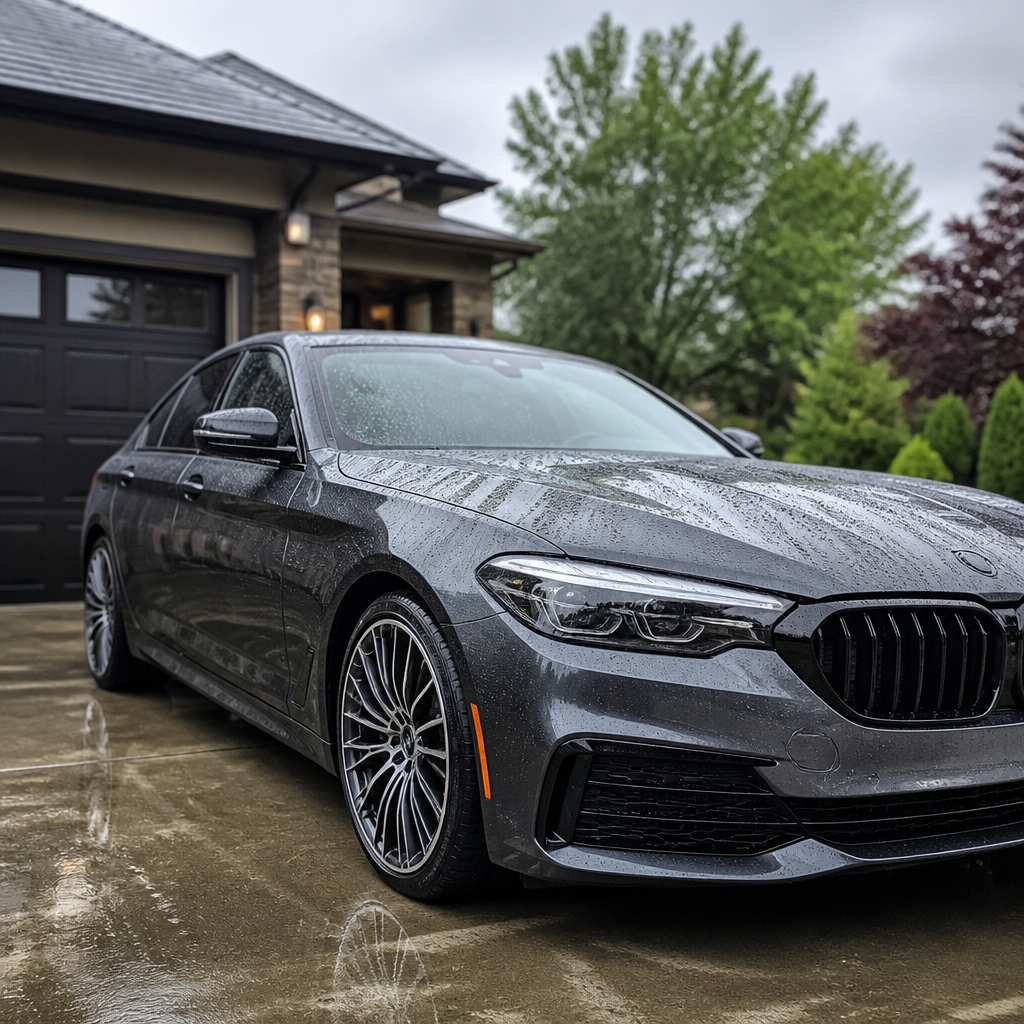
Nissan came closest. In April 2014, the company began testing a coating called Ultra-Ever Dry on the European Nissan Note, describing it as a super-hydrophobic and oleophobic paint that repels water and oils. Industry coverage says the paint was developed at Nissan's technical center in the United Kingdom with the nanotechnology firm Nano Labs.
Where Nissan's Ultra-Ever Dry Experiment Stands
Nissan said it had no current plans to apply the paint as standard equipment, and that it would keep considering it as a future aftermarket option. That is the detail most headlines skipped. A press-release test car is not a product you can book at a dealership or a body shop.
The engineering limits are real, too. The main constraint is sensitivity to mechanical loads, meaning the effect degrades under the kind of contact a car sees every day. The finish also tends toward a slightly matt look, which is a hard sell on a luxury paint job where gloss is the whole point.
The Three Categories Behind the Marketing
Self-cleaning surfaces fall into three groups: super-hydrophobic, super-hydrophilic, and photo-catalytic. Super-hydrophilic systems used on commercial buildings rely on titanium dioxide nanoparticles that break down organic films in sunlight and let water spread into a sheet that carries dirt away. That works on a building facade. It does not translate to a car body that has to survive a Glendale Heights winter and a summer of bug splatter.
For a car, the practical category is super-hydrophobic. That is what ceramic coatings produce, and it is the reason the rest of this article focuses on them. Our clients in Wheaton, Bloomingdale, and Carol Stream usually ask about self-cleaning paint after they see a viral clip, and the first thing we explain is that a coating is the realistic version of the same idea.
How Hydrophobic Ceramic Coatings Shed Water
A ceramic coating bonds to the clear coat and creates a surface with very low surface energy. Water beads into tight spheres instead of spreading into a film, and those beads roll off carrying loose particles. The nano SiO₂ coatings we apply are built on silicon dioxide chemistry, which is why the surface feels hard and the beading is obvious on day one.
The key distinction is between repellency and self-cleaning. A coating does not make paint immune to dirt. Road film, brake dust, and tree sap still land on the car. What changes is adhesion. Contaminants sit on the surface more loosely, so a rinse removes more of them before they can bond.
What Beading Actually Does to Road Grime
Think about a typical commute on a salted or dusty road. Fine film settles and dries in thin layers. On uncoated paint, that film bonds to the clear coat, and the car looks dull within days. On a properly coated car, water sheets off during rain and takes most of the film with it, leaving the panels noticeably clearer between washes.
A surface that repels water does not stop dirt from landing. It changes how easily that dirt lets go, and that difference is where the weekend hours come back.
Why Hydrophobic Does Not Mean Hands-Off
Hydrophobic surfaces still need washing. The advantage is that you can often skip foam-heavy, aggressive contact and move to a gentle rinse plus a light wash. That is the whole time saving. A common mistake is treating a coated car as if it cannot pick up contamination, then wiping dusty panels with a dry towel. That scratches the coating and defeats the purpose.
Consumer discussions of hydrophobic coatings also point to a trap: hard water. The beading is excellent, but the mineral deposits left behind can etch into clear coat if a car sits outside, especially a daily driver parked in the open. That is why the drying step matters more than most owners expect.
Pro tip: Dry the car with a clean microfiber drying towel or a blower immediately after rinsing. Water spots are the fastest way to turn a low-maintenance finish into a weekend project.
Weekly Washing Time With and Without a Coating
Weekly time is where owners feel the difference. An uncoated car usually needs a full two-bucket wash, a decontamination pass when contamination builds up, and a drying session that takes longer than the wash itself. A coated car, maintained properly, usually needs a pre-rinse, a gentle wash, and a quick dry.
Those are the steps that matter. Most owners who report that their car "never needs washing" are actually describing a car that gets a fast rinse every week and a proper wash every few weeks. The coating shortens each session, but it does not remove the schedule.
A Realistic Week for a Coated Daily Driver
Here is the routine we give clients who commute every day. Rinse the car on the weekend to remove the week's road film. Spot-clean bird droppings, bug residue, or sap as soon as you notice them, because they bond faster the longer they sit. Run a full maintenance wash every two to three weeks, depending on how much time the car spends outside.
That routine usually takes a fraction of the time an uncoated car needs. The difference shows up most in the drying step, since beaded water leaves the panels with less standing moisture to wipe away.
Where the Time Savings Disappear
The savings vanish when owners treat the coating as a shield and skip maintenance. Let grime sit for several weeks and it bonds to the surface, so every wash turns into a scrubbing session. Use the wrong product, such as a degreaser or an acidic wheel cleaner that drifts onto the paint, and you wear the coating down faster.
Another mistake is washing too soon after application. Keep the car out of the wash for the cure period your installer specifies, and ask what products are safe before your first wash. Those two habits protect the investment more than any spray product on the shelf.
Winter Road Salt and Chicago Grime
Chicago-area winters test every paint protection system. Road salt and brine are applied across the region's roads, and the film they leave is sticky and corrosive. Salt does not simply wash away with water. It clings, dries, and works into seams, door jambs, and the gaps around trim.
A coating makes this easier, but it does not make it optional. Salt residue beads less and releases faster from a slick surface, yet you still need to rinse the underside, wheel wells, and lower panels within a few days of a salted-road trip.
Rinse Frequency in Salt Season
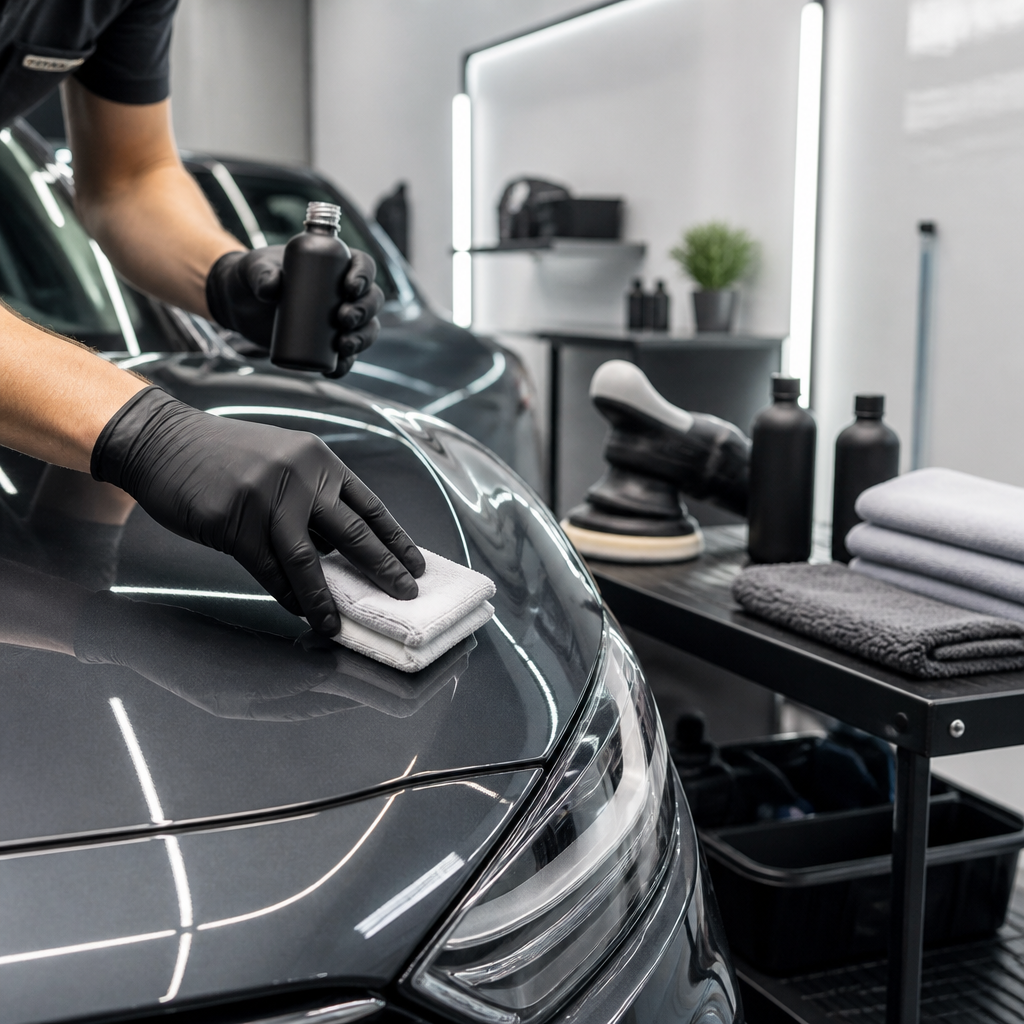
During heavy salt season, our practical advice is to rinse the car at least every week or two, and sooner after a storm. Focus on the lower panels and rocker areas, where residue builds up fastest. Use a pH-neutral soap. Acidic and alkaline cleaners wear coatings faster, and a coated car does not need them.
Do not chase the residue with a pressure washer held close to the paint. Keep the nozzle at a safe distance and let the water and soap do the work. Heavy pressure at close range can lift edges of trim and stress the coating at seams.
Pollen, Tree Sap, and Spring Grime
Spring brings pollen, sap, and a wave of insect residue. Sap can be more damaging than road film over a short window because it bonds quickly to clear coat. Use a dedicated sap remover on a clean microfiber, applied gently, and never scrape it off with a tool or your fingernail.
Pollen is less dramatic but more constant. A quick rinse each week keeps it from building into a yellow film on horizontal surfaces like the hood and roof, where it is most visible in direct sunlight.
Ceramic Coatings Compared With Waxes and Sealants
Most owners weighing a coating have already used a wax or sealant, so the real question is whether the upgrade changes the weekly routine. The table below compares the three options people ask us about most, including the experimental self-cleaning paint that gets the headlines.
| Option | Effect on Weekly Washing | Practical Limits |
|---|---|---|
| Professional nano-ceramic SiO₂ coating | Dirt releases with lighter rinsing, so washes are shorter and gentler | Needs proper decontamination and polishing before application, plus pH-neutral maintenance washes |
| Carnauba wax or synthetic sealant | Water repellency that may last several weeks, so you re-apply it often | Wears quickly under frequent washing and road exposure, so it adds steps over the year |
| Nissan-style self-cleaning paint (Ultra-Ever Dry trial) | Potentially fewer cleans, based on the test's water and oil repellency | Not offered as a production option, with mechanical-load sensitivity and a matt finish noted in reporting |
Reading the Real Cost of Each Option
Wax is the cheapest per application, and that is why many owners stick with it. The problem is frequency. Repellency from wax and wax-based compounds may last only several weeks, so the time you save on one wash is spent re-applying the product on the next one. Over a year, that adds up to more hours than most people expect.
A ceramic coating costs more up front and needs a professional process, but it changes the weekly routine instead of adding another step to it. For owners who want a luxury finish that stays presentable without constant attention, that trade-off usually makes sense. For a car that is parked in a garage most of the year, a good wax routine may be enough.
Maintenance Habits That Protect the Coating
A coating only delivers the weekly savings if you maintain it. The habits that matter are simple, and most of them cost nothing. The rest of this section covers the washing method and the products that cause the most damage.
The Washing Method That Preserves Repellency
Start with a thorough pre-rinse to lift loose grit before anything touches the paint. Then wash with a soft microfiber mitt, working top to bottom and rinsing the mitt often in a separate water bucket. This keeps dirt out of the wash water and reduces the swirl marks that show up under sunlight.
Finish with a gentle drying method. Blot or pull a clean towel across the panel, and avoid rubbing in circles. Circular rubbing is how even a coated car picks up fine marks that dull the gloss over time.
Products to Keep Off Coated Paint
Avoid strong degreasers, solvent-based bug removers, and harsh wheel cleaners on the paint. They can strip the hydrophobic layer faster than normal road grime does. Also skip automatic wash brushes that have been run through a gritty bay, because they can leave the swirl marks that make a coated finish look tired.
Pro tip: Keep two separate microfiber sets, one for paint and one for wheels and lower panels. Cross-contamination from brake dust is one of the quickest ways to dull a coating's gloss.
Where Coatings Fall Short
A coating is not armor. It does not stop rock chips, prevent scratches from a careless parking lot brush, or protect against hail damage. It makes the surface easier to clean and more resistant to contamination, but it sits on top of the paint and can only do so much against physical impact.

Expectations matter as much as the product. Owners who expect zero maintenance end up frustrated, while owners who understand the trade-off usually love the result. The difference is almost always in the first few weeks and in how the car was prepared.
Prep Work Decides the Result
The most common reason a coating underperforms is poor preparation. If contamination, swirls, or old wax are left on the paint, the coating bonds over them and locks in the defects. Decontamination and paint correction are not optional extras. They are the foundation that determines how long the coating looks good.
This is also where experience matters. Multi-stage machine polishing removes defects before the coating goes on, which is the difference between a glossy finish that lasts and a coating that simply hides the problems for a few months.
Setting Expectations for Your Car
Cars that sit outdoors, drive daily on salted roads, or are parked near trees will need more attention than a garaged weekend car. A coating helps all of them, but the schedule should match the exposure. Ask your detailer for a maintenance plan based on how you actually use the vehicle.
Finally, be honest about what you want from the coating. If the goal is a car that looks freshly detailed with less effort, a ceramic coating delivers that. If the goal is a car that never needs a wash, no paint on the market today will get you there.
Frequently Asked Questions
Can I buy self-cleaning car paint in Illinois today?
No, not as a factory option. Nissan's Ultra-Ever Dry trial was a limited test, and the company said it had no plans for standard equipment. What you can buy is a ceramic coating that provides a similar hydrophobic effect on the paint you already have.
How often should a ceramic-coated car be washed in the Chicago suburbs?
Most daily drivers do well with a rinse every week and a full maintenance wash every two to three weeks. Increase the frequency during salt season or after storms, and rinse sap, bird droppings, and bug residue as soon as you notice them.
Does a ceramic coating stop bird droppings and bug splatter from damaging paint?
It does not stop them from landing, but it makes them easier to remove because they bond less tightly. Still, remove droppings and bug residue promptly, since waiting even a day can leave marks that a rinse alone will not clear.
Is a hydrophobic spray enough to replace a ceramic coating?
For some owners, yes, but expect to re-apply it often. Spray products and waxes tend to offer repellency for only a few weeks, while a professionally applied nano-ceramic coating is designed to last much longer with proper maintenance.
Can I use an automatic car wash on a coated car?
A touchless automatic is usually the safer choice. Brush-based systems can carry grit from earlier cars and leave swirl marks, which dull the gloss. Hand washing with a clean mitt remains the gentlest option for a coated finish.
Does winter road salt ruin a ceramic coating?
Salt does not ruin a properly maintained coating, but it does test it. Rinse the lower panels and wheel wells regularly, use a pH-neutral soap, and avoid pressure washing too close to the paint or trim.
Have you tried a ceramic coating or a wax routine on a car that sees Illinois winters, and what made the biggest difference to your weekly washing time? Share your experience in the comments.