Most drivers in Glendale Heights have experienced it: you run your car through an automated wash, pay twelve dollars, and pull out with water spots on the paint and a faint chemical smell inside. Six months later, the clear coat is dull, the seats are still grimy in the creases, and the swirl marks from a bad hand-wash job are catching the light at every intersection. That is not a cleaning problem. It is a protection and value problem, and a twelve-dollar car wash cannot fix it. Auto detailing in Glendale Heights, IL done by a trained professional is a different category of service entirely, and understanding why it costs what it costs is the first step to understanding why skipping it is the more expensive choice.
Table of Contents
- Quick Takeaways
- The Glendale Heights Case for Premium Detailing
- What Premium Car Detailing Actually Includes
- Paint Correction: The Process That Separates Real Detailing from a Glorified Wash
- Ceramic Coatings: Long-Term Protection with Measurable ROI
- How Professional Detailing Affects Resale Value
- Detailing Approaches Compared
- Frequently Asked Questions
- References
Quick Takeaways
| Key Insight | Explanation |
|---|---|
| Road salt is your paint's worst enemy in Illinois | Chicago-area winters deposit road salt that settles into paint pores and creates a mild acid that attacks the clear coat over time. Professional decontamination and coating remove this threat. |
| Multi-stage machine polishing cannot be replicated at home | True paint correction uses specialized polishers, compounds, and pads matched to each defect level. A store-bought buffer and a pad from the auto parts store will create new holograms faster than it fixes swirl marks. |
| Nano-ceramic SiO₂ coatings outlast consumer waxes by years | Professional-grade ceramic coatings bond at a molecular level and carry warranties measured in years, not weeks. Consumer waxes typically wash off within one to three months. |
| A well-maintained exterior directly influences trade-in and resale price | Buyers and dealerships assess paint condition immediately. A car with documented detailing history and a preserved finish commands more at sale time than one that looks neglected. |
| Interior detailing prevents irreversible material degradation | Leather left unconditioned cracks and cannot be restored without replacement. Fabric stains set permanently if not treated promptly. Professional interior work is prevention, not just cosmetics. |
| Paint correction must precede ceramic coating for the coating to bond correctly | Applying a ceramic coating over defective paint locks the swirl marks in permanently. Correcting the surface first ensures the coating adheres properly and delivers its full protective life. |
| Premium car detailing in Illinois protects against multiple seasonal threats | Between winter salt, spring pollen, summer UV exposure, and fall tree sap, Illinois vehicles face year-round paint threats. A single annual professional treatment addresses all of them systematically. |
The Glendale Heights Case for Premium Detailing
Glendale Heights sits in DuPage County, part of the broader Chicago suburban corridor that includes Carol Stream, Bloomingdale, and Wheaton. That geography matters for your vehicle's finish. Road salt is a fixture on Illinois roads through the winter months, and the corrosive chemistry it triggers on painted metal is not subtle. Salt ions settle into the microscopic pores of a paint surface, where they create a mild acid that eats through the clear coat layer from below. Rust can follow on exposed metal if the damage goes unaddressed.
That is the local context that makes professional detailing a practical necessity here, not a luxury indulgence. The Chicago suburbs do not offer the mild, dry winters that keep vehicles looking clean with minimal intervention. They offer freeze-thaw cycles, road brine, construction debris from major highway corridors, and summer humidity that bakes pollen and bird droppings into the paint before most owners notice them.
A premium detailer operating in this environment does not just wash and wax. They run a decontamination process to pull bonded contamination out of the paint before it causes deeper damage, and they apply protection rated to handle the specific environmental stressors this region produces. That is the service Hershey's Detailing is built around, and it is the reason clients from Carol Stream, Bloomingdale, and Wheaton make the trip.
What Premium Car Detailing Actually Includes
The word "detailing" is used loosely in the Chicago suburbs. Some operations put it on their signage but deliver little more than a thorough hand wash. Genuine premium car detailing in Illinois is defined by what happens to each surface of the vehicle, how those surfaces are treated, and what products are used at every stage.
Exterior Decontamination and Surface Preparation
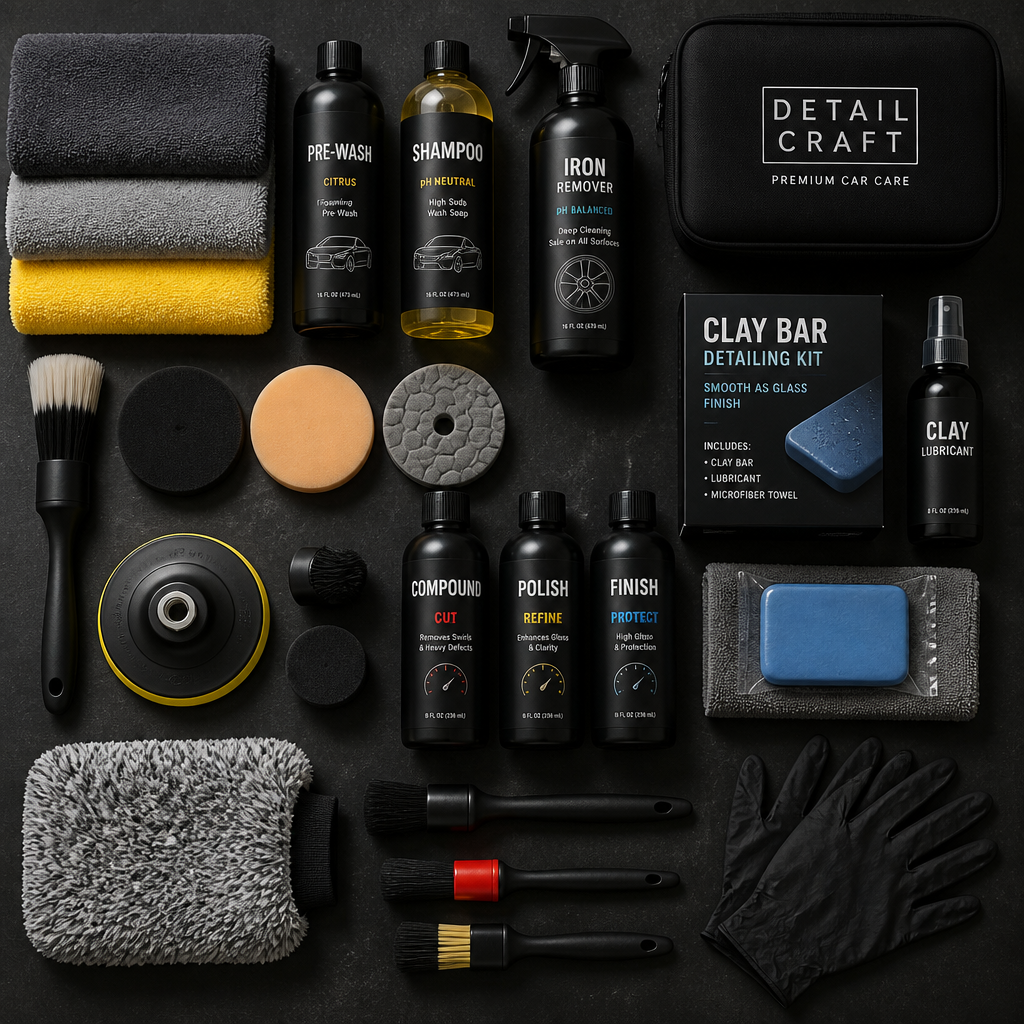
Before any polish or protection goes on the paint, the surface has to be properly decontaminated. This means removing bonded iron particles, road tar, tree sap, and other contamination that a wash alone cannot lift. Clay bar treatment is one tool in this process, gliding across the paint surface to pick up embedded material that would otherwise cause problems under a polish or coating. Skipping this step is one of the most common shortcuts taken by lower-end operations.
Professional detailers also use pH-balanced shampoos and high-foam cleansers specifically chosen to loosen contamination without stripping protection from surfaces that still have it. Every product decision in a premium detail is intentional. There is no reaching for whatever bottle is cheapest or most convenient.
Interior Detailing Done Correctly
A premium interior detail goes far beyond vacuuming. Carpets and fabric upholstery are shampooed to remove embedded dirt and stains that surface cleaning cannot reach. Leather surfaces are cleaned with products matched to the specific type of leather, then conditioned to restore flexibility. Dashboard plastics, door panels, and trim are treated with UV protectants that prevent cracking and fading.
The interior of a vehicle depreciates rapidly when neglected. Leather that is not conditioned becomes brittle and cracks, and cracked leather panels are expensive to replace. A professional interior detail every season is significantly cheaper than a single leather restoration.
Pro tip: If you drive a luxury vehicle and use it daily, schedule an interior-only detail every three to four months. The return on investment in preserved material condition is immediate and measurable when trade-in time comes.
Paint Correction: The Process That Separates Real Detailing from a Glorified Wash
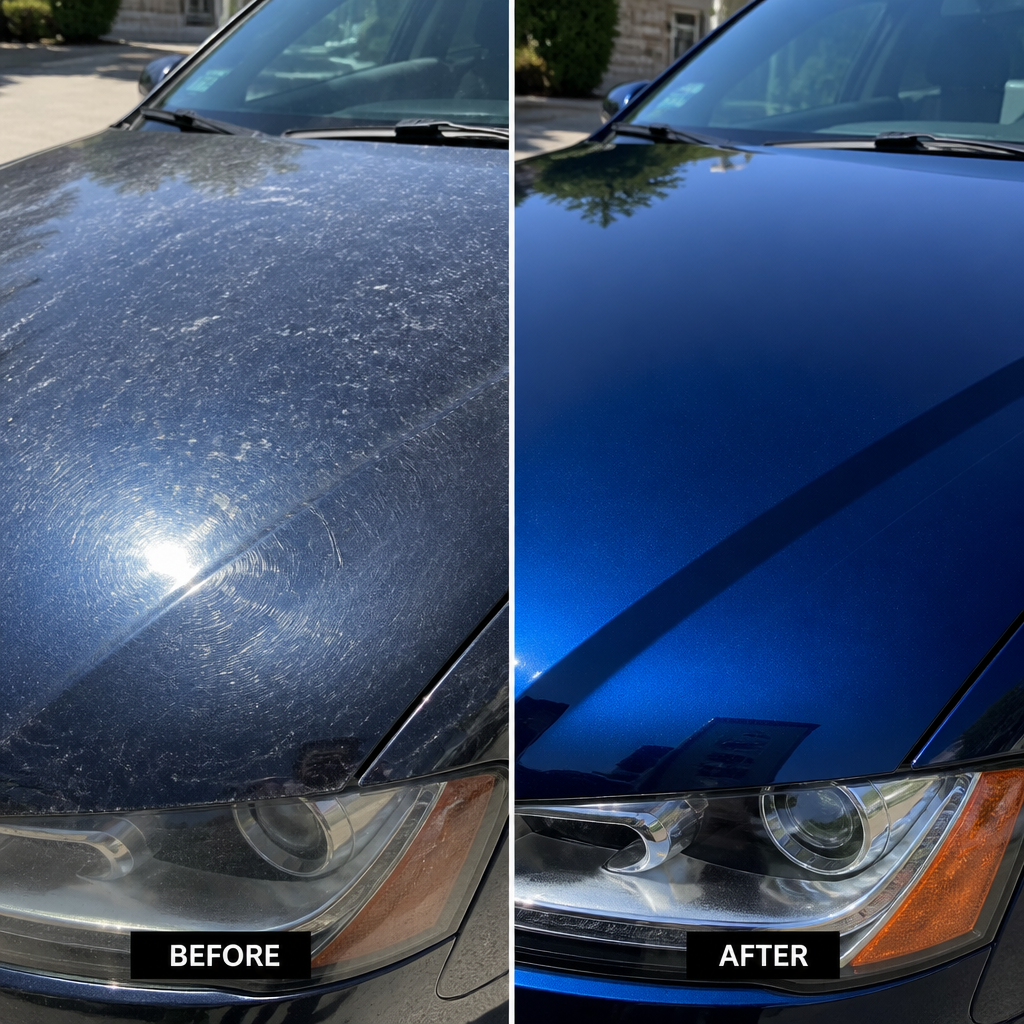
Paint correction is the service that most dramatically separates professional detailing from everything a car owner can do themselves. Most modern vehicles have a base color coat protected by a clear coat layer on top. Over time, that clear coat accumulates fine scratches, swirl marks from improper washing techniques, water spot etching, oxidation, and other defects that make a finish look dull and aged even on a relatively new vehicle.
Machine polishing during a paint correction removes those defects by carefully refining the clear coat surface. A multi-stage correction process works through different compounds and polishes matched to the severity of the defects present. Heavier compounds address deeper scratches and oxidation. Finer finishing polishes then refine the surface to a high-gloss result. The entire process requires trained hands, calibrated machine speed, and product knowledge that comes from real experience with different paint types and conditions.
Machine polishing is more than just a cosmetic upgrade. It is a comprehensive paint correction process that restores, enhances, and protects a vehicle's finish, often bringing it to a condition that exceeds how it looked when it left the dealership.
A common mistake in the Chicago suburbs is assuming that a new car does not need paint correction. In practice, dealership prep work is often done quickly and without the attention that a professional operation gives. Many brand-new vehicles arrive at a dedicated detailer with visible wash-induced swirl marks from the dealership's detail bay. Catching and correcting those early, before a coating goes on, is far better than sealing the defects in place.
Hershey's Detailing uses a multi-stage machine polishing approach specifically because no two vehicles present the same correction challenge. A single-stage polish appropriate for light swirl removal is a different tool than the compound-and-polish sequence needed to address heavier oxidation or water spot etching on a vehicle that has been neglected through several Illinois winters.
Pro tip: Before any ceramic coating is applied to your vehicle, insist on a proper paint correction stage first. A coating applied over defective paint permanently seals those defects under a layer of protection, making them significantly harder to address later without removing the coating entirely.
Ceramic Coatings: Long-Term Protection with Measurable ROI
Nano-ceramic SiO₂ coatings are the most significant advancement in automotive paint protection available outside of paint protection film. They bond to the clear coat at a molecular level and create a semi-permanent layer that is hydrophobic, UV-resistant, and chemically resistant. For vehicle owners in the Chicago suburbs, that chemistry is directly relevant to the threats the environment puts on a finish year-round.
Why Ceramic Outperforms Consumer Wax
Consumer-grade carnauba wax provides real but short-lived protection. In a market where third-party cost comparisons frequently show wax wearing off within weeks to a few months under normal driving conditions, the comparison to a professionally applied ceramic coating rated for five to eight years is not close. The coating does not wash off, does not degrade in UV exposure the way wax does, and does not require quarterly reapplication.
Ceramic coatings also make the vehicle dramatically easier to maintain. The hydrophobic surface causes water, mud, and road grime to bead and sheet off rather than bond to the paint. Routine washes are faster and require less effort to achieve a clean result, which also reduces the risk of wash-induced scratching over time.
The Case Against DIY Ceramic Kits
Consumer-grade ceramic spray products exist, and some of them provide a modest level of protection. However, they are not the same product applied by a professional using professional-grade coating chemistry, and they require none of the surface preparation that makes a professional coating bond correctly and last. Applying a consumer spray ceramic to paint that has not been properly decontaminated and corrected is the equivalent of painting over rust: the surface looks better briefly, but the problems underneath continue.
Professional ceramic coating applications in the northern Illinois area are priced based on vehicle size, paint condition, and coating tier. The investment reflects the prep work, the product quality, and the warranty coverage that backs the application. Hershey's Detailing backs their ceramic work with warranties measured in years because the process is done correctly from the first step.
How Professional Detailing Affects Resale Value
The financial case for professional car detailing in Illinois is most concrete when viewed through resale. A vehicle with well-maintained paint, a conditioned interior, and a documented detailing history is objectively more attractive to buyers than the same vehicle showing oxidation, swirl marks, and worn interior surfaces.
Ceramic coatings provide a durable shield against local environmental hazards such as road salt and seasonal weather changes, helping preserve paint in ways that translate to real market appeal when the vehicle is sold. Buyers in a market where they can compare multiple similar vehicles will move toward the one that looks like it has been cared for. That impression is established by the paint and the interior in the first thirty seconds of viewing.
Beyond curb appeal, there is the question of avoided repair costs. Paint that has been allowed to oxidize, develop deep scratches, or suffer rust intrusion from salt exposure is expensive to restore. A single paint correction job cost is a fraction of what a repaint section costs. A professional decontamination and coating applied before rust initiates is a fraction of what body shop corrosion repair costs. The economics favor prevention decisively.
Detailing Approaches Compared
| Approach | What It Delivers | Realistic Limitations |
|---|---|---|
| Automated Car Wash | Surface dirt removal. Fast and cheap. Works for casual cleanliness. | Brush-based washes actively create swirl marks. No contamination removal. No protection applied. No interior benefit. |
| DIY Hand Wash and Consumer Wax | Better control than automated wash. Consumer wax adds short-term gloss and mild water resistance. | No true decontamination. Consumer wax lasts weeks to a few months. Incorrect technique during washing generates new swirl marks. No paint correction possible without professional equipment. |
| Professional Premium Detailing with Ceramic Coating | Decontamination, multi-stage paint correction, professional-grade ceramic coating, full interior restoration. Protection rated for 5-8 years. Maintained appearance between services with less effort. | Higher upfront cost. Requires a qualified provider. Results depend on the quality of the detailer executing the work. |
Frequently Asked Questions
How often should I have my vehicle professionally detailed in the Chicago suburbs?
For most luxury and high-end vehicle owners in Glendale Heights and the surrounding suburbs, a full exterior detail with decontamination once or twice per year is a solid baseline. Interior detailing every three to four months is worth considering if the vehicle sees daily use. Vehicles with a professional ceramic coating in place need less frequent correction work but benefit from a maintenance detail to keep the coating performing correctly.
Is paint correction necessary before a ceramic coating?
Yes, and this is not negotiable if you want the coating to perform as warranted. A ceramic coating applied over a surface with swirl marks, scratches, or oxidation will lock those defects in permanently beneath a layer of protection. Correcting the paint first ensures the coating bonds to a flawless surface and delivers the gloss, hydrophobic performance, and durability it is rated for. Any detailer offering ceramic coating without a correction stage first is cutting a corner that will cost you later.
What makes professional car detailing in Illinois different from what I can do at home?
The tools, the products, and the trained technique are all different. Professional machine polishers operate at calibrated speeds with pads and compounds matched to specific paint types and defect levels. The decontamination chemistry used by professionals pulls bonded contamination from paint pores that a home wash cannot reach. Professional-grade ceramic coatings are not available at retail. None of this is replicable with equipment and products from an auto parts store, regardless of how carefully you work.
Does a ceramic coating protect against road salt damage in Illinois winters?
It significantly reduces the risk. Road salt settles into paint pores and initiates corrosive chemistry that attacks the clear coat over time. A properly applied nano-ceramic SiO₂ coating creates a hydrophobic barrier that causes salt-laden water to bead and run off rather than sit on and penetrate the paint surface. It is not a guarantee against every form of damage, but it is the most effective paint-level protection available for vehicles driven on Illinois roads through the winter season.
How do I know if my vehicle needs paint correction before my next detailing appointment?
Look at your vehicle in direct sunlight or under a bright overhead light and examine the paint at a low angle. Swirl marks appear as circular scratches concentrated where the paint has been washed repeatedly. Water spot etching shows as faint rings left behind where water dried on the surface. A dull, hazy finish with no real depth or gloss is a sign of oxidation. If you see any of these, paint correction is the right first step, not wax or a coating applied over the existing surface condition.
Is professional detailing worth it for a daily driver, not just a collector or show car?
Absolutely. Daily drivers take more abuse than cars kept for shows, which makes the protection case stronger, not weaker. A daily commuter in the Chicago suburbs accumulates road salt exposure, parking lot contact damage, UV degradation, and interior wear at a consistent rate. Professional detailing and a quality ceramic coating reduce the rate of that deterioration, keep the vehicle looking presentable for a buyer when the time comes, and prevent the accumulation of damage that becomes expensive to fix rather than maintain.
Have you had a professional detail done on your vehicle in the Glendale Heights area? Share what the experience was like and what results you noticed, we would genuinely like to hear what made the difference for you.
References
- DuPage Chrysler Dodge Jeep Ram: How road salt damages vehicles on Illinois roads and how to protect against it
- Marine Klean: Top reasons professional auto detailing is worth the investment for vehicle owners
- Foreign Affairs Motorsports: What distinguishes premium auto detailing for luxury vehicles from standard services
- Riverstone Networks: How ceramic coating impacts vehicle resale value in northern Illinois
- Paddock Ten: The benefits of machine polishing and why it delivers real paint correction results