If you own a black car in the Chicago suburbs, you already know the trade-off. Black paint looks incredible right after a wash, then a low afternoon sun reveals a web of fine swirl marks that no spray fixes. Black car detailing in Illinois is less about one magic product and more about a routine that fits our climate, from road salt in January to tree sap and glare in summer. This guide covers what actually works on dark finishes, what damages them, and how to keep the paint defect-free all year.
Table of Contents
- Quick Takeaways
- Why Black Paint Shows Every Defect
- Swirl Marks: Causes and How Deep They Go
- A Wash Routine That Stops New Marks
- Illinois Seasons Work Against Dark Paint
- Paint Correction Without Hazing Dark Paint
- Ceramic Coating for Black Cars
- Choosing Your Protection Level
- Frequently Asked Questions How do I keep swirl marks off my black car in Illinois? Wash with two buckets and grit guards, use straight-line motions, and dry with a soft towel or a blower instead of rubbing. Rinse road salt and pollen before any contact wash, and avoid automatic brush washes whenever you can. Can swirl marks be removed from black paint by hand? Very light swirls can be softened by hand polishing, but the results are uneven and take a long time. Widespread or deeper marks usually need machine polishing with a careful finishing step to get an even, clear reflection. How often should a black car be washed during salt season? Aim for a wash every one to two weeks while roads are salted. Rinse the lower panels and wheel wells sooner after a heavy storm or a long drive on treated roads, since that is where residue builds up fastest. Is a ceramic coating worth it on a black car? Yes, if the paint is corrected and prepared first. The coating adds gloss and makes washing easier, but it locks in any swirls that were already there, so the preparation step is what makes the investment pay off. Do automatic car washes damage black paint? They can, mainly because brushes carry grit from the cars that came before yours. Touchless systems reduce that risk, but they still leave a film that a proper hand wash will remove more completely. How long does a ceramic coating last on a black car? Our nano-ceramic coatings carry warranties from 5 to 8 years depending on the package. Real-world lifespan depends on how the car is maintained and how much road salt, sun, and washing it sees each year. What has worked best for keeping your black car free of swirls through an Illinois winter, and what are you still struggling with? References
Quick Takeaways
| Key Insight | Explanation |
|---|---|
| Black paint exposes defects that lighter colors hide | Judge the finish under low-angle light, not in a shaded driveway, before you decide it looks fine. |
| Most swirls come from your own wash | Two buckets, grit guards, and straight-line washing prevent most new marks. |
| Salt and pollen need removal within days | Rinse lower panels after salted roads and pollen seasons instead of waiting until spring. |
| Correct with the least aggressive pad first | Finish with a polish and inspect each panel under bright light before approving the job. |
| Prep decides how long a ceramic coating lasts | Decontaminate and wipe down the paint before any coating goes on, or it will not bond properly. |
| Automatic brush washes carry grit between cars | Use a careful hand wash with clean mitts on dark paint, and treat any brush wash as a backup option. |
Why Black Paint Shows Every Defect
Black paint does not get dirtier than white paint, but it shows every flaw it has. A swirl mark that disappears into silver or white stands out on black like a scratch on a mirror. That is why dark cars need a stricter routine, and why the owners who keep them looking best treat washing as the main job, not an afterthought.
Light Behaves Differently on Dark Clear Coat
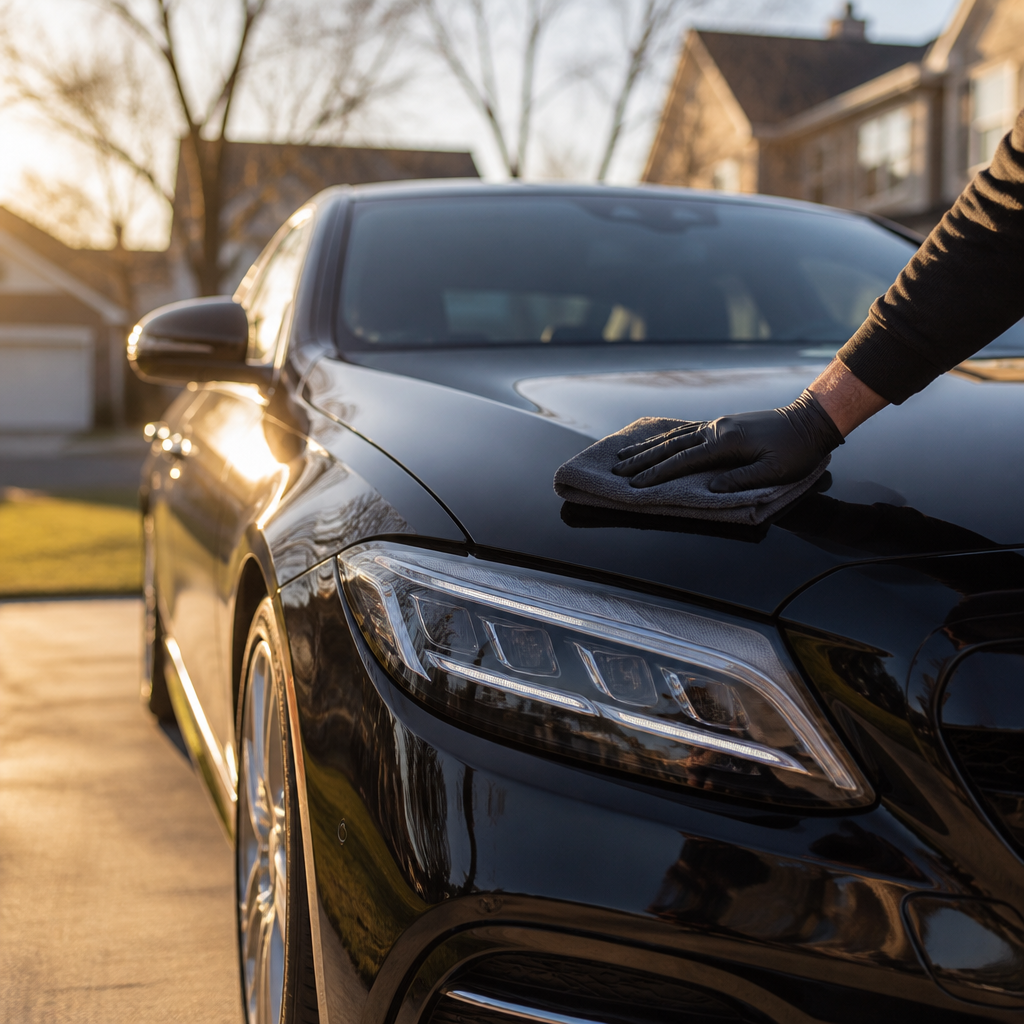
Dark paint absorbs more light, so the eye reads any disturbance in the clear coat as a bright or dull line. Under overcast skies the finish can look deep and even. Once the sun drops low in the afternoon or a streetlight hits the hood at night, swirls and fine scratches jump out.
In practice, most black cars look their worst in the hour before sunset in late fall, when the sun sits low and the tracks from the last few washes become obvious. The defects were there all summer. The lighting just changed.
What Black Paint Hides and What It Reveals
Black paint hides light water spotting that would be obvious on a lighter color. It reveals dust, pollen film, and haze, which settle on the surface and dull the reflection. Owners often assume the paint is damaged when the real problem is a layer of contamination that a proper decontamination wash would remove.
Expect the first correction to surprise you. Many black cars we inspect look hazy until the surface is fully decontaminated, and then the depth of the finish comes back. That is the difference between a clean car and a clean surface.
The finish you see on a black car is mostly a reflection of how well the surface was maintained, not how new the paint is.
Swirl Marks: Causes and How Deep They Go
Swirl marks are fine, circular scratches in the clear coat, usually caused by abrasive particles dragged across the paint during washing and drying. Dirt trapped between a wash mitt and the surface acts like fine sandpaper. Circular scrubbing, dirty towels, and a single bucket make the problem worse every time.
Where Swirls Come From on a Typical Driveway
Most swirls we correct come from the owner's own weekly wash. A mitt that has picked up grit from the lower panels and then gets dragged across the hood leaves a pattern that shows up as soon as the sun hits it. Automatic brush washes add a second source, because the brushes carry grit from every car that came through before yours.
Road grime from Illinois streets works the same way. Salt residue and fine sand that sit on dark paint get pushed around during the next wash, so a dirty car is not just unattractive, it is actively scratching the finish.
Testing Whether a Mark Is Polishable
Swirls live in the clear coat, which is the layer that machine polishing can refine. Deeper scratches that catch a fingernail are a different problem and may need more aggressive work or touch-up. A quick fingernail test across the mark is a practical first step.
Light swirls that vanish under a polish are cosmetic. Deep scratches that stay visible after compounding may have gone through the clear coat, and no polish will fully remove them. Clear coat depth is the line between a correction and a repaint conversation.
Pro tip: Shine a bright LED flashlight across the hood at a low angle before you book any work. Note which marks are visible from every angle and which only show in one spot, since the second group often sits in the top clear coat and polishes out easily.
A Wash Routine That Stops New Marks
A good wash on black paint is mostly about keeping grit away from the surface. Two buckets, a grit guard in each, and a clean microfiber mitt do more for dark paint than any spray product on the shelf. The goal is to keep the dirt you removed out of the water you use next.
Two Buckets, Grit Guards, and Mitt Choice
Fill one bucket with soap and the other with clean rinse water, and rinse the mitt after each panel. Wash in straight lines rather than circles, start from the roof, and leave the lower rockers and bumpers for last. Replace or flip mitts often, because a mitt that has picked up grit becomes the tool that creates swirls.
Choose a mitt with a deep pile so it pulls grit away from the paint. Avoid sponges that trap grit in their face, and never use the same towel on wheels and on paint.
Drying Without Creating Marks
Drying is where many black cars pick up their worst scratches. Use a dedicated drying towel with light pressure, or use a blower to push water off the panels. Rubbing a dry towel back and forth across a dark hood is the fastest way to add new swirls.
Wash in the shade whenever possible. Water dries on hot paint and leaves mineral spots that are harder to lift than dust, and in summer that drying window closes quickly.
Illinois Seasons Work Against Dark Paint
Illinois puts different pressure on a black finish in every season. Our roads, weather swings, and tree cover each leave residue that a dark car shows faster than a lighter one. A routine that ignores the calendar will leave your paint behind.
Around the suburbs, we see the same pattern each year. The paint looks fine through summer, then the first salt season and the first pollen-heavy spring expose a finish that was never given a proper seasonal plan.
Winter Road Salt and Brine
Road salt and brine stick to lower panels, wheel wells, and rocker panels, and they hold moisture against the paint. If that film stays on the car for weeks, it dulls the surface and pushes grit into the clear coat with every wash. A wash after a snowstorm, followed by a light sealant, limits that buildup.
Wash only when temperatures allow it. Water can freeze in door seams and locks, and a hand wash in a driveway below freezing is a good way to create a new problem.
Spring Pollen and Summer Sun
Spring pollen in Glendale Heights, Carol Stream, and Wheaton lays a yellow film that bonds to wax and sealant. On black paint it looks like a dust cloud, and wiping it dry without rinsing scratches the finish. Rinse pollen off with a pre-rinse before any contact wash.
Summer sun is the other factor. Dark paint runs hot in direct sun, and bird droppings, bug splatter, and water spots bake onto the surface quickly. Park in shade when you can, and schedule washes early in the morning.
Fall Leaves, Sap, and Pre-Winter Prep
October is when we see tree sap, leaf staining, and damp residue on black cars around the suburbs. Leaf stains can etch if they sit under wet leaves for days, so remove them promptly. This is also the right time to get the paint protected before salt season arrives, because a fresh layer of protection gives winter grime less to bond to.
Paint Correction Without Hazing Dark Paint
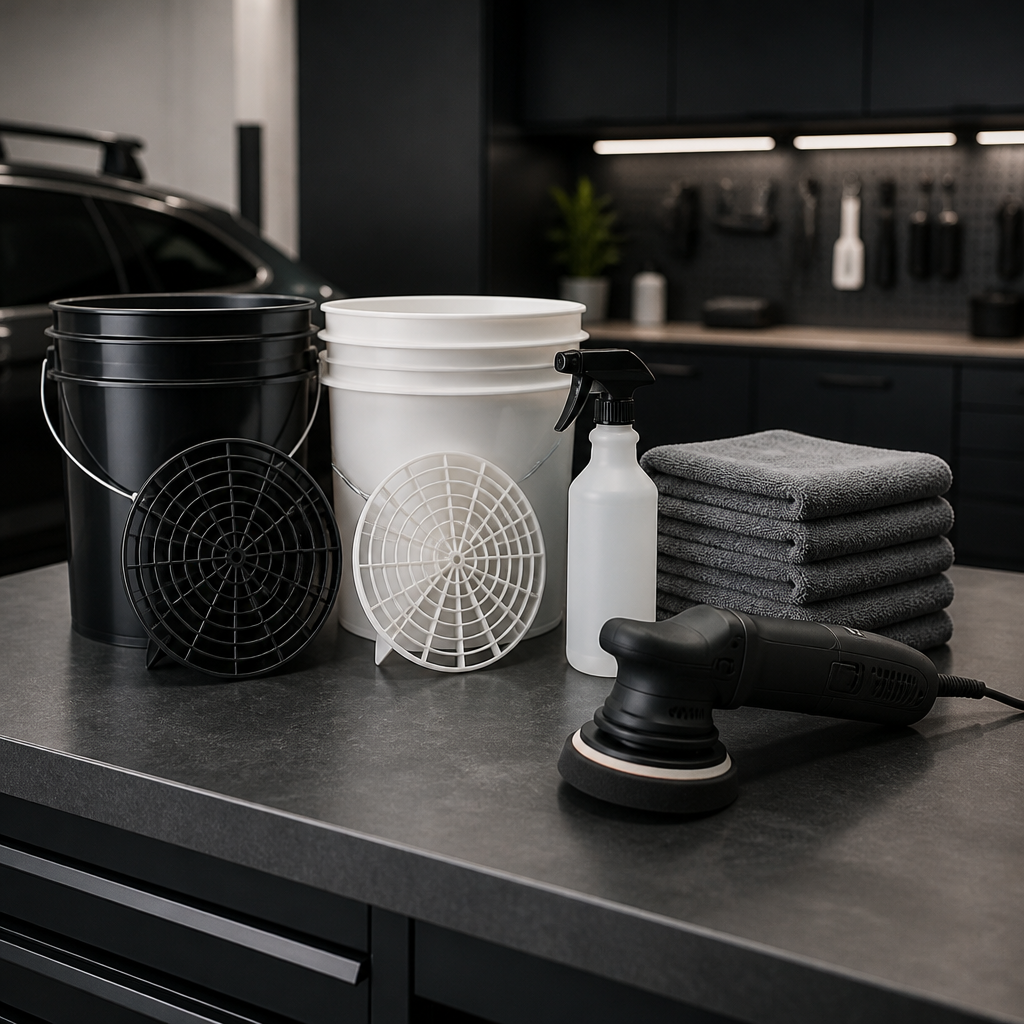
Paint correction is where black cars get damaged by the wrong process. Aggressive compounding with the wrong pad or too much speed can leave a hazy, dull finish that looks worse than the swirls it was meant to remove. The goal is to level the clear coat while removing as little material as possible.
Multi-Stage Machine Polishing on Black
Our process uses staged polishing, starting with the least aggressive pad and compound that will do the job, then stepping up only where the defects demand it. Each panel is checked under bright light before we move on. On black paint, a finishing polish matters as much as the cut, because it removes the micro-marring left behind by the compound.
Machine speed, pad condition, and pressure matter more than the name on the bottle. A pad loaded with old residue will scratch as it cuts, and working a panel in direct sun lets the product dry before it breaks down properly.
Why Haze Happens and How to Prevent It
Haze is a cloud of micro-scratches left after polishing. It appears most often when a compound is left on the surface too long, when the pad is overloaded, or when residue is wiped with a dirty towel. Wiping carefully and inspecting under proper lighting catches it early.
Done right, a black hood should look like wet ink, with the reflection sharp enough to show the sky without any cloudiness. If you can see a faint veil across the panel, the job is not finished.
Pro tip: Never run a cutting pad on black paint in one spot for long. Keep the machine moving, wipe residue off with a clean microfiber, and check each section under light before you move to the next panel.
Ceramic Coating for Black Cars
A ceramic coating is a semi-permanent layer that bonds to the clear coat and adds a hard, slick surface. On black paint, the depth and gloss it adds can be more dramatic than on lighter colors, but only if the paint underneath is properly prepared. Coating over swirls locks them in place, so the correction has to come first.
Why Preparation Decides Coating Results
A coating bonds only to the surface you give it. Decontamination with a clay bar or iron remover, followed by a full polish and an alcohol wipe, removes the oils and polishing residue that would otherwise block bonding. Skipping any of these steps is the most common reason a coating underperforms.
Our nano-ceramic SiO2 coatings are applied this way, and they carry warranties from 5 to 8 years depending on the package. A warranty only holds when the paint was prepared correctly and the owner follows the maintenance guidance.
Maintaining a Coated Black Car
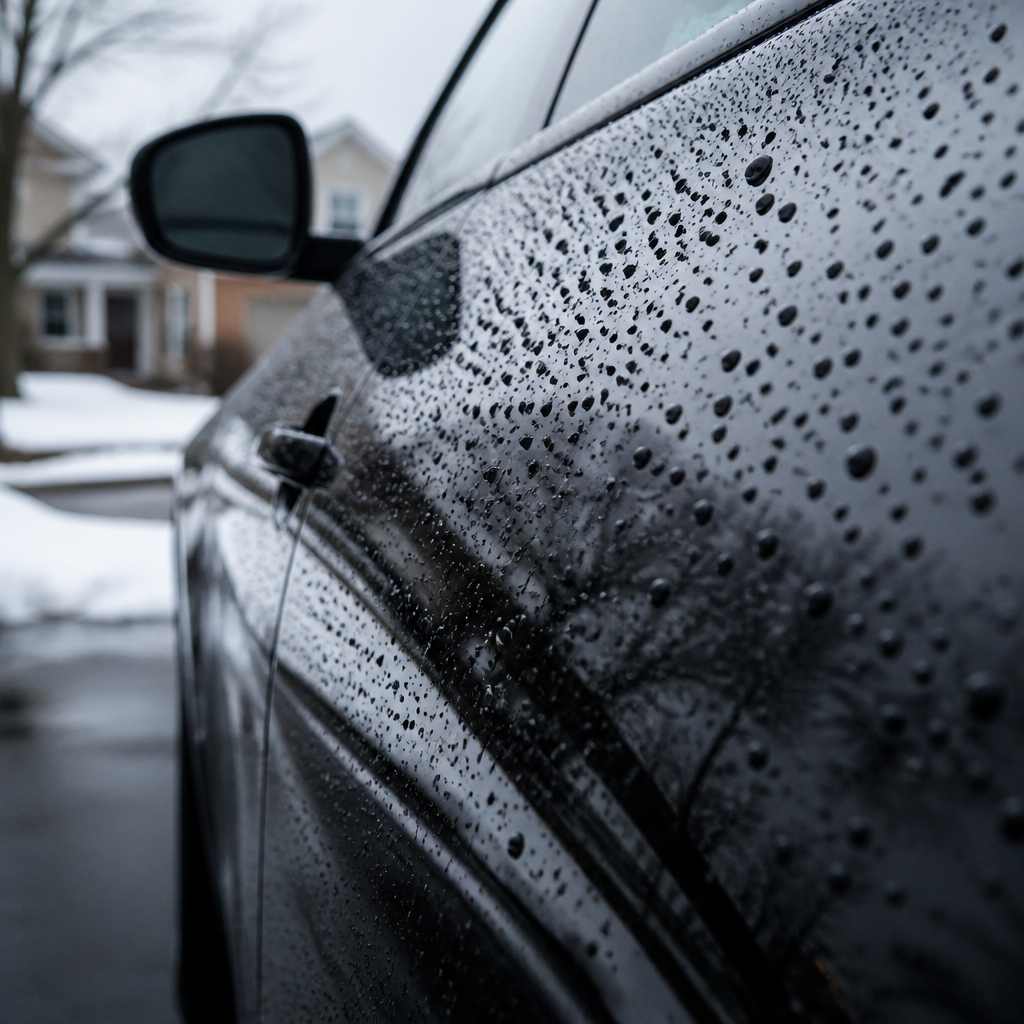
A coating does not make a car maintenance free. Use a pH-neutral soap, avoid automatic brush washes, and use a ceramic-safe spray every few washes to keep the water-beading effect strong. Beading is the simplest sign that the surface is still healthy.
Watch for water spots that stop beading and for a dull patch that appears after a wash. Those usually mean the protection is thinning in that area, and it is time for a refresh rather than a full recoat.
Choosing Your Protection Level
Most black car owners choose between three paths: a home maintenance routine, a professional maintenance program, or a full correction followed by a coating. Each suits a different level of ownership and a different amount of time you can give the car. The table below lays out what each path does well and where it falls short.
Three Protection Paths Compared
| Approach | Strengths on Black Paint | Limitations |
|---|---|---|
| Home two-bucket wash with sealant | Full control over products and technique, with a low cost per wash | Requires consistent technique, and one rushed wash can add new swirls |
| Automatic or brush wash | Fast and convenient during salt season | Brushes carry grit from earlier cars, and lower panels often get missed |
| Professional multi-stage polish and nano-ceramic coating | Corrects existing defects and adds long-term gloss and protection | Higher upfront cost, and results depend on prep and on following maintenance guidance |
In practice, the best option for most suburban owners is a hybrid. Wash carefully at home between professional services, and schedule a correction and coating once the finish starts to show wear that washing alone cannot fix.
Which Path Fits Your Driving
If your black car sees daily commuting on salted roads, the protection needs to be stronger and the wash schedule tighter. A weekend car kept in a garage can get by with a lighter routine. For luxury and high-end vehicles, the value of the finish makes a professional program the more sensible investment.
Be honest about how much time you will spend on washing. A coating does not replace regular washing, and an owner who skips maintenance will see the same swirls return within a season.
Frequently Asked Questions
How do I keep swirl marks off my black car in Illinois?
Wash with two buckets and grit guards, use straight-line motions, and dry with a soft towel or a blower instead of rubbing. Rinse road salt and pollen before any contact wash, and avoid automatic brush washes whenever you can.
Can swirl marks be removed from black paint by hand?
Very light swirls can be softened by hand polishing, but the results are uneven and take a long time. Widespread or deeper marks usually need machine polishing with a careful finishing step to get an even, clear reflection.
How often should a black car be washed during salt season?
Aim for a wash every one to two weeks while roads are salted. Rinse the lower panels and wheel wells sooner after a heavy storm or a long drive on treated roads, since that is where residue builds up fastest.
Is a ceramic coating worth it on a black car?
Yes, if the paint is corrected and prepared first. The coating adds gloss and makes washing easier, but it locks in any swirls that were already there, so the preparation step is what makes the investment pay off.
Do automatic car washes damage black paint?
They can, mainly because brushes carry grit from the cars that came before yours. Touchless systems reduce that risk, but they still leave a film that a proper hand wash will remove more completely.
How long does a ceramic coating last on a black car?
Our nano-ceramic coatings carry warranties from 5 to 8 years depending on the package. Real-world lifespan depends on how the car is maintained and how much road salt, sun, and washing it sees each year.
What has worked best for keeping your black car free of swirls through an Illinois winter, and what are you still struggling with?