Black trim care Illinois owners need is harder than most expect. Your car's black trim around the windows, mirrors, and bumper often looks rich one month and chalky the next. That happens because trim is rarely one material. Gloss black plastic and painted trim sit side by side on the same vehicle, yet they age differently under road salt, freeze-thaw cycles, and summer sun. At Hersheys Detailing in Glendale Heights, we treat them as two separate jobs with two separate tool lists. Here is how we approach each one, and where owners tend to cause damage without realizing it.
Table of Contents
- Quick Takeaways
- Why Gloss Black and Painted Trim Need Different Treatment
- How Gloss Black Plastic Trim Breaks Down in Chicago Weather
- Painted Trim Is a Finish, Not a Plastic
- Restoring Gloss Black Trim Without Hazing It
- Trim Restoration Approaches Compared
- A Maintenance Calendar for Chicago Suburb Owners
- Mistakes We See Most Often on Trim
- Frequently Asked Questions
- References
Quick Takeaways
| Key Insight | Explanation |
|---|---|
| Identify the material before you touch it | Gloss black trim is usually plastic with a glossy top layer, while painted trim is a paint film over metal or plastic. Check a hidden edge for texture and paint thickness before choosing a product. |
| Road salt hits gloss black harder | Brine that dries on textured plastic leaves white residue in the grain. Rinse lower panels within a day of a salt event, not at the end of the week. |
| Skip aggressive polishing on gloss black by default | Compounds that work on paint can haze or dull plastic. Use a light cleaner and a trim-specific product, and test in a hidden spot first. |
| Painted trim needs pH-balanced cleaners | Strong degreasers strip protection from painted surfaces and dry out the finish. Use a neutral cleaner and save heavy degreasing for wheel wells. |
| Faded trim is oxidized, not just dirty | A dressing can mask fading for a few weeks. Real restoration starts with decontamination, then a correction step if the surface allows it. |
| Protect trim before the first hard freeze | Apply protection in early fall, then refresh it before the spring salt season ends. Protection applied in late winter has far less work to do. |
Why Gloss Black and Painted Trim Need Different Treatment
Most owners lump all black trim together, and that is the first mistake. Gloss black trim is usually a molded plastic part with a high-shine surface, and many pieces have fine texture underneath that gives them their depth. Painted trim is a film of coating on a substrate, and its durability depends on the paint system and the clear layer above it.
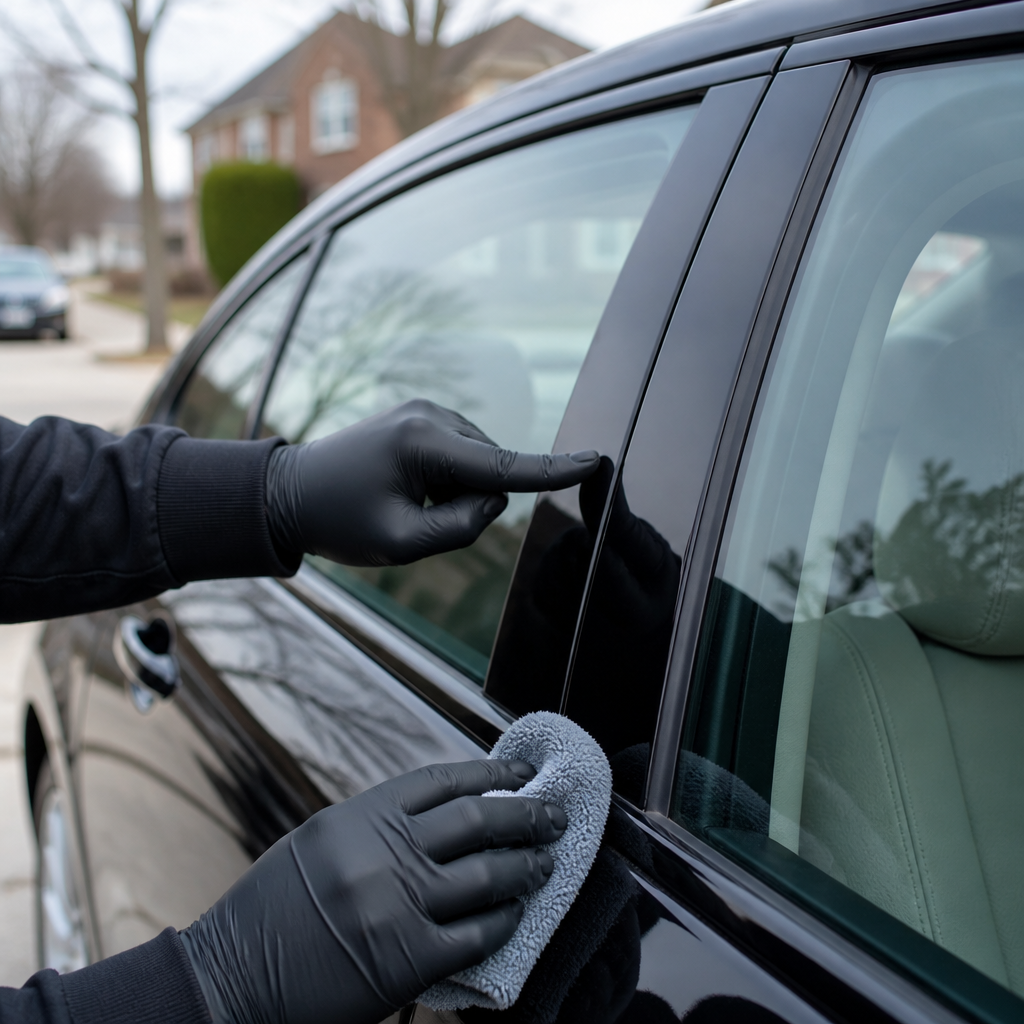
The reason this matters is simple. Plastic and paint react to the same cleaners, polishes, and weather in different ways. A product that brightens painted trim can leave gloss black plastic looking streaky, and a dressing that makes plastic look wet can sit on painted surfaces and attract dust.
In practice, we start every trim job by identifying the material. We look at how light reflects off the surface, check for texture in the grain, and inspect the edges where a part meets the body. If you are unsure, a detailer should be able to tell you what they think the material is and why before they start working on it.
Pro tip: Look at the edge of a trim piece under direct light. Painted trim often shows a thin paint line, while molded plastic usually shows a uniform color throughout the edge.
How Gloss Black Plastic Trim Breaks Down in Chicago Weather
Chicago suburb cars face a specific combination of stressors. Winter brings road salt and brine, spring brings grit and pollen, and summer adds intense UV exposure that comes off the pavement and the sky at the same time. Gloss black plastic has to handle all three, and its weak point is usually the texture rather than the shine.
Road salt and brine residue in textured plastic
Brine is a salt solution that many roads use before a storm, and it sticks to vehicles more stubbornly than dry salt. When it dries on textured gloss black plastic, the residue settles into the grain and leaves a white or gray haze that looks like dirt but does not wash off with a normal car wash. Owners who see this in January often assume the trim is permanently damaged, but in most cases the surface is just loaded with mineral residue.
The fix is timing. Rinsing the lower doors, rocker areas, and bumper edges within a day of a salt event prevents most of the buildup. Waiting until the weekend usually means the residue has already bonded into the texture.
UV fading and the chalky look on piano black finishes
Piano black, the highest-gloss version of this trim, looks flawless when new and shows fading faster than most owners expect. Sun exposure breaks down the surface layer over time, and the first sign is a dull, slightly gray look that appears even on a clean car. A glossy dressing can hide this for a short period, but it does not reverse the oxidation underneath.
In our experience, owners who park outside for most of the year see fading first on the top edge of the rear spoiler and the roof trim. Those areas take the most direct light and the most heat. Covered parking slows this down considerably, which is one reason we ask every client about where the car lives overnight.
Painted Trim Is a Finish, Not a Plastic
Painted trim behaves more like the body panels around it. It can be polished, sealed, and corrected, but it also has less tolerance for harsh chemicals and aggressive pads. The paint film is thinner than many owners assume, and the clear layer is what carries most of the gloss.
Because of this, we handle painted trim with the same care we give a painted door or hood. The goal is to preserve the clear layer and keep the finish even, not to remove every mark in a single pass.
Why sheen controls how painted trim looks
Sheen describes how much light a surface reflects, and it has a direct effect on how flaws show. Home painting guides often recommend a satin finish for trim because it resists scuffs better than flat paint and cleans more easily than a very dull finish. The same principle applies to automotive painted trim. A higher-gloss finish shows swirl marks, haze, and uneven spots more clearly, so the surface needs to be smooth before you apply any protection.
When a painted trim piece looks dull, the cause is often a combination of light oxidation and buildup from road film. Cleaning and decontamination usually reveal more gloss than owners expect before any polishing begins.
Cleaners that are safe for paint but harsh on clear coats
Many all-purpose cleaners are strong enough to strip wax and sealant in one pass. On painted trim, repeated use of strong alkaline cleaners can dull the clear layer and leave the surface feeling rough. That roughness then traps more dirt, which means the owner washes more often and the cycle repeats.
We use neutral pH cleaners on painted trim and reserve heavier products for wheel wells and lower body areas where grime builds up. The difference shows up after a few months, when the trim still has depth instead of a flat, tired look.
Restoring Gloss Black Trim Without Hazing It
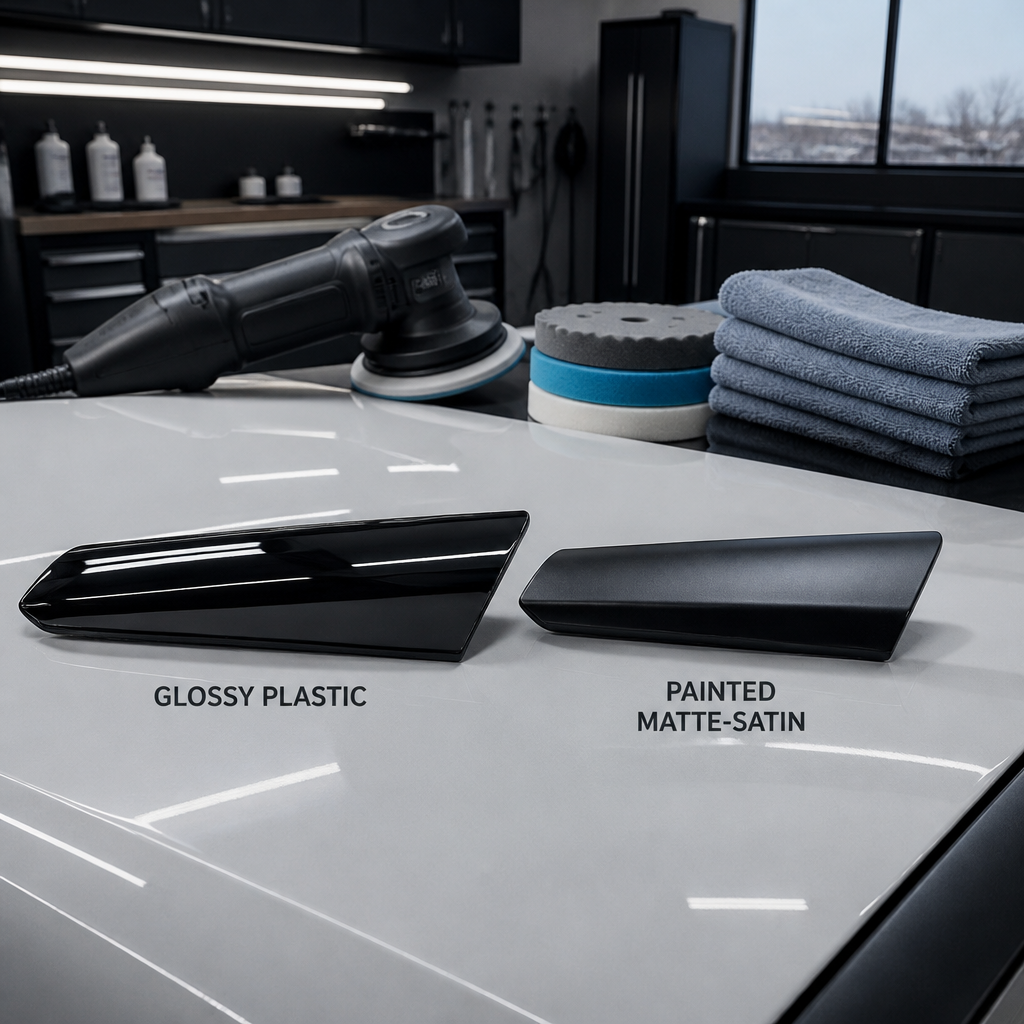
Restoration is where the two types of trim diverge most clearly. Painted trim can usually take controlled correction, while gloss black plastic often needs a gentler approach. Treating both the same way is one of the most common ways owners end up with cloudy trim that is harder to fix than the original fading.
Why we skip aggressive polishing on gloss black plastic
A machine polisher with a cutting compound can remove a lot of oxidation quickly, but plastic has a thinner margin for error. The compound can dull the surface, leave micro-marring, or flatten the texture that gives gloss black its depth. Once that happens, no amount of later polishing returns the original sheen.
For this reason, our first step on gloss black trim is a cleaning process designed for plastic, followed by a test spot. We only move to a stronger step if the test area responds without haze. Most gloss black trim that looks faded responds well to decontamination and a trim-specific product, without any cutting step at all.
Pro tip: Before you apply any product to a gloss black trim piece, test it on a small area that is hidden by a door seal or inside a wheel arch. Wait a full day and check for haze, streaking, or a change in texture under direct light.
Restoring faded painted trim with controlled correction
Painted trim that has light oxidation or swirl marks can often be corrected with a light polish and a fine finishing pad. The key word is controlled. We use small sections, check our progress often, and stop as soon as the trim reaches an even gloss. Pushing too hard on a thin paint edge can burn through to the primer, and that repair is expensive and rarely invisible.
After correction, the finish needs protection. A sealant or coating locks in the gloss and gives the owner a surface that cleans more easily through the winter.
Trim Restoration Approaches Compared
Owners usually choose between three paths: a simple dressing between seasons, a correction and sealant service, or a longer-lasting ceramic coating. Each one suits a different material and a different level of commitment. The table below shows how we match them to the trim type and the owner's driving pattern.
| Approach | Best suited for | Main risk |
|---|---|---|
| Light cleaner and trim-specific dressing | Gloss black plastic between seasons, especially on lightly faded trim | Buildup and streaking if the product is over-applied or left to dry unevenly |
| Controlled paint correction and sealant | Painted trim with light oxidation, swirl marks, or dullness from road film | Thin paint edges can burn through if the pad or pressure is too aggressive |
| Nano-ceramic SiO2 coating | Owners who want longer protection on both painted trim and properly prepared gloss black trim | Results depend on surface prep and the specific plastic, so a test area is essential |
Choosing a protection layer for gloss black trim
For gloss black plastic, we generally prefer a protection layer that adds gloss without a heavy film. Heavy waxes can collect dust in the texture and turn gray after a few weeks of road driving. A coating designed for plastic and trim gives a more durable finish, but it still needs careful preparation, because any residue left on the surface can prevent proper bonding.
We also tell clients that coating gloss black trim is not the same decision as coating paint. A coating might last longer on painted panels than on plastic, and that difference should shape what the owner expects.
When painted trim needs more than a wash
Painted trim needs more than a wash when the gloss looks flat even after thorough cleaning, when contamination sits under the clear layer, or when the finish feels rough to the touch. At that point, decontamination followed by a light correction usually produces the best result. A wash alone does not remove embedded contamination, and sealing over it only locks the problem in place.
A Maintenance Calendar for Chicago Suburb Owners
Trim care in the Chicago suburbs follows the seasons more closely than most owners realize. Our clients in Carol Stream, Bloomingdale, and Wheaton often schedule service around the same two windows each year, and the timing has a bigger effect on results than the product choice.
Fall prep before the first hard freeze
Early fall is the best time to clean, decontaminate, and protect black trim. The surface is free of the heavy summer grime, and the protection layer has time to cure before the first cold snap. A clean, protected trim piece sheds road salt more easily when the season turns.
We recommend a full trim check in September or early October, with a second check in late winter. The late-winter check is about removing salt residue and refreshing protection, not starting a restoration from scratch.
Spring decontamination after salt season
Spring is when many owners discover the damage that winter left behind. Residue that sat in textured plastic for months can look like permanent fading, but decontamination often reveals a surface that is still in good condition. We start with a thorough cleaning, then decide whether the trim needs a dressing, a correction, or a coating.
Mistakes We See Most Often on Trim
Most trim problems come from a small set of habits. They are easy to fix once you know what to look for, and they account for most of the trim we are asked to repair. Learning them early saves a lot of money and frustration.
Dressings that make gloss black look wet, then streaky
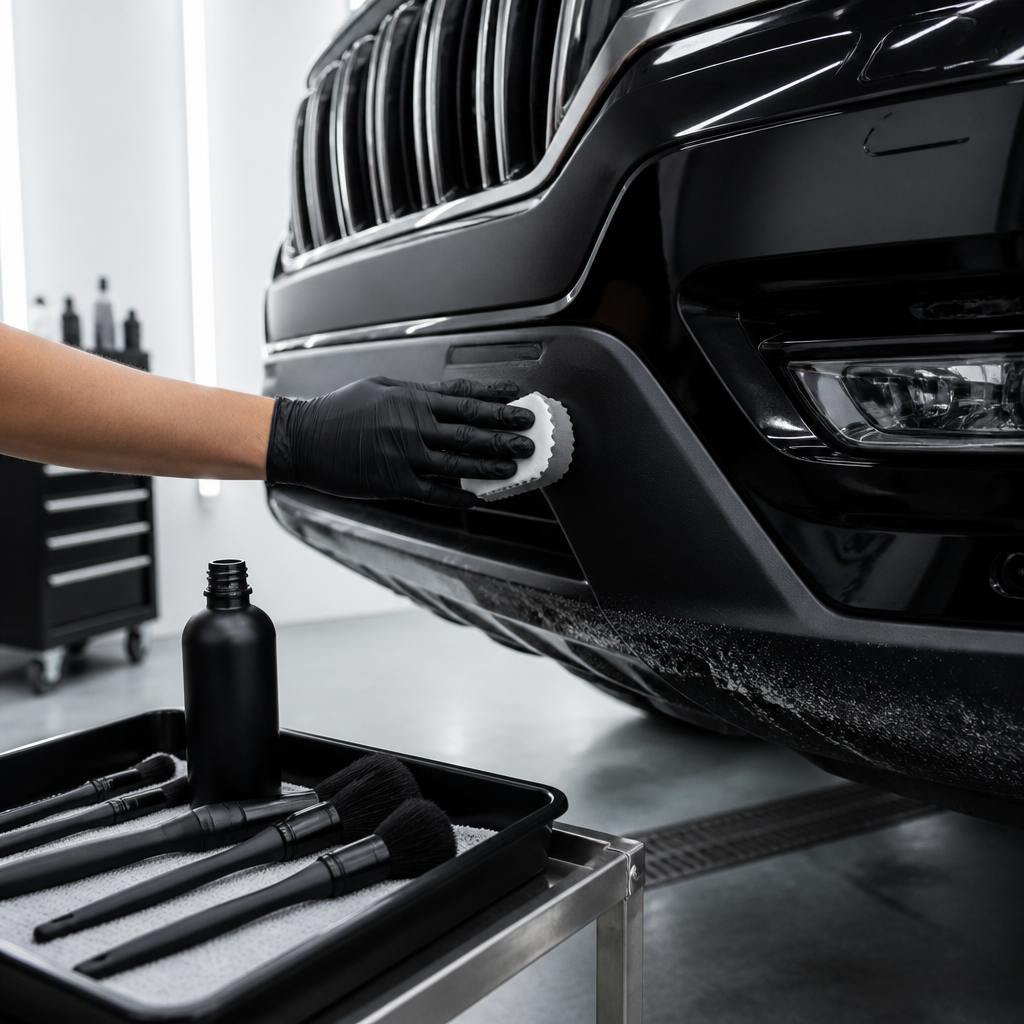
Dressings are popular because they make trim look fresh in minutes. The problem is that many dressings are oily, and they attract dust and road film. Applied heavily, they leave streaks that look worse than the original fading, and the owner often adds more product to fix the streaks, which only makes the problem worse.
Apply a thin layer, wipe off the excess with a clean microfiber towel, and check the surface from several angles. If the trim still looks wet after a few hours, you used too much.
High-pressure washing at trim seams
High-pressure washing is useful for lower body areas, but it can lift the edges of trim pieces and force water behind seals. On painted trim, a concentrated stream held too close can also chip or lift the clear layer at the edges. Keep the wand at a safe distance, sweep across trim rather than blasting directly into seams, and avoid pointing the stream at trim edges.
Trim care is not about one perfect product. It is about knowing what the material is, respecting its limits, and maintaining it before the damage builds up. Owners who do this usually spend less time correcting their trim and more time enjoying how the car looks.
Frequently Asked Questions
Can I use the same products on gloss black trim and painted trim?
You can use some of the same products, but not all of them. Neutral cleaners are usually safe on both materials, while heavy polishes and strong degreasers suit painted trim better than gloss black plastic. Always test a new product in a hidden spot before using it on the full piece.
How can I tell whether my trim is plastic or painted?
Look at the edge of the piece under bright light. Painted trim often shows a thin layer of paint over a different base, while molded plastic usually looks uniform through the edge. If you still cannot tell, ask a detailer to check before you apply any product.
Does a ceramic coating work on gloss black trim?
It can, but the results depend on proper preparation and the specific plastic involved. Residue, old dressing, or fine texture can all affect bonding. A test area and a thorough cleaning step are the best way to decide whether a coating is the right choice for your car.
How often should black trim be protected in Illinois?
For most owners, two protection cycles per year work well, one in early fall and one in late winter or early spring. Cars parked outside through the winter benefit most from that schedule. Cars kept in a garage can often stretch the interval.
Why does my black trim look gray after a car wash?
Gray trim after washing is often caused by mineral residue from road salt, hard water, or a cleaner that left a film behind. Thorough rinsing and a neutral cleaner usually solve the problem. If the gray remains after decontamination, the surface may have oxidized and needs a light restoration step.
Tell us what has worked for your gloss black or painted trim through a Chicago winter, and what faded faster than you expected.
We would love your feedback and any insights you would share with others. What perspective would you add?