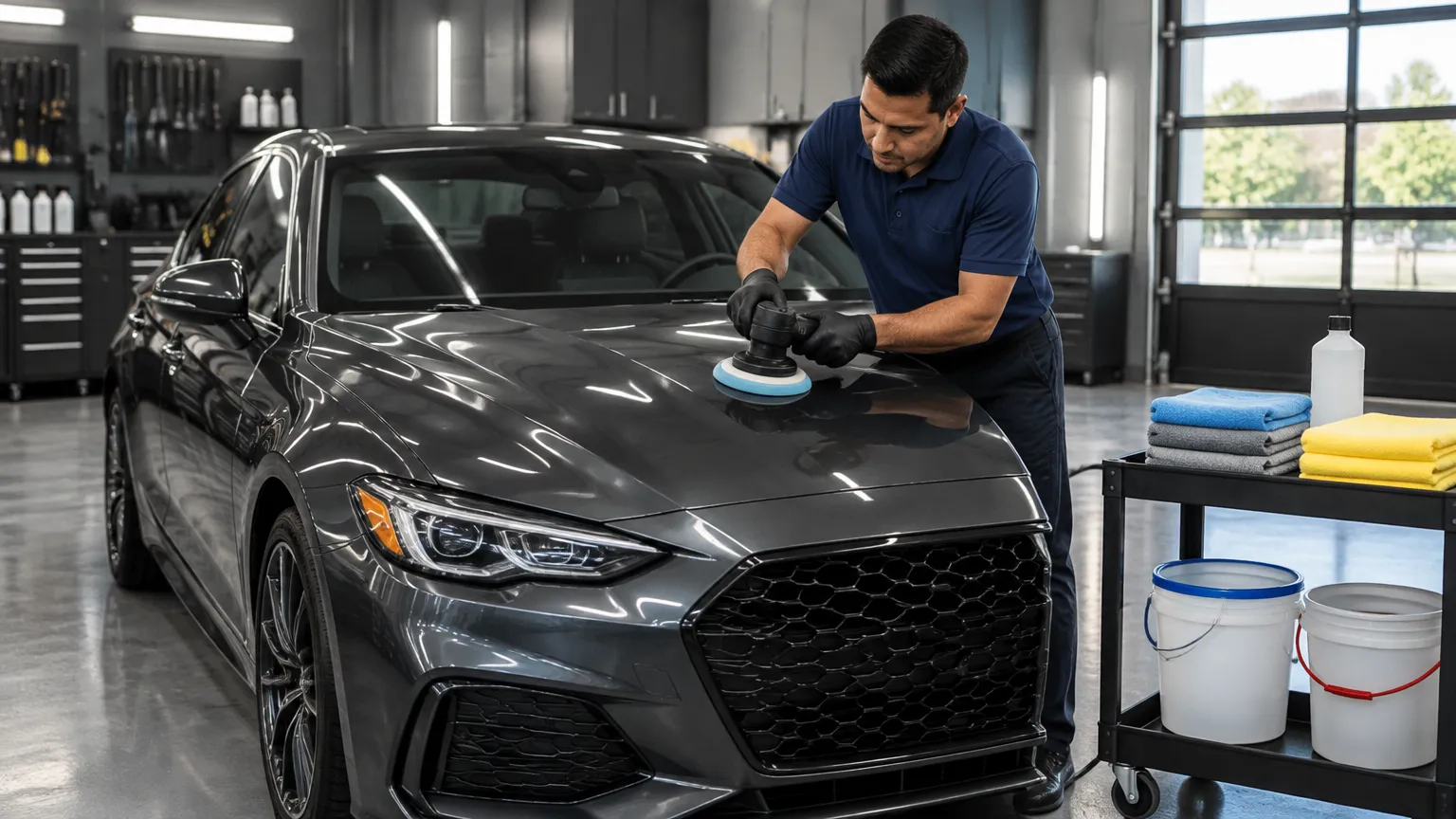
A BMW M3 or M5, a Mercedes-AMG sedan, or a Cadillac CT5-V Blackwing asks more of its owner than a commuter car does. These cars run wider tires, brake systems that shed more visible dust, and dark, glossy paint that shows every swirl under a garage light. If you are searching for BMW M detailing Illinois, the real question is how to clean and protect the car without undoing the work that makes it special. At our Glendale Heights studio, we see the same mistakes again and again: automatic washes, dish soap, and a wax applied once a year. This guide explains where performance sedans need a different approach and where the standard routine still holds up.
Table of Contents
- Quick Takeaways
- Why Performance Sedans Punish Paint Differently
- Illinois Seasons, Road Salt, and Brake Dust
- BMW M Detailing: Grilles, Emblems, and Trim
- Mercedes-AMG Paint Correction: Measure First, Then Polish
- Cadillac CT5-V Owners: Interior Materials and Trim Care
- Ceramic Coating and Protection Options for Performance Sedans
- What to Expect When You Book in Glendale Heights
- Frequently Asked Questions
- References
Quick Takeaways
| Key Insight | Explanation |
|---|---|
| Wash with two buckets | Use a pH-balanced automotive shampoo with separate rinse and wash buckets. Dish soap strips protection, and a single bucket drags grit back across the clear coat. |
| Remove iron fallout before polishing | Brake dust bonds to paint and wheels when it sits. Use an iron remover during every detail, before clay or machine polishing. |
| Measure paint thickness first | Every correction at our studio starts with a pre-service paint thickness measurement and documentation, so the polish plan matches the paint that is actually on the car. |
| Plan the correction time | A 1-step paint correction typically takes 4 to 6 hours. A 2-step paint correction is a full-day service, so book accordingly. |
| Rinse after salt events | Road salt and brine cling to lower panels and wheel wells. Rinsing the same day you drive through them keeps contamination from setting in. |
| Price the coating with the correction included | Ceramic coating packages start at $999 for a 5-year coating and $1,099 for an 8-year coating, both including a full 2-step paint correction at no extra charge. |
Why Performance Sedans Punish Paint Differently
Performance sedans are not simply faster versions of commuter cars. They carry larger wheels, more aggressive bodywork, and more surface area where dirt and brake dust collect. Dark paint, which many owners choose for these cars, makes every swirl and haze easy to see in direct Illinois sunlight.
Where Swirls Come From on a Daily Driver
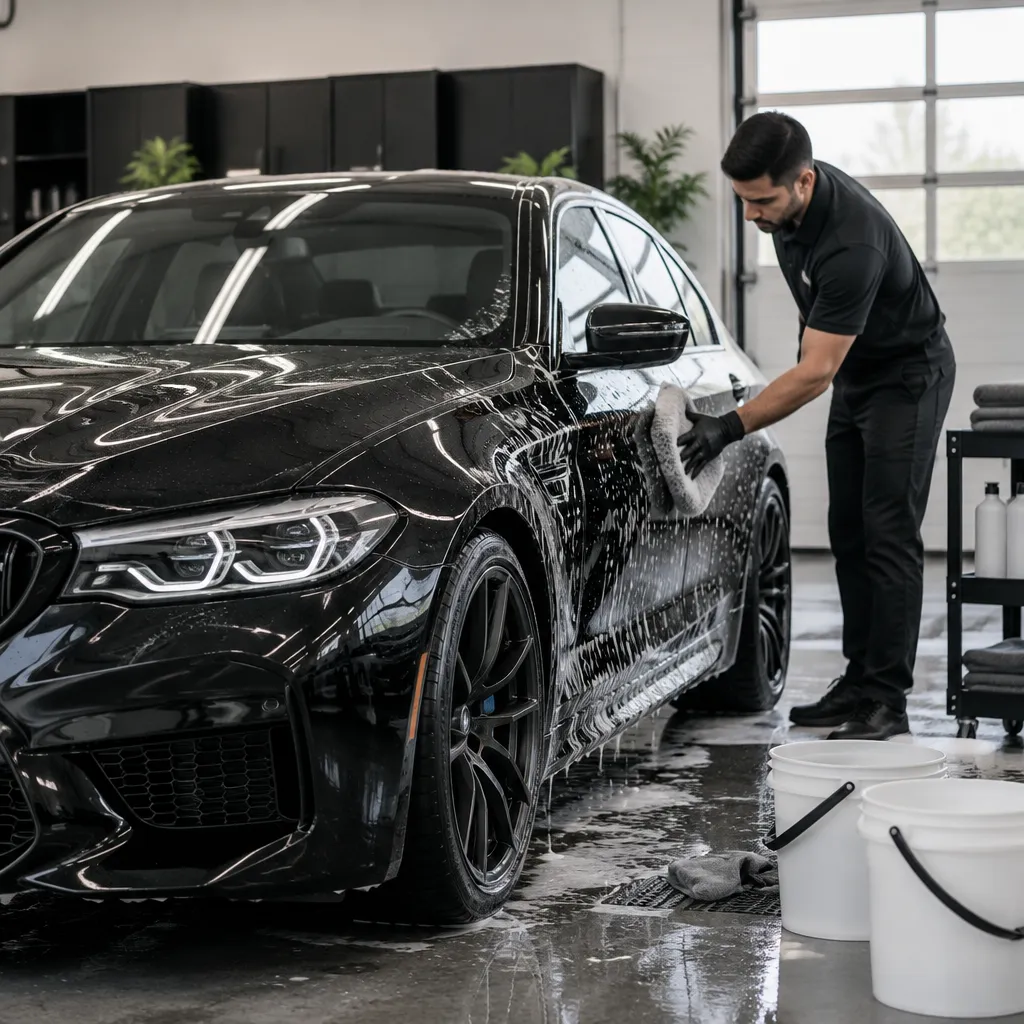
Most swirl marks are not caused by one bad wash. They build up over months of contact with grit, especially when the same towel or mitt moves from wheels to rocker panels to the hood. A car driven hard on weekends often picks up its marks from the wash routine, not from the road.
In practice, an owner who washes weekly with a single bucket often ends up with more correction work than an owner who washes every two weeks with a proper two-bucket setup. Contamination control matters more than wash frequency.
Why Dish Soap and Automatic Washes Fail Here
Dish soap is designed to strip grease, and that is exactly what it does to a sealant or coating. A Colorado BMW specialist recommends a high-quality, pH-balanced automotive shampoo instead, since dish soap strips away protective waxes. The same logic applies to automatic washes, where brushes and cloths carry grit from every car that went through before yours.
Hand washing also lets you spot rock chips and small paint defects early, before they turn into rust or a larger repair. That inspection is the part of the wash most owners skip.
The car that looks best after five years is rarely the one with the most expensive product. It is the one with the most consistent washing habits.
Illinois Seasons, Road Salt, and Brake Dust
Illinois is hard on exterior finishes in a different rhythm than warmer states. Salted roads from late fall into early spring, freeze and thaw cycles, and humid summers each create a separate risk. In our Glendale Heights studio, the damage usually shows up first on lower rocker panels, wheel faces, and the front bumper.
Road Salt in Winter Traffic
Road salt and brine cling to the lower third of the car, close to the clear coat and the undercarriage. If that residue sits through a week of melting and refreezing, it becomes harder to remove. Rinsing the underbody and lower panels after snow days is the most useful winter habit a performance sedan owner can build.
Pro tip: Rinse the lower panels and wheel wells on the same day you drive through slush or brine, even if a full wash has to wait. Salt that dries in place is what makes the later cleanup so much harder.
Brake Dust on Wheels and Lower Panels
Brake dust from performance pads is metallic, and it bonds to the surface when it is left to sit. A BMW-focused Ask a Pro guide lists brake dust first among its top five BMW care tips, and that matches what we see in the bay. Iron fallout removal dissolves embedded particles, but it has to happen before clay or polish, not as an afterthought.
Wheels deserve their own bucket and their own brushes. Mixing wheel brushes with paint tools is one of the fastest ways to move metallic debris onto a clean door panel.
Storing the Car Through a Suburban Winter
A performance sedan that sits for weeks collects dust, moisture, and spring pollen under any cover. A cover only helps if the car is clean and dry first, and if the material breathes. A covered car that was never washed traps grit directly against the paint.
BMW M Detailing: Grilles, Emblems, and Trim
BMW M cars have dense front ends, detailed grilles, and plenty of contrast trim. The areas that separate a thorough BMW detail from a quick wash are the ones most owners never touch, including the kidney grille, the emblems, and the trim around the windows.
Cleaning Grilles and Emblems Without Damage
Grille cleaning and emblem cleaning or removal are among the top care tips in the Ask a Pro guide, and both come up often on performance cars. We clean grilles with a soft brush and a pH-neutral cleaner, then decontaminate the surrounding paint before any polishing. That order keeps grit out of the grille surround.
Emblem removal makes sense for some owners, especially when edges lift or trap grime. It should be done by someone who understands the adhesive and the paint underneath. Prying at an emblem with a scraper from a parts store is how paint chips start.
Masking Trim Before Machine Polishing
Black plastic trim and window surrounds can stain when polish or correction residue sits on them. Masking those areas before machine polishing is a routine step for us, and it is the one a DIY job most often skips. A stained trim piece looks worse than a swirl, and it is harder to fix.
Interior Plastics and Dashboard Dressings
A Colorado BMW shop advises avoiding silicone-based protectants on dashboards and trim because they can cause glare and speed up aging. We agree with that principle. Use a matte, non-greasy dressing that leaves a natural finish, and keep it away from the windshield edge, where residue can smear into glare.
Mercedes-AMG Paint Correction: Measure First, Then Polish
The AMG badge now covers more than one powertrain. Mercedes-AMG's own homepage promotes electric models such as the CLA 45 4MATIC+ alongside combustion cars, so the paint on the car in your garage may come from a different production process than the one you remember. Before any polisher touches a panel, we measure paint thickness. That reading tells us how much material is safe to remove.
Why Paint Thickness Comes First
Every correction at our studio includes a pre-service paint thickness measurement and documentation. The reading shows whether a panel has been repainted, whether edges are thin, or whether an earlier polish has already taken material off. Without that information, a correction is guesswork.
If a panel reads thin, we change the plan. A lighter approach that leaves some defects in place is often better than chasing every swirl and burning through the clear coat.
One-Step or Two-Step: Choosing the Right Correction
A 1-step paint correction typically takes 4 to 6 hours and addresses light swirls, oxidation, and minor marring. A 2-step paint correction is a full-day service that tackles deeper defects and creates a better surface for coating. The right choice depends on what the paint looks like under a light and what the car will get afterward.
Pro tip: Ask for the paint thickness reading in writing before you approve any correction. A shop that will not share the measurement is asking you to trust the polish instead of the data.
Machine Polishing Mistakes That Cost Paint
Multi-stage machine polishing does the most good and the most harm in careless hands. Running a rotary polisher on a sharp body edge, or using an aggressive cutting pad on a soft clear coat, can burn through paint quickly. Pad selection and technique matter more than the brand on the bottle.
We use Rupes and Koch Chemie products through our correction stages, and our studio is certified by Koch Chemie. Even so, the product only works as well as the person holding the machine and watching the panel under good light.
Cadillac CT5-V Owners: Interior Materials and Trim Care
Cadillac CT5-V owners often arrive with a different set of questions than BMW and AMG owners. The cabin mixes seating surfaces, soft-touch panels, and trim pieces, and each needs its own treatment. A single all-purpose interior cleaner is a shortcut that tends to cost more later.
Leather Care Without the Greasy Finish
Leather conditioners that replenish natural oils work best when they are applied in thin layers and wiped off. A heavy coat attracts dust and leaves a residue on bolsters, exactly where you sit and grip the wheel. Small amounts of a dedicated leather product keep the surface supple without a plastic-looking shine.
Driver contact points, including the steering wheel rim, the seat bolsters, and the shifter area, wear first. Wiping them down after warm or humid drives keeps oils from building up in the seams.
Interior Pricing and Soiling Levels
Our interior detail starts from $150 and includes steam cleaning, thorough vacuuming, an interior surface wipe-down, and inside window cleaning. A moderate interior condition adds $40 for light pet hair removal and heavier buildup. A heavy condition adds $80 for heavy pet hair and debris cleanup.
Deep extraction for carpets and seats is listed at +$80 and is recommended for stains, spills, and heavily soiled interiors. Pet hair removal is an optional add-on priced at $20 to $50 by severity. Ask for the condition check before you book, so the quote matches the cabin you actually have.
Ceramic Coating and Protection Options for Performance Sedans
Our ceramic coating packages start at $999 for a 5-year coating and $1,099 for an 8-year coating, and both include a full 2-step paint correction at no extra charge. Final pricing depends on vehicle size and paint condition. Our nano-ceramic SiO₂ coatings carry 5 to 8 year limited coverage.
Why Correction Comes Before Coating
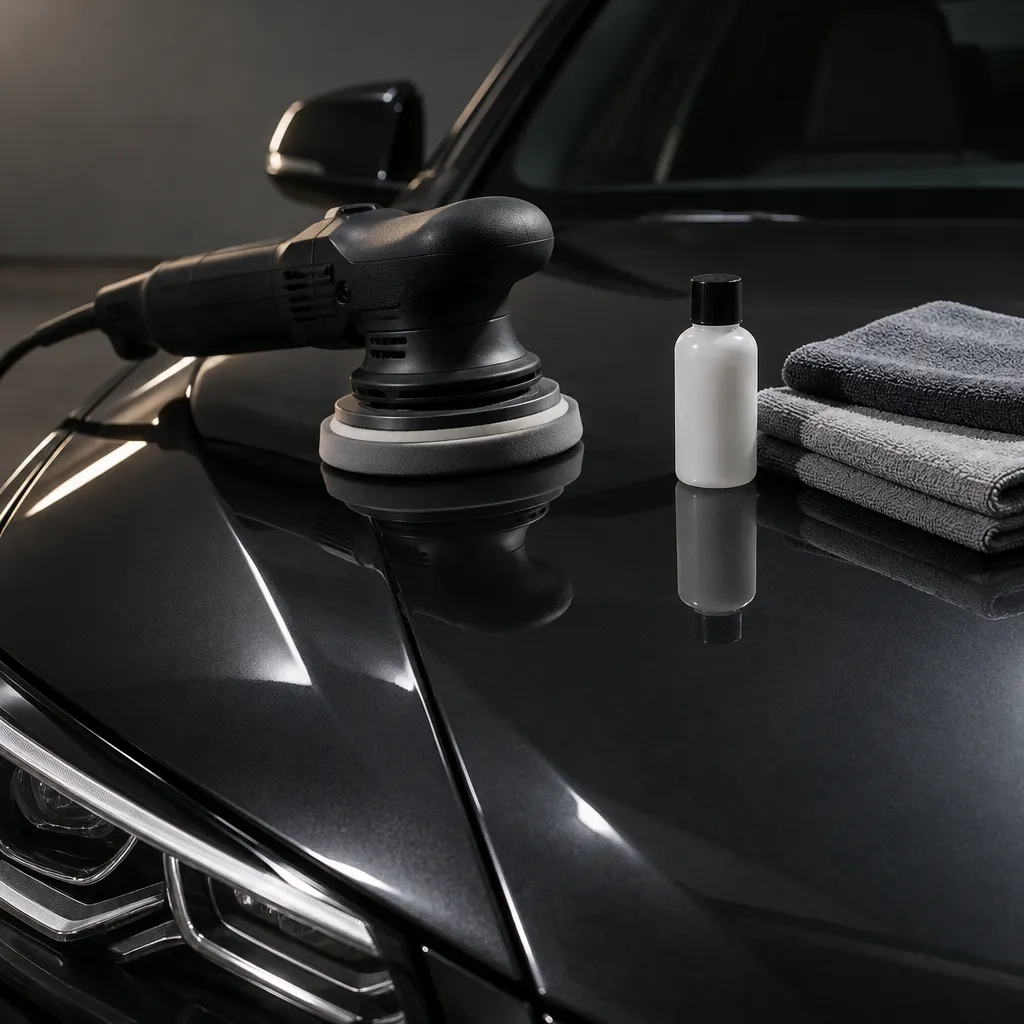
A coating bonds to the paint surface, so anything underneath gets sealed in. Swirls, oxidation, and water spots stay visible under a coating and simply look glossier. That is why the correction is part of the coating package rather than an optional extra.
Comparing the Three Protection Options
| Option | Best For | Trade-offs |
|---|---|---|
| 3-month synthetic paint sealant | Owners who wash regularly and want a hydrophobic layer between major details | Needs reapplication on a schedule, and it does not hold up to heavy wear the way a coating does |
| Carnauba wax | Owners who enjoy hand application and a warm, deep gloss | Shorter-lived protection that needs frequent reapplication, and it only performs well on a corrected surface |
| Ceramic coating with 5 to 8 year limited coverage | Owners who drive daily, park outdoors, and want easier washing through salt season | Higher upfront cost, and it requires proper prep and a 2-step correction before application |
A sealant suits a performance sedan you wash every couple of weeks and want protected between major details. A ceramic coating makes more sense for a daily driver that sits outside through Illinois winters. It rewards owners who keep up with regular washing.
Maintenance Between Visits
Between professional details, use a two-bucket wash with a pH-balanced shampoo and a clean microfiber mitt for each panel group. Dry with a dedicated towel, not the one you used on the wheels. Keep the car out of automatic washes when you can, and check the lower panels after every storm.
Pro tip: Carry a separate wheel brush and bucket for brake dust days. Keeping wheel tools away from paint tools is the cheapest protection a performance car can get.
What to Expect When You Book in Glendale Heights
Our studio is located at 2017 Bloomingdale Rd, Glendale Heights, IL 60139, and we work by appointment Monday through Saturday. Submitting a booking request does not require payment. We review each request and contact you within one business day to confirm the appointment and finalize pricing.
Preparing Your Car Before the Appointment
Bring the car in as clean as you can get it at home, but avoid dish soap and do not run it through a tunnel wash right before your visit. Tell us about any known issues, such as a rock chip, a suspected respray, or a brake noise. Those details shape the paint thickness check and the correction plan.
If you are considering a correction, review our paint correction service in Glendale Heights before you book so you know what the correction stages involve.
Serving the Chicago Suburbs
We serve Glendale Heights, Carol Stream, Bloomingdale, Villa Park, Wheaton, Lombard, Addison, Roselle, Glen Ellyn, and Hanover Park. If you are unsure whether your location is covered, call (331) 231-0176 or email support@hersheysdetailing.com before you drive in. You can also start from our booking page.
Frequently Asked Questions
Can I take a BMW M or AMG sedan through an automatic car wash in Illinois?
You can in an emergency, but automatic washes carry grit from every car that went through before yours, and friction brushes leave fine swirls on dark paint. Between professional details, a two-bucket hand wash with a pH-balanced shampoo is the safer routine.
Is a 1-step correction enough for a performance sedan?
It can be, if the paint thickness reading is healthy and the defects are light swirls or oxidation. A 1-step paint correction typically takes 4 to 6 hours. Deeper defects usually call for a 2-step paint correction, which is a full-day service.
How much does ceramic coating cost for a BMW M or Mercedes-AMG?
Our ceramic coating packages start at $999 for a 5-year coating and $1,099 for an 8-year coating, and both include a full 2-step paint correction at no extra charge. Final pricing depends on vehicle size and paint condition.
Does ceramic coating protect against road salt?
A coating does not make the paint immune to road salt. It makes contamination easier to rinse and remove, but salt still needs to be washed off after winter driving. Rinsing the lower panels after salt events is still necessary.
Do I have to pay when I submit a booking request?
No payment is collected when you submit a booking request. We review the request and contact you within one business day to confirm the appointment and finalize pricing.
Which performance sedan do you drive in the Chicago suburbs, and what detailing problem keeps coming back on it?
References
- Colorado BMW specialist guide to protecting paint and interior surfaces
- Ask a Pro overview of the top five BMW care tips
- Mercedes-AMG official homepage for the current performance model lineup