If you have been thinking about getting a paint correction or ceramic coating done before winter hits the Chicago suburbs, you are already running behind. Every October, the calendar at serious detailing shops in the Illinois suburbs fills up weeks in advance, and the surge that starts just before Black Friday is the sharpest of the year. Luxury vehicle owners who wait until Thanksgiving week to book a car detailing appointment in Illinois regularly find themselves turned away until January, which means their paint spends all winter unprotected against road salt, calcium chloride, and freeze-thaw cycles. If that describes your situation, this article is for you.
Table of Contents
- Why Fall Is the Detailing Rush Season in the Chicago Suburbs
- What Happens to Your Paint Without Fall Protection
- Ceramic Coating Scheduling in Illinois: Why Timing Matters Chemically
- Paint Correction Before Coating: Why Sequence Matters
- How to Actually Secure an Appointment Before the Rush Peaks
- Comparing Your Fall Protection Options
- Frequently Asked Questions
- References
Why Fall Is the Detailing Rush Season in the Chicago Suburbs
The demand surge is not random. Three things happen in September through early November that compress the available booking windows at quality shops serving Carol Stream, Bloomingdale, Wheaton, and Glendale Heights. First, vehicle owners who ignored summer detailing finally see tree sap, bug splatter, and UV damage and decide to act. Second, ceramic coating jobs require mild temperatures and controlled humidity, which narrows the outdoor-application window dramatically as December approaches. Third, people want their cars looking sharp for the holidays, driving a last-minute gift-certificate and appointment wave right around Black Friday.
A premium detailing appointment, especially one that includes multi-stage machine polishing and a nano-ceramic SiO2 coating, is not a two-hour slot. A full paint correction followed by a professional-grade ceramic coating can occupy a shop for one to three days depending on the vehicle's condition. That time intensity is exactly why shops with real quality standards fill up so fast. They cannot squeeze in an extra appointment the way a quick-wash bay can.
Pro tip: If you want a ceramic coating appointment in October or November, contact the shop in August or early September at the latest. Every week you wait in September narrows your realistic window by roughly the same amount.
What Happens to Your Paint Without Fall Protection
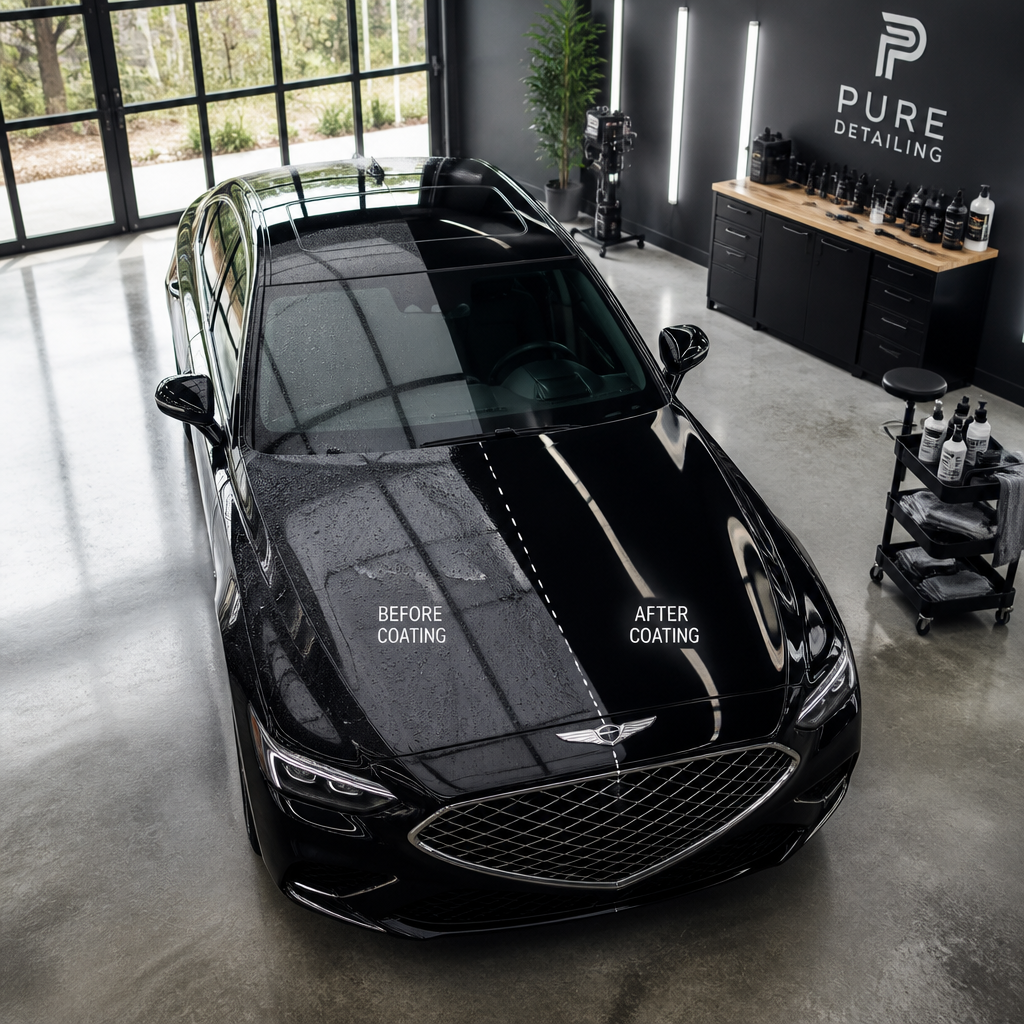
Illinois winters are hard on paint in ways that are not immediately visible. Road crews in DuPage County and across the Chicago suburbs apply road salt and calcium chloride aggressively from November onward. Those compounds do not just sit on the surface. They work into any existing scratch, chip, or thin spot and begin the oxidation process from the inside out.
By spring, a car that entered winter with uncorrected paint and no protective coating often shows widespread swirl marks, micro-oxidation around panel edges, and in worse cases, clear-coat delamination that no amount of polishing can fully reverse. The damage is not inevitable, but it is predictable, and it is the direct consequence of skipping fall protection.
Fall is the last opportunity to correct paint defects on your terms, before the abrasive grind of a Chicago-area winter makes those decisions for you.
The Illinois-Specific Problem With Road Salt
Road salt and calcium chloride create a corrosive film that bonds to paint surfaces, especially where the clear coat has already been weakened by summer UV exposure. A properly applied ceramic coating creates a hydrophobic molecular barrier that prevents salt from bonding directly to the paint. Without that barrier, each winter wash is essentially a race against active corrosion.
Vehicles that sit outside overnight in suburban Illinois are also exposed to repeated freeze-thaw cycles. Water that has worked into a paint chip freezes, expands, and widens the chip each night. A paint correction appointment in October catches those chips before winter multiplies them.
Ceramic Coating Scheduling in Illinois: Why Timing Matters Chemically
This is where most vehicle owners miss the real urgency. Ceramic coating scheduling in Illinois is not just a customer-demand problem. It is a chemistry problem. Professional nano-ceramic SiO2 coatings require controlled temperature and humidity conditions during application and the initial cure window.
The general application window for most professional-grade coatings runs between roughly 60 and 80 degrees Fahrenheit, with relative humidity below 50 percent. In the Chicago suburbs, that window narrows sharply after mid-October. By November, outdoor application becomes unreliable, and even indoor bays need to be properly heated and temperature-controlled to hit those parameters consistently.
What Happens When Coatings Are Applied Outside the Optimal Window
Below the minimum temperature threshold, ceramic coatings cure more slowly and incompletely. The coating can develop high spots, haze, and bonding failures that are invisible at application but become apparent as the first winter hits. A coating applied correctly in a controlled environment in October, with a proper 5 to 14-day initial cure period before the car faces road salt, performs dramatically better over its rated lifespan than one rushed in during a cold snap.
At Hersheys Detailing, the heated, climate-controlled work environment means coatings can be applied correctly even as outdoor temperatures drop. But that controlled capacity is finite, and it books up well before the holidays.
Pro tip: Ask any detailer you are considering whether they have a climate-controlled indoor bay. If the answer is no, or vague, a late-fall ceramic coating appointment with that shop carries real chemical risk regardless of the price offered.

Paint Correction Before Coating: Why Sequence Matters
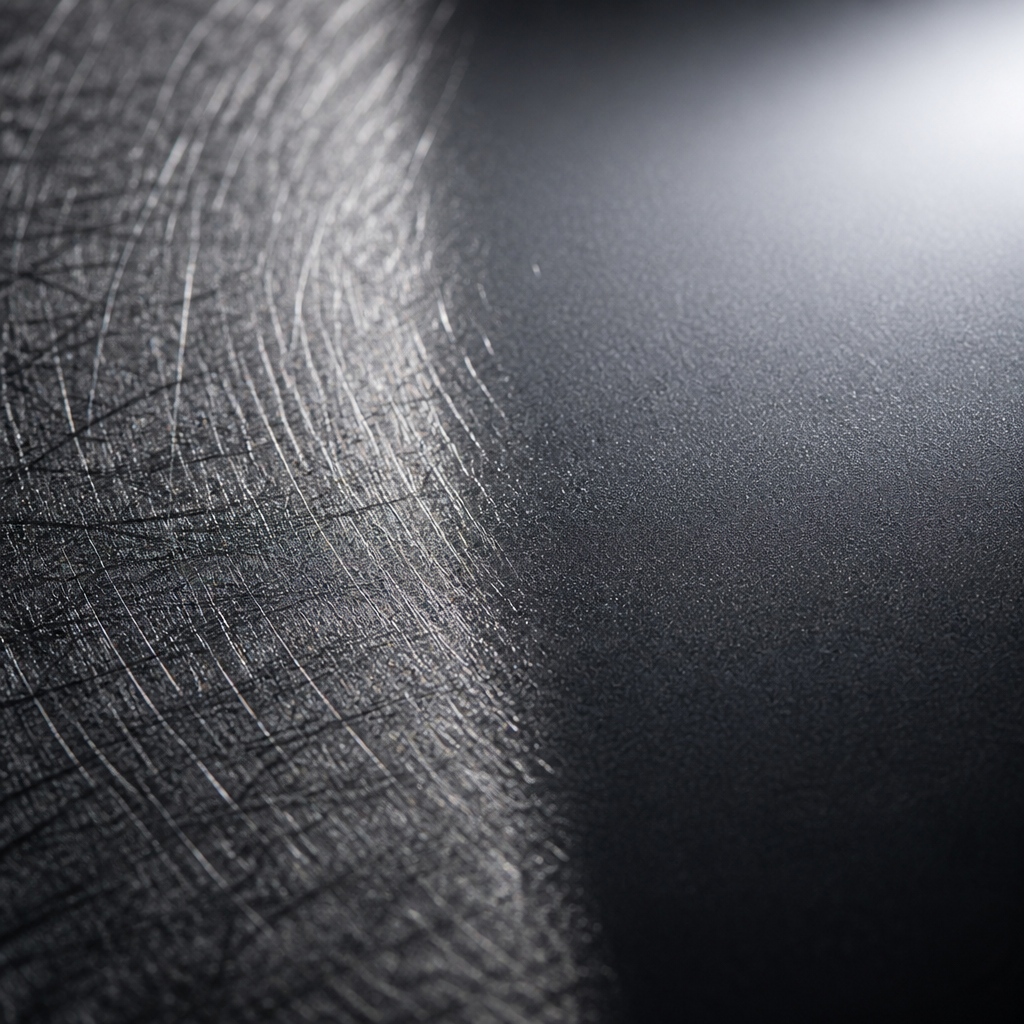
One of the most common and costly mistakes vehicle owners make is scheduling a ceramic coating without first addressing the paint's condition. A coating bonds to whatever surface is beneath it. Swirl marks, water spots, oxidation, and buffer trails do not disappear under a ceramic coating. They become permanent. You are essentially sealing in the defects under a layer that is rated to last five to eight years.
A proper pre-coat sequence for a vehicle that has been through even one Illinois winter looks like this: a thorough decontamination wash, iron fallout removal, clay bar or chemical decontamination, multi-stage machine polishing to correct paint defects, a final inspection under proper lighting, and then coating application. That is not a single afternoon. It is the reason a paint correction appointment in Glendale Heights needs to be booked well ahead of your target date, not the week before.
What Multi-Stage Machine Polishing Actually Corrects
A single-stage polish removes light surface contamination but does not level the clear coat enough to eliminate deep swirls, marring from automated car washes, or oxidation from UV exposure. Multi-stage polishing, using progressively finer compounds and pads, cuts down to the actual defect level and then refines the surface back to a high-gloss finish. The difference under direct light is not subtle. It is the difference between a car that looks clean and a car that looks new.
At Hersheys Detailing, multi-stage machine polishing is the standard before any ceramic coating application. Not because it adds to the invoice, but because a coating applied over uncorrected paint is a waste of the coating itself.
How to Actually Secure an Appointment Before the Rush Peaks
The practical answer to how to book auto detailing in the fall Chicago suburbs before slots disappear is to treat it like a dinner reservation at a popular restaurant during the holidays, except the consequences of missing out are measured in months of unprotected paint, not a missed meal.
Contact the shop directly rather than assuming an online form will hold a slot. Describe what you want specifically: exterior detail only, full decontamination plus paint correction, ceramic coating, or a full package. Shops prioritize inquiries from customers who clearly know what they want because those jobs can be scheduled without back-and-forth.
What to Ask When Booking a Fall Detailing Appointment
Ask whether the shop performs paint correction and ceramic coating as separate, sequential appointments or as a combined process. Ask what the current lead time is for a coating job. Ask whether the shop has indoor, climate-controlled space. These questions tell you immediately whether the shop operates at a professional level or is running a volume operation.
For vehicle owners in Carol Stream, Bloomingdale, Wheaton, and surrounding DuPage County communities, Hersheys Detailing in Glendale Heights is within a short drive and has served over 500 vehicles across the Chicago suburbs over seven years of operation. The fall calendar fills with returning clients and referrals first. New bookings for October and November slots open on a first-contact basis.
Comparing Your Fall Protection Options
Not every vehicle or budget calls for a full paint correction plus ceramic coating. But every vehicle that will face an Illinois winter benefits from some level of professional fall preparation. The table below compares the three most realistic options for suburban Chicago vehicle owners heading into the colder months.
| Protection Approach | What It Covers | Best For |
|---|---|---|
| Full Paint Correction + Nano-Ceramic SiO2 Coating | Removes all paint defects, applies a molecular barrier with 5-8 year warranty against road salt, UV, and contaminants. Maximum protection for multiple winters. | Luxury vehicles, new or nearly new vehicles, owners who want a multi-year set-and-maintain solution |
| Exterior Decontamination + Professional Sealant | Removes iron fallout, tar, and embedded contamination. Applies a synthetic paint sealant for one season of protection. No permanent defect correction. | Vehicles in good paint condition needing a one-season refresh before committing to ceramic coating next year |
| Full Interior + Exterior Detail Only | Deep cleans interior surfaces, treats leather or fabric, cleans and dresses exterior trim, glass, and paint. No long-term paint protection layer. | Vehicles heading into covered or garage storage for winter, or owners focusing on cabin condition before holiday travel |
Frequently Asked Questions
When should I book a car detailing appointment in Illinois before winter?
The ideal window is September through mid-October. Quality shops in the Chicago suburbs fill their October and November slots fast, and ceramic coating applications become chemically riskier as temperatures drop after mid-October. Booking in late summer for a fall appointment is not excessive. It is practical.
Can a ceramic coating be applied in November or December in Illinois?
It depends entirely on the facility. Outdoors or in an unheated garage, November temperatures in the Chicago suburbs are already below the reliable application threshold for most professional coatings. In a properly heated, climate-controlled indoor bay, a skilled detailer can apply coatings correctly through late fall. Always confirm the shop's setup before scheduling a late-season coating job.
Do I need paint correction before a ceramic coating?
Yes, in nearly every case. Ceramic coatings are not a corrective product. They seal and protect whatever surface they bond to. If your paint has swirl marks, oxidation, or water spots, those defects will be locked in permanently under the coating. A proper multi-stage machine polish before coating is not optional for any vehicle that has been driven and washed more than a handful of times.
Why do detailing shops in the Chicago suburbs book up before Black Friday?
Three overlapping demand sources hit at once. Owners who want protection applied before the first serious snow try to schedule October or November appointments. People shopping for gift certificates or holiday-timed bookings create a late-November surge. And the narrowing weather window means shops with climate-controlled space become the only realistic option for coating work, concentrating demand at the best facilities. The result is that October fills up first, then early November, typically well before Black Friday week.
What services should I prioritize if I can only book one fall appointment?
If your vehicle has visible paint defects and has never had a ceramic coating, prioritize a paint correction followed immediately by ceramic coating. That sequence gives you the most durable protection heading into winter. If your paint is already in good shape or already coated, a decontamination detail and inspection is the right move to confirm the existing protection layer is intact before road salt season begins.
Is a fall ceramic coating worth it for a leased vehicle?
Typically yes, for a different reason. Ceramic coatings make the car easier to keep clean throughout the lease, reduce the risk of paint damage that triggers lease-end charges, and maintain the vehicle's condition for return inspection. A coating applied to a leased luxury vehicle in fall is often offset by the avoidance of even one paint-related lease-end fee.
Does Hersheys Detailing offer maintenance programs after a ceramic coating?
Yes. A ceramic coating performs best with correct maintenance washes that do not strip or abrade the coating layer. Hersheys Detailing offers maintenance programs specifically designed to keep the coating performing at its rated level throughout its warranty period, which runs five to eight years depending on the product applied.
Have you run into trouble booking a fall detailing appointment in the Chicago suburbs? Share what you experienced and what you wish you had known sooner.
References
- Ceramic coating application guidance for fall and cold-weather conditions, including temperature and humidity requirements
- Complete guide to ceramic coating application temperature ranges and cold-weather cure procedures
- Seasonal suitability for ceramic coating application and pre-coat preparation steps
- How road salt damages vehicle paint and how protective coatings defend against corrosion
- Seasonal detailing priorities and why fall preparation sets up vehicles for winter protection