You buy an air freshener at the gas station, clip it to your vent, and for about three days your car smells like a pine forest. Then the smell is back, and now it is fighting the pine for dominance. That is not car odor removal - that is odor masking, and it is the single most common mistake Illinois vehicle owners make when dealing with a persistent interior smell. At Hersheys Detailing in Glendale Heights, we see it constantly: luxury vehicles from Carol Stream, Bloomingdale, and Wheaton come in layered with four or five different fragrance products stacked on top of a smoke, pet, or mildew odor that was never actually treated. This article explains why masking always fails, how real professional odor elimination works at the molecular level, and why the method matters enormously if you care about your car's interior and your own air quality.
Table of Contents
- Quick Takeaways
- What Odor Masking Actually Does to Your Car Interior
- The Science Behind Real Odor Elimination
- Common Odor Sources in Vehicle Interiors and Why They Are Stubborn
- Professional Odor Elimination Methods Compared
- Why DIY Products Almost Always Fall Short
- What Illinois Vehicle Owners Need to Know About Interior Odors
- Frequently Asked Questions
- References
Quick Takeaways
| Key Insight | Explanation |
|---|---|
| Masking never solves the problem | Air fresheners and sprays add fragrance on top of odor molecules. The original smell returns the moment the fragrance fades, and the two scents often combine into something worse. |
| Odors are molecules, not air | Volatile organic compounds (VOCs) from bacteria, mold, smoke, and food residue embed in carpet, foam, and upholstery fibers. You have to address those molecules directly, not the air above them. |
| Enzyme cleaners digest organic odors | For pet accidents, spilled milk, and food residues, enzyme-based treatments break odor-causing proteins and fats down into water and carbon dioxide - no smell remains because the source molecule no longer exists. |
| Ozone treatment is powerful but requires expertise | Ozone (O₃) oxidizes and destroys odor molecules chemically, penetrating deep into fabric and foam. It must be applied correctly: ozone damages rubber seals and electronics if misused, and requires full vehicle evacuation during treatment. |
| The AC evaporator coil is often the hidden culprit | Mold and bacteria grow on AC evaporator coils and spread odors every time you run the fan. Air fresheners cannot reach this area. Only targeted antimicrobial treatment does. |
| Smoke odor requires a two-step approach | Nicotine residue coats every surface and must be physically removed by deep cleaning before any neutralization treatment works. Ozone alone on a smoke-contaminated interior without prior cleaning delivers temporary results at best. |
| pH-based neutralization handles chemical odors | Some odors are acidic, others alkaline. Professional neutralizers shift the pH of the odor compound and break the chemical bonds that make it detectable. This is not something an off-the-shelf product does reliably. |
What Odor Masking Actually Does to Your Car Interior
Odor masking works by covering an unpleasant smell with a stronger, more favorable one. The product adds a fragrance layer to the air. It does not touch the bacteria colony growing in your seat foam, the nicotine film on your headliner, or the mold in your carpet padding. When the fragrance dissipates, the original odor is still there, unchanged, waiting.
The problem compounds quickly. Many drivers layer product after product, and the interior ends up carrying a complex mix of synthetic fragrance and the original odor. The U.S. Environmental Protection Agency has identified many synthetic fragrances as contributors to elevated indoor VOC levels, which can trigger headaches, respiratory irritation, and fatigue during long drives. You are not fixing the problem - you are adding to it.
A practical way to identify a masking product versus a true eliminator: check the active ingredient list. If the label leads with "fragrance," "parfum," or "aroma compound" and does not list a specific neutralizing agent - such as activated charcoal, sodium bicarbonate, or an enzyme complex - it is a masking product, regardless of how its marketing copy is written. Most retail "odor eliminating" air fresheners fall into this category.
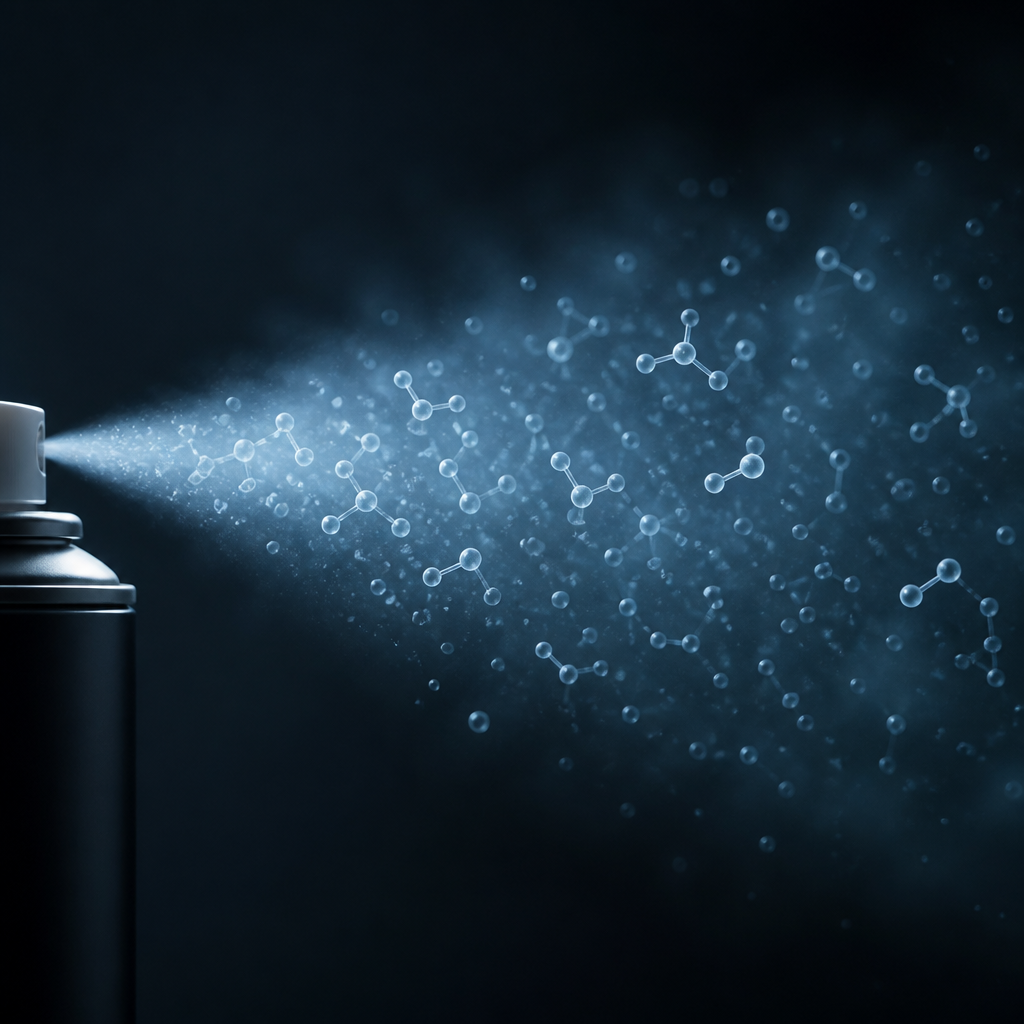
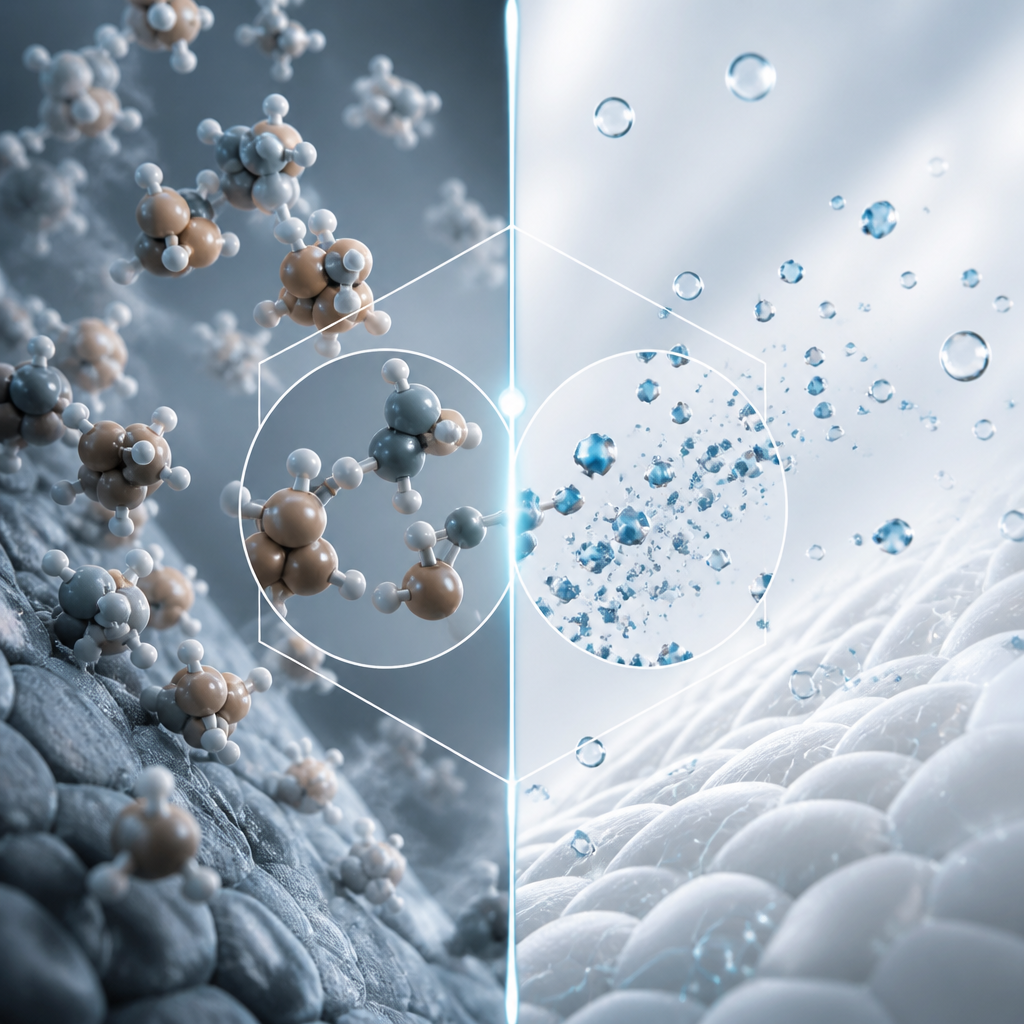
The biggest mistake people make is buying a fragrance when they have an odor problem. A car air freshener that masks bad smells is a short-term fix - the smell returns when the fragrance fades.
The Science Behind Real Odor Elimination
Real odor elimination does not add anything to the air that smells better. It changes or destroys the molecule that is causing the smell. There are several distinct mechanisms by which professional-grade treatments accomplish this, and understanding them explains why professional interior odor neutralization produces results that store-bought products cannot replicate.
Oxidation: Breaking the Odor Molecule Apart
Ozone (O₃) is a molecule made of three oxygen atoms. When introduced into a sealed vehicle interior, it reacts with odor-causing particles - smoke residue, mold spores, bacteria - through a process called oxidation. The ozone breaks the chemical structure of those particles, rendering them odorless. After the reaction, the ozone molecule itself reverts to ordinary oxygen (O₂), leaving no chemical residue behind. The smell does not go somewhere else. It ceases to exist in its odor-producing form.
This is why ozone treatment reaches places physical cleaning cannot: deep inside seat foam, behind door panels, inside HVAC ducts. The gas diffuses through the entire cabin space and reacts with odor sources wherever they are embedded.
Enzymatic Digestion: Eliminating Organic Odor Sources
For organic odors from pet accidents, food spills, or mildew, enzyme-based treatments are the precision instrument. These products contain enzymes or living microbes that digest the proteins, fats, and starches producing the smell. The biological material is broken down into smaller, non-odorous molecules - effectively water and carbon dioxide. Once the source material is consumed, the odor has no physical basis to return from.
Pro tip: Enzyme treatments require dwell time. Applying them and immediately extracting eliminates the benefit. A professional technician allows the product to saturate the affected area and work for the time the product requires - often 15 to 30 minutes or longer - before extraction. Rushing this step is a common reason DIY enzyme treatments fail.
Adsorption and pH Neutralization
Activated charcoal and similar porous materials trap odor molecules physically through adsorption - the molecule bonds to the surface of the material and is held there, removed from the air. This works well for ongoing VOC management but is not sufficient for heavy contamination.
pH-based neutralization addresses the fact that different odors have different chemical profiles. Smoke and body odor tend toward acidity; spoiled food residues can be alkaline. Professional neutralizing agents are formulated to shift the pH of the odor compound, breaking the chemical bonds that make the molecule volatile and detectable. This is a chemistry problem, and it requires chemistry-appropriate products - not fragrance.
Common Odor Sources in Vehicle Interiors and Why They Are Stubborn
Most persistent car odors fall into a predictable set of categories, and each one requires a different treatment approach. Knowing the source is not optional - it determines which elimination method will actually work.
Cigarette and Tobacco Smoke
Smoke odor is among the most difficult to eliminate because nicotine and tar residue physically coat every surface in the interior: headliner fabric, seat foam, door panels, and every piece of trim. Ozone treatment addresses the volatile smoke molecules in the air and on surfaces, but it cannot substitute for the physical removal of nicotine residue through thorough surface cleaning first. A vehicle treated with ozone without prior deep cleaning will see the odor return as the residue continues to off-gas. The correct sequence is deep cleaning of all surfaces, then neutralization treatment.
Pet Odors and Accidents
Pet urine soaks through fabric, through carpet padding, and often reaches the subfloor material beneath. The odor-producing compounds are uric acid crystals and bacteria. Neither an air freshener nor a standard carpet cleaner reaches the depth of contamination. Enzyme treatment must be applied in sufficient volume to penetrate all affected layers, allowed to dwell, and then fully extracted. Incomplete extraction leaves enzyme residue that can itself become an odor source as it dries.
Mold, Mildew, and AC Evaporator Contamination
Mold and mildew in a vehicle interior are usually traceable to one of two sources: a water leak that soaked carpet or insulation, or microbial growth on the AC evaporator coil. The evaporator coil issue is extremely common and almost always overlooked by DIY attempts. Every time the climate system runs, air passes over the contaminated coil and distributes the odor throughout the cabin. No amount of fragrance product treats this. An antimicrobial treatment applied directly to the evaporator coil - usually through the fresh air intake with the fan running - is the only effective approach.
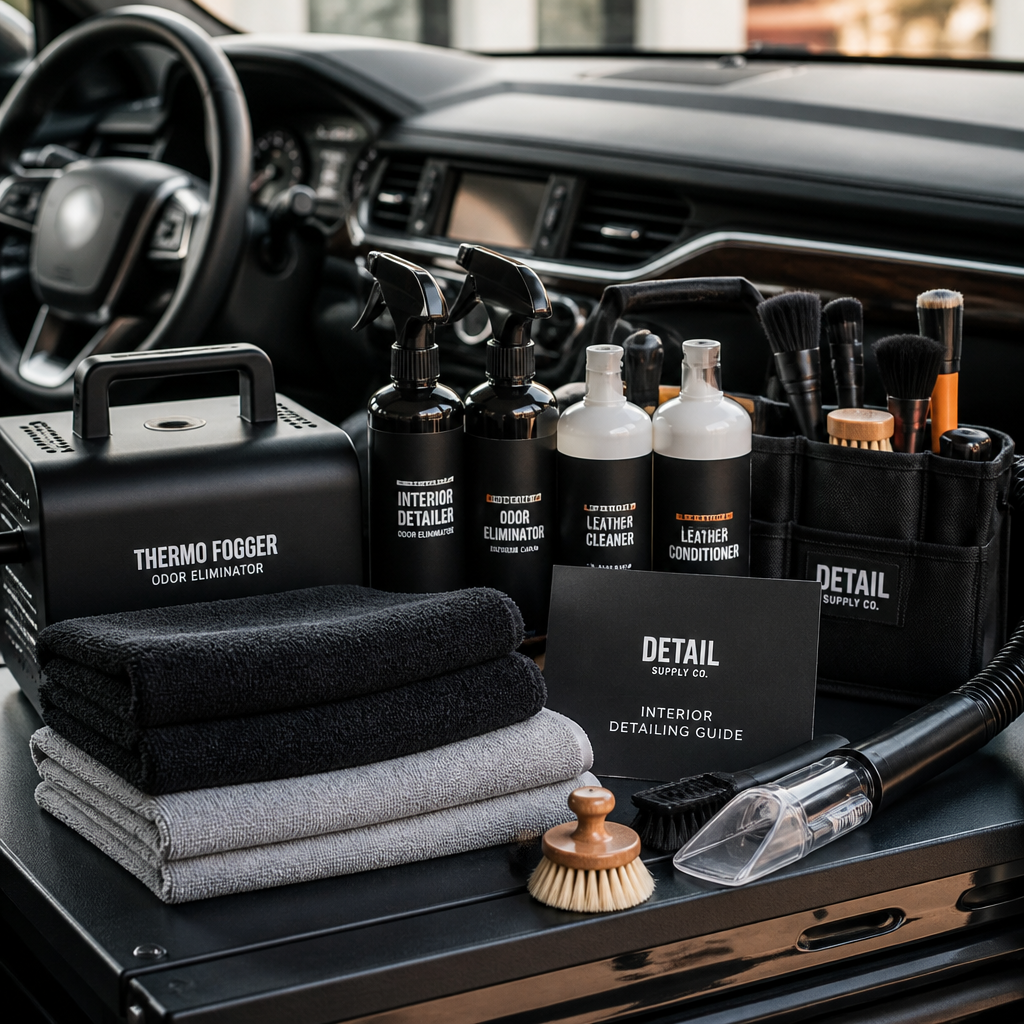
Pro tip: If your car smells musty only when the AC runs, the evaporator coil is almost certainly the source. This is a targeted fix, not a whole-interior treatment. Identifying the actual source before choosing a treatment method saves both time and money.
Food and Beverage Residue
Coffee, fast food grease, and spilled drinks soak into upholstery and carpet fibers and feed bacterial growth over time. The smell often evolves and intensifies because it is a biological process. Steam cleaning combined with enzyme treatment is the effective combination here - steam opens fiber structure and kills surface bacteria while enzymes break down the organic residue that is the actual odor source.
Professional Odor Elimination Methods Compared
| Method | How It Works | Best For / Limitations |
|---|---|---|
| Ozone Treatment | O₃ gas oxidizes and chemically destroys odor molecules throughout the sealed cabin, then converts back to O₂ with no residue | Best for smoke, mold, and widespread odors. Requires full vehicle evacuation during treatment. Can damage rubber seals and electronics if overexposed or misapplied. Deep cleaning must precede it for smoke odors. |
| Enzyme-Based Treatment | Enzymes and microbial cultures digest organic odor sources (proteins, fats, starches) at the molecular level, converting them to water and CO₂ | Best for pet accidents, food spills, and biological contamination. Requires adequate dwell time and full extraction. Does not address non-organic odors like chemical off-gassing. |
| Odor Masking (Air Fresheners / Sprays) | Adds fragrance to the air to temporarily override the perception of unpleasant odor | Appropriate only for mild, non-persistent smells in an already-clean vehicle. Does not eliminate any odor molecule. Layering products raises indoor VOC levels and provides no lasting relief from genuine odor problems. |
Why DIY Products Almost Always Fall Short
The retail market for car odor products is enormous, and the marketing language on most packaging is designed to suggest elimination. In practice, most consumer products are masking products, and the few genuine enzyme or neutralizing formulations available to consumers are lower concentration than professional-grade equivalents and are often applied incorrectly because the instructions minimize dwell time.
There is also the diagnosis problem. A professional detailer identifies the odor source before choosing a treatment. Most vehicle owners guess. Someone spending money on enzyme treatment for what is actually an AC evaporator mold problem is wasting both product and effort. Someone using an ozone bomb without first deep-cleaning a smoke-saturated interior is producing a temporary result that will reverse within weeks.
The other limitation is equipment. Effective extraction of enzyme treatments from carpet and upholstery requires professional hot-water extraction equipment that operates at temperatures and pressures that consumer carpet cleaners do not reach. Steam cleaning equipment that sanitizes rather than just dampens fabric is similarly beyond what most DIY setups offer.
This is not an argument against ever cleaning your own car. Regular maintenance cleaning - vacuuming, wiping surfaces, removing food waste promptly - genuinely prevents odor buildup. But once a persistent odor is embedded in the material of the interior, professional-grade tools and products are what actually resolves it.
What Illinois Vehicle Owners Need to Know About Interior Odors
The Chicago suburban climate creates specific conditions that accelerate interior odor development. Illinois winters mean vehicles run with the windows closed for months, concentrating any interior odor source without ventilation. Seasonal temperature swings between cold winters and hot, humid summers cause moisture to cycle in and out of interior materials - carpet padding, seat foam, and headliner backing all absorb and release humidity. This cycling feeds mold and mildew growth in ways that a drier climate does not produce at the same rate.
Road salt and tracked-in moisture from Illinois winters also introduce additional contamination into carpet fibers that, over one or two seasons, contributes to that stale-car smell many Illinois vehicle owners accept as normal. It is not normal, and it is not permanent with the right treatment.
At Hersheys Detailing, our interior detailing service for vehicles from Glendale Heights, Carol Stream, Bloomingdale, and Wheaton addresses odor elimination as part of a systematic process: identifying the source, selecting the appropriate elimination method, applying professional-grade treatments with correct dwell times, fully extracting residue, and treating the HVAC system where needed. The result is an interior that does not merely smell like a product - it smells clean because the source of the odor no longer exists in the vehicle.
If you are in the Chicago suburbs and dealing with a persistent vehicle odor that retail products have not resolved, the answer is not a stronger air freshener. It is professional interior odor neutralization - the kind that targets what is actually causing the problem. Learn more about our interior detailing services or contact us directly to discuss what your vehicle needs.
Frequently Asked Questions
What is the difference between odor elimination and odor masking in car detailing?
Odor masking adds a fragrance to override the perception of an unpleasant smell without addressing the molecule causing it. Odor elimination uses chemical reactions - oxidation, enzyme digestion, or pH neutralization - to destroy or permanently alter the odor-producing compound. Only elimination produces lasting results because it removes the source rather than covering it.
Can ozone treatment damage my car interior?
Ozone is a powerful oxidizer, and when misapplied it can degrade rubber seals, damage certain electronics, and accelerate wear on sensitive interior materials. Properly administered by a professional - with correct exposure time, the vehicle fully sealed and evacuated, and sensitive components protected - it is an effective tool. This is one reason ozone treatment is best left to trained detailers rather than consumer ozone bomb products.
Why does my car still smell after I cleaned it?
Cleaning removes surface contamination. Persistent odors are embedded in the material itself - inside carpet padding, deep in seat foam, on the AC evaporator coil, or in the headliner backing. Surface cleaning does not reach these areas. Professional extraction equipment, enzyme treatments with sufficient dwell time, and HVAC system treatment are required to address embedded odor sources.
How long does professional odor elimination last?
When the odor source is fully addressed, professional elimination results are permanent for that source. The smell does not return because the molecule causing it has been destroyed or removed. If a new odor source develops - a new spill, a new water leak - it introduces a new problem, not a return of the old one. Masking products, by contrast, last only as long as the fragrance does, typically days to a few weeks.
Does car odor removal in Illinois cost more than other detailing services?
Odor elimination is typically priced as an add-on to interior detailing or as a standalone service. The cost varies depending on the severity of contamination, the treatment method required, and the size of the vehicle. For severe smoke or pet odor contamination, the process is more involved and reflects that. What is consistent is that professional elimination costs far less over time than repeated purchases of masking products that provide no resolution.
Is professional interior odor neutralization safe for luxury vehicle interiors?
Yes, when performed by a trained detailer who selects the right method for the materials in the vehicle. Enzyme treatments are gentle on leather, fabric, and alcantara. Ozone treatment requires care around specific materials and electronics but is safe when applied correctly. A professional will assess your specific interior before choosing a treatment approach, which is exactly what you want for a high-value vehicle.
Have you dealt with a persistent car odor that store-bought products failed to fix? Share your experience in the comments - what the smell was, what you tried, and whether a professional treatment finally resolved it.
References
- How professional car odor treatments work at the molecular level: ozone, enzymes, and VOC neutralization explained
- How ozone treatment eliminates car odors through oxidation and why it outperforms masking sprays
- The science of odor neutralization versus masking: how eliminating odors at the source works
- Ozone treatment for car interiors: effectiveness, safety risks, and professional alternatives
- How to identify the right car odor removal technology for different odor types and interior materials