Most Illinois drivers think of road salt as a winter problem for the underside of a car. On a convertible or a vehicle with a vinyl roof, though, the same salt, brine, and de-icer residue behaves in very different ways depending on whether the surface is fabric, vinyl, or painted steel. A soft top holds grime in its weave, a vinyl roof traps heat and cleaner chemistry, and a hardtop carries contamination in its clear coat and trim. Understanding those differences is the foundation of real car surface protection in Illinois, and it explains why a single wash routine often fails the owners who need it most.
Table of Contents
- Quick Takeaways
- How Road Salt Brine Behaves on Hardtop Paint
- Soft-Top Fabric and Why Grime Sinks In
- Vinyl Tops and Rear Windows Under Heat and UV
- Hardtop Trim, Seals, and Plastic Surfaces
- Protection Options Compared by Surface
- A Seasonal Care Routine for Chicago Suburb Drivers
- When to Book Professional Detailing
- Frequently Asked Questions
- References
Quick Takeaways
| Key Insight | Explanation |
|---|---|
| Salt brine dries and concentrates in panel gaps | Liquid brine sprayed before storms settles in door jambs, rocker panels, and wheel wells, where rinse-only washing rarely reaches. |
| Fabric soft tops absorb rather than shed | Grime and salt residue sink into the weave, so wiping the surface can push contamination deeper instead of removing it. |
| Ammonia-based cleaners do not belong on vinyl | Harsh products dry out and discolor vinyl. Use a cleaner made for vinyl or fabric and rinse it off completely. |
| Fabric is not paint | Most soft tops need fabric dye, a vinyl color restorer, or a specialty coating. Standard automotive paint can crack and peel as the fabric flexes. |
| Decontaminate hardtop paint before any coating | Bonded road film and salt must be removed with chemical decontamination and clay first, or a ceramic coating seals the contamination in. |
| Set a fixed protection schedule | Weekly washes and a monthly protectant are a practical baseline for a convertible that sees Illinois sun and salt. |
How Road Salt Brine Behaves on Hardtop Paint
Illinois road crews and property managers often apply salt as a liquid brine before a storm, and that brine behaves differently from the crystal salt many drivers picture. It is sprayed thin, dries into a film, and clings to any surface it touches. On a hardtop, that film concentrates in the places that stay damp the longest.
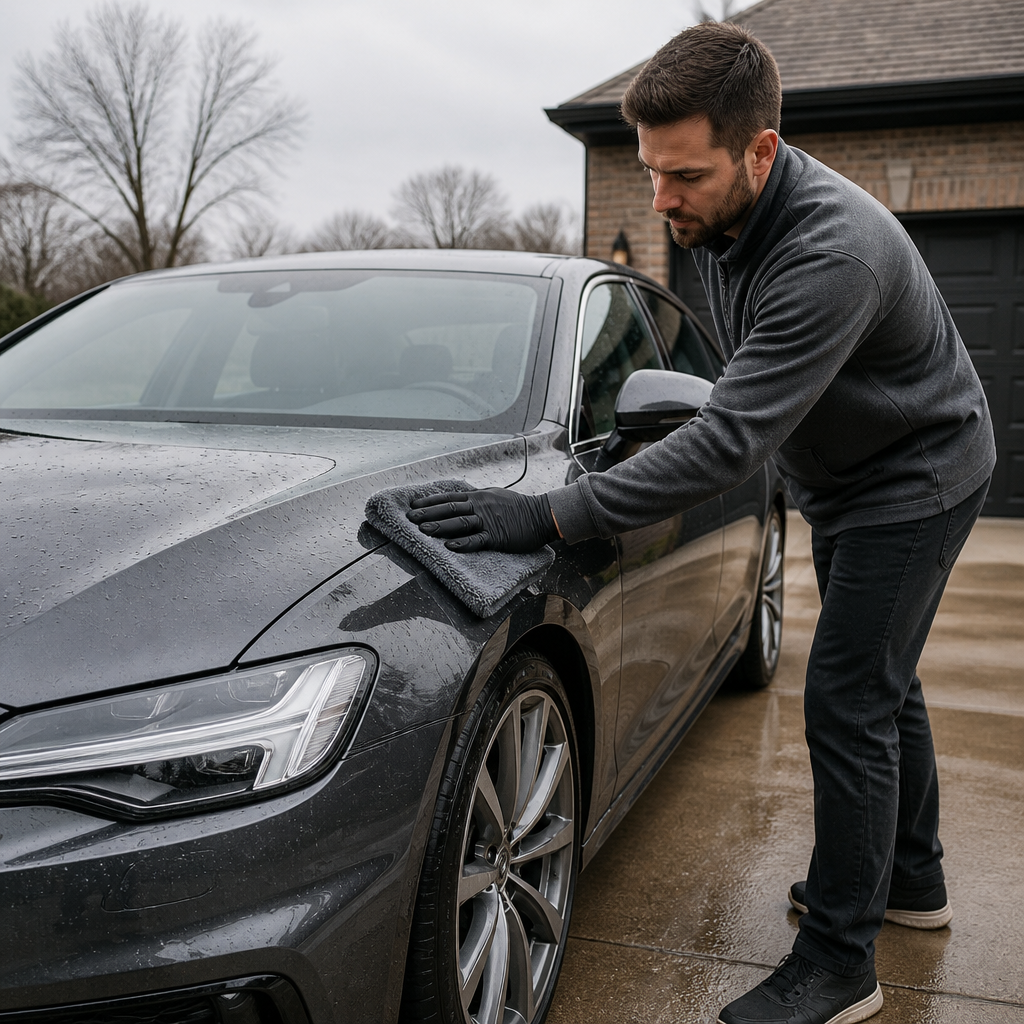
That is why the first step in any hardtop inspection is never the roof. We look at the rocker panels, the lower quarter panels behind the wheels, the door jambs, and the seams around the hood and trunk. Those are the surfaces where brine sits, evaporates, and leaves salt behind again and again over a single winter.
Where Brine Settles on a Hardtop
Door jambs and rocker panels hold moisture because air moves poorly there. A car washed on a cold day can still carry residue in those areas, because the spray never reaches inside the jamb. In practice, we often find white crust in the seams of cars that the owner believes are clean.
Wheel wells deserve the same attention. Brine thrown up by the tires coats the inner fender liners and the back of the wheel face, areas a standard wash rarely reaches. Left alone, that film works into the finish of the lower panels.
Why Topical Contamination Becomes a Paint Problem
A detailed paint defect guide makes a point that matters here. Topical contaminants are usually mild and come off with washing and decontamination. Some are chemically aggressive, though, and if they dwell on the surface for long periods, they can damage the paint and turn into below-surface defects that need machine polishing to remove.
That is the practical reason to decontaminate before any coating. A nano-ceramic SiO₂ coating bonds to a clean, properly prepared clear coat. If road film is still bonded to the paint when the coating goes on, the coating is locking the contamination in rather than protecting the paint beneath it.
Pro tip: After the last salt event of the season, do a targeted rinse of the door jambs, rocker panels, and wheel wells before the car sits. Residue that dries overnight is much harder to remove than the same residue rinsed off the same afternoon.
Soft-Top Fabric and Why Grime Sinks In
A soft top is built from fabric or a laminate of fabric and vinyl, and it does not shed contamination the way paint does. Road grime and salt residue work into the weave, where the fibers hold moisture against the material for hours after a wash. The surface can look clean while the problem sits underneath.
A rinse-only wash often makes this worse. Owners who wipe a fabric top with a dry towel or a dirty wash mitt see a clean outer layer while residue remains in the fibers. Over a season, the fabric darkens at the rear seams and in the folds where the top stacks.
Why Rinse-Only Washing Leaves Residue Behind
A soft top needs a gentle wash with a cleaner made for fabric, applied and then rinsed thoroughly from the top down. Aggressive pressure at close range can fray stitching and lift the water-repellent finish. Patience with the rinse does more for fabric than any scrubbing.
A soft top is only as clean as the residue you can actually rinse out of it.
Why Fabric Is Not Painted
Autotopsdirect's overview of convertible tops notes that most soft tops need fabric dye, vinyl color restorer, or a specialty coating rather than standard paint, and that a dye or coating will not always hide heavy contamination. That is a useful reality check. If a top has heavy salt staining, a color product can only do so much, and the stain has to be removed first.
Our approach is to clean first and decide second. If the fabric still shows staining after a proper wash, the real question is whether a fabric-specific restorer makes sense or whether the top has reached the end of its useful life. Guessing at a color product before cleaning usually wastes money and hides the damage.
Vinyl Tops and Rear Windows Under Heat and UV
Vinyl behaves differently from both fabric and paint. It is a plasticized material, and it depends on its internal plasticizers and its surface protectant to stay flexible. When those dry out, the surface fades, chalks, and cracks along stress points such as the rear window seam.
Suburban Chicago sees hot summer sun followed by cold, salty winters, and that swing between extremes is hard on vinyl. The top may look fine in July and still show stiffness and haze by the time the first hard freeze arrives.
Ammonia and Harsh Alkaline Cleaners on Vinyl
One widely cited convertible care guide is blunt on this point: steer clear of ammonia-based products. They are harsh on vinyl and can dry it out. A household glass cleaner containing ammonia has no place on a vinyl top or a vinyl-wrapped roof, no matter how greasy the road film looks.
Strong degreasers carry the same risk. They can strip what protection the vinyl still has, which leaves the material exposed to the next round of sun and salt.
Protectants That Help and Those That Cause Trouble
A convertible care guide from Cleantools recommends protection against UV rays, grease, oils, and dirt, with weekly washes and a protectant applied about once a month. That schedule is a reasonable baseline for a vinyl roof that sees daily sun. It is far more useful than waiting until the vinyl looks faded.
The protectant choice matters as much as the schedule. Choose a UV-blocking product labeled for vinyl, and avoid heavy, greasy dressings that attract dust and leave a sticky film holding grime. For a vinyl top that gets a lot of sun, we prefer a product that dries to a matte or satin finish over a high-gloss shine.
Hardtop Trim, Seals, and Plastic Surfaces
A hardtop is not just paint. Trim, seals, and plastic cladding make up a large share of the visible surface on many luxury and performance vehicles, and they react to road chemicals differently from clear coat. A car can have flawless paint and still look tired around the glass and the windshield base.
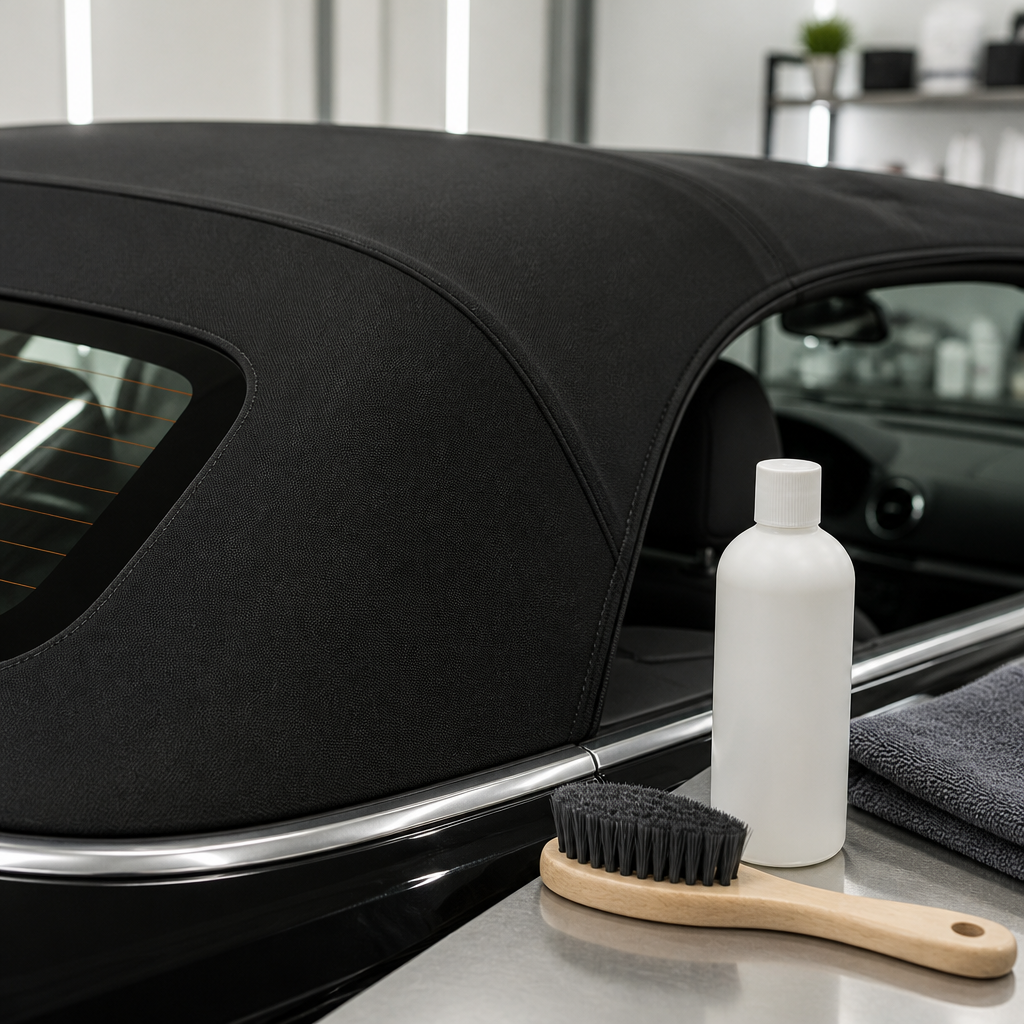
Unpainted black plastic and textured trim oxidize, and road chemicals speed up fading when they are left on the surface. Rubber seals stiffen and crack after repeated cycles of salt, moisture, and freezing. These parts are easy to overlook because they do not look like paint, but they age on the same winter schedule.
Black Plastic Trim and Oxidation
Faded trim is one of the most common complaints we hear from owners who believe their car is well kept. Restoration products can help, but they wear quickly when the surface has not been cleaned properly first. A cleaner made for plastics, followed by a UV-stable protectant, gives the best return.
Rubber Seals and Door Gaps
Seals around the doors and along the roof line take the brunt of salt and freeze-thaw cycles. Keep them clean and conditioned with a product labeled for rubber. Avoid petroleum-based dressings, which can degrade some rubber compounds over time.
Pro tip: Clean door seals and gasket channels with a soft brush before applying any protectant. Dressing over salt residue traps grit against the rubber and speeds up wear.
Protection Options Compared by Surface
No single product protects every surface on a car that has a hardtop, a fabric top, and a vinyl rear window. The right choice depends on what each material is made of and how much salt and sun it takes. A sound decision starts with three questions: what the surface is made of, how much road exposure it gets, and how much maintenance you can realistically keep up.
| Approach | Best Surface Fit | Main Risk If Misused |
|---|---|---|
| Nano-ceramic SiO₂ coating | Hardtop clear coat and painted panels, applied after decontamination | Applied over bonded contamination, it seals the residue in and weakens bonding |
| Fabric-specific protectant or restorer | Soft-top fabric, folds, and stitched seams | Heavy or wrong products can stiffen some fabrics or fail to hide heavy staining |
| Non-greasy vinyl UV protectant (matte or satin) | Vinyl roofs, rear windows, and vinyl trim | Greasy or high-gloss dressings attract dust and leave a film that holds grime |
Ceramic coatings are a strong fit for hardtop paint. Our nano-ceramic SiO₂ coatings carry 5 to 8 year warranties, but coverage depends on the package and on proper preparation and maintenance. A coating does not make the car immune to salt, so the rinse schedule still matters.
The surface that gets the most protection is rarely the one that needs it most. Plan around the material with the least forgiveness.
Fabric and vinyl need a different kind of protection. Their job is to repel moisture, block UV, and make residue easy to lift, not to form a hard shell. Matching the product to the material is what separates a top that ages gracefully from one that needs replacing early.
A Seasonal Care Routine for Chicago Suburb Drivers
Chicago suburb drivers face a yearly cycle that many care guides ignore. Fall leaves stain fabric and trim, winter brings salt and brine, and spring rain carries residue into the places it can hide. Each season calls for a different emphasis.
Late Fall: Prepare Before the First Salt
Before the first treated road day, a hardtop should already have protection in place, and a soft top should be clean and completely dry before storage. Damp fabric kept under a cover can develop mildew, so confirm the top is fully dry before the car sits for the season.
Winter: Rinse Often Without Drying Out the Finish
Winter washing is about frequency and reach. A rinse of the undercarriage and wheel wells after each salt event matters more than a full wash every weekend. Avoid parking in a damp garage that holds moisture against seams and trim.
Spring: Decontaminate and Reset
Spring is the time for a full decontamination, using chemical decontamination and clay to lift embedded salt and road film from hardtop paint. Then restore protection on the trim and seals, and recondition vinyl with a UV protectant. This is also when hidden defects often show up, because the winter film is finally gone.
When to Book Professional Detailing
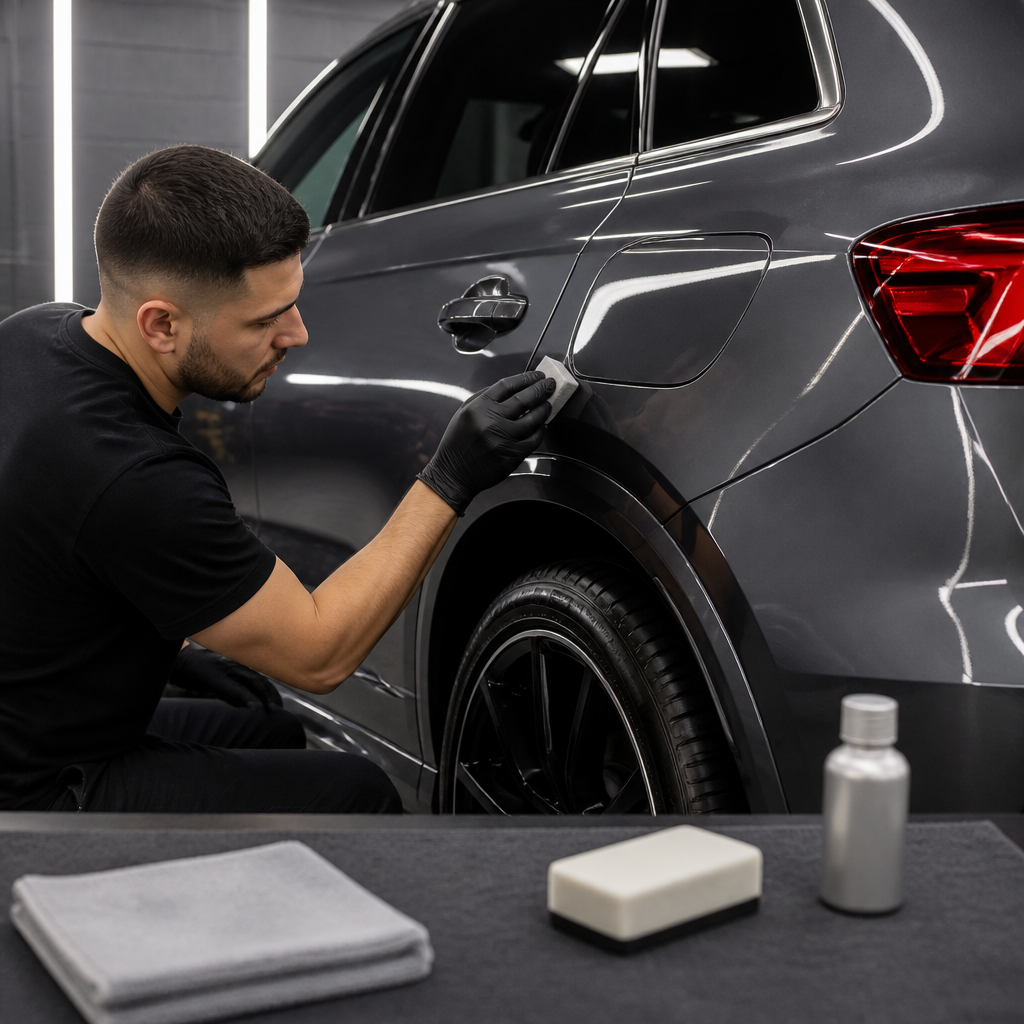
Some problems are beyond what a weekend routine can fix. Knowing when to step up protects both the value of the vehicle and the money you have already spent on it. Waiting too long often turns a maintenance job into a correction job.
Signs Your Protection Has Already Failed
Water that no longer beads on a hardtop, a dull or hazy finish that does not respond to washing, and fabric that darkens in the same spot after every wash are clear signs. So is vinyl that feels tacky or chalky when you run a hand across it.
What to Ask Before Treating a Soft Top or Vinyl Roof
Ask what cleaner and protectant will be used on fabric and vinyl, and whether the process starts with a test area. A competent shop will explain why a particular product suits your material. If the answer is simply that it is the best product on the market, keep looking.
For owners in Glendale Heights, Carol Stream, Bloomingdale, and Wheaton, a professional inspection is most useful before the first salt event and again in spring. At Hersheys Detailing, we assess the hardtop paint, soft-top fabric, and vinyl separately, then recommend a plan for each. You can learn more about our professional ceramic coating and maintenance services on our website.
Pro tip: Photograph your soft top, vinyl roof, and trim each spring under the same light. Comparing photos year to year shows fading and staining early, when it is still inexpensive to correct.
Frequently Asked Questions
Does road salt damage a convertible's fabric top?
It can. Salt and road grime that stay in the weave can stain, stiffen, and encourage mildew over time. Rinse the top thoroughly after salt exposure and let it dry completely before storing the car.
Can I use regular car wash soap on a vinyl roof?
A gentle car soap is generally fine for light cleaning. Avoid ammonia-based products and strong degreasers, and use a cleaner made for vinyl when the road film is heavy.
Should I paint my soft top if the color fades?
Usually not. Most soft tops need fabric dye, a vinyl color restorer, or a specialty coating. Standard paint tends to crack as the fabric flexes.
Can a ceramic coating protect a hardtop from road salt?
A ceramic coating adds a sacrificial layer that makes salt and grime easier to rinse away. It does not make the paint immune, so regular rinsing still matters, and the coating must go on over clean, decontaminated paint.
How often should I wash my car during an Illinois winter?
Rinse the undercarriage and wheel wells after each salt event at a minimum. A full wash every one to two weeks is practical when temperatures let the car dry quickly.
What is the first step for a soft top with salt staining?
Clean it with a fabric-appropriate cleaner, rinse thoroughly, and let it dry fully. Only then decide whether a dye or restorer is needed.
What surface has given you the most trouble this season, your hardtop, your soft top, or your vinyl trim, and what finally worked for you?