Most Illinois drivers who invest in a professional ceramic coating ask the same question six months in: "Is it still working?" The honest answer requires more than a number. Ceramic coating lifespan in Illinois is not just a product specification on a data sheet. It is the result of the coating grade, the prep work underneath it, the maintenance routine that follows, and the specific abuse your vehicle absorbs from Chicago-area roads every single winter. Get those four variables right and a professional-grade nano-ceramic SiO2 coating can protect your paint for five to eight years. Cut corners on any one of them and you are looking at two years at best.
Table of Contents
- Quick Takeaways
- What Ceramic Coating Lifespan Actually Means
- Illinois-Specific Threats to Your Coating
- Coating Grades Compared: Consumer vs. Professional
- How Surface Prep Determines Longevity
- Maintenance That Actually Extends Coating Life
- Ceramic Coating Warranty in the Chicago Suburbs: What to Expect
- Signs Your Coating Is Wearing Down
- Frequently Asked Questions
- References
Quick Takeaways
| Key Insight | Explanation |
|---|---|
| Professional coatings outlast DIY products by years | Consumer spray-on coatings last 6 to 12 months. Professional-grade SiO2 nano-ceramic coatings applied by a certified detailer typically last 3 to 8 years with proper care. |
| Illinois road salt is a real threat, not a marketing scare | Chicago suburbs apply road salt, calcium chloride, and chemical deicers from November through April. Without a fully bonded ceramic barrier, these chemicals penetrate clear coat and accelerate oxidation. |
| Paint correction before coating is non-negotiable | A ceramic coating permanently locks in whatever the paint looks like at application. Skipping multi-stage machine polishing means sealing in swirls, marring, and oxidation under a hard shell. |
| Maintenance routine is the biggest variable you control | Regular pH-neutral washing, a two-bucket method, and periodic SiO2 booster applications can meaningfully extend the active life of any professional coating. |
| Warranty terms vary significantly between brands and installers | Gyeon Q2 Mohs EVO offers up to a 5-year warranty with a certified installer. Gtechniq coatings can carry coverage up to 9 years depending on the product and registered maintenance. |
| Water beading is a functional indicator, not just aesthetics | When water stops sheeting off the surface and starts sitting in flat droplets, the hydrophobic layer is degrading and it is time to inspect or boost the coating. |
| Outdoor parking cuts coating lifespan faster than any other single factor | Vehicles parked outdoors year-round in the Chicago suburbs are exposed to constant UV, acid rain, and freeze-thaw cycles. Garage storage is the single most effective longevity strategy a driver controls. |
What Ceramic Coating Lifespan Actually Means
When a detailing shop gives you a lifespan number, they are telling you how long the coating's functional properties, primarily its hydrophobic repellency, UV resistance, and chemical barrier, remain meaningfully active. A professional ceramic coating does not disappear overnight. It degrades gradually, and the timeline varies widely depending on variables the installer controls and variables you control afterward.
In practice, professional-grade ceramic coatings typically last between 2 and 10 years, with most quality professional applications landing in the 3-to-7-year range under real-world conditions. Consumer-grade spray-on products sold at auto parts stores offer roughly 6 to 12 months of surface protection and should not be compared to a professionally applied nano-ceramic SiO2 system. That distinction matters enormously when you are making an investment decision on a luxury or high-end vehicle.
The coating grade is only part of the equation. The other two parts are what happens to the paint before the coating goes on and what happens to the car after it leaves the shop. A premium coating applied over unpolished, contaminated paint with no maintenance plan will underperform a mid-grade coating applied correctly over fully corrected paint that gets conscientious upkeep.
A coating is only as durable as the surface beneath it and the care above it. Product specs are the ceiling, not the guarantee.
Illinois-Specific Threats to Your Coating
Driving in the Chicago suburbs means your vehicle faces a combination of environmental stressors that most other U.S. markets do not see at the same intensity or duration. Understanding those threats specifically is what makes a conversation about ceramic coating lifespan in Illinois different from a generic national guide.
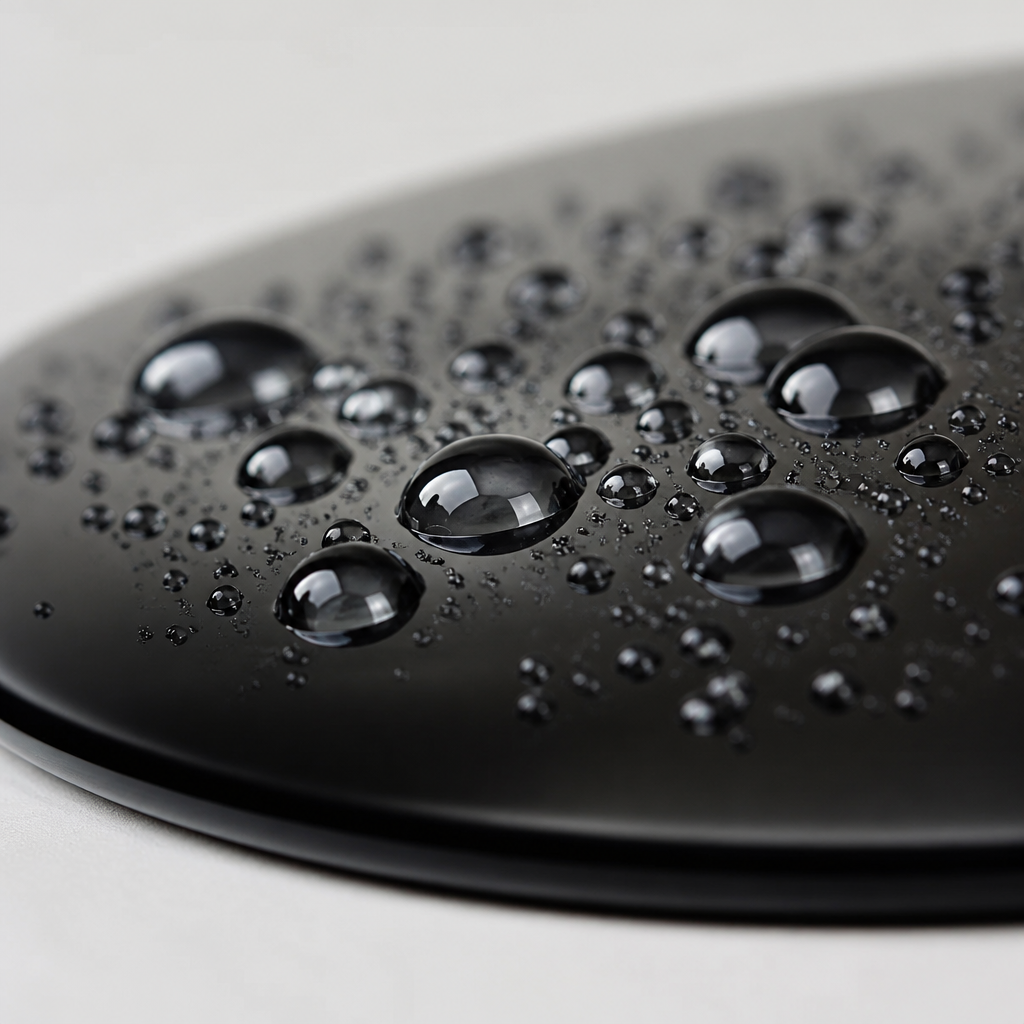
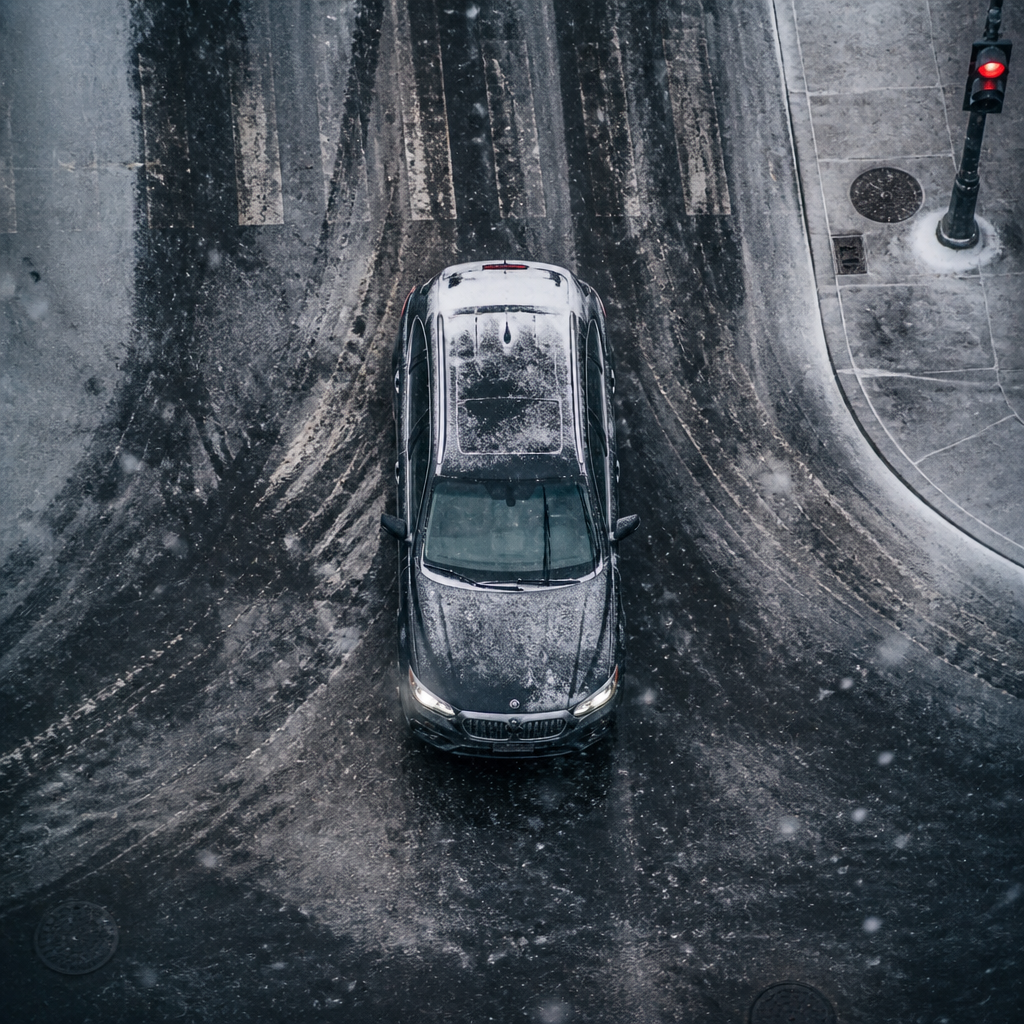
Road Salt and Chemical Deicers, November Through April
Illinois roads, including the streets of Glendale Heights, Carol Stream, Bloomingdale, and Wheaton, are treated with road salt, calcium chloride, and liquid brine deicers for roughly five months of the year. These compounds are highly corrosive to exposed paint and metal. A properly bonded ceramic coating creates a hard, chemically resistant barrier that causes salt spray to sheet off the paint surface rather than bonding to it. Without that barrier, repeated winter washing and road exposure can accelerate clear coat degradation significantly.
Freeze-Thaw Cycles and Abrasive Grit
Chicago's winters do not stay consistently cold. Temperatures oscillate above and below freezing repeatedly through January, February, and March, and that freeze-thaw cycle drives road grit and sand against your paint at every highway speed. Abrasive particles that would slide off a properly coated surface become micro-sandpaper on unprotected clear coat.
Summer UV Intensity and Acid Rain
Illinois summers deliver a concentrated UV season that fades paint and oxidizes clear coat on vehicles parked outdoors. Acid rain from the urban-industrial corridor compounds that damage. A high-quality SiO2 ceramic coating absorbs and deflects UV radiation and resists light acid exposure better than bare clear coat or traditional wax, which breaks down in weeks under direct summer sun.
Pro tip: After every winter season in the Chicago suburbs, schedule a decontamination wash with an iron fallout remover and clay bar treatment. Winter deposits left on a coated surface act like sandpaper during spring washing and will shorten your coating's effective life by months.
Coating Grades Compared: Consumer vs. Professional
Not all ceramic coatings are created equal, and the gap between what you buy at a box store and what a certified installer applies in a controlled shop environment is substantial. Here is a direct comparison across the three tiers drivers in the Chicago suburbs will encounter.
| Coating Tier | Expected Lifespan | Key Characteristics |
|---|---|---|
| Consumer / DIY Spray-On | 6 to 12 months | Simplified SiO2 formulas, forgiving application windows, no paint correction required. Adequate for low-budget protection but degrades quickly under Illinois winter conditions. No meaningful warranty coverage. |
| Professional Mid-Grade (e.g., Gyeon Q2 Mohs EVO) | 3 to 5 years | Fluoropolysilazane technology, certified installer required, 5-year warranty with proper maintenance registration. High hardness, excellent hydrophobicity, and reliable chemical resistance. Single or dual-layer options. |
| Professional Premium (e.g., Gtechniq Crystal Serum) | 5 to 9 years | Dual-layer ultra-hard shell with flex-layer under-coat, registered warranty up to 9 years through accredited installers, requires controlled application environment and multi-stage paint correction. Best choice for luxury and collector vehicles. |
The takeaway is blunt: if you are driving a BMW, Mercedes, Porsche, or any vehicle where the paint is a meaningful part of the ownership experience, the mid-grade and premium professional options are the only realistic choices. A DIY coating is not a bad product for what it is. It is simply not designed for the level of protection or longevity that Chicago-suburb roads demand of a vehicle you intend to keep in excellent condition for years.
Pro tip: When comparing quotes between detailers, ask specifically which coating product and which certification tier the installer holds. A Gyeon Certified Detailer and a Gtechniq-accredited installer can register your warranty directly. An uncertified shop applying the same product often cannot, which voids warranty coverage entirely.
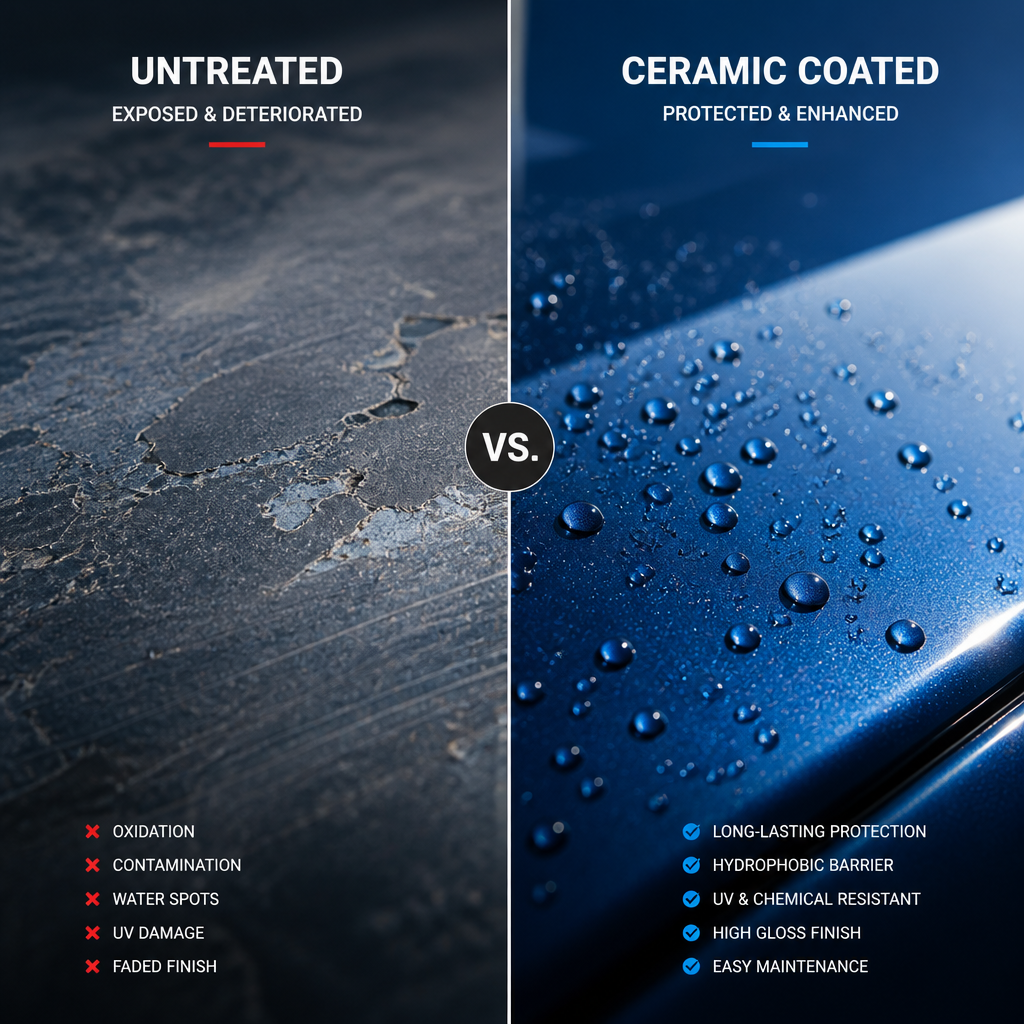
How Surface Prep Determines Longevity
Surface preparation is where the real difference between a coating that lasts three years and one that lasts seven years is made. This is also where inexperienced or budget-focused detailers cut corners most aggressively, because prep work is invisible to the client but consumes most of the labor hours.
Decontamination: Removing What Washing Cannot
Before any coating goes on, paint must be chemically decontaminated to remove iron fallout, industrial fallout, tree sap, overspray, and embedded road grime. An iron fallout remover pulls ferrous particles out of the clear coat that a wash mitt will never touch. A clay bar or clay pad removes the layer of bonded surface contamination that makes paint feel rough even after washing. Skipping this step means the coating bonds to contamination rather than to the clear coat itself, which significantly reduces adhesion and therefore lifespan.
Multi-Stage Machine Polishing Before Coating
A ceramic coating is semi-permanent. Once it cures, it locks in the exact condition of the paint surface beneath it. That means every swirl mark, water spot etch, and fine scratch visible before application will be visible, and permanent, after application unless they are corrected first. A proper multi-stage machine polishing process, using a combination of cutting compounds and finishing polishes, removes those defects down to a level that maximizes both the visual result and the coating's bond strength. This is not optional for luxury vehicle owners who expect the coating to look as good in year four as it did in year one.
Panel Wipe and IPA Prep
The final step before coating application is a thorough wipe-down with an isopropyl alcohol panel prep solution to remove any polish oils or residues left by the polishing stage. Oils from polishing compounds will prevent proper coating adhesion if not fully removed. This step takes minutes but is one of the most consequential for long-term bond integrity.
Maintenance That Actually Extends Coating Life
A professional ceramic coating is not a "set it and forget it" product. It is a performance surface that rewards consistent care and degrades faster under neglect. The good news is that maintaining a properly coated vehicle requires less effort than maintaining an uncoated one. The maintenance routine is simpler. But it does need to happen on a schedule.
Washing Frequency and Method
Washing every two to four weeks with a pH-neutral car shampoo using the two-bucket wash method is the foundation of coating maintenance. Harsh detergents and alkaline cleaners can degrade the coating's polymer matrix over time, particularly on coatings with lower SiO2 content. Automated car washes with rotating brushes are damaging regardless of coating quality. Hand washing with high-quality grit guards and separate rinse buckets is non-negotiable for anyone who wants their coating to perform at the five-year mark the way it did at six months.
SiO2 Booster Applications
Applying a ceramic booster or SiO2 topper spray every six to twelve weeks replenishes the hydrophobic layer and builds additional protection thickness over time. This is particularly valuable in the Chicago suburbs during late fall, before salt season begins, and in spring after decontamination. These products are not replacements for the base coating but they measurably extend its active life by supplementing the outer contact layer that takes the most abuse.
Annual or Biannual Inspection Detail
An annual professional inspection and maintenance detail allows a trained eye to identify coating wear patterns, address any bonded contamination that has accumulated, and apply a professional-grade topper treatment. For premium coatings with extended warranties, this type of periodic professional care is often a warranty condition. In Illinois specifically, a post-winter decontamination and inspection is the single most productive maintenance investment you can make each year.
Ceramic Coating Warranty in the Chicago Suburbs: What to Expect
The ceramic coating warranty in the Chicago suburbs is a topic that generates a lot of confusion, partly because detailing shops market warranty years as though they are all equivalent, and they are not. A warranty number only means something if the conditions attached to it are clearly understood before you sign.
What Gyeon Warranty Coverage Looks Like
Gyeon's Q2 Mohs EVO offers warranty coverage of up to 5 years when applied by a Gyeon Certified Detailer, with the coating registered within 30 days of application. Gyeon also offers an Infinite Lifetime Warranty on specific products when periodic maintenance services are performed by a Gyeon Certified Detailer every 24 months and the vehicle owner maintains the vehicle with Gyeon maintenance products. The lifetime path requires strict adherence. Missing a maintenance window can void the extended coverage.
What Gtechniq Warranty Coverage Looks Like
Gtechniq's guarantee structure covers professionally applied coatings for up to 9 years depending on the specific coating applied and whether the owner follows Gtechniq's official maintenance routine. The warranty must be registered online within 30 days of application, and the work must be performed by a Gtechniq-accredited detailer. Accreditation matters here. An unaccredited shop applying a Gtechniq product cannot register the warranty on your behalf.
What to Ask Any Detailing Shop Before You Book
Ask which brand and specific product will be applied. Ask whether the shop is certified or accredited by that brand. Ask how the warranty is registered, who registers it, and what maintenance is required to keep it valid. A reputable shop will answer all three without hesitation. If the answer is vague, that is useful information about the shop's processes and accountability.
Signs Your Coating Is Wearing Down
Knowing when your coating needs attention is as important as knowing how long it should last. The signs are observable without any special equipment and should be part of your regular car care awareness.
Water beading behavior changes. A fresh professional coating causes water to form tight, high-contact-angle beads that roll off the surface rapidly. As the coating degrades, water droplets flatten and spread rather than bead. When water starts sitting on the surface in flat sheets rather than rolling away, the hydrophobic layer is significantly worn down.
Fading gloss and reduced clarity are secondary indicators. Increased dirt accumulation between washes, particularly in areas like the hood and roof that take the most UV exposure, points to a loss of the self-cleaning properties that a fresh coating provides. Visible light scratching or swirl marks appearing in areas that were previously clear suggest the hard outer shell has been compromised.
None of these signs mean the coating has failed catastrophically. They mean it is time to book a professional inspection, decontaminate the surface, apply a quality SiO2 topper, or in cases of significant degradation, schedule a fresh coating application after paint correction. Catching degradation early is far less expensive than waiting until the paint itself needs protection from accumulated damage.
Pro tip: Do a water bead test on your vehicle every three months by pouring a small amount of water over a horizontal panel. The shape and behavior of the droplets tells you exactly where your coating stands. Tight, round beads that roll at a slight tilt mean healthy coating. Flat, spreading water means it is time to act.
Frequently Asked Questions
How long does a professional ceramic coating realistically last in Illinois?
Under Illinois conditions, including road salt exposure from November through April and summer UV intensity, a professionally applied premium ceramic coating from a brand like Gyeon or Gtechniq will typically perform well for 3 to 7 years with proper maintenance. Vehicles that are garage-kept, washed correctly, and receive annual professional care will trend toward the upper end of that range. Daily drivers parked outdoors year-round in Glendale Heights or Carol Stream should expect to fall closer to the 3 to 5 year mark without additional booster treatments.
Does Illinois road salt actually shorten ceramic coating life?
Yes, but the coating significantly reduces the damage. Road salt and calcium chloride are chemically aggressive to paint and metal. A properly bonded ceramic coating creates a hard barrier that causes salt spray to sheet off rather than adhere, which reduces direct exposure. The coating itself, however, still experiences chemical stress over a long winter season, particularly if it is not decontaminated thoroughly each spring. Annual post-winter decontamination is the most important single maintenance step for Illinois drivers specifically.
What is the difference between a 5-year warranty and a 5-year lifespan?
A warranty is a manufacturer's commitment to stand behind the product's performance for a specified period under defined maintenance conditions. A lifespan is a performance estimate based on average real-world conditions. A coating can carry a 5-year warranty and still last 7 years under excellent care. It can also fall short of its warranted performance if maintenance conditions are not met. Read warranty terms carefully. Most require certified installation, timely registration, and adherence to specific washing and maintenance protocols to remain valid.
Can I apply a ceramic coating over existing wax or sealant?
No. Any wax, sealant, or polymer residue on the paint surface will prevent a ceramic coating from bonding to the clear coat. Applying a nano-ceramic coating over wax results in the coating bonding to the wax layer rather than the paint, which dramatically shortens its life and compromises its protection. Proper decontamination and panel prep with an isopropyl alcohol wipe-down are required to remove all prior protection products before application.
How often should I wash a ceramic coated vehicle in the Chicago suburbs?
Every two to four weeks during normal seasons, and more frequently during winter months when road salt accumulation is aggressive. Always use a pH-neutral, ceramic-safe car shampoo with the two-bucket method. Avoid automatic car washes with rotating brushes. In late fall, add an SiO2 booster spray application before salt season starts. In spring, schedule a decontamination wash to remove any iron fallout and mineral deposits that have accumulated over winter.
Is paint correction always necessary before a ceramic coating?
For any vehicle where the owner expects excellent visual results and maximum coating longevity, yes. A ceramic coating is semi-permanent and seals the paint condition in place. Swirl marks, light scratches, and oxidation that are present at the time of application will remain visible and sealed under the coating. Multi-stage machine polishing to correct the paint surface first is the standard practice for premium detailing work and directly impacts both the visual outcome and the coating's adhesion quality.
What has been your experience maintaining a ceramic coating through an Illinois winter? Share what has worked, or what you wish someone had told you before your first application.
References
- Gtechniq official guide to ceramic coating lifespan and durability factors
- Chemical Guys breakdown of ceramic coating lifespan by product type and maintenance
- Industry overview of ceramic coating demand and road salt impact in Illinois
- Gtechniq warranty terms and certified detailer registration requirements explained
- Ceramic coating maintenance routine guide covering washing, boosting, and inspection schedules