Illinois convertible owners face a hard stretch every October and November. Falling leaves leave tannins and sap on fabric, damp mornings trap moisture in the seams, and the first hard freeze can stiffen vinyl that was never meant to crack. Most soft-top damage we see across the Chicago suburbs does not come from one bad day. It comes from a few skipped steps in the weeks before the car goes into storage. This guide covers convertible top detailing in Illinois, from identifying your material to preparing the top for a winter in the garage.
Table of Contents
- Quick Takeaways
- Why Illinois Fall Is Hard on Soft Tops
- Identify Your Top Material Before You Touch It
- A Fall Cleaning Routine That Protects the Fabric
- Drying and Protectant Timing
- Maintenance Between Cleanings
- Choosing a Top Protectant
- Storage Season Prep
- Common Mistakes That Shorten Top Life
- Frequently Asked Questions
- References
Quick Takeaways
| Key Insight | Explanation |
|---|---|
| Identify the material first | Run the water drop test before you pick a cleaner. If water soaks in, you have fabric. If it sits on the surface and smears, treat the top as vinyl. |
| Skip the automatic brush wash | Rotating brushes grind grit into the weave and wear down the material over time. Hand washing is the safer choice for a soft top. |
| Dry the top completely before protectant | Protectant sealed over trapped moisture can lead to mildew, staining, and a cloudy finish that is hard to correct. |
| Rinse monthly through fall | A strong jet of water once a month lifts leaf debris and grit before it bonds to the surface and starts to stain. |
| Apply protectant in thin, even coats | Two or three light coats with drying time between them outperform one heavy coat that pools in seams and attracts dirt. |
| Store the car clean, dry, and ventilated | Use a breathable cover rather than plastic, and make sure the top is fully dry before the car sits for the winter. |
The first thing we check on a soft top is not the fabric itself. It is the seams, the rear window, and the edges where the top meets the body. Those areas tell us how the top has been treated over its life, and they show where a fall routine needs to focus. Once you know what to look for, the work is simple, but the order matters.
Why Illinois Fall Is Hard on Soft Tops
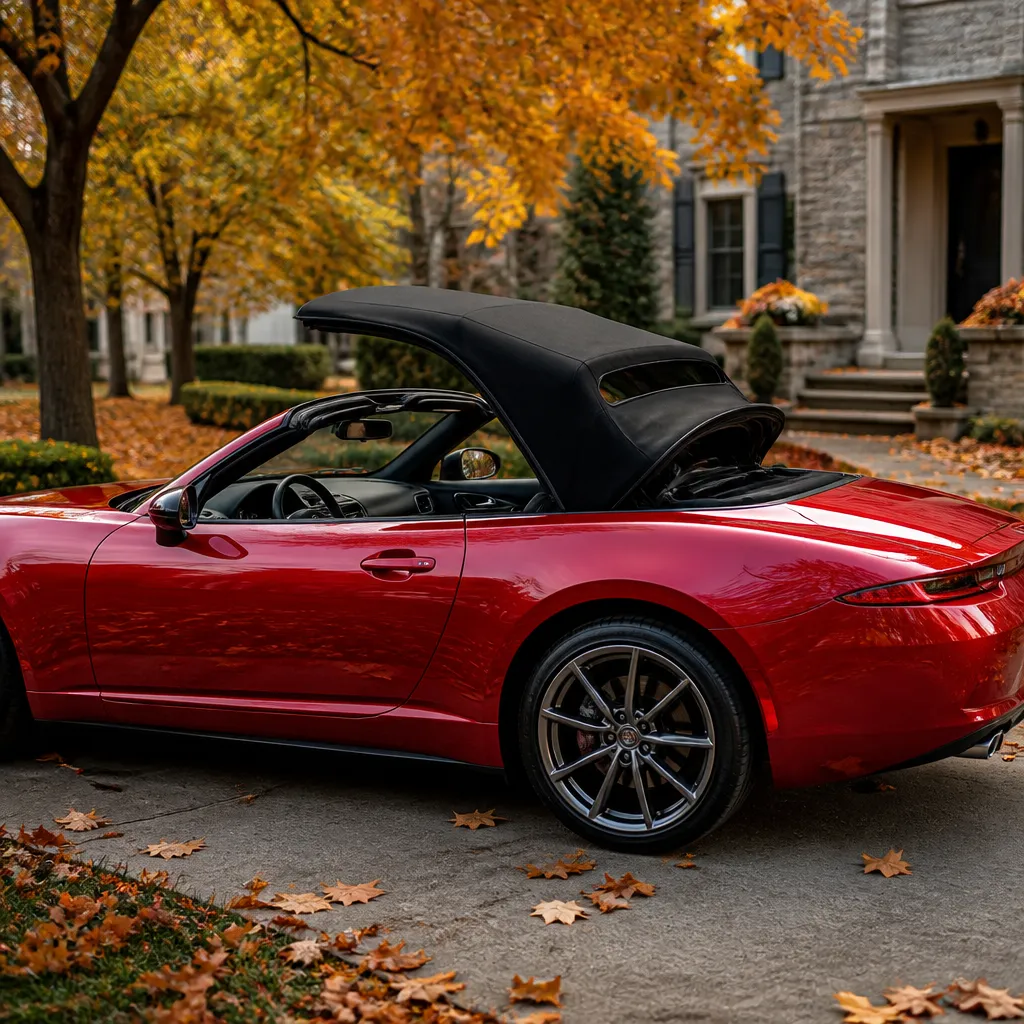
Illinois autumns bring a combination that is tough on any soft top. Leaves fall for weeks, they break down in wet conditions, and they leave staining behind. Cool, damp nights mean the top may not fully dry overnight, so moisture sits in the stitching and the folds. That moisture is the real enemy, because it turns a surface problem into a material problem.
Leaves, Sap, and Tree Debris
Oak and maple leaves are the most common culprits in the Chicago suburbs. When they sit on a fabric top after rain, they release color and acids that can leave brown rings. Pine sap and birch tree residue cause a different problem, because it bonds to the surface and resists simple wiping. Removing debris early is far easier than trying to lift a stain after it has set.
Moisture Trapped in Seams and Folds
The stitching and the fold lines hold water longer than the flat sections of the top. In practice, we see mildew start in these areas first, usually along the rear seam and where the top meets the header bow. A quick check of the seams after every wash tells you whether the top is truly dry or only looks dry on the surface.
Identify Your Top Material Before You Touch It
Most convertible owners know the car, but few know the exact material of the top. That gap causes real damage. Fabric and vinyl tops respond to cleaners, heat, and protectants in very different ways, and a product that suits one can dull or strip the other. Confirm the material before you buy anything for the fall routine.
The Water Drop Test
Place about 1/8 teaspoon of water on the top and try to rub it in. If the water soaks into the surface, the top is fabric. If the water sits on the surface and smears, the top is vinyl. The test takes less than a minute, and it should be done on a clean, dry section so that old residue does not change the result.
Pro tip: Run the water drop test on the rear window area as well as the main panel. Some owners find that the top is one material and the glass or plastic sections behave differently, which affects how you should clean around them.
How Fabric and Vinyl Differ in Practice
Fabric tops absorb cleaner and water, so they need careful rinsing and a longer drying window. Vinyl tops hold surface film and can look streaky if a product is left to dry on them. Both types need a cleaner built for their material, and both should be kept away from harsh household chemicals.
A Fall Cleaning Routine That Protects the Fabric
A good fall routine is short and repeatable. The goal is to remove debris before it can stain, to clean without stripping protection, and to leave the top dry. Working in the shade and in the right order makes a noticeable difference in the final result.
Wash in the Shade, Not in Direct Sun
Wash the top in the shade so the cleaner does not dry before you can rinse it. Soap residue left on fabric can attract dirt and create a dull patch that looks worse than the original stain. Rinse off loose dirt with water first, then apply the cleaner evenly across the whole top.
Use a soft-bristle brush and work the cleaner gently in one direction. For deep stains, let the cleaner sit for 15 to 20 minutes before you agitate again. Rinse thoroughly until no soap remains, because a soapy film is one of the most common causes of premature staining.
Cleaners to Avoid on Any Soft Top
Bleach, ammonia, household detergent, alcohol, and vinegar can all damage a convertible top. They strip the protective finish, dry out the material, and in some cases discolor the fabric permanently. A specialized convertible top cleaner matched to your material costs less than repairing a stain that a harsh product made worse.
Why Automatic Car Washes Are a Problem
Automatic car washes with brushes are hard on soft tops. The brushes can push grit into the weave and stretch the top over time, and the high-pressure dryers can leave seams damp. Hand washing is generally the safest choice, and a touchless system is a reasonable second option if you have no other way to wash the car this fall.
Drying and Protectant Timing
Drying is where most soft-top care goes wrong. Owners clean the top, pull the car into the garage while it still feels cool to the touch, and apply protectant the same day. Trapped moisture then sits under the protectant, and the result is a hazy, uneven finish that shows up within weeks.
Protectant does not repair a wet top. It seals in whatever the top is holding, so the drying step is the part of the job that decides whether the protection actually works.
Knowing When the Top Is Truly Dry
Check the seams, the rear window edges, and the folds before you call the top dry. Press a clean cloth into the stitching and look for any dampness. If the cloth comes away dark, give the top more time, because the surface can feel dry while the material underneath is still wet.
Applying Protectant on the Right Day
Avoid applying protectant on windy days, because overspray lands on paint, glass, and trim. Shake the bottle well and hold the spray about 16 to 18 inches from the surface. Use light, even coats, and let each coat dry for about 10 minutes in the sun before the next one.
Apply up to three coats for maximum UV protection, but stop once the surface looks even. A heavy coat pools in the seams and attracts dust, which is the opposite of what you want before winter.
Pro tip: Pick a dry afternoon with light wind and temperatures that let the coats set in the sun. Applying in the early morning, when dew is still forming, is one of the most common reasons protectant leaves a streaky finish.
Maintenance Between Cleanings
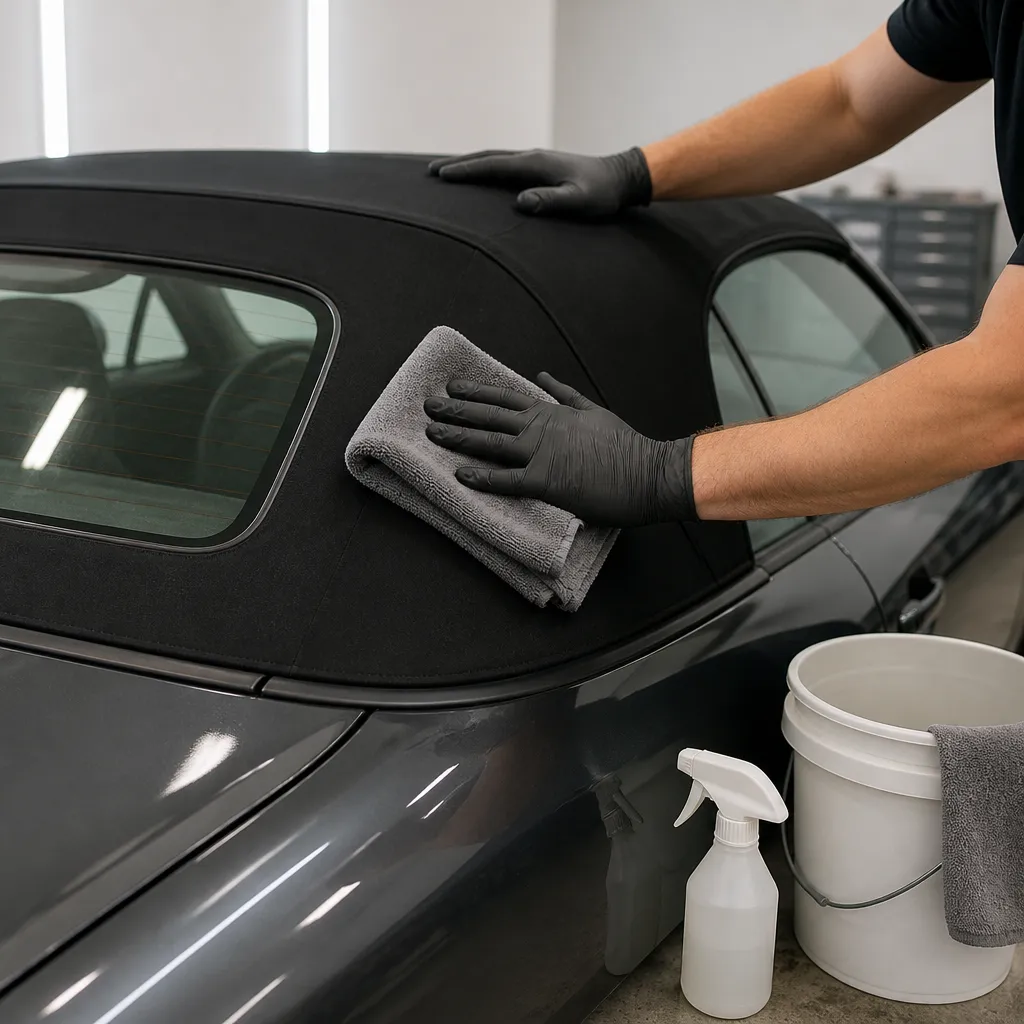
A soft top does not need a full detail every week, but it does need attention between the big cleanings. Small checks catch problems while they are still cheap to fix. Most of the work is looking closely at the parts that owners tend to ignore.
Seams and Stitching
Look along the seams for fraying thread, lifting edges, or small areas that stay damp longer than the rest of the top. Early wear in the stitching often shows up as a faint line of dirt that does not wash out. Catching it in the fall gives you time to address the issue before the top sees winter weather.
Rear Windows and Plastic Panels
Rear plastic windows scratch easily and cloud when they are cleaned with dry rags or harsh chemicals. Clean them with a gentle, approved product and a clean microfiber cloth, and avoid wiping across grit without rinsing first. A cloudy rear window is one of the most common reasons owners decide a top looks old, even when the fabric is in good condition.
Zippers, Tracks, and Latches
Zippers and roof tracks collect grit that can scratch the surrounding material. Wipe them down during each wash and check that they move freely before the top is folded for the season. A stiff or gritty zipper is a sign the track needs cleaning, not forcing.
Choosing a Top Protectant
Protectant choice matters as much as technique. Some owners want a simple spray they can apply at home, while others prefer a professional treatment that lasts longer between maintenance visits. Each option has trade-offs, and the right choice depends on how the car is driven and stored.
The comparison below covers three common approaches. It is written around the material and use patterns we see most often in the Chicago suburbs, where cars are driven in spring and summer and then stored through a long, damp winter.
| Option | Best For | Trade-Offs |
|---|---|---|
| Home spray-on fabric protectant | Fabric tops on cars that are driven often and washed by hand | Needs reapplication about every 6 to 8 weeks during active driving season, and only works well when the top is fully dry and the air is calm. |
| Vinyl-labeled protectant or dressing | Vinyl tops that need a clean, uniform finish | Only use products labeled for vinyl. General-purpose sprays can leave an uneven film, and heavy dressings can attract dust. |
| Professional top coating applied by a detail shop | Owners who want longer coverage and less routine upkeep | Higher upfront cost and shop time, and the result depends heavily on how well the top is cleaned and prepped before coating. |
For most owners, the home option is enough if they follow the drying and timing steps closely. A professional coating makes more sense when the car is a higher-value vehicle, when the owner does not want to schedule regular applications, or when the top has already begun to show surface wear that needs correction first.
Storage Season Prep
Storage is where a good fall routine pays off. A car that goes into a garage with a clean, dry, and protected top will come out in spring in much better shape than one stored with residual dirt and moisture. The preparation is straightforward, but it needs to happen in the right order.
Clean and Dry Before the Car Goes Away
Give the top one final wash and a full drying check before storage. Pay close attention to the seams and the rear window edges, because moisture left there over a long winter causes the most damage. If the car is going to sit for months, a few extra hours of drying time is worth the wait.
Covers, Ventilation, and Garage Humidity
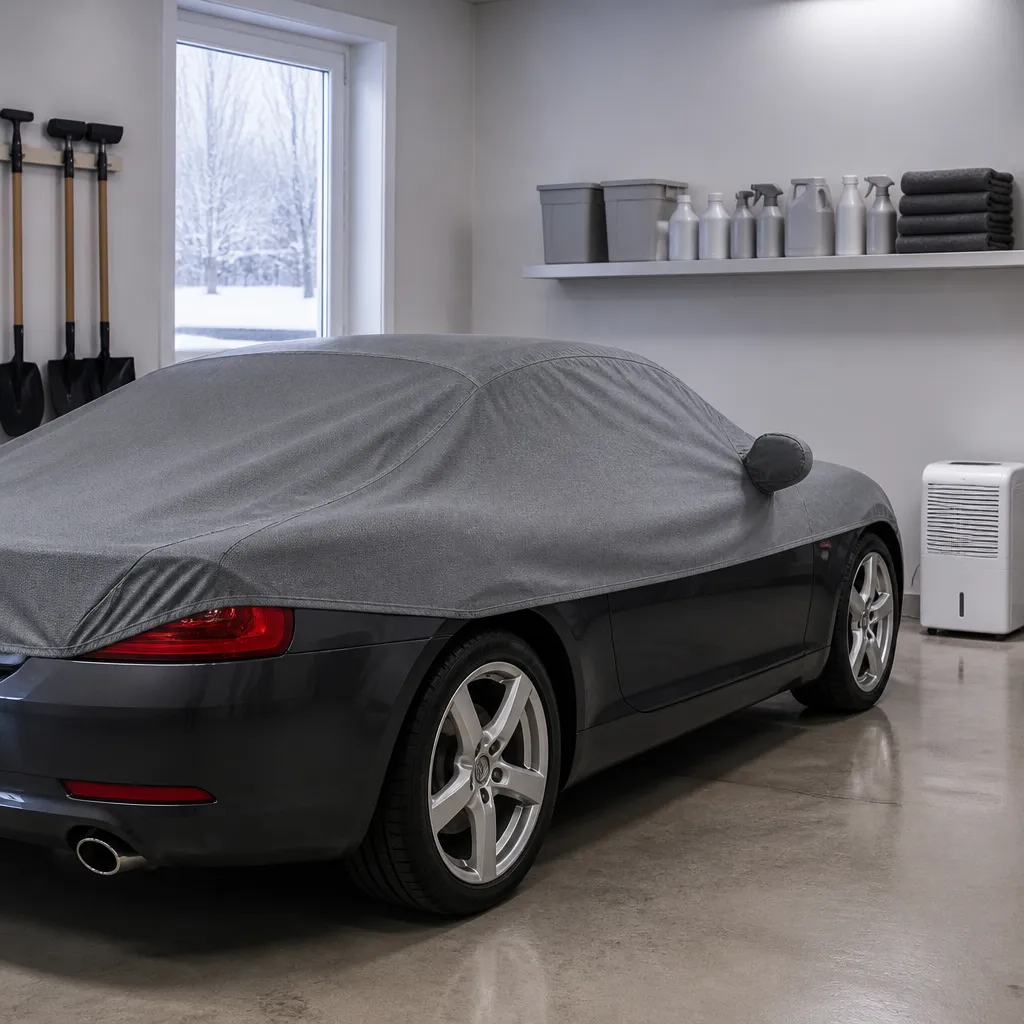
Use a breathable car cover rather than a plastic one. Plastic traps moisture against the paint and the top, which encourages mildew and fogging. Keep the garage as dry as you can, and avoid storing the car in a space where condensation builds on the floor or walls.
Deciding Whether to Store the Top Up or Down
Whether the top should stay up or down depends on the model, so check the owner's manual before you decide. In general, a top that stays in the raised position for months holds moisture more easily, while a top that is lowered and stored with the boot open needs its folds and cavity checked for dampness. Whichever position you choose, do not store the car with a top that still feels damp.
Pro tip: Place a moisture absorber in the garage near the car, and check it monthly. A simple way to catch a humidity problem before it reaches the top is to look for condensation on the car cover or the windows after a cold night.
Common Mistakes That Shorten Top Life
Most of the damage we repair on soft tops comes from habits rather than bad luck. The mistakes below are common, easy to make, and easy to prevent once you know what to watch for. They cost owners more in repairs than the routine care they skipped.
Using the Wrong Cleaner Because It Was Handy
Household cleaners often seem like a reasonable shortcut, but they strip protection and change the surface of the top. A stain that looked minor becomes a discolored patch after the wrong product is used. Keep a dedicated convertible top cleaner in the garage so you never have to improvise.
Folding the Top While It Is Wet
Folding a damp top locks moisture into the folds, where it stays out of sight and out of the sun. The result is often a crease that never fully relaxes and a patch of mildew along the fold line. If you must lower the top in wet weather, plan to air it out as soon as the weather allows.
Skipping the monthly rinse and then trying to fix a season of buildup in one visit is another common mistake. Routine rinsing is much easier than a heavy cleaning, and it keeps the top in better condition over time.
Frequently Asked Questions
How often should I clean a convertible top in Illinois during fall?
Rinse the top with a strong jet of water about once a month, and do a full hand wash with a convertible top cleaner whenever you see staining or debris buildup. During heavy leaf drop, you may need to rinse more often, especially if the car is parked under trees.
Can I use a regular car wash soap on a soft top?
Regular car wash soap is not the best choice for a soft top, because it is not formulated for the fabric or vinyl. Use a convertible top cleaner matched to your material, and avoid household detergents, bleach, ammonia, alcohol, and vinegar.
How do I know if my convertible top is fabric or vinyl?
Use the water drop test. Place about 1/8 teaspoon of water on the top and rub it in. If the water soaks in, the top is fabric. If the water sits on the surface and smears, the top is vinyl.
How long should I wait before applying protectant after washing?
Wait until the top is completely dry, including the seams and folds. Applying protectant too early seals in moisture, which can cause a hazy finish and staining. Test the seams with a clean cloth before you start.
Should I take my convertible through an automatic car wash in winter?
Avoid automatic brush washes if you can, because the brushes can wear down the top and push grit into the fabric. Hand washing is the safer choice. If you have no other option, a touchless system is a better compromise than brushes.
Is a professional ceramic or top coating worth the cost for a convertible?
It can be, especially for owners who want longer coverage and less frequent maintenance. The result depends on how well the top is cleaned and prepped before coating, so ask the shop how it will handle the seams, the rear window, and the drying steps before you book.
Have you found a fall or storage routine that keeps your soft top looking good through an Illinois winter? Share what has worked for you, or the problem you are still trying to solve, in the comments.