Returning a leased vehicle in Illinois is one of the few situations where a few hundred dollars spent on professional detailing can save you well over a thousand dollars in dealer-imposed charges. Leasing companies do not grade on a curve. Their inspectors arrive with written standards, size-comparison tools, and a damage chart that converts every scratch, stain, and scuff into a specific dollar amount. If you are heading into a lease return in the Chicago suburbs without having addressed the cosmetic condition of your vehicle, you are handing the dealership an open invoice. Detailing before lease return in Illinois is not a luxury step; it is a straightforward financial decision.
Table of Contents
- What Lease Inspectors Actually Check
- Quick Takeaways
- Excess Wear Charges: What They Actually Cost You
- Exterior Detailing for Lease Return: What Needs to Happen
- Interior Detailing for Lease Return: The Hidden Landmines
- Paint Correction vs. DIY Fixes: What Actually Works
- Timing Your Lease Return Detail in the Chicago Suburbs
- Comparing Your Detailing Options Before Turn-In
- Frequently Asked Questions
- References
What Lease Inspectors Actually Check
The inspection process is more structured than most lessees expect. A certified inspector walks the entire vehicle and documents every item against the leasing company's published wear guidelines. Two physical tools show up on nearly every inspection: a quarter and a credit card.
If a dent is larger than a quarter, it gets flagged. If a paint scratch is longer than a credit card, it gets flagged. Those are not arbitrary rules; they are the published thresholds used by most major lenders to separate normal wear from chargeable damage.
Here is what inspectors examine on the exterior: dents and dings across all body panels, paint chips and scratches (especially along door edges where rust risk elevates the concern), bumper scuffs from parking lots, cracked or chipped glass, damaged or missing trim pieces, and curb rash on wheels. On the interior, they check every upholstered surface for stains and tears, carpet condition, the condition of the headliner, dashboard and door panels for cracks, and whether the vehicle carries any smoke or pet odors. A single deep scratch can run $200 to $400 in charges. A cracked windshield typically draws $300 to $600. A torn seat is frequently assessed at $400 or more. Interior odor remediation can reach $800.
Quick Takeaways
| Key Insight | Explanation |
|---|---|
| Size thresholds trigger charges | Dents larger than a quarter and scratches longer than a credit card are almost always flagged and billed by lease inspectors. |
| Interior odors are expensive | Smoke and pet odors are not overlooked, and remediation fees from the dealership can reach $800 or more, far exceeding the cost of professional interior detailing. |
| Paint correction removes surface damage | Many scratches that look permanent are only in the clear coat. Machine polishing removes them entirely, eliminating those line items from your inspection report. |
| Document the car's condition before drop-off | Photograph every panel and interior surface after detailing. If a dispute arises later, timestamped photos are your strongest defense. |
| Illinois winter roads create extra contamination | Road salt, brine, and grit bond to paint and undercarriage surfaces throughout winter. Decontamination before inspection matters in this region. |
| Schedule detailing at least two weeks before inspection | This gives time to address any items the detailer flags and schedule any additional cosmetic repairs if needed before the official turn-in date. |
| Professional detailing costs far less than dealer charges | A full professional detail typically costs a fraction of what a single excess wear line item would cost through the dealer's repair network. |
Understanding where the money actually goes at lease turn-in is the first step toward protecting it. Most lessees are surprised to learn that charges can arrive after the vehicle has already been returned, sometimes weeks later. Getting the car professionally detailed before the inspection creates a documented, clean baseline that is harder to dispute against you.
Excess Wear Charges: What They Actually Cost You
The math on lease return charges is sobering. According to data published by Lease End in 2025, drivers can face between $1,000 and $4,000 or more in surprise end-of-lease costs when excess wear combines with mileage overages and disposition fees. The charges are calculated using industry repair cost databases, not retail shop estimates, and they are typically higher than what a private-pay customer would pay at an independent shop.
A leased vehicle's condition is assessed against published standards, not the dealership employee's personal judgment. Preparing the car to meet those standards before inspection is the only reliable way to control the outcome.
Common individual charge amounts based on published inspection data: dents larger than a quarter run $100 to $400 per dent, deep paint scratches are $150 to $600 per panel, cracked or chipped windshields are $200 to $600, interior stains and burns are $100 to $500 each, and wheel curb rash can be $100 to $300 per wheel. Each of those items is individually cheaper to address through professional detailing and minor cosmetic repair than through the dealer's charge sheet. The cost difference is not marginal; it is typically two to four times more expensive to let the dealer handle it.
Pro tip: Request a pre-return inspection from your leasing company before your scheduled turn-in date. Most major lenders offer this at no charge, and it gives you a written list of flagged items to address rather than guessing. Then bring that list to your detail appointment.
Exterior Detailing for Lease Return: What Needs to Happen
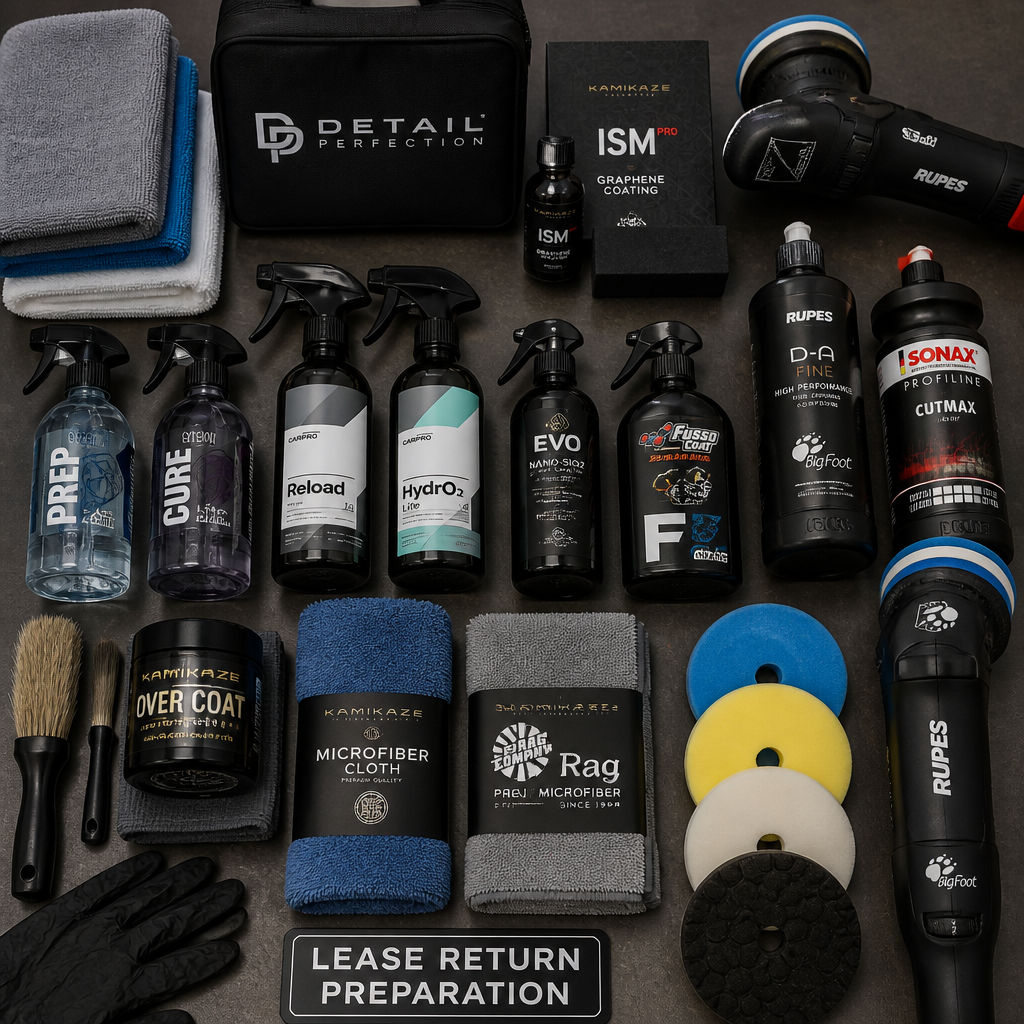
Surface-level cleaning is not enough for a lease return. A proper exterior prep for turn-in requires several distinct steps, each targeting a different type of damage or contamination.
Decontamination Wash
Illinois roads are aggressive. From November through March, Glendale Heights, Carol Stream, Wheaton, and Bloomingdale roads are treated with salt and brine. That contamination bonds to paint at a chemical level and cannot be removed by a standard wash. Iron fallout remover and a clay bar treatment pull the embedded particles from the clear coat surface, leaving paint that is genuinely clean rather than just visually cleaner.
Skipping decontamination leaves behind a rough texture inspectors can feel and contaminants that continue damaging the paint. A fresh decontamination wash before inspection is non-negotiable for any vehicle that has spent multiple winters in northeastern Illinois.
Paint Correction for Clear Coat Scratches
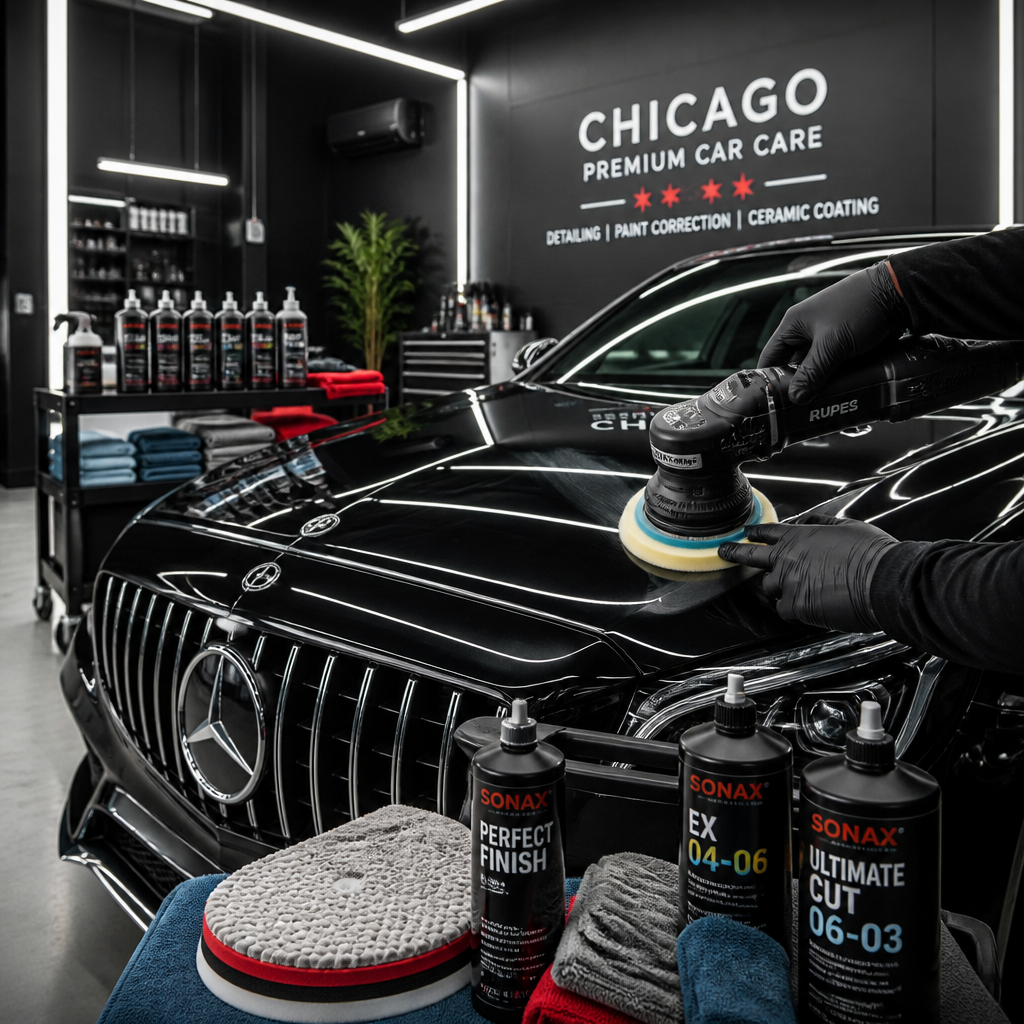
The majority of scratches on a three-year-old leased vehicle are clear coat damage, not base coat damage. That distinction matters enormously. Clear coat scratches, including the swirl marks from automated car washes and the light scuffs from parking lot doors, are fully correctable through machine polishing. A single or two-stage machine polish removes the damaged material from the clear coat surface and leaves uniform paint that no longer shows those scratches under direct light.
What this means for your lease return: many of the line items an inspector would flag simply disappear after a proper paint correction session. At Hersheys Detailing, multi-stage machine polishing is a core part of exterior work precisely because surface-level paint flaws are the most common source of chargeable damage on returned vehicles.
Wheel and Trim Restoration
Wheels take consistent punishment from curbs, brake dust, and road debris. Curb rash on alloy wheels is one of the most commonly charged items at lease return, and light-to-moderate curb rash can often be significantly improved through professional wheel polishing and finishing. Trim pieces, including door handles, mirror housings, and plastic moldings, should be cleaned and dressed so they do not show accelerated aging or cracking.
Interior Detailing for Lease Return: The Hidden Landmines
Interior condition is where many lessees are caught off guard. The exterior is easy to inspect yourself in daylight. Interior damage accumulates slowly and becomes normalized until an inspector flags $800 worth of issues in ten minutes.
Upholstery and Carpet Deep Cleaning
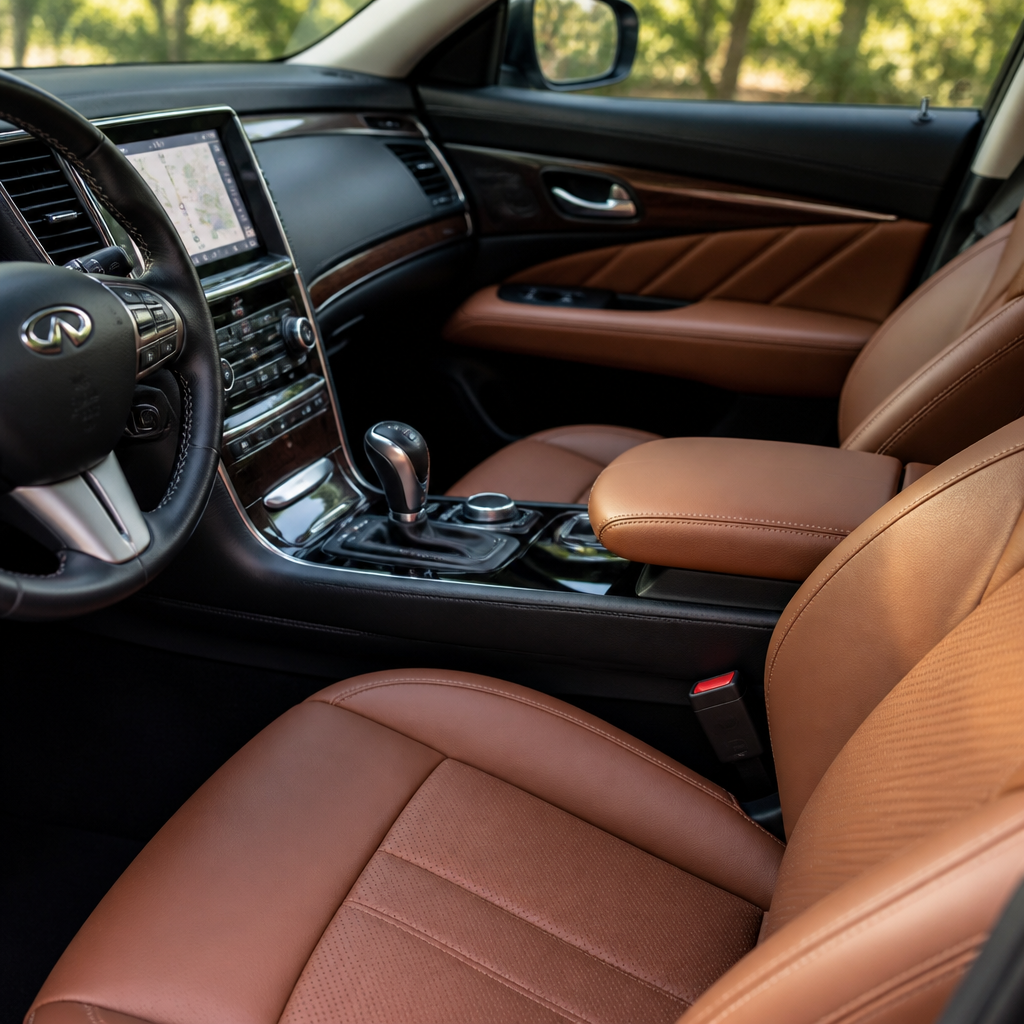
Any stain larger than a credit card on a seat, carpet, or headliner is typically considered excessive wear by most leasing companies. Hot water extraction is the standard professional method for removing embedded stains from fabric and carpet, and it works on stains that look permanent to the eye. Leather seats require careful cleaning and conditioning because cracked leather or missing surface coating on bolsters will be charged as excessive wear.
Coffee, food, and dirt stains that have set into carpet fibers for months are recoverable with professional equipment. Do not assume they are not. A professional interior detail before your inspection removes the ambiguity entirely.
Odor Elimination
Smoke and pet odors are assessed separately from visible stains, and they generate some of the highest remediation charges on lease returns. The dealership's remediation process typically involves replacing cabin air filters, ozone treatment, and full interior cleaning at your expense. Professional odor elimination before turn-in costs a fraction of that remediation charge and is performed to a higher standard because the detailer is motivated to actually solve the problem rather than process a billing line item.
Hard Surface and Glass Cleaning
Dashboard cracking and door panel damage get flagged as excessive wear. Professional cleaning of hard surfaces removes the grinding dirt that accelerates surface deterioration and makes existing minor wear far less visible. Glass should be completely cleaned inside and out, including removal of interior film that builds up over time. Inspectors view the windshield closely because chips and cracks are automatically flagged.
Pro tip: After your full interior detail is complete, open all four doors and examine every surface in natural daylight before photographing. Detailing shops work under artificial light, and natural daylight sometimes reveals areas worth a second pass before the inspection date.
Paint Correction vs. DIY Fixes: What Actually Works
The lease return prep market has generated a category of DIY products that promise to hide scratches, fill dents, and restore faded trim. In practice, inspectors see these attempts regularly and they do not help. Touch-up paint applied incorrectly leaves texture and color mismatches that may actually draw more attention to a chip than the chip itself. Dent-pulling tools sold to consumers require significant skill to produce acceptable results on modern automotive panels, and poor attempts can make the damage worse.
Machine polishing requires the correct compound and polish for the clear coat thickness, proper pad selection, and controlled machine speed. Incorrect technique removes more clear coat than the scratch did, creating a thinned area that either hazes under light or requires repainting. This is why paint correction is one of the services where professional execution produces a materially different result than a careful DIY attempt, not because the tools are secret, but because the skill threshold is genuinely high.
Where DIY is appropriate before a lease return: removing minor road grime, cleaning windows, vacuuming loose debris before the professional detail, and removing personal belongings and aftermarket accessories. Beyond that, the cost-benefit calculation strongly favors professional work when the alternative is an inspection charge that is two to four times higher than the detailing service.
Timing Your Lease Return Detail in the Chicago Suburbs
Geography and season matter for Chicago-area lessees in ways that do not apply elsewhere. If your lease ends in winter or early spring, your vehicle has likely been exposed to four to six months of road salt each year of the lease term. That salt does not fully wash off in a standard car wash; it requires dedicated decontamination. A vehicle turned in during February or March in the Chicago suburbs needs more exterior prep work than the same vehicle turned in during August.
The window between your pre-return inspection and your final turn-in date is your action period. Schedule your professional detail after the pre-return inspection if your lender offers one. That gives you the inspection report as a specific task list. If your lender does not offer a pre-return inspection, schedule your detail four to six weeks before your lease end date to allow time for any additional cosmetic repairs the detailer identifies.
Hersheys Detailing serves the Chicago suburbs including Glendale Heights, Carol Stream, Bloomingdale, and Wheaton, which means the team understands the specific contamination profile of vehicles driven on Illinois roads. That regional knowledge translates into more thorough decontamination work than a shop that does not deal with midwestern winters year-round.
Comparing Your Detailing Options Before Turn-In
Lessees approaching their turn-in date typically consider three options: a standard car wash, a DIY detail at home, or a professional multi-step detail. The differences in outcome are significant and directly affect what charges appear on your final inspection report.
| Approach | What It Addresses | What It Misses (and Gets You Charged For) |
|---|---|---|
| Standard car wash or quick lube detail | Surface dirt, some light dust on interior surfaces | Embedded road salt, clear coat scratches, upholstery stains, odors, wheel contamination, paint swirls. Automated wash brushes can add new swirl marks. |
| DIY detail at home | Surface cleaning, vacuuming, basic wipe-down of hard surfaces | Iron fallout embedded in paint, set-in carpet stains, odor sources, clear coat scratches requiring machine correction, cracked leather conditioning |
| Professional multi-step detail (paint correction, decontamination, interior deep clean) | Embedded contamination, clear coat scratches, upholstery and carpet stains, odors, wheel restoration, glass film removal, trim restoration | Structural damage, deep base coat damage, cracks in hard plastic panels. These require body shop work, not detailing. |
The practical conclusion is direct: a car wash and a DIY wipe-down leave most chargeable items in place. A professional multi-step detail removes or significantly reduces most of the cosmetic damage categories that generate inspection charges. The return on that investment is typically positive for any vehicle that has been driven normally for two or more years.
Frequently Asked Questions
How far in advance should I get my leased car detailed before returning it in Illinois?
Schedule your professional detail four to six weeks before your lease end date. This gives you time to review the detailer's findings, address any items that require additional cosmetic repair at a body shop, and still have the vehicle looking its best at the inspection date. Waiting until the week of return creates a time crunch that forces you to skip follow-up steps.
What is considered normal wear and tear versus excessive wear on a lease return?
Normal wear typically includes minor surface scuffs smaller than a quarter-inch, very small paint chips below the leasing company's published threshold (often under half an inch in diameter), and light surface marks on door sills. Excessive wear includes dents larger than a quarter, paint scratches longer than a credit card, stains larger than a credit card on any interior surface, cracked glass, torn upholstery, smoke or pet odors, and significant curb rash on wheels. Each lender publishes their own standards, so review your specific lease agreement for the definitions that apply to your vehicle.
Will detailing actually remove scratches or just hide them?
For scratches confined to the clear coat layer, professional machine polishing removes the damage entirely rather than hiding it. The clear coat is a sacrificial layer designed to absorb light surface damage, and machine polishing removes the compromised material to reveal unmarked clear coat beneath. Scratches that have penetrated through the clear coat into the base coat or primer require paint repair, not polishing. A good detailer will tell you which category each scratch falls into before starting work.
Is it worth getting my leased car detailed if it has high mileage overages?
Yes, and here is why: mileage charges and wear-and-tear charges are calculated independently. Mileage overage fees are fixed based on your lease contract. Wear-and-tear charges are additive and assessed on top of mileage fees. Addressing cosmetic damage through professional detailing reduces the wear-and-tear portion of your bill regardless of what you owe for mileage. A vehicle with a large mileage overage and clean cosmetic condition will owe significantly less than the same vehicle with both overages and multiple wear charges.
Can I use the same professional detailer for a car I plan to buy out from my lease?
Absolutely, and the process is actually simpler. When you are buying out your lease rather than returning it, the goal shifts from passing an inspection to restoring the vehicle's condition and value for your own use. Paint correction, ceramic coating, and interior deep cleaning make excellent investments on a vehicle you intend to keep because the protection extends the paint life and reduces the maintenance burden over the ownership period. At Hersheys Detailing, ceramic coatings with multi-year warranties are a natural next step after a full correction detail on a bought-out lease vehicle.
Do Illinois road conditions make lease return detailing more complicated?
Yes, meaningfully so. The combination of winter road salt, pothole-related wheel and panel damage, and freeze-thaw cycles means Illinois-driven vehicles typically carry more embedded contamination and more incidental paint chips than vehicles driven in milder climates. The decontamination step that is technically optional in some regions is effectively mandatory here. Vehicles driven in Glendale Heights, Carol Stream, Wheaton, and Bloomingdale accumulate several winters' worth of road treatment chemicals that bond to paint and accelerate oxidation if not properly removed.
Have you gone through a lease return inspection in the Chicago suburbs? Share what you found on the inspection report and whether detailing made a difference for you.
References
- How excess wear and tear charges are calculated on a leased vehicle, with typical cost ranges per damage type
- What lease return inspectors examine and the specific thresholds used to distinguish normal wear from chargeable damage
- Complete breakdown of all end-of-lease return costs including disposition fees, mileage overages, and wear charges
- Why professional detailing before lease return helps avoid inspection charges and what the preparation process involves
- Practical checklist for detailing a vehicle before lease return, covering interior and exterior preparation steps