Most Illinois drivers check the hood, the roof, and the wheels after a salty week. Almost nobody looks at the door jambs, the rocker trim under the doors, or the lower panels just behind the front wheels. Those are the places where road salt sits longest and where paint is thinnest at the edges, so they are usually the first spots to show trouble. If you care about door jamb detailing in Illinois, start with the edges, not the flat panels everyone photographs.
Salt spray gets kicked up onto the lower body every time a car drives through a slushy intersection in the Chicago suburbs. It works its way into the gaps around doors and settles where water pools. By spring, a car that looked clean in December can have rust bubbles starting exactly where the paint rolls over an edge.
Table of Contents
- Quick Takeaways
- Why Salt Attacks the Edges First
- Door Jambs: The Overlooked Salt Trap
- Rocker Trim and Lower Panels
- Trim, Seals, and Plastic Cladding
- Protection Options Compared
- Winter Washing Routine for Chicago Suburbs
- Professional Edge Protection at Our Shop
- Frequently Asked Questions
- References
Quick Takeaways
| Key Insight | Explanation |
|---|---|
| Salt reaches the edges first | Door jambs, rocker trim, and lower panels collect slush and salt that splashes up from the road and stays wet far longer than flat panels. |
| Open every door during washes | Wipe the jambs, sills, and door edges on every wash. A exterior-only wash leaves the most salt-loaded surfaces untouched. |
| Re-wax after every winter wash | Wax and sealant thin out fastest on edges that take direct spray. Re-apply protection after each wash during salt season. |
| Treat chips on rocker edges now | A small chip on a rocker edge is where rust starts. Touch it up before the next salt event, not in April. |
| Protect the underside and rocker cavity | A wash rarely reaches the inside of the rocker or the lower sill. Rust-inhibiting protection in those cavities is the only way to cover them. |
| Keep drain holes clear | Blocked drain holes in doors and rockers trap salt water inside the panel, where you cannot see the damage developing. |
| Coat the edges, not just the flat panels | A coating on the hood and doors with bare jambs leaves the most vulnerable surfaces exposed to the same salt. |
Why Salt Attacks the Edges First
Road salt works by lowering the freezing point of snow and ice, which keeps roads passable at temperatures where plain water would freeze. It also adds grip on cold, wet pavement. The trade-off is that salt is corrosive, and the damage it does to a vehicle is often delayed and hidden until rust shows up. Rust damage caused by road salt can generally be avoided with the right precautions, but those precautions have to reach the right places.
The reason edges take the hit is physical. Water and salt are thrown up from the tires and the lower sides of the car, then carried into every seam and gap. Paint is usually thinnest where the panel bends over an edge, so the clear coat has less material to resist a steady salt attack. Where bare metal is exposed through a chip or a scuff, the process speeds up.
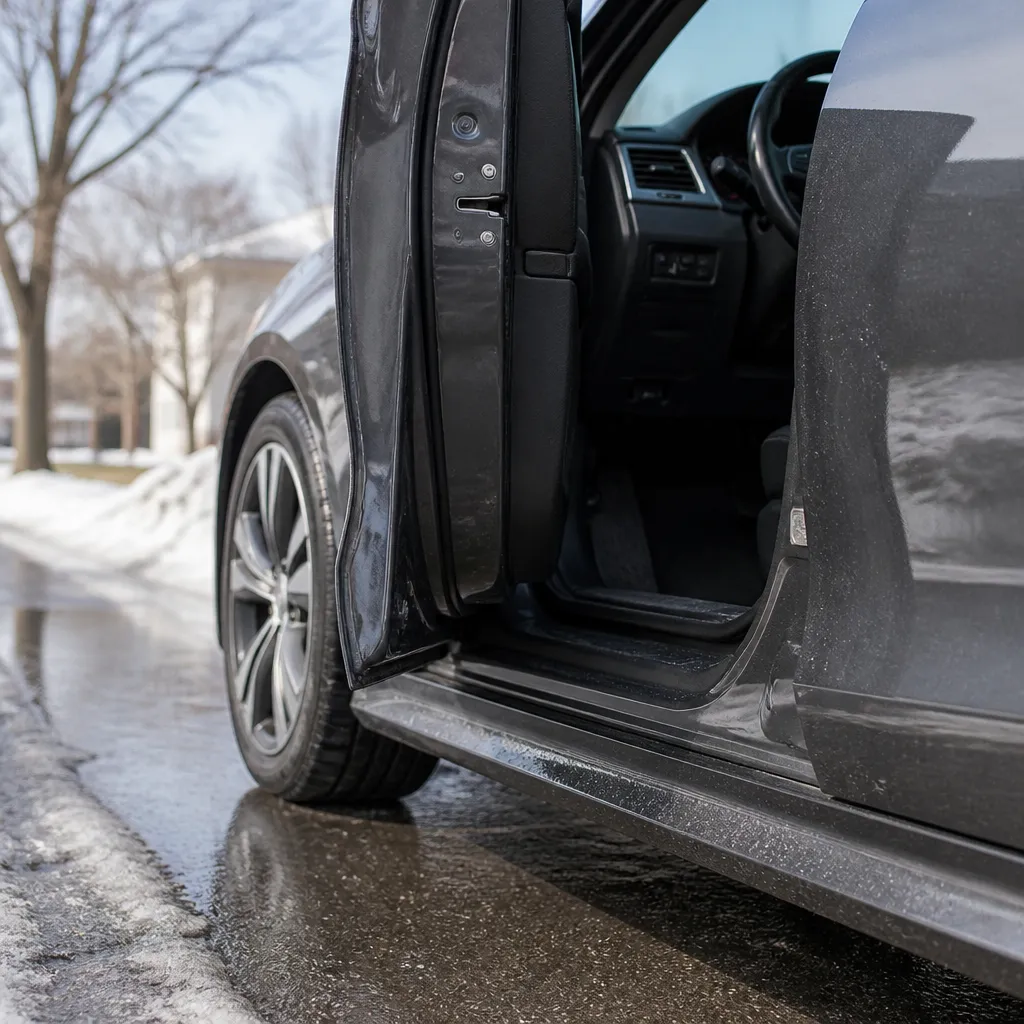
In practice, the first clue is rarely a dramatic rust spot. It is usually a faint white film along the door sill, a slightly dull band on the rocker edge, or a tiny bubble where the paint meets the metal. By the time those signs are obvious to a casual owner, the damage has usually been underway for a full season.
The surfaces that get the most salt are rarely the ones that get the most attention. If the edges are not part of the wash and protection plan, the plan has a gap.
A common mistake is treating the car as a set of flat panels. A detailer who only sees the hood, roof, and doors will miss the places where salt actually accumulates. That is why any winter plan for Illinois cars needs to start with the openings, the sills, and the lower body.
Door Jambs: The Overlooked Salt Trap
The door jamb is the painted surface inside the door opening, and it is one of the most neglected areas of a car in winter. Every time you open the door, slush from your shoes and salt from the floor gets pushed onto the jamb. The area stays damp for hours, especially after a snowfall that melts during the day and refreezes at night.
Why the Jamb Stays Wet
Jambs have a shape that holds moisture. The lip of the door overlaps the body, and the gap traps water and dissolved salt right where air circulation is poor. Unlike the roof, which sheds water quickly, the jamb keeps a film of salt solution in contact with the paint for long periods.
Many owners only wipe the jambs when they are already dirty enough to notice. By then, salt has been sitting on the surface for days. A quick wipe after each drive, using a damp microfiber towel, removes most of the buildup before it can work into the paint.
Cleaning the Jamb Without Scratching It
The jamb paint is often softer than people expect, and it sees a lot of abrasion from shoes, bags, and cuffs. Use a pH-neutral cleaner with a soft towel, and avoid stiff brushes that can leave fine marks along the edge. Work the towel into the corners and along the rubber seal line, where salt crystals hide.
Once the jamb is clean and dry, apply a thin layer of wax or sealant to the painted surfaces. Protection on the jamb is only useful if the edges are fully clean first, because wax locks in whatever is underneath it.
Drain Holes and Hidden Water
Doors and rocker sections have drain holes that let water escape from the inside of the panel. When those holes clog with leaves, road grit, or salt residue, water collects inside the structure. That water cannot be seen from outside, and it can sit against bare metal for an entire season.
Pro tip: Open each door and check the small drain openings at the bottom edge with a flashlight. If you see crusted salt or debris, clear it gently with a soft brush and a little water. Do not poke into the openings with anything sharp.
When we inspect a car in our shop, the jamb and drain area is one of the first places we look. It tells us how much salt the car has actually been exposed to, which is useful for planning the rest of the protection work.
Rocker Trim and Lower Panels
The rocker panel is the section of body between the front and rear wheel openings, directly below the doors. On many vehicles it is covered in a strip of trim or cladding, and the paint below that strip is the part that takes the most spray from the tires. In the Chicago suburbs, that spray is often a mix of salt and wet slush.
Where Rocker Trim Takes the Hit
Rocker trim sits low enough to catch splash from every passing car on a wet road. The gap between the trim and the body is a perfect place for salt to collect. If the trim is loose or the seal is worn, the salt works behind it, out of sight.
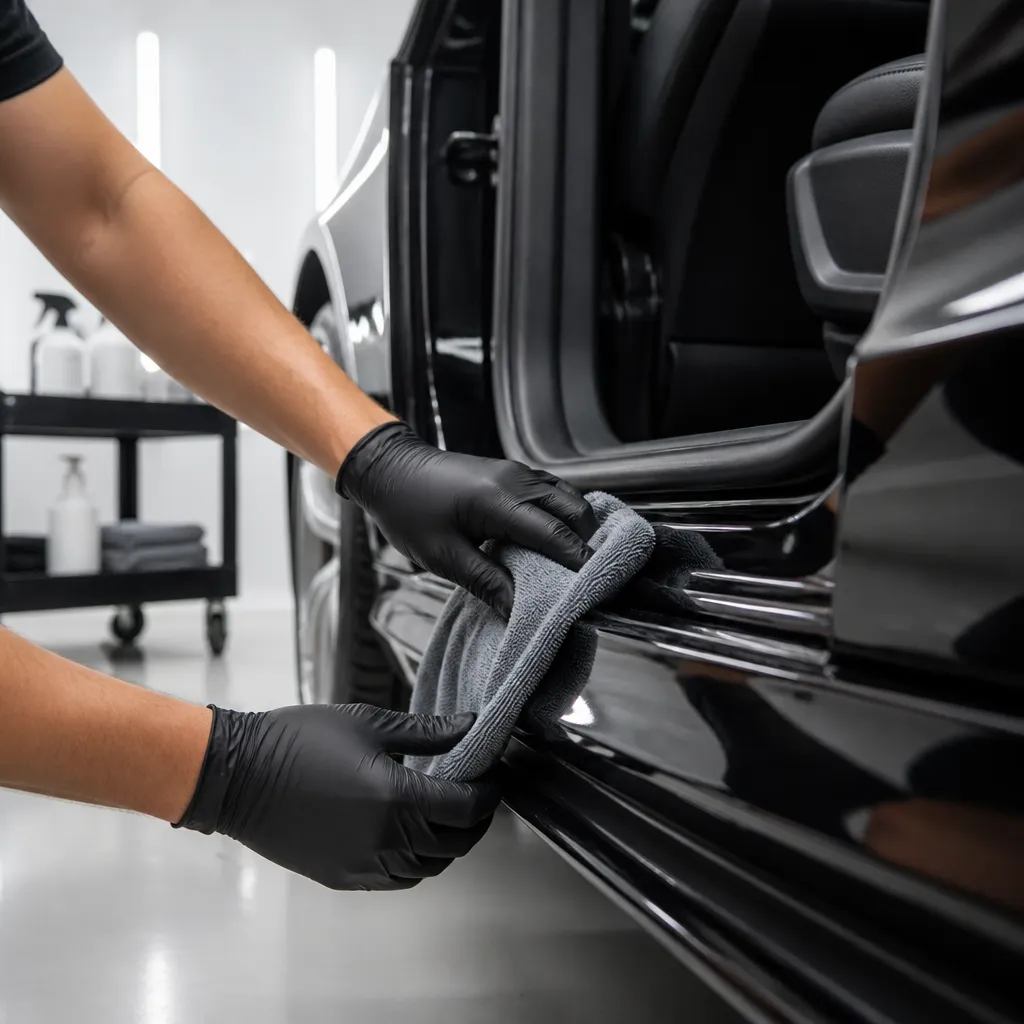
A practical check is to run your fingers along the lower edge of the trim after a drive. If you feel grit, residue, or moisture, that area needs cleaning and protection before the next storm. Leaving it alone lets the same spot take the same abuse every time the road is treated.
Lower Panels Behind the Front Wheels
The lower panels just behind the front wheels are among the most exposed areas on the car. They catch direct spray from the tire, and they are often where the first paint chips appear after a season of gravel and salt. Many owners never see this area because it is hidden by the wheel and the fender liner.
Lower panels also tend to be coated with road film that is harder to see than on the hood. A wash that focuses on the upper body can leave a gritty layer that acts like sandpaper every time the car moves. Working the lower panels with a separate mitt and a gentle touch prevents that buildup from becoming a scratch problem.
Chips and Bubbles on the Edge
Chips on the rocker edge are the most urgent problem we see in late winter. A chip exposes the metal, and salt water gets into the edge of the paint around it. Within a few weeks, the paint can lift in a small bubble that grows with each thaw and refreeze cycle.
Touch-up before winter is far cheaper than repair after the rust has spread. If a chip is small, clean it, dry it, and seal it with a precise touch-up product. If the edge already shows bubbling, the area needs professional attention because the rust has already started under the paint.
Trim, Seals, and Plastic Cladding
Not every edge on a car is painted metal. Door seals, black plastic cladding, and the rubber strips along the sill are part of the same salt-exposed zone. They are not immune to damage, and they can hide the condition of the paint underneath them.
Black Plastic Cladding and Salt Stains
Black plastic cladding on the lower body often looks fine until salt residue dries into a chalky white line along its edge. That line is a sign of standing moisture behind the trim. Left alone, it can stain the plastic and mask the metal behind it.
Cleaning cladding is simple, but it needs the right product. A mild cleaner and a soft brush remove most residue, and a light coat of protectant helps the plastic resist fading and staining. Avoid harsh solvents that can dry the surface and leave a grayish finish.
Rubber Door Seals and Salt Residue
Door seals collect salt in their folds and along the bottom edge, where they meet the sill. Dried residue can make the rubber stiff and cause it to lose its seal over time. A stiff seal lets more water and salt into the door opening, which feeds the cycle we described earlier.
Wipe the seals with a damp towel after each drive, and use a silicone-based conditioner sparingly once the rubber is clean. Keep the product off the paint, because it can cause problems with later coating work if it transfers to the surface.
Protection Options Compared
There is no single product that solves the edge problem. Each option covers a different zone, lasts a different length of time, and asks for a different level of maintenance. The table below compares three common approaches that Illinois owners tend to consider.
| Protection Option | Best Use on Edges | Main Limitation in Winter |
|---|---|---|
| Carnauba wax or paint sealant | Door jambs and painted lower panels after a full clean, as a sacrificial layer that is easy to refresh | Wears off quickly under salt and repeated washing, so it needs re-application after each wash during the season |
| Rust-inhibiting undercoating or oil-based spray | Rocker cavities, lower sills, and underbody surfaces that a wash cannot reach | Does not improve the look of the paint, and it must be applied to a clean, dry surface to bond properly |
| Professional nano-ceramic SiO₂ coating | Paint on the lower body, door jambs, and rocker edges when prepared properly before application | Requires paint correction and decontamination first, and it is not a substitute for cleaning salt off the car in winter |
Wax and Sealant on Edges
Wax and sealant are the simplest options and the easiest to refresh. Carnauba wax offers a warm glow and a sacrificial barrier, while synthetic sealants tend to last longer. On edges, the main job is to keep salt from bonding directly to the clear coat.
The weakness is durability. Edges see the most friction and the most salt, so the protection can thin out in weeks. If you rely on wax alone, plan to reapply it on the jambs and lower panels more often than on the hood.
Underbody Rust Inhibitors
Rust-inhibiting sprays and undercoatings put a protective film over the parts of the car that a wash does not reach. That film helps keep moisture and salt off the steel, which is the real concern inside the rocker and sill cavities. For the underside, this is often the most useful layer.
These products do not add shine, and they can be messy. Apply them to a clean, dry surface, and avoid spraying over moving parts or brake components. A good application keeps the protection where it belongs without creating new problems.
Professional Ceramic Coating on Lower Body
A professional nano-ceramic coating creates a harder, more durable layer on the paint. For lower panels and jambs, it can make salt and grime easier to rinse away, and it gives the edges a stronger barrier than wax alone. It is the option we recommend most often for owners who drive through salt every week.
The catch is preparation. A coating over contaminated paint seals the contamination in, so decontamination and paint correction have to come first. Coating also does not stop salt from landing on the car, so winter washing still matters.
Winter Washing Routine for Chicago Suburbs
A winter routine for the Chicago suburbs should match how the roads are treated. Salt is spread before and after storms, and the car sees repeated exposure in short bursts. Waiting for a warm, dry weekend to wash is the most common reason edges go unprotected for months.
Washing After Every Salt Event
Wash the car after each significant salt event when conditions allow, and make sure the wash reaches the lower body. Run the car through a wash that includes undercarriage spray if possible, because salt settles on the underside and in the wheel wells. Frequent washing is one of the most effective habits you can build.
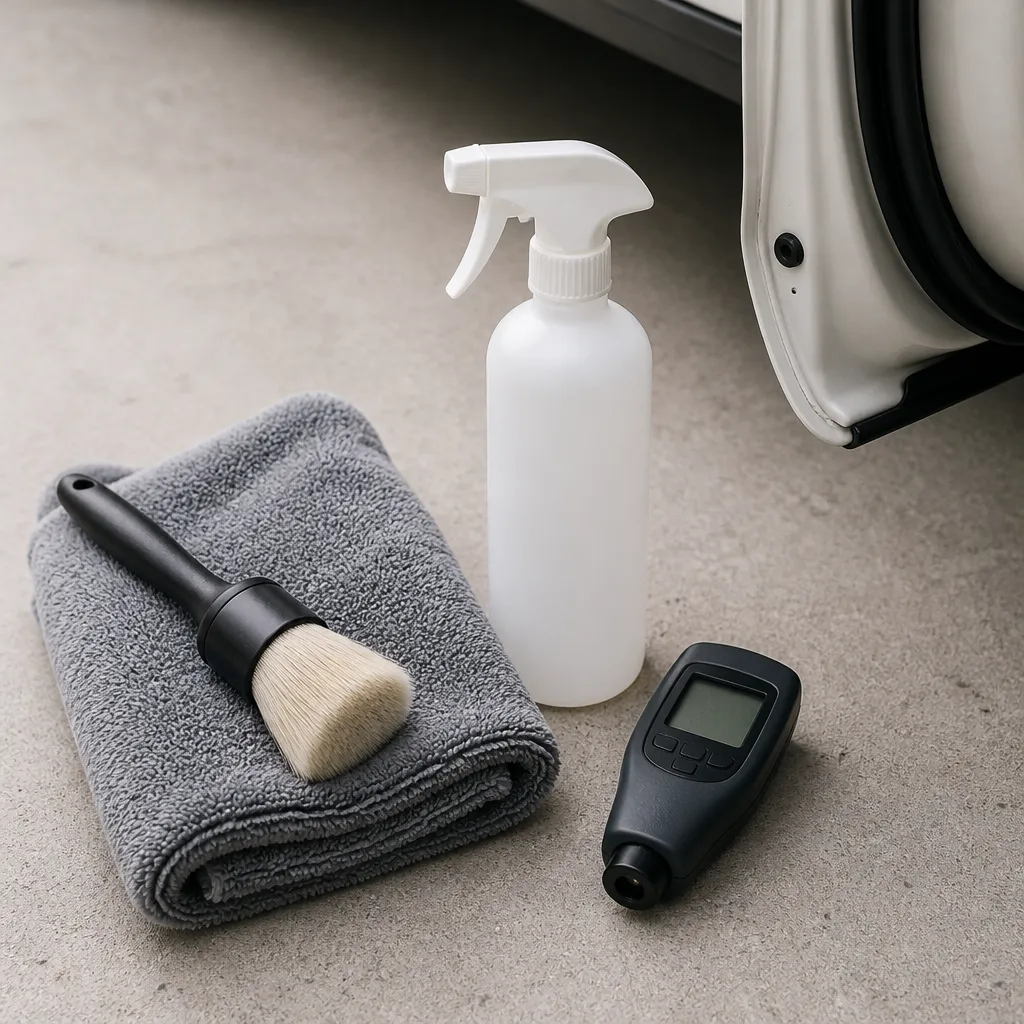
At home, open the doors and wipe the jambs, sills, and rocker edges with a damp towel. This takes a few minutes and removes the residue that a drive-through wash can miss. It is the simplest way to stop salt from working into the paint at the edges.
Re-Waxing and Re-Sealing
After each wash, reapply wax or sealant to the painted surfaces that took the most salt. Focus on the jambs, lower panels, and the area just behind the front wheels. These spots lose protection faster than the hood or roof.
A common mistake is applying wax to a surface that still has salt on it. The wax then traps the residue against the paint. Make sure the surface is fully rinsed and dry before protection goes on.
Late Fall Underbody Wash
Before the first hard freeze, give the entire vehicle a thorough wash, including the underside. The underside is especially sensitive to rust, so cleaning it before winter gives any protective layer a clean surface to bond to. Late fall is the best window for that work in most Illinois years.
Pro tip: Set a reminder to inspect the rocker edges and jambs every two weeks through salt season. Look for white residue, dull bands, and small bubbles. Catching a problem in January is much easier than fixing it in April.
Professional Edge Protection at Our Shop
At Hersheys Detailing in Glendale Heights, we see the results of salt season every spring. Owners in Carol Stream, Bloomingdale, and Wheaton bring in cars that look fine from ten feet away and have hidden damage along the jambs and rockers. Our approach starts with finding what is actually there, then working the edges with the same care we give the flat panels.
Multi-Stage Polishing Around Edges
Our paint correction work is multi-stage, and it includes the edges that many shops skip. Polishing a rocker or jamb requires lighter pressure, smaller pads, and more attention to the edge radius. Taking the time to do it right prevents burn-through on the sharpest curves.
Edge work also means removing the thin haze that salt leaves on painted surfaces. Once that haze is gone, the paint reflects light evenly, which makes it easier to spot early chips and bubbles during future inspections.
Decontamination Before Coating
Decontamination removes iron particles, road tar, and mineral deposits from the paint. On the lower body, it is the step that pulls out salt residue that a regular wash will leave behind. Skipping it means the coating bonds to the contamination, not to the clean paint.
We do not rush this stage. A coating is only as good as the surface beneath it, and edges are the places where contamination hides longest.
Ceramic Coating Warranties
Our nano-ceramic SiO₂ coatings come with 5-8 year warranties, and the coverage depends on proper preparation and the care plan that follows. That care plan matters in Illinois winters, because the coating still needs regular washing to keep the edges clean. We walk every client through the maintenance steps before the car leaves the shop.
Frequently Asked Questions
Why do door jambs rust before the rest of the car?
Door jambs hold moisture and salt in tight openings where air does not circulate well. The paint there is also thinner at the edges, and every door opening pushes more slush onto the surface. That combination lets salt work into the paint faster than on flat panels.
How often should I wipe the rocker panels during winter?
Wipe the rocker panels and jambs after each drive that involved salted roads, or at least once a week during active salt season. A quick pass with a damp microfiber towel removes most of the residue before it can bond to the paint.
Is wax enough to protect door jambs from road salt?
Wax helps as a sacrificial layer, but it wears away quickly on edges that see friction and constant spray. For most owners, wax needs to be reapplied after each winter wash, and a more durable coating is worth considering for the lower body.
Can I treat a small chip on the rocker edge myself?
Yes, if the chip is small, clean, and not yet bubbling. Clean and dry the area, then use a precise touch-up product that matches your paint code. If the paint is lifting or the metal shows rust, the area needs professional repair before it spreads.
Does an underbody spray replace washing the car?
No. An underbody spray protects the steel in areas a wash cannot reach, but it does not remove salt from the paint or the wheel wells. Washing and underbody protection work together, and neither one replaces the other during salt season.
Have you noticed salt damage starting at your door jambs or rocker panels? Share what you found and what you did about it in the comments, and tell us whether your winter routine has changed over the years.