Most car owners in the Chicago suburbs think a drive-through wash is sufficient. It is not. The combination of road salt from Illinois winters, brake dust baked onto wheel faces by summer heat, and industrial fallout settling onto paint across DuPage County creates a level of surface contamination that no automated tunnel can touch. That is the environment every vehicle in Glendale Heights, Carol Stream, Bloomingdale, and Wheaton is exposed to year-round. Exterior detailing in Glendale Heights is not a luxury service for obsessive car owners. It is the difference between paint that lasts a decade and paint that oxidizes, chips, and fades by year four.
Table of Contents
- Quick Takeaways
- Why Exterior Detailing Matters in Illinois
- The Full Exterior Detailing Process, Step by Step
- Clay Bar Decontamination and Iron Fallout Removal
- Paint Correction: Single-Stage vs. Multi-Stage
- Nano-Ceramic SiO2 Coatings: The Final Layer of Defense
- What Hersheys Detailing Does Differently
- Decontamination Method Comparison
- Frequently Asked Questions
- References
Quick Takeaways
| Key Insight | Explanation |
|---|---|
| Iron fallout is invisible until it is too late | Ferrous brake dust and industrial particles embed into clear coat without any visible warning. A dedicated iron remover is required to dissolve them before they cause permanent oxidation staining. |
| Clay bar alone is not enough for contaminated paint | On heavily contaminated surfaces, clay bar will physically drag iron particles across the paint rather than remove them. Chemical decontamination must come first. |
| Multi-stage polishing is not the same as a single buff | Multi-stage machine polishing uses a cutting compound to remove defects, then a finishing polish to restore clarity. Single-stage skips the refinement phase, leaving behind micro-marring. |
| SiO2 ceramic coatings bond at the molecular level | Nano-ceramic coatings form a hardened layer of silicon dioxide nanoparticles that bond to the clear coat, providing durable protection against UV rays, oxidation, and chemical contamination. |
| Illinois winters demand a decontamination protocol, not a rinse | Road salt and brine used on Illinois roads accelerate rust and clear coat degradation. A proper pre-wash and decontamination wash is essential after every winter season. |
| Paint correction before coating is non-negotiable | If fallout or micro-scratches are trapped beneath a ceramic coating, the coating locks in those defects permanently. Correction must happen first. |
| Hand washing preserves clear coat longer than automated washes | Tunnel brushes and high-pressure mechanized rollers introduce swirl marks into the clear coat over time. Professional hand washing with pH-neutral shampoo eliminates that risk entirely. |
Why Exterior Detailing Matters in Illinois
DuPage County is not a forgiving environment for vehicle paint. Illinois weather cycles between road salt and freeze-thaw damage in winter and UV-heavy, humid summers that accelerate oxidation. Road salt used during winter months accelerates rust and corrosion on undercarriages and painted surfaces, turning what looks like clean paint into a surface that is actively degrading underneath. By the time you see orange staining around wheel arches or dull patches in the clear coat, the damage is already compounded.
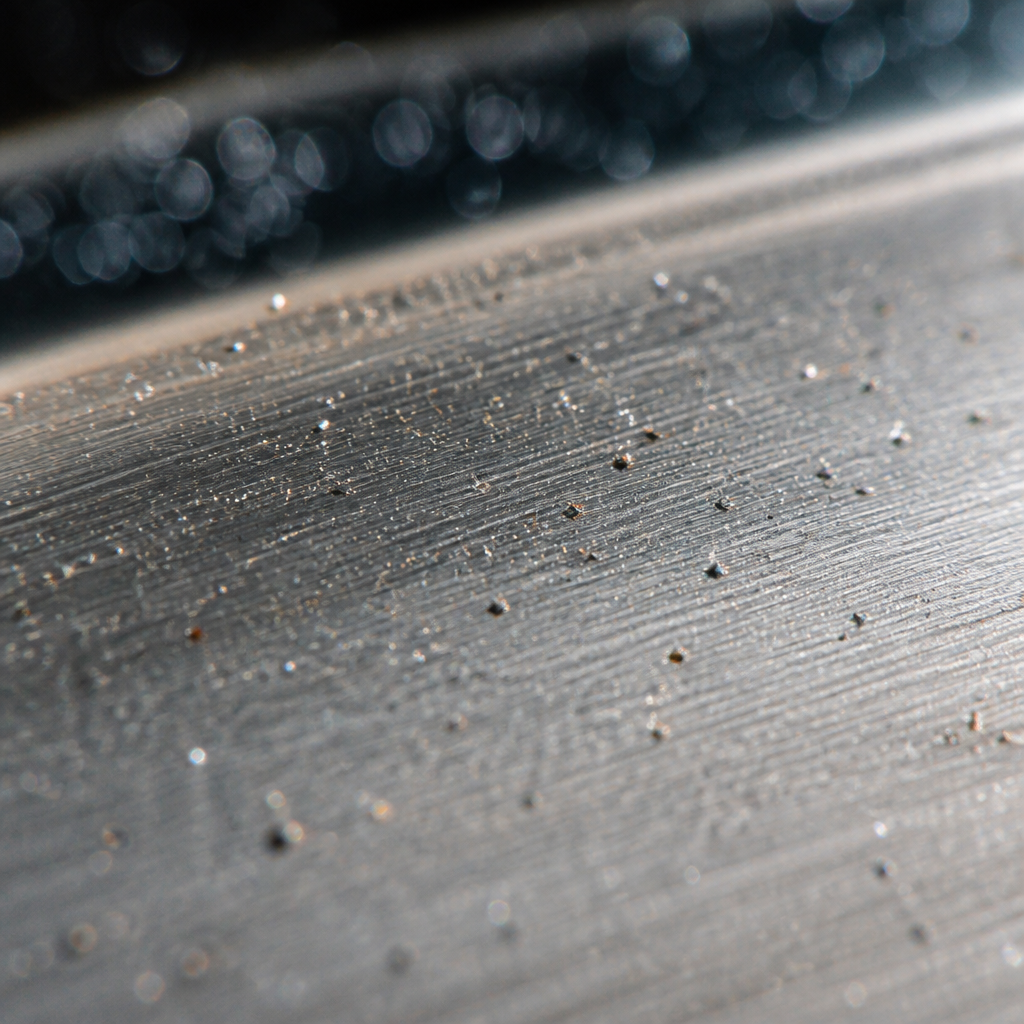
The problem is not just seasonal. Brake dust from daily commuting on I-355 and Route 53 deposits ferrous iron particles onto wheel faces and rear quarter panels constantly. These particles are hot when they land, which means they embed into the clear coat rather than sitting on top of it. A standard wash removes none of this. Only a chemical iron remover dissolves the bond between the particle and the paint.
This is the baseline reality for every vehicle owner in Glendale Heights, Bloomingdale, Carol Stream, and Wheaton. Understanding what proper exterior detailing actually involves is the first step toward protecting a vehicle that costs tens of thousands of dollars.

The Full Exterior Detailing Process, Step by Step
A professional exterior detail is not a single action. It is a sequenced protocol where each step builds on the one before it. Skip a step, and every step after it is compromised.
Pre-Wash and Foam Cannon Application
The process begins before any contact is made with the paint. A foam cannon loaded with pH-neutral pre-wash shampoo is applied to dwell on the surface, loosening heavy contamination without physical abrasion. This is not for aesthetics. It is to reduce the risk of dragging grit across the paint surface during the contact wash phase.
Two-Bucket Hand Wash Method
After the foam dwell, a two-bucket contact wash removes remaining surface contamination. One bucket holds clean soapy water, the other holds rinse water for the wash mitt. The mitt is rinsed between every panel to prevent reintroduction of trapped grit. Tunnel washes skip this entirely, which is why they introduce the swirl marks that customers later pay to have corrected.
Wheel and Tire Decontamination
Wheels get dedicated attention with separate brushes, wheel-safe cleaners, and a purpose-formulated iron remover. The same iron chemistry attacking your paint panels hits wheel faces even harder, given the proximity to the brake caliper. Cleaning wheels with the same mitt used on the paint is a mistake that spreads brake dust contamination.
Rinse and Drying
A thorough rinse is followed by drying with clean, high-quality microfiber towels. Air drying is not used. Standing water leaves mineral deposits on surfaces, particularly around trim lines and mirror housings where water pools. These water spots etch into clear coat if left to bake under sun exposure.
Pro tip: Always dry the vehicle in a shaded area or indoors. Even on a mild Illinois spring day, direct sunlight heats the clear coat enough for water minerals to etch into the surface before the panel fully dries.
Clay Bar Decontamination and Iron Fallout Removal
This is the most commonly skipped step in amateur detailing, and skipping it is the single biggest reason ceramic coatings fail to bond correctly or last as long as they should. Clay bar decontamination and iron fallout removal are two distinct processes that work together, not interchangeably.
Why Iron Removers Come Before the Clay Bar
Iron removers target embedded ferrous particles, which are microscopic pieces of iron from brake dust and industrial fallout that have bonded chemically to the clear coat. When an iron remover is applied, it reacts with these particles and changes color, typically turning purple or red, as it dissolves the iron bond. What you see turn purple on a vehicle you thought was clean is a useful dose of reality.
The reason iron removal must precede clay bar work is straightforward. Clay bar works by physically lifting and trapping surface bonded contamination in the clay medium as it glides across a lubricated panel. If iron particles are still firmly embedded, the clay bar drags across them rather than encapsulating them. This creates micro-scratches across the clear coat, the opposite of what you are trying to achieve.
If the fallout is trapped in the clear coat, a protective coating that uses nanotechnology to penetrate microscopic imperfections simply will not bond or last as it should.
What the Clay Bar Actually Does
After chemical decontamination, clay bar treatment removes what the iron remover cannot: bonded industrial fallout, tar deposits, tree sap residue, and overspray. The clay is worked across each panel with a clay lubricant to prevent marring, using overlapping passes. When the clay bar surface becomes visibly contaminated, it is folded to expose a clean section. A contaminated clay bar dragged across paint is just as damaging as the original contamination.
For vehicles in Illinois that spend winters on roads treated with magnesium chloride brine, a clay bar treatment at minimum once per season is the right cadence. Vehicles driven daily on routes with heavy truck traffic should consider it twice per year.
Pro tip: Run a clean finger across a freshly washed panel before and after clay bar treatment. Before treatment, the surface feels rough, like fine sandpaper. After correct clay bar decontamination, it should feel smooth enough to squeak. If the panel still feels rough, the decontamination process is not complete.
Paint Correction: Single-Stage vs. Multi-Stage
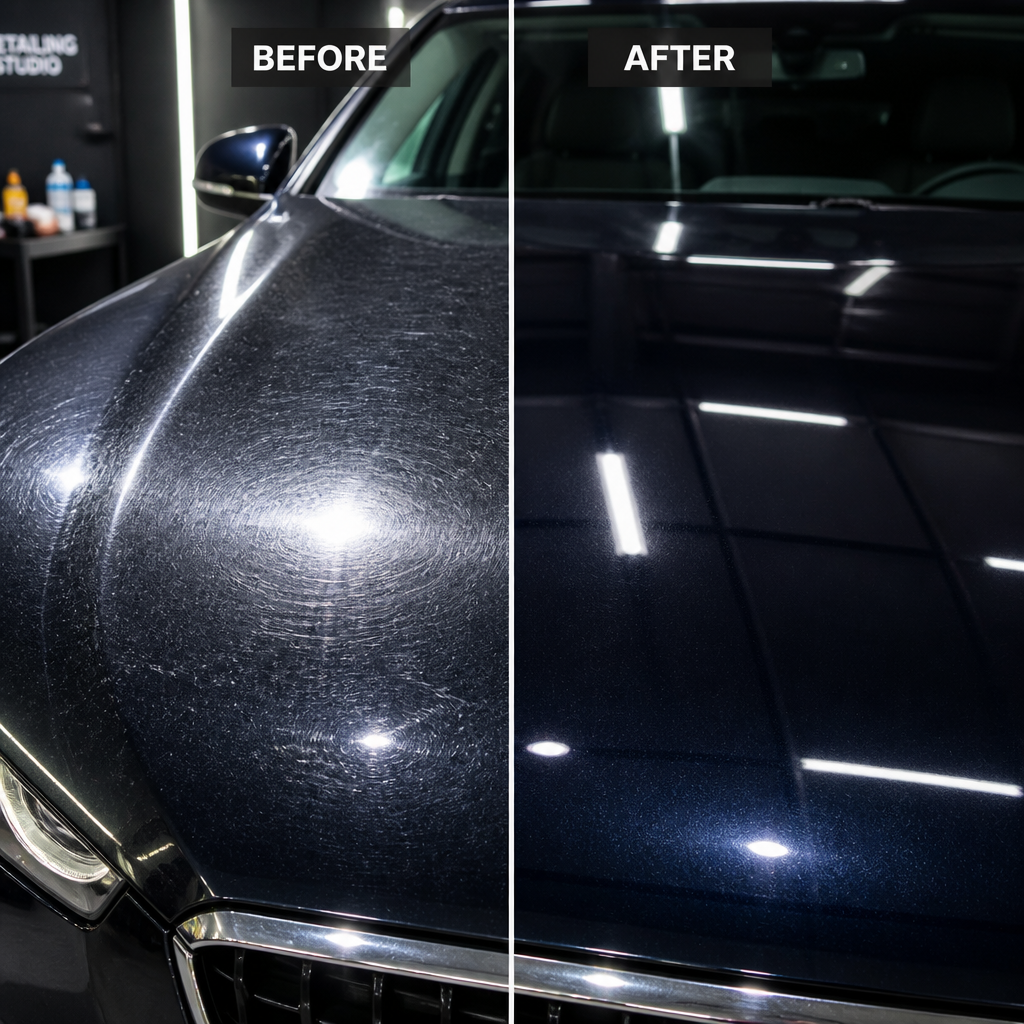
Paint correction is the process of removing defects from the clear coat using machine polishing. The clear coat on most vehicles is thin, typically measured in microns, and it is where all the damage accumulates: swirl marks from improper washing, fine scratches from parking lot encounters, and oxidation from UV exposure. Paint correction addresses all of these, but only if it is done in the right number of stages with the right abrasive compounds.
Single-Stage Polishing
Single-stage polishing uses one polish product and one pad combination to simultaneously cut defects and refine the finish. It is appropriate for vehicles with mild swirling and no deep scratches. A single-stage job done correctly produces a noticeably improved finish. The limitation is that the cutting compound used to remove defects also leaves behind a degree of micro-marring that a dedicated finishing polish would eliminate.
Multi-Stage Machine Polishing
Multi-stage polishing is the professional standard for any vehicle receiving a ceramic coating or paint protection film. The first stage uses a cutting compound and an appropriate pad to level defects in the clear coat. The second stage, and sometimes a third, uses progressively finer polishes to refine the surface and remove any haze introduced by the cutting stage. The result is a surface with genuine depth, clarity, and gloss that a single-stage process cannot replicate.
Hersheys Detailing uses multi-stage machine polishing as the standard for paint correction work. This is not an upsell. It is the process required to achieve a finish that holds up under proper paint depth gauge inspection and reflects correctly under lighting. Any detailer who skips the finishing stage is delivering an incomplete result.
Nano-Ceramic SiO2 Coatings: The Final Layer of Defense
After decontamination and paint correction, the vehicle is ready for a protective coating. Nano-ceramic SiO2 coatings are composed of nanoparticles of silicon dioxide suspended in a liquid solution. When applied to a vehicle, the liquid evaporates and leaves behind a hardened layer of SiO2 nanoparticles that bond to the surface at the molecular level. This forms a protective barrier that enhances appearance and safeguards the vehicle from environmental elements.
The protection offered by a properly applied ceramic coating covers UV ray degradation, chemical etching from bird droppings and acidic rain, minor abrasion resistance, and hydrophobic water behavior that keeps the surface cleaner for longer. The hardness of the cured coating also means that minor contact contamination sits on top of the coating rather than bonding to the clear coat underneath.
What Makes SiO2 Coatings Different from Wax
Wax is a temporary layer that sits on top of the clear coat and degrades with washing, UV exposure, and temperature cycling. In Illinois, wax typically lasts a single season if applied correctly. A nano-ceramic SiO2 coating bonds chemically to the surface rather than sitting on it. Hersheys Detailing applies coatings backed by 5 to 8-year warranties, a timeframe that no wax or spray sealant product can approach.
The coating also amplifies the clarity and depth of a corrected paint surface. On a dark-colored vehicle, the difference between bare corrected paint and the same paint under a cured ceramic coating is immediately visible. The gloss has a wet, three-dimensional quality that polished paint alone cannot produce.
Why Surface Preparation Determines Coating Performance
This is where cutting corners has permanent consequences. If contamination or micro-scratches remain in the clear coat when the coating is applied, the coating bonds over those defects and locks them in. There is no fixing this without removing the coating. The decontamination and paint correction stages exist entirely to ensure the coating bonds to a flawless surface. Every step that comes before coating application is, in effect, preparation for that coating to perform as specified.
What Hersheys Detailing Does Differently
There are detailing services across the Chicago suburbs that offer some version of the steps described above. What separates Hersheys Detailing from the alternatives comes down to process discipline and the refusal to compress a multi-step protocol into a single-day shortcut.
After 7 years and 500-plus vehicles detailed in the Glendale Heights area, the team has developed a systematic approach to exterior work that does not vary based on how busy the schedule is. The decontamination phase is never skipped to save time. Paint correction work is done under proper lighting and verified with a paint depth gauge before any coating is applied. Koch Chemie certification informs the product selection and application techniques used throughout every detail.
The client base is largely composed of luxury and high-end vehicle owners in Carol Stream, Bloomingdale, and Wheaton who understand that their vehicle's paintwork is a significant asset. These are not clients who want a quick buff and a spray sealant. They want documented, warranted protection applied by a team that treats the process as a technical discipline, not a production line.
Hersheys Detailing also offers ongoing maintenance programs, which is relevant because a ceramic coating is only as good as the maintenance that follows it. A coated vehicle still needs proper wash technique to preserve the coating's hydrophobic properties and surface hardness. Setting up clients with a maintenance program after coating application is part of the service, not an afterthought.
Decontamination Method Comparison
Understanding which decontamination tools to use and in what order is the foundation of proper exterior detailing. The three primary methods serve different purposes and work best in sequence, not as substitutes for each other.
| Method | What It Removes | Limitations |
|---|---|---|
| Iron / Fallout Remover (chemical) | Embedded ferrous brake dust particles and industrial iron fallout bonded to clear coat. Works chemically without physical contact. | Does not remove tar, sap, overspray, or organic contamination. Must be rinsed off within dwell time to prevent etching. |
| Clay Bar Treatment (mechanical) | Bonded surface contamination including industrial fallout, tar spots, tree sap, and overspray that survives washing. | Ineffective on firmly embedded iron without prior chemical treatment. Used clay can scratch paint if it picks up grit and is not folded frequently. |
| Tar and Adhesive Remover (chemical spot treatment) | Road tar, adhesive residue, bug splatter, and bitumen deposits concentrated in specific zones like the lower rocker panels and front fascia. | Requires careful application to avoid contact with rubber trim and bare plastic. Not a full-panel treatment. |
In practice, a full professional decontamination protocol uses all three in sequence. Iron remover first, tar remover on affected areas second, and clay bar last to capture any remaining bonded contamination before paint correction begins. Skipping to clay bar without chemical decontamination first is a common mistake that introduces more swirl marks than it removes.
Frequently Asked Questions
How often should I get an exterior detail for my vehicle in the Chicago suburbs?
For vehicles driven year-round in Illinois conditions, a full exterior detail including decontamination is recommended at minimum twice per year: once after winter when road salt accumulation is at its peak, and once before winter to apply protective coatings before salt season begins. Vehicles under a ceramic coating maintenance program can extend the interval between full decontamination details.
Is clay bar decontamination safe for all paint types, including factory paint and wraps?
Clay bar treatment is safe for clear-coated factory paint when used with proper lubrication and technique. It is not appropriate for matte finishes, satin wraps, or paint protection film without a product specifically formulated for those surfaces. Using standard clay on a matte finish will introduce gloss spots that cannot be easily corrected. Always confirm the surface type with your detailer before scheduling decontamination work.
What is the difference between a spray sealant and a nano-ceramic SiO2 coating?
A spray sealant is a polymer-based product that bonds loosely to the clear coat surface and typically lasts one to three months depending on washing frequency and UV exposure. A nano-ceramic SiO2 coating is a hardened silicon dioxide layer that bonds at the molecular level and, when professionally applied and properly maintained, provides protection measured in years rather than months. The durability, chemical resistance, and hydrophobic performance of a ceramic coating far exceed what a spray sealant delivers.
Can paint correction fix deep scratches that go through the clear coat to the base coat?
Machine polishing corrects defects that exist within the clear coat layer. If a scratch penetrates through the clear coat and reaches the base coat or primer, paint correction will not fix it. Those scratches require touch-up paint application before polishing. A paint depth gauge measurement before starting correction work identifies which defects are correctable and which require a different repair approach.
Why does my car develop swirl marks even though I wash it regularly?
Swirl marks are almost always introduced during the washing process itself, not from driving. Automatic tunnel washes with rotating brushes or foam curtains drag microscopic grit across the clear coat surface with every pass. Even hand washing with a single bucket or a dirty wash mitt reintroduces trapped particles into the paint. The two-bucket wash method with a clean microfiber mitt, proper lubrication, and frequent mitt rinsing eliminates the source of swirl mark introduction that makes paint look dull under direct light.
Do I need paint correction before getting a ceramic coating applied?
Yes, without exception. A ceramic coating bonds to the surface it is applied to, including any scratches, swirl marks, or contamination present at the time of application. Those defects become permanently locked beneath the coating. Paint correction before coating application ensures the coating enhances a flawless surface rather than preserving a compromised one. Any detailer offering ceramic coating without a correction and decontamination phase first is delivering a result that will not hold up to scrutiny under proper lighting.
Have you had an exterior detail done on your vehicle in the Chicago suburbs? Share what the experience was like and what difference you noticed in the finish afterward.
References
- Ceramic Pro: Why clay bar and chemical decontamination are essential steps in professional detailing
- Detailed Image: How iron removers work and why they are necessary before clay bar treatment
- Detailed Image: Complete paint decontamination guide covering iron removers, clay bars, and fallout removal
- TopCoat Products: What SiO2 ceramic coatings are and how they bond to vehicle surfaces
- Detail Pilot: Why Illinois road conditions make professional detailing a practical necessity for vehicle owners