Most vehicle owners in the Chicago suburbs think about paint protection either too early in the summer or too late when November slush is already coating the rocker panels. The window that actually matters is September, and it closes faster than most people expect. Fall car detailing in Illinois is not just about keeping a car clean before winter. It is about putting a hard, chemically bonded barrier between your clearcoat and five or six months of road salt, calcium chloride, and freeze-thaw abuse. Miss that September window and you are either rushing an application into marginal October conditions or spending spring undoing a winter's worth of oxidation damage.
Table of Contents
- Quick Takeaways
- Why September Is the Sweet Spot for Ceramic Coating in Illinois
- What Illinois Winters Actually Do to Your Paint
- Ceramic Coating vs. Wax vs. Paint Sealant: A Pre-Winter Comparison
- What Happens Before the Coating Goes On
- How to Choose a Ceramic Coating Service in the Chicago Suburbs
- Frequently Asked Questions
- References
Quick Takeaways
| Key Insight | Explanation |
|---|---|
| September temperatures are ideal for curing | Glendale Heights averages daily highs dropping from around 79°F to 69°F through September, staying comfortably within the 60-80°F sweet spot that ceramic coatings need for proper cross-linking and adhesion. |
| Illinois road salt starts earlier than most drivers expect | IDOT pre-treatment operations can begin before the first measurable snowfall. A car coated in September has weeks of full cure time before salt hits the roads. |
| High humidity wrecks adhesion | July and August humidity in northeastern Illinois regularly spikes above the threshold that interferes with ceramic coating bonding. September humidity moderates significantly, making application more predictable. |
| Paint correction must happen before coating | Ceramic coating locks in whatever is already on your paint. Any swirl marks, water spots, or oxidation must be removed with machine polishing before the coating is applied, or they are sealed in permanently. |
| Wax and sealant fail fast in Illinois winters | Spray wax and polymer sealants degrade quickly under repeated road salt exposure and harsh freeze-thaw cycles. Professional-grade nano-ceramic SiO₂ coatings provide a harder, more chemically resistant barrier that lasts seasons, not weeks. |
| Full cure takes days, not hours | Most professional ceramic coatings need 5-14 days to reach full hardness. Applying in September gives ample dry, mild weather for that cure to complete before the first serious autumn rain or cold snap. |
| A coated car is significantly easier to decontaminate all winter | The hydrophobic surface of a cured ceramic coating causes road grime, salt slush, and brake dust to sheet off rather than bond to the paint, cutting wash time and reducing the chance of wash-induced marring. |
Why September Is the Sweet Spot for Ceramic Coating in Illinois
Ceramic coatings are not paint. They are a chemical layer that needs to bond to your clearcoat, and that bonding process is directly affected by ambient temperature and relative humidity at the time of application and during the initial cure window. Apply in conditions that are too hot, too cold, or too humid and you get coating failures: high spots that cannot be leveled, streaking, or adhesion so weak the coating peels within a season.
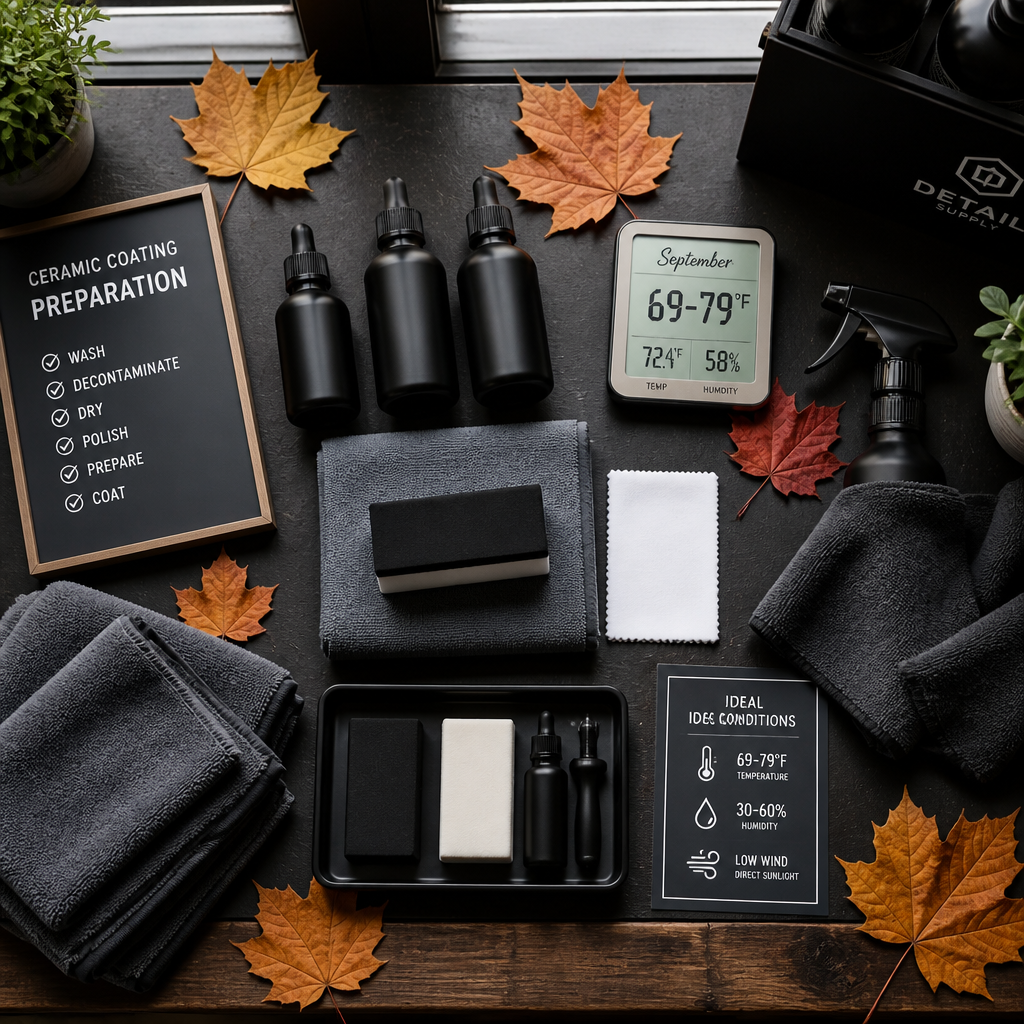
The ideal application window is 60-80°F with humidity below 70%. Early to mid-fall in northeastern Illinois hits that range consistently. According to weather data for Glendale Heights, September average daily highs run from approximately 79°F early in the month down to around 69°F by month's end, with overnight lows following a comparable decline. That means daytime application windows are predictable and the coating can begin its initial cure during the same controlled-temperature period.
Compare that to July and August, when humidity in the Chicago suburbs regularly climbs to uncomfortable levels and can push above the threshold that causes ceramic coatings to cure unevenly. October is usable, but barely. Once overnight temperatures start dropping toward 50°F and morning dew becomes heavier, flash times on the coating extend significantly, scheduling a proper cure window gets harder, and the margin for error narrows. September is the reliable middle ground.
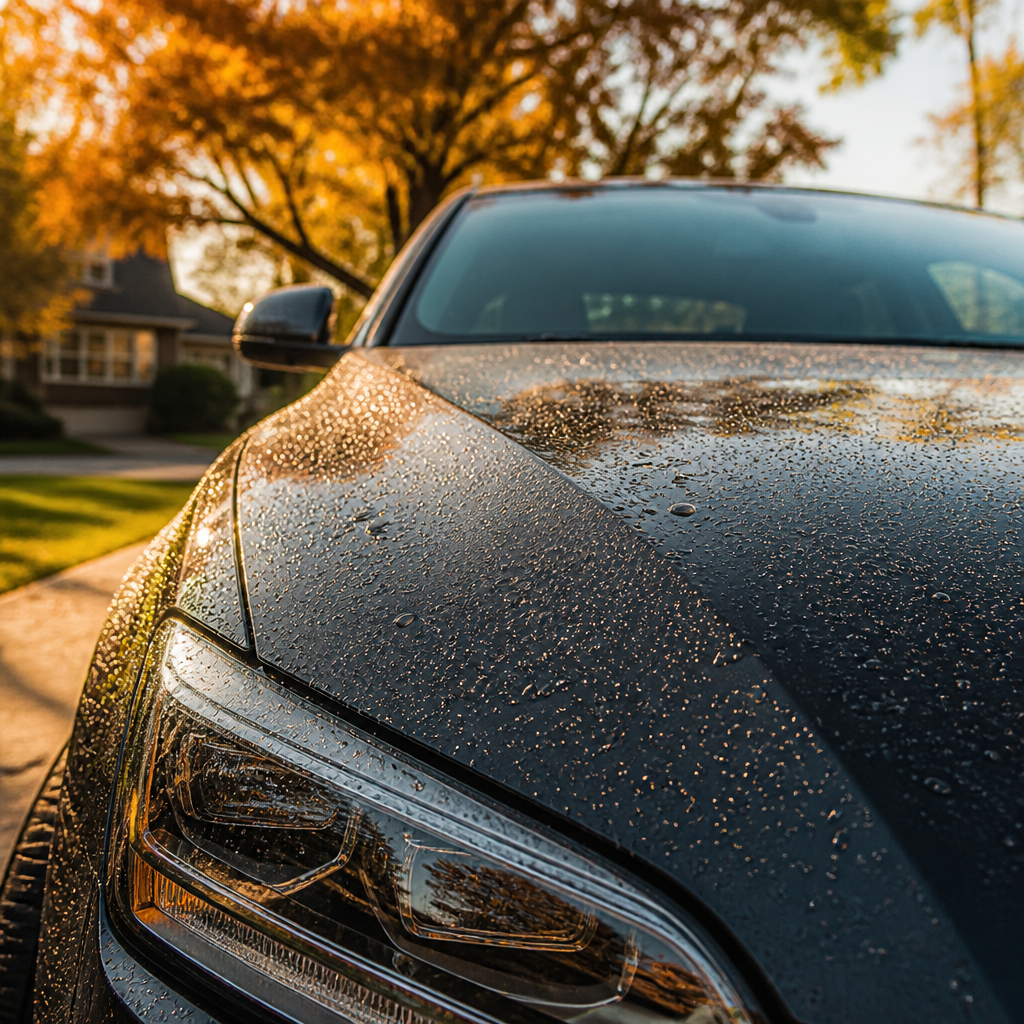
Early to mid-fall is one of the best coating windows of the year. Daytime highs land in the ideal 65-80°F range, humidity moderates from summer highs, and applying before winter means your paint enters road-salt season protected.
Pro tip: If you are booking a September appointment at a shop in Glendale Heights or anywhere in the western Chicago suburbs, book before Labor Day. Detailers who do this work properly, including multi-stage paint correction before coating, fill up fast once summer ends and the "I need this before winter" calls start coming in.

The Curing Timeline Matters More Than Most People Realize
After application, a professional ceramic coating needs a minimum of 24 to 48 hours with zero water contact for the initial chemical bond to form. That means no rain, no morning dew, no car wash. Full hardness, the point at which the coating reaches its rated scratch resistance and chemical protection, takes most professional-grade products between 5 and 14 days.
In September in Illinois, you have a realistic chance of getting a full week of dry, mild conditions after your appointment. By October, scheduling around rain gaps and cold snaps becomes a game. By November, it is mostly not worth trying unless the car will be kept in a heated, climate-controlled environment immediately after application.
What Illinois Winters Actually Do to Your Paint
This is not theoretical. If you have owned a car in the Chicago suburbs for more than a few winters, you already know what road salt looks like on a dark paint job. What most people do not realize is the mechanism behind the damage, because understanding it changes how seriously you take pre-winter protection.
Road salt cannot directly rust paint, but it works its way into the microscopic pores of your clearcoat and creates a mild acid that attacks from within. Over time, that acid degrades the clearcoat, leading to oxidation, dullness, and eventually paint failure. The undercarriage and lower body panels take the worst of it because tire spray kicks salt-laden slush directly onto those surfaces, where it can sit for days between washes.
Beyond salt, Illinois winters add UV exposure on clear days (UV does not take winter off), freeze-thaw cycles that expand and contract any existing micro-cracks in the paint, and the physical abrasion of ice scrapers, snow brushes, and automatic car wash brushes that drivers resort to when they need a quick clean between storms. A car that goes into November without proper paint protection is essentially undefended against all of those simultaneously.
Pro tip: After a ceramic coating is applied and fully cured, road grime and salt slush bond far less aggressively to the surface. The hydrophobic layer causes water and the contaminants in it to bead up and sheet off rather than sticking. This does not mean you skip winter washes. It means the washes you do are faster, safer, and less likely to cause the swirl marks that touchless washes and improper rinsing create on unprotected paint.
What Road Salt Does to an Unprotected Clearcoat Over One Illinois Winter
Salt ions settle into clearcoat pores and begin accelerating oxidation almost immediately after first contact. After a single Chicago-area winter of regular road exposure without a proper protective barrier, many vehicles show visible etching, minor oxidation, and increased surface roughness that makes the next season's contaminants adhere even more easily. Each winter compounds the damage from the last one.
Bird droppings and tree sap from fall parking also etch clearcoat quickly, especially when temperature-cycled repeatedly. Illinois city birds, particularly around suburban commercial areas, leave acidic droppings that can begin etching an unprotected clearcoat within hours on a warm day.
Ceramic Coating vs. Wax vs. Paint Sealant: A Pre-Winter Comparison
Not every product marketed as paint protection is the same, and the differences matter enormously in an Illinois winter context. Here is a direct comparison of the three main options most detailers will present to you.
| Protection Type | Durability in Illinois Winter Conditions | Road Salt and Chemical Resistance |
|---|---|---|
| Carnauba Wax | 4-8 weeks. Heat, cold, and road wash strip it quickly. Does not survive a full Illinois winter without reapplication every 4-6 weeks. | Low. Wax softens in heat and becomes brittle in extreme cold. Salt ions penetrate the wax layer relatively easily. |
| Polymer Paint Sealant | 3-6 months under ideal conditions. Illinois road salt, repeated washing, and temperature cycling reduce that significantly. May last one season with careful maintenance. | Moderate. Better than wax, but polymer sealants degrade under repeated exposure to road salt, calcium chloride, and alkaline wash chemicals. |
| Professional Nano-Ceramic SiO₂ Coating | 5-8 years with proper maintenance. Forms a hard, semi-permanent layer that does not degrade from temperature cycling, road salt, or UV exposure the way sacrificial coatings do. | High. Creates a hard sacrificial barrier that is impervious to road salt, calcium chloride, and abrasive grit. Chemical resistance far exceeds both wax and sealant. |
The comparison is not close for a vehicle being driven in northeastern Illinois year-round. A quality wax applied in September will be largely gone by December. A professional nano-ceramic SiO₂ coating applied in September will still be providing meaningful protection when your car goes through its seventh Illinois winter. The economics of that math are straightforward for anyone driving a vehicle they care about.
What Happens Before the Coating Goes On
This is the part of the process that separates a genuine professional ceramic coating from a spray-on ceramic product applied over contaminated, scratched paint. The preparation work is not optional, and any shop that does not walk you through it in detail before quoting you should raise a flag.
Decontamination: Removing What a Wash Cannot
A standard wash removes loose dirt. It does not remove embedded iron fallout from brake dust, bonded industrial contamination, tree sap, tar spots, or the mineral deposits from hard water washing. All of those have to come off before a coating goes on, because the coating will seal them against the paint permanently.
Professional decontamination involves a chemical iron remover applied to the entire panel surface, followed by a clay bar or clay mitt treatment to pull bonded contamination out of the clearcoat pores. After decontamination, the surface is wiped down with an isopropyl alcohol panel wipe to remove any oils, silicones, or residues that would interfere with coating adhesion. Only then is the surface actually ready for coating application.
Paint Correction: The Step Most DIY Coatings Skip
Ceramic coating amplifies your paint's condition. Applied over swirl marks, light scratches, water etching, or oxidation, the coating locks those defects in under a glossy layer. They do not go away. In many cases they become more visible because the coating increases the reflectivity of the surface, making any imperfections more apparent under light.
Multi-stage machine polishing removes those defects before the coating goes on. Depending on the condition of the paint, this can range from a single-stage polish to a two-stage or three-stage correction process. The result is paint that is genuinely flawless before the coating is applied, so the coating preserves that flawless finish rather than enshrining someone's swirl-heavy past washes.
At Hersheys Detailing in Glendale Heights, the pre-coating correction work is done with professional machine polishers and follows a decontamination process before any coating touches the paint. If your vehicle has significant paint defects accumulated over prior winters, September is the right time to address both the correction and the protection in a single appointment before the next season's damage cycle begins.
How to Choose a Ceramic Coating Service in the Chicago Suburbs
There are a lot of shops offering ceramic coatings now. The word "ceramic" on a menu does not tell you much without understanding what is actually being applied and how. Here are the questions worth asking before you book anywhere.
What Specific Coating Product Are They Using?
A professional-grade nano-ceramic SiO₂ coating and a consumer spray ceramic are not the same product and do not offer the same protection or longevity. Ask for the product name and look it up. Professional coatings with 5-8 year warranties are applied by trained technicians in controlled environments, not sprayed over an uncorrected paint job in a parking lot.
Does the Quote Include Paint Correction?
If a shop quotes you a ceramic coating without any mention of paint correction or asks you to show up with a freshly washed car and applies the coating the same day, the result will reflect that. The preparation is a significant part of the labor involved. A low quote almost always means preparation steps are being cut.
What Does the Warranty Actually Cover?
Some warranties are product warranties, not workmanship warranties. Understand whether the shop is standing behind their application specifically and what the maintenance requirements are to keep that warranty valid. A proper warranty on a professional coating should specify years of coverage, what failure modes are covered, and what maintenance the owner needs to perform.
Hersheys Detailing serves Carol Stream, Bloomingdale, Wheaton, and the broader western Chicago suburb area from their Glendale Heights location. With more than 500 vehicles detailed over seven years of operation, their focus on multi-stage correction before coating application and professional-grade ceramic products with 5-8 year warranties reflects exactly the kind of accountability that matters when you are making a multi-year investment in your paint.
Pro tip: Ask to see the correction work under a paint inspection light before the coating goes on. Any shop confident in their prep work will show you. If a shop hesitates or wants to move directly to coating without inspection, that tells you something about what they are actually correcting.
Frequently Asked Questions
Can ceramic coating be applied in October in Illinois, or is September really the deadline?
October is workable in the Chicago suburbs, but the margin for error is smaller. You need to verify that the application will happen in a heated indoor space, that overnight temperatures will stay above the minimum threshold for at least 24 hours after application, and that the forecast is clear of rain for the same period. September removes most of those scheduling risks. By late October, the combination of falling overnight temperatures and heavier dew makes the cure window genuinely difficult to manage without a fully climate-controlled shop environment.
How long does a ceramic coating appointment take?
A full professional appointment that includes decontamination, multi-stage paint correction, and coating application typically takes one to three days depending on the size of the vehicle and the severity of paint correction needed. Single-stage correction with coating can be done in a long day. Two-stage correction on a vehicle with significant swirl damage or oxidation from prior winters will take longer. Do not expect to drop off your car in the morning and pick it up by lunch if the work is being done properly.
Do I need to do anything to maintain a ceramic coating through an Illinois winter?
Yes, but significantly less than an uncoated vehicle requires. The coating handles the heavy lifting of repelling salt, grime, and contamination. Your job is to wash the car regularly using a pH-neutral car wash soap, avoid automatic brush washes that can cause marring on the coated surface, and address any iron fallout or tar contamination periodically with the appropriate decontamination products. A semi-annual maintenance detail will keep the coating in optimal condition and is often included in a good maintenance program.
Will a ceramic coating protect against rock chips and physical scratches?
Ceramic coating adds hardness to your paint surface and provides meaningful resistance to light swirl marks and minor surface abrasions. It is not a physical impact absorber and will not prevent rock chips or deep scratches from a key or road debris. For chip-prone areas like the hood, front bumper, and side mirrors, paint protection film combined with a ceramic coating on top offers the most comprehensive defense. The ceramic coating excels at chemical protection, UV resistance, and making the surface hydrophobic and easy to clean.
Is ceramic coating worth it on an older vehicle that already has some paint imperfections?
Yes, provided the paint correction is done properly first. Paint correction done before coating can eliminate the vast majority of swirl marks, light water etching, and oxidation on a vehicle regardless of age. The coating then protects the corrected paint going forward. The cost makes more sense on a vehicle you plan to keep for several years, which describes most vehicles owned in the Chicago suburbs where the investment is protecting against ongoing annual damage from road salt and seasonal extremes rather than a single event.
What is the difference between a September ceramic coating and just waxing before winter?
A carnauba wax applied in September will provide diminishing protection through October and be largely ineffective by November or December. Road salt, alkaline cleaning products, and the repeated freeze-thaw cycling of an Illinois winter strip wax quickly. A professional nano-ceramic SiO₂ coating applied in September, on the other hand, forms a chemically bonded layer with rated durability of 5-8 years. The hydrophobic, salt-resistant surface it creates does not degrade through a single season the way wax does. For a vehicle driven year-round in northeastern Illinois, the comparison in real-world durability is not close.
Have you already had a ceramic coating applied before winter in Illinois, or are you still weighing whether it is the right call for your vehicle? Share your experience or questions below.
References
- September average temperatures and weather conditions in Glendale Heights, Illinois
- Ceramic coating ideal application temperature and humidity guide with fall-specific timing advice
- How Chicago winter road salt damages car paint and clearcoat
- Best seasonal timing for ceramic coating application and humidity requirements
- Why applying ceramic coating before winter provides hydrophobic protection through harsh seasonal conditions