Salt trucks start running across the Chicago suburbs every November, and the parts of your car that take the worst of it are the ones you rarely see. Your underbody and rocker panels sit low, catch spray from every direction, and trap moisture in places a drive-through wash never reaches. Real underbody protection Illinois winter driving demands has two parts: clean metal before the first storm, and a barrier that salt cannot easily bond to. Here is how we approach both at our Glendale Heights shop, and where the popular shortcuts fall apart.
Table of Contents
- Quick Takeaways
- Why Salt Attacks the Underbody and Rocker Panels
- What Rocker Panels Hide and Where Rust Starts
- Decontamination Before Winter Coating
- Ceramic Coating on the Underbody
- Comparing Winter Underbody Protection
- Winter Maintenance Schedule for Chicago Suburbs
- Frequently Asked Questions
- References
Quick Takeaways
| Key Insight | Explanation |
|---|---|
| Rinse the underside before the first salt | Salt residue left on steel keeps corroding under any protection you add. Target the wheel wells, sill edges, and floor pan, not just the paint. |
| Decontaminate before you coat | A ceramic layer bonds to clean paint and clean metal. Coating over iron fallout and tar traps the contamination underneath. |
| Treat bare steel differently from painted surfaces | Ceramic coating seals painted panels. Bare or scaled steel needs a rust-inhibiting undercoat first. |
| Check the bottom edge of every rocker panel | Bubbling paint along the lower lip usually means corrosion started on the inside, so the damage is already advanced. |
| Clean the drain paths in late fall | Clogged drain holes turn a rocker panel into a reservoir for brine. Clearing them costs little and prevents the slowest kind of rot. |
| Rinse the underbody after heavy salt events | Salt stays active on the underside for days. A quick rinse after a major storm does more than a wash that only touches the body panels. |
| Ask about warranty conditions before you book | Our nano-ceramic SiO₂ coatings carry 5-8 year warranties. Confirm what maintenance the warranty requires so the protection holds up. |
Why Salt Attacks the Underbody and Rocker Panels
Road salt does its damage in the places you are least likely to wash. The underside of a car gets sprayed with a mix of salt, water, and grime every time a truck passes through slush, and that spray travels up behind wheel arches and into every gap in the floor pan. Most of it never rinses off in an automatic wash.
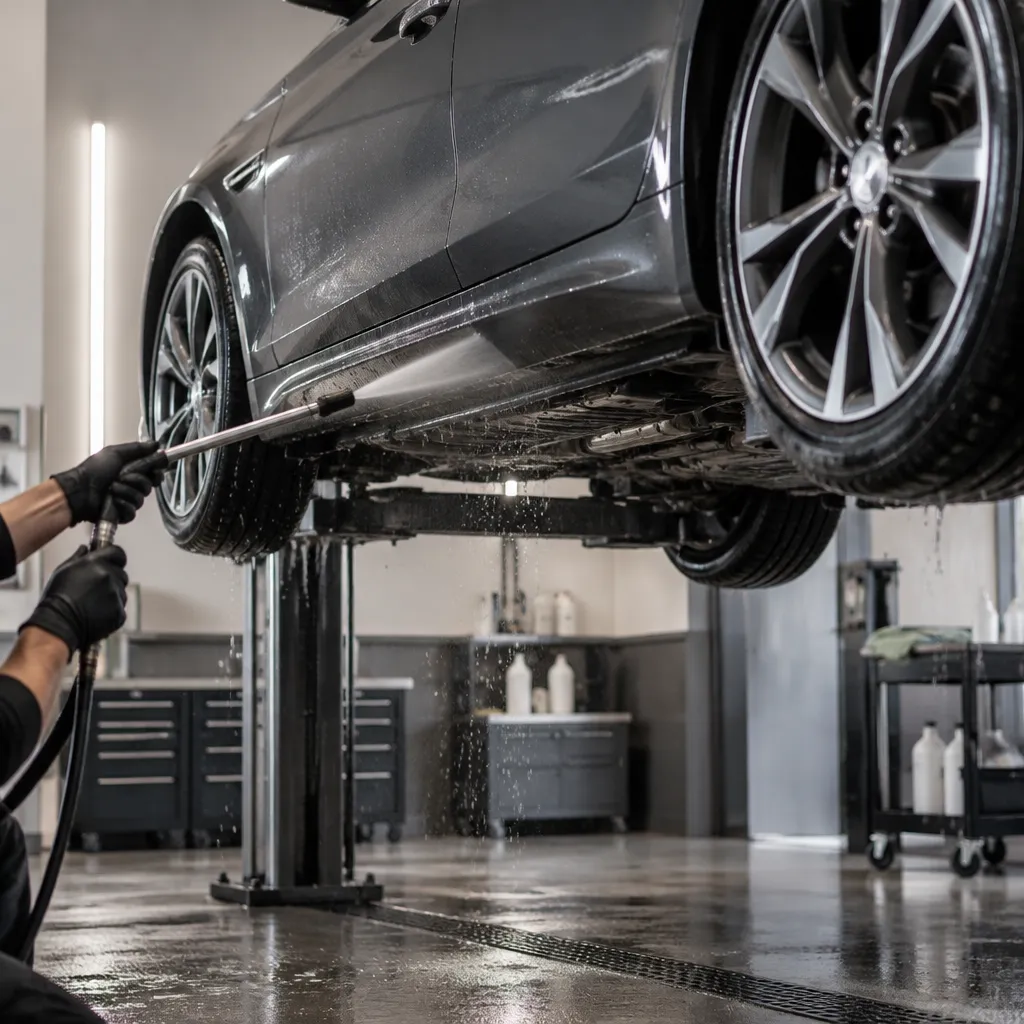
Salt is a problem because it attracts and holds moisture. Brine sitting on bare or scratched steel keeps the metal wet, and corrosion can start even on cold days when nothing looks damp. This is why a car can look clean in January and still be losing metal underneath.
How Salt Gets Into the Seams
Water and salt do not need a hole to get in. They wick along seams, weld joints, and the lip where the rocker meets the door sill. Once moisture is inside a closed section, it has nowhere to go, and the metal stays wet long after the road dries.
In practice, the worst corrosion we see is rarely on the flat areas that take the most stone chips. It sits at the bottom edges of panels, where two surfaces meet and gravel and debris collect. A wash nozzle aimed at the doors almost never reaches that point.
Why Rockers Fail Before the Rest of the Car
The rocker is the structural strip under the doors, between the front and rear wheels. Its bottom edge is the most exposed surface on the car to thrown salt and gravel, and it is often the last area owners inspect. By the time it shows rust through the paint, the metal behind it has usually been thinning for a while.
A common mistake is judging a rocker by its outer appearance alone. A panel can look acceptable from a standing position and still have a corroded bottom lip that you would only see from underneath with a light.
What Rocker Panels Hide and Where Rust Starts
Rocker panels are hollow sections, and many of them are built with drain paths meant to let water escape. Those paths clog with leaves, mud, and old undercoating, and the section becomes a reservoir. Good underbody work includes clearing these paths, not only spraying the outside of the panel.
Drain Holes and Trapped Water
When a drain path is blocked, water sits inside the rocker through the thaw cycles that define a Chicago winter. Each freeze and melt puts the metal through a fresh round of moisture exposure. The damage is slow, which is exactly why owners tend to notice it late.
Before winter, we check the drain paths where they are accessible and look for old, cracked coating that has started to hold water. Removing that buildup gives any protection you apply a clean surface to bond to.
What Owners Find When They Pull the Covers Off
A thread on a car repair forum from November 2016 shows the pattern clearly. The owner of a 2004 Ford Taurus with 232,000 miles stopped driving the car once road salt went down, removed the rocker covers, and found rot reaching into the door sill. The car had never given trouble, and the rust was simply out of sight until the cover came off.
That owner could not afford an undercoat at the time, and the plan was to wire brush the rust and apply a fluid protectant until replacement panels were available. The thread is useful because it shows how quickly a plan made in November can become a repair bill in spring.
An Illinois owner in a car-care Facebook group asked a similar question: how to stop rocker rust before winter, given how much salt gets used in the state. Questions like that come from owners who already know the rockers are the weak point, and the answer they need is a process, not a single product.
Rust rarely starts where you are looking. It starts where water collects and stays.
Replacement is the other path, and it is a much bigger job. A forum post about driving without rocker panels describes lining up a new rocker, drilling holes along its edges, and pop riveting it to the body. That is a repair, not a maintenance step, and it is a strong reason to prevent rot rather than wait for it.
Decontamination Before Winter Coating
Decontamination is the step most owners skip, and it is the step that decides whether any protection you add will hold. Decontamination removes the bonded contamination that a normal wash leaves behind, including iron particles from brake dust, road tar, and mineral deposits. Coating over those contaminants locks them in place.
Iron Fallout and Tar on Lower Panels
Brake dust contains iron particles that land on the car and embed in the clear coat, and they settle heavily on lower panels and wheel arches. Tar and road grime build up in the same zones. Both feel rough to the touch even after a wash, and you can feel the difference by running a hand over a clean panel.
We use an iron remover and a clay bar on painted lower sections, and we work the underside with a dedicated cleaner that will not dry out seals or trim. The goal is a surface that is smooth to the hand, not one that only looks clean in the sun.
Why a Wash Is Not Decontamination
A standard wash removes loose dirt and salt film. It does not remove the particles that have bonded to the surface. That is why a car can look spotless after a wash and still feel rough when you run a hand over the lower doors.
Decontamination is a separate stage, done before any coating goes on. If the surface is not decontaminated, a coating sits on top of the problem rather than on clean metal or paint, and its bond is weaker from the start.
Drying, Inspection, and Testing the Surface
The final stage is drying thoroughly and inspecting the surface under good light. We look for old wax residue, cloudy patches, and any bare spots where stone chips have reached the metal. Those spots need attention before any coating is applied, because a coating does not cover bare steel in any meaningful way.
Pro tip: Do the decontamination in a shaded area, and never let a cleaner dry on the lower panels. Residue left on the surface can cause spotting and weaken the bond of whatever you apply next.
Ceramic Coating on the Underbody
A ceramic coating is a thin, hard layer that bonds to clean paint and makes the surface slicker and more chemically resistant. On lower body panels, that resistance helps. Salt and grime have a harder time grabbing the surface, and washing takes less effort. For owners who park outside through a Chicago winter, that difference is real.
What a Ceramic Coating Does on Lower Panels
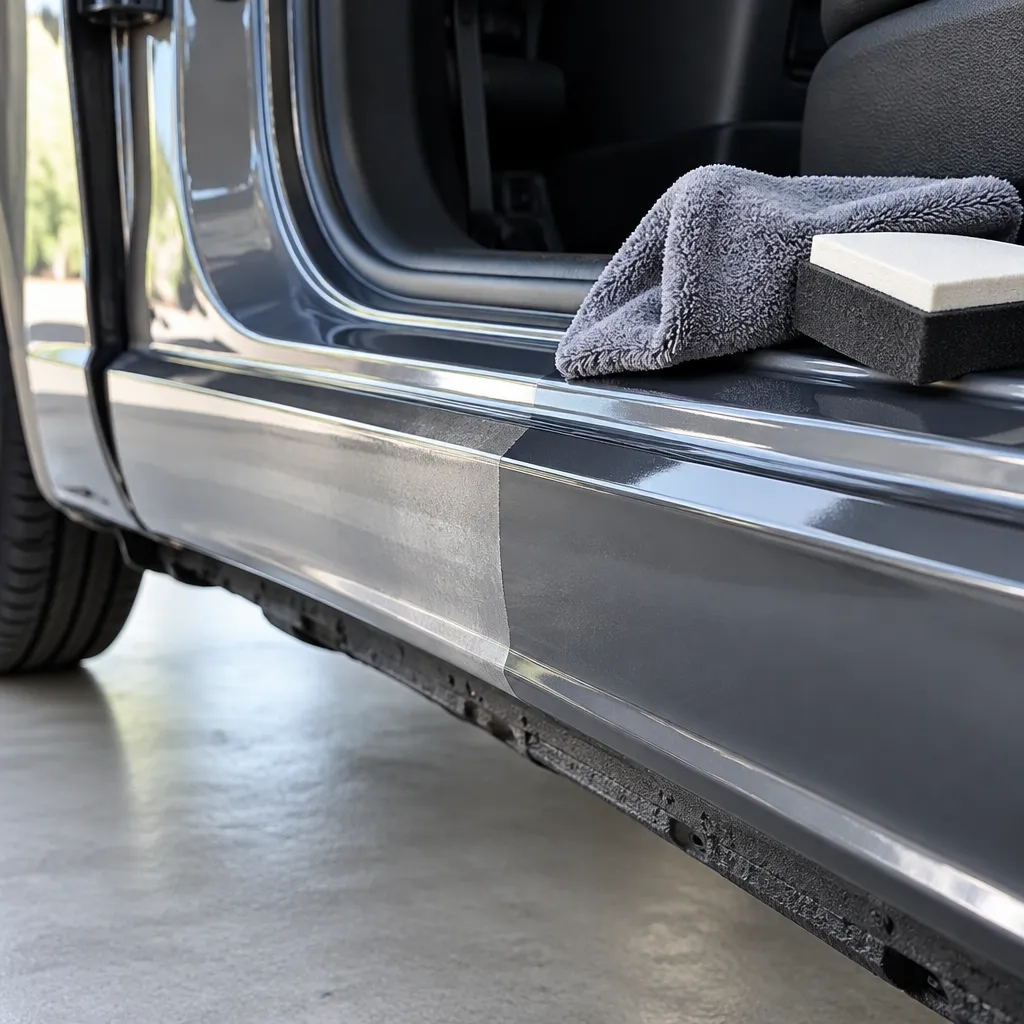
Our nano-ceramic SiO₂ coatings are designed for painted surfaces, including the lower sections of the body where salt splash lands. They create a barrier that reduces how much grime and brine can cling to the paint. Maintenance washes are easier, and the surface stays more uniform between cleanings.
The coating does not make a car rustproof. Its job is to make the painted surface harder to contaminate and easier to clean, which buys you time between proper washes during the season.
Where Ceramic Falls Short on Bare Steel
This is the point most owners misunderstand. A ceramic coating bonds to paint and clear coat, not to bare or scaled steel. If you apply it over rust, you are sealing the rust in and calling it protected. That is a mistake we refuse to make.
Ceramic is also hard and fairly brittle. It resists chemicals well, but it does not flex with the body, and it will not stop a stone chip from exposing bare metal. Once the metal is exposed, a coating cannot fix it.
Our Approach to Underbody and Rocker Panels
We treat painted lower surfaces, the rocker outer faces, and the wheel arch edges as candidates for ceramic protection after decontamination. Bare or scaled metal gets addressed with a suitable rust-inhibiting product before any coating goes on. The sequence matters more than the product name.
Pro tip: If you see bubbling along a rocker's bottom lip, do not coat over it. Have the metal inspected first, because surface protection on top of active corrosion only hides the problem for a season.
Comparing Winter Underbody Protection
Owners usually choose between three approaches for the lower body: a rubberized undercoating, a wax-based rust inhibitor, or a ceramic coating on painted surfaces. Each has a different job, and the right choice depends on what the metal looks like before winter arrives.
AutoZone's guide on rocker panels recommends applying an undercoating or rust inhibitor to rocker panels annually, particularly before winter, and names rubberized undercoating and wax-based sprays as examples. That advice fits a practical rule: protection should match the surface it is going on.
Rubberized Undercoating and Wax-Based Sprays
Rubberized undercoating and wax-based rust inhibitors are designed for the underside of the car, including the parts of the rocker and floor pan that have no paint worth protecting. They can flex with the metal and reach into seams where a coating would not go.
Their weakness is maintenance. They need periodic reapplication, and they can collect grime that becomes hard to clean from the inside of the sill. They also do not give the paint the same chemical resistance that a ceramic layer provides.
Ceramic Coating for Painted Lower Panels
A ceramic coating works best on painted lower surfaces where the paint is sound and the metal is clean. It makes the surface easier to wash and harder for salt residue to cling to. It is not a substitute for an undercoat on bare steel, and it should never be used that way.
| Protection Option | Best Use | Main Limitation |
|---|---|---|
| Rubberized undercoating | Floor pan, seams, and bare or lightly rusted steel that needs a flexible barrier | Needs periodic reapplication and can trap grime in tight areas |
| Wax-based rust inhibitor | Interior sill cavities and seams where a spray can reach | Requires regular renewal and offers little chemical resistance on paint |
| Ceramic coating (nano-ceramic SiO₂) | Sound painted lower panels and rocker outer faces after decontamination | Does not bond to bare steel and cannot repair existing rust |
Winter Maintenance Schedule for Chicago Suburbs
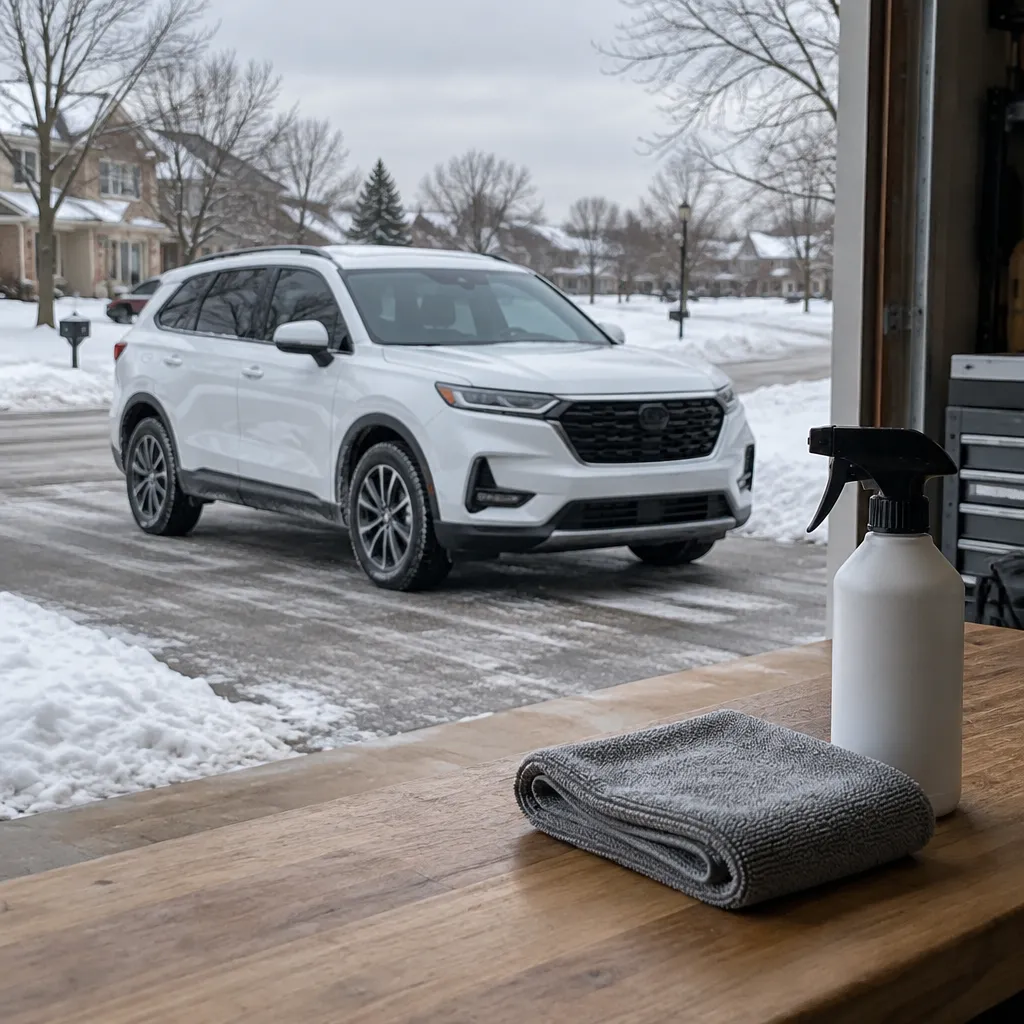
Timing is the other half of underbody protection. Work done in late December, after the first heavy salt runs, is working against the season rather than preparing for it. The schedule below is what we recommend for drivers in Carol Stream, Bloomingdale, Wheaton, and the surrounding suburbs.
Before the First Snow
Schedule decontamination and any needed rust treatment in late October or early November, before the first salt application. This gives the coating time to cure fully and gives you a clean baseline to inspect later. If the car is already showing rust, that is the time to decide between repair and replacement.
After Each Heavy Salt Event
Rinse the underbody after major storms, paying attention to the wheel wells, the floor pan, and the bottom edges of the rockers. A rinse that only hits the doors and wheels leaves the most exposed areas untouched. Salt on the underside stays active for days, so the sooner it comes off, the better.
Pro tip: Keep a short hose attachment in the garage for winter rinses. A rinse from a hose with a wand reaches the underbody far better than a wash that only sprays the body panels.
Spring Cleanup and Inspection
When the salt season ends, do a full wash, decontaminate the lower panels again, and inspect the rockers and drain paths. Spring is when hidden damage shows up, and it is the best time to catch a small spot before it becomes a repair. Note any bare spots and address them before summer heat and humidity arrive.
Frequently Asked Questions
Can I put a ceramic coating on my underbody before Illinois winter?
You can coat painted lower body panels and rocker outer faces, but only after decontamination and only where the paint and metal are sound. Bare or rusted steel needs a rust-inhibiting treatment first, because a ceramic coating does not bond to bare metal or stop corrosion that has already started.
Is undercoating better than ceramic coating for rocker panels?
Neither is better in every case. Undercoating suits bare steel, seams, and the floor pan, while ceramic coating suits sound painted surfaces. For most rockers, the best approach uses both, applied to the areas each one is designed to protect.
How often should I rinse the underbody during winter?
Rinse the underside after each major salt event, and do a thorough underbody wash at least a few times through the season. Salt stays active on the metal, so waiting weeks between rinses lets brine work into seams and edges.
Does ceramic coating stop rust that has already started?
No. A ceramic coating cannot stop rust that is already active under the surface, and it cannot repair metal that has thinned. Rust needs to be cleaned, treated, and inspected first, and the coating is applied to the sound surface around it.
When is the best time to get underbody protection in the Chicago suburbs?
Late October and early November are the best windows, before the first heavy salt application. That timing gives coatings time to cure and gives you a clean baseline for spring inspection. Waiting until December means the protection starts after the most exposure has already happened.
What did your rocker panels look like after last winter, and which step made the biggest difference for you?