Most Chicago-area drivers think about interior car care in Illinois winter only when the heater quits or the floor mats get soaked. The damage that matters happens more quietly. Plastic trim stiffens in the cold, dashboards fade under low winter sun, and salt-laced slush works its way into every seam. By the time a crack shows up in the dash, the trim has usually been losing flexibility for months. Here is what happens to those surfaces between November and March, and what we do about it at our Glendale Heights shop.
Table of Contents
- Quick Takeaways
- Why Illinois Winters Hit Cabin Plastics
- Dashboard and Instrument Panel Trim
- Door Panels, Pillars and Lower Trim
- Steering Wheel, Shifter and Touch Surfaces
- Conditioning Products Compared
- Winter Conditioning Routine
- Mistakes That Make Trim Worse
- Frequently Asked Questions
- References
Quick Takeaways
| Key Insight | Explanation |
|---|---|
| Cold makes plastic stiff | Interior plastics lose flexibility in freezing temperatures, so door slams and heater cycles concentrate stress at screw bosses and seams, where hairline cracks begin. |
| Low winter sun still reaches the dash | Illinois sun sits low for much of the season and angles straight through the windshield onto the top of the dashboard, so UV exposure continues even on cold days. |
| Salt residue is abrasive and drying | Road salt and brine dry out textured trim, scuff the surface when walked over, and leave a white film on sills and lower panels. |
| Condition before the first hard freeze | Clean the cabin and apply a water-based UV protectant to the dash and trim in October, so the surface enters winter with its protection already in place. |
| Avoid heavy silicone shine | Greasy dressings attract dust, build a film that is hard to remove, and create glare on the windshield during low-angle sun. |
| Inspect sills and kick panels monthly | A quick wipe and visual check of door sills and lower trim catches salt buildup before it dries into the texture and becomes permanent discoloration. |
Why Illinois Winters Hit Cabin Plastics
Interior plastics are not a solid, unchanging material. Most dashboards, door panels, and trim pieces are built from polymers that contain plasticizers and other additives to keep them flexible. Heat, ultraviolet light, and years of temperature swings slowly pull those additives out, and the surface loses the give it had when the car was new.
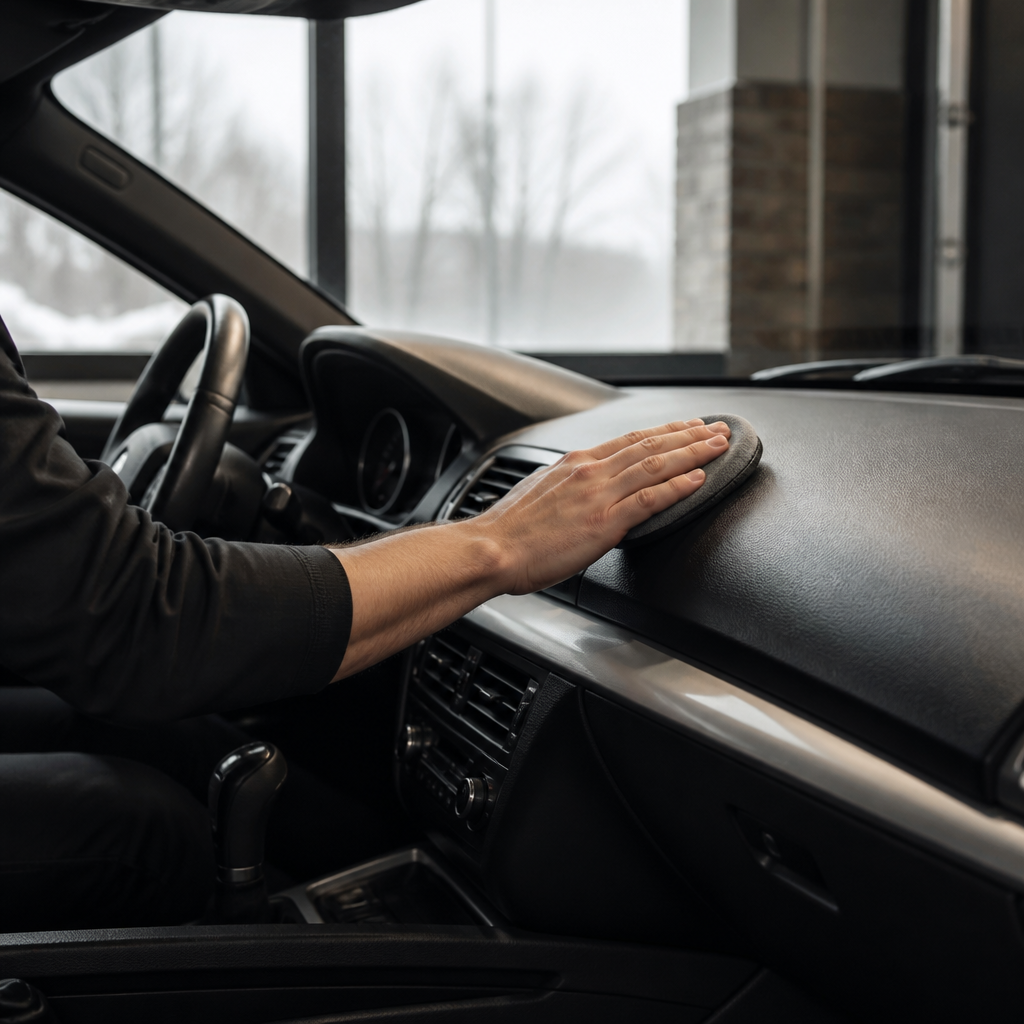
Winter adds a sharper version of that problem. Overnight, a car parked in a Glendale Heights driveway or a Wheaton office lot can sit well below freezing, then get hit with defroster heat within minutes of starting. That repeated cycle stresses the plastic at mounting points and seams far more than a single cold morning would.
The Cold Soak and Heater Cycle
A cold soak is the stretch when the cabin sits at outdoor temperature with no airflow or sun. Plastics are at their most brittle at that stage. When the heater starts pushing warm air across the dash, the surface expands unevenly against the clips and screws holding it in place. In practice, the first stress lines we see sit near screw bosses, the corners of the glovebox door, and the edges where a trim panel meets a fixed frame.
Gloss-finish plastics and soft-touch coatings respond differently. Soft-touch surfaces can dry out, lose their smoothness, and turn chalky or tacky depending on what they were exposed to. Glossy black trim shows fine scratches and haze more readily than textured parts, which is why a car that looked perfect in October can look tired by February.
Why Winter Sun Still Matters
Many owners assume UV damage is a summer problem. Illinois sun sits lower in the sky from late fall through early spring, and that low angle sends light straight through the windshield onto the top of the dashboard for longer stretches of the day. The cabin still heats up in direct light even when the air outside is bitter, and that heat speeds up the loss of plasticizers. A dash that only gets a few sunny afternoons a week still takes exposure on every day it sits facing the sun.
Dashboard and Instrument Panel Trim
The dashboard is the largest single plastic surface in most cars, and it is the one owners see every time they get behind the wheel. CARSTAR's winter guidance, published through Black Car News, notes that cold temperatures can cause plastic trim and surfaces to harden, crack, and fade. That matches what we see on cars brought in each spring. The damage is rarely a single event. It is a slow loss of flexibility that finally shows up as a visible line.
How Hairline Cracks Start
Hairline cracks usually begin at a stress point rather than in the middle of a panel. Look at the top of the dash near the defroster vents, the edges of the instrument cluster bezel, and the pocket above the glovebox. These are places where the material is thin, where hardware holds it in place, or where air and heat move most. Once a crack starts, every heater cycle and every door slam makes it longer.
Winter damage to a car is cumulative. The crack you notice in February usually started as stress that built up during several cold snaps before anyone saw it.
Fading and Chalking on the Top Surface
Fading on a dash shows up as a light gray or whitish haze, often on the top surface where sun hits hardest. Dark interiors show it first. A surface that was once smooth and slightly satin can start to feel rough under a fingertip. That roughness is UV breaking down the outer layer. Once the surface is chalky, a quick wipe with the wrong product makes it worse, not better.
Pro tip: Before the first hard freeze, park with the nose turned away from the low winter sun whenever you can. A few hours of direct light on the dash each day adds up over a season.
Door Panels, Pillars and Lower Trim
The lower third of the cabin takes the worst abuse in winter. Salt, brine, and sand do not stay on the road. They come in on boots and wet shoes, settle onto the floor, and wick up onto door panels, carpeted kick plates, and the plastic sill trim at the door opening. Simoniz's winter cleaning guidance makes a similar point about the trim around the door frame, which can get covered in mud and dirt quickly.
Salt and Slush Tracked In on Boots
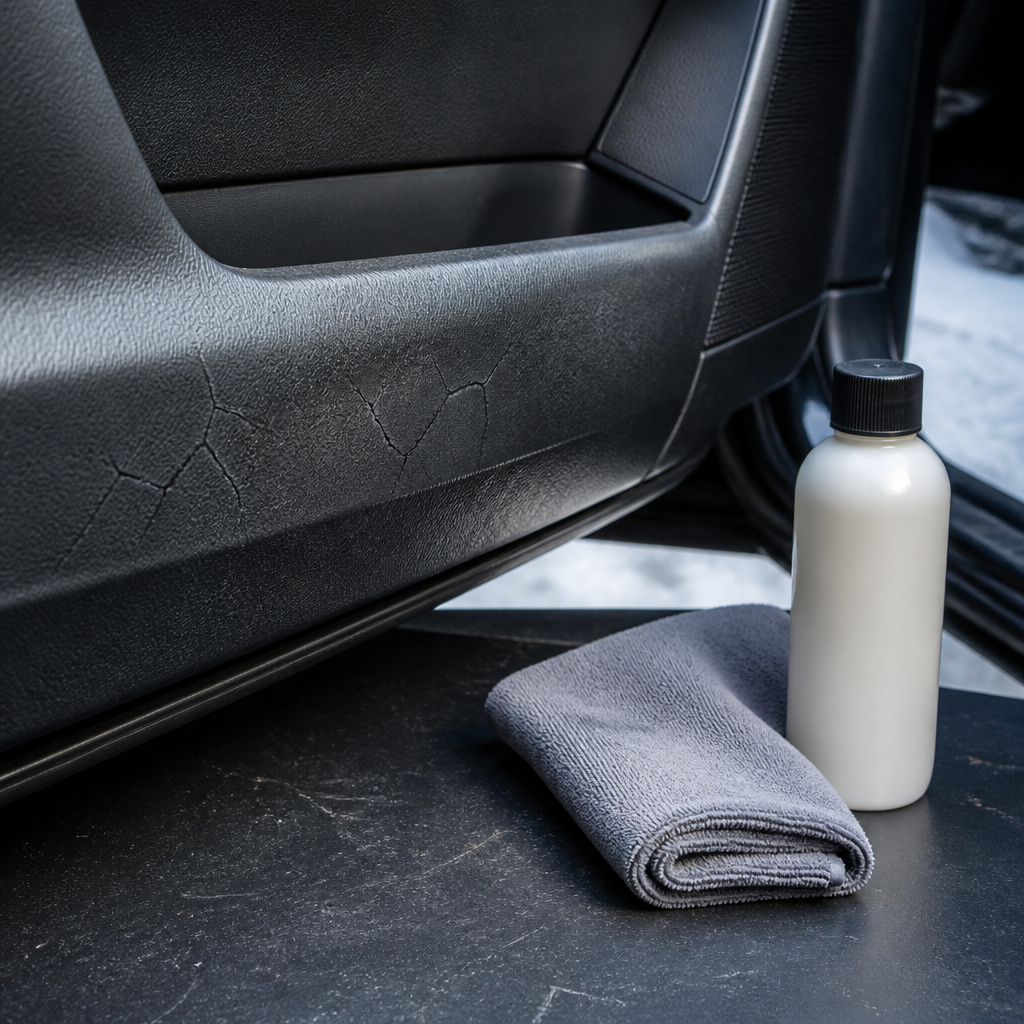
Salt residue is more than unsightly. Dried salt is abrasive when it gets walked over and scuffed, and it pulls moisture out of the surface. Once it dries into the texture of sill plates and lower panels, it leaves a white or gray film that regular wiping does not fully remove. A common mistake is to vacuum the carpet, skip the lower trim, and assume the job is done. The trim keeps getting scuffed every time someone steps in.
Door Sills and Kick Panels
Door sills take a beating from every entry and exit. The textured plastic on a sill ages faster than the rest of the cabin because it sees heel scuffs, grit, and moisture every day. In practice, the sill is where owners first notice whitening on black plastic, and it is also the easiest place to protect if you catch it early. Our interior detailing service always includes lifting the mats, cleaning the sills, and checking the lower panels for residue, because that is where damage builds without anyone noticing.
Steering Wheel, Shifter and Touch Surfaces
The parts you touch most often show wear first. The steering wheel, gear selector surround, window switch bezels, and cupholder trim are handled with bare hands in cold weather, and winter skin oils and hand cream transfer onto them. Combined with salt-laced gloves and wet mittens, these surfaces get grimy fast, and that grime makes cold-stiffened materials look worse than they really are.
Leather and Vinyl Wheels in Cold Weather
Leather and vinyl steering wheels lose moisture and suppleness in the cold. A wheel that feels smooth in summer can feel stiff and slightly crazed by January. Cleaning it with an all-purpose spray and letting it sit is a mistake, because the cleaner strips the protective layer that keeps the grain flexible. Use a cleaner made for automotive leather or vinyl, condition lightly, and buff off the excess so the wheel does not feel greasy in your hands.
Shifter Bezels and Cupholder Plastics
Shifter bezels and cupholder trim are usually hard plastic or soft-touch material. They get wiped often and rarely conditioned, so they collect a film of dust and skin oil that dulls the finish. Winter also brings coffee spills and wet cups that leave residue behind. A gentle cleaner, a microfiber towel, and a light protectant applied sparingly keep these areas looking close to the day the car was delivered.
Conditioning Products Compared
No single product solves every winter problem in a cabin. Different materials need different treatments, and the wrong product can make trim look shinier while doing nothing for flexibility or UV resistance. The table below compares three approaches we see owners reach for most often, along with where each one earns its place.
| Approach | What It Does Well | Where It Falls Short |
|---|---|---|
| Water-based UV protectant dressing | Adds UV resistance to dash and trim without a greasy feel, and dries to a natural finish | Needs reapplication every few weeks in heavy sun, and it cannot restore flexibility lost in heavily cracked parts |
| Silicone-heavy dash shine | Gives a fast, glossy look that many owners like right after cleaning | Attracts dust and grime, can create windshield glare on sunny days, and often wears off quickly in salt season |
| Professional interior sealant or coating | Creates a longer-lasting protective layer on trim and soft-touch surfaces when applied over a clean, properly prepared surface | Costs more, requires careful preparation and cure time, and is only as good as the prep work underneath it |
For most Chicago suburb drivers, the best starting point is a water-based UV protectant on the dash and trim, applied in October before the first hard freeze. Silicone shine is the product that causes the most regret. It looks great in the driveway, then collects dust and creates glare that makes the windshield harder to see through in low sun.
Exterior products are not interchangeable with interior ones. Paint-focused coatings are built for painted surfaces. One professional-grade ceramic coating listed on a retail product page is described as designed for hydrophobicity, slickness, and protection on painted surfaces, which is a different job from protecting a textured dashboard. Owners who apply paint-focused products to interior plastics often end up with a surface that does not age the way they expected.
Winter Conditioning Routine
The routine that works in Illinois depends less on one heroic detail and more on timing. Conditioning before the cold arrives gives the surface protection when it is least stressed. Waiting until March to address cracked trim means treating damage rather than preventing it. Our approach has two phases, one before winter and one through the season.

Before the First Hard Freeze
Start with a thorough clean, because conditioning over dirt just seals it in. Vacuum the seams and lift the floor mats, then clean the dash, door panels, and sills with a pH-neutral interior cleaner. Let everything dry fully. Apply a water-based UV protectant to the dash and trim, check the steering wheel and shifter surround, and treat leather or vinyl lightly. Give the product its full cure time before the first cold night.
Pro tip: Work on the dash in the morning and keep the car in shade for a few hours afterward. Dressings applied in cold, damp conditions often streak and need a second wipe, and streaks look worse on a winter morning than most owners expect.
Monthly Checks Through February
Once winter sets in, a quick monthly check catches problems early. Wipe the sills and kick panels, look for white residue on lower trim, and feel the dash surface for roughness. Reapply UV protection to the dash and trim roughly every few weeks during heavy sun periods, and more often if the car sits outdoors. Keep a microfiber towel and a small bottle of interior cleaner in the trunk so you can address salt on the drive home rather than a week later.
Pro tip: Keep a spare set of rubber mats in the trunk for slushy days and swap them in at the office. Taking wet, salted boots off the carpet is the cheapest protection you can give the cabin.
Mistakes That Make Trim Worse
Most interior damage in winter comes from well-meaning habits. Owners clean hard, dress heavily, and wait until spring to address what they noticed in December. Each of these habits is common, and each one makes the trim more fragile over time.
Using Harsh Household Cleaners on Textured Plastic
Household multi-surface cleaners and glass sprays are formulated for other materials. On textured dash plastic and soft-touch coatings, they can strip the surface and leave it chalky and more exposed to UV. A dash that looks clean after a glass cleaner wipe may actually be drier than before. Use a cleaner made for automotive interiors, test it on a hidden spot first, and wipe away residue completely.
Heavy Dressing That Attracts Dust
Thick, greasy dressings look rich when they go on, but they attract dust and lint. In winter, that residue mixes with road grime and becomes a film that is hard to remove. It also reflects light, which is a safety problem on the windshield side of the dash. A thin, even application that dries to a satin finish does more for trim than a heavy coat that still looks wet.
Waiting is the other mistake. Owners often notice a dash whitening in February and assume it is cosmetic. By that point the surface has already lost some flexibility, and a dressing will protect what is left rather than restore what was lost. Early action in October and November costs less and works better than repairs in March.
Frequently Asked Questions
Does cold weather actually crack dashboard plastic?
Cold weather rarely cracks healthy plastic by itself, but it makes the material stiffer and less forgiving. Cracks usually appear when stiff plastic is then stressed by heater cycles, mounting hardware, or door slams. Conditioning before winter keeps the material more flexible through those stress points.
When should I apply UV protectant to my dashboard in the Chicago suburbs?
October is the best time, before the first hard freeze and before the car spends weeks parked in cold, low sun. A second application in midwinter helps, especially if the car sits outdoors most nights. Clean the dash first so the protectant bonds properly.
Can I use a glass cleaner or all-purpose cleaner on my dashboard?
Glass cleaners and all-purpose sprays are not designed for textured automotive plastics and can dry out or chalk the surface over time. For the dash and trim, use a cleaner made for automotive interiors and test it on a hidden area first. Wipe away any residue fully.
Why does the trim near my door sills look white after winter?
White or gray film on sills and lower trim is usually dried salt, brine residue, or mineral deposits from wet footwear. It can also be surface wear on black plastic that has been scuffed repeatedly. An interior clean usually removes salt residue, while degraded plastic needs conditioning to recover its appearance.
Is interior detailing worth it before winter or should I wait until spring?
Detailing before winter is worth more than detailing in spring, because it protects surfaces during the period when they are most stressed. A pre-winter session that cleans, protects, and inspects the cabin usually costs less than repairing cracked or badly faded trim in March. Spring detailing still helps, but it is cleanup rather than prevention.
Tell us in the comments what your dashboard and door trim looked like after your last Illinois winter, and whether conditioning them beforehand made a visible difference.