Most Illinois drivers don't look at their floor mats until the first hard freeze, when the carpet smells like wet leaves and a gray crust has formed along the driver's side heel pad. By then, fall has been working on those mats for weeks. Wet leaves, damp boots, and grit from parking lots sink into the fibers, and the cold that follows locks the mess in place. If you plan one interior detailing session in Illinois this fall, schedule it before the first snowfall, not after. Here is what builds up in between and how to deal with it.
Table of Contents
- Quick Takeaways
- What Actually Lands on Your Floor Mats in Fall
- Why Wet Fall Weather Turns Dirt Into Stains
- Winter Road Salt and What It Does to Carpet Backing
- Floor Mat Materials and How They Hold Up
- Cleaning Methods Compared for Fall Buildup
- Why Deep Extraction Beats Surface Cleaning
- Interior Detailing in Illinois This Fall: Timing Before the Snow
- Habits That Slow Buildup Between Cleanings
- Frequently Asked Questions
- References
Quick Takeaways
| Key Insight | Explanation |
|---|---|
| Leaves cause the first stain | Wet leaves release tannins that leave tea-colored rings on carpet, and those rings often stay after the mat dries. |
| Clean before the first hard freeze | Once salt and moisture bond to carpet fibers in cold weather, a surface wipe rarely lifts them. |
| Check under the mat, not just on top | Grit and salt collect under the mat and on the carpet beneath it, which is where residue shows up first. |
| Rubber contains, carpet absorbs | Rubber trays hold liquid well, but grit still settles in the ribs. Carpet mats pull moisture and salt deep into the pile. |
| A wet vacuum is not extraction | Surface cleaning moves dirt around. Extraction flushes dissolved residue out of the fibers and padding. |
| Ask where the waste water goes | Extraction water carries oils, salt, and dirt. A responsible provider captures and disposes of it rather than letting it run to a storm drain. |
| Book now, before the first freeze | Late October and early November are the best windows, and shops fill quickly once the first cold snap arrives. |
What Actually Lands on Your Floor Mats in Fall
Floor mats collect more than most people expect in a typical fall month. They sit at the lowest point of the cabin, so anything that falls off a shoe, out of a bag, or off a jacket ends up there. The driver's mat takes the heaviest load because it sees every trip in and out of the car.
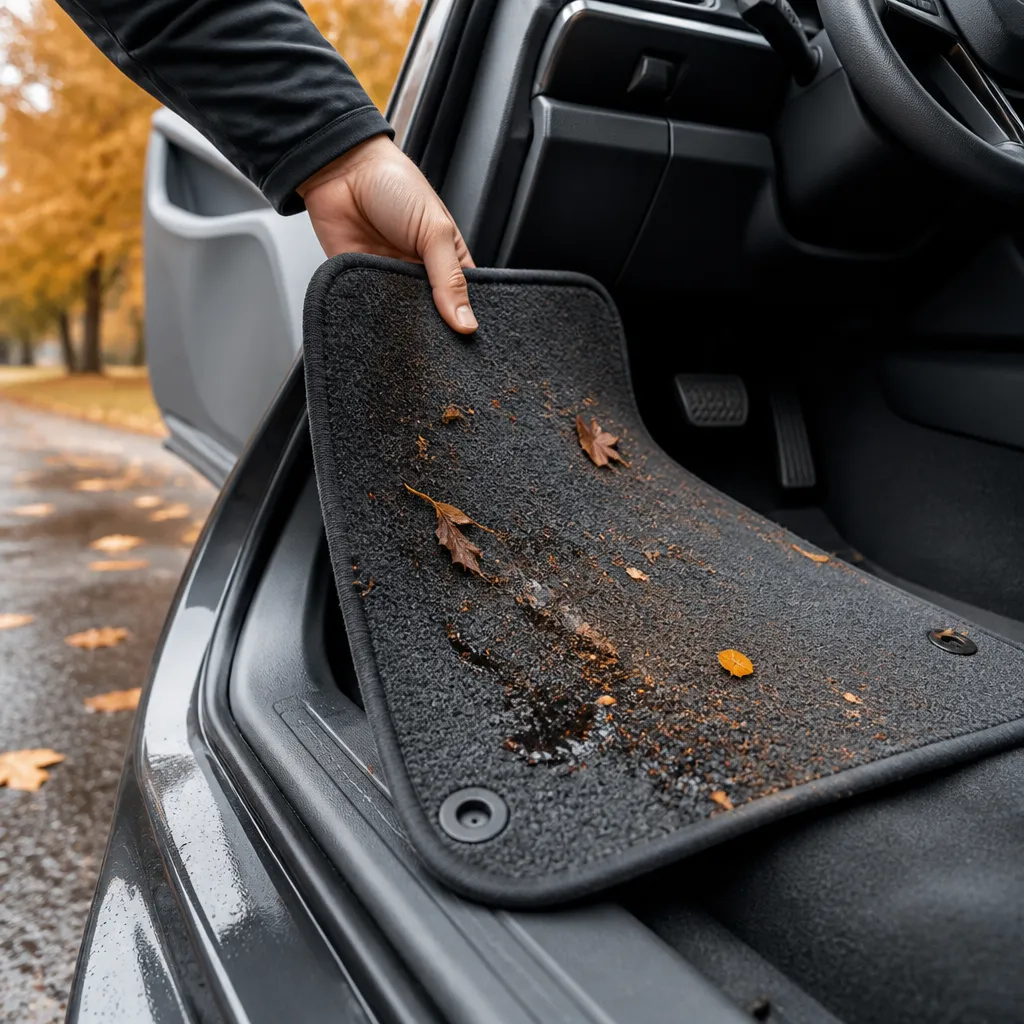
Fall residue is a mix of organic and mineral material. Leaves and twigs add color and moisture, while sand and fine grit add abrasion. Together they create a layer that looks like dirt on the surface but behaves like a stain once it is wet and dried a few times.
Wet leaves and the stains they leave behind
Wet leaves are the first problem most of our clients mention. As leaves break down, they release tannins, and those tannins leave tea-colored marks on carpet fiber. Once the mat dries, the marks often remain visible because the color has bonded to the fibers rather than sitting on top of them.
Leaves also trap moisture against the carpet and the floor pan. A soggy leaf stuck under a seat bracket or in the seam of a rubber tray can stay damp for days. That is usually how musty odor starts, long before anyone notices a visible stain.
Grit that works like sandpaper
Sand and grit from parking lots, school drop-offs, and job sites get ground into carpet pile every time you step on the mat. Each step works fine particles deeper into the backing. Over a season, that abrasion flattens the texture of the carpet and makes the mat look older than the car.
Grit also leaves the rubber edges of all-weather trays looking chalky. Owners often assume the tray is worn out, when the real problem is residue packed into the ribs that a quick rinse never reaches.
Why Wet Fall Weather Turns Dirt Into Stains
Fall weather in the Chicago suburbs is wet and cool, which is a poor combination for car interiors. Rain comes in on wet shoes, damp umbrellas, and jackets that drip onto the mat. Closed windows and a cool cabin mean the moisture has nowhere to go, so it stays in the carpet.
Repeated wet and dry cycles are what turn surface dirt into set-in staining. Each time a mat dries, it carries dissolved color and minerals a little closer to the surface. By November, the pattern of a mat often matches the path your feet take every day.
Leaf tannins and the dark rings they leave
Tannin stains usually show up as an outline. As water evaporates, it carries the dissolved color toward the edge of the wet area, which leaves a darker ring. A quick spray and wipe usually spreads that outline wider, so the stain looks bigger afterward than it did before you started.
Extraction works because it flushes the dissolved color out of the fibers instead of pushing it around. That is the difference between a mat that looks cleaner and one that actually lost the ring.
Humidity, closed windows, and the odor problem
Odor is the complaint we hear most from owners who drive daily in the suburbs. Wet carpet padding holds smell long after the surface looks clean. A mat that appears fine on top can still be damp at the backing, and that is where mildew-type odor begins.
If the cabin smells like a damp basement when you first turn on the heat, the problem is almost always underneath the mat. Surface cleaning will not reach it.
Surface stains are rarely the real problem. The residue you cannot see, sitting in the backing and the padding below it, is what keeps odor and staining coming back.
Pro tip: After a rainy drive, pull the mat and press a dry white towel firmly against the carpet underneath. If the towel picks up grime or comes away damp, the padding needs extraction, not another wipe.
Winter Road Salt and What It Does to Carpet Backing
Road salt arrives with the first real cold snaps, and it is the biggest single change in what your mats collect. Salt brine is wet and sticky, and it stays on shoes long after you have left the road. When it dries, it leaves a white crust on carpet and rubber alike.
The fall-to-winter shift matters because salt changes the job. Leaves and dust respond well to a thorough vacuum and extraction. Salt needs to be dissolved and flushed, so the cleaning process has to be more deliberate.
How brine wicks into the foam backing
Brine does not stay on the surface. It soaks through the carpet pile and into the foam or felt backing, where it can sit for a long time. From there, it moves upward each time the mat gets wet and dries again. That is why a mat that looked clean in December can show a white bloom by February.
Rubber trays are not immune. Brine runs into the grooves and dries there, so the ribs of a tray can hold salt even when the flat surface looks spotless.
Why salt residue looks harmless until spring
Dried salt looks like dust, so owners often ignore it. The real problem is what salt does once it migrates. Salt is corrosive to metal, and when it is carried into the cabin on wet mats, it can settle near seat tracks, pedal areas, and floor mounting points.
In practice, the worst cases we see come from drivers who deal with snow regularly and only vacuum the top of the carpet. The buildup is still there in the spring, and it is harder to remove because it has been through several freeze cycles.
Floor Mat Materials and How They Hold Up
Your mat material decides how fall and winter residue behaves. Carpet absorbs and holds, rubber contains and hides, and each needs a different cleaning approach. Knowing which type you have saves time and money when you book a detail.
Many luxury and high-end vehicles come with fitted carpet mats designed to match the interior. They look right, but they need more attention than rubber in a wet season. The trade-off is worth understanding before you decide what goes in the car from November through March.
Carpet mats: the most absorbent option
Carpet mats are what most owners in this area drive with, and they look best in a premium cabin. Their weakness is absorption. Carpet pulls moisture, salt, and tannins down into the pile, so surface vacuuming misses most of what has settled in.
These mats need extraction at least once a season, and more often if you drive through slush every day. Waiting until spring usually means a longer, more expensive job.
Rubber and all-weather trays: contain, then hide the seams
All-weather trays are built to hold liquid, which helps during a wet commute. Still, grit collects in the ribs and along the edges, and dried salt forms a white film in the grooves. A tray that looks clean from above can be full of residue in the channels.
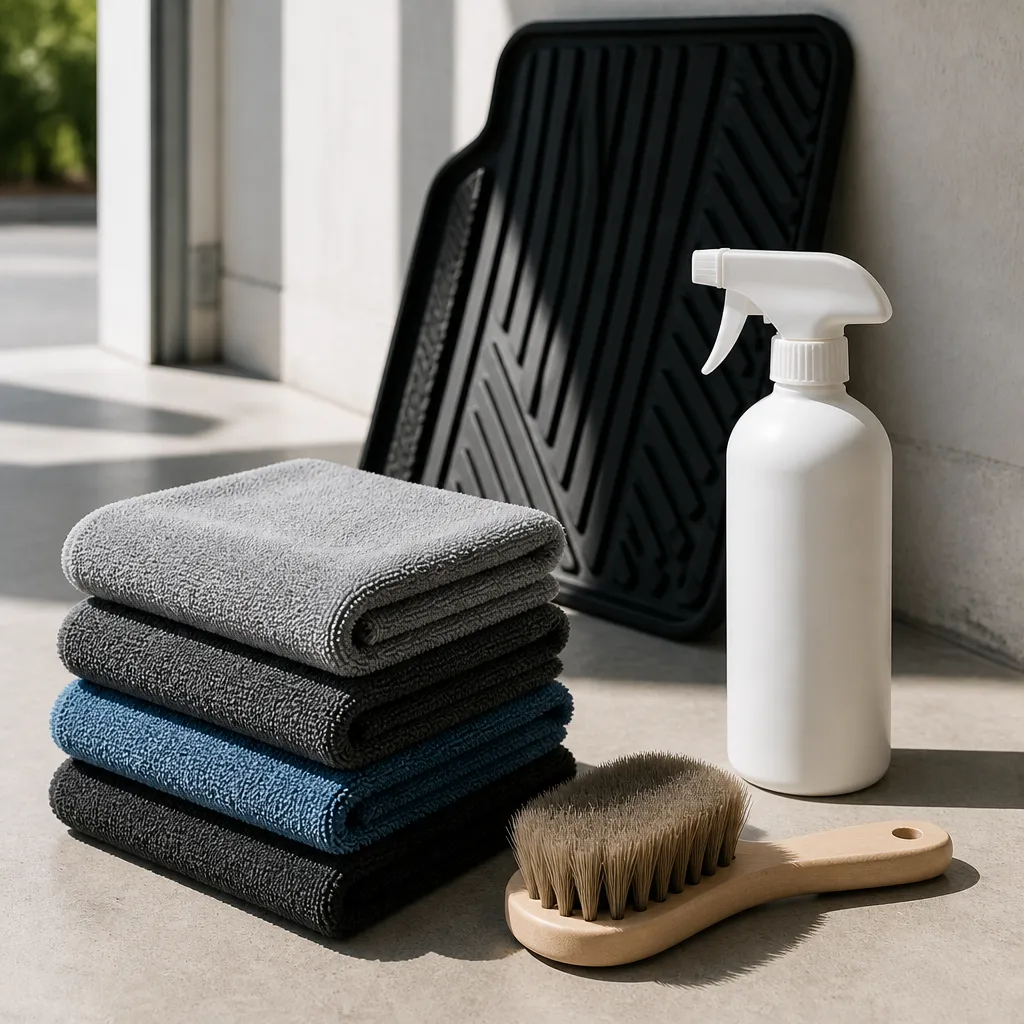
Rinsing and scrubbing the ribs with a soft brush works far better than a wipe. A dedicated mat cleaner is worth using on rubber that has been through a full winter, because degreasers and general cleaners can leave a slick film behind.
Why the carpet under the mat matters more than the mat
Many owners clean the mat and leave the carpet untouched. The residue that migrates under the mat often causes the worst staining. When we pull a mat for a detail, the carpet beneath is frequently the dirtiest surface in the footwell, which tells you exactly where the buildup has been hiding.
Cleaning Methods Compared for Fall Buildup
Not every cleaning method performs the same when fall and winter residue are involved. The comparison below assumes leaves, moisture, and early salt have already bonded to the fibers, which is the situation most owners face by November.
| Cleaning Method | Where It Works | Where It Falls Short |
|---|---|---|
| Home vacuum and a rinse | Loose leaves, sand, and dry grit | Leaves tannin rings and salt residue in the backing untouched |
| Steam or hot-water surface cleaning | Light odor and surface spots on rubber trays | Can miss residue that has soaked into carpet padding without extraction |
| Professional deep extraction with agitation | Tannin rings, salt bloom, and odor from wet padding | Takes longer and costs more than a quick vacuum, and only works well with proper moisture control |
Use this table as a practical rule of thumb. Vacuuming should happen weekly through fall, because it keeps grit from grinding into the pile. Extraction is what restores the carpet once the buildup has set.
Why Deep Extraction Beats Surface Cleaning
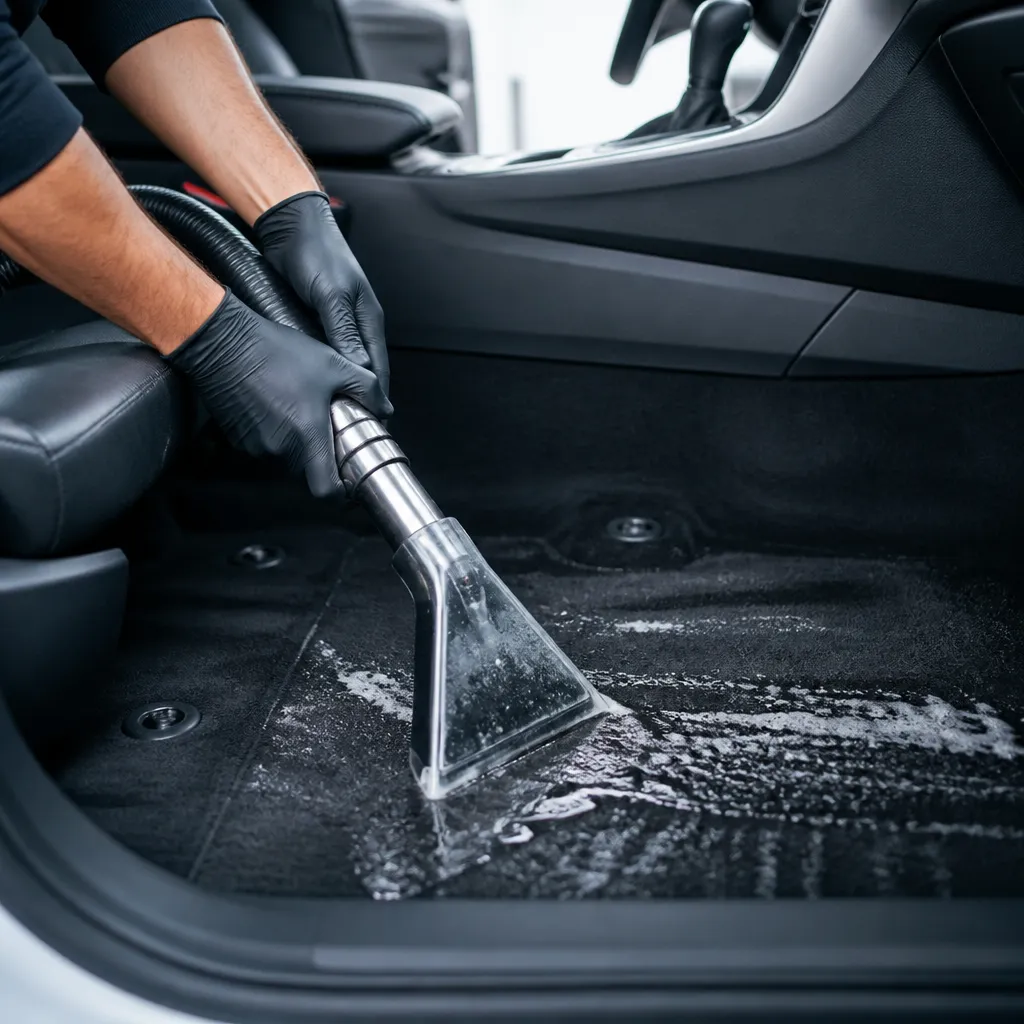
Deep extraction adds a cleaning solution, agitates the fibers, and then pulls the dirty water back out with a strong vacuum. It removes what surface cleaning leaves behind. At Hersheys Detailing in Glendale Heights, extraction is the step we use when carpet and padding need real restoration rather than a refresh.
What the process looks like on a fall mat
On a typical fall mat, we start by removing it and shaking out loose debris. Then we pre-treat the stains, agitate the carpet, and extract. The water coming out is often brown, and that is the point. If a stain remains after extraction, it usually needs a targeted spot treatment rather than another full pass.
Moisture control matters as much as the cleaning itself. The padding has to dry fully before the mat goes back in, or the job has created a new problem.
Waste water and why it matters
Extraction water is not harmless. It carries oils, salt, and dissolved dirt, so it should never go down a storm drain. Federal effluent guidelines for cleaning transportation equipment interiors, along with EPA compliance tools for parts cleaning, show how seriously regulators treat wash water. A responsible provider captures and disposes of it properly.
Pro tip: Before you book, ask any provider where their extraction water goes. A clear answer about capture and disposal is a good sign. A vague answer tells you what you need to know.
Interior Detailing in Illinois This Fall: Timing Before the Snow
Timing matters more than most owners think. Cleaning before the first hard freeze gives you a clean baseline for winter. Once salt is bonded to the carpet and the cabin is sealed against cold weather, the work takes longer and the results are less predictable.
A pre-winter detail also changes how the next few months go. A clean carpet holds less salt, and you can see new buildup sooner, which makes weekly maintenance far easier.
Late October and early November as the sweet spot
Late October and early November are when fall residue has built up, but salt has not yet become a daily problem for most drivers. Today is November 1, so the window is open, though shops fill up quickly once the first real cold snap arrives. Booking now means your mats come back before the first snow.
If you wait until a hard freeze, you will likely pay more for the same result, because the residue has had longer to bond and the salt is harder to dissolve.
A simple pre-winter checklist for Chicago suburb drivers
Pull the mats and check the carpet beneath them for darkening. Sit in the car with the heat on for a minute and notice any damp or musty smell. Look at the ribs of rubber trays for grit and white film. If you find any of these, the car is due for extraction.
If your provider offers a fabric protectant for carpet, consider adding it after the cleaning. It will not stop salt, but it makes spills and residue easier to lift during the winter.
Habits That Slow Buildup Between Cleanings
Professional cleaning resets the mats, but daily habits decide how fast they get dirty again. Small changes make a real difference over a winter in Illinois, especially for owners who drive through slush every day.
Shake and air out the mats after wet days
Taking the mats out at the end of a snowy or rainy day lets the carpet dry fully. Leaving them in place traps moisture against the floor pan, and that is where odor and rust begin. Shaking them out and letting them air dry in the garage keeps the padding from staying damp overnight.
Wipe the ribs of rubber trays with a dry towel before they go back in. It takes less than a minute and removes the loose grit that would otherwise be ground into the next day's footsteps.
Use a cargo liner for wet gear
Wet boots, bags of ice melt, and dog gear do the most damage in the rear footwell. A cargo liner contains that mess. It will not stop tracked-in grit on the front mats, but it protects the rear carpet, which otherwise becomes one of the dirtiest surfaces in the cabin.
Pro tip: Keep a small pack of microfiber towels in the car during fall and winter. A quick blot after a wet pickup prevents the tannin and salt rings that become expensive to remove later.
Frequently Asked Questions
Is fall the right time for interior detailing in Illinois?
Yes, especially in late October and early November. Cleaning before the first hard freeze removes leaf tannins and early grit before salt bonds to the carpet, which makes the results more reliable through winter.
Can I remove leaf stains from floor mats at home?
Light surface stains can often be lifted with a carpet cleaner and a soft brush. Deep tannin rings usually need extraction. If a stain is still there after two attempts, stop scrubbing, because repeated aggressive scrubbing can fray the pile.
Do rubber mats or carpet mats handle road salt better?
Rubber trays hold liquid and salt better because they contain it, but residue still collects in the ribs. Carpet mats hold more salt and moisture, so they need extraction more often. Many owners run rubber trays in the worst winter weather and carpet in drier months.
Will extraction damage the carpet underneath?
Not when it is done correctly. Problems usually come from over-wetting the padding or leaving it damp. A good provider controls moisture, runs airflow through the cabin, and confirms the carpet is dry before handing the vehicle back.
How often should floor mats be professionally cleaned in the Chicago suburbs?
A visit in late fall and another in early spring covers most drivers. Owners with kids, pets, or daily slush commutes should consider a mid-winter visit as well.
How long does a floor mat cleaning take?
Floor mat cleaning on its own is usually quick, but full interior restoration takes longer. Ask for a timeline when you book, because the answer depends on how much buildup you have and how long the mats need to dry.
If you have fought fall mat stains or winter salt residue on your own vehicle, tell us what finally worked by reaching out to our team.
We would love your feedback and any insights you would share with others. What perspective would you add?