Every fall, the same complaint lands on our booking calendar: the inside of the windshield looks filmy, and the harder you wipe, the worse it gets. If you have been searching for car interior glass cleaning Illinois drivers can actually rely on, you have probably already tried the spray bottle and paper towel routine. Window haze is one of the most stubborn problems in interior detailing, and the reason is simple. It is not dirt sitting on the glass. It is a bonded residue that has been building for months, and it needs a different approach than a quick wipe.
Table of Contents
- Quick Takeaways
- Why Interior Haze Forms
- Why Household Cleaners Make It Worse
- Why Haze Is Harder to Remove Than It Looks
- A Removal Process That Works
- Comparing Removal Approaches
- Tinted Glass and Film Care
- Illinois Fall and Winter Fogging
- Professional Interior Glass Detailing
- Frequently Asked Questions
- References
Quick Takeaways
| Key Insight | Explanation |
|---|---|
| Window haze is residue, not dirt | The film is plasticizer, hand oil, and cleaner buildup bonded to the glass, so wiping with a dry towel mostly moves it around. |
| Keep ammonia cleaners away from tint | Ammonia can weaken the adhesive on aftermarket window film and cause lifting or bubbling at the edges. |
| Use two towels and a glass-only product | One towel applies and lifts the product, and a second dry towel buffs it off. Keep glass towels separate from dash towels. |
| Clean on cool glass in the shade | Hot glass flashes the cleaner dry before you buff, which leaves streaks that look like haze. |
| Dress the dash, then clean the glass | Silicone-heavy dashboard dressings migrate onto the windshield, and the greasy halo can return within days. |
| Fall humidity exposes the film first | Cabin moisture condenses on residue-coated glass when outdoor temperatures drop, so the problem shows up on cold October and November mornings. |
Why Interior Haze Forms
Interior haze starts with the materials around you. Dashboards, door panels, and headliners are mostly plastic and vinyl, and manufacturers add plasticizers to keep those parts flexible. In hot weather, some of those compounds release as vapor, and the vapor settles on the coolest surface nearby, which is usually the inside of the glass.
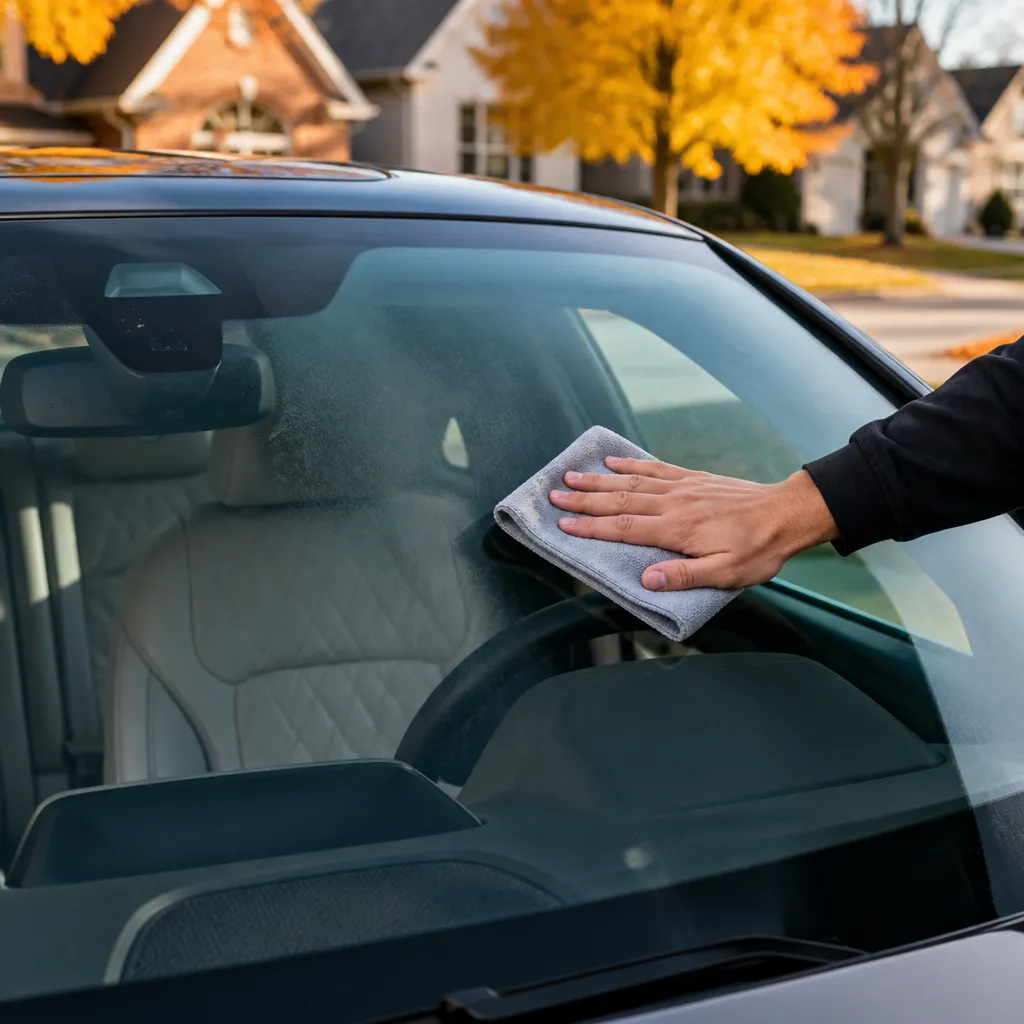
What Outgassing Actually Does
The vapor does not look like dust. It condenses into a thin, oily layer that sits on the glass and bonds more tightly the longer it stays there. In our experience, the film shows up first on the passenger side and across the center of the windshield, where the afternoon sun heats the dash and the defroster vents push warm air across the glass.
Oils, Smoke, and Air Freshener Residue
Hand oil from touching the dashboard, the top of the steering wheel, and the window switches transfers onto the glass every time someone reaches across to adjust the radio. Smoke and scented air fresheners add a sticky layer that holds dust and makes the haze appear faster. A car that was smoked in years ago often shows a film that returns within weeks of a clean.
Why Household Cleaners Make It Worse
Most people reach for whatever glass cleaner is under the kitchen sink. That works fine on a dusty window in spring. Against a bonded film, it often produces a streaky, slightly cloudy finish that makes the haze look worse, and in many cases the cloudiness is a new layer of residue left behind by the cleaner itself.
The Ammonia Problem
Many household glass cleaners are ammonia-based, and they dry quickly, especially on warm glass. When the solvent flashes off before you buff, it leaves behind dissolved residue and a faint film. Ammonia is also hard on the adhesive used on aftermarket window tint, so spraying it near the edges of tinted glass can lead to lifting and bubbling over time.
Silicone Dressings Moving onto the Glass
Dashboard dressings are the other common culprit. Many contain silicone oils that give plastic a satin finish, and those oils migrate. Every time you wipe the dash with a dressed towel and then touch the windshield, or every time the heat pulls product upward, you add a greasy halo that scatters light. That halo is why haze seems to return within days of a clean that looked perfect.
A common mistake is cleaning the glass while the car sits in direct sun, then wondering why the streaks reappear on the drive home. The surface was too hot for the solution to work as intended. Paper towels make it worse too, because they shed lint that clings to the film and shows up as specks on a dark interior.
Why Haze Is Harder to Remove Than It Looks
The core problem is that you are not simply lifting dirt off the glass. You are removing a thin film that has bonded to the surface. Glass is smooth and nonporous, so the oily layer has nothing to soak into. It sits on top, grips through contact, and changes its character the longer it stays in place.
Why Wiping Spreads the Film
If you wipe with a dry towel, you move the film around without lifting it. A damp towel with ordinary cleaner spreads the oily layer thinner and wider, which makes the glass look hazy across a larger area. This is why many owners say their windshield got cloudier after a few passes. You are not failing to clean. You are redistributing the residue.
Night Glare and the Halo Effect
The haze matters most after dark. Oily residue scatters oncoming headlights and streetlights into halos and starbursts, so a windshield that looks acceptable in daylight can be a real problem at night. Drivers often notice it first when the lights of oncoming traffic bloom across the glass on a wet road.
Window haze is a surface chemistry problem with a physical cleaning step attached. Treat it as a residue to dissolve, not as dirt to wipe away, and the results change completely.
In our shop, the first sign is usually a customer who says they cleaned the windshield twice and it still looks wrong. That is the moment we stop assuming and start testing.
A Removal Process That Works
Our process starts before any product touches the glass. We check the dashboard, the defroster grille, and the trim near the windshield, because the cleaning method has to match what surrounds it. Then we test a small section of glass to see whether the film responds to a glass-specific cleaner, a light polishing step, or both.
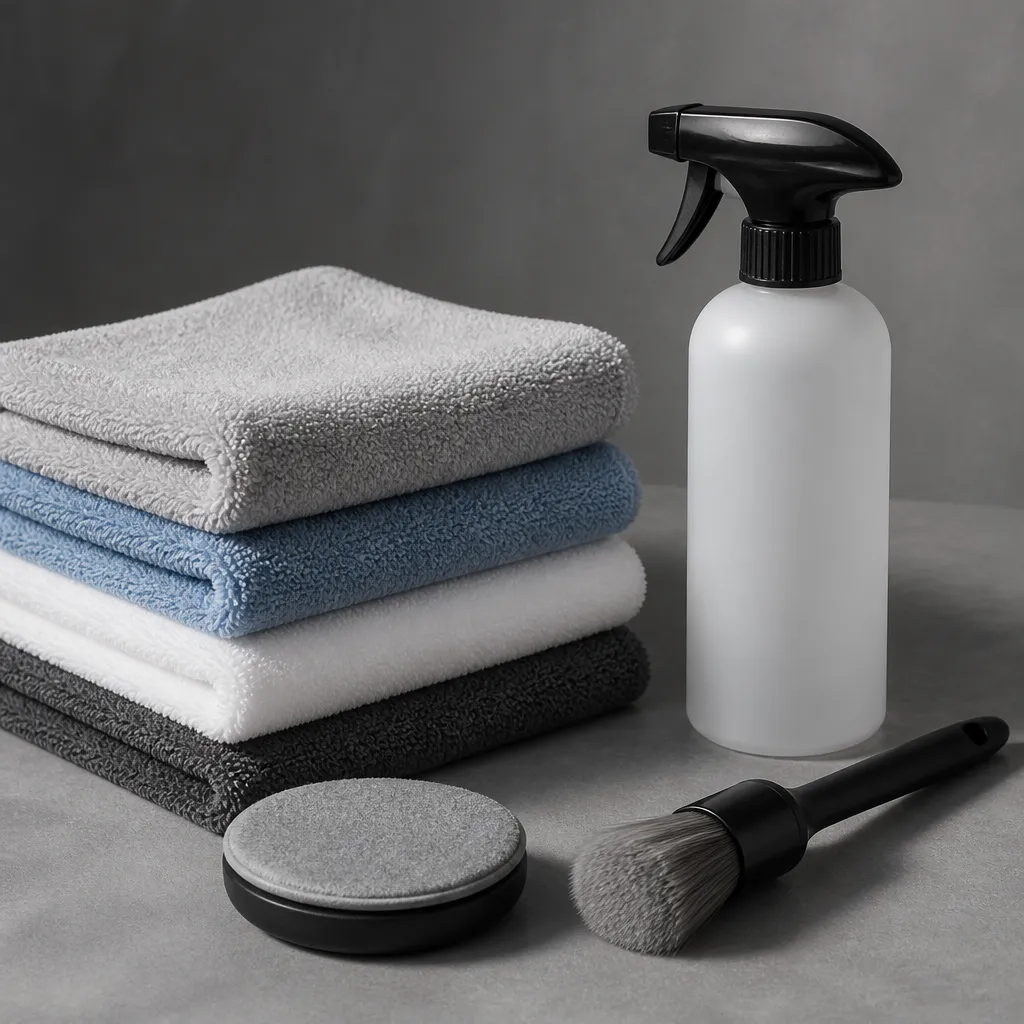
Prep and Test Spot
Protect the dash and door seals with painter's tape or a folded microfiber, and work with the glass cool. Pick a test spot in the lower corner of the windshield, where a small mistake will be hidden under the cowl. A good test tells you whether a simple cleaner will lift the film or whether you need a more aggressive step.
Two-Towel Lift and Finish
Spray the cleaner onto the first towel, not directly onto the glass, so overspray stays off the dash. Wipe in one direction, then buff with a second, dry, plush towel in a crosswise pattern. Keep the towels separate, and flip or refold them often, because a saturated towel will simply redeposit the film.
Pro tip: Mark your glass towels or keep them in a sealed bag so they never touch dash or door panel products. A single towel used on the dashboard can undo an otherwise clean windshield in one pass.
When a Polish Step Is Needed
If the film survives two-towel cleaning, it has usually bonded deeper into the surface. At that point we use a fine glass polish with a soft pad on a controlled, low-speed pass. Polish is a finishing step, not a shortcut, and we only use it after the test spot confirms that the product lifts the film without leaving marks.
Comparing Removal Approaches
Three approaches cover most of what people try. The table below shows where each one works and where it runs out of steam, based on the film types we see most often in Chicago-area vehicles.
| Approach | Where It Works | Where It Falls Short |
|---|---|---|
| Household ammonia-based cleaner and paper towels | Light dust on cool, bare glass | Leaves streaks on warm glass, can harm tint edges, and does not lift bonded film |
| Two-towel microfiber with a glass-specific cleaner | Routine maintenance and early haze | Slow on heavy film and depends on frequent towel changes |
| Professional decontamination with a fine glass polish | Long-term bonded film on windshield and side glass | Requires trained technique and careful masking around trim and tint |
The short version: a household spray is fine for dust, the two-towel method handles routine haze, and professional decontamination is the practical path once film has bonded for months. An extra hour on the first clean usually costs less than a second and third attempt that leave the glass looking worse.
When an owner asks what to buy, our answer is always to start with the lightest method that works. Begin with the two-towel method, then escalate only if the test spot tells you to.
Tinted Glass and Film Care
Tinted side and rear glass is where a lot of well-meaning cleaning goes wrong. Aftermarket window film sits on the inside surface, so the film is what you are cleaning, and it is more vulnerable than the glass underneath. The edges are the weak point, because that is where adhesive meets the rubber gasket and the trim.
Ammonia, Razors, and Tint Edges
Avoid ammonia-based products, abrasive pads, and razor blades on tinted glass. Blades can scratch the film and lift its edges, and abrasive pads leave micro-scratches that show up as haze in bright sunlight. Use a soft microfiber, a mild glass-safe cleaner, and light pressure, and keep liquid away from the seam where the film meets the gasket.
Rear Windows and Defroster Lines
The rear window is the trickiest part of most cars. The defroster lines are thin and break easily if you wipe across them. Wipe parallel to the lines, not perpendicular, and lift the towel at the end of each stroke. A common mistake is scrubbing hard at the center of the rear glass, which is exactly where the heating element runs.
Pro tip: If the rear window hazes only near the defroster lines, check for a damaged or lifting line before you assume it is residue. No amount of cleaning will fix a broken element.
Illinois Fall and Winter Fogging
Late October is when the haze problem becomes obvious for most people in the Chicago suburbs. Mornings turn cold, afternoons can still feel mild, and the cabin air picks up moisture from passengers, wet shoes, and damp coats. Cold glass coated with residue gives that moisture the perfect surface to cling to.
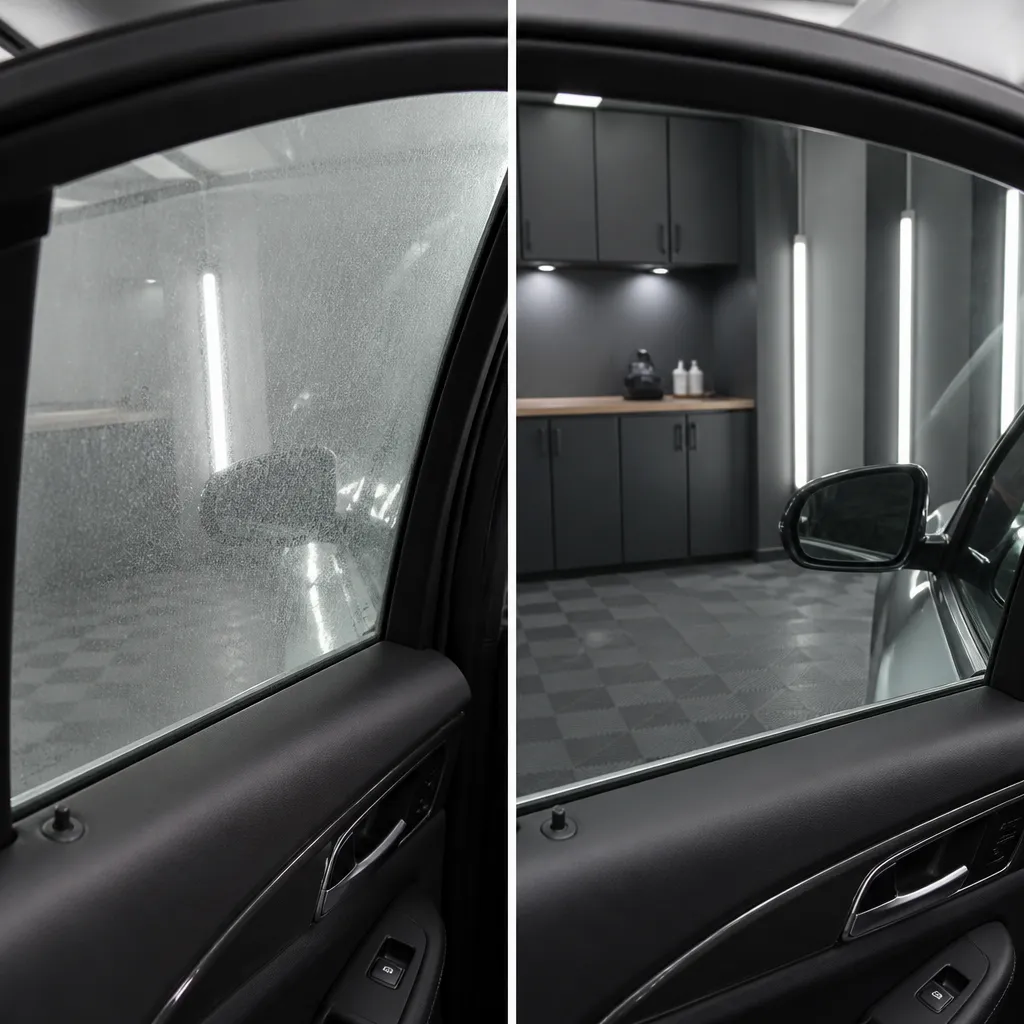
Why October Mornings Show the Problem
The residue is not new in October. What changes is the temperature difference between the glass and the cabin. When the outside of the glass is cold and the inside air is humid, moisture condenses on the film first, and the haze looks like fog that will not clear. Many drivers blame the defroster, but it is usually doing its job and simply revealing what was already on the glass.
Defrost Habits and Cabin Humidity
Running the air on recirculate can trap moisture inside the car, which makes fogging worse. Switching to fresh air and aiming the airflow at the glass clears condensation faster, though it does not remove the film. If the windshield fogs every morning despite good airflow, the film is the reason, and that is when a proper interior glass cleaning is worth scheduling.
Professional Interior Glass Detailing
A professional interior glass service is different from a quick wipe at a car wash. It starts with identifying the film, choosing the right chemistry, and protecting the rest of the interior. Detailing guides often describe glass cleaning and treatment as a specialized service rather than a basic add-on, and that matches what we see in the shop.
Our Process at Hersheys Detailing
At our Glendale Heights shop, each interior glass job begins with a walk-around under good light, a test spot, and a decision about which method to use. We protect the dash and trim, keep separate towels for glass and interior plastics, and finish with a streak check from several angles. We have detailed more than 500 vehicles across the Chicago suburbs, including Carol Stream, Bloomingdale, and Wheaton, and the pattern is consistent: the earlier the film is caught, the faster it comes off.
Protecting Glass After the Clean
After removal, the best defense is a clean dash and a change in habits. Use dressing sparingly, keep it off the glass, and avoid touching the windshield with dressed hands. Some owners ask about interior glass treatments that slow future buildup. Those can help, but they only work on glass that was cleaned properly first, so treat them as a follow-up, not a fix.
Pro tip: Clean the windshield after the dashboard, never before. Dressing that drips onto freshly cleaned glass undoes the work in a single drive.
Pro tip: Ask any detailer whether they run a test spot first. A shop that tests before it cleans understands the film, not just the surface.
Frequently Asked Questions
Why does the inside of my windshield fog up so quickly in the fall?
Cold outside glass meets humid cabin air, and any residue on the glass gives moisture a surface to cling to. Use fresh air and aim the airflow at the windshield, and if the fogging repeats every morning, the film is the likely cause.
Can I remove window haze without professional help?
Often, yes, if the film is light. Use the two-towel method with a glass-specific cleaner and test a small spot first. If the haze returns within days or survives two careful passes, the film has likely bonded, and professional decontamination will save time and protect the glass.
Can I use an ammonia-based cleaner on tinted windows?
Avoid it. Ammonia can weaken the adhesive on aftermarket tint and cause bubbling or lifting at the edges. A mild, glass-safe cleaner on a soft microfiber is the safer choice.
How often should I clean interior glass in Illinois?
Clean it every few weeks in fall and winter, and any time you notice haze at night or fog that will not clear. Frequent light cleaning keeps film from bonding, which is the biggest factor in how hard it is to remove.
Will a dashboard dressing cause the haze to come back?
It can. Silicone-based dressings migrate onto glass, especially in heat. Apply dressing sparingly, wipe off any overspray, and clean the glass after you dress the dash.
Does interior glass haze require polishing?
Only when lighter methods have failed. A fine glass polish on a soft pad can remove bonded film that cleaning alone cannot lift. It is a finishing step that should follow a test spot, not replace one.
Have you fought a stubborn film on your own windshield this season, and if so, which method finally cleared it for you?