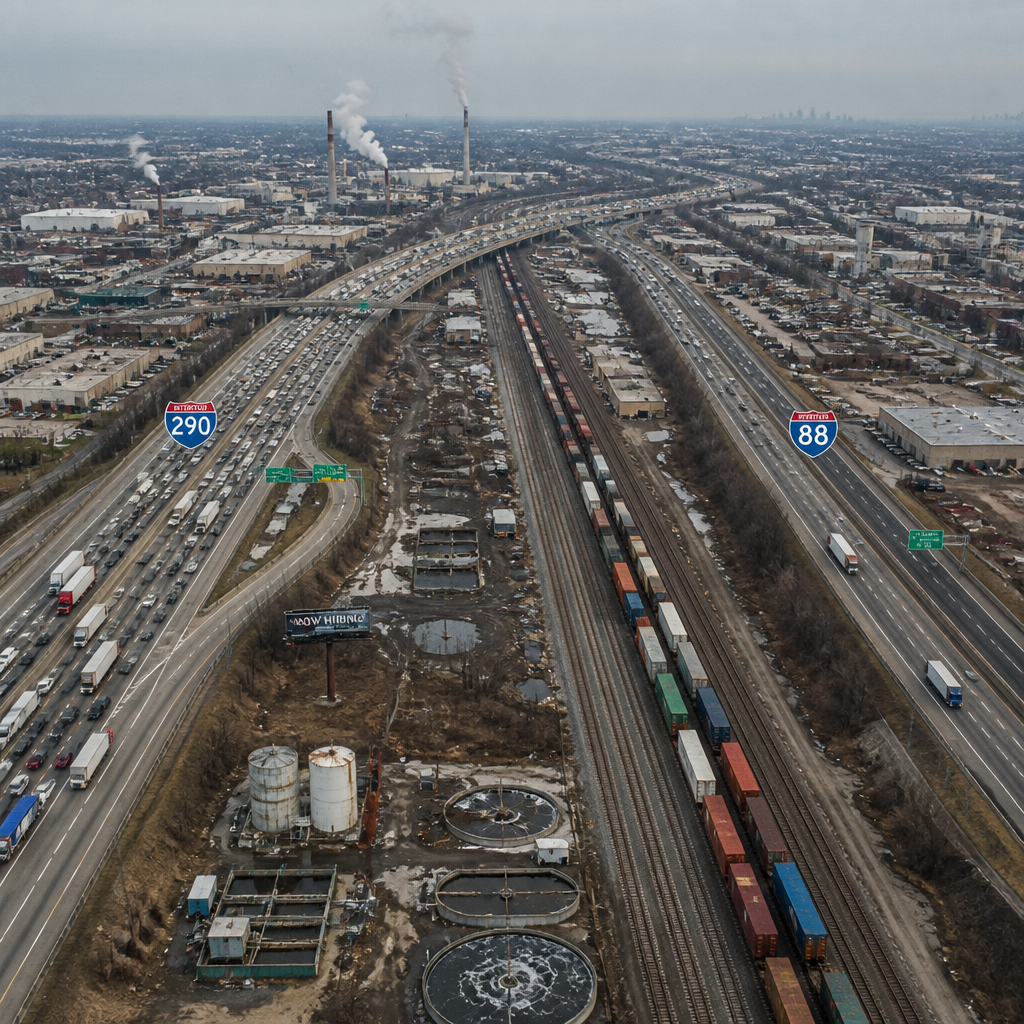
Run your clean hand across a freshly washed panel on your car. If it feels like fine sandpaper instead of glass, your paint is already under attack. That grit is not dirt. It is embedded iron contamination, microscopic metallic particles that have fused into your clear coat and are rusting from the inside out. For drivers in the Chicago suburbs, the problem is worse than average. Between heavy highway commute traffic, industrial zones along the I-290 and I-88 corridors, and the Metra rail network running through towns like Carol Stream, Bloomingdale, and Wheaton, iron fallout removal in Illinois is not an optional detailing step. It is a necessity. This article explains exactly what iron fallout is, where it comes from, what it does to your paint, and how professional decontamination stops it.
Table of Contents
- What Is Iron Fallout and Where Does It Come From
- How Iron Contamination Damages Your Clear Coat
- Signs Your Car Needs Decontamination Right Now
- Clay Bar vs. Iron Decontamination: What Each Actually Does
- What a Professional Decontamination Process Looks Like
- Why Decontamination Is Non-Negotiable Before Ceramic Coating
- How Often Should You Decontaminate Your Paint
- Frequently Asked Questions
- References
What Is Iron Fallout and Where Does It Come From
Iron fallout refers to microscopic metallic particles that embed themselves into your vehicle's clear coat and oxidize. They are not visible to the naked eye individually, but their cumulative damage absolutely is. There are three primary sources that affect every car on Illinois roads.
Brake dust is the most common culprit. Every time you or the driver in front of you applies the brakes, the pad grinds against the rotor and releases a cloud of hot metallic particles. Those particles become airborne and settle on every painted surface on your car. Drivers who spend time on congested stretches like Route 53, North Avenue, or Gary Avenue during rush hour are absorbing brake dust from dozens of surrounding vehicles on every single commute.
Rail dust is the second source, and it affects the Chicago suburbs more than most people realize. Fine iron particles are shed wherever train wheels contact steel track. The Metra UP-West line runs directly through Glendale Heights, Carol Stream, and Wheaton. Parking near commuter rail stations or living within a few blocks of active rail lines exposes your paint to elevated concentrations of ferrous contamination year-round.
Industrial emissions from factories, construction zones, and metalworking facilities round out the three main sources. The greater Chicago metro area is one of the more industrially active regions in the Midwest, and fine metallic particles dispersed by wind travel significant distances from their source before settling onto vehicle surfaces.
A common misconception is that iron fallout only affects neglected vehicles or daily beaters. In practice, even a well-maintained luxury vehicle parked in a suburban garage accumulates meaningful ferrous contamination within six months of normal driving. The contamination is invisible. The damage it causes is not.
New cars are not immune, either. Vehicles transported by rail from manufacturing plants often arrive with embedded fallout before a single mile has been driven on public roads. The paint may feel smooth in the showroom, but a chemical decontamination spray will tell the real story within seconds.
How Iron Contamination Damages Your Clear Coat
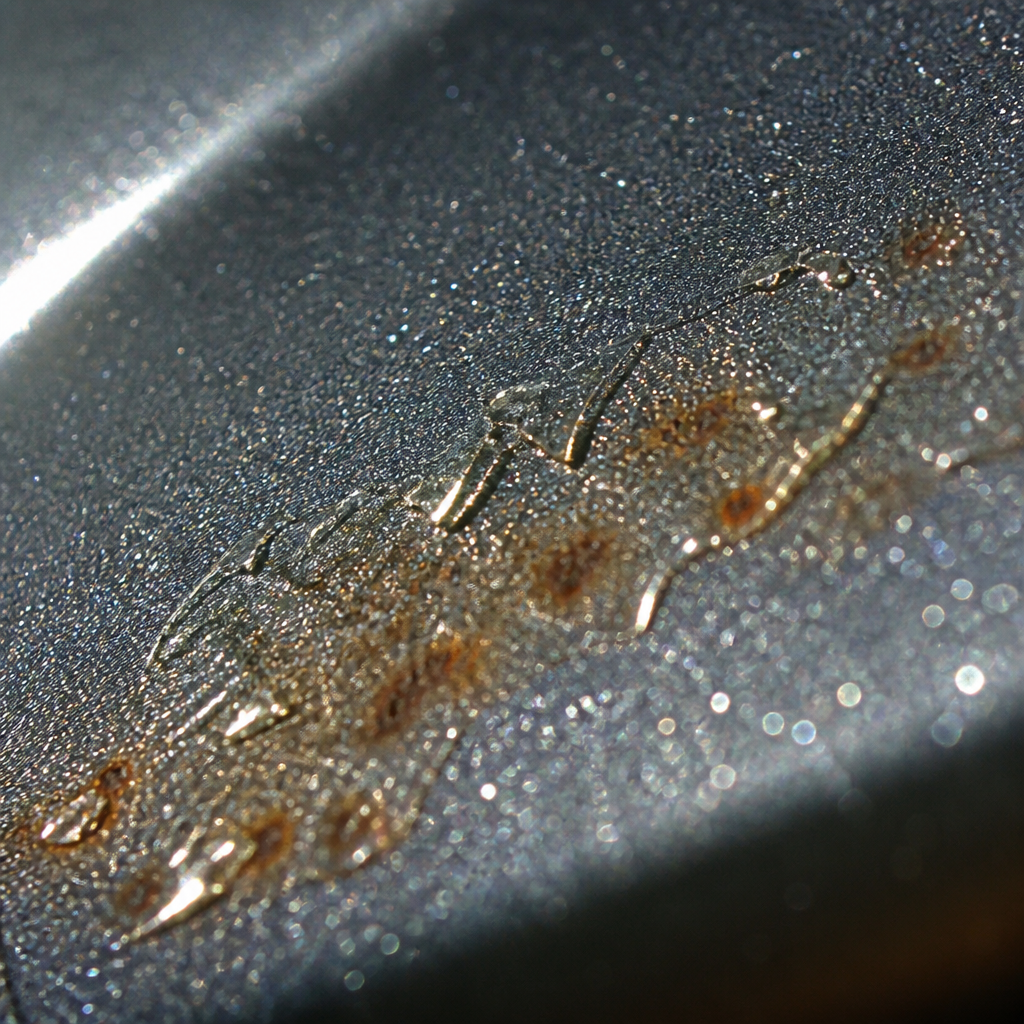
The reason iron fallout is so destructive is that it does not sit on the surface of your paint. It embeds into it. When a hot metallic particle contacts your clear coat, it physically penetrates the outer layer and bonds with the substrate beneath. At that point, a standard car wash cannot remove it. The particle is physically fused into the paint.
Once embedded, the iron particle begins to react with oxygen and moisture. This is the process of oxidation, or rusting, and it happens below the clear coat surface. The rust expands as it forms, creating pressure from within the paint layer. Over time, this produces the visible symptoms most people notice: tiny orange or rust-colored specks, surface pitting, and a dull, rough texture that persists no matter how many times you wash the car.
Left untreated for extended periods, the damage moves beyond surface contamination. The corrosion can penetrate through the clear coat and into the base coat, which moves the problem from a decontamination issue to a paint correction or refinishing issue. At that stage, the cost and labor involved increases substantially. Catching iron contamination early, while it is still a chemical problem rather than a structural one, is the point of regular decontamination.
White, silver, and light gray vehicles show the symptoms most obviously, as the orange rust speckling stands out against light paint. Dark vehicles are equally contaminated, but the visible signs are harder to spot until the damage is already advanced. Do not assume a dark vehicle is clean because you cannot see rust spots.
Signs Your Car Needs Decontamination Right Now
There are two reliable ways to check whether your paint has significant iron contamination. Neither requires any product purchase upfront.
The first is the plastic bag test. Stretch a clean plastic bag over your hand and run it lightly across a clean, dry painted panel. The plastic amplifies surface texture dramatically. A properly decontaminated surface will feel like glass. A contaminated surface will feel like fine sandpaper or very light grit. Most cars that have not been professionally decontaminated within the last year will fail this test.
The second indicator is visual. Look at your paint under bright light, ideally a detailing inspection light or direct sunlight at a low angle. On light-colored vehicles, look for tiny orange or brownish specks that do not wash away. On any color vehicle, look for an overall lack of clarity or depth that is inconsistent with the age of the paint. Wax or sealant applied over contaminated paint always looks muted rather than brilliant, because the contamination breaks the optical smoothness of the surface.
Pro tip: If you are not sure whether your car has iron contamination, spray a pH-reactive iron remover onto a foam applicator and wipe it on a small section of paint. If the product bleeds red or purple within a minute, iron contamination is present. The chemical reaction is immediate and unmistakable.
Other practical indicators: your car spends time parked near rail lines or highways, you drive in heavy commuter traffic regularly, it has been more than a year since a professional decontamination service, or you are preparing for a ceramic coating and want to confirm the surface is truly clean.
Clay Bar vs. Iron Decontamination: What Each Actually Does
These two processes are frequently confused, and using them in the wrong order causes real damage. They are complementary, not interchangeable, and each addresses a different category of contamination.
Iron decontamination is a chemical process. A pH-reactive iron remover is sprayed onto the paint and left to dwell. The active chemistry reacts with ferrous particles, breaking the bond between the iron and the clear coat and converting the particle into a water-soluble compound that rinses away. The purple or red color change that occurs during this process is the visual indicator that the reaction is working. The iron remover cannot remove non-ferrous surface bonded contaminants like tree sap, industrial tar, or mineral deposits. That is not what it is designed to do.
Clay bar treatment is a mechanical process. A clay bar or clay mitt is drawn across lubricated paint and physically shears away bonded surface contaminants that protrude above the paint surface. This includes residual contamination that the iron remover did not dissolve, as well as non-ferrous materials like tree sap overspray and road grime.
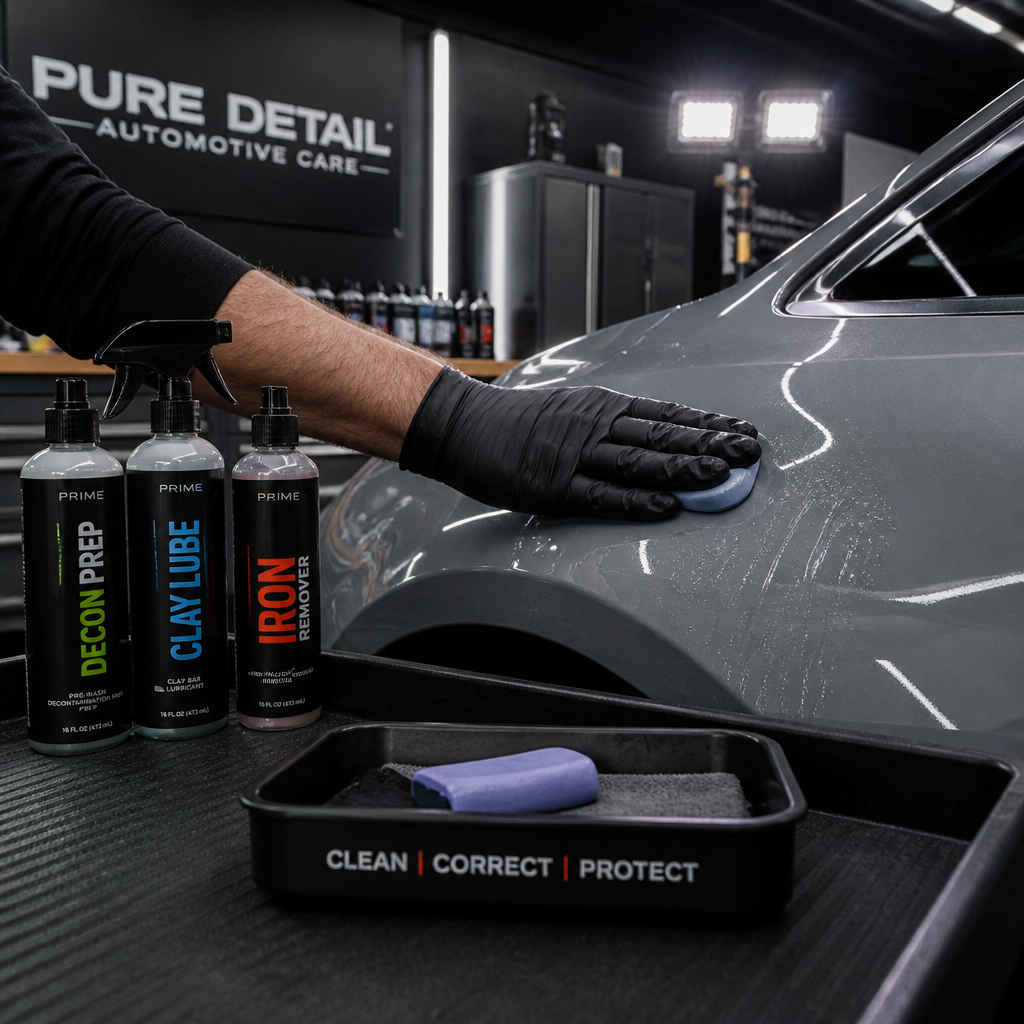
The critical rule is that iron decontamination always comes first. Iron particles are sharp. Running a clay bar over paint that still contains embedded iron grinds those sharp particles across the surface, creating micro-scratches and swirl marks. You then have a paint correction problem on top of a contamination problem. Chemical iron removal first, clay second, in that order, every time.
The Comparison: Iron Remover, Clay Bar, and Combined Decontamination
| Method | What It Removes | Best Used For |
|---|---|---|
| Chemical Iron Remover | Embedded ferrous particles (brake dust, rail dust, industrial fallout) | First step in any decontamination; mandatory before clay, polishing, or coating |
| Clay Bar / Clay Mitt | Bonded surface contaminants (sap, overspray, mineral deposits, residual grime) | Second step after iron removal; used when the paint still feels rough after chemical treatment |
| Combined Chemical + Clay Decontamination | Full spectrum of paint contamination, both ferrous and non-ferrous | Pre-coating preparation, pre-paint correction, annual deep detail |
For most vehicles that have not been decontaminated within the past year, both steps are warranted. For a vehicle that was decontaminated recently and is being touched up, iron remover alone may be sufficient. The condition of the paint and the result of the plastic bag test determine which approach is appropriate.
What a Professional Decontamination Process Looks Like
A proper professional decontamination is not a spray-and-rinse operation. At Hersheys Detailing, decontamination is a structured multi-stage process that prepares the paint for whatever comes next, whether that is a maintenance wax, a paint sealant, or a full ceramic coating application.
Stage One: Pre-Wash and Surface Cleaning
The vehicle is fully pre-rinsed to remove loose surface debris, then washed with a pH-neutral car shampoo using the two-bucket method. The goal is to arrive at a clean surface before any chemical decontamination is applied. Applying iron remover over heavy surface dirt reduces dwell time effectiveness and wastes product.
Stage Two: Iron and Fallout Removal
With the vehicle wet, a pH-reactive iron and fallout remover is applied generously across all painted surfaces, glass, and wheels. The product is allowed to dwell for the appropriate time, typically three to five minutes on a standard contamination load. The characteristic purple-red color change confirms where active contamination exists. On heavily contaminated vehicles, a second application pass may be warranted before rinsing. The vehicle is then rinsed thoroughly with high pressure to flush dissolved iron compounds completely off the surface.
Stage Three: Clay Decontamination
After the iron remover rinse, the paint surface is assessed. If the plastic bag test still shows roughness, a clay bar or clay mitt is worked across the paint with adequate lubricant using light, overlapping passes. The clay picks up any remaining bonded surface contamination. The key here is technique: too much pressure or insufficient lubricant causes clay marring, which then requires polishing to correct.
Stage Four: Final Rinse and Inspection
A final rinse removes all residue, and the paint is dried and inspected under lighting. At this point the surface should pass the plastic bag test cleanly. If it does not, the process is repeated in problem areas before any protective product is applied.
Pro tip: Never apply a ceramic coating, paint sealant, or even a quality carnauba wax over paint that has not been fully decontaminated. The contamination gets sealed under the protective layer, continues to oxidize, and causes premature coating failure and bonding issues. Decontamination is not the step you skip to save time.
Why Decontamination Is Non-Negotiable Before Ceramic Coating
Ceramic coatings chemically bond to the outermost surface of your clear coat at a molecular level. This is precisely what makes them so durable and effective. It is also precisely why the surface they bond to must be completely free of contamination before application.
Iron particles embedded in the clear coat disrupt the bonding surface. A coating applied over contaminated paint does not achieve full molecular adhesion across the entire surface. The coating seals in the contamination rather than bonding cleanly to clear coat. Those embedded iron particles continue to oxidize beneath the coating, creating bubbling, spotting, and premature delamination. The expensive protection you paid for is compromised from the first day.
At Hersheys Detailing, every ceramic coating package includes full decontamination as a non-negotiable step in the preparation process. The 5-year and 8-year SiO2 nano-ceramic coatings applied here are designed to last, and that longevity depends entirely on the quality of the surface prep work done before the coating is applied. Skipping decontamination to save an hour of labor time is the single most common reason ceramic coatings fail ahead of schedule.
This also applies to paint correction. Polishing over embedded iron drives sharp metallic particles across the paint surface with the pad, causing micro-scratches in the clear coat. Proper sequence is always: chemical iron removal, then clay decontamination if needed, then paint correction, then coating application. Any other order compromises the next step in the chain.
How Often Should You Decontaminate Your Paint
For most daily drivers in the Chicago suburbs, a full paint decontamination treatment should be performed at minimum twice per year. The most logical timing is before winter begins, when road salt and freeze-thaw cycles compound the damage from existing contamination, and again in spring after winter is over, when accumulated salt and iron contamination from the cold months is addressed before it has more months to oxidize into the clear coat.
Certain use cases warrant more frequent treatment. If your vehicle is parked near rail lines regularly, driven in heavy stop-and-go traffic daily, or kept outdoors without a cover, quarterly decontamination may be appropriate. High-performance vehicles with aggressive brake setups produce significantly more brake dust than stock vehicles, meaning the contamination load accumulates faster.
Vehicles with an active ceramic coating require less frequent full decontamination because the coating's hydrophobic surface causes many contaminants to sheet off rather than embed. However, the maintenance detail schedule for a coated vehicle still typically includes a decontamination rinse or pH-reactive wash at each service appointment. The coating reduces contamination rate, not to zero, but significantly enough to change the service interval.
The bottom line is this: if your car has not had a professional paint decontamination service in the past twelve months and you drive it regularly in the Chicago suburbs, it has iron contamination. The question is not whether it needs decontamination. The question is how much damage has accumulated in the meantime.
Frequently Asked Questions
Can I remove iron fallout myself at home?
Yes, pH-reactive iron remover products are available at auto parts stores and online, and a basic iron decontamination can be done at home if you follow the correct process: wash first, apply iron remover to a wet surface, let it dwell, and rinse thoroughly. The limitation is that most consumer products are less concentrated than professional-grade formulas, and the multi-stage process including clay decontamination, correct technique, and proper inspection is harder to execute correctly without experience. For vehicles going into paint correction or ceramic coating, professional decontamination is strongly recommended because errors at this stage compound through every step that follows.
Will regular car washes remove iron fallout?
No. Standard car wash soap, including premium hand wash soaps, does not have the chemistry to dissolve the bond between iron particles and clear coat. A regular wash removes loose surface contamination and some light surface residue, but embedded iron requires a pH-reactive chemical product specifically formulated to react with ferrous metal. Running a vehicle through an automatic car wash does not address iron contamination and can actually worsen it by grinding surface grit across the paint with brushes or fabric strips.
How do I know if my car has iron fallout if I can't see any rust spots?
Use the plastic bag test. Stretch a thin plastic bag over your clean, dry hand and run it across a washed paint panel. The plastic amplifies surface texture so precisely that you will feel any embedded contamination as a rough, gritty texture even when the paint looks clean to the eye. Alternatively, apply a small amount of pH-reactive iron remover to a foam pad and wipe it on a small test area. A purple or red bleed within a few minutes confirms iron contamination is present, even if no visible rust spots have appeared yet.
Does iron fallout affect wheels differently than paint?
Wheels actually accumulate iron contamination faster than painted body panels because they are the primary source of brake dust and are in closest proximity to the rotor and caliper. The heat cycles that wheels go through also help iron particles embed more aggressively into wheel coatings or bare alloy surfaces. This is why iron remover turns most visibly purple-red on wheels even when the body panels appear relatively clean. Including wheels in every decontamination treatment is not optional.
If my car has a ceramic coating, is iron fallout still a concern?
A ceramic coating significantly reduces the rate at which iron contamination embeds into your paint by creating a harder, more hydrophobic surface that resists particle penetration. However, it does not eliminate the risk entirely. Over time, iron particles can still embed into the coating layer itself, particularly on uncoated surfaces or areas where the coating has thinned. Annual maintenance details for coated vehicles should include a decontamination step to keep the coating surface clean and performing at full effectiveness.
What is the difference between iron fallout and tar or tree sap contamination?
Iron fallout is a ferrous metal contamination that requires a pH-reactive chemical product to dissolve. Tar and tree sap are organic or petroleum-based contaminants that require a dedicated tar remover or clay bar treatment to address. They are different contamination categories, and the products designed for one do not effectively address the other. A complete decontamination addresses both categories in the correct order: iron remover first, then clay bar to pick up any remaining bonded organic or residual contamination that the iron remover did not address.
If you have had your paint decontaminated recently or you have been living with a rough-feeling paint surface for longer than you would like, share your experience in the comments. We read every response and your specific situation may be worth a direct answer.
We would love your feedback and any insights you would share with others. What perspective would you add?
References
- How iron fallout embeds into clear coat and how to safely remove it with pH-reactive chemistry
- What iron fallout is, its three main sources, and how it damages vehicle paintwork
- Iron remover vs. clay bar: which comes first and why the order matters for paint decontamination
- How to use iron fallout remover as part of a multi-stage decontamination process
- How iron removers work chemically and when to use them for paint and wheel decontamination