If you own a matte-finish vehicle in the Chicago suburbs, you have already discovered that standard detailing advice does not apply to your car. Products that keep gloss paint looking spectacular will actively ruin a matte surface. The same is true in reverse: routines built around preserving a flat, non-reflective finish will leave a gloss vehicle looking under-protected. Matte paint protection in Illinois demands a completely separate approach from gloss paint ceramic coating in Chicago, and getting that wrong is expensive to fix. This guide covers what actually separates these two protection paths, what each finish demands from Chicago's climate, and how to make the right call for your specific vehicle.
Table of Contents
- Why Finish Type Changes Everything in Protection
- Quick Takeaways
- How Gloss Ceramic Coating Works and Why It Excels
- Matte Paint Protection: Different Rules, Different Products
- Chicago's Climate and What It Does to Both Finishes
- Gloss vs. Matte Protection: A Direct Comparison
- The Biggest Mistakes Owners Make with Each Finish
- Maintenance After Protection: Keeping Both Finishes Looking Right
- Frequently Asked Questions
- References
Why Finish Type Changes Everything in Protection
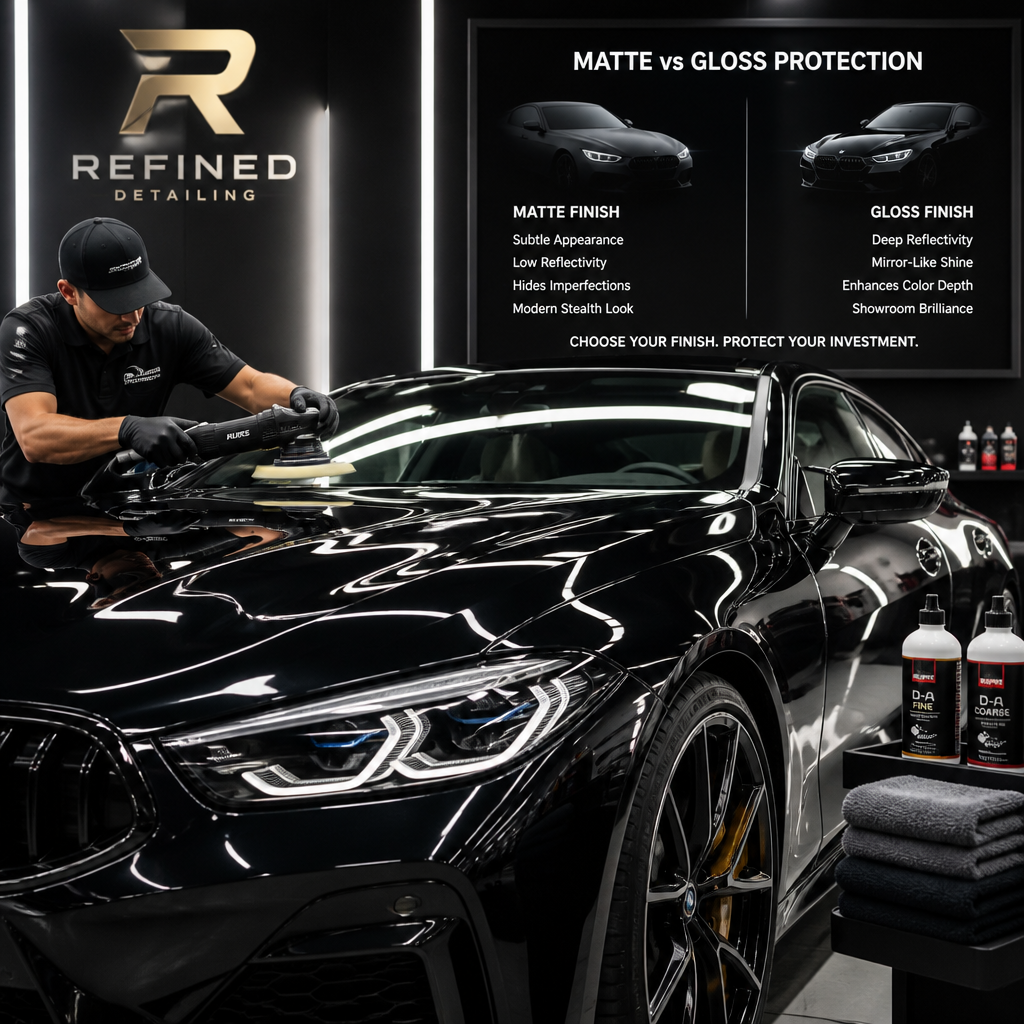
The difference between gloss and matte paint is not just aesthetic. It is structural. Gloss clear coats are formulated to be as smooth and flat as possible at a microscopic level, which is what creates that mirror-like light reflection. Matte clear coats, by contrast, are engineered with microscopic surface irregularities that scatter light instead of reflecting it, producing the flat, non-shiny look. Every product decision you make about protection has to account for which of those structures you are working with.
When a gloss-enhancing ceramic coating is applied to a matte finish, the coating can fill in those microscopic irregularities, creating unwanted shine that permanently compromises the look. That is not a correction you can polish away. Polishing matte paint removes material and levels the surface, which only makes the gloss problem worse. The texture that defines a matte finish is gone, and no amount of detailing will bring it back short of a full repaint.
For gloss vehicles, this same property works in your favor. A quality SiO2 nano-ceramic coating bonds chemically with the clear coat and fills microscopic pores for a smoother, more reflective surface. The result is deeper color, more clarity, and a wet-look shine that wax cannot match for longevity. Understanding this physical difference is the starting point for every other decision in this guide.
Quick Takeaways
| Key Insight | Explanation |
|---|---|
| Standard ceramic coatings ruin matte finishes | Gloss-formulated coatings fill the microscopic texture of matte clear coats, creating permanent unwanted shine that cannot be polished out without damaging the finish further. |
| Matte-specific coatings exist and are the correct choice | Dedicated matte-safe ceramic products are engineered to bond with the clear coat while preserving the original flat appearance, not altering the light-scattering texture. |
| Machine polishing destroys matte paint | Machine polishing levels the surface, increases gloss, and permanently changes the texture. It is not a detailing step for matte vehicles. Ever. |
| Chicago road salt hits coatings, not your paint | A properly applied coating or paint protection film means winter road salt contacts the protective layer first. Without protection, salt sits directly on your clear coat or paint. |
| Matte PPF offers physical protection gloss coatings do not | Matte-finish paint protection film provides a physical barrier against rock chips and scratches that a ceramic coating alone cannot match, while maintaining the flat look. |
| Gloss paint rewards a quality SiO2 coating with longevity | Nano-ceramic SiO2 coatings chemically bond with gloss clear coats, producing protection that lasts 5 to 8 years with measurably better UV resistance and hydrophobic performance than wax. |
| Waxes and gloss quick detailers are off-limits for matte | Most retail car wash soaps, spray waxes, and quick detailers contain gloss enhancers or polishing agents that degrade matte finishes over time, even in small amounts. |
The table above is the core decision framework. Before any product touches a matte-finish vehicle, the question is not "will this protect my paint?" but "is this formulated specifically for matte?" The two categories are not interchangeable, and treating them as if they are is the most common and most costly error in this segment of detailing.
How Gloss Ceramic Coating Works and Why It Excels
A professional nano-ceramic coating is a liquid polymer, primarily silicon dioxide (SiO2), applied to the vehicle's exterior. Once it cures, it chemically bonds with the factory clear coat to form a semi-permanent protective layer. This is fundamentally different from wax or paint sealant, which sit on top of the surface and wash away over time. A properly applied SiO2 coating becomes part of the surface it protects.
What Gloss Vehicles Gain from Ceramic Coating
The benefits for gloss paint are layered and durable. First, there is the visual improvement: enhanced depth, clarity, and reflectivity that produce a genuine wet-look, mirror-like finish. Second, there is the protection layer: a hard, chemically bonded barrier against UV radiation, chemical contaminants, bird droppings, and the kind of fine scratches that come from routine washing. Third, there is the maintenance advantage: the hydrophobic properties of a quality coating cause water to bead and roll off, carrying dirt with it, which makes every wash faster and reduces the frequency of contact washing needed.
At Hersheys Detailing, the ceramic coating process starts with full paint decontamination and multi-stage machine polishing before a single drop of coating is applied. That prep work is not optional for gloss vehicles. Any surface imperfections locked under a coating become permanent, which is why paint correction before coating is non-negotiable for a true premium result.
Pro tip: For gloss vehicles, ceramic coating warranties of 5 to 8 years are realistic when applied by a trained professional over properly corrected paint. A coating applied over swirls and oxidation will not perform or look the way the product is capable of performing. Prep is what you are paying for as much as the coating itself.
How SiO2 Holds Up in the Chicago Suburbs
The Chicago-area climate puts vehicles through genuine punishment. UV exposure in summer is significant, road salt and deicing chemicals in winter are corrosive, and temperature swings from below zero to the upper 90s create expansion and contraction stress on paint surfaces. A chemically bonded SiO2 coating handles this cycle far better than wax or basic sealants, which need to be reapplied frequently to maintain any meaningful protection. For owners in Carol Stream, Bloomingdale, Wheaton, and the surrounding suburbs who drive their vehicles year-round, a durable ceramic coating is not a luxury upgrade. It is the practical choice for long-term paint preservation.
Matte Paint Protection: Different Rules, Different Products
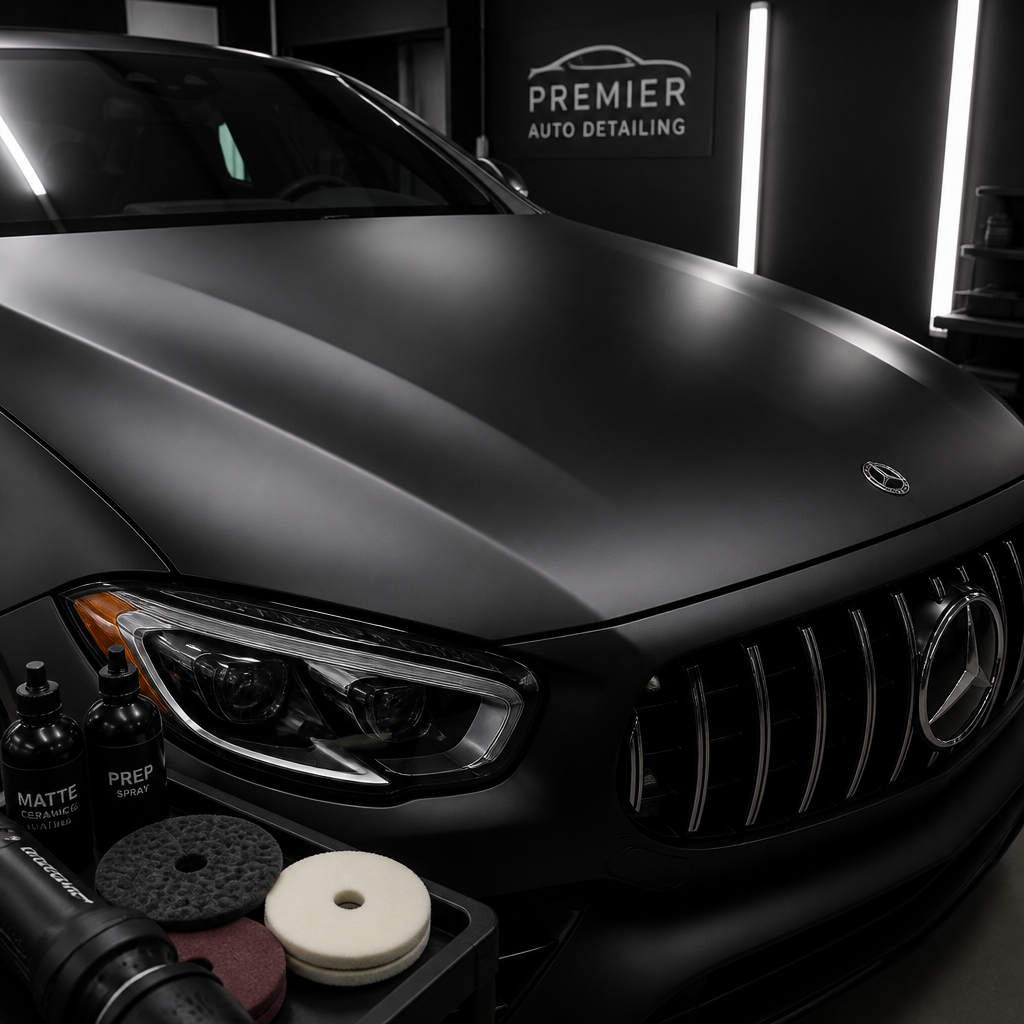
Matte finishes have grown significantly in popularity among luxury and performance vehicle owners, and that popularity has come with a learning curve for both owners and detailers. The rules that apply to gloss paint protection do not transfer. Matte clear coat is engineered to scatter light rather than reflect it, and any product or process that smooths or fills that texture changes the finish permanently.
Why Standard Coatings Are the Wrong Answer for Matte
A conventional gloss-formulated ceramic coating will fill in the microscopic irregularities of a matte clear coat and create patches or overall sheen that the owner did not want and cannot easily remove. Machine polishing to try and correct this problem makes things worse, not better, because polishing levels the surface and increases gloss. The only correct route is a coating specifically formulated and approved for matte finishes, applied by someone who understands what matte prep requires and what it prohibits.
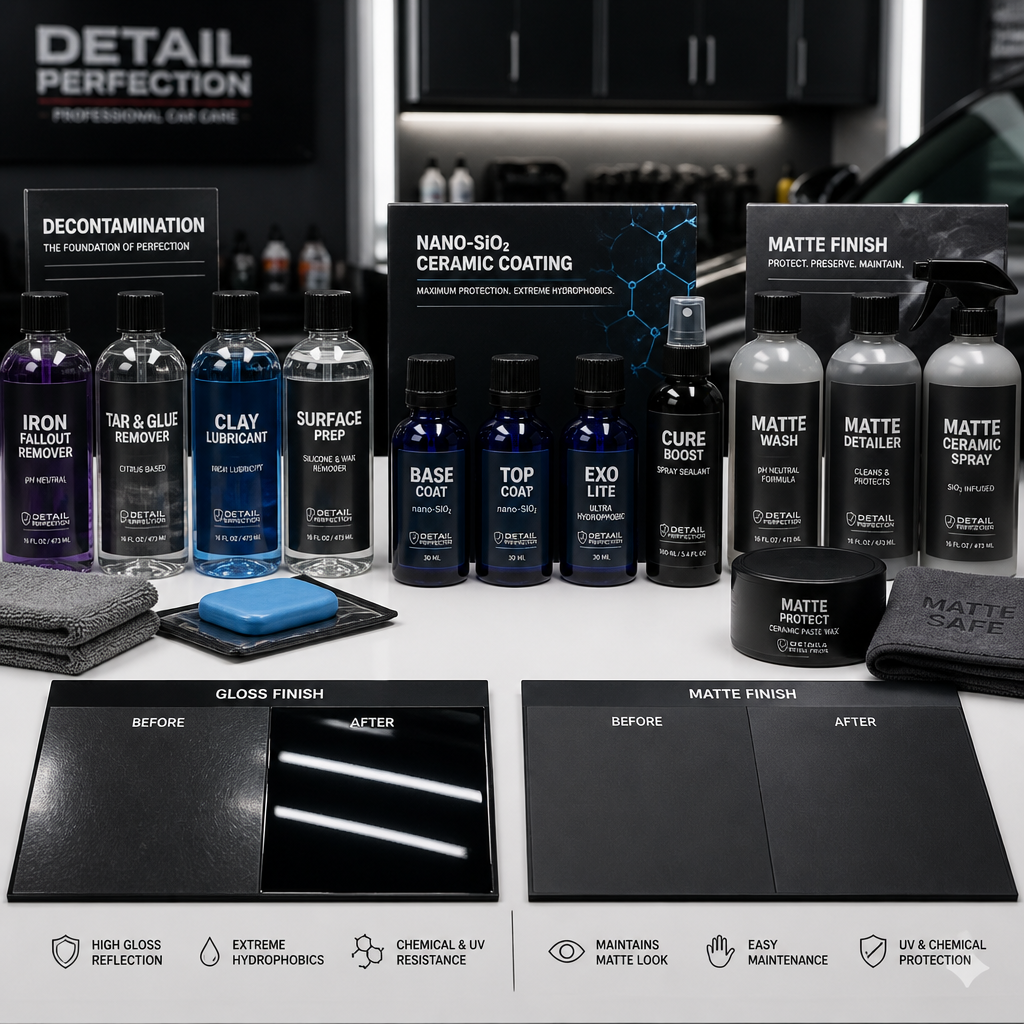
Matte prep is more restrictive than gloss prep. Aggressive clay bar treatment creates risks for matte surfaces. Machine polishing is completely off the table. Decontamination has to be done with chemical methods that do not abrade or level the clear coat texture. At Hersheys Detailing, the paint correction and decontamination process is adapted specifically to the finish type before any protective product is applied.
Matte PPF as a Physical Protection Layer
For matte vehicle owners who want the highest available level of protection, matte-finish paint protection film is worth serious consideration. A matte PPF sits as a physical barrier over the paint surface, absorbing rock chips, scratches, and road debris that a coating alone cannot stop. It can last five to ten years with proper care and comes with its own warranty. The matte finish of the film is designed to match and maintain the flat look of the factory paint beneath it. A matte-safe ceramic coating can then be applied over the PPF to add hydrophobic properties and make maintenance easier.
The most durable protection for any finish starts with understanding what that finish is made of and what it tolerates. A product formulated for the wrong finish type is not neutral, it is actively damaging.
Pro tip: Never use the same wash mitt on a matte vehicle that you have used on a gloss vehicle. Residual waxes, glazes, and gloss-enhancing products transfer from a contaminated mitt to matte paint. Dedicate specific mitts to matte vehicles and wash them separately before use.
Chicago's Climate and What It Does to Both Finishes
The Chicago suburbs are not a forgiving environment for unprotected paint. Winters bring subzero temperatures, heavy road salt applications, slush, and repeated freeze-thaw cycles. Summers bring intense UV exposure and heat. Spring and fall bring temperature swings and the residue of months of winter chemical contamination. Every finish type suffers without proper protection, but matte and gloss surfaces suffer in different ways and need different defenses.
Road Salt and Matte Paint
Road salt is corrosive to clear coat and paint at the chemical level. For matte finishes, which already show contamination and smudging more visibly than gloss paint, road salt that sits on an unprotected surface is a particular problem. A properly applied matte-safe ceramic coating or matte PPF means the salt contacts the protective layer first, not the clear coat. Washing off winter grime is also meaningfully easier on a coated matte surface because contaminants cannot bond to the hydrophobic coating the way they bond to bare clear coat.
UV Damage Across Both Finish Types
UV radiation degrades clear coat over time on both gloss and matte vehicles, but the visual effect differs. On gloss paint, UV damage first appears as fading and oxidation that dulls the reflective quality. On matte paint, UV exposure can produce uneven patches that change how the surface scatters light, creating inconsistency in the flat appearance. A quality SiO2 ceramic coating on either finish type provides UV resistance that slows this degradation significantly. For vehicle owners in the Chicago suburbs who park outdoors, this protection matters across all four seasons, not just summer.
Winter Washing Frequency
Both gloss and matte vehicles benefit from frequent washing during Illinois winters. Allowing road salt and deicing chemical residue to sit on any finish accelerates degradation. For matte vehicles specifically, regular hand washing with pH-neutral, matte-specific shampoo every week during heavy salt exposure is the correct approach. Automatic tunnel washes are a problem for matte finishes because the chemicals used in many of those systems contain gloss enhancers and the brushes can damage the texture. Gloss vehicles can tolerate touchless washes between hand washes, though even for them, professional hand washing produces far better long-term results.
Gloss vs. Matte Protection: A Direct Comparison
| Protection Factor | Gloss Finish with SiO2 Ceramic Coating | Matte Finish with Matte-Safe Coating or PPF |
|---|---|---|
| Correct coating type | Standard SiO2 nano-ceramic coating | Matte-approved ceramic coating only; never gloss-formulated |
| Machine polishing before coating | Required for paint correction and surface prep | Prohibited; permanently alters matte texture and increases gloss |
| Physical chip and scratch protection | Coating adds hardness but does not absorb impacts | Matte PPF provides a physical barrier; ceramic coating alone does not |
| Hydrophobic performance | Strong water beading and sheeting; easy wash-off | Present with matte-safe coating, less dramatic than on gloss |
| Aesthetic result after coating | Enhanced depth, clarity, and mirror-like shine | Original flat appearance preserved; no added gloss |
| Maintenance product requirements | pH-neutral soaps; dedicated ceramic coating maintenance sprays | pH-neutral, matte-specific shampoos only; no waxes, no gloss products |
| Warranty range (professional application) | 5 to 8 years with proper maintenance | PPF: 5 to 10 years; matte coating: varies by product |
The comparison above makes one thing clear: these are not two versions of the same service. The products, the prep methods, the acceptable maintenance routines, and the long-term expectations are all different. A detailer who treats both finish types identically is not providing professional service for either of them. At Hersheys Detailing, the exterior detailing and protection process is tailored to the specific finish type on each vehicle before any work begins.
The Biggest Mistakes Owners Make with Each Finish
Seven years of detailing vehicles across Glendale Heights and the surrounding Chicago suburbs shows a consistent set of errors that owners make before they bring their vehicles in. Some of these mistakes are reversible. Others are not.
Gloss Paint Mistakes
The most common mistake with gloss vehicles is applying a ceramic coating without proper paint correction first. Swirl marks, light scratches, and water spot etching that are visible before the coating get locked in permanently once the coating cures. The coating amplifies what is under it. A vehicle that looked acceptable before coating can look significantly worse after coating if the surface was not properly prepared. The second common mistake is believing that a ceramic coating eliminates the need for washing. It reduces washing frequency and makes washing easier, but the coating still needs maintenance washing and periodic inspection.
Matte Paint Mistakes
The most damaging mistake matte owners make is using products formulated for gloss paint. This includes retail car wash soaps, spray waxes, quick detailers from auto parts stores, and the chemicals used in most automatic car washes. Many of these products contain gloss enhancers or polishing agents that alter the matte texture over time. The effect is often gradual and uneven, creating patchy areas that catch light differently from the rest of the panel. The second major mistake is taking a matte vehicle through a standard automatic tunnel wash. The chemicals and brushes in those systems are designed around gloss paint and actively work against a matte finish.
The third mistake, and the one with the most permanent consequences, is attempting to polish out a contamination mark or scratch on matte paint. Machine polishing removes material, levels the surface, and increases gloss in the polished area. What results is a shiny patch on a flat panel, and no amount of further detailing will restore the original matte texture. Prevention and the right protective products from the start are the only real answer.
Maintenance After Protection: Keeping Both Finishes Looking Right
Applying a professional coating or paint protection film is the starting point, not the finishing line. What owners do in the months and years after protection determines how well that investment holds up. The maintenance requirements for gloss and matte finishes remain fundamentally different even after protective products are applied.
Gloss Maintenance After Ceramic Coating
For gloss vehicles with a professional ceramic coating, the maintenance routine is relatively straightforward. Wash regularly with a pH-neutral car wash shampoo and clean microfiber wash mitts. Avoid abrasive wash tools and automated brush-based car washes. Use a dedicated ceramic coating maintenance spray or top-up product periodically to reinforce the hydrophobic layer. Inspect the coating at regular intervals and address any contamination, bird dropping etching, or hard water spots promptly, because these can etch through a coating if left long enough. Annual inspections by a professional detailer allow any degradation to be caught and addressed before it becomes a larger issue. Hersheys Detailing offers maintenance programs specifically designed to protect ceramic coating investments for the long term.
Matte Maintenance After Coating or PPF
Matte maintenance is more restrictive. Use only pH-neutral shampoos specifically labeled safe for matte finishes. Never use products containing wax, fillers, gloss enhancers, or polishing agents. Rinse the vehicle thoroughly before any contact washing to flush abrasive particles from panel surfaces, which prevents scratching during the wash process. Dry with clean, dedicated microfiber towels. Never dry-wipe dust from a matte surface. If a contamination mark appears that does not come off with a normal wash, consult a professional before attempting any product on the area. A matte-specific detailing spray may be appropriate. A standard spray wax from the auto parts store is not.
During Illinois winters, increase wash frequency for both finish types. Road salt and deicing chemical residue are corrosive to clear coats over time. Coated surfaces are more resistant, but regular washing is still the correct practice and extends the life of the coating significantly.
Frequently Asked Questions
Can a standard ceramic coating be applied to matte paint?
No. Standard ceramic coatings are formulated to enhance gloss, and applying them to matte paint fills in the microscopic texture of the matte clear coat, creating unwanted shine that permanently alters the finish. Only coatings specifically approved or formulated for matte finishes should ever be used on a matte vehicle. This is not a minor distinction. The wrong coating type causes irreversible damage to the surface appearance.
How long does matte paint protection last in an Illinois climate?
A professionally applied matte-safe ceramic coating, maintained with the correct products, typically performs for several years depending on the specific product used. Matte paint protection film rated for five to ten years provides the most durable option, especially for high-impact areas like the front bumper and hood that take the most rock chip exposure during Chicago suburb highway driving. The harsh winters and road salt exposure in Illinois make a strong case for the most durable protection option available for any matte vehicle.
Is paint correction always required before ceramic coating on gloss paint?
Yes, for a professional result it is always required. A ceramic coating chemically bonds with the clear coat and amplifies what is underneath it. Swirl marks, scratches, water spot etching, and oxidation that are present before the coating are locked in permanently once the coating cures. Multi-stage machine polishing before ceramic coating is what separates a professional application from a product simply spread onto an unprepared surface. The coating itself is not what produces a flawless result. The preparation does.
What happens if I accidentally use a gloss product on my matte car?
The severity depends on the product and how much was used. Waxes and gloss enhancers can create patchy areas of unwanted shine that appear gradually and unevenly. In some cases, multiple careful washes with a matte-appropriate degreaser can reduce the effect if caught early. In more severe cases, the contamination is difficult to fully remove without risking further damage to the finish. The best approach is to contact a professional detailer immediately rather than attempting to correct the issue with additional products, which risks compounding the problem.
Does a ceramic coating on a matte vehicle still provide hydrophobic water beading?
Yes, matte-safe ceramic coatings still provide hydrophobic properties, which means water and contaminants are easier to rinse away than on bare, unprotected matte clear coat. The water behavior on a coated matte surface is less visually dramatic than on a coated gloss surface because the flat texture naturally produces a different water interaction, but the protective and maintenance benefits are genuine. Coated matte paint is meaningfully easier to keep clean than unprotected matte paint, particularly during Illinois winters when road salt and road film accumulate quickly.
Is matte paint harder to maintain than gloss paint in the Chicago suburbs?
In practice, yes. Matte finishes show smudges, stains, and contamination more visibly than gloss paint, they cannot be polished to remove marks, and they require a more restricted product list for washing and maintenance. Add the Chicago-area winter environment with heavy road salt use, and the challenge increases further. The answer is not to avoid matte paint but to protect it properly from the start with matte-appropriate products and professional application, and to commit to a consistent maintenance routine year-round.
If you drive a matte or gloss vehicle in the Chicago suburbs and are weighing your protection options, we would like to hear what questions or experiences have shaped your thinking. What has been most confusing or most useful about navigating paint protection for your specific finish type?
References
- Paint protection film versus ceramic coating: how each interacts with matte and gloss finishes
- Ceramic coating versus PPF: durability, maintenance, and finish compatibility compared
- Protecting matte paint through winter: road salt, Chicago climate, and the right approach
- Ceramic coating for matte and satin paint: what works, what damages, and correct prep
- Paint protection film options including gloss, matte, and satin finishes with warranty ranges