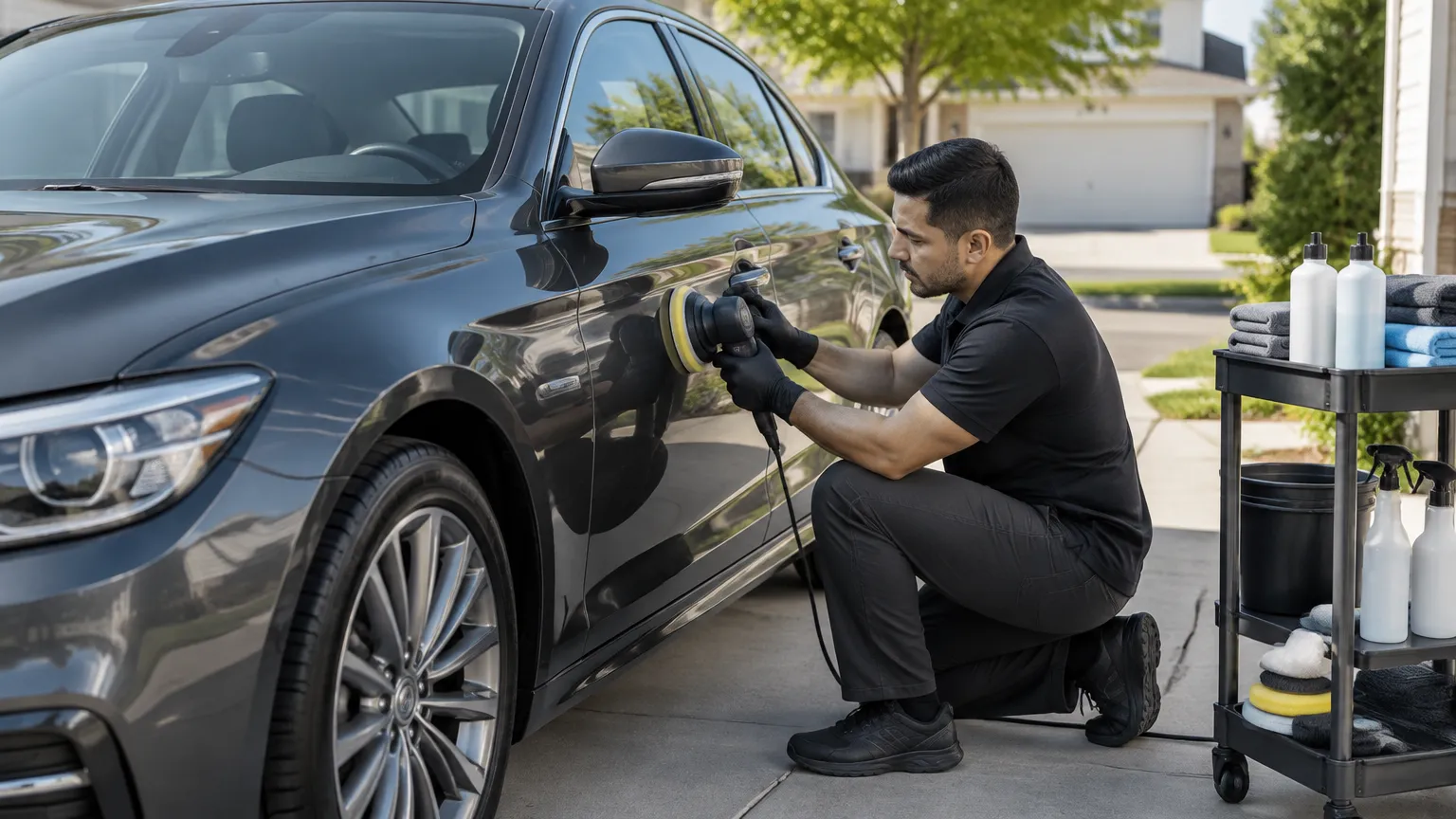
A scratched door panel rarely kills a sale on its own. What costs you money is the buyer's assumption that the rest of the car was neglected too. In the Chicago suburbs, cars spend winters on salted roads and summers in driveways under direct sun, so paint condition is often the first thing a buyer judges. Understanding paint correction resale value Illinois sellers can actually capture starts with knowing what buyers inspect, and where a correction changes the conversation before anyone names a number.
Table of Contents
- Quick Takeaways
- How Buyers Judge Paint in the First Few Minutes
- Which Paint Defects Move the Price
- How Correction Changes the Negotiation
- Correction Options Compared
- Dealers Versus Private Buyers
- Timing a Pre-Sale Correction
- Frequently Asked Questions
- References
Quick Takeaways
| Key Insight | Explanation |
|---|---|
| Buyers judge paint before they judge anything else | Paint is visible from across a parking lot, so it sets the tone for the whole inspection, including the engine, the service records, and the test drive. |
| Clear coat failure costs more than rock chips | A few chips are normal on a used car. Peeling, hazing, and oxidized clear coat make a car look older than its odometer suggests. |
| Swirls and haze are the defects correction removes best | A 1-step correction from $399 targets light to moderate swirls and haze. Deeper defects usually call for the 2-step correction from $699. |
| Documentation beats verbal claims | A pre-service paint thickness measurement and written record give a buyer something concrete to trust instead of a seller's word. |
| Trade-in appraisals and private sales reward different work | A trade-in appraiser often prices the car as-is, while a private buyer pays more attention to how the paint looks in daylight and in person. |
| Book early and confirm the details | Booking requests are reviewed and clients are contacted within one business day to confirm the appointment and finalize pricing. No payment is collected at the request stage. |
How Buyers Judge Paint in the First Few Minutes
Most buyers form an opinion about a car before they touch the door handle. They see the paint from across the lot, and they read its condition as a signal for everything they cannot see yet. A tired finish suggests deferred maintenance, and that suspicion follows them into the engine bay, the service history, and the price talk.
What Dealers Check First
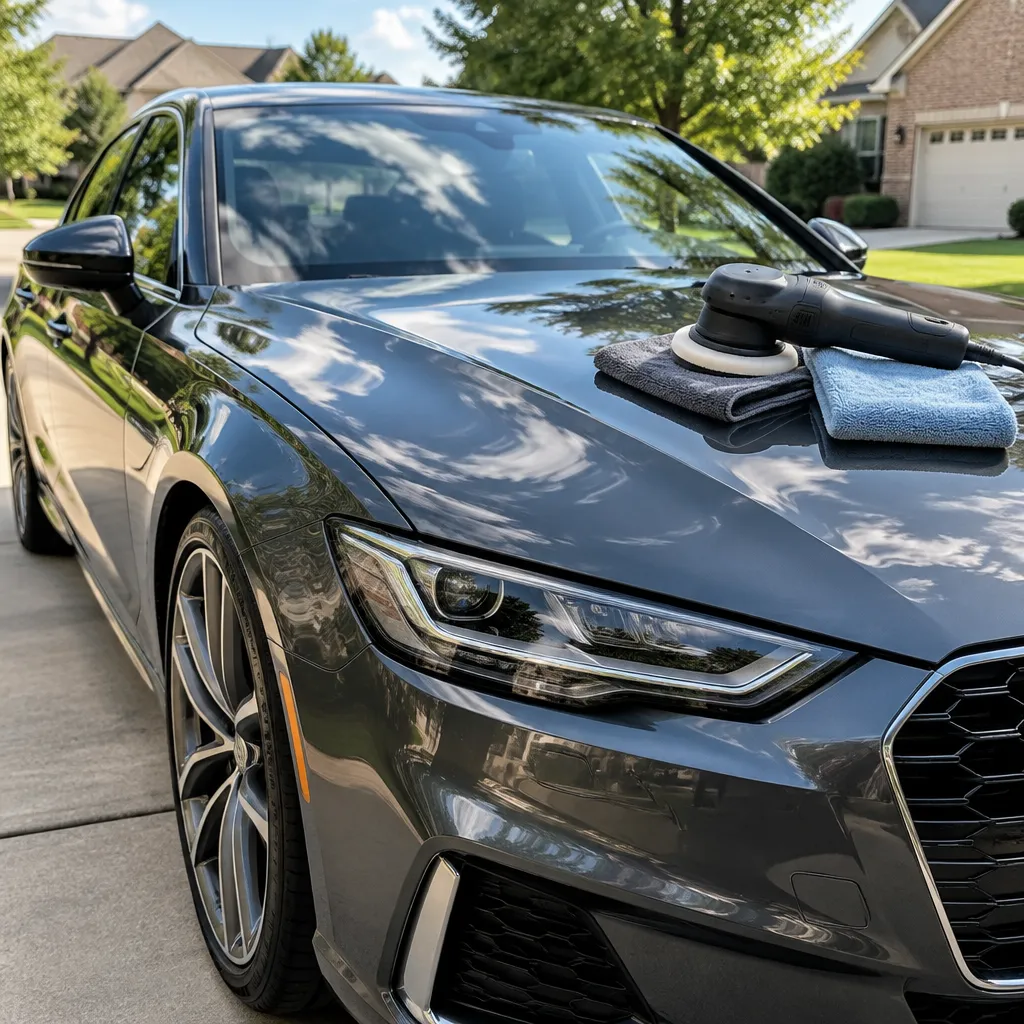
A trade-in appraiser usually walks the car under bright lights, often without washing it first. They look for haze, swirl patterns, and any panel where the reflection breaks up instead of stretching cleanly. A car that looks dull under those lights gets marked down before anyone reads the vehicle history.
Appraisers also compare panels. If the hood reads glossy and the driver door reads flat, they assume a repaint or a neglected panel and start asking questions. That kind of mismatch can cost more negotiating time than the defect itself.
What a Private Buyer Checks in the Driveway
Private buyers usually see the car in daylight, often in the seller's driveway, which is the worst place to judge a finish that has spent years in the sun. They run a hand over the paint, look at the roof and hood for chalky patches, and check the lower doors for road grime and rust bubbles. Many will ask to see the car after a wash, and a clean wash will not hide oxidation.
In practice, a private buyer is less forgiving than a dealer about cosmetic flaws, because they are paying with their own money and have no trade-in form to sign. That is exactly why paint condition shows up so often in the questions they ask.
Which Paint Defects Move the Price
Not every defect carries the same weight. Light clear coat scratches are easy to live with, and buyers expect a few stone chips on a used car. The defects that move the price are the ones that look like neglect or hint at a bigger repair underneath.
Light Swirls and Buffer Trails
Swirl marks come from washing with dirty towels, automatic brushes, or dry wiping a dusty car. Under showroom light they show up as a spider web pattern, and in direct sun they make the paint look hazy. A polish can reduce them, which is why swirls are one of the first defects a correction is designed to remove.
Oxidized and Peeling Clear Coat
Oxidation looks like chalky or faded paint, most often on horizontal surfaces such as the hood, roof, and trunk lid. Cars in the Chicago suburbs take a double hit from summer sun on driveways and winter salt on the road. Correction can restore clarity where the clear coat is still intact, but peeling clear coat cannot be polished back to gloss, and that calls for a different conversation about repainting costs.
Deep Scratches, Chips, and Mismatched Repairs
A scratch that reaches primer or bare metal is a different problem. Exposed metal can rust, and a buyer who finds rust bubbles starts wondering about the underbody. Stone chips on the hood and front bumper are normal on a used car, but a cluster of chips on a newer vehicle reads as neglect. An old repair with a slightly different shade is also flagged quickly, because buyers have learned to look for it.
How Correction Changes the Negotiation
A buyer who sees oxidation will negotiate from the worst thing they see. Once the paint is corrected, the conversation shifts from "what is wrong with this car" to "what is this car worth as it stands." That shift matters because it removes the most visible defect from the discussion before the price talk starts.
Turning a Price Argument into a Measured Result
Our 1-step correction starts from $399 and typically takes 4 to 6 hours. It is designed to enhance gloss and depth while reducing light to moderate swirls, which covers much of what buyers notice on a well-kept daily driver. The 2-step correction starts from $699 and is a full-day service that targets deeper swirls, buffer trails, and imperfections a single stage cannot fully address.
Buyers rarely discount a car for a defect they cannot see. They discount it for the defects they can see and the ones they assume are hiding underneath.
Why Documentation Carries Weight
Every correction we perform starts with a pre-service paint thickness measurement, and we document the results. At the negotiation table, a buyer can review a clear before and after record instead of trusting a seller's claim that the car was "pretty much fine." The thickness data also tells a careful buyer whether there is enough clear coat left to polish, which is exactly the question they tend to ask.
Pro tip: Ask for the paint thickness readings in writing and keep them with the vehicle's service records. Numbers on paper end arguments that vague reassurance cannot.
Correction Options Compared
Choosing a correction level is a question of how deep the defects go and how much of the paint's life is left. Over-correcting a daily driver is a waste of money, and under-correcting an older car means the buyer still sees the swirls you paid to reduce. The right choice depends on what a buyer will see under daylight and in a close inspection.
Choosing Between 1-Step and 2-Step
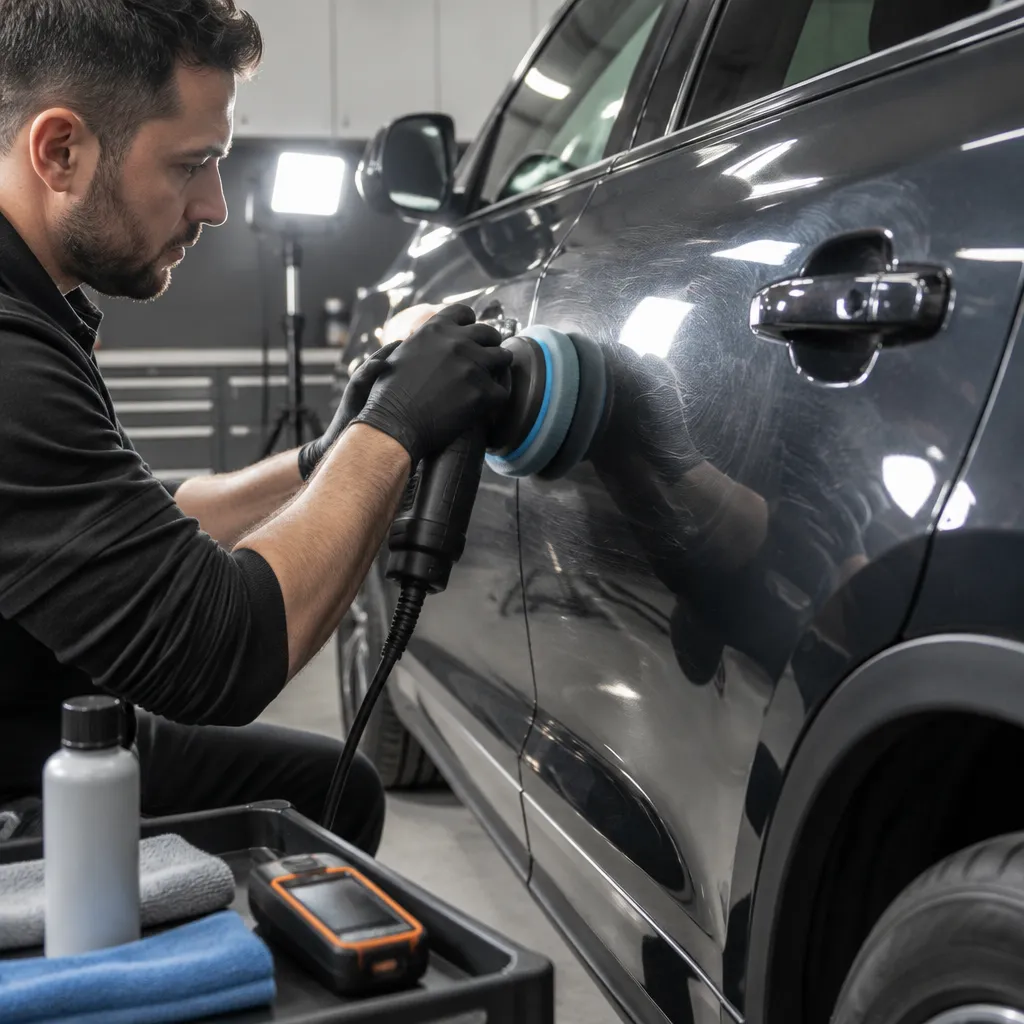
A 1-step correction fits newer vehicles and paint that has been maintained well. It is the right call when the main complaint is light swirling and dullness that a buyer can see from a few feet away. A 2-step correction is for older daily drivers with deeper swirls, buffer trails, and patchy haze that a single pass will not clear.
When a Ceramic Coating Makes Sense for a Sale
Ceramic coating packages start at $999 for a 5-year coating and $1,099 for an 8-year coating, and both include a full 2-step paint correction at no extra charge. Final pricing depends on vehicle size and paint condition. A coating is most useful when the seller wants a documented protective layer on the paint that a buyer can see and ask about.
| Option | Typical Time and Starting Price | Best Fit at Sale |
|---|---|---|
| 1-Step Correction | 4 to 6 hours, from $399 | Newer cars or well-kept paint with light swirls and haze |
| 2-Step Correction | Full-day service, from $699 | Older daily drivers with deeper swirls and buffer trails, also included with ceramic coating packages |
| Ceramic Coating Package | From $999 for a 5-year coating or $1,099 for an 8-year coating, including full 2-step correction. Final pricing depends on vehicle size and paint condition. | Sellers who want a protected finish with 5 to 8 year limited coverage to show the buyer |
Dealers Versus Private Buyers
Dealers and private buyers look at the same car with different goals. A dealer is pricing a vehicle for resale and wants margin, while a private buyer is weighing whether the car feels like a good purchase. Your correction strategy should match the buyer you are most likely to face.
How Trade-In Appraisers Price Paint
Paint is only one part of a trade-in appraisal. Appraisers also weigh the body, the interior, mileage, service history, and how the car drives. Paint damage counts, but it does not decide the number on its own, and many trade-in offers are made as-is.
That is why a trade-in is usually not the place to spend money on a correction. If the appraisal is going to be made as-is anyway, a correction is more likely to pay off when you sell privately, where the buyer forms an opinion from the paint itself.
What Private Buyers Pay For
Private buyers tend to reward a car that looks cared for in daylight. They notice a clean, even reflection on the hood and doors, and they tend to trust a seller who can show receipts and documentation. A visible correction record gives them a reason to believe the rest of the car was treated with the same care.
Timing a Pre-Sale Correction
Timing matters more than most sellers expect. A correction done a week before you list gives you time to photograph the car in good light, respond to questions, and adjust the price if a buyer finds something new. Waiting until the day a buyer arrives leaves no room to handle the unexpected.
Lead Time Before You List
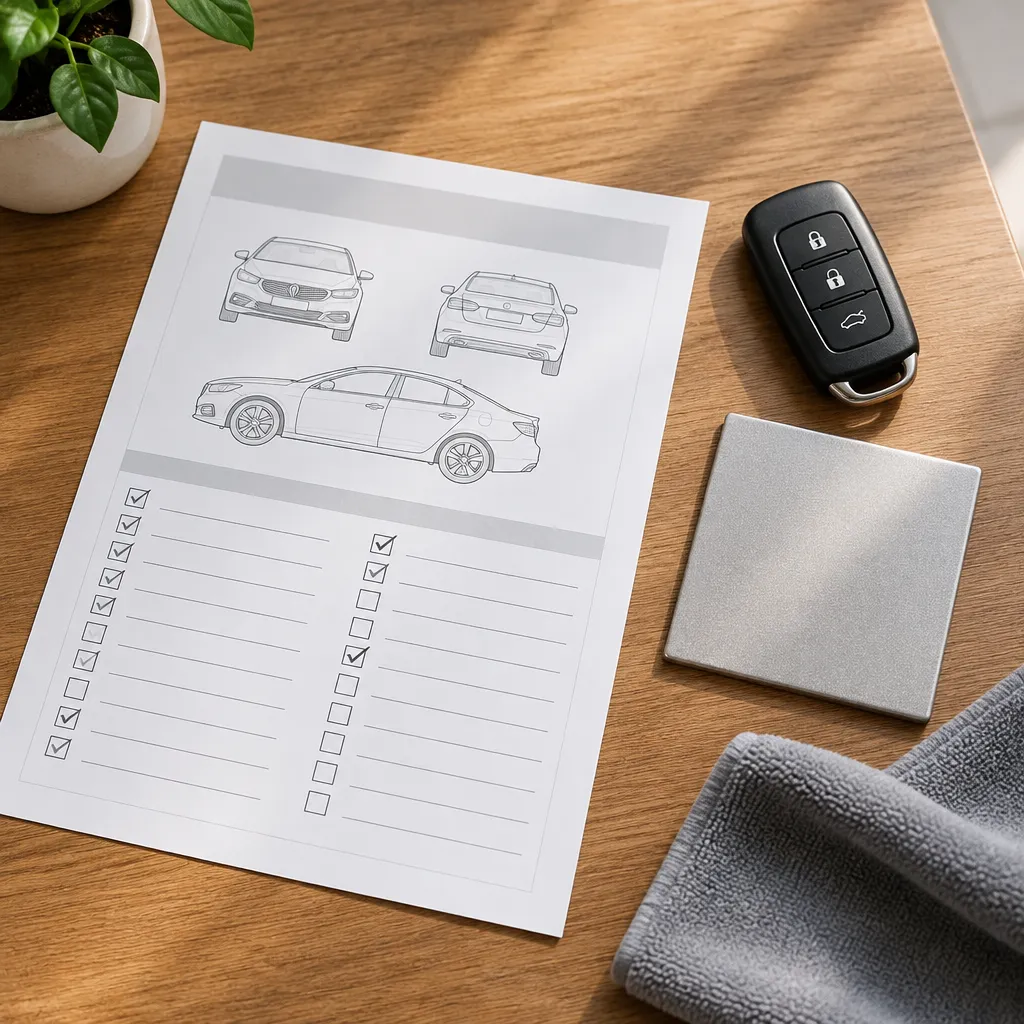
Build the schedule backward from your listing date. Our studio works by appointment only, and booking requests are reviewed with clients contacted within one business day to confirm the appointment and finalize pricing. Add the correction time itself, which is 4 to 6 hours for a 1-step job or a full day for a 2-step job, and leave a buffer for photos.
A deals page for Chicago auto detailing notes that intro packages frequently appear under $100 for smaller vehicles or partial services. Those packages can clean a car well, but a wash and interior package rarely includes machine polishing, so do not expect it to change what a buyer sees in the paint. If your goal is to improve the paint at the negotiation table, the service has to include correction.
How Booking Works at Our Glendale Heights Studio
Our studio is at 2017 Bloomingdale Rd, Glendale Heights, IL 60139, and it is open Monday through Saturday by appointment. You can start with a booking request, and no payment is collected when you submit it. If you prefer to talk first, call (331) 231-0176 or email support@hersheysdetailing.com.
If your car needs more than a polish, our ceramic coating pages and paint correction details explain what each level includes. Read them before you book so the right service is on the appointment.
Pro tip: Photograph the car in daylight before and after the correction, from the same spots. Buyers in the Chicago suburbs often compare listing photos to the car they see in person, and matching angles make the improvement easy to verify.
Frequently Asked Questions
Does paint correction increase resale value in Illinois?
Paint correction can remove the defects that drive offers down, such as swirls, haze, and oxidation, but it does not add value on its own. Its main effect is on the buyer's first impression and on how much discount they ask for during negotiation.
Should I correct the paint before a trade-in?
Usually not. Trade-in appraisals are often made as-is, so a correction may not change the number you are offered. A correction is more likely to pay off in a private sale, where the buyer judges the paint directly.
Is a 1-step or 2-step correction better before selling?
A 1-step correction, from $399, suits newer cars and paint with light swirls and haze. A 2-step correction, from $699, is the better choice for older cars with deeper swirls, buffer trails, or patchy oxidation.
How far ahead should I book a pre-sale correction?
Book at least a week before you plan to list the car, so you have time for photos and any follow-up questions. Booking requests are reviewed and clients are contacted within one business day to confirm the appointment.
Does a ceramic coating replace paint correction when selling a car?
Not exactly. Our ceramic coating packages include a full 2-step paint correction at no extra charge, starting at $999 for a 5-year coating or $1,099 for an 8-year coating. Final pricing depends on vehicle size and paint condition.
Do I pay when I submit a booking request?
No. No payment is collected when you submit a booking request. Pricing is finalized after we contact you to confirm the appointment.
Have you corrected paint before selling a car in the Chicago suburbs, and did the buyer's offer change? Share what you saw at the negotiation table at support@hersheysdetailing.com.
References
- Dealership guide on how paint damage affects trade-in and resale value
- Article on how paint correction affects the resale value of used vehicles
- Chicago auto detailing deals page listing intro package prices