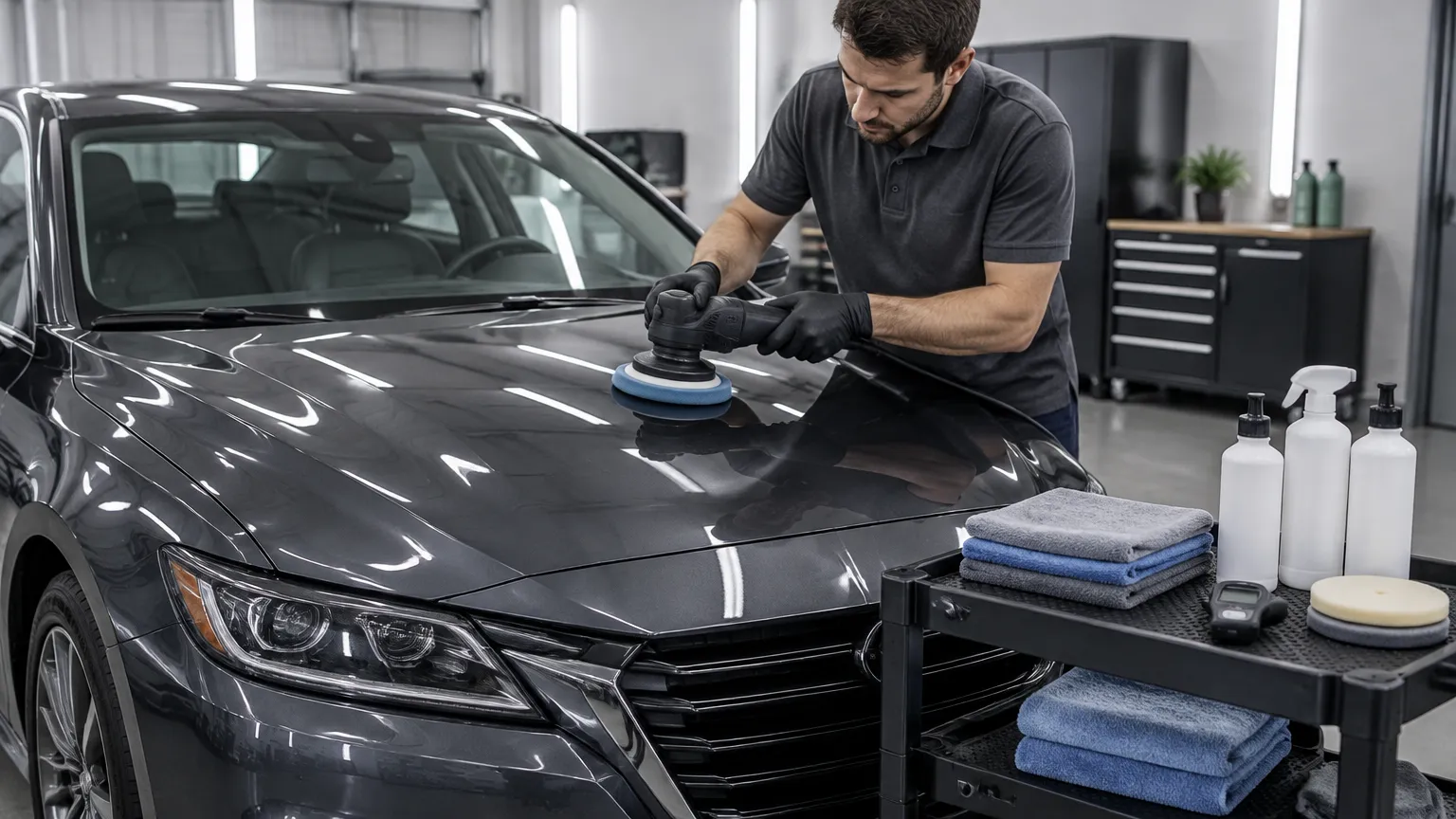
If you have searched for paint correction vs polishing in Illinois, you have probably seen the two terms used as if they mean the same thing. They do not. A shop that offers a polish may be selling a single light pass over your paint, while a paint correction is a planned, multi-stage repair that starts with measuring how much clear coat your car has to spare. The difference changes what you pay, how long your car stays in the bay, and how much of the swirl pattern you actually see gone when you pick it up. This guide breaks down the terminology we use at our Glendale Heights studio so you know what you are booking before you call.
Table of Contents
- Quick Takeaways
- What Paint Correction Actually Means
- What a Standalone Polish Does
- Terminology That Gets Mixed Up
- Defects That Decide the Service
- Paint Thickness and Clear Coat
- Comparing Correction Options
- Reading Your Paint Before You Book
- Frequently Asked Questions
- References
Quick Takeaways
| Key Insight | Explanation |
|---|---|
| A polish is usually a single light pass | Standalone polishing targets light haze and fine swirls. It does not have the cutting power to level deeper defects. |
| Correction is a planned sequence | Paint correction uses a heavier cut first, then finer steps to remove the haze that the cut leaves behind. |
| Ask whether the quote is 1-step or 2-step | Our 1-step correction starts from $399 and takes 4 to 6 hours. Our 2-step correction starts from $699 and is a full-day service. |
| Swirls and scratches are different problems | Light swirls usually respond well to correction. A scratch that catches a fingernail often needs more than polishing can deliver. |
| Measure the paint before cutting | Every correction removes a small amount of clear coat, so a pre-service paint thickness measurement should be part of any correction you book. |
| Protection is not correction | Sealants and ceramic coatings protect corrected paint but do not remove defects. Our ceramic coating packages start at $999 for 5 years and $1,099 for 8 years, and both include a 2-step correction. |
| Expect a review, not an instant price | No payment is collected when you submit a booking request. We review each request and contact you within one business day to confirm the appointment and finalize pricing. |
What Paint Correction Actually Means
Paint correction is a sequence of work, not a single product. The goal is to remove defects that sit in the clear coat, the transparent protective layer over your color, and to leave the surface with more clarity than it had before. At our Glendale Heights studio, every correction starts with measurement and ends with a plan built around the defects we actually find.
Why the cut comes first
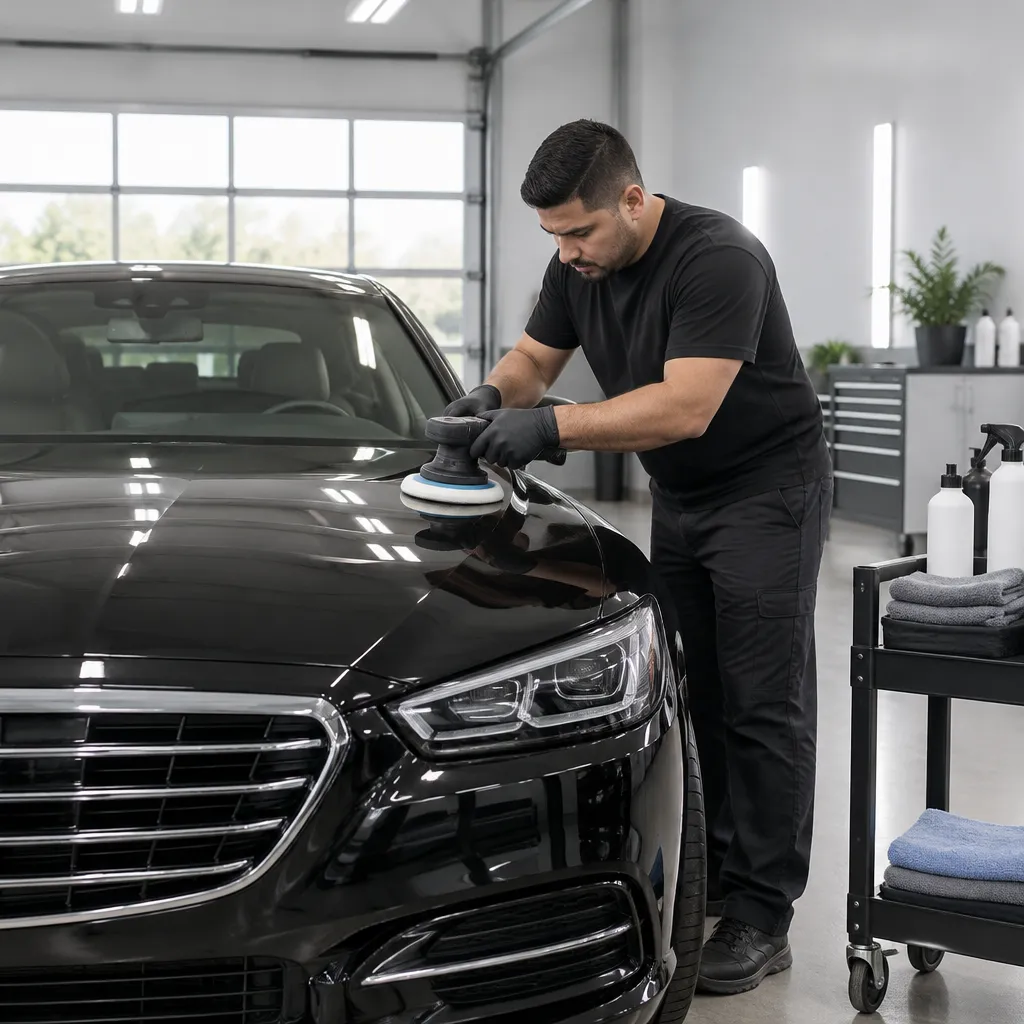
Most swirl marks, water spots, and light scratches are tiny valleys in the clear coat. To flatten them, a correction uses a machine polisher with a foam pad and a cutting compound that removes a very thin layer of paint. That cutting stage is aggressive by design, which is also where the risk lives. Too much pressure, the wrong pad, or a contaminated surface can introduce new marks, so a careful technician controls each variable before the car leaves the bay.
The cut is only half of the job. Once the deep defects are leveled, the cutting step leaves its own haze, which is a fine pattern of micro-marks that dulls the finish. Progressively finer pads and polishes remove that haze and restore clarity. Skipping this refinement is the main reason a cut can look good under a shop light and disappoint in the driveway.
What correction removes and what it cannot
Correction works on defects that live in the clear coat. Light to moderate swirls, oxidation, haze, and water spotting usually respond well. A scratch that cuts through the clear coat into the color layer or primer will not disappear under any amount of machine work, and anyone who promises otherwise is selling a guess.
In practice, we tell clients which defects we can improve and which need a body shop conversation before any polishing begins. A correction that softens most of the swirl pattern is a success, but only if that expectation was set before the first pass. Honest expectations are part of the service, and they are the easiest way to tell a serious detailer from a sales pitch.
What a Standalone Polish Does
A polish is a finishing product that uses fine abrasives to smooth the paint surface and sharpen gloss. When someone offers a standalone polish, they usually mean one pass with a finer abrasive and a softer pad. That is a real service, and for paint with only faint haze, it can make a visible difference. It is not the same thing as correcting a vehicle.
One pass, light defects
A single polishing pass suits paint that is mostly healthy, with light haze, fine swirls that only show in direct sun, or dullness from a routine wash schedule. It will boost gloss and make the finish look cleaner. It will not remove deep defects, because a fine polish lacks the cutting power to level them. If the paint looks like a spider web under a garage light, a single pass is usually the wrong tool.
Polishing also makes the most sense as a maintenance step. A car that was corrected properly and then washed carefully can often be refreshed with a light polish once a year or so, rather than being recut from scratch. That maintenance role is where a standalone polish earns its place.
Where polishing falls short
The problem starts when a polish is sold as a fix for a damaged finish. Polishing over bonded contamination can drag grit across the paint and leave new marks. A polish also rarely addresses etching, the damage that happens when water spots or acidic contamination sit on the paint long enough to change the clear coat itself.
A common pattern we see is a car that was polished once, looked better for a couple of weeks, and then showed the same swirls again. The swirls never went away because they were never leveled. The paint simply got a temporary gloss on top of the same damage, which is why we always ask what the previous work actually was before quoting.
Terminology That Gets Mixed Up
Detailing vocabulary is loose in some shops and deliberately vague in others. Terms like polish, compound, glaze, wax, sealant, and coating appear on the same menu, often with prices that look similar. Knowing what each word describes lets you compare quotes on equal terms.
Polish, compound, and glaze
A compound is the heavier abrasive used for cutting. A polish is finer and refines the surface after the cut. A glaze is usually a filling or oil-based product that adds temporary gloss and is not a correction step at all. When a shop says it will compound and polish your car, it is describing the stages of a correction. When a quote lists only a glaze, ask whether it is covering defects that will return after a few washes.
Wax, sealant, and ceramic coating
Wax, sealant, and ceramic coating are protection layers. None of them removes defects. They sit on top of the paint, and their value depends on how clean and corrected the surface was before they went on. Our 3-month paint protection sealant is included with both correction levels, but it protects the work rather than doing the work.
A protection layer can only preserve the paint it is applied to. If the surface is hazy when the coating goes on, the haze is sealed in.
That is why the order matters: decontamination, then correction, then protection. A shop that starts with a coating on a dirty, swirled finish is selling a shine that will not last, and the defects underneath will become harder to see as they are hidden by the gloss.
Defects That Decide the Service
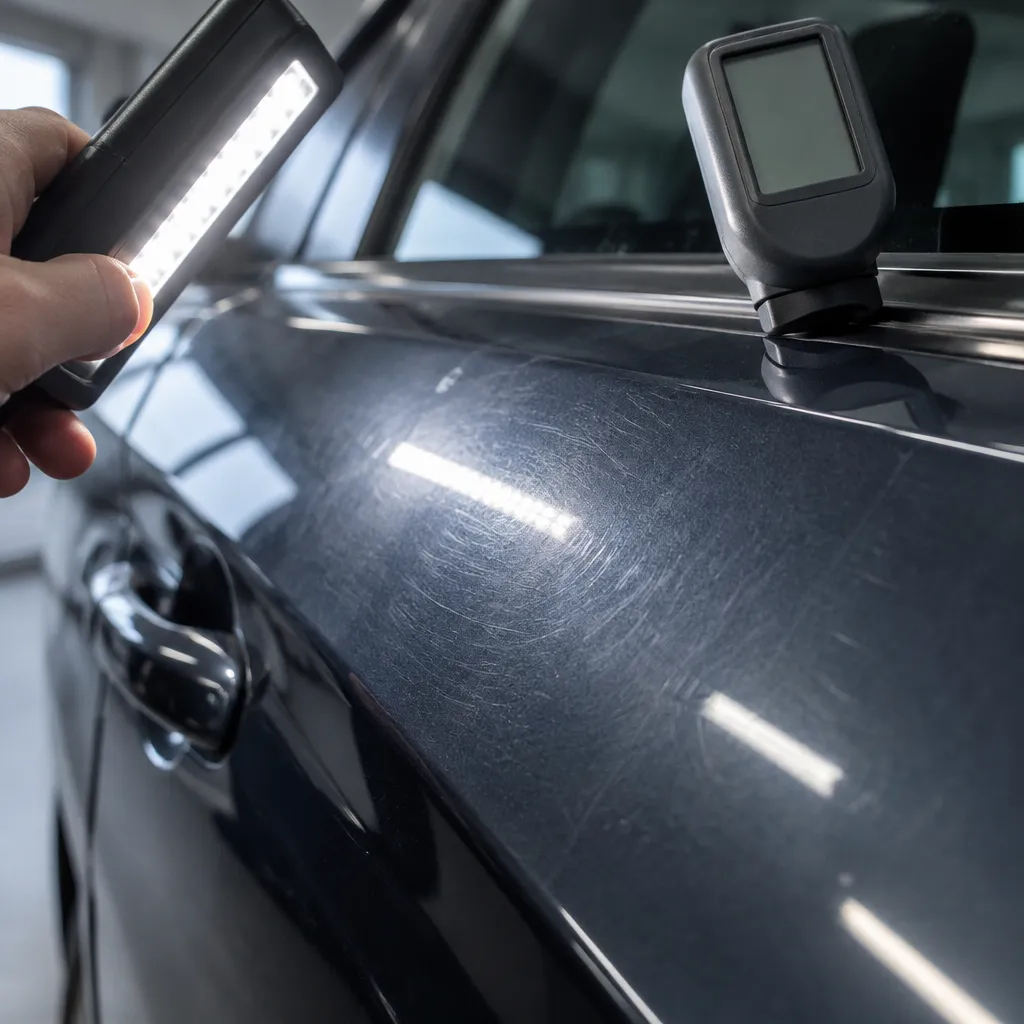
The right service is decided by the defects, not by the name on the menu. Before we quote anything, we look at the paint under strong light and identify what is actually there, because the same car can have several defect types at once. Light, direct lighting exposes more than a casual walk-around ever will.
Swirls and buffer trails
Swirl marks usually come from washing and drying with contaminated towels or automatic wash brushes. Buffer trails are the holographic haze left when a rotary or dual action machine is used without enough skill or with the wrong pad. Light swirls and fine buffer trails usually respond well to a 1-step correction when the paint is in good health.
Deeper or more numerous marks generally call for the 2-step process. At our studio, a 2-step correction is a full-day service and starts from $699, because the extra stage is what levels the deeper marks and clears the haze left behind.
Etching, oxidation, and light scratches
Etching happens when water spots or acidic contamination sit on the paint long enough to change the clear coat. Oxidation is the chalky, faded look that comes from long UV exposure. Both can be improved by correction, but etching depth varies, and a deep etch may leave a faint mark even after excellent work.
Light scratches that do not catch a fingernail are often reduced significantly, which is exactly why we measure the paint first. The measurement tells us how far we can safely go before we start cutting, and it keeps the plan honest from the beginning.
Scratches that catch a fingernail
Run a clean fingernail across a scratch. If it catches, the defect has likely cut through the clear coat, and no amount of polishing will remove it without going into the layers beneath. This is where an honest estimate matters. A shop that quotes a full correction to erase a deep scratch is setting you up for disappointment, and a shop that refuses to polish at all may be leaving real improvement on the table.
Pro tip: Photograph your paint in direct sun from two angles before you book. A baseline photo lets you compare the results honestly when you pick up the car.
Paint Thickness and Clear Coat
Every correction removes a small amount of clear coat, and clear coat is finite. That makes measuring it one of the most important steps in the process, not a formality. Factory clear coat is not uniform across a vehicle, and a previous repaint can leave a very different thickness on a door than on a hood.
Why we measure before every correction
Each correction at our studio includes a pre-service paint thickness measurement and documentation. The reading tells us how much material we can safely work with and which panels need a lighter touch. If a panel reads thin, we adjust the plan, use less aggressive steps, or tell you the defect will stay. That conversation is part of the service, not an upsell.
The measurement also protects the car long term. Clear coat that has been cut too far cannot be restored, so a correction that removes more than it should trades a cosmetic improvement for a permanent problem. Documenting the readings means the decisions can be reviewed later if questions come up.
What to ask a shop about its process
Ask whether the shop measures paint thickness before correcting, whether the readings are recorded, and how many stages the process includes. Ask what a 1-step correction covers compared with a 2-step, and how long each takes. Vague answers are a warning sign. A specific answer, such as 4 to 6 hours for a 1-step or a full day for a 2-step, tells you someone has planned the work before the car arrives.
Pro tip: If a shop cannot explain how paint thickness was checked, ask what they would do differently on a panel that reads thin before you hand over the keys.
Comparing Correction Options
The options most Glendale Heights and Chicago suburb owners weigh are the 1-step correction, the 2-step correction, and a ceramic coating package that includes a 2-step correction. Each solves a different problem. The table below lays out what each one addresses and what it starts at in our studio.
| Service | What It Addresses | Time and Starting Price |
|---|---|---|
| 1-Step Correction | Light to moderate swirls, haze, and oxidation, with a gloss and clarity boost and a 3-month paint protection sealant | 4 to 6 hours, from $399 |
| 2-Step Correction | Deeper swirls, buffer trails, and more stubborn imperfections, with improved depth and paint uniformity and a 3-month paint protection sealant | Full day, from $699 |
| Ceramic Coating Package | Long-term protection over corrected paint, including hydrophobic behavior and UV resistance, with a full 2-step correction included at no extra charge | 5-year package from $999, 8-year package from $1,099. Final pricing depends on vehicle size and paint condition |
The comparison only helps if you know which problem you have. A car with light haze and no deep marks may be well served by a 1-step. A car with visible buffer trails under garage lights usually needs the 2-step. A coating applied over unresolved defects locks those defects under a protective layer, which is why we rarely recommend coating before correction.
Choosing between a 1-step and a 2-step
The practical difference is cutting power and time. The 1-step is designed to enhance gloss and reduce light to moderate defects, while the 2-step targets deeper imperfections and improves reflectivity. Newer vehicles and paint that has been maintained well often fit the 1-step. Older cars, dark colors that show every mark, and vehicles with winter wear from road salt often point toward the 2-step.
When a ceramic coating makes sense
A coating makes sense when the paint is already corrected and you want easier maintenance and longer-lasting protection. Our ceramic coating packages include the 2-step correction at no extra charge, so you are not paying twice to get a clean surface first. Our ceramic coating carries 5 to 8 year limited coverage, depending on the package you choose.
Reading Your Paint Before You Book
You do not need a lab to make a useful first assessment. A few checks in your driveway will tell you whether you are looking at a polish, a correction, or a body shop conversation. These checks also help you describe the problem accurately when you book, which speeds up the quote.
Three checks you can do in your driveway
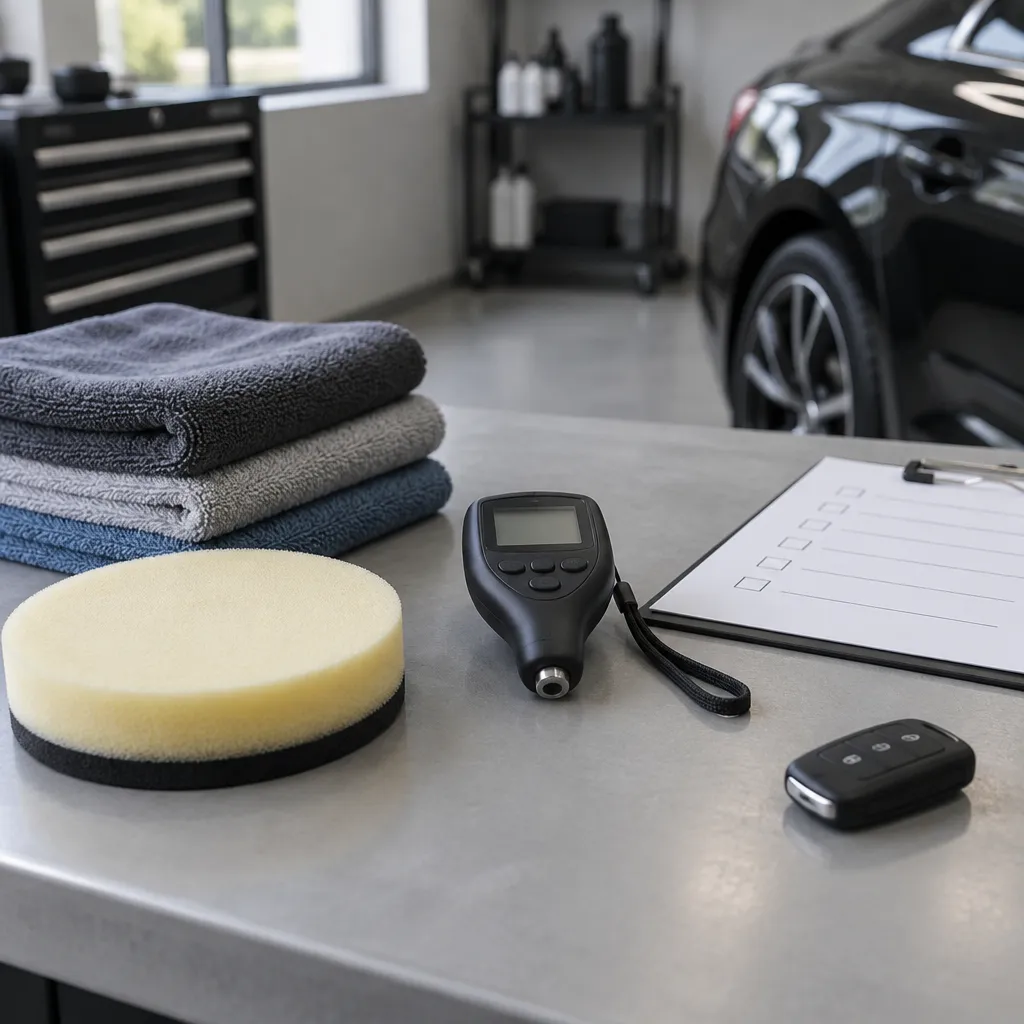
Start with direct sunlight, then move to a shaded garage with a single bright light. Look at the paint at an angle to see whether the marks are swirls, scratches, or haze. Next, wash and dry a panel, then wipe it with a clean microfiber. If the cloth grabs or you feel grit after washing, the paint has bonded contamination that needs decontamination before any polishing.
Finally, run a fingernail across any scratch you can see. A scratch that catches is likely beyond what correction can remove alone. Note what you found, because that description is the fastest way to get an accurate estimate.
What to tell us when you book
Our booking page asks for the details that matter, and the more specific you are, the faster we can respond. Describe what you see, how long the car has looked this way, and whether it is garaged or parked outside. Winter road salt and cold weather can leave a finish looking tired, and that history changes the plan.
No payment is collected when you submit a request. We review each one and contact you within one business day to confirm the appointment and finalize pricing. You can also reach us at (331) 231-0176 or support@hersheysdetailing.com.
Pro tip: Photograph the paint before any wash in the days leading up to your appointment. Fresh wash marks can blur the picture of what was already there, so a clear baseline photo is more useful than a freshly washed car.
We serve Glendale Heights, Carol Stream, Bloomingdale, Villa Park, Wheaton, Lombard, Addison, Roselle, Glen Ellyn, and Hanover Park from our studio at 2017 Bloomingdale Rd, Glendale Heights, IL 60139. Appointments run Monday to Saturday, and you can explore our paint correction options before you request a time.
Frequently Asked Questions
Is paint correction the same as polishing?
No. Polishing is a finishing step that can be done as a single light pass. Paint correction is a planned, multi-stage process that includes decontamination, a cutting stage, refinement, and finishing, and it begins with a paint thickness measurement.
How long does paint correction take at your Glendale Heights studio?
A 1-step correction typically takes 4 to 6 hours. A 2-step correction is a full-day service, so plan to leave your vehicle with us for the day.
How much does paint correction cost?
Our 1-step correction starts from $399, and our 2-step correction starts from $699. Starting prices are a baseline, and we confirm final pricing after reviewing your request within one business day.
Will paint correction remove deep scratches?
It removes defects that live in the clear coat, but a scratch that cuts through the clear coat into the color layer will not disappear completely. The fingernail test is a good first check, and the pre-service measurement confirms how far we can safely go.
Do I need a ceramic coating after paint correction?
No, a coating is optional. It protects the finish but does not remove defects, so it works best over paint that has already been corrected. Our ceramic coating packages include a 2-step correction at no extra charge, with 5-year and 8-year options.
Do I have to pay when I submit a booking request?
No. Submitting a booking request does not collect payment. We review the request and contact you within one business day to confirm the appointment and finalize pricing.
If you have had a polish or correction that did not match what the shop described, we would like to hear what happened, so send your experience to support@hersheysdetailing.com.
We would love your feedback and any insights you would share with others. What perspective would you add?