Your car's paint is not fading randomly. It is being chemically dismantled, layer by layer, by UV radiation, oxygen, environmental fallout, and every automatic car wash that drags grit across your clear coat. Paint oxidation removal is not a detail job you can skip or patch with a spray wax from a gas station shelf. Once oxidation sets in, the paint's molecular structure has already broken down, and the only way back is abrasive correction performed by someone who knows exactly how much clear coat your vehicle has left to give. If you own a luxury or high-end vehicle in the Chicago suburbs - and you park outside even part of the year - oxidation is not a question of if. It is a question of how far along it already is.
Table of Contents
- Quick Takeaways
- What Paint Oxidation Actually Is
- The Three Stages of Oxidation: Light, Moderate, and Severe
- Why DIY Oxidation Removal Falls Short
- What Professional Paint Correction Actually Involves
- Oxidation Correction Methods Compared
- Protecting Corrected Paint: Why Correction Alone Is Not Enough
- Frequently Asked Questions
- References
Quick Takeaways
| Key Insight | Explanation |
|---|---|
| Oxidation is a chemical reaction, not surface dirt | UV rays break down the molecular bonds in paint pigments and degrade the clear coat from within. Washing the car does not reverse this. |
| The three stages require different correction intensities | Light oxidation may respond to a single-stage polish. Moderate oxidation needs compounding. Severe oxidation risks clear coat failure and may be beyond correction. |
| Every polishing pass removes clear coat permanently | Abrasive correction reduces the remaining thickness of your clear coat. Doing it wrong, or too often, shortens the paint's remaining life significantly. |
| Horizontal panels oxidize fastest | The hood, roof, and trunk receive the most direct UV exposure and show chalky oxidation first. These are also the panels where machine correction is most critical. |
| Clay bar decontamination is a required step, not optional prep | Embedded iron, industrial fallout, and road tar must be removed before polishing. Skipping this grinds contaminants into the paint during correction. |
| Light oxidation: 70-90% defect removal is realistic in one stage | Caught early, a single-stage machine polish with the correct compound can recover most of the paint's gloss and depth. |
| Correction without protection guarantees repeat oxidation | Freshly corrected paint is clean, smooth, and completely unprotected. Without a ceramic coating or durable sealant applied immediately after, oxidation restarts within weeks. |
What Paint Oxidation Actually Is
Most vehicle owners describe oxidation as their paint "going dull" or "looking faded." Both descriptions are accurate, but they describe the symptom, not the mechanism. Understanding the mechanism matters because it explains why no cosmetic shortcut fixes the problem.
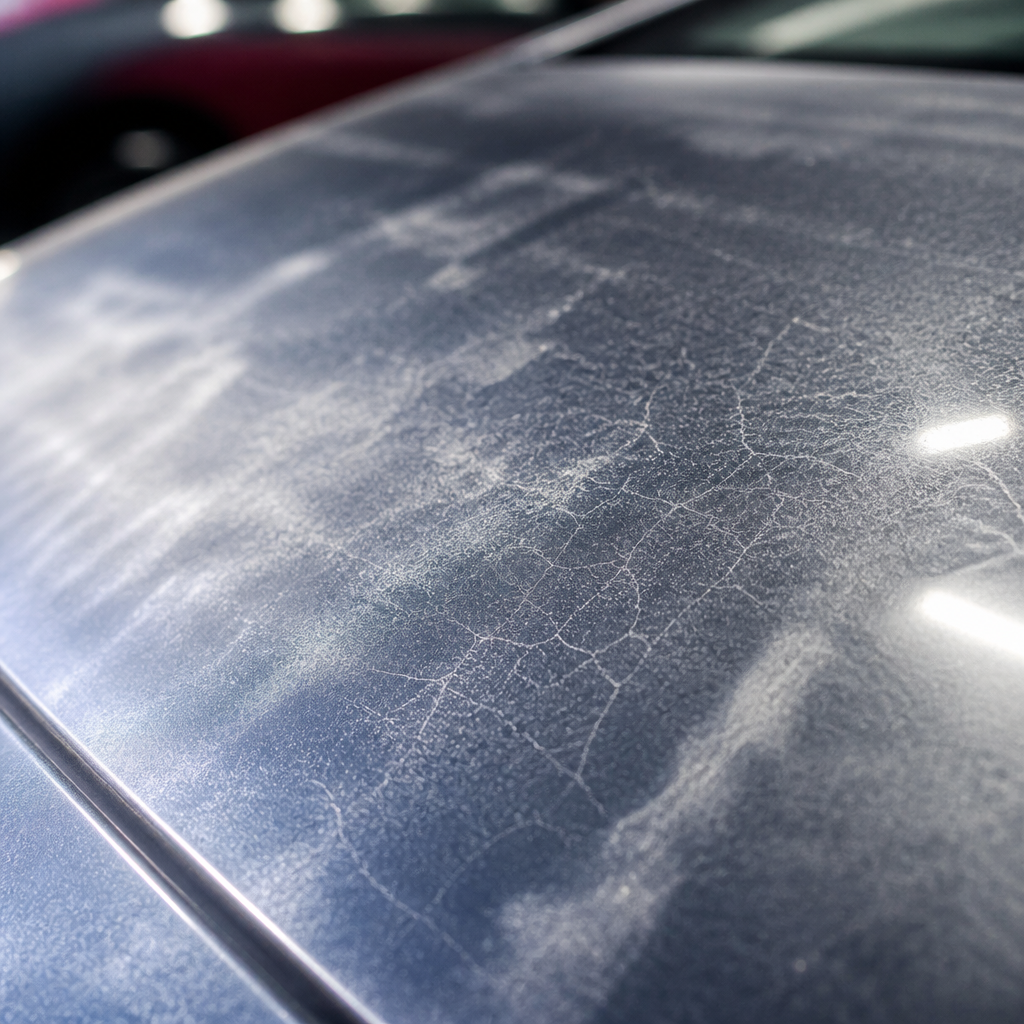
Oxidation occurs when oxygen interacts with unprotected paint. The process is accelerated heavily by UV radiation. UV rays penetrate the clear coat, weakening its protective layer and triggering a chemical reaction that degrades the paint's surface. The result is a faded, chalky appearance that makes even a relatively new vehicle look neglected and aged. What you see on the surface is the visual evidence of molecular breakdown happening beneath it.
The clear coat on a modern vehicle is typically measured in microns. It exists as a transparent protective barrier over the color basecoat. Once UV radiation and oxygen begin degrading this layer, the surface loses its ability to reflect light cleanly. Gloss disappears. Color depth fades. The texture becomes rough and uneven instead of smooth and flat. At advanced stages, the clear coat physically separates from the basecoat, and no amount of polishing corrects that.
UV radiation does not just warm the surface of your vehicle. It penetrates the clear coat and gradually dismantles the pigments in the paint at the molecular level. Environmental exposure accelerates every stage of this process.
Chicago-area vehicles face a specific combination of stressors that accelerates oxidation faster than the national average. Summer UV intensity during peak months, road salt and chemical de-icers used through long Illinois winters, industrial fallout from the broader metro area, and the freeze-thaw cycles that expand micro-cracks in a compromised clear coat all work together. A vehicle parked outdoors in Carol Stream or Wheaton year-round is not getting a gentle test of its paint system. It is getting the full suite of oxidation accelerants applied continuously.
The Three Stages of Oxidation: Light, Moderate, and Severe
Not all oxidized paint is in the same condition, and the correction approach changes significantly depending on how far the degradation has progressed. Misreading the stage and applying the wrong correction method either leaves the problem uncorrected or removes more clear coat than necessary.
Light Oxidation
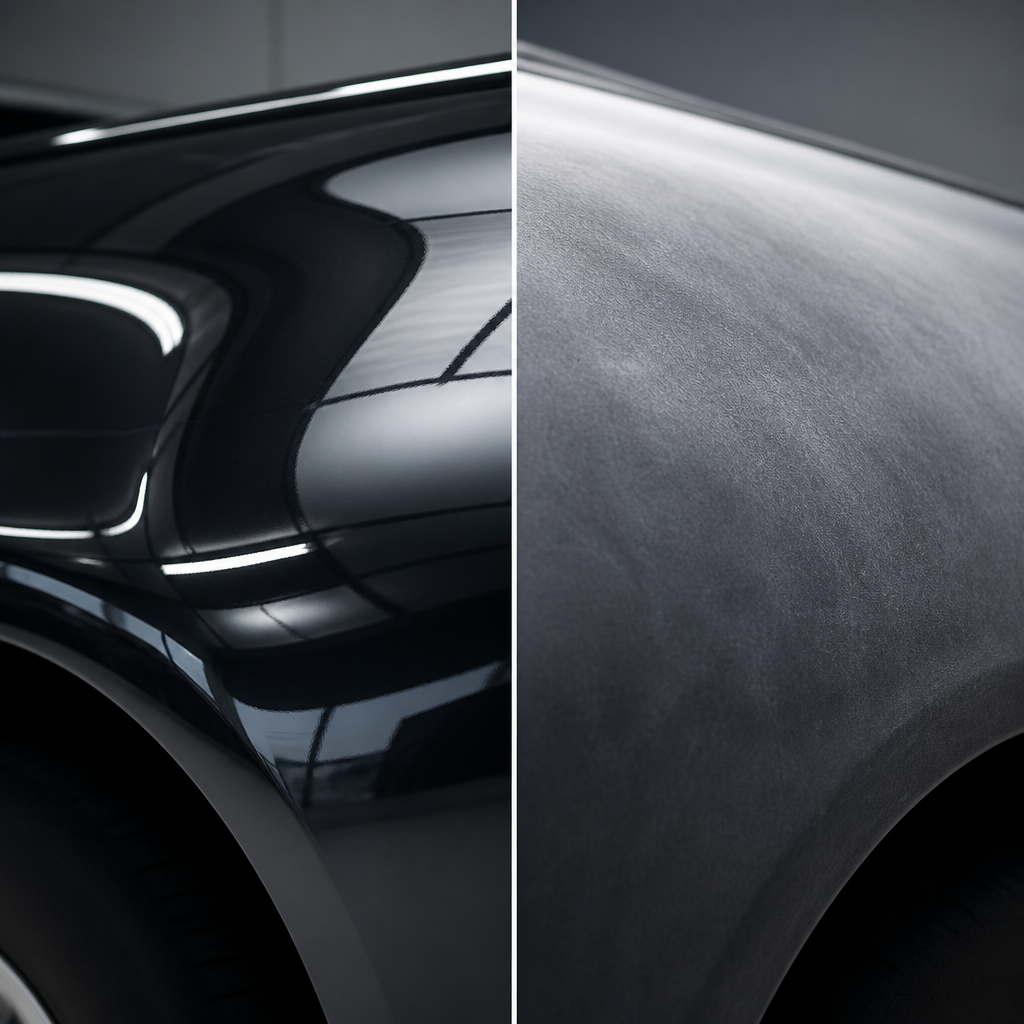
This is the beginning stage. The paint has started to lose its depth and pop. It looks slightly hazy or muted, almost like the gloss has been turned down a notch. The color is still present, but that three-dimensional depth that makes a quality paint job look alive is gone. At this stage, the clear coat is still fundamentally intact and the damage is mostly at the surface level.
Light oxidation can typically be corrected in a single machine polishing stage, with realistic defect removal in the range of 70 to 90 percent. The key is catching it here. This is the most cost-effective correction point, and it is where the least clear coat needs to be sacrificed to achieve a full restoration of gloss and color depth.
Moderate Oxidation
At this stage, the problem is obvious. Color is visibly faded. Running your hand across the surface reveals a chalky, slightly rough texture rather than the smooth glass-like feel of healthy paint. A powdery film is often visible on horizontal surfaces like the hood, roof, and trunk lid because those panels absorb the most direct UV radiation. Moderate oxidation requires a heavier cutting compound before moving to a finishing polish.
In practice, moderate oxidation is the most common condition seen on vehicles that have gone two or more years without any paint protection or professional maintenance in this climate. Single-stage correction with a light polish does not reach it. Multi-stage machine polishing, starting with an aggressive cut and stepping down to a finer finish polish, is required.
Severe Oxidation
Severe oxidation means the clear coat is at or near failure. The surface is visibly chalky, the color may have shifted entirely in the most affected areas, and there is often visible clouding or hazing that does not respond to polishing pressure. If the clear coat is peeling or delaminating, no polishing will restore it. At that point, the vehicle needs a repaint of the affected panels. No professional correction service can reverse clear coat that has physically separated from the substrate.
This is why early intervention matters so much. Moderate oxidation corrected at the right time prevents a vehicle from reaching the point where the only answer is bodywork and a paint booth.
Pro tip: Test a small, inconspicuous area before committing to a correction plan. Apply a small amount of polish by hand and wipe it away. If the area looks significantly better, the clear coat is still workable. If the surface remains chalky or feels powdery no matter how much you polish, the damage has gone past what correction can address.
Why DIY Oxidation Removal Falls Short
The detailing aisle at any auto parts store is full of products marketed for oxidation removal. Spray compounds, rubbing compounds in a can, "restorer" wipes. Some of them will make a chalky panel look temporarily better. None of them are a substitute for proper machine polishing performed with the right equipment and product knowledge.
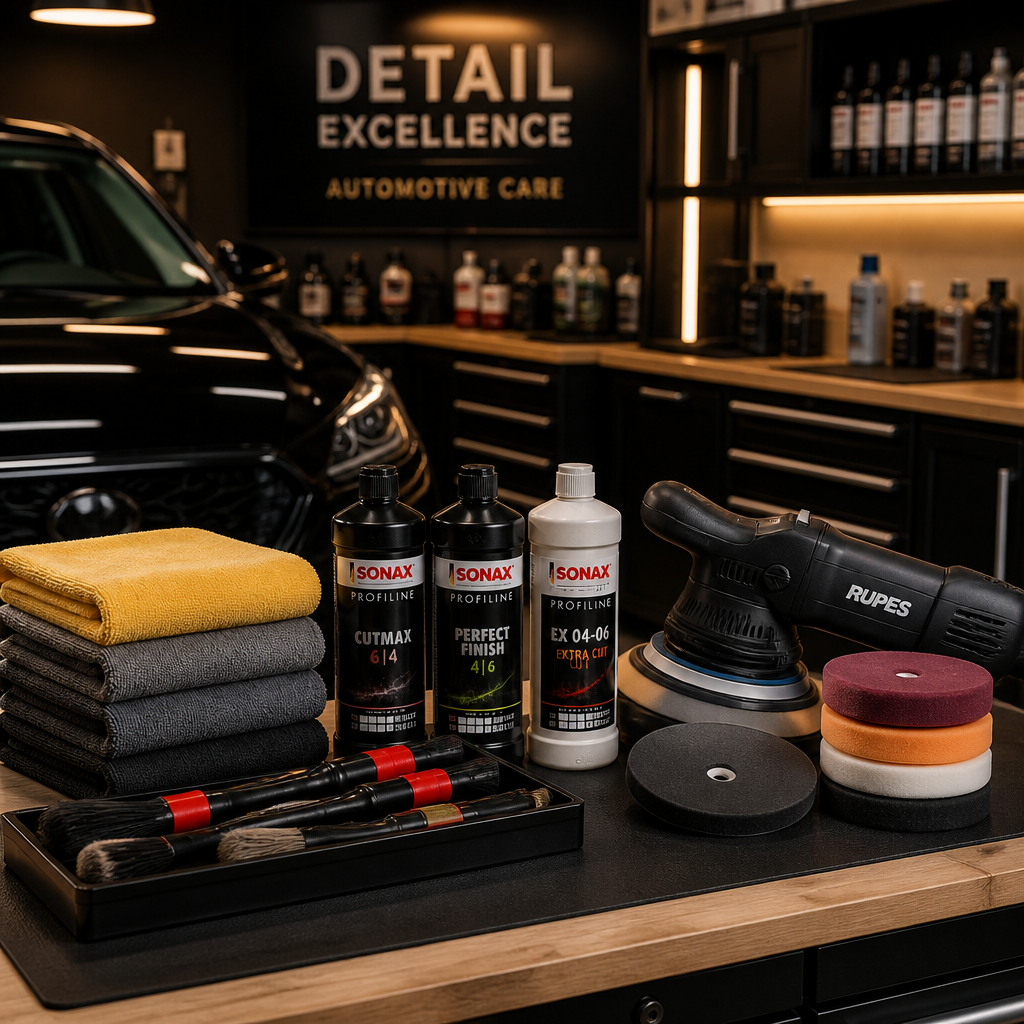
The fundamental problem with hand-applied DIY correction is pressure and speed consistency. Machine polishers work at controlled speeds with specific pad compounds selected for the paint's hardness and the severity of the oxidation. A dual-action or rotary polisher delivers consistent, measured abrasion across the entire surface. A human hand applying compound with a foam applicator cannot replicate that. The result is uneven correction, haze left in low spots, and frequently, swirl marks introduced during the attempt.
The second problem is product selection. Not every compound works on every paint. Single-stage paints, which have the pigment mixed directly into the topcoat rather than sitting under a separate clear coat, require a completely different approach. Push too hard on single-stage paint or generate too much heat during polishing, and the color itself begins to disappear. This is not a recoverable mistake without repainting. A professional reads the paint type, measures the correction required, and selects the correct combination of compound, pad, and machine speed before touching the panel.
The third problem is clear coat thickness management. Every polishing pass removes a measurable amount of clear coat. Polishing removes damaged material, but also reduces the remaining thickness of the clear coat, shortening the paint's remaining life if done incorrectly. An inexperienced operator who makes multiple passes with a heavy compound chasing oxidation that is not fully correcting is burning through clear coat unnecessarily. At some point, there is not enough left to polish safely.
What Professional Paint Correction Actually Involves
Professional paint correction for oxidized vehicle paint is a multi-step process that starts before the polisher is ever touched. Understanding the full sequence helps vehicle owners evaluate what they are paying for and why shortcuts at any stage degrade the final result.
Stage 1: Thorough Wash and Surface Preparation
The correction process begins with a thorough wash using the two-bucket method. One bucket holds clean soapy water, one holds the rinse water for the wash mitt. This prevents dragging contamination back across the paint during washing. Every particle of dirt left on the surface during the correction stage becomes an abrasive agent that causes new scratching.
Stage 2: Chemical Decontamination and Clay Bar Treatment
After washing, the surface is treated with an iron fallout remover to dissolve and flush embedded ferrous particles from the clear coat. These come from brake dust, rail dust, and industrial fallout that are invisible to the eye but bond chemically to the paint surface. After the chemical decontamination, a clay bar is worked across the entire vehicle to mechanically remove any remaining embedded contaminants.
This step is not optional prep. It is required before any polishing begins. Skipping clay bar treatment means grinding contaminants into the paint during correction, introducing new defects while trying to remove existing ones.
Stage 3: Machine Polishing (Single or Multi-Stage)
This is the correction itself. For light oxidation, a single pass with a finishing compound on a dual-action polisher is often sufficient. For moderate to severe oxidation, a multi-stage approach is used: a heavy cutting compound with a cutting pad to break through the oxidized layer, followed by a medium polish to refine the surface, followed by a finishing polish to maximize gloss and clarity.
Each stage uses a different combination of pad aggressiveness and compound abrasiveness. The operator evaluates progress under intense lighting, adjusting pressure, speed, and product as needed. Inspection under LED lighting or direct sunlight after each pass reveals remaining haze, high spots, or areas where the oxidation runs deeper than the initial assessment suggested.
Stage 4: Panel Wipe-Down and Final Inspection
After polishing, an isopropyl alcohol solution is applied to each panel. This removes polishing oils left by the compound, which can temporarily fill and mask minor defects. The IPA wipe reveals the true corrected state of the paint and prepares the surface for whatever protection layer is going on next.
Pro tip: The IPA wipe-down step is the best diagnostic tool in the shop. If the panel looks great during polishing but haziness reappears after the IPA wipe, the finishing stage was not completed properly, or the oxidation is deeper than the correction reached. A professional will catch this. A DIY operator often does not.
Oxidation Correction Methods Compared
The table below compares the three main approaches to oxidized car paint correction, from the least to the most effective, across the factors that matter most to vehicle owners making a decision.
| Approach | Best Case Result | Key Limitations |
|---|---|---|
| Hand-applied DIY compound (store-bought rubbing compound, applicator pad) | Temporary improvement on very light surface haze. Gloss increase of 20-40% at best on early-stage oxidation. | Cannot reach moderate or severe oxidation. Inconsistent abrasion causes new swirl marks. No clear coat thickness management. Results last weeks, not months. |
| Single-stage machine polish (one pass with DA polisher and finishing compound) | 70-90% defect removal on light oxidation. Good gloss restoration if the clear coat is intact and the oxidation is surface-level. | Not aggressive enough for moderate or severe oxidation. Requires correct pad and compound pairing. Still needs proper decontamination prep to work cleanly. |
| Multi-stage professional machine correction (cutting compound + polish + finish, with decontamination, IPA wipe, and ceramic protection) | Near-complete restoration of gloss, color depth, and surface clarity on any correctable paint. The correct answer for moderate and severe oxidation cases. | Higher cost and time investment than single-stage. Requires skilled operator to manage clear coat thickness. Must be paired with durable protection or the result degrades rapidly. |
For luxury vehicles and high-end paint finishes, multi-stage professional correction is the only approach worth considering. Single-stage polishing on a moderately oxidized BMW, Porsche, or Mercedes often leaves visible haze in the paint that is obvious under direct light. The depth of correction matters as much as the surface gloss reading.
Protecting Corrected Paint: Why Correction Alone Is Not Enough
A professionally corrected paint surface is, immediately after the IPA wipe, in the best condition your vehicle's paint will ever be in. The surface is completely free of oxidation, contamination, and polishing oils. It is also completely unprotected. This is the moment that determines how long the correction lasts.
Freshly corrected paint that receives no protection layer will begin showing surface contamination bonding and UV exposure within weeks. Depending on where the vehicle is parked and how it is maintained, light oxidation can return to a corrected but unprotected surface within a single Illinois summer season. The correction work was real. The durability was zero.
The protection layer applied after correction determines the longevity of the result. Carnauba wax provides some UV resistance but requires reapplication every few months and offers no meaningful chemical resistance. Paint sealants last longer, typically six months to a year, but still leave the clear coat exposed to UV degradation at the molecular level over time. Nano-ceramic SiO2 coatings are the professional standard for corrected paint because they bond chemically to the clear coat, creating a durable sacrificial layer that resists UV radiation, chemical fallout, water spotting, and minor abrasion. Professional-grade ceramic coatings with proper maintenance programs can carry warranties of five to eight years.
For vehicle owners in the Chicago suburbs who have invested in multi-stage paint correction to restore oxidized car paint, applying a professional ceramic coating at the same appointment is not an upsell. It is the logical conclusion of the correction process. Correction removes what went wrong. Ceramic coating prevents it from happening again at the same rate.
At Hersheys Detailing in Glendale Heights, the paint correction process is always followed by a protection recommendation calibrated to how the owner uses and stores the vehicle. A daily driver parked outside in Bloomingdale has different needs than a weekend car kept in a climate-controlled garage. The protection choice should match the real-world conditions the paint will face, not just what looks good on a product spec sheet.
Frequently Asked Questions
Can oxidized car paint always be corrected, or is there a point of no return?
There is absolutely a point of no return. If the clear coat is peeling, delaminating, or has failed entirely in sections, no amount of machine polishing can restore it. Polishing works by abrading and leveling the clear coat surface. If the clear coat is gone or separating from the basecoat, the only legitimate fix is repainting the affected panels. The window for correction closes faster than most vehicle owners expect, which is why moderate oxidation should be addressed as soon as it is noticed rather than deferred another season.
How long does professional paint oxidation removal take?
This depends almost entirely on the severity of the oxidation and the size of the vehicle. A single-stage correction on a vehicle with light oxidation might take four to six hours including prep and protection application. A full multi-stage correction on a larger vehicle with moderate to severe oxidation, including decontamination, multiple polishing stages, and ceramic coating application and cure time, can run a full day or longer. Any shop quoting a two-hour correction for a heavily oxidized vehicle is not doing the work correctly.
Does paint correction work on all paint types, including single-stage finishes?
Yes, but the approach is fundamentally different. Modern vehicles use a two-stage system with a separate color basecoat and clear coat. Older vehicles, classic cars, and some commercial vehicles use single-stage paint where the pigment is part of the topcoat. On single-stage paint, aggressive compounding can literally remove color from the surface. The correction must be much more conservative, often starting with a pre-treatment of conditioning oils before any abrasive work begins. A professional identifies the paint type before selecting products and techniques.
How does Chicago's climate specifically accelerate paint oxidation?
The Chicago metro area applies a combination of stressors that few climates match. Peak summer UV intensity breaks down clear coat molecularly during the hottest months. Road salt, magnesium chloride, and chemical brine used for de-icing during Illinois winters are chemically aggressive to paint surfaces and accelerate the oxidation process at the micro level. Industrial fallout from the metro area deposits iron particles on the clear coat that cause rust staining and accelerate degradation. Freeze-thaw cycles expand any existing micro-cracks in a compromised clear coat. A vehicle in the western Chicago suburbs that is not actively protected is dealing with all of these simultaneously.
What is the difference between paint correction and a standard detail or polish at a car wash?
The difference is significant. A standard detail or "polish" at most car washes and budget detail shops involves applying a product that temporarily fills surface imperfections with oils or fillers, giving the appearance of improved gloss without actually removing any defects. Professional paint correction uses abrasive machine polishing to physically remove a controlled layer of the clear coat, eliminating the defects permanently rather than masking them. The improvement from correction is real and measurable. The improvement from a filler-based treatment washes away in a few weeks.
Should I get ceramic coating immediately after paint correction?
Yes. The timing matters. Immediately after correction and the IPA wipe-down, the paint surface is in the best possible condition for a ceramic coating to bond to. The clear coat is clean, free of oils and contamination, and the surface energy is ideal for adhesion. Waiting to apply ceramic coating after correction means the corrected surface begins accumulating contamination and UV exposure with no protection. Applying correction and ceramic coating in the same service appointment is not just convenient. It is the correct sequence for maximizing both the correction result and the longevity of the protection layer.
If you have had your vehicle detailed or corrected and are wondering whether the shop actually addressed the oxidation or just masked it, we would genuinely like to hear what your experience looked like. Drop a comment or reach out and let us know what questions came up along the way.
We would love your feedback and any insights you would share with others. What perspective would you add?
References
- How UV exposure triggers paint oxidation and clear coat degradation explained by Chemical Guys
- Step-by-step professional process for removing oxidation from car paint including compounding and protection
- Visual guide to light, moderate, and severe paint oxidation stages and what each one looks like
- Why modern vehicle paint fails early due to UV radiation and environmental fallout from a surface chemistry perspective
- How UV radiation breaks down molecular bonds in automotive paint pigments and causes visible fading