Your car looks dull after a long summer, and your first guess is that it needs a polish. Sometimes that is exactly right. Other times the clear coat is failing, and no polish will bring back the gloss. Knowing which problem you have is the difference between a paint correction and a costly respray, so it pays to sort out paint oxidation from clear coat failure before you book anything. This guide covers the visual signs, a simple check you can run in your driveway, and the questions Illinois owners should ask before they hand over the keys. With November here and road salt on the way, now is a good time to look closely at your paint.
Table of Contents
- Quick Takeaways
- What Paint Oxidation Actually Is
- What Clear Coat Failure Looks Like
- At-Home Checks Before You Book
- Illinois Winters and Paint Damage
- Paint Correction vs. Respray in Illinois
- Comparing Your Options
- What Drives the Quote
- Booking Without Wasting Money
- Frequently Asked Questions
- References
Quick Takeaways
| Key Insight | Explanation |
|---|---|
| A chalky haze that brightens under compound points to oxidation | If a test spot comes back glossy after a light compound, the damage lives in the top layer and correction can remove it. |
| Peeling, lifting, or flaking clear is not a polishing problem | Once the clear coat has separated from the base, polishing spreads the damage around. The honest fix for that panel is a respray. |
| Test a small area before you book | Work a light compound over a two-foot square on the hood or roof. The result tells you more than any quick look at the car from across the driveway. |
| Hot summers and winter salt both speed up clear coat breakdown | Dark paint parked in full sun and salt-covered lower panels after a Chicago-area winter are two of the most common ways clear coat gets stressed. |
| Ask for a written assessment with photos | A reputable detailer should explain what they see, which panels are affected, and whether correction can deliver a real improvement before any work begins. |
| Correction only pays off if the paint is protected afterward | Wax, sealant, or a ceramic coating applied after correction keeps the restored gloss from fading back into oxidation. |
What Paint Oxidation Actually Is
Paint oxidation is the gradual breakdown of the surface layer caused by ultraviolet light, heat, and weathering. Over time the surface loses its smoothness and reflects less light, which makes the color look flat, chalky, or faded. On older single-stage paints, color and gloss live in one layer, so oxidation shows up as the color itself dulling.
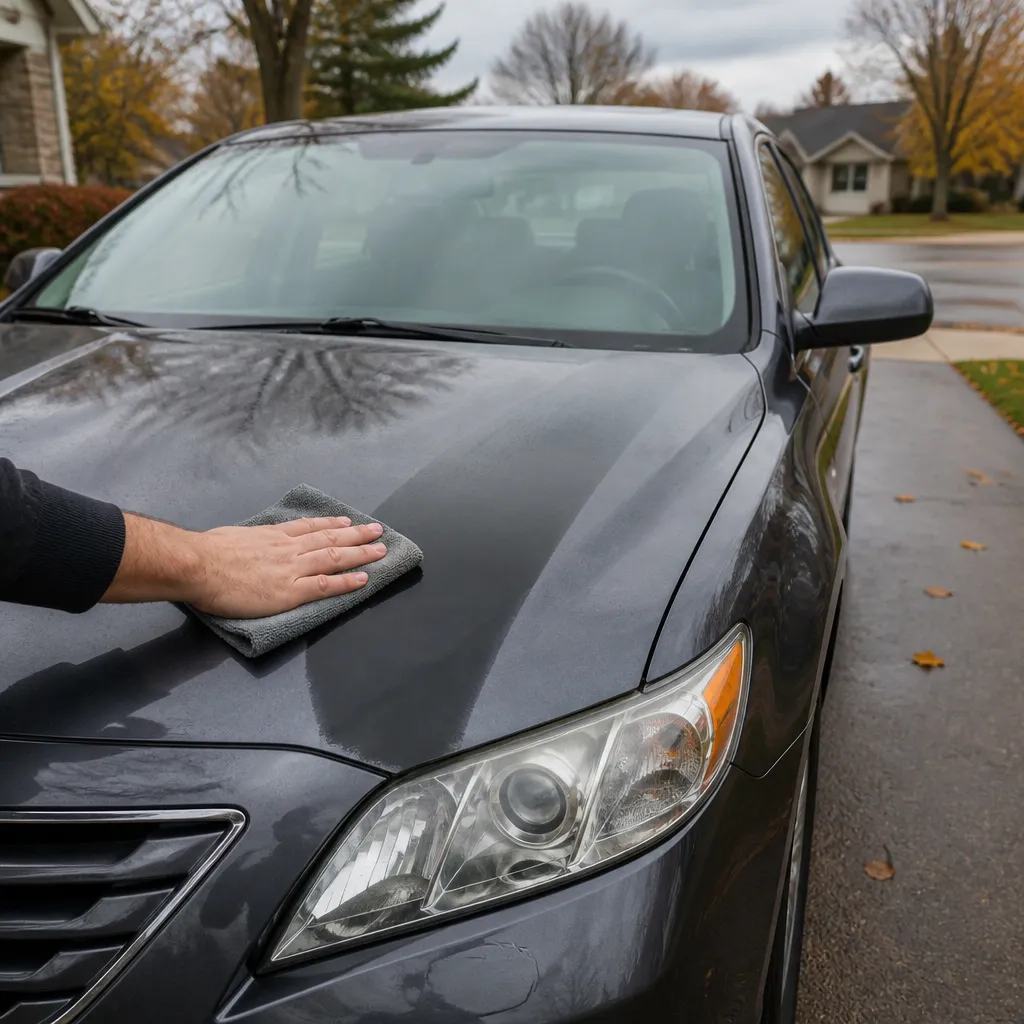
The reason this distinction matters is repairability. Oxidation is a surface problem, so a light layer can be removed by machine polishing, which levels the damaged top layer and reveals healthy paint underneath. Experienced detailers on long-running forum threads tend to agree on this point: if the paint is only oxidized, you can polish it back to a high gloss.
How oxidation looks on the car
Oxidation usually starts on horizontal surfaces that take the most direct sun, such as the hood, roof, and trunk lid. You will often see a uniform haze that looks like a thin film over the color. Rub a clean microfiber across the panel and you may pick up a fine, chalky residue.
The haze tends to be even across the panel. That evenness is one of the clearest signs you are looking at oxidation rather than a failing clear layer, which tends to show up in patches and edges.
Why horizontal panels go first
Panels that face the sky absorb the most UV throughout the day, and they also collect the most heat. Dark colors make this worse because they absorb more energy. If your car lives outside, the hood and roof will show age long before the doors or rear quarter panels.
Pro tip: Compare the hood with the driver door on the same car. If the hood is hazy and the door still has depth, you are most likely dealing with surface oxidation that correction can address.
What Clear Coat Failure Looks Like
Clear coat is the transparent top layer that protects the color and gives the paint its depth. When it fails, it does not simply get dull. It breaks down, separates, and in many cases starts to peel or flake, usually at the edges of panels first. The failed area looks different from oxidation because the damage sits in a layer that polishing cannot rebuild.
In practice, clear coat failure is the defect most owners misdiagnose. They see a dull patch, polish it, and watch the patch get bigger and rougher. That is the signal that the clear has lost its bond, and the panel needs more than a polish.
Flaking, lifting, and peeling edges
The most reliable sign of clear coat failure is physical separation. Look at the edges of the hood, the top of the door frames, and around the mirror housings. If you see small curls of clear, a rough sandpaper-like texture, or a line where the shiny top layer stops and a dull layer begins, the clear is separating.
Do not try to rub a flaking area with aggressive compound. Once the clear is lifting, aggressive work removes more of what is still attached and leaves a larger repair area.
Hazy patches that won't polish out
A second warning sign is haze that stays after several passes with a proper compound. Oxidation responds to correction with a clear, visible improvement. Failing clear often gets cloudy, milky, or streaky, and the cloudiness stays or comes back quickly. If the test area looks worse after you work it, stop and get a professional opinion.
At-Home Checks Before You Book
Before you call a detailer, you can run a basic check that takes about fifteen minutes. The goal is not to fix the car. The goal is to learn how the paint responds, so you can explain the problem accurately and avoid paying for work that will not help. Use a wash-clean panel, good light, and a fresh applicator.
Work a light polishing compound over a small square, roughly two feet by two feet, on the hood or roof. Use a foam applicator and gentle pressure, and then wipe the residue off. If the area shows a clear, glossy improvement with depth, the defect is most likely oxidation. If the area stays cloudy or looks rougher, you are probably dealing with clear coat failure.
The compound test, step by step
Start by washing and drying the panel, then check it under a bright light from two angles. Mark the test square with painter's tape so you can compare it to the surrounding paint. Apply a small amount of compound, work it in with light pressure, and buff off the residue with a clean towel.
Step back and compare the test area with the untouched paint right beside it. Oxidation will usually show a clear shift toward gloss, and the difference will be obvious even to a casual observer. Clear coat failure is more likely to show no shift, a streaky finish, or a rougher texture.
Checking panels and angles
Look at the car from several angles rather than straight on. Oxidation tends to look uniform from every direction, while clear coat failure often shows up in patches that change as you move. Walk around the car in open shade if you can, because direct sun can make both problems look similar.
Oxidation can usually be polished back to life, while failed clear coat cannot be polished into health. Telling them apart is the step most owners skip, and it is the step that decides what the job should cost.
Pro tip: Take close, well-lit photos of the affected panels before and after your test. Photos make it much easier for a detailer to give you a straight answer when you call for a quote.
Illinois Winters and Paint Damage
Illinois owners face a particular set of conditions. Summer brings long stretches of strong sun, especially for cars parked outside in driveways and open lots across the Chicago suburbs. Winter then brings road salt, slush, and repeated freeze-thaw cycles, each of which can stress the clear coat and the bond beneath it. The result is that a car can show oxidation in summer and clear coat trouble by spring.
Salt is the factor most owners underestimate. It collects on lower panels, rocker panels, and the edges of hoods and trunk lids, where it can sit wet for hours. Over several seasons, that moisture and chemical exposure can work into any existing chips or thin spots in the clear.
Salt spray and lower panels
The lower third of the car takes the worst of winter. Look at the rocker panels, the lower doors, and the bumper edges for a rough, hazy look that differs from the upper panels. If the lower panels show flaking while the upper panels look fine, the damage is often a salt and moisture issue rather than pure oxidation.
Washing the undercarriage and lower panels soon after snow events slows the buildup. Rinse thoroughly, dry the panels, and avoid letting salty slush dry on the paint overnight.
Freeze-thaw and existing chips
Chips and stone strikes create entry points for moisture. When water gets under a chip, it can work outward through freeze-thaw cycles and lift the clear around the damage. A small chip that looked harmless in October can become a flaking patch by March.
If you spot a chip, document it with a photo and address it before winter if you can. Early attention keeps a small defect from turning into a panel-sized repair.
Paint Correction vs. Respray in Illinois
Paint correction and a respray solve different problems, and the choice between them should follow the diagnosis. Correction is a controlled removal of a thin layer of clear to level out defects such as oxidation, swirls, water spots, and light scratches. A respray means stripping or sanding back a damaged panel and applying new base color and clear, which is the only real fix for failed clear.
The biggest mistake Illinois owners make is ordering correction on a panel that needs a respray, or ordering a respray for paint that only needed correction. The first wastes money and can make the repair area bigger. The second costs far more than the problem warranted.
What multi-stage correction removes
Multi-stage machine polishing uses progressively finer compounds and polishes to remove oxidation, swirl marks, and light defects in controlled passes. Done well, it restores depth and clarity to paint that still has healthy clear underneath. It also requires experience, because the operator has to know how much clear is safe to remove.
A quality correction starts with a paint thickness assessment when the car is in the bay, so the detailer knows how much material is available to work with. Decontamination, including clay and iron removal, comes before any polishing so that contamination is not ground into the surface.
When a respray is the honest answer
A respray becomes the right call when the clear is peeling, lifting, or delaminating over a large area. At that point correction would remove the remaining sound clear in the surrounding area while leaving the failed patches in place. Be wary of anyone who promises to polish out failed clear. The honest answer for that panel is a repaint, and a good shop will say so plainly.
Respray quality matters as much as the decision itself. Ask how the panel will be prepared, what primer and clear system will be used, and whether the blend into adjacent panels has been considered.
Comparing Your Options
Most cars fall into one of three repair categories. The table below shows how each approach fits the diagnosis, which helps you match the work to the damage instead of the other way around.
| Approach | Best fit | Main limitation |
|---|---|---|
| One-step polish (DIY or light touch-up) | Mild, even oxidation on healthy clear with no flaking | Limited ability to remove heavier haze, and it cannot repair failed clear |
| Multi-stage machine correction | Oxidation, swirl marks, and light defects where the clear is still bonded | Requires enough clear thickness and skilled operation, and it cannot fix peeling clear |
| Full panel respray | Peeling, lifting, or delaminating clear on one or more panels | Higher cost and time, and the blend into surrounding paint needs careful work |
The right approach is rarely the most expensive one. For many Illinois cars with dull but intact paint, a multi-stage correction delivers the best result for the money. For cars with failing clear, the honest path is a respray on the affected panels, followed by protection.
What Drives the Quote
Quotes for paint correction vary widely, and the reasons are usually the depth and severity of the defects, the size of the vehicle, and how many stages the work requires. One published pricing guide puts a reputable one-stage correction at roughly $500 to $800 or more, with multi-stage work costing more. Those numbers are a starting point, not a promise, and your local detailer's quote should reflect your car's condition.
Another guide makes the same core point: the depth and severity of the defects drive the price more than anything else. A car with light, even oxidation will generally cost less to correct than one with deep scratches, heavy haze, and multiple stages of compounding.
Paint depth and the number of stages
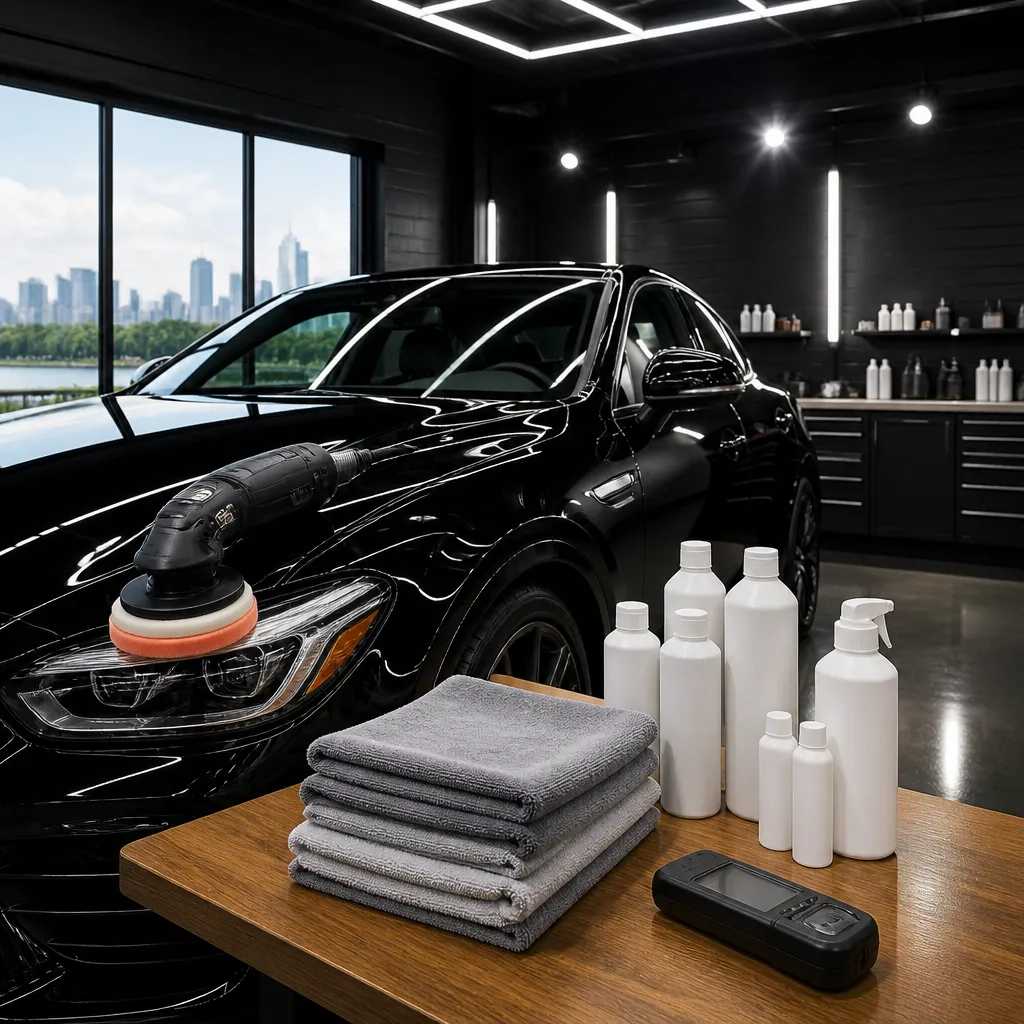
Each correction stage removes a small amount of clear. A car that needs three stages to clear up its defects uses more of the available clear than one that needs a single light pass. Experienced detailers measure paint thickness so they can plan the work without risking a burn-through, and that measurement is part of a professional assessment.
If a quote does not mention how many stages are planned or how the paint will be assessed, ask. A clear answer is a good sign.
Vehicle size, condition, and prep time
Larger vehicles and SUVs take longer, and cars that have been neglected often need extra decontamination before polishing can start. Heavy contamination, tar, and iron fallout add labor that shows up in the final price. Ask the detailer what prep is included.
Booking Without Wasting Money
The best time to book is after you have done the diagnosis, not before. Having a clear picture of whether you are dealing with oxidation, clear coat failure, or both lets you ask better questions and compare quotes on the same basis. It also helps you avoid a service that solves the wrong problem.
When you contact a detailer, describe what you saw, share your test results, and send photos. A good provider will ask about the car's history, how it has been stored, and where it spends winters. Those answers help them plan a realistic outcome.
Questions to ask before you pay a deposit
Ask whether the detailer will assess the paint for oxidation and clear coat condition before quoting. Ask what stages are included, whether decontamination is part of the price, and what protection is applied afterward. If the answers are vague, the quote is probably vague too.
For panels that need a respray, ask about the repair process and who will handle it. A detailer who is honest about the limits of correction is more likely to deliver results you can trust.
Protection after correction
Correction removes the damaged surface, but the restored gloss needs protection or it will start to fade again. Wax and sealant give shorter-term protection, while a professional ceramic coating adds a durable, hydrophobic layer that is easier to keep clean. Ceramic coatings do not repair defects, so the paint underneath must be corrected first.
Pro tip: Ask whether the protection product is applied the same day as correction. Leaving corrected paint unprotected through a damp Illinois week can start the fade process sooner than most owners expect.
Frequently Asked Questions
Can I tell oxidation from clear coat failure without a test?
Often you can get a good first read from visual cues. Oxidation tends to look even and chalky, while failed clear shows patches, edges, flaking, or a rough texture. A small compound test on a hidden area gives a more reliable answer.
Will polishing fix clear coat failure?
No. Polishing can improve oxidation, but it cannot rebuild clear coat that has lost its bond to the paint. On failed clear, polishing usually spreads the damage and makes the eventual repair larger.
Is a respray always more expensive than correction?
Not always, but a respray is usually the larger job. Compare quotes based on the actual damage, and remember that correcting a panel that needs repainting wastes money. A respray is the right call only when the clear has failed.
Does a ceramic coating hide oxidation or clear coat damage?
A ceramic coating adds gloss and protection, but it does not repair defects. Oxidation should be corrected first, and failed clear needs a respray before any coating goes on.
How long does paint correction take?
A single-stage job can be shorter, while a multi-stage restoration often takes a full day or longer for a professional. The time depends on the car's size, the number of stages, and how much prep is needed.
Why does my car look hazy after a Chicago-area winter?
Road salt, moisture, and freeze-thaw cycles can accelerate oxidation and stress the clear coat. If the haze polishes away, it was probably oxidation. If it returns in patches or the clear is lifting, get the panel assessed before the next season.
Have you run the compound test on your own vehicle, and did it point you toward oxidation or clear coat failure?