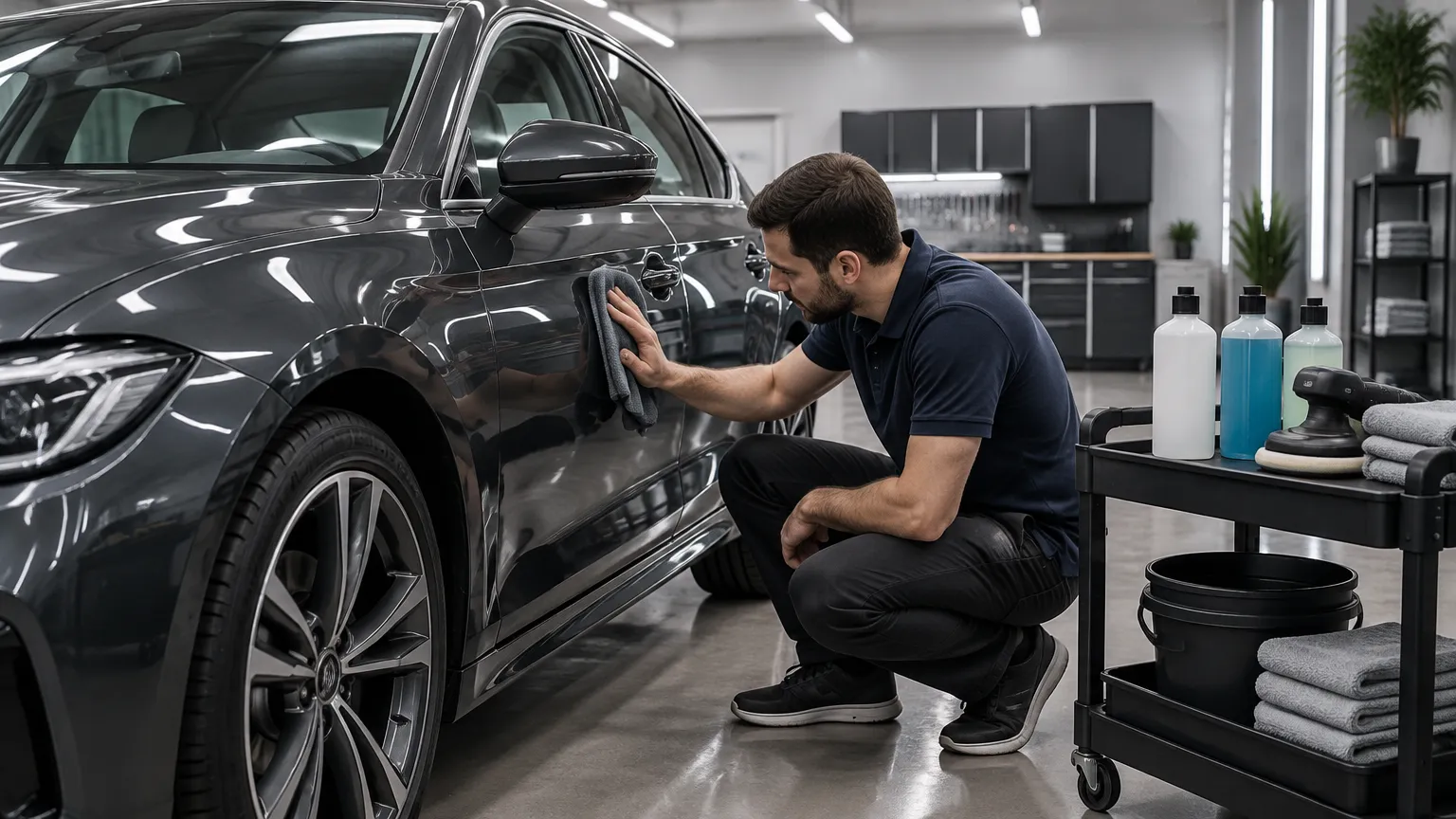
Thanksgiving week parking lots raise your odds of door dings and clear coat scratches, and much of that damage never gets reported. A door swung open against a neighboring SUV, a cart rolled into a quarter panel, a tight space squeezed too close: each one can leave a mark that stays in your paint for years. In 2026, Thanksgiving falls on November 26, so the Wednesday before, November 25, is one of the busiest driving days of the season. If you plan to shop Illinois malls and strip centers this weekend, here is what actually damages paint, where to park, and what to check when you get back to your car.
Table of Contents
- Quick Takeaways
- Why Thanksgiving Week Raises Parking Lot Risk
- Door Dings: How They Form on Clear Coat
- Where to Park for the Holiday Rush
- What Your Clear Coat Actually Does
- Comparing Protection Options
- Carts, Curbs, and Pedestrians
- After the Shopping Trip
- Frequently Asked Questions
- References
Quick Takeaways
| Key Insight | Explanation |
|---|---|
| The Wednesday before Thanksgiving is the high-risk day | Plymouth Rock Assurance found that, across its Northeast claims from 2019 through 2025, the Wednesday before Thanksgiving had more than twice as many claims as Thanksgiving Day. If you can shop on a different day, do it. |
| Parking-related claims rise during holiday week | Parking-related accidents made up about 19% of claims during Thanksgiving week, compared with about 17% for November overall. That data is Northeast data, but any crowded Illinois lot carries the same kind of risk. |
| Take an end spot or a far row | Fewer neighbors means fewer doors that can reach your paint. A longer walk with bags costs you a few minutes and saves your rocker panels. |
| Check door edges and lower panels first | Hits usually land at door height and along the lower body, where carts, open doors, and curbs make contact. Inspect those areas before anything else. |
| Use the fingernail test before you book a correction | If a mark glides smoothly, it is likely transfer that a gentle wash can remove. If your nail catches, the damage is in the clear coat and needs polishing. |
| A ceramic coating helps cleaning, not impact protection | A coating makes contaminants easier to rinse and keeps the surface slick, but it will not stop a door from denting the panel. |
| Inspect in daylight before the marks set | Look at the car as soon as you return to it, while the marks are still easy to read. Book a paint assessment early rather than waiting for spring. |
Why Thanksgiving Week Raises Parking Lot Risk
Thanksgiving week packs a lot of driving into a few days. Plymouth Rock Assurance reviewed its Northeast auto insurance claims from 2019 through 2025 and found that the Wednesday before Thanksgiving had more than twice as many claims as Thanksgiving Day itself. In every year studied, that Wednesday had more claims than the holiday.
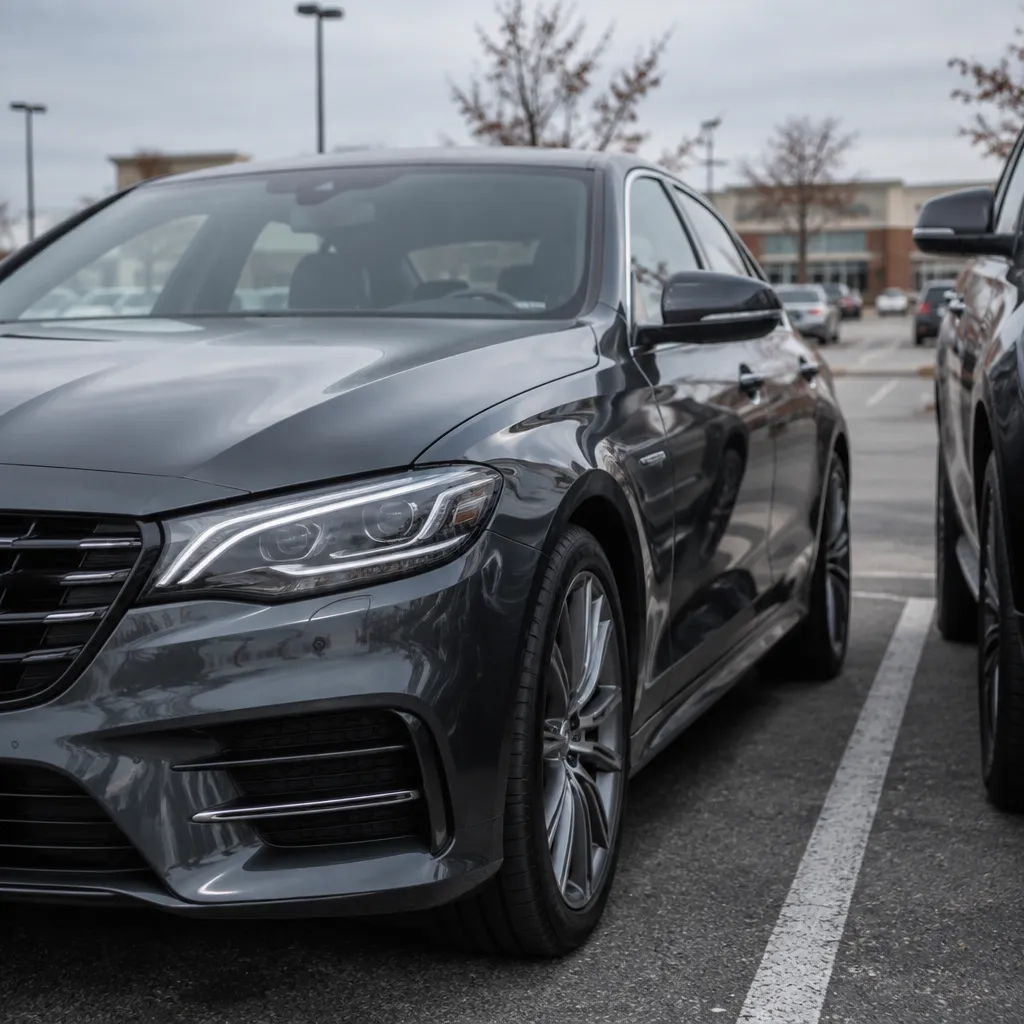
The same analysis found that parking-related accidents made up about 19% of claims during Thanksgiving week, compared with about 17% for November overall. Those figures come from Northeast policyholders, so they are not an Illinois count. The pattern still matches what shoppers see in a crowded lot: more cars, more open doors, and more people looking for a space instead of watching the car beside them.
Why the Wednesday before is the riskiest day
The day before Thanksgiving is when errands, grocery runs, and last-minute gift trips stack up. Drivers are rushed, and rushed drivers take the first open space they see rather than the safest one. That is how a quick stop turns into a door against a neighboring bumper.
If you can move a shopping trip to a quieter morning, do it. Fewer cars means more room to maneuver, and the lot is less likely to be jammed with people backing out at the same time you are pulling in. Peak afternoon on a holiday weekend means competing for the same spaces as everyone else.
Low speed does not mean low risk
Parking lot collisions happen at walking speed, which is why many drivers dismiss them. A car backing out slowly can still push a door into the panel beside it. The contact points sit at door height and bumper height, exactly where clear coat takes the most abuse.
Many lot incidents are never reported because nobody is hurt and both owners walk away. That is why you should check your own car carefully before you drive off, not after a week of ignoring a faint line in the paint.
Door Dings: How They Form on Clear Coat
What a door ding does to the paint
A door ding looks like a dent, but the damage people notice is often in the clear coat above the metal. Clear coat is the top layer of your paint system. It carries the gloss and takes everyday abuse, so it is the first layer to show a scuff or a crease.
Not every mark is damage. Many are paint transfer or light scuffs that look serious but come off with a proper wash and a clay bar. The problem is telling them apart before the car sits in the sun for a week and the marks bake in.
The fingernail test for scuffs versus scratches
Run a fingernail gently across the mark. If the nail catches, the damage has cut into the clear coat and will need machine polishing. If it glides over smoothly, you are probably dealing with transfer or residue that a gentle wash will remove.
In practice, this test prevents two common mistakes. The first is paying for a full correction on a mark that would have come off in one wash. The second is ignoring a catching scratch because it looks small in the shade of a parking garage.
Where dings land most often
Front and rear doors take most of the hits, especially the leading edge near the handle and the rear quarter panel beside the fuel door. Low body lines get hit by carts and by the edges of neighboring doors. The lower rocker area is often the forgotten victim, because owners rarely look down there after a trip.
Where to Park for the Holiday Rush
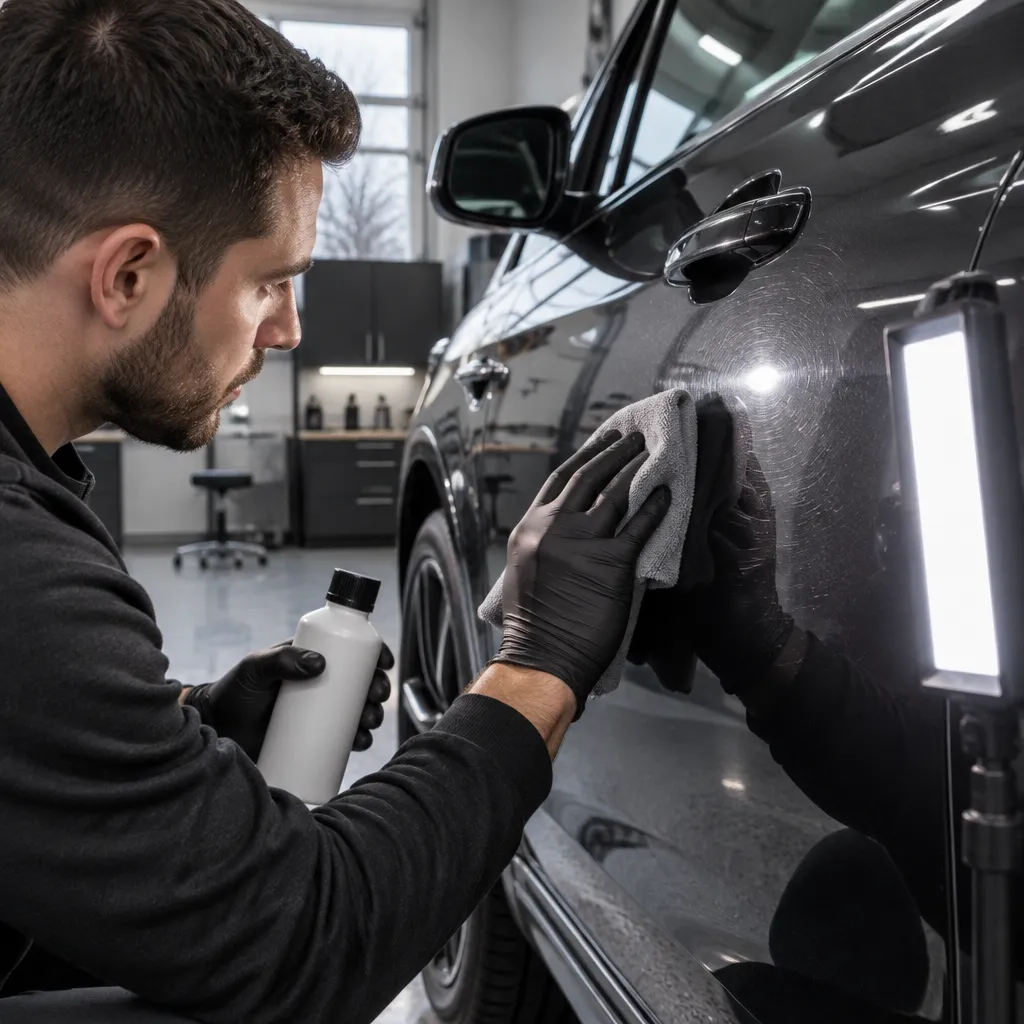
The State Farm guide to avoiding door dings in parking lots makes the simplest case: park away from other vehicles, shopping carts, and people. An end spot or a space a few rows out gives you one neighbor instead of two, and it keeps your doors out of the lane where traffic moves fastest.
Choose the end spot, then check the angle
An end spot is one of the best spaces you can get on a holiday Saturday, and it is worth a longer walk. Before you leave the car, look at the angle of the neighboring vehicle. If its door would swing against your panel, shift your car a little or pick another row.
Backing in is a useful habit when the lot allows it. You get a clear view of your neighbors when you leave, and you can see whether someone is opening a door right next to you.
The cart corral is the worst spot in most lots
Cart corrals draw people who are unloading heavy bags in a hurry, and carts roll when nobody is holding them. Parking next to one is a gamble with your lower panels. Choose a space at least one row away, even if it means carrying bags a little farther.
Pro tip: Before you lock the car, walk one full lap and look at door edges and lower panels in daylight. Catching a fresh mark in the lot gives you a clear record and lets you photograph it before dirt and sun change the picture.
What Your Clear Coat Actually Does
Why clear coat loses gloss in small steps
Clear coat rarely fails all at once. It loses gloss a little at a time, collecting swirl marks and light scratches from washing, drying, and brushing against the things around it. Each mark scatters light differently, so the finish looks flatter at certain angles.
Clear coat rarely dies from one bad day. It usually loses gloss in small steps, and a crowded parking lot is one of the places where that clock runs fastest.
Contaminants that sit on paint while you shop
Road salt, slush, bird droppings, and tree sap sit on paint for the whole length of a shopping trip. Sap and droppings are especially aggressive because they can etch the clear coat when they bake in the sun. The longer they stay, the more work the surface needs afterward.
Winter adds its own problem. Salt residue collects along lower panels and rocker areas, exactly where carts and door edges also make contact. A parking lot ding that lands on a salt-coated panel often shows up as a dull patch rather than a clean line, which makes it harder to judge.
Why the finish matters after the trip
Once clear coat has swirls and etching, the only real fix is removing a thin layer through polishing. That is why the first defense is avoiding the mark, and the second is catching it early. A few minutes of attention after a trip is far cheaper than a full correction later.
Comparing Protection Options
No single option stops every kind of damage. Parking choice prevents most door contact, removable door edge guards protect the edge that takes the most hits, and a ceramic coating makes the surface easier to clean and maintain. Here is how they compare for a holiday shopping trip.
| Protection Option | What It Helps With | What It Does Not Stop |
|---|---|---|
| End spot or far-row parking | Reduces the number of neighboring doors that can reach your paint and keeps you clear of carts | A careless driver backing out next to you, or a neighbor who parks crooked |
| Removable door edge guards | Adds a physical buffer on the door edge, where most contact occurs | Impacts to the main panel face and lower body, since they only protect where they are fitted |
| Ceramic coating (5-year from $999, 8-year from $1,099) | Makes contaminants easier to rinse, keeps the surface slick, and includes a full 2-step paint correction at no extra charge | Dents, door dings, and physical impacts, because a coating does not make paint impact resistant |
Final ceramic coating pricing depends on vehicle size and paint condition. For holiday use, parking choice comes first because it costs nothing. Ceramic coating comes next for long-term surface care, and edge guards suit owners who park in crowded lots every day, though not everyone wants a visible addition on the car.
Pro tip: If you are weighing a ceramic coating, ask whether the quote starts from a corrected surface. Our 5-year and 8-year packages start at $999 and $1,099, and both include a full 2-step paint correction at no extra charge, so the coating goes onto clean, leveled paint.
Carts, Curbs, and Pedestrians
Most lot damage is not a single dramatic crash. It is a series of small contacts with carts, curbs, and people walking between rows. Knowing which threat is most likely helps you park and leave more safely.
Backing out is where lot incidents start
Backing out of a space is where many lot incidents begin. Drivers check the mirror, see open space, and miss a child, a shopping cart, or a car cutting through the lane. Slow down, use your mirrors and cameras, and check blind spots before you move.
Turn on your headlights any time visibility is reduced. Late November daylight fades early, so the afternoon shopping rush often happens in fading light, when a parked car and a moving car are harder to see clearly.
Curbs and carts leave the worst marks
Curb contact damages wheels, tires, and the lower lip of the bumper, while carts leave marks at bumper and rocker height that are easy to miss. Look at both ends of the car when you return. Turning tight in a crowded lot raises the chance of scraping a curb or a bollard.
Pedestrians and distracted walking
Pedestrians cause problems too. People with phones, kids, and full hands often walk between cars without looking. Drive slowly through the lanes, watch for people stepping out between parked cars, and use marked walkways when they exist. If an officer or attendant is directing traffic through a crowded lot, follow their instructions even if it slows you down.
After the Shopping Trip
Most people check their car for a dent only after they notice a problem. Build the habit of looking before you drive away and again when you get home. A quick inspection now is much easier than discovering a line in the paint at a car wash next week.
How to inspect your paint in daylight
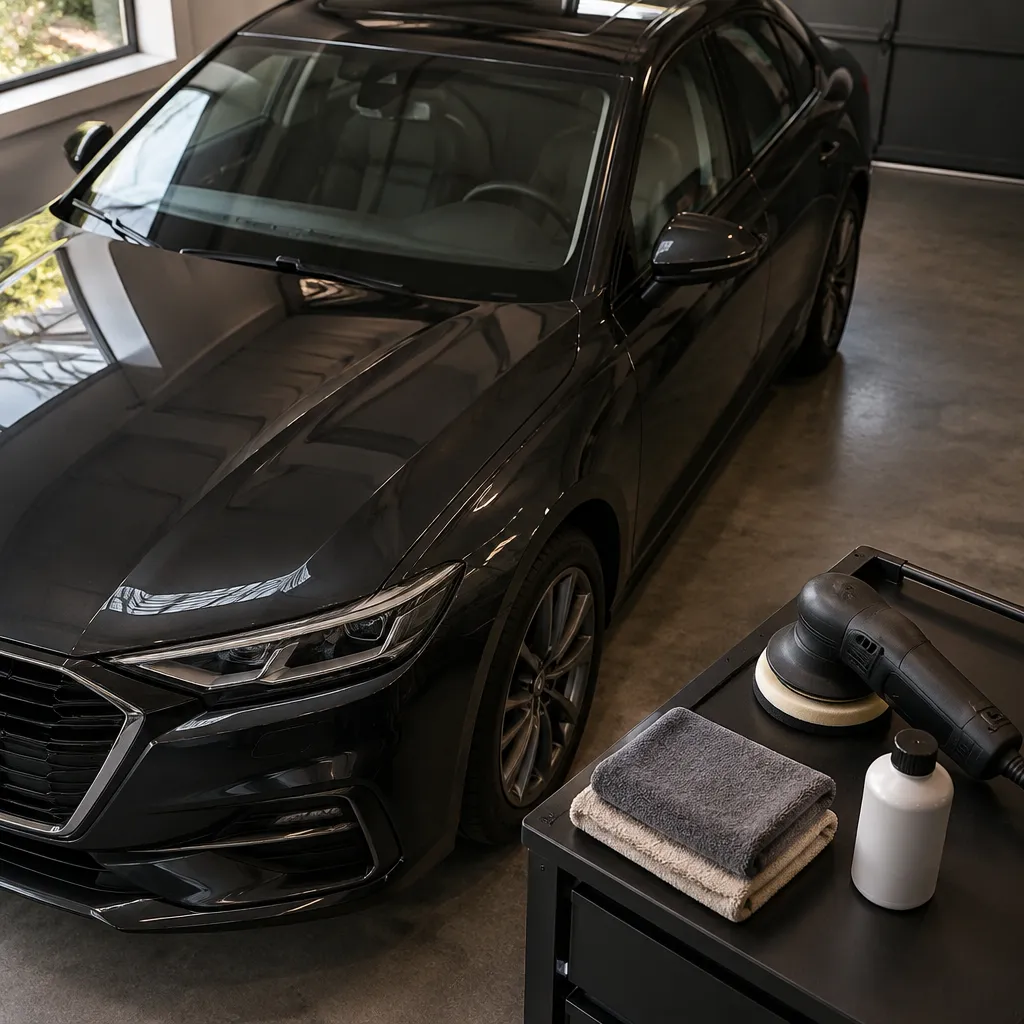
Walk around the car in daylight, not under the glow of a parking lot light. Look at the door edges, the lower rocker panels, the rear bumper, and the wheel arches. Run your hand over suspect areas, then compare them with the untouched side of the car.
When a wash is enough and when it is not
If a mark comes off with a gentle wash, you are dealing with transfer. If it catches a fingernail or shows as a line in the clear coat under direct light, it needs correction. A 1-step paint correction typically takes 4 to 6 hours and is designed for light to moderate swirls and surface imperfections, starting at $399. A 2-step correction is a full-day service that targets deeper swirls and imperfections, starting at $699.
Every correction at our Glendale Heights studio includes a pre-service paint thickness measurement and documentation. That measurement shows how much clear coat is left before any polishing begins, which matters if the mark is close to the limit.
Booking a paint check at our Glendale Heights studio
Our studio is by appointment only at 2017 Bloomingdale Rd, Glendale Heights, IL 60139, and we serve Carol Stream, Bloomingdale, Wheaton, and nearby suburbs. Submitting a booking request does not require payment. Requests are reviewed, and clients are contacted within one business day to confirm the appointment and finalize pricing.
If you want a paint check before winter sets in, call (331) 231-0176 or use our booking page. You can also review our paint correction options in Glendale Heights before you book.
Pro tip: Photograph any mark in daylight from two angles before you wash the car. A clear photo gives you a baseline and helps the detailer decide between a wash, a polish, or a deeper correction.
Frequently Asked Questions
Is the Wednesday before Thanksgiving really the busiest day for car claims?
In the Plymouth Rock Assurance analysis of its Northeast claims from 2019 through 2025, the Wednesday before Thanksgiving had the highest number of claims in six of the seven years studied, and more claims than Thanksgiving Day in every year. The data is not from Illinois, but it is a useful signal for planning your errands.
Can a ceramic coating prevent door dings?
No. A ceramic coating is a protective layer that makes contaminants easier to rinse and keeps the surface slick, but it will not stop a door from denting the panel. Our 5-year and 8-year coatings start at $999 and $1,099, include a full 2-step paint correction, and carry 5 to 8 year limited coverage that depends on maintenance and annual inspections.
How can I tell whether a mark is clear coat damage or just transfer?
Run a fingernail gently across the mark. If the nail catches, the damage has entered the clear coat and needs polishing. If the mark glides smooth and disappears after a gentle wash, it was likely transfer or residue.
Is a 1-step correction enough after a parking lot ding?
It depends on the depth of the mark, and that is why an inspection comes first. A 1-step correction, starting at $399, is designed for light to moderate swirls and surface imperfections. Deeper scratches or buffer trails usually need the 2-step correction, which starts at $699.
Are covered parking structures worth seeking out during the holidays?
They protect paint from sun, rain, and hail, which is valuable on any car. They do not stop a neighbor from opening a door against your panel, so the same rules about spacing, angle, and carts still apply inside a garage.
What should I do right away if someone dings my car in a shopping center lot?
Photograph the mark and the surrounding cars in daylight, look for a note or a contact from the other driver, and talk to your insurer about your options. Whether you need to file a report depends on the situation, so check with your insurer or local authorities if the other driver left the scene.
What is the worst parking lot ding you have seen this holiday season, and what did you do about it?