If you just paid for multi-stage machine polishing, the most expensive mistake you can make is letting the finish sit until it looks tired again. A maintenance detail interval is how often you bring the car back to keep corrected paint clean, protected, and free of new defects. For luxury owners in the Chicago suburbs, the right interval is not one fixed number. It depends on your protection layer, how the car lives through winter, and how often it goes through automatic washes. Here is how we set that interval for clients in Glendale Heights, Carol Stream, Bloomingdale, and Wheaton.
Table of Contents
- Quick Takeaways
- Why Paint Correction Changes the Maintenance Math
- What Your Protection Layer Changes About the Interval
- Signs Your Paint Needs Attention Sooner
- Illinois Winters, Road Salt, and the Interval
- Matching the Interval to How You Drive
- Common Mistakes With Maintenance Intervals
- What a Maintenance Visit Should Cover
- Frequently Asked Questions
- References
Quick Takeaways
| Key Insight | Explanation |
|---|---|
| Set the first visit by protection layer | Bare corrected paint shows new marring faster than paint under a sealant or coating, so the first maintenance date should follow what is sealing the finish. |
| Illinois winter shortens the interval | Road salt and brine residue are the main reason to tighten a warm-season schedule, usually by several weeks from November through March. |
| Wash method matters more than mileage | Brush washes and dirty mitts add fresh swirls quickly, so your interval should track how the car is actually washed. |
| Inspect before you schedule | If defects reappear within a few weeks of a visit, the interval is too long for your conditions, and you should move the next visit up. |
| A garage does not stop contamination | Dust, pollen, and industrial fallout still settle on paint in a closed garage, so storage can stretch the interval but rarely eliminates it. |
| Book the next visit before you leave | Owners who leave with a date on the calendar keep their schedule. Owners who wait to see how the paint looks usually wait too long. |
Why Paint Correction Changes the Maintenance Math
Paint correction removes a thin layer of clear coat to level out swirls, scratches, and water spotting. Once that work is done, the paint is at its best and most vulnerable at the same time. The surface is smooth enough to show new contamination clearly, but nothing is sealing it yet.
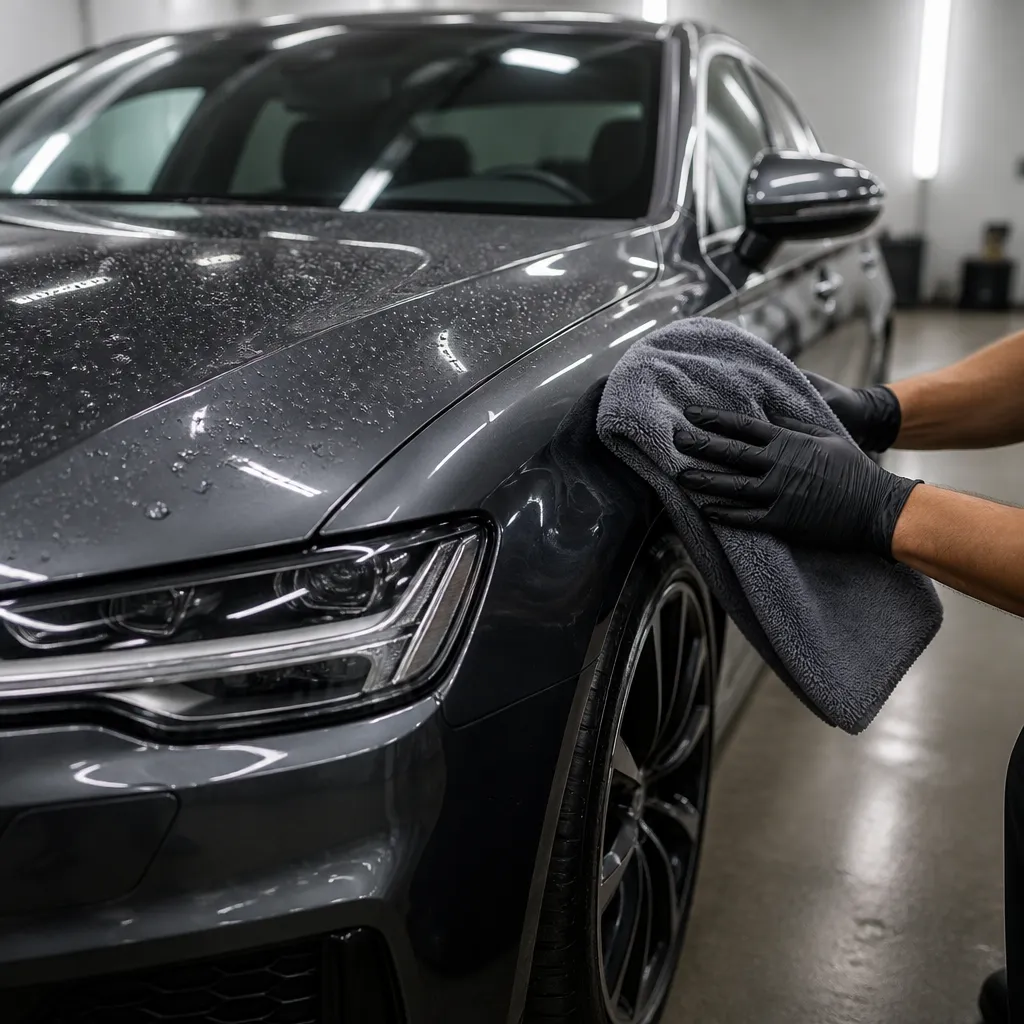
That is why the interval after correction differs from the one a car needs when it was never corrected. A vehicle that arrives with heavy wash marring can pick up fresh damage within a few weeks of ordinary use. The goal of the first six months is not to keep the car looking new. It is to learn how quickly the finish collects new marks under your actual driving and washing habits.
Clear coat is finite. Every polish removes some material, so the purpose of maintenance is not to chase perfect gloss with heavier compounds. It is to keep contamination from bonding to the surface so you never have to correct the same panel again. A disciplined program can make the next correction smaller, or unnecessary for years.
The best maintenance interval is the longest gap your finish can tolerate without picking up defects you would later have to polish out.
Think of the interval as a measurement tool. Each visit tells you something about the paint, the wash routine, and the environment. Owners who treat the schedule as a fixed calendar item miss that feedback. Owners who read the paint after every visit can adjust before the damage becomes a correction job.
What Your Protection Layer Changes About the Interval
The protection on top of corrected paint sets the baseline for how often the car needs attention. A bare finish, a sealant, a ceramic coating, and paint protection film each behave differently under the same washing routine. Choosing the interval without knowing which layer you have is the most common planning error we see.
Bare Paint and Sealant Schedules
Bare corrected paint has no sacrificial layer, so every wash and every bit of road film touches the clear coat directly. In practice, a bare finish needs the shortest interval of any setup, and it should be inspected before each wash during the first season. Sealants add slickness and some water behavior, but they wear away with washing and need reapplication on a shorter cycle than a coating.
A sealant-protected car on a regular wash routine usually benefits from a maintenance visit every two to three months, with a quick inspection between visits. The exact timing depends on how often the car sees rain, road salt, and automatic washes. Treat the sealant as a consumable, not a permanent upgrade.
Ceramic Coatings Still Need Maintenance
Our nano-ceramic SiO2 coatings are built for long service life, and our coating packages carry 5 to 8 year warranties. A coating is not maintenance-free, though. Coatings keep their hydrophobic behavior, the water beading that lifts dirt away, only when the surface stays clean and free of bonded contamination.
For a coated luxury car, we usually recommend a maintenance visit roughly every four to six months, plus a decontamination check after winter. Between visits, the owner should keep washing gentle and avoid harsh chemicals that dull the top layer. Coatings reduce how often the paint needs correction, but they do not remove the need to inspect.
Pro tip: Ask for a water-behavior check at every visit. If water sheets across the panel instead of beading tightly, the top layer is losing its performance, and the interval should move earlier before the next season.
Paint Protection Film Edges and Panels
Paint protection film is a clear barrier against rock chips and scratches on high-impact areas such as the front bumper, hood edge, and mirror caps. The film itself needs cleaning and inspection, but its edges are where lifting and contamination build up first. Check the film edges during each maintenance visit, not only the paint in the middle of the panel.
Signs Your Paint Needs Attention Sooner
Sometimes the schedule on paper and the condition of the car do not match. When that happens, the car is telling you the interval is too long. The earlier you catch those signs, the less polishing you will need later, and the less of your clear coat you spend on avoidable correction.
Water Behavior Fades Before Gloss Does
Water performance usually drops before the paint looks dull. Look for water that lies flat, leaves large spots after drying, or leaves a film instead of beads. These are early signs that washing has started to strip the protection or that bonded contamination is sitting on the surface. A car that has lost its beading should move up to the next visit, even if it still looks shiny in the garage.
Swirls Under Bright, Angled Light
Swirls are hard to see under flat overhead lighting but show clearly under a bright LED light held at a low angle. We check every car this way before and after each visit. If you can see fresh swirls within a few weeks of a wash, the interval is too long for your current routine, or the wash method needs to change.
Contamination You Can Feel
Run a clean hand over the paint after washing and drying. A smooth finish feels like glass. Rough patches mean bonded contaminants such as rail dust, tree sap residue, or industrial fallout are still present. Those particles should be removed with a proper decontamination step rather than more aggressive polishing, because the goal is to remove what is bonded without taking more clear coat.
Illinois Winters, Road Salt, and the Interval
Illinois winters change the maintenance math more than any other factor for Chicago-area owners. Road salt, brine, and grit from plowed streets sit on the car for days at a time, and the damage is cumulative. A schedule that works in June can fall apart by February if nobody adjusts it.
Why Salt Season Shortens the Interval
Salt is corrosive to exposed metal and abrasive when it mixes with grit. Brine residue can cling to lower panels, wheel wells, and rocker areas, even after a wash. In practice, we tighten the schedule from November through March, often moving a typical six-week visit to every four weeks for a daily driver. Waiting for spring to address winter buildup means more time for contamination to bond.
The timing of the first winter wash also matters. A car that goes straight from a fall correction into road salt without a sealant refresh can lose its protection before January. Schedule a wash and inspection before the first serious snowfall, not after.
Spring Pollen and Late-Season Grime
The transition from winter to spring brings a different problem. Pollen, tree sap, and construction dust land on freshly washed paint and bond quickly in warm weather. Many owners treat April as the start of a lighter schedule, but this is often when defects appear fastest. We recommend one spring visit focused on decontamination before the interval relaxes for summer.
Garage Parking Is Not a Free Pass
A garage protects the car from UV exposure, weather, and most falling debris. It does not protect the paint from dust that drifts in through open doors, from tools and cleaning chemicals on shelves, or from washing habits. Owners who park in a garage can usually stretch the interval slightly, but a garage alone does not justify skipping inspections.
Matching the Interval to How You Drive
Driving pattern is the variable most owners underestimate. A weekend car that rarely sees rain needs a very different schedule from a daily driver that commutes on the expressways through construction season. Before you pick a number, be honest about how many miles the car covers, how often it is washed, and where it is parked.
The comparison below shows three approaches we see working for Chicago-suburb owners. Each one fits a different kind of car and owner, and each has a weak point you should plan around.
| Approach | Best For | Main Weakness |
|---|---|---|
| Fixed calendar visits, every 3 months | Owners who want simple scheduling and who wash their cars at home with safe methods | Ignores conditions, so a car driven through a salty winter can collect damage between visits |
| Condition-based visits, scheduled after inspection | Owners with fluctuating driving habits or a coated car that needs reliable performance checks | Requires discipline to inspect regularly, and owners often delay the visit until the paint looks worse |
| Hybrid, seasonal baseline plus inspection | Daily drivers in Illinois who want a predictable winter schedule with flexibility in summer | Needs a booked calendar and a clear owner who logs washes and visits |
For most luxury owners in our service area, the hybrid approach works best. Keep a baseline of every four to six months, tighten it to every four to six weeks in salt season, and add an inspection whenever the water behavior or the paint under angled light changes. A car that sits for most of the week may only need the baseline, while a car that commutes daily needs the tighter cycle.
Common Mistakes With Maintenance Intervals
Most interval problems come from habits, not from the detailing itself. The same few mistakes show up again and again on cars that arrive with fresh swirls after a single season. Fixing them is usually cheaper than another correction.
Using the Wrong Tools Between Visits
The most damaging maintenance mistake is washing with a single bucket, a dirty mitt, or a drying towel that has picked up grit. Each one drags particles across the paint and adds marring the next visit has to remove. Use separate wash and rinse water, a clean wash mitt, and a dedicated drying towel. Keep the tools clean as well, since a dropped towel is a common source of new scratches.
Waiting for Visible Swirls
Many owners wait until they see swirls in the sun before booking a visit. By then, the defects are already in the clear coat, and the next visit may need light polishing rather than simple maintenance. The better trigger is a change in water behavior, a rough feel after washing, or a visible change under angled light. Those signs show up weeks earlier.
Treating the Interval as a Package Count
Some owners buy a set number of visits and spread them across the year without regard to conditions. That approach front-loads the cheap visits and leaves the winter months unprotected. An interval should follow the calendar of your car, not the calendar of your purchase. If your plan includes four visits, place them where the risk is highest, usually before winter and after salt season.
What a Maintenance Visit Should Cover
A maintenance visit is not just a wash with a higher price. It should start with inspection, move to targeted cleaning, and end with a protection step that matches the car's current condition. If your provider skips the inspection, you have no way to judge whether the interval you chose is working.

Inspection Before Any Product Touches the Paint
The inspection comes first. We check water behavior, look for swirls under angled light, and run a hand test on each panel. We also check paint protection film edges, trim, and the lower body panels where salt and grime collect. The results decide how much decontamination and how much protection the visit needs.
Decontamination Only When Needed
Decontamination removes bonded contamination such as iron particles, rail dust, and sap, and it should happen only when the inspection shows a need. Doing it on every visit adds wear without adding much value. When it is needed, it should be done gently, with lubrication and clean tools, so the process does not add new marring.
Interior Items That Follow the Same Clock
The interval applies to the interior too. One luxury-vehicle maintenance guide suggests vacuuming the cabin about every other week, which is a useful baseline for owners who drive daily. Leather seats need conditioning every few months, and wood trim and brushed metal need gentle cleaning that avoids harsh chemicals. Schedule interior work on the same visits so nothing gets forgotten.
Pro tip: Ask for a short written note after each visit that records the water behavior, the condition of the film edges, and the next recommended date. Over a year, those notes show you whether the interval is too long, too short, or about right.
Frequently Asked Questions
How often should I get a maintenance detail after paint correction in Illinois?
For most luxury cars in the Chicago suburbs, a baseline of every four to six months works well, tightened to every four to six weeks from November through March. Adjust earlier if water stops beading or swirls show under angled light.
Does a ceramic coating mean I can skip maintenance details?
No. A coating reduces how often the paint needs correction, and it keeps contamination easier to remove, but it still needs inspection and periodic maintenance to keep its water performance and appearance.
Does garage parking let me stretch the interval?
Often, slightly. A garage limits UV exposure, weather, and falling debris. It does not stop dust, tool residue, or wash damage, so inspections still matter.
Can I do maintenance washes at home instead of booking a professional visit?
Yes, if you use separate wash and rinse water, a clean mitt, and a dedicated drying towel. Home washing handles routine dirt well, but it does not replace inspection or decontamination when bonded contamination builds up.
What happens if I wait too long after paint correction?
Fresh swirls and bonded contamination build up, and the next correction needs more polishing. That removes more clear coat than a maintenance visit would have, so the cost and risk go up over time.
Share your experience: how often does your corrected paint need attention through an Illinois winter, and which interval has held up best for your car?
References
- Essential care tips for high-end vehicles and paint protection options
- Basic car maintenance checklist from Car and Driver editors
- Maintenance tips for luxury vehicles, including interior cleaning routines