Your paint faces a specific kind of punishment in the Chicago suburbs. Gravel kicked up on Route 53, road salt brine sprayed through Carol Stream winters, UV exposure baking paint all summer on I-290, and tree sap dropping onto hoods parked in Wheaton driveways. The question of PPF vs ceramic coating in Illinois is not a general internet debate for you. It is a real decision with real consequences for your vehicle's finish. Get it wrong and you are either overpaying for protection you do not need, or leaving your paint defenseless against the exact threats your local roads throw at it every day.
Table of Contents
- Quick Takeaways
- What PPF and Ceramic Coating Actually Do
- How Illinois Road Conditions Change the Calculation
- PPF vs Ceramic Coating: Cost and Coverage Comparison
- Which Protection Is Right for Your Vehicle and Driving Habits
- Why Combining PPF and Ceramic Coating Makes Sense Here
- What to Expect from a Professional Installation in Glendale Heights
- Frequently Asked Questions
- References
Quick Takeaways
| Key Insight | Explanation |
|---|---|
| PPF stops physical impact, ceramic coating does not | Paint protection film is a thick thermoplastic polyurethane layer that absorbs stone chips and road debris. A ceramic coating is far too thin to stop a rock from hitting your paint. |
| Illinois winters make PPF on high-impact zones a priority | Road salt, sand, and gravel are pushed onto roadways all winter in DuPage County. The front bumper, hood, and rocker panels take the worst of it and benefit most from PPF coverage. |
| Ceramic coatings excel at repelling Illinois-specific environmental contaminants | Hard water spots from Chicago suburb sprinkler systems, tree sap, bird droppings, and brake dust bond less aggressively to a properly cured SiO2 ceramic coating than to bare or waxed paint. |
| Self-healing PPF is especially valuable in daily-driven vehicles | Light swirl marks and fine scratches in PPF close up with heat from the sun. For a car driven every day in Bloomingdale traffic, this prevents gradual paint degradation without regular polishing. |
| Ceramic coating warranties require professional application to be valid | Professional nano-ceramic SiO2 coatings applied by a certified installer carry meaningful warranties, often 5 to 8 years. Consumer spray-on "ceramic" products do not compare in durability or protection depth. |
| PPF is reversible, ceramic coating is not | PPF can be removed cleanly, leaving the original paint intact. Ceramic coating chemically bonds to the surface and wears away gradually. This matters for leased vehicles or those planning to resell. |
| Combining both products is not overkill for luxury vehicles | Applying a ceramic coating over PPF on impact zones gives you physical protection from chips plus hydrophobic, UV-resistant performance from the coating. For a high-value vehicle, this is the complete solution. |
What PPF and Ceramic Coating Actually Do
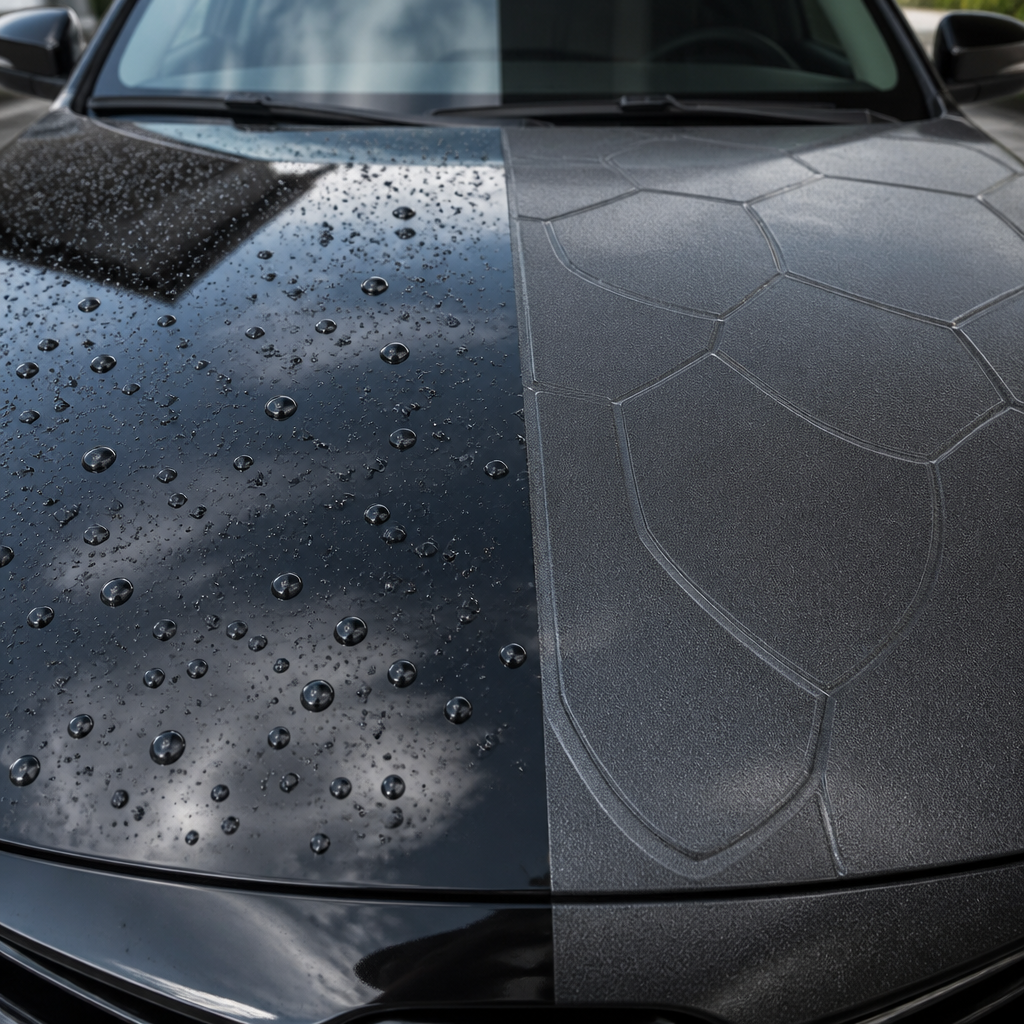
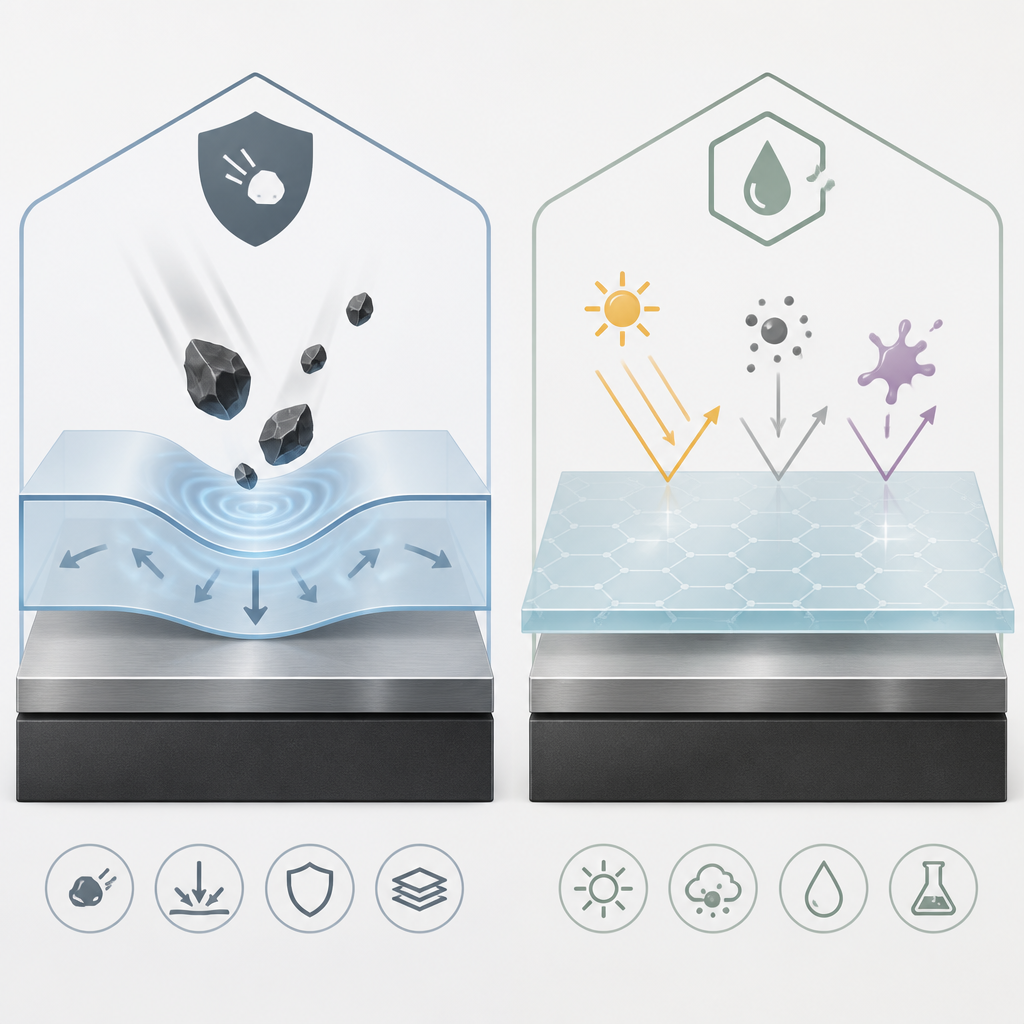
These two products protect your paint through completely different mechanisms, and confusing one for the other leads to expensive mistakes. Paint protection film (PPF) is a clear thermoplastic polyurethane film cut to fit each panel and applied directly over the paint. It is noticeably thick, and that thickness is the entire point. A stone that would chip bare paint hits the film instead. Light scratches in the film's surface layer close up with heat, either from sun exposure or a heat gun, and disappear. If a panel takes a severe hit beyond self-healing, that panel can be refilmed rather than requiring a full-car redo.
Ceramic coating works through chemistry rather than physical mass. A liquid silica-based solution is applied by hand and cures into a hard, hydrophobic layer that bonds chemically to the paint surface. Water beads and rolls off. Contaminants like bird droppings, tree sap, and road grime struggle to adhere. UV rays are blocked, slowing oxidation and color fade. The coating adds depth and gloss to the existing finish. What it cannot do is absorb physical impact. A rock travelling at highway speed will go right through a ceramic coating and into the paint underneath.
The most common protection mistake is using ceramic coating to solve a problem it was never designed for. If your concern is chips and road debris, a coating does nothing to stop them. If your concern is contamination, water spots, and long-term paint maintenance, a film alone leaves that work entirely on you.
Understanding this distinction before you spend money is the foundation of making the right call for your specific vehicle and driving environment.
How Illinois Road Conditions Change the Calculation
General articles about paint protection rarely account for regional driving conditions. The Chicago suburbs are not Phoenix, and they are not coastal Florida. The threats to your paint here are specific, and your protection strategy should reflect them.
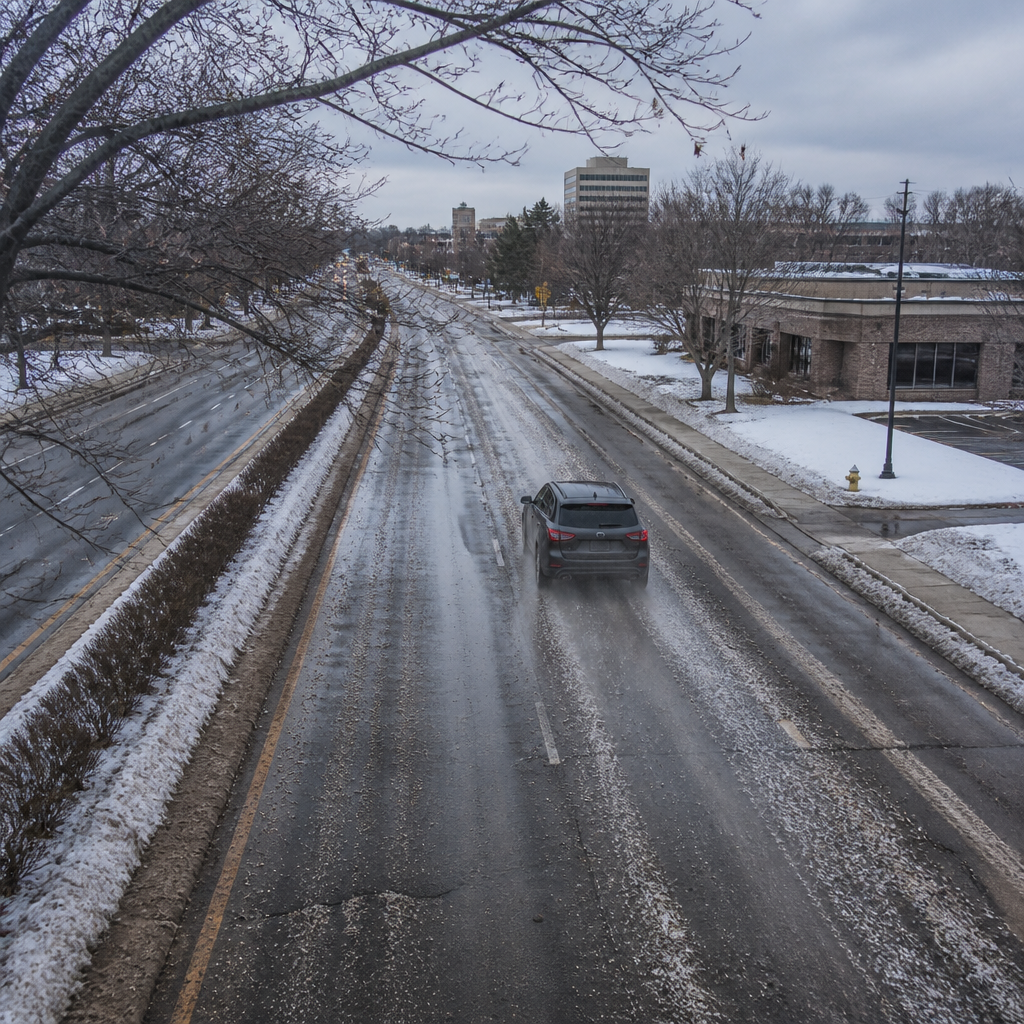
Winter Road Salt and Gravel
DuPage County roads are treated heavily through the winter season with salt brine and sand. Every mile driven from November through March sends a spray of abrasive, corrosive material at your lower panels, rocker panels, front bumper, and wheel arches. This is exactly the environment where PPF earns its cost on a daily driver. A ceramic coating alone does not prevent a piece of gravel from embedding in your hood at 65 mph on the I-355 extension.
Summer UV and Environmental Fallout
Illinois summers bring sustained UV exposure that accelerates paint oxidation, particularly on dark-colored vehicles. The suburbs also bring tree sap from oak and maple canopy, hard water mineral deposits from irrigation systems, and brake dust that bonds to wheel surfaces. A professionally applied nano-ceramic SiO2 coating handles all of these threats far more effectively than wax or sealant. Contaminants that would etch bare paint over hours simply do not bond the same way to a properly cured ceramic surface.
Stop-and-Go Suburban Traffic
Commuting through Carol Stream, Bloomingdale, and Wheaton means frequent stopping and starting, which increases exposure to gravel flicked from construction zones and pickup trucks. The front end of any vehicle driven in this environment is a chip magnet. Prioritizing PPF on the front bumper, hood leading edge, and mirror caps is practical, not excessive.
Pro tip: If you only have budget for partial PPF coverage, prioritize the front bumper, leading edge of the hood, and the first 12 to 18 inches of the front fenders. These panels absorb roughly 80 percent of road debris impact on a typical Chicago suburb commute.
PPF vs Ceramic Coating: Cost and Coverage Comparison
Cost is the most common deciding factor, and it should be approached honestly rather than with vague generalities. PPF installation requires significantly more labor than ceramic coating application. Each panel must be measured, film cut, and fitted without visible edges or lifting. A full-vehicle PPF installation is a multi-day professional job. Partial coverage on high-impact zones only brings the cost down substantially while still protecting the areas that matter most on Illinois roads.
Ceramic coating application requires thorough paint decontamination, paint correction to remove existing defects, and careful product application in controlled conditions. The coating itself is the fastest part of the process. The surface preparation beforehand is what separates a coating that lasts years from one that fails in months. A professional-grade SiO2 ceramic coating applied over properly corrected paint can carry warranties in the 5 to 8 year range. Consumer-grade spray products do not approach this durability.
| Protection Type | What It Covers | Best For |
|---|---|---|
| PPF (Full Vehicle) | Physical chip and scratch protection on all panels, self-healing surface, UV barrier, reversible removal | High-value luxury and exotic vehicles, daily drivers with significant highway exposure, vehicles in long-term ownership |
| PPF (Partial, High-Impact Zones) | Chip protection on front bumper, hood, fenders, mirror caps, and rocker panels | Budget-conscious owners who want real chip protection where it matters without full-vehicle cost |
| Ceramic Coating Only | Hydrophobic protection, UV resistance, gloss enhancement, contamination resistance on all painted surfaces | Garage-kept vehicles, lower-mileage drivers, owners prioritizing ease of maintenance and appearance over chip defense |
The combination approach, PPF on high-impact zones with ceramic coating applied over the top and across the remaining panels, gives you the benefits of both products and is what most experienced detailers recommend for luxury vehicles used as daily drivers in this region.
Which Protection Is Right for Your Vehicle and Driving Habits
The honest answer is that your driving habits determine the answer more than the vehicle itself does. Two identical vehicles owned by different people in the Chicago suburbs can have completely different protection needs.
If You Drive Highways Daily
Regular highway driving in Illinois, particularly on roads that carry significant truck traffic, exposes your front end to constant debris. PPF is not optional for this use case if you care about maintaining your paint. The front bumper of an unprotected vehicle driven daily on Illinois highways will show chips within months of ownership. Pair PPF on those impact zones with a full ceramic coating for complete coverage.
If Your Vehicle Is Mostly Garage-Kept or Weekend-Driven
A vehicle that sees limited highway miles, is garage-kept, and is mostly driven on suburban streets faces far less chip risk. For this owner, a professional ceramic coating alone is a sensible, cost-effective choice. The coating provides real, lasting protection against UV damage, water spots, bird etchings, and contamination, which are exactly the threats a garage-kept vehicle faces most.
If You Own a Luxury or Exotic Vehicle
For vehicles where maintaining showroom-condition paint matters to resale value or personal standards, there is no practical argument against combining both products. The cost of a professional PPF and ceramic combination package is far lower than a single paint correction or respray on a high-end vehicle years down the line from preventable chip damage.
Pro tip: Before any coating or film is applied, insist on a professional paint decontamination and multi-stage machine polishing process first. Applying ceramic coating over paint that already has swirl marks, water spots, or light scratches locks those defects in permanently under the coating. The preparation process is what you are really paying for in a quality installation.
Why Combining PPF and Ceramic Coating Makes Sense Here
The detailing industry's direction on this question is clear. Applying a ceramic coating over PPF in high-impact zones gives you physical impact defense from the film and hydrophobic, UV-resistant performance from the coating. These products are not competing options. They solve different problems, and for a vehicle driven in the Chicago suburbs, both problems are real.
PPF on its own is excellent for chip and scratch prevention, but water still sheets across the surface without the hydrophobic behavior a ceramic coating adds. Ceramic coating on its own is excellent for maintenance and appearance, but it offers no protection from the road debris that pits and chips paint on Illinois highways. Together, they address the full range of threats your vehicle faces.
The practical approach for most luxury vehicle owners in Glendale Heights and the surrounding suburbs is partial PPF on the front bumper, hood leading edge, front fenders, mirror caps, and rocker panels, with a full-vehicle professional SiO2 ceramic coating applied over the top. This gives every panel contamination and UV protection, and the panels most likely to take physical hits are also protected from chips and scratches.
A common mistake at this stage is applying a ceramic coating and then deciding to add PPF later. PPF adhesive needs to bond to paint, not to a ceramic coating. The coating must either be removed from the areas to be filmed, or the film must go on before the coating. Plan your protection strategy before either product is applied.
What to Expect from a Professional Installation in Glendale Heights
Not all detailing installations are equal, and the difference between a quality job and a poor one is visible within months. At Hersheys Detailing in Glendale Heights, the process starts with surface preparation, not product application. That means a thorough wash, chemical decontamination to remove embedded iron particles and tar, and a multi-stage machine polish to correct any existing paint defects before anything is applied.
For PPF, a proper installation should be invisible at panel edges. Visible lifting, bubbling, or edge silvering are signs of poor fitment or rushed installation. Film that is not cut and seated correctly will trap moisture and debris underneath, which defeats the purpose entirely. The installation environment matters too. Film laid in a dusty garage collects contamination under the film before it cures.
For ceramic coatings, the application itself is straightforward, but curing conditions and surface preparation are not. A professionally applied nano-ceramic SiO2 coating applied over properly corrected, decontaminated paint in a controlled environment will outlast any consumer product by years. The 5 to 8 year warranties available through professional-grade products are earned through the preparation process, not just the product in the bottle.
Hersheys Detailing has detailed over 500 vehicles across the Chicago suburbs over 7 years, working on everything from daily drivers to luxury and exotic vehicles. The detailing process here does not cut corners on prep, because a shortcut at the decontamination or polishing stage undermines everything applied on top of it.
Frequently Asked Questions
Can I apply ceramic coating over PPF?
Yes, and in many cases this is the recommended approach. Applying a professional ceramic coating over PPF gives you the hydrophobic water behavior and UV resistance of the coating on top of the physical chip protection of the film. The coating also makes the PPF surface easier to clean and maintain. Make sure the PPF has fully cured before the coating is applied, which typically takes several days after installation.
How long does PPF last on a vehicle driven in Illinois winters?
Quality PPF installed professionally can last many years even on vehicles regularly exposed to road salt and winter conditions. The film acts as a sacrificial barrier that takes the abuse instead of the paint. Individual panels that take severe damage can be replaced without affecting the rest of the film. The film's longevity depends heavily on the quality of the product used and the precision of the installation.
Is ceramic coating worth it without PPF?
For vehicles that are garage-kept, driven primarily in lower-debris environments, or not regularly exposed to highway chip risk, a professional ceramic coating alone delivers real, lasting value. It protects against UV fading, water spots, bird etching, tree sap, and environmental fallout. It dramatically reduces maintenance time and effort. It is not a substitute for PPF on a daily highway driver, but it is a meaningful upgrade over wax or sealant for any vehicle.
What is the difference between consumer ceramic spray products and professional coatings?
The gap is significant. Consumer ceramic spray products are easy to apply but offer a fraction of the hardness, thickness, and durability of a professional-grade nano-ceramic SiO2 coating. Professional coatings require proper surface preparation and application technique to bond correctly, which is why they are applied by trained installers rather than sold in auto parts stores. The warranties available on professional coatings, often 5 to 8 years, reflect a genuinely different product category, not just marketing language.
Does PPF change the appearance of my vehicle's paint?
A properly installed clear PPF should be nearly invisible on the vehicle. High-quality film preserves the original color depth and gloss of the paint beneath it. Some films are also available in matte finishes if you want to change or match a matte paint finish. A poor installation, however, can show at edges and corners. This is why installation quality and the experience of the installer matter as much as the film product itself.
How do I maintain a vehicle with both PPF and ceramic coating?
Maintenance is actually simpler with both products in place. The ceramic coating's hydrophobic surface means a contactless rinse removes most contamination. For full washes, use a pH-neutral soap and a soft wash mitt. Avoid automatic car washes with harsh brushes, which can degrade both the coating and the film's surface over time. A periodic maintenance detail, typically once or twice a year, helps inspect the film for lifting or damage and refreshes the coating's hydrophobic properties.
Have you already had PPF, ceramic coating, or both applied to your vehicle in the Chicago suburbs? Share what you noticed in the first season of driving with your protection in place, your experience helps other owners make a better-informed decision.
References
- PPF and ceramic coating compared by a leading car care product authority, covering protection types, costs, and how to combine both for maximum results
- Detailed practitioner breakdown of PPF versus ceramic coating including self-healing film behavior, hydrophobic coating performance, and side-by-side protection comparison