Most Chicago-area owners think about paint protection only after the first snow, and by then the window has already closed. Salt is on the road, slush is packed into the wheel wells, and any sealant you meant to apply in October is still sitting in the garage. Mid-November is the sweet spot for pre-winter car detailing in Illinois because the leaves are mostly down, the car can stay clean through the coldest stretch, and the prep work actually bonds. Veterans Day on November 11 is also a good reminder to check the vehicle you rely on every day. Here is how we approach the timing, what to inspect, and what to skip.
Table of Contents
- Quick Takeaways
- Why Mid-November Works Best for Pre-Winter Detailing
- What Road Salt Does Before the First Snow
- The Pre-Winter Exterior Checklist
- Ceramic Coating Timing and Warranty
- Interior Care Before the Heater Runs
- Booking Your Glendale Heights Detail
- Comparing Pre-Winter Protection Options
- Frequently Asked Questions
- References
Quick Takeaways
| Key Insight | Explanation |
|---|---|
| Protect before the first hard freeze | Salt and brine do the most damage to paint and metal that was never sealed. Mid-November gives you a clean car and a few weeks of mild application time. |
| Remove autumn debris before any product | Leaves, tree sap and tar picked up during fall road work need to come off first, or the protection bonds to the contamination instead of the paint. |
| Start with the lower third of the car | Rocker panels, wheel wells, lower doors and bumper edges catch the most road salt, so they deserve the most attention. |
| Inspect for chips while the car is clean | Rock chips, scratches and failing weatherstripping are far easier to spot on a clean surface, and they are cheaper to address before moisture gets into them. |
| Match the protection to your commute | A daily driver on busy Chicago-area roads faces more salt exposure than a weekend car kept in a garage, so the protection level should reflect the miles you drive. |
| Book before the holiday calendar fills | In our experience, the weeks right before Thanksgiving travel fill fast. Booking in the Veterans Day week gives you a better slot and more time to plan. |
Why Mid-November Works Best for Pre-Winter Detailing
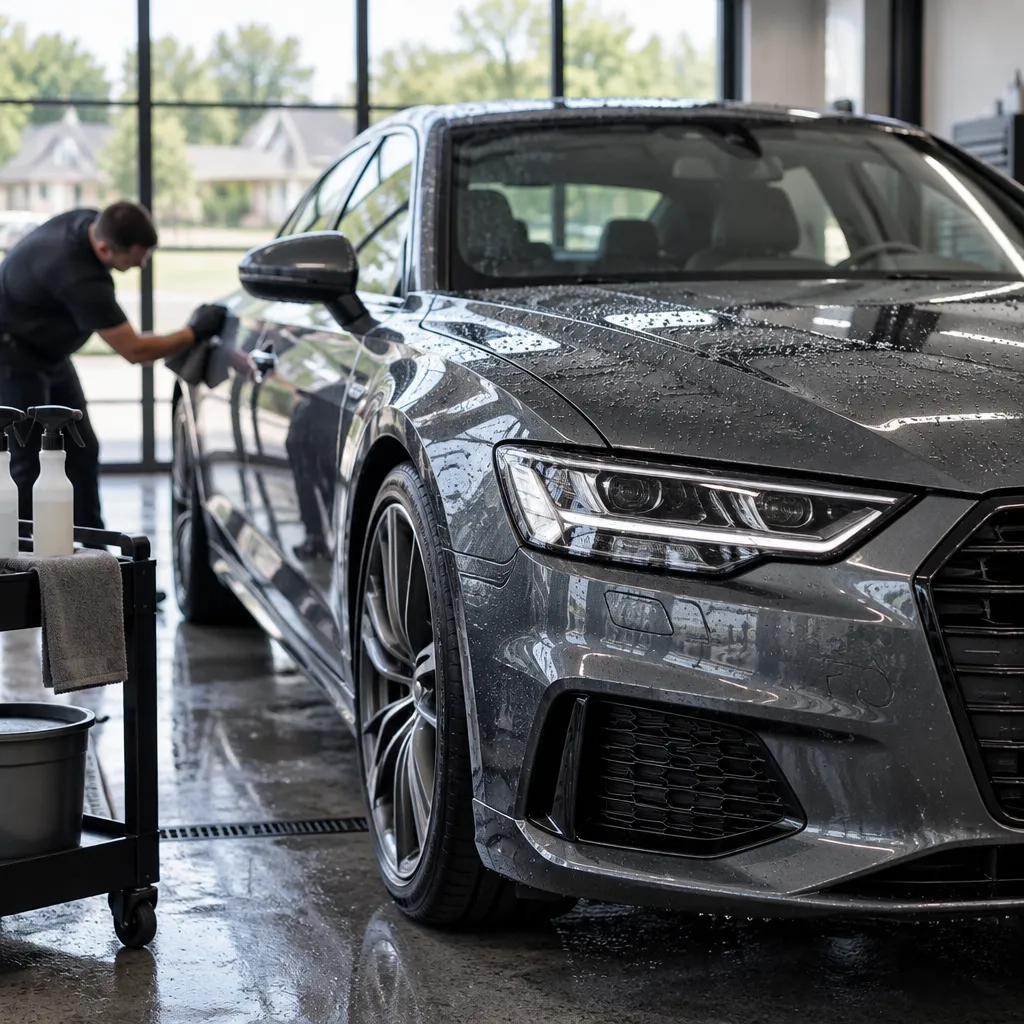
October is usually too early for a full protection service, because the car keeps collecting fall debris for weeks after you clean it. Tree sap, pollen residue and the last of the road grime from warm months settle onto fresh paint. The result is a coating or sealant that starts its job on top of contamination.
Why October Is Often Too Early
The goal is to do the deep work once the leaves are mostly down and the car can sit clean through the coldest weeks. Waiting until that point means the protection you apply has a real chance to last. Starting in October often means a second visit before the snow arrives.
Timing the wash matters as much as timing the protection. A car washed too early will pick up fresh debris within days, so we prefer to schedule the full service once the trees are bare.
Why Waiting for the First Snow Costs You
Most drivers book a detail after the first slushy commute, which is the worst possible time. Salt is already in the seams and the lower panels, and any protection you apply over a salt film is only as good as the bond underneath. Mid-November keeps you ahead of that curve without rushing the job into a cold garage at the first frost.
Cold weather also affects the work itself. Many protective products list a minimum application temperature on the label, and a December appointment leaves less room for a stretch of mild days. Booking in mid-November keeps the schedule flexible if the forecast turns early.
What Road Salt Does Before the First Snow
Road salt does not wait for snowfall to start working. Brine sprayed ahead of a storm, and the salt that stays on pavement during thaw cycles, can reach the lower body of your car within a few weeks. The damage is quiet, and it usually shows up in spring as dull paint or bubbling near the rocker panels.
Once salt, slush and road grime begin building up, keeping those contaminants off the paint and out of the vehicle's hard-to-reach areas becomes much more difficult.
Kyle Kamas, a detailer with 11 years in the industry, quoted in Quick Lane's winter exterior guide
Salt Gets Into the Wheel Wells and Rocker Panels
The wheel wells, the inside edges of the doors and the rocker panels are where salt collects and stays wet. These areas are hard to rinse thoroughly with a standard drive-through wash, which is why they often look worst in March. Getting them clean before protection goes on is one of the most useful steps you can take.
Look at the door jambs and the trunk opening too. Salt slush works into these gaps and sits there long after the visible paint looks fine.
Tar and Fall Debris Make Things Worse
Recently paved roads and construction zones leave tar that can bond to clear coat. If you drive through fresh asphalt in the fall, the tar often sits on the lower panels right where salt will land later. Removing it before winter prevents the spots from becoming a permanent stain under a layer of grime.
Tree sap works the same way. It hardens over time and can etch the finish if left through a cold, wet season. Treat both as part of the pre-winter job, not an afterthought.
The Pre-Winter Exterior Checklist
A good pre-winter exterior service follows a fixed order. Wash first, inspect second, decontaminate third, and only then apply protection. Skipping steps in that sequence is how owners end up sealing dirt into the paint.
Wash Thoroughly Before Any Product
Start with a full rinse to remove loose grit before a mitt touches the paint. Small particles dragged across the finish act like sandpaper and leave fine scratches that show up in low light. Pay extra attention to the lower doors, rocker panels, bumpers, wheel wells, door jambs and the trunk opening.
Wash the wheels separately and with their own tools. Brake dust and road grime on the wheels are a common source of contamination that gets transferred to the paint when wheel tools are shared.
Pro tip: Do a rinse-only pass on the lower panels before the full wash. It pulls off the heaviest grit so the mitt does not drag it across the finish.
Inspect Chips, Scratches and Weatherstripping
After the wash, walk around the car in good light. Rock chips and scratches are easier to see on a clean surface, and this is the moment to note them. Look for exposed metal, cracked plastic and weatherstripping that is peeling or deteriorating.
Address those issues before winter. Moisture, salt and slush work into gaps and seams quickly, and a small chip that is easy to touch up in November can become a rust spot by February.
Remove Tar Before You Protect
Tar removal should happen while the car is clean and dry. Apply a tar remover made for automotive paint to the affected areas, focusing on the lower doors, rocker panels and behind the wheels. Wipe the residue with a clean microfiber cloth and avoid heavy scrubbing, which can mar the finish.
Wash the treated areas again to remove any product residue, then follow the manufacturer's directions for dwell time. Protection goes on only after the surface is completely clean.
Ceramic Coating Timing and Warranty
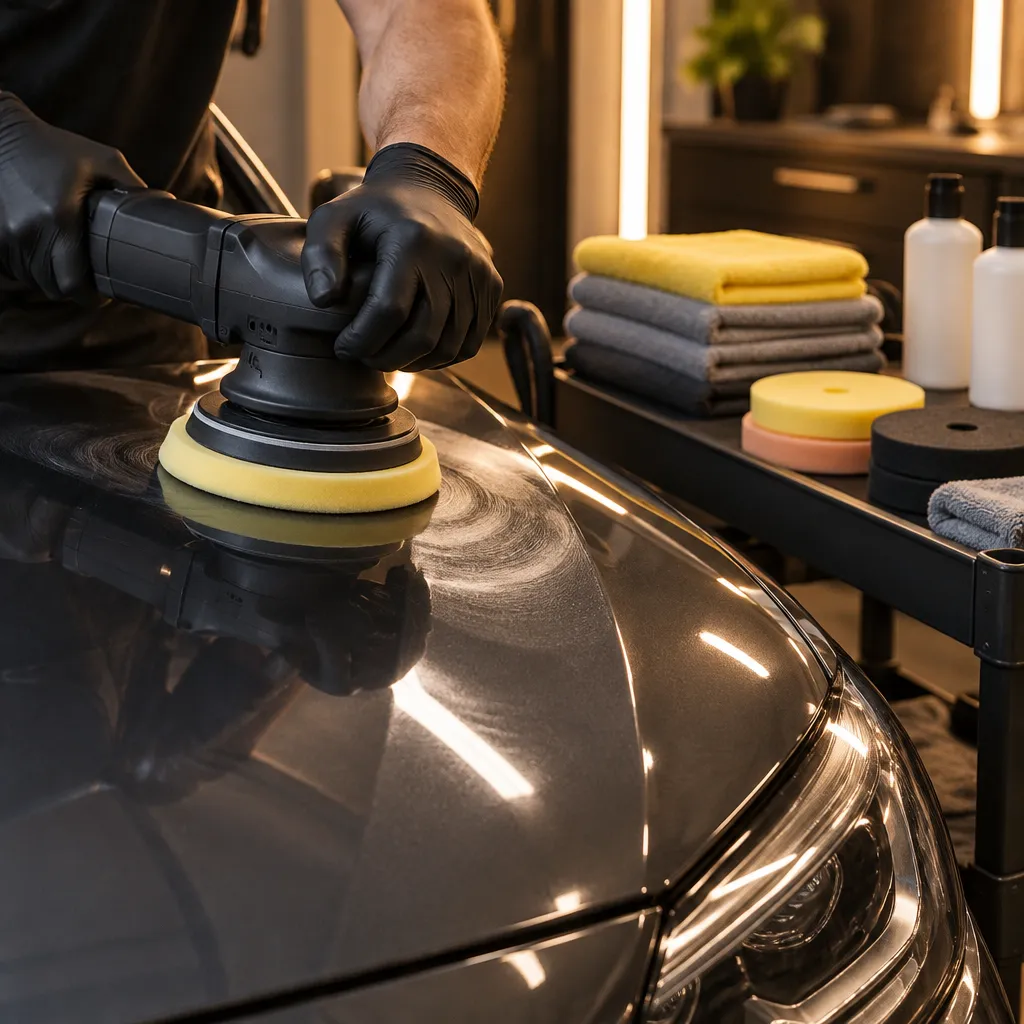
A ceramic coating is only as good as the surface beneath it. Our nano-ceramic SiO2 coatings bond to clear coat, so any contamination, polishing haze or leftover oil will limit how well the coating adheres. That is why the November window suits coatings so well: the car is clean, the leaves are down, and there is time to decontaminate and polish before the coating goes on.
Why Coatings Need a Decontaminated Surface
Decontamination removes bonded contamination that a wash cannot touch, such as iron particles and tar. Skipping this step means the coating locks in whatever was left on the paint. We treat decontamination as a required step, not an optional add-on for coatings.
Multi-stage machine polishing usually comes next when the paint has swirls or light oxidation. Polishing removes the defects that would otherwise be sealed under the coating and remain visible for years.
What to Ask About Warranty Before You Book
Our ceramic coatings carry warranties in the 5 to 8 year range, but warranty terms depend on the coating and on how the car is maintained. Ask for the written terms before you book, and ask what maintenance the warranty requires. A coating that is not washed correctly can lose its performance faster than the warranty suggests.
Winter maintenance is where many coatings are tested. Washing off salt regularly, using pH-neutral soap and avoiding harsh automatic brushes will keep the coating performing through the season.
Interior Care Before the Heater Runs
Winter does not stop at the paint. Wet shoes, slush and road salt move into the cabin on every trip, and the interior feels it long before the exterior shows damage. A pre-winter interior service is the easiest way to keep the cabin from becoming a mess by February.
Salt Lines on Carpet and Floor Mats
Salt tracks leave white lines on carpet and floor mats that are hard to remove once they dry. Pull the mats, extract the carpet and check the seams under the seats for moisture. Ask for the floor pans to be cleaned as well, since trapped slush can cause odors and staining.
If you use all-weather mats, they still need to be removed and cleaned on a schedule. Salt can sit under a mat and stay wet for days.
Leather, Vinyl and Door Seals
Leather and vinyl trim dry out quickly in a heated cabin, and winter air makes that worse. A gentle cleaner followed by a conditioner that suits the material keeps the surfaces supple. Avoid heavy shine products on steering wheels and shifters, which can leave slippery residue.
Door seals and window channels need attention too. Clean them and condition the rubber so it does not stiffen and tear when the temperature drops.
Booking Your Glendale Heights Detail
If you live in Glendale Heights, the timing works on your side. Mid-November gives you room to schedule the work before the first hard freeze, and the drive to a detail appointment is far easier than hunting for a dry window in December. We also serve Carol Stream, Bloomingdale and Wheaton, so owners across the western suburbs can plan around the same calendar.
Why the Schedule Works in Your Favor
The weeks around Veterans Day are a practical time to book. The fall rush has eased, the car is dirty enough to need the full process, and there is still time to correct any issues before the cold arrives. Booking early also gives you options if the weather shifts.
Plan the appointment as a full working block rather than a quick stop. Multi-stage polishing and coating work take longer than a basic wash, and rushing them defeats the purpose.
What to Bring and Tell Us When You Book
Tell us about any chips, odors, stains or areas where you have noticed rust starting. Mention whether the car sees daily highway miles, sits in a garage or is used mainly for short trips. Those details change how we set up the protection.
Remove personal items and valuables before drop-off. Note any warning lights or known mechanical issues that could affect the work. Clear information at booking saves time and keeps the result on track.
Comparing Pre-Winter Protection Options
Not every car needs the same level of protection. The right choice depends on how much salt the car sees, how long you want protection to last and how much maintenance you are willing to do yourself. Here is how the most common options compare.

Sealant or Coating: Which Fits Your Car
A paint sealant is a reasonable choice for a garaged weekend car that sees little salt. It is easier to apply at home, but it needs reapplication more often and depends heavily on prep. A nano-ceramic coating suits a daily driver that faces repeated salt exposure and wants easier washing through the season.
When Polishing Comes First
If the paint has swirls, light oxidation or chips in the clear coat, protection will simply seal those defects in place. Polishing first makes the finish look better and gives the protection a clean surface to bond to. This step is the difference between a coating that looks sharp in spring and one that only looks good in the shop.
| Approach | Best For | Trade-offs |
|---|---|---|
| Hand wash and spray sealant at home | Garaged cars and owners who want a quick top-up between professional details | Needs reapplication more often, and results depend heavily on how well the paint was prepped |
| Multi-stage machine polish with paint sealant | Cars with visible swirls, oxidation or light defects in the clear coat | Takes longer to complete, and the sealant layer still needs regular maintenance through winter |
| Professional nano-ceramic SiO2 coating | Daily drivers facing repeated salt and owners who want easier washing through the season | Higher upfront cost, and it needs a fully decontaminated and polished surface to perform well |
Frequently Asked Questions
When is the best time for pre-winter car detailing in Illinois?
Mid-November is usually the best window. The leaves are mostly down, the car can stay clean through the coldest stretch, and there is still time to apply protection before the first hard freeze.
Is a ceramic coating worth it for a daily driver in the Chicago suburbs?
For most daily drivers, yes, as long as the surface is decontaminated and polished first. Daily miles and winter salt exposure are exactly the conditions where a coating earns its cost.
Can I skip a pre-winter detail if my car is garaged?
A garaged car still benefits from a pre-winter wash and inspection, since road grime and tar come in on the tires and lower panels. Protection may be less urgent, but the inspection often finds issues worth fixing before spring.
How long does a pre-winter detail take?
Basic washing and interior cleaning take less time, but polishing and coating work usually requires a full working day. Ask when booking, so you can plan around the appointment.
What should I do before dropping my car off for a detail?
Remove personal items, note any chips or problem areas you have seen, and tell the team how the car is used. Those details help set up the right level of protection and avoid surprises at pickup.
Tell us what your pre-winter routine looks like, and whether salt has already left marks on your car from last season.
We would love your feedback and any insights you would share with others. What perspective would you add?
References
- Guide to checking vehicle exterior condition before winter, covering washing, damage inspection and tar removal
- Ten service department tips for preparing a vehicle for winter weather
- Chicago drivers discussing winter car preparation in a community thread