Ask a room of detailers about satin ceramic coating and you will hear strong opinions, and most of the regret stories come from owners who picked a finish based on a photo rather than on how they actually drive. A satin finish cuts the mirror-like shine that gloss owners expect, and that change touches everything from how paint looks in direct sun to how it handles Illinois road salt in January. If you are weighing a satin ceramic coating in Illinois against a traditional gloss, the right answer depends on your paint, your parking, and how much maintenance you will realistically keep up. At Hersheys Detailing in Glendale Heights, we walk every client through those three factors before we touch the car.
Table of Contents
- Quick Takeaways
- How Gloss and Satin Finishes Actually Differ
- Who Should Choose a Satin Finish
- Who Should Stay With Gloss
- Daily Care Differences Between Finishes
- Side-by-Side Comparison of Gloss and Satin Coatings
- Illinois Winters, Road Salt, and Finish Choice
- Choosing the Right Finish for Your Vehicle
- Frequently Asked Questions
- References
Quick Takeaways
| Key Insight | Explanation |
|---|---|
| Satin changes reflection, not the need for protection | A satin ceramic coating still adds a protective layer. The difference is that it reduces mirror-like shine, so the finish looks softer under sun and shade. |
| Gloss shows more defects | Gloss reveals swirl marks, water spots, and fine scratches more clearly. Satin hides light defects better, which helps daily drivers who cannot wash every few days. |
| Confirm the product is labeled for satin | A gloss-enhancing coating applied to satin or matte paint can leave shiny streaks that do not wash out. Ask for the product spec before you book. |
| Test a hidden spot first | Apply the product to a small, hidden area such as a lower door jamb, then check it in daylight and in shade over several days before committing the whole vehicle. |
| Match the finish to your wash routine | Satin rewards careful hand washing with clean microfiber and gentle soap. Brush-based automatic washes are harder on satin and can leave dull, uneven patches over time. |
| Plan around Illinois winters | Road salt, slush, and grime build up from late fall through early spring. Either finish needs regular rinsing during that stretch, and satin needs it done carefully to avoid dull spots. |
How Gloss and Satin Finishes Actually Differ
The difference between gloss and satin comes down to how the surface reflects light. A gloss coating produces a smooth, reflective surface that makes paint look deep and wet, with sharp highlights along body lines. A satin finish scatters more light, so reflections spread out and the color reads softer and more even.
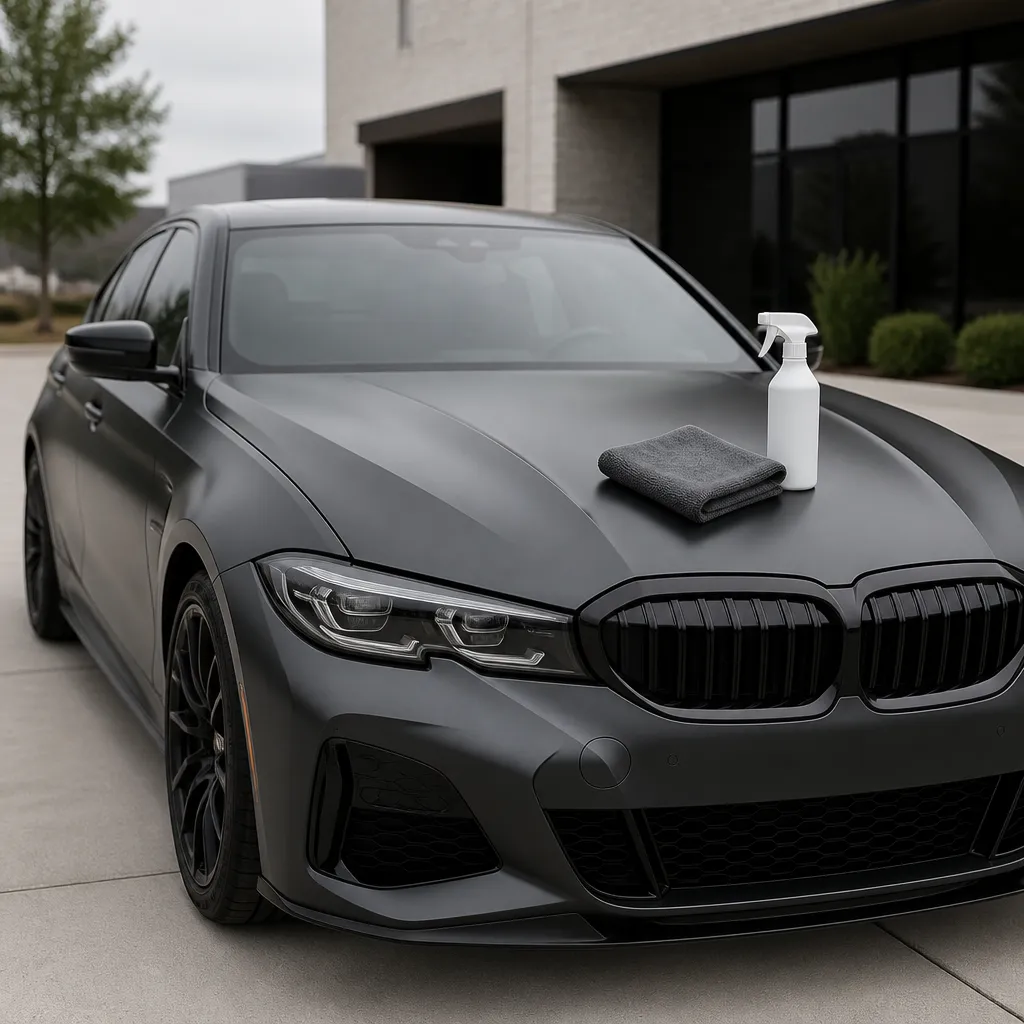
Satin is not the same as matte. Matte paint has almost no sheen at all, while satin sits between matte and gloss with a low luster that shows in direct sun. Owners who love the look of flat paint often end up disappointed with a true matte finish, which is why satin is the middle path many luxury owners ask about.
How light behaves on each finish
On a gloss coating, reflections are mirror-like, which is why a freshly polished car looks almost wet under showroom lights. On satin, the same light scatters, so the shine looks more like satin fabric than glass. Neither look is better in the abstract, but the lighting in your garage, the color of your paint, and how often the car sits in direct sun will decide which one you enjoy.
In practice, gloss looks best on dark colors and on paint that has been fully corrected through multi-stage machine polishing. Satin tends to suit grays, bronzes, and deep blues, where the softer reflection reads as a deliberate design choice rather than a flat or unfinished surface.
Why satin hides some defects better
A comparison of matte, satin, and gloss protective films makes a point that applies to coatings as well: satin hides minor swirl marks, water spots, and light dust better than gloss. That is a real advantage for a daily driver who cannot wash every few days. Gloss, by contrast, makes every imperfection easier to see because the surface reflects a clean, sharp image.
The finish you choose is a daily-use decision, not a showroom decision. The coating that photographs best is rarely the one that still looks right after a winter of salt and automatic washes.
Who Should Choose a Satin Finish
Satin makes the most sense for owners who want a quieter, more understated look on a vehicle that already draws attention. Many of our luxury clients drive cars with strong body lines and rich paint, and they want the coating to protect the paint without turning the car into a mirror. A satin ceramic coating in Illinois gives that low-key character while still delivering the protection ceramic coatings are known for.
Owners who want a low-key look
If you own a car that is meant to look elegant rather than flashy, satin lets the paint speak through shape and color. Sunlight does not produce the same hard glare on the hood, and the car looks composed at a valet stand or in a parking garage downtown. For clients who spent money on paint correction, satin shows the color well while keeping the finish understated.
Drivers who accept a different wash routine
Satin rewards careful washing. A two-bucket hand wash with a pH-neutral soap and clean microfiber tends to keep a satin surface even, while aggressive drying or dirty towels can leave marks that catch the light. If you are willing to hand wash or use a gentle touchless process, satin will look consistent for years. If you run through a brush tunnel every week, think harder before choosing it.
Who Should Stay With Gloss
Gloss is the right choice for owners who want depth, reflection, and a finish that looks freshly detailed for longer. It also suits anyone who has invested in paint correction and wants the coating to show the clarity of that work. Gloss amplifies color and makes a well-corrected surface look wet and dimensional.
Owners who want depth and reflection
Gloss is the finish most people picture when they think of a show car. The reflections are sharp, the color looks rich, and the car draws the eye from across a parking lot. For luxury owners who like the glow of a fresh detail, gloss delivers that result more directly than any satin option.
Paint that has been corrected to the bone
A gloss coating only looks as good as the paint underneath it. If the clear coat still carries holograms or deep swirls, gloss will reveal them clearly, which is why our multi-stage machine polishing comes before any coating. Once the paint is corrected, gloss rewards that work with a finish that looks clean and deliberate.
Pro tip: Before you pick gloss, have the paint inspected under strong, direct light. If you can see swirls from several feet away, plan on correction first, because a gloss coating will not hide what is underneath it.
Daily Care Differences Between Finishes
Daily care is where the two finishes diverge most in real life. Both need regular washing, but small mistakes that are forgiving on gloss can show up quickly on satin. Understanding those differences before you commit saves frustration later.
Washing habits that protect satin
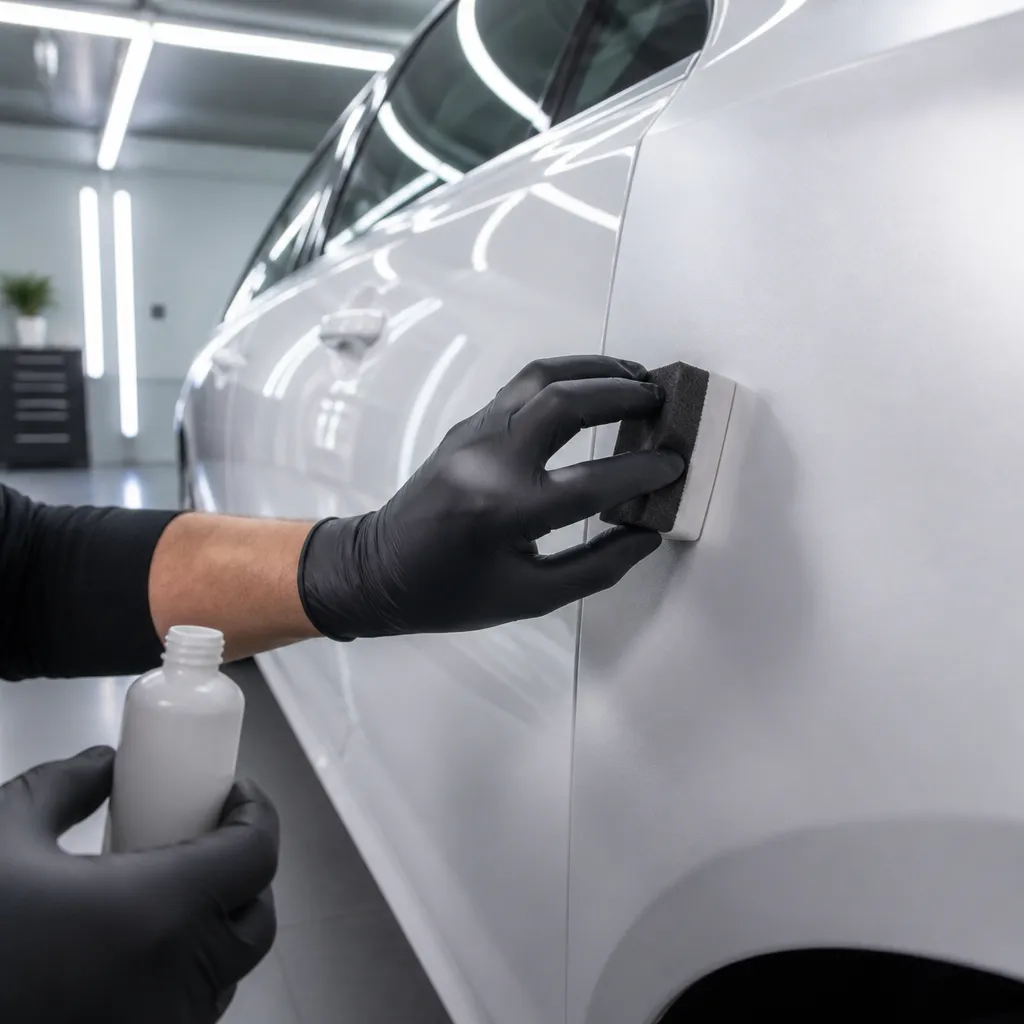
On satin, the goal is to avoid anything that polishes or burnishes the surface unevenly. Rinse off grit before touching the paint, wash with a pH-neutral soap, and dry with a clean, soft towel or blower rather than dragging a dirty towel across the panel. Clean technique matters more than the brand on the bottle.
Products that are safe and products to avoid
Not every maintenance product suits a satin finish. Heavy gloss boosters, sprays marketed for shine, and some wax-based toppers can change the look of satin, sometimes creating shiny streaks. A quick patch test on a hidden panel tells you more than a label does.
A ceramic coating test published by Car and Driver makes the same point: many coatings work on matte or satin paint, but a product may subtly change the appearance, so testing a small hidden area first is the practical step. A wrap-focused guide adds a stronger warning, noting that a traditional gloss-enhancing coating can permanently change how a matte wrap looks, leaving uneven shiny streaks.
Pro tip: Keep a dedicated set of microfiber towels for satin paint, separate from anything used on wheels or door jambs. Cross-contamination is one of the easiest ways to leave blotchy patches on a satin finish.
Side-by-Side Comparison of Gloss and Satin Coatings
The table below compares the two finishes across the factors that matter most to owners in the Chicago suburbs. Read it as a set of trade-offs rather than a scorecard, because the right finish depends on how you use the car.
| Factor | High-Gloss Ceramic Coating | Satin Ceramic Coating |
|---|---|---|
| Light reflection | Sharp, mirror-like reflections with deep color | Diffused, soft reflections with a low luster |
| Visibility of swirls and water spots | More visible, so paint must be well maintained | Hides minor swirls, water spots, and light dust better |
| Wash technique tolerance | Shows wash marks clearly, so technique still matters | Stays even with careful hand washing, but dull patches show if towels or brushes are harsh |
| Best fit | Owners who want show-car depth and have corrected paint | Owners who want an understated look and a low-key daily driver |
| Testing before application | Test on a hidden area to confirm color and clarity | Test on a hidden area, because gloss-enhancing products can change the satin look |
What the table does not show
Price and warranty are where many owners stop comparing. Our nano-ceramic SiO2 coatings carry warranties in the 5 to 8 year range, but the finish you choose changes both appearance and maintenance tolerance. Compare the warranty terms for each finish in writing rather than assuming they match.
Illinois Winters, Road Salt, and Finish Choice
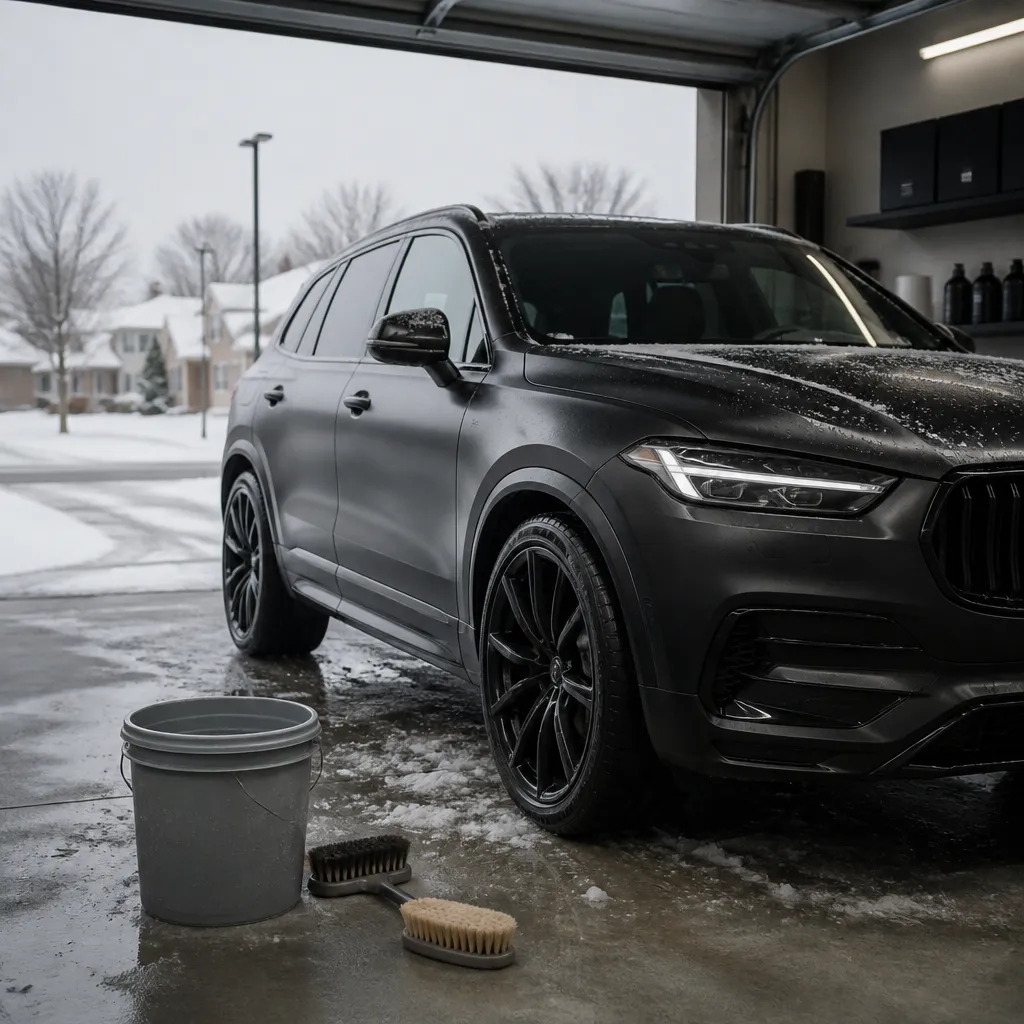
Illinois winters are hard on paint. From late fall through early spring, road salt, brine, and slush cling to lower panels and wheel wells, and a neglected car can look dull within days. The finish you choose affects how that grime shows and how much effort it takes to remove it.
Road salt and slush from late fall through early spring
Gloss tends to show salt film as a hazy veil that breaks up the reflection, so drivers notice it quickly. Satin can soften that look, but salt residue left to dry can etch dull patches that are harder to lift. Either way, rinse the lower panels after salt events and do not let road grime sit for days.
In practice, the problem we see most often with clients in Glendale Heights, Carol Stream, Bloomingdale, and Wheaton is a daily driver that runs salted roads all week and then sits outside. The finish looks fine after one wash, then uneven after a month of neglect. A rinse schedule matters more than the finish label.
Garage parking versus driveway parking
A garaged car avoids much of the sun, rain, and salt that wear on paint, which makes either finish easier to live with. A driveway car faces uneven weather and drips from nearby trees, and that is where satin's better tolerance of light marks helps most. If your car lives outside, satin is the more forgiving daily choice, provided you commit to careful washing.
Choosing the Right Finish for Your Vehicle
Once you know how each finish behaves, the decision becomes practical. Start with your paint color, your parking, your wash routine, and the condition of the paint today. Those four answers will point you toward gloss or satin far more reliably than any showroom comparison.
A decision checklist for luxury owners
Ask yourself whether you want the car to stand out in reflection or blend into its surroundings. Ask whether the paint has been corrected, and whether you will wash by hand or through a tunnel. If your answers point to a quiet look, hand washing, and outdoor parking, satin is the stronger choice. If they point to depth, corrected paint, and a garage, gloss will serve you better.
Changing your mind later
Switching finishes after application is not a simple swap. Removing an existing coating takes time and adds cost, so it is worth testing before the whole car is done. That is the reason we recommend a small test area, even for owners who feel certain about their choice.
Pro tip: Confirm in writing what the warranty covers, what maintenance it requires, and what would void it. Coverage can differ with the product and the prep work, so do not assume the terms are identical for both finishes.
Frequently Asked Questions
Is satin ceramic coating the same as matte?
No. Matte has almost no sheen, while satin has a low luster that sits between matte and gloss. A satin finish looks softer in sun and shade but still reflects some light.
Can I apply a gloss ceramic coating over satin paint?
Only if the product is designed for satin or matte surfaces. A gloss-enhancing coating can leave shiny, uneven streaks on a satin finish that do not wash out, so check the product spec and test a hidden area first.
Which finish is better for Illinois winters?
Neither finish removes the need for regular rinsing. Satin hides some light grime and water spotting better, but it requires careful washing so salt residue does not leave dull patches.
Does satin ceramic coating hide swirl marks?
Satin hides minor swirl marks, water spots, and light dust better than gloss. It does not replace paint correction, so heavy swirling should be addressed before coating.
Can a satin finish be maintained with an automatic car wash?
It can, but brush-based automatic washes are harder on satin than on gloss. A touchless or careful hand wash keeps the surface more even over time.
Should I choose the finish based on color?
Color matters, but it should not be the only factor. Use color as a tiebreaker after you have considered parking, wash habits, and the condition of the paint.
Tell us which finish you are leaning toward and how your car spends its week, whether that is a garage, a commute on salted roads, or weekend shows, and we will help you narrow the choice.
We would love your feedback and any insights you would share with others. What perspective would you add?