Your car tells you when it needs attention, but most owners do not listen until the damage is already deep. A cloudy finish, seats that smell like last month's commute, and paint that no longer reflects the sky above it are not cosmetic annoyances. They are signals that ordinary car washing has stopped being enough. If you own a luxury or high-end vehicle in Carol Stream, Bloomingdale, Wheaton, or anywhere else in the Chicago suburbs, recognizing the signs car needs detailing early is the difference between a paint correction job and a full repaint. This guide lays out every warning sign clearly, so you know exactly when to get car detailed by a professional.
Table of Contents
- Exterior Warning Signs You Cannot Ignore
- Interior Warning Signs That Mean Business
- Paint Protection Comparison: Wax vs. Sealant vs. Ceramic Coating
- Why Chicago Suburb Drivers Face Accelerated Damage
- How Often Should You Get Your Car Professionally Detailed
- What Professional Detailing Actually Fixes
- Frequently Asked Questions
- References
Exterior Warning Signs You Cannot Ignore
The exterior of your vehicle takes constant punishment from UV rays, road salt, bird droppings, tree sap, and industrial fallout. Some of the damage is invisible to a quick glance in a parking lot. Others are hard to miss once you know what to look for.
Dull, Chalky, or Flat Paint
When you park under direct sunlight and your paint looks flat rather than deep, that is oxidation at work. Paint oxidation happens when UV rays and environmental contaminants break down the clear coat over time. Running your hand across the surface may reveal a powdery residue, which is an early sign that the clear coat is breaking down. Left alone, it penetrates deeper layers and the only fix becomes a full repaint.
This is not a problem a $15 car wash resolves. A professional decontamination followed by multi-stage machine polishing is the correct response. At that stage, a nano-ceramic SiO2 coating applied afterward locks in the corrected finish so the cycle does not repeat itself within months.
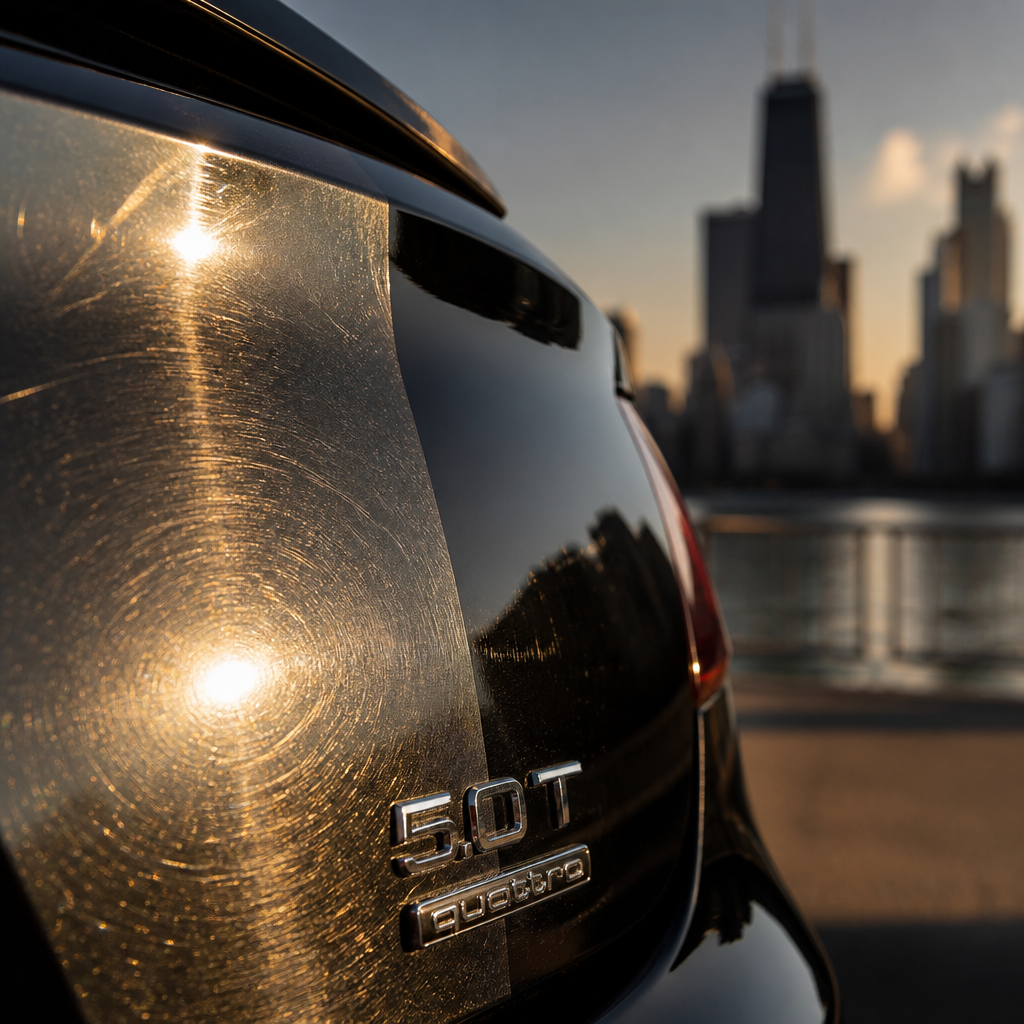
Swirl Marks and Spider-Web Scratches
Those circular, web-like scratches visible under direct light or in a garage with the sun at an angle are called swirl marks. They happen from improper washing techniques, automatic car washes, and low-quality towels. They are especially evident on darker-colored vehicles, where they make an otherwise clean car look worn down and neglected.
A common mistake is assuming a fresh coat of wax will hide swirl marks. Wax fills them temporarily, but the scratches are still in the clear coat. The only real fix is machine polishing by someone who knows how to work a dual-action or rotary polisher without generating heat damage. Amateur attempts at this almost always make the swirls worse.
Water Spots and Mineral Etching
Spots left by rain, sprinklers, or hard tap water look harmless at first. They dry down with mineral rings that cling to the paint surface. Over time, those minerals etch into the clear coat and resist any standard wash. Once mineral etching gets deep enough, machine polishing is the only removal method that actually works.
Pro tip: If you can feel water spots with your fingertip, they have already started to etch. Do not wait another season. The longer mineral deposits sit on your clear coat, the more material a detailer has to remove to fix them, and the more risk to the overall paint thickness.
Faded or Peeling Trim and Plastic
Exterior plastic trim on bumpers, mirror caps, and moldings turns chalky gray when UV protection breaks down. This is a fast-moving sign. Once trim goes gray, it attracts more contaminants, degrades faster, and starts to look like the vehicle has been neglected even if the paint underneath is fine. Professional detailing includes trim restoration and UV-protective coatings that stop the fade from advancing.
Contaminated Paint That Feels Rough
Run a clean fingertip over your washed paint in a plastic bag. If the surface feels rough or gritty, your paint has embedded contaminants: iron fallout from brake dust, industrial pollution, or tar spots. These cannot be removed by washing. They require a clay bar decontamination process. Skip this step before applying a coating or sealant, and you are sealing contamination into the paint permanently.
Interior Warning Signs That Mean Business
Interior damage compounds silently. By the time most owners notice, the stains are set, the odors are embedded in the foam beneath the fabric, and the leather has cracked past easy restoration.
Persistent Odors That Do Not Go Away
If you smell old food, spilled drinks, mildew, or pet odors that persist no matter what air freshener you use, the odor source is not on the surface. It is in the carpet padding, the seat foam, or the headliner. Professional interior detailing uses hot water extraction and steam cleaning to reach the odor-causing particles embedded in those materials. Spraying a deodorizer over the problem is not a fix. It is a temporary mask.
Pro tip: If your vehicle has experienced any water intrusion, whether from a window left open in rain or a sunroof drain clog, get the interior professionally inspected and treated. Mold growth in carpet padding is not visible on the surface and causes respiratory irritation over time.
Stains That Resist Home Cleaning
Coffee, mud, grease, and ink stains become much harder to remove the longer they sit. If you have already tried store-bought cleaners without success, the stain has bonded to the fabric or leather. Professional detailers use specialized pre-treatments and steam extraction that lift what consumer products leave behind. High-traffic areas like driver footwells and seat edges accumulate the worst compacted grime.
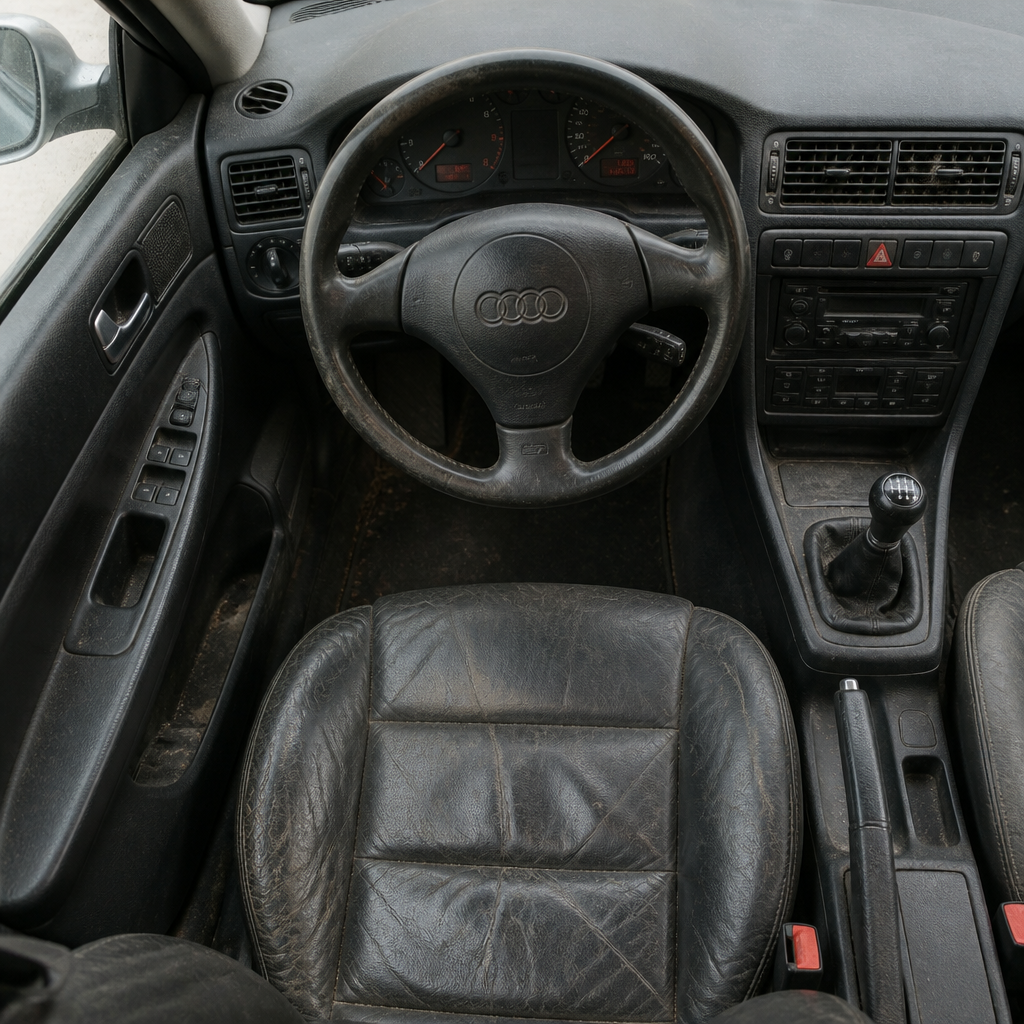
Cracked, Dry, or Discolored Leather
Leather that has not been conditioned regularly begins to dry out, crack, and fade. On luxury vehicles, this is not just an aesthetic problem. Cracked leather loses structural integrity, and replacement panels on high-end interiors are expensive. A professional detailing service includes leather cleaning, conditioning, and protection that restores suppleness and prevents further cracking. This is far cheaper than reupholstery.
Dust and Film on Dashboard and Screens
A thick film on interior screens and a dust buildup in vents and seams is a sign that the cabin air quality is degrading. Professional interior detailing removes dust, pollen, and allergens from hard-to-reach areas, improving the air you breathe during every drive. This matters especially for drivers who spend extended commute time in their vehicles.
A vehicle's interior surfaces accumulate more bacteria and particulate matter per square inch than most people realize. Regular professional cleaning is not cosmetic. It is a health maintenance decision.
Paint Protection Comparison: Wax vs. Sealant vs. Ceramic Coating
Understanding your current protection level tells you whether the warning signs you are seeing are the result of expired protection or no protection at all. Here is how the three main options stack up for vehicles in the Chicago suburbs, where road salt, temperature swings, and harsh winters are a reality.
| Protection Type | Durability in Chicago Conditions | Best For |
|---|---|---|
| Carnauba Wax | 4 to 8 weeks in winter salt exposure. Degrades quickly in freeze-thaw cycles and frequent washing. | Short-term gloss enhancement between professional services. Not a long-term protection strategy for Chicago drivers. |
| Paint Sealant | 3 to 6 months. More durable than wax, delivers a glassier finish. Better UV resistance but still requires regular reapplication. | Drivers who want synthetic durability without the upfront cost of a ceramic coating. A step up from wax for year-round protection. |
| Nano-Ceramic SiO2 Coating | 5 to 8 years with proper maintenance. Bonds chemically to the clear coat. Resists road salt, UV rays, chemical etching, and minor abrasion. | Luxury and high-end vehicle owners who want lasting protection, reduced maintenance frequency, and genuine paint preservation. The right choice for the Chicago climate. |
For Chicago suburb drivers dealing with winter road salt and the kind of temperature swings that go from -10°F in January to 95°F in July, ceramic coating's chemical resistance makes it the most rational long-term investment. The cost of reapplying wax or sealant every few months adds up quickly, and neither option provides the bond strength that a professional nano-ceramic coating delivers.
Why Chicago Suburb Drivers Face Accelerated Damage
Living and driving in Glendale Heights, Carol Stream, Bloomingdale, and Wheaton puts your vehicle through conditions that are genuinely harder on paint and interiors than most parts of the country. This is not a general claim. It is what the environment actually does to a vehicle here.
Road Salt and Iron Fallout
Illinois roads are heavily salted from November through March. Road salt accelerates oxidation, embeds into painted surfaces, and causes iron fallout from brake dust to bond more aggressively to the paint. If you are driving these roads without a properly maintained protective coating, the signs of damage appear significantly faster than the national average.
Freeze-Thaw Cycling and Paint Stress
The Chicago suburbs see dramatic temperature swings within a single day during shoulder seasons. Paint contracts and expands repeatedly, stressing any existing protection layer. Wax degrades to essentially nothing by February under these conditions. A professional detailing service that includes a true ceramic coating creates a bond that withstands this cycling without delaminating.
UV Intensity in Summer
The flip side of brutal winters is a long, intense Midwest summer with sustained UV exposure. Vehicles parked outdoors in Wheaton or Bloomingdale for even a few hours daily in July and August accumulate UV damage faster than owners expect. This UV load is what drives the oxidation and trim fading described above. Professional ceramic coatings with built-in UV blockers protect against this degradation between maintenance visits.
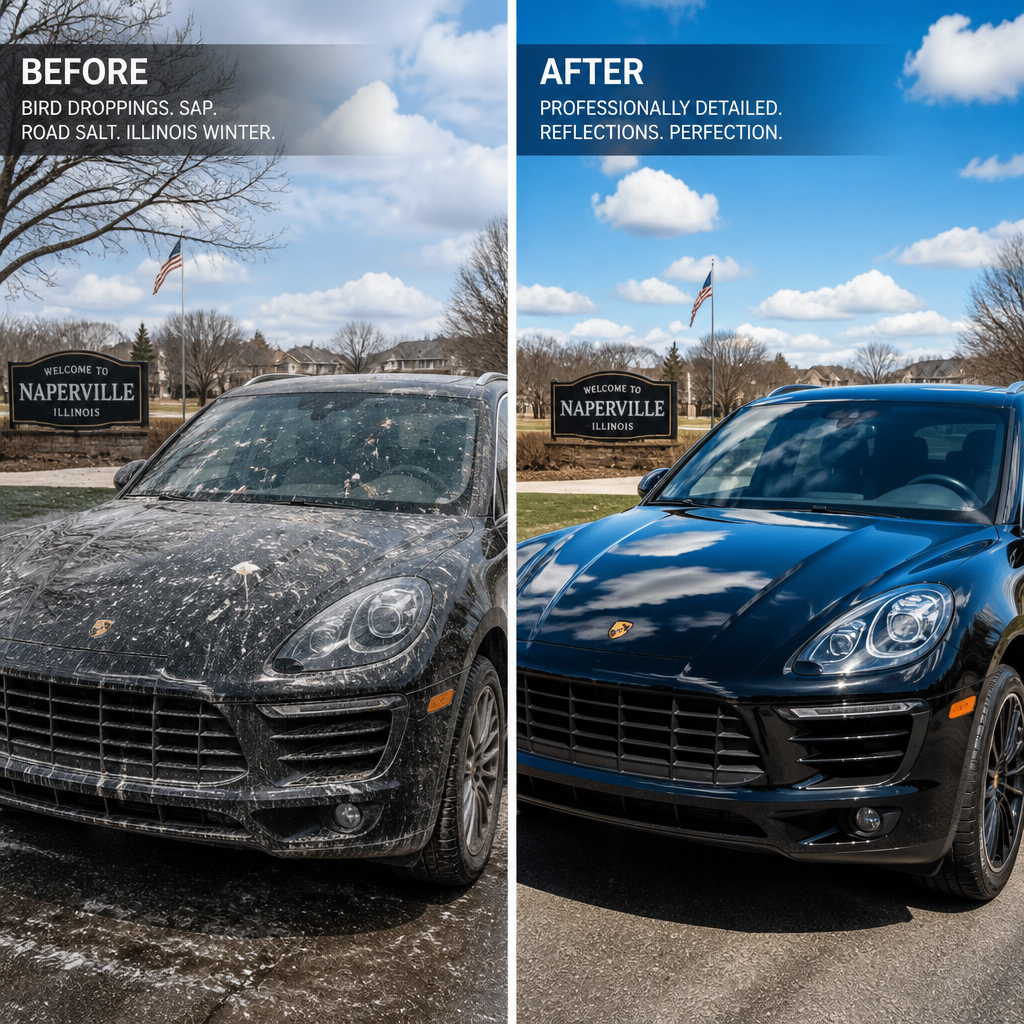
Pro tip: After a Chicago winter, spring is the single most important time to schedule a professional detailing. The salt and grime that accumulated on and in your vehicle all winter needs to be thoroughly decontaminated before it continues etching into surfaces. Waiting until summer means the damage is already months deeper.
How Often Should You Get Your Car Professionally Detailed
The general professional recommendation is to have your vehicle fully detailed two to three times per year, roughly every four to six months. For drivers in the Chicago suburbs who park outdoors, have children or pets in the vehicle, or drive high-mileage daily, quarterly professional attention is more appropriate.
Vehicles protected with a professional nano-ceramic coating can extend the interval between full exterior detail sessions, since the coating repels contaminants and makes routine washing far more effective. However, the interior, trim, and glass still benefit from periodic professional attention regardless of exterior coating status.
If your vehicle has not been professionally detailed in over a year, you should treat the next service as a full corrective session rather than a maintenance visit. That means decontamination, paint correction, and then protection. Skipping straight to a coating on neglected paint traps damage under the coating and defeats the purpose entirely.
What Professional Detailing Actually Fixes
There is a persistent misconception that professional detailing is just an expensive car wash. The reality is that it addresses damage that a car wash not only fails to fix but in many cases actively worsens. Automatic car washes are one of the primary causes of swirl marks, for example.
Multi-Stage Machine Polishing
This is the core of exterior paint correction. A trained detailer uses a combination of compounds and polishes at different cut levels, applied with a machine polisher, to systematically remove clear coat damage. The number of stages depends on the severity of the damage. Light swirls may need a single-stage polish. Heavy oxidation or deep scratches may require a more aggressive compound stage followed by refinement stages.
The result is not a vehicle that looks clean. It is a vehicle where the paint depth, gloss, and reflection are restored to a condition that may be better than when the car left the dealership.
Decontamination Processes
Before any polishing or protection work begins, a proper professional detail includes a full decontamination sequence: a thorough wash, an iron remover application to chemically dissolve embedded metallic particles, and a clay bar treatment to physically remove bonded surface contaminants. This step is non-negotiable. Any detailer who skips it and goes straight to polishing or coating is cutting corners in a way that produces short-lived, inferior results.
Professional Ceramic Coating Application
A nano-ceramic SiO2 coating applied by a trained professional is not the same product you find in spray bottles at auto parts stores. Professional-grade ceramic coatings bond chemically to the clear coat, creating a hard, sacrificial layer that protects against UV, chemical etching, water spots, and minor abrasion. When applied correctly after proper paint correction, they can carry warranties of five to eight years.
The application process requires a controlled environment, proper surface preparation, and precise layering technique. Errors in application create high spots, streaking, or uneven coverage that require significant effort to correct. This is one area where the skill of the applicator matters more than the brand of the product.
Interior Deep Cleaning and Fabric Extraction
Professional interior detailing goes beyond vacuuming. Hot water extraction pulls embedded dirt, oils, and allergens out of carpet fibers and seat fabric. Steam cleaning sanitizes surfaces without leaving chemical residues. Leather conditioning restores suppleness and applies a protective layer. These processes collectively restore the interior to a condition that routine home cleaning cannot approximate.
For luxury vehicles where the interior materials represent a significant portion of the vehicle's value and ownership experience, this level of care is not optional. It is maintenance.
Frequently Asked Questions
What are the most obvious signs car needs detailing right now?
The most immediate signs are dull or chalky paint that no longer reflects cleanly, swirl marks visible under direct light, water spots you cannot remove with washing, persistent interior odors, and stains on upholstery that home cleaning has not removed. Any one of these indicates that standard washing has stopped being sufficient and a professional service is overdue.
When should I get car detailed if I live in the Chicago suburbs?
Spring is the highest priority for Chicago suburb drivers. After a winter of road salt exposure, your vehicle needs a full decontamination before that salt continues to damage painted surfaces. After that, a late summer or early fall session prepares the vehicle for the next winter. If you drive daily and park outdoors, quarterly professional detailing is the right frequency.
Can professional detailing remove deep scratches?
Machine polishing removes scratches that are within the clear coat layer. If a scratch catches your fingernail, it has gone through the clear coat into the base coat or primer, and polishing alone will not fix it. That level of damage requires paint touch-up or respray before a protective coating is applied. A professional detailer will tell you clearly which scratches are correctable by polishing and which are not.
Is a ceramic coating worth it after professional detailing?
For Chicago suburb drivers, yes. Road salt, UV exposure, and temperature extremes break down conventional wax protection within weeks. A professionally applied nano-ceramic SiO2 coating bonds to the clear coat and provides protection for five to eight years with proper maintenance. The long-term cost per year of protection is significantly lower than repeated wax or sealant applications, and the level of protection is genuinely better.
How do I know if my paint needs correction before a coating?
If your paint has swirl marks, water spot etching, oxidation, or surface scratches visible under direct light, it needs correction before a coating is applied. Applying a ceramic coating over uncorrected paint seals those defects in permanently under a hard layer. A reputable detailer will inspect the paint under a paint depth gauge and a high-intensity inspection light before recommending whether correction is needed.
Does professional interior detailing actually improve air quality in the car?
Yes, meaningfully. Professional interior detailing removes dust, pollen, pet dander, mold spores, and bacteria embedded in fabric, carpet, and HVAC-adjacent surfaces. For drivers who spend significant time in their vehicles, or who have children or allergy sufferers as regular passengers, the difference in cabin air quality after a thorough professional interior detail is noticeable.
How long does a full professional detail take on a luxury vehicle?
A full detail that includes decontamination, multi-stage paint correction, and ceramic coating application on a luxury or high-end vehicle typically takes one to three days depending on the vehicle's current condition and size. This is not a same-day in-and-out process when done properly. Any shop promising a complete paint correction and ceramic coating in under four hours is almost certainly skipping critical steps.
Have you noticed any of these signs on your own vehicle? Share what finally convinced you to book a professional detail, or ask a question about your specific situation in the comments below.
References
- Chemical Guys guide to identifying and removing paint oxidation from clear coats
- Professional auto spa breakdown of the top signs a vehicle needs paint correction
- Hand car wash resource on when interior detailing is needed to address embedded dirt and odors
- Chicago-area auto care comparison of ceramic coating versus wax for year-round paint protection
- Ceramic Pro guidance on how often a vehicle should be professionally detailed based on usage and climate