Most car owners hear "ceramic coating" and picture a shiny finish. What they rarely understand is the chemistry making that shine last five to eight years instead of five to eight weeks. A SiO2 ceramic coating bonds at the molecular level to your vehicle's clear coat, creating a semi-permanent glass-like layer that wax simply cannot replicate. If you own a luxury or high-end vehicle in the Chicago suburbs and you are still relying on carnauba wax or a spray sealant, you are leaving your paint unprotected against road salt, UV oxidation, and Illinois winters that will degrade your clear coat faster than you think.
Table of Contents
- Quick Takeaways
- What Is SiO2 and Why Does the Chemistry Matter
- How Nano Ceramic Bonding Works on Clear Coat
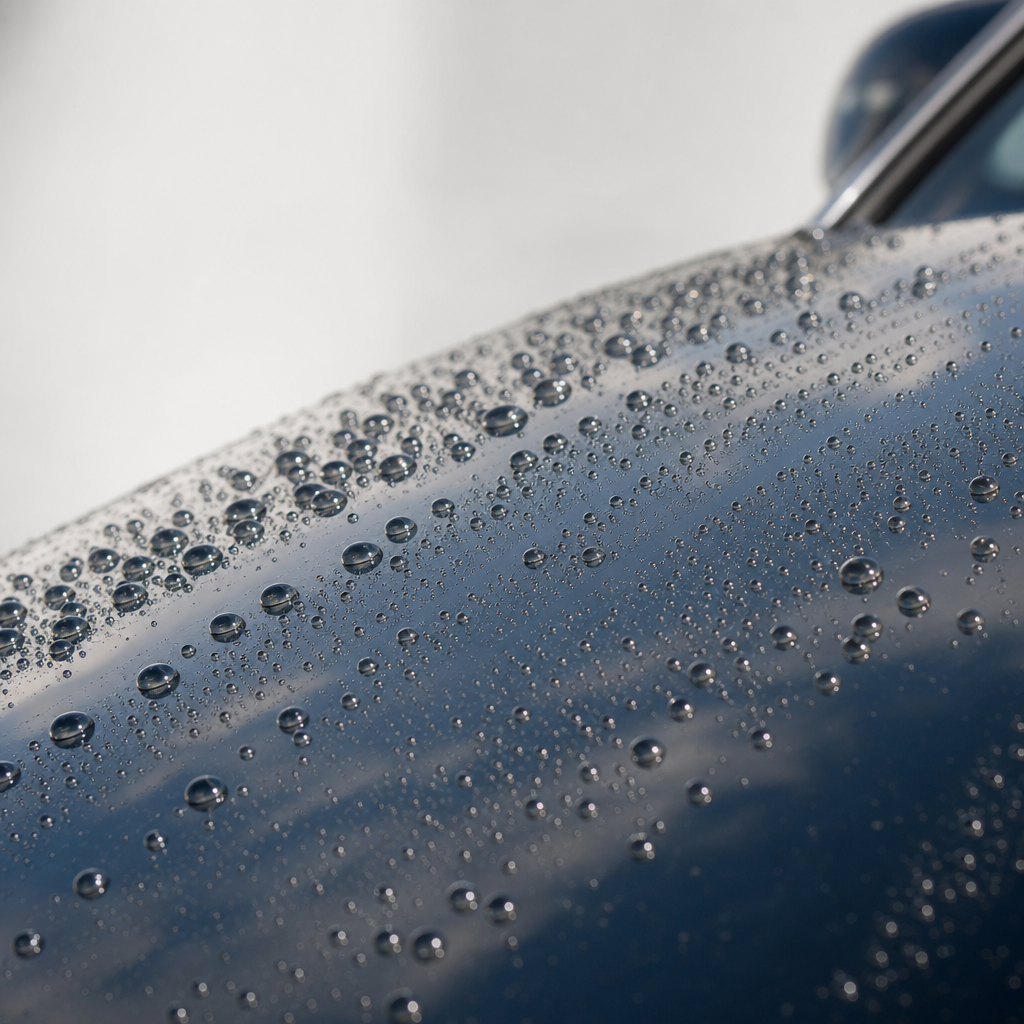
- The Hydrophobic Effect Explained: More Than Just Water Beading
- SiO2 Ceramic Coating vs. Wax and Paint Sealants
- Why Illinois Road and Weather Conditions Make SiO2 Essential
- The Application Process: What Separates a Professional Job from a DIY Kit
- Warranty and Longevity: What 5-8 Years Actually Means
- Frequently Asked Questions
- References
Quick Takeaways
Key Insight | Explanation |
|---|---|
SiO2 bonds covalently to clear coat | Unlike wax which sits on top of paint, SiO2 forms a chemical bond with the clear coat surface, making removal extremely difficult without abrasive polishing. |
Hardness is measured on the pencil scale (9H) | Professional-grade nano ceramic coatings reach 9H hardness, meaning they resist light scratches, swirl marks, and marring that would visibly damage unprotected paint. |
Hydrophobicity reduces contamination adhesion | A water contact angle above 100 degrees prevents road grime, bird droppings, and industrial fallout from bonding tightly to the surface, making decontamination far easier. |
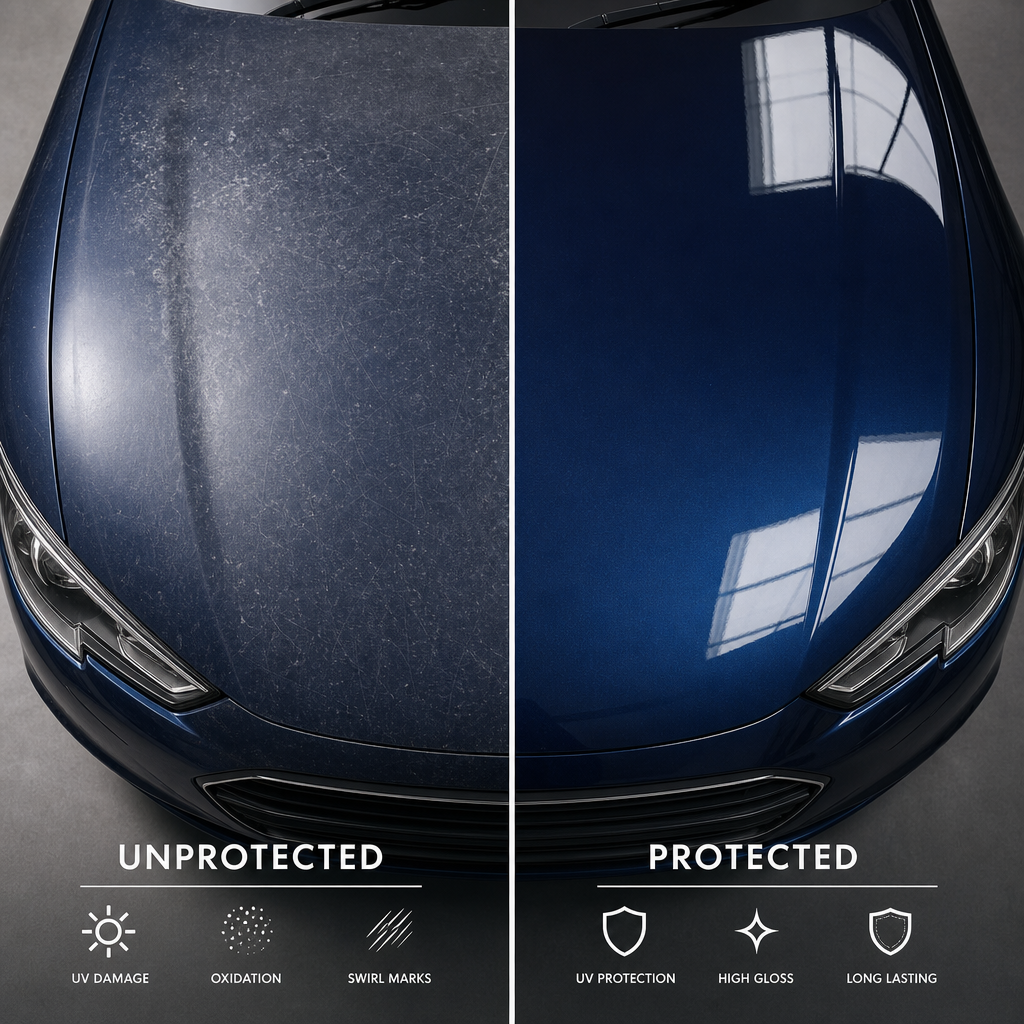
Surface prep determines coating performance | If paint correction is skipped before coating, defects like swirl marks and oxidation are sealed permanently under the ceramic layer. There is no fixing this without stripping the coating. |
Illinois road salt accelerates clear coat failure | The combination of road salt, freeze-thaw cycles, and UV exposure in the Chicago suburbs degrades unprotected clear coat measurably faster than in milder climates. |
Not all SiO2 concentrations are equal | Consumer spray coatings may contain 5-10% SiO2. Professional coatings applied by certified installers like Hersheys Detailing use formulations with significantly higher concentrations for real durability. |
Maintenance programs extend coating lifespan | A ceramic coating is not maintenance-free. Annual SiO2 booster applications and pH-neutral wash routines preserve the coating's hydrophobic angle and UV resistance over the full warranty period. |
What Is SiO2 and Why Does the Chemistry Matter
Silicon dioxide, written as SiO2, is the same compound that forms quartz and glass. In automotive coatings, it is suspended in a carrier solvent as nanoparticles, typically 20 to 150 nanometers in diameter. When the solvent evaporates after application, those particles cross-link with each other and with the hydroxyl groups present on your vehicle's clear coat surface. The result is a three-dimensional silica network sitting directly on your paint.
This matters because the bond is not mechanical the way wax is. Wax fills microscopic surface valleys and eventually melts, washes away, or oxidizes. SiO2 forms a covalent bond with the substrate. That bond does not melt in heat or dissolve in rain. It takes abrasion or chemical stripping to break it, which is precisely why properly applied professional ceramic coatings carry multi-year warranties that no wax product can honestly offer.
The practical consequence is straightforward. A carnauba wax applied in April will likely be gone by July in Illinois heat. A professional-grade SiO2 ceramic coating applied by Hersheys Detailing will still be performing in year five or six, assuming the correct maintenance routine is followed.
How Nano Ceramic Bonding Works on Clear Coat
The term "nano ceramic coating Illinois" gets used loosely in marketing. Here is what it actually describes at the chemical level. Modern automotive clear coats are typically urethane-based polymers. Their surface contains free hydroxyl (OH) groups. SiO2 nanoparticles in the coating formulation carry silanol groups (Si-OH) that react with those surface hydroxyl groups through a condensation reaction, releasing water and forming Si-O-C or Si-O-Si bonds.
This reaction happens during the cure window, which is typically 24 to 72 hours at ambient temperature for professional formulations. Temperature and humidity during this window directly affect bond density. Too cold and the reaction slows or stops. Too humid and moisture can interfere with proper cross-linking. This is one concrete reason why professional installation in a controlled environment matters more than most customers realize.
Why Nanoparticle Size Affects Performance
Smaller nanoparticles penetrate surface irregularities more completely, producing a more uniform coating thickness. Professional-grade formulations engineered for certified installers use tightly controlled particle size distributions. Consumer kit products vary widely in particle size and suspension quality, which is why their real-world durability falls short of claimed performance, often failing within 12 months where a professional application holds for 60 or more.
Coating Thickness and Build
A single layer of professional SiO2 ceramic coating is approximately 1 to 5 microns thick. For reference, a human hair is roughly 70 microns. Multiple layers increase thickness and scratch resistance incrementally, but the primary performance gains come from the density and uniformity of the first layer. At Hersheys Detailing, the multi-stage process ensures the paint surface is optimally prepared before any coating chemistry touches the clear coat, because a dense bond on a properly prepared surface outperforms a thick coating on contaminated paint every single time.
"The mechanical properties of SiO2-based coatings, including hardness and scratch resistance, are strongly dependent on the degree of cross-linking achieved during the condensation cure process." - Journal of Sol-Gel Science and Technology, peer-reviewed research on silica thin film coatings
The Hydrophobic Effect Explained: More Than Just Water Beading
Water beading is the visual cue most people associate with a hydrophobic car coating Chicago installers apply. But the beading behavior is a symptom of something more important: a high water contact angle. Professional ceramic coatings achieve contact angles between 100 and 115 degrees. At that angle, water droplets have minimal surface area contact with your paint and roll off carrying contaminants with them.
The practical benefit in the Chicago suburbs is significant. Road grime, tree sap, bird dropping acids, and industrial fallout from highway traffic all have a harder time adhering to a high-contact-angle surface. They sit on top rather than bonding to the clear coat. This reduces the chemical etching these substances cause when left on unprotected paint, particularly in summer heat when bird dropping acidity accelerates damage within hours.
Hydrophobicity vs. Oleophobicity
A complete SiO2 coating formulation also includes oleophobic properties, meaning resistance to oil-based contaminants. Fingerprints, exhaust residue, and fuel splash all involve oil-based compounds. Premium ceramic coatings address both water and oil repellency. Cheaper consumer coatings often sacrifice oleophobicity to reduce cost, which is why fingerprints and brake dust remain visible problems on cars with discount ceramic treatments.
Pro tip: After a professional ceramic coating, test hydrophobic performance by pouring water slowly across the hood. If beading and sheeting are inconsistent, the surface prep or application had coverage gaps. A correctly applied coating from a qualified installer shows uniform behavior across the entire panel.
SiO2 Ceramic Coating vs. Wax and Paint Sealants
The coating protection market offers three main categories: carnauba wax, synthetic polymer sealants, and SiO2 ceramic coatings. Each operates on a fundamentally different mechanism and produces different real-world results. The comparison below uses professional-grade products in each category, not consumer-grade entry points.
Protection Type | Bond Mechanism | Durability and Performance |
|---|---|---|
Carnauba Wax (e.g., Collinite 845) | Mechanical adhesion only. Sits on the paint surface with no chemical bond. Fills surface pores temporarily. | 2 to 4 months durability. Melts above 82 degrees Celsius. No hardness benefit. Washes away with alkaline soaps or automatic car washes. |
Synthetic Polymer Sealant (e.g., Meguiar's Ultimate Liquid Wax) | Polymer chains adhere via electrostatic attraction to the paint surface. Stronger than wax but still not a covalent bond. | 6 to 12 months durability under ideal conditions. Better UV resistance than wax. No significant hardness contribution. Degrades progressively with wash cycles. |
Professional SiO2 Ceramic Coating (e.g., Gyeon Quartz, IGL Kenzo) | Covalent Si-O bond to the clear coat's hydroxyl groups. Cross-linked silica network forms a semi-permanent glass layer. | 5 to 8 years with proper maintenance. 9H hardness rating. Sustained hydrophobicity above 100-degree contact angle. UV absorption built into formulation chemistry. |
The data is not ambiguous. For a vehicle owner in Carol Stream or Wheaton who parks outside, commutes on salted roads from October through March, and wants paint in show condition without reapplication every season, a professional SiO2 ceramic coating is the only category that delivers on that expectation. Wax is not in the same conversation for long-term protection.
Why Illinois Road and Weather Conditions Make SiO2 Essential
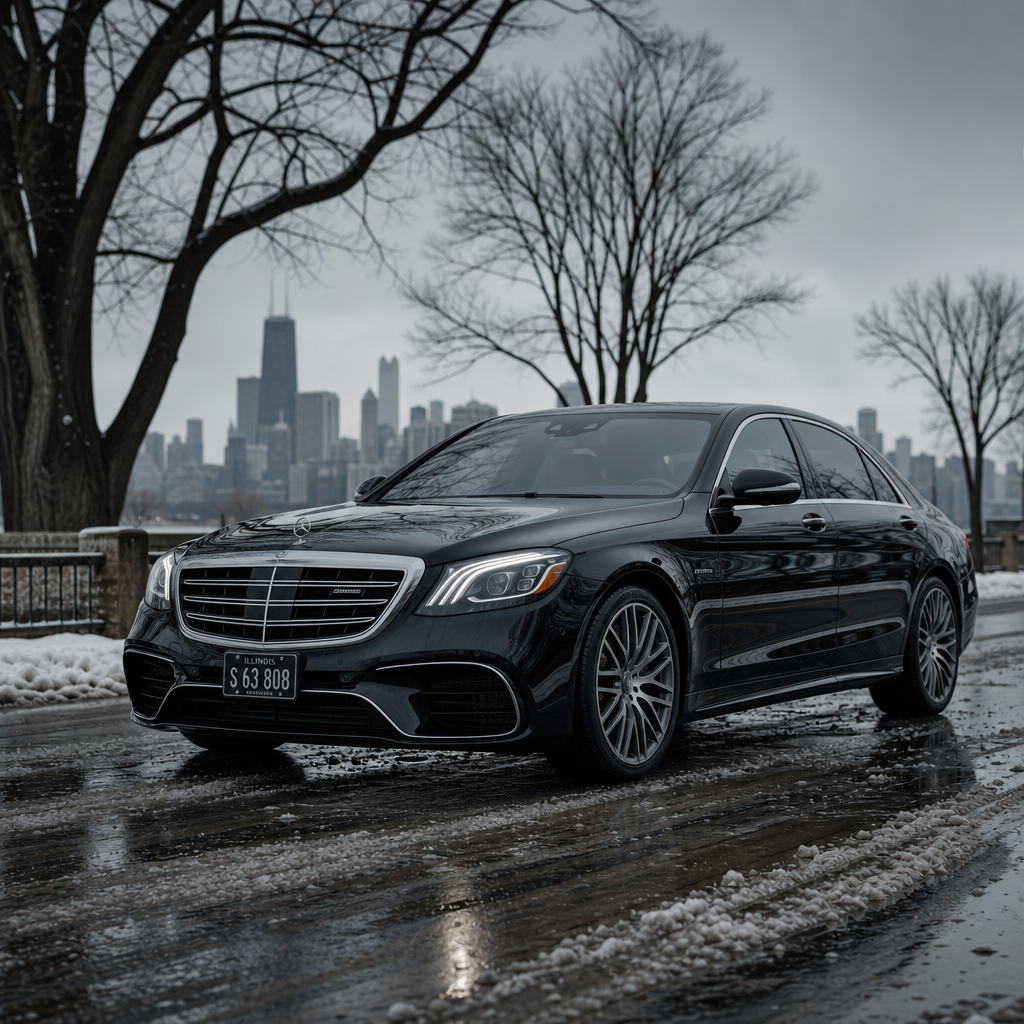
Illinois applies millions of tons of road salt every winter across the state highway system. The Chicago Department of Transportation regularly pre-treats roads with liquid chloride solutions before storms. For vehicles in Glendale Heights, Bloomingdale, and surrounding suburbs, chloride exposure from November through March is relentless. Sodium chloride and calcium chloride are both hygroscopic and corrosive. On unprotected clear coat, they accelerate micro-crack formation and promote oxidation beneath the surface.
UV radiation is the second major threat. Illinois receives meaningful UV index levels from April through September. Unprotected clear coat absorbs UV energy that degrades the polyurethane polymer chains over time, producing the chalky oxidized appearance visible on vehicles five to eight years old that were never properly protected. Professional SiO2 formulations include UV absorbers in the coating chemistry, blocking that radiation before it reaches the clear coat underneath.
Freeze-Thaw Cycle Damage on Unprotected Paint
The repeated freeze-thaw cycles that characterize Illinois winters are particularly damaging to paint with existing micro-scratches or clear coat chips. Water enters those micro-defects, freezes, expands, and widens the damage. A correctly applied nano ceramic coating seals those surface irregularities before they become pathways for water infiltration. This is a protection benefit that almost no marketing material explains clearly, but it is one of the most tangible reasons high-end vehicle owners in this region choose ceramic over wax.
Pro tip: Before the first Illinois winter, schedule a full paint decontamination and ceramic coating installation. Applying the coating to contaminated or salt-damaged paint produces significantly weaker adhesion. The decontamination step, including clay bar and chemical iron remover treatment, is not optional. It is the difference between a coating that lasts eight years and one that begins delaminating in three.
The Application Process: What Separates a Professional Job from a DIY Kit
A common mistake is treating ceramic coating installation as comparable in complexity to applying wax. It is not. The professional application process at Hersheys Detailing involves multiple distinct phases before the coating chemistry ever contacts the paint.
Phase one is a full exterior decontamination wash, removing bonded contamination like iron particles from brake dust and embedded road fallout using dedicated chemical decontaminants. Phase two is machine polishing for paint correction, a multi-stage process using different pad and compound combinations to remove swirl marks, light scratches, water spots, and oxidation. Phase three is a panel wipe with an isopropyl alcohol solution to remove any polishing oils that would interfere with ceramic adhesion. Only then does the coating application begin.
Why DIY Ceramic Kits Consistently Underperform
Consumer ceramic kits skip the decontamination and paint correction steps because the average buyer does not own the equipment or have the training to perform them. The result is a ceramic coating bonding over contaminated, scratched paint. The coating itself may be chemically sound, but its real-world durability is compromised by the surface beneath it. In practice, DIY ceramic coatings on unprepared paint fail within 12 to 24 months and often amplify the visibility of swirl marks by adding gloss over them.
Flash Time, Leveling, and High-Spot Removal
Professional formulations require precise flash time management. Flash time is the window between application and the leveling wipe. Too early and the coating smears rather than curing. Too late and high spots harden and require compounding to remove. In a professional setting with controlled temperature and humidity, an experienced installer reads the coating's visual transition accurately. In a garage on a Saturday morning with variable humidity and temperature, that precision is nearly impossible to replicate consistently.
Warranty and Longevity: What 5-8 Years Actually Means
Hersheys Detailing offers ceramic coatings with 5 to 8 year warranties. What does that mean mechanically? It means the SiO2 network, properly bonded and properly maintained, retains functional hydrophobicity, UV resistance, and hardness properties throughout that period. The coating does not disappear at year three and magically reappear at year five. It degrades gradually, and proper maintenance slows that degradation significantly.
The warranty claim is only valid with adherence to a maintenance protocol. This includes using pH-neutral car wash products, avoiding automatic brushed car washes that create swirl marks in the coating surface, and applying an annual SiO2 booster spray that replenishes the outermost layer. Hersheys Detailing's maintenance programs are designed specifically to extend coating performance across the full warranty period, not just the first year.
What Voids a Ceramic Coating Warranty
Using alkaline or acidic wash products strips the hydrophobic layer progressively. Automatic car washes with rotating brushes introduce swirl marks into the coating surface, reducing its optical clarity and hydrophobicity. Failing to address paint chips promptly allows corrosion to undercut the coating from below. None of these issues are covered under a standard warranty because they result from improper maintenance, not coating failure. Understanding this upfront saves significant frustration later.
The investment in a professional SiO2 ceramic coating on a luxury vehicle in the Chicago suburbs makes financial sense when the alternative is clear coat resprays at $1,500 to $3,000 per panel or full paint correction sessions every two to three years. The math favors ceramic, provided the application and maintenance are done correctly from the start.
Frequently Asked Questions
How is SiO2 different from polysilazane coatings?
Polysilazane coatings cure by reacting with atmospheric moisture to form a ceramic-like SiO2 structure in place. SiO2 coatings are applied as pre-formed nanoparticles in a carrier. Both produce a hard silica layer, but polysilazane coatings generally achieve greater hardness and thickness per layer. Professional detailers in Glendale Heights who use certified coating products often work with formulations that blend both chemistries for optimal performance.
Can a ceramic coating be applied over existing wax?
No. Wax residue prevents the SiO2 from bonding to the clear coat's hydroxyl groups. Any wax, silicone, or oil on the surface at the time of application will produce an inconsistent bond and coating failure within months. This is why the isopropyl alcohol panel wipe is a non-negotiable step in professional installation. Even trace amounts of panel spray or quick detailer left on the surface will cause high spots and adhesion failures.
Does a ceramic coating prevent rock chips and deep scratches?
No. A ceramic coating at 1 to 5 microns thick does not absorb the energy of a rock strike traveling at highway speed. It resists light scratching, swirl marks from washing, and environmental etching. For rock chip protection, paint protection film (PPF) applied to high-impact areas like the hood, fenders, and mirror caps is the appropriate solution. Many Hersheys Detailing clients combine PPF on impact zones with ceramic coating over the full vehicle for comprehensive coverage.
How long does the application process take at a professional detailer?
For a full single-stage paint correction followed by professional ceramic coating installation, expect one to three days at a shop like Hersheys Detailing. The timeline depends on vehicle size, paint condition, and the number of coating layers specified. Rushing the process to finish in a few hours is a red flag. Flash times, cure windows, and inspection lighting reviews between stages all require time to execute correctly.
Is maintenance really necessary or is that just an upsell?
Maintenance is genuinely necessary if the goal is durability through the full warranty period. The topmost layer of a ceramic coating is the most exposed and degrades from UV, wash abrasion, and chemical contact first. Annual SiO2 booster applications replenish this sacrificial layer and restore contact angles that may have dropped from 110 degrees toward 90 degrees over time. At 90 degrees the sheeting behavior changes meaningfully, and contamination adhesion increases. Skipping maintenance does not void the bond immediately, but it shortens the coating's effective life and reduces the protection it provides in year three through eight.
Does ceramic coating make washing easier?
Yes, measurably so. The reduced surface energy of a properly coated vehicle means bonded contamination like brake dust, road film, and pollen releases with a lower-pressure rinse than on uncoated paint. A simple foam cannon pre-rinse followed by a two-bucket wash method removes nearly all contaminants without scrubbing on a well-maintained ceramic coated surface. This reduces wash-induced swirl marks significantly over the coating's lifespan.
If you own a high-end vehicle in Glendale Heights, Carol Stream, Bloomingdale, or Wheaton and you have questions about the right ceramic coating specification for your paint's current condition, share your situation in the comments or contact Hersheys Detailing directly for an honest assessment of what your vehicle actually needs.