Your Ferrari, Porsche, or Corvette does not belong in the hands of a general-purpose car wash. Sports car detailing in Illinois is a different discipline entirely, and owners in the Chicago suburbs who have handed a six-figure exotic to an under-equipped shop know exactly what that mistake costs. Road salt from a brutal DuPage County winter, freeway gravel from I-355, and the constant humidity cycling between Lake Michigan seasons create conditions that actively punish unprotected paint. At Hershey's Detailing in Glendale Heights, every sports car that rolls in receives a protocol built specifically around exotic and performance vehicle finishes, not the same service dressed up with a fancier name.
Table of Contents
- Quick Takeaways
- Why Sports Cars Need Specialist Detailing
- The Chicago Suburb Environment and Your Paint
- Ferrari Detailing in the Chicago Suburbs
- Porsche Ceramic Coating in Glendale Heights
- Corvette Paint Correction Illinois: The C7 and C8 Problem
- The Full Sports Car Detailing Process at Hershey's Detailing
- Protection Options Compared: Wax vs. Sealant vs. Nano-Ceramic Coating
- Frequently Asked Questions
- References
Quick Takeaways
| Key Insight | Explanation |
|---|---|
| Sports car paint is softer and thinner than most owners expect | Ferrari and Porsche use water-based, factory-thin clearcoats that swirl easily under automated washes and improper hand-drying. One wrong wash can undo showroom gloss in a single pass. |
| Paint correction must come before any coating | Applying a ceramic coating over existing swirl marks seals the defects permanently. Multi-stage machine polishing must remove all imperfections first. |
| Illinois winters make ceramic coating non-optional for serious owners | Road salt is chemically corrosive to unprotected clearcoat. A professional nano-ceramic SiO2 coating creates a molecular barrier that resists salt, grime, and chemical etching. |
| Corvette C8 clear coat is notoriously soft | GM's water-based clear on C7 and C8 Corvettes scratches from even light contact. Decontamination and correction before protection are mandatory, not optional. |
| Porsche's GT-series cars carry enormous paint-related value | A GT3 or GT3 RS in original, unrepainted condition is worth measurably more. Professional ceramic coating protects that financial value alongside the aesthetic one. |
| A 5 to 8 year ceramic warranty is only valid with professional application | Consumer-grade coating kits void professional warranties. The nano-ceramic SiO2 coatings applied at Hershey's Detailing carry warranties ranging from 5 to 8 years. |
| Decontamination is a separate step, not part of a normal wash | Iron fallout from brake dust and rail contamination bonds to paint and must be chemically removed before polishing begins. Skipping it means polishing contaminants into the surface. |
Why Sports Cars Need Specialist Detailing
The most common mistake made with exotic and performance vehicles is treating them like a normal car that simply costs more. The paint chemistry on a current Ferrari, Porsche, or mid-engine Corvette behaves nothing like the clearcoat on a family crossover. Modern factory paint on high-end sports cars uses water-based formulations that are thinner and softer than older solvent-based systems, which means they respond differently to every polishing pad, compound, and application pressure.
Paint depth gauges are not optional on these vehicles. Before any machine polishing begins, a competent detailer reads the actual clearcoat thickness across multiple panels to understand how much material remains and how much can safely be removed. Skipping this step risks burning through the clear on raised edges or body lines, which on a Ferrari is not a cosmetic inconvenience. It is a five-figure repair.
The other factor that separates specialist detailing from general-purpose work is the correction methodology. A genuine multi-stage machine polishing process uses different pad and compound combinations for each stage, typically starting with a heavier cut to remove scratches and finishing with ultra-fine refinishing compounds to restore maximum gloss. This is the process Hershey's Detailing applies to every sports car, regardless of whether the vehicle is being prepped for a ceramic coating or simply refreshed for show season.
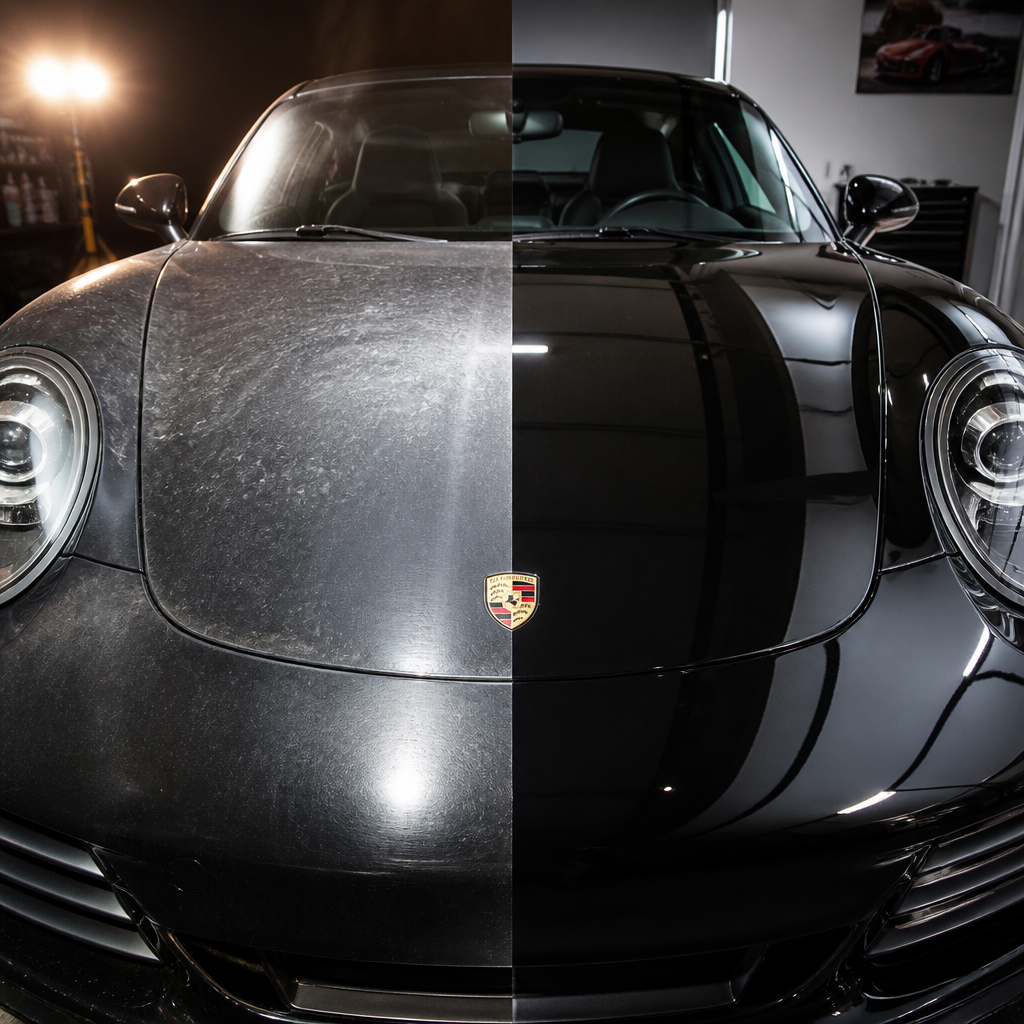
True paint correction uses machine polishers, a range of cutting and finishing compounds, and paint depth gauges to ensure precise material removal. Done correctly, the results are dramatic. Done incorrectly, it can thin your clear coat and cause permanent damage.
The Chicago Suburb Environment and Your Paint
Owners in Carol Stream, Bloomingdale, Wheaton, and Glendale Heights deal with one of the most demanding climates for automotive paint in the Midwest. Illinois winters bring road salt applications that begin in November and often continue into March. That salt does not simply wash off. It bonds with paint imperfections and microscopic pores in an unprotected clearcoat, and over time, it accelerates oxidation and chemical etching that dulls even the deepest factory finishes.
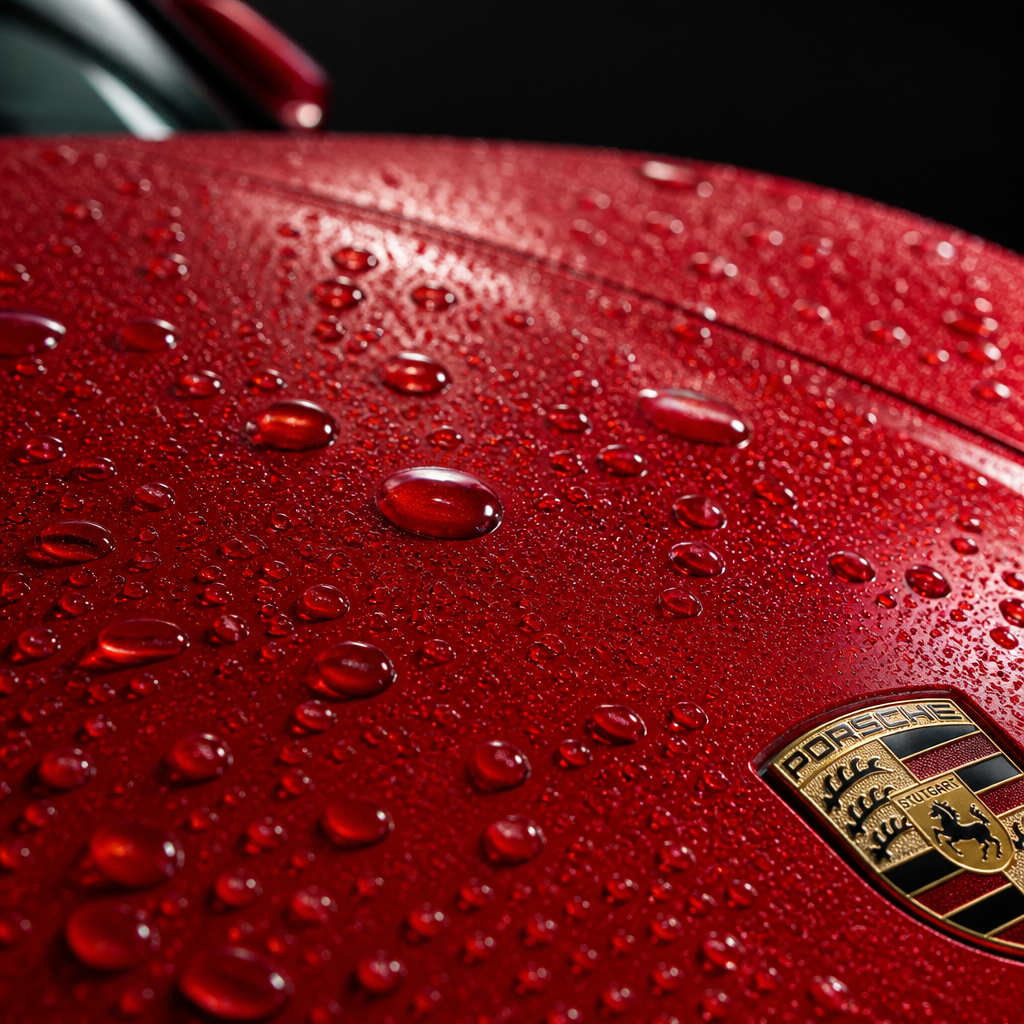
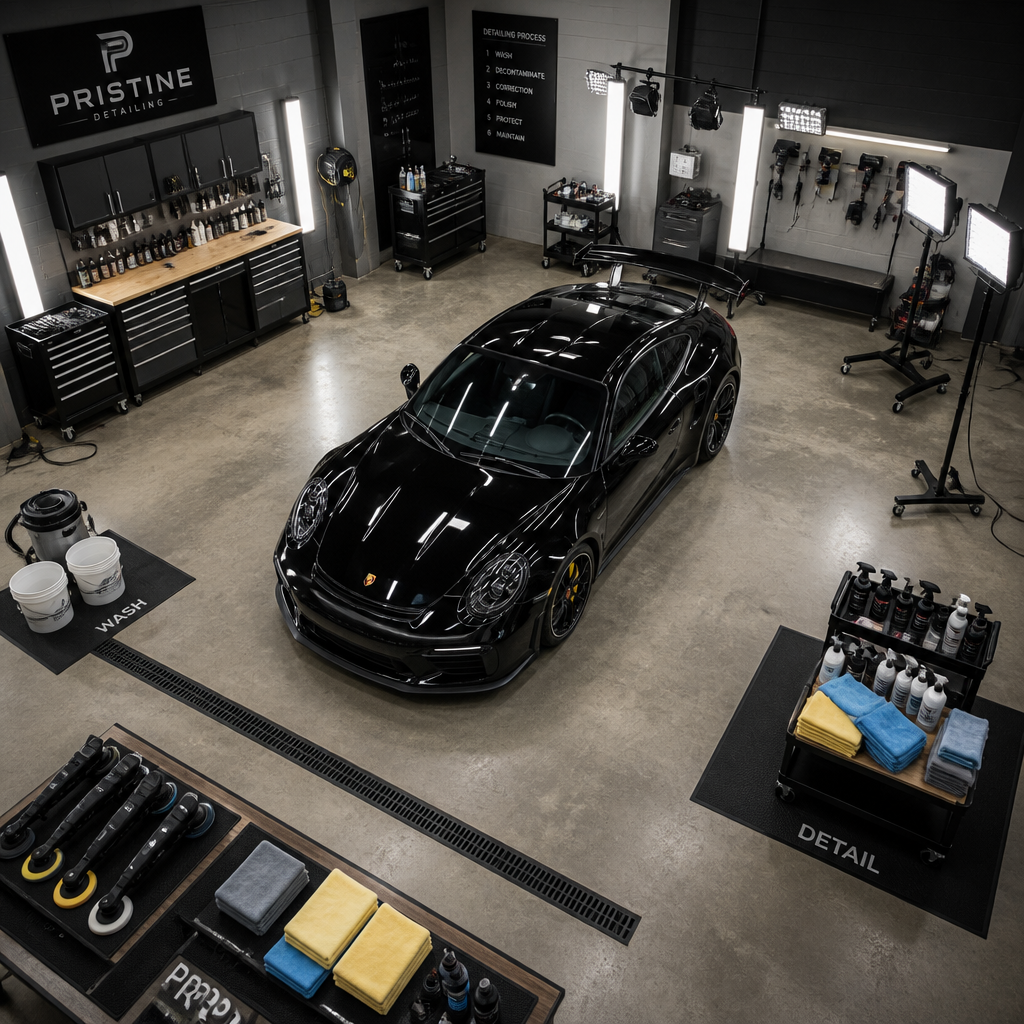
Spring and summer bring a different threat. Tree sap, bird droppings, and UV exposure are present throughout the warm season, and the Chicago area's humidity creates conditions where iron fallout from brake dust accumulates faster than it would in a drier climate. That iron fallout, combined with rail contamination from nearby freight corridors, chemically bonds to paint and must be removed with dedicated iron decontamination products before any polishing or coating work begins. A standard car wash does not touch it.
Pro tip: If you park your sports car outdoors during Illinois winters even occasionally, a professional nano-ceramic SiO2 coating is the single highest-return investment you can make in protecting the paint. The coating's chemical resistance specifically addresses road salt and de-icing agents, which are the most common sources of paint damage in the Chicago suburbs.
Ferrari Detailing in the Chicago Suburbs
Ferrari ownership in the Chicago suburbs is more common than the general public assumes. Glendale Heights sits within easy driving distance of Naperville, Wheaton, and Bloomingdale, communities with a substantial concentration of high-net-worth households and collectors. That means Ferraris from the F8 Tributo, Roma, and 488 generation, along with older classics, regularly need proper care from a detailer who understands the brand's specific paint behavior.
Understanding Ferrari's Factory Paint Systems
Ferrari has used different paint formulations across generations. Older models from the Dino era through the early 355 used solvent-based paints that behave differently under correction than the modern water-based systems used from the 360 generation forward. Both require care, but they respond to different compounds and pad selections. A detailer who applies the same correction approach to a 1990s 348 and a current SF90 Stradale will either under-correct one or damage the other.
For Ferrari detailing in the Chicago suburbs, the correct protocol starts with a thorough decontamination wash, followed by clay bar or chemical decontamination to remove bonded contamination, then a paint thickness reading across all panels, and only then the multi-stage correction process. Hershey's Detailing follows this sequence on every Ferrari that comes through, without exception. The final step is the application of a professional nano-ceramic SiO2 coating that bonds at the molecular level and delivers the depth and gloss Ferrari owners expect alongside real long-term protection.
Rosso Corsa and Dark Metallics: The Swirl Problem
Red Ferraris, especially Rosso Corsa, show swirl marks with relentless clarity under direct sunlight. Dark metallics are no different. Both colors demand the finest finishing compounds in the final polishing stage and the cleanest possible drying and application techniques throughout. A dedicated finishing polish on a dual-action machine, followed by a thorough panel wipe-down before ceramic application, is what separates a true Ferrari detail from a standard buff-and-wax job.
Porsche Ceramic Coating in Glendale Heights
Porsche owners represent one of the most engaged ownership communities in automotive detailing. GT3, GT4, and Cayman GT4 RS owners in particular understand that an unrepainted car in documented original paint condition commands a meaningful premium in the used market. That is not a small consideration when those cars carry sticker prices well above six figures and have strong resale demand. Porsche ceramic coating in Glendale Heights at Hershey's Detailing directly protects that value.
New Porsche Paint Protection: Get It Right From Delivery
The best time to coat a Porsche is before it accumulates any contamination or driving damage. A new GT3 RS or 911 Turbo S delivered from a dealership is not pristine in the detailing sense. It has transport film adhesive residue, minor wash swirls from PDI processes, and potentially light contamination from sitting on a lot. A proper new-car detail removes all of that before the ceramic coating goes on, so the factory finish is locked in at its best possible state rather than with dealer-introduced defects underneath it.
GT and Track-Day Porsches: Brake Dust and Track Contamination
Track-day drivers face a specific problem. High-performance brake pads used on Porsche GT cars produce significantly more iron fallout than street pads. After even a single track day at a nearby circuit, the wheel faces, lower rocker panels, and rear bumper will have collected a heavy iron deposit. Regular chemical decontamination as part of a maintenance program keeps this contamination from etching into coated or uncoated surfaces. Hershey's Detailing's maintenance programs are built to account for this, with scheduled decontamination intervals appropriate for track-driven vehicles.
Pro tip: If you bring your Porsche to a track day even twice a year, discuss a maintenance detailing schedule with your detailer at the time of the original ceramic coating application. The contamination from high-performance brake dust is aggressive enough to degrade an unprotected surface faster than road driving alone.
Corvette Paint Correction Illinois: The C7 and C8 Problem
The Corvette occupies a unique position in this conversation. It is an American sports car that delivers supercar-level performance, and its ownership community takes paint care seriously. But the C7 and C8 generations shipped from the factory with clearcoat that is soft by any standard, and owners who have attempted even careful hand polishing at home have discovered swirl marks appearing from minimal contact. This is not user error in most cases. It is a documented characteristic of the paint system GM chose for these generations.
Corvette paint correction in Illinois requires the kind of measured approach that only professional-grade dual-action and rotary machine polishers with proper pad selection can deliver. The objective is to level the clear coat enough to remove scratches and swirls without removing so much material that future correction options are eliminated. Hershey's Detailing uses paint depth gauges at every stage of correction on Corvettes, partly because of how little clearcoat these cars carry relative to their soft composition.
C8 Mid-Engine Corvette: Special Considerations
The C8 Corvette moved to a mid-engine layout starting with the 2020 model year, and that body redesign brought with it some new detailing considerations. The wider rear haunches and lower rear fascia collect more road debris and iron contamination than the front-engine C7 configuration did. Owners who push their C8s hard will see heavier contamination on the rear body panels after spirited driving. Chemical iron decontamination on these specific areas before each machine polishing session is not optional on a C8 that sees real use.
Beyond correction, a professional nano-ceramic SiO2 coating on a Corvette delivers something the factory clear does not: chemical resistance. Illinois road salt interacts directly with unprotected soft clearcoat, accelerating the micro-pitting and hazing that makes a Corvette look dull well before its time. Sealing the corrected surface with a coating rated for five to eight years of protection eliminates that risk for the long term.
The Full Sports Car Detailing Process at Hershey's Detailing
Hershey's Detailing serves Glendale Heights, Carol Stream, Bloomingdale, Wheaton, and the broader Chicago suburbs with a process built around no shortcuts. What follows is the actual sequence of steps applied to a sports car coming in for full paint correction and ceramic coating.
Step 1: Decontamination Wash
The vehicle is pre-rinsed and treated with a snow foam or dedicated pre-wash product to loosen surface contamination before any contact washing begins. Contact washing comes only after the loosened contamination has been rinsed away, reducing the risk of dragging debris across the paint. Iron decontamination spray is applied to dissolve bonded iron fallout, and a chemical clay alternative or traditional clay bar follows to remove remaining bonded contamination. The vehicle is dried with clean, high-quality microfiber towels using no dragging pressure.
Step 2: Paint Thickness and Condition Assessment
Every panel is measured with a paint depth gauge before machine work begins. The detailer notes problem areas, assesses the severity of scratches and swirl marks, and selects the appropriate correction approach for each zone. This assessment drives the entire polishing plan and prevents over-correction on thinner or previously repainted panels.
Step 3: Multi-Stage Machine Polishing
Hershey's Detailing's signature multi-stage machine polishing begins with a correction stage using a compound and pad combination matched to the vehicle's clearcoat. A second refinement stage removes any hazing left by the first, and a final finishing stage brings the corrected surface to maximum gloss. The entire process is done under dedicated lighting so that swirls and haze are visible and nothing is missed.
Step 4: Surface Preparation and Ceramic Coating Application
Before the nano-ceramic SiO2 coating goes on, each panel is wiped with a panel preparation solution to remove any polishing oils and ensure a clean bonding surface. The coating is then applied panel by panel, leveled, and left to cure in a controlled environment. The result is a hard, semi-permanent glass-like layer that bonds at the molecular level and carries a five to eight year warranty from Hershey's Detailing.
Protection Options Compared: Wax vs. Sealant vs. Nano-Ceramic Coating
Sports car owners are regularly sold on protection products that do not match the investment they are protecting. The table below gives an honest comparison of the three main options available to owners of Ferraris, Porsches, and Corvettes in Illinois.
| Protection Type | Best For | Durability and Key Limitations |
|---|---|---|
| Carnauba Wax | Show cars with minimal outdoor exposure, temporary seasonal protection | Lasts 4 to 8 weeks under normal use. Offers no meaningful chemical resistance to road salt or iron fallout. Requires reapplication multiple times per season. Provides a warm, natural gloss that some collectors prefer for concours events. |
| Paint Sealant (Polymer) | Daily driven sports cars seeking a budget-conscious layer above wax | Lasts roughly 3 to 6 months. Better UV resistance than wax. Still limited chemical resistance. Does not bond at the molecular level, so it sits on top of the clear and is removed by stronger chemicals. Inadequate on its own for Illinois winter conditions. |
| Professional Nano-Ceramic SiO2 Coating | Any sports car driven, stored, or exposed to Midwest seasonal conditions | Bonds at the molecular level, creating a semi-permanent glass-like barrier. Resists UV, bird droppings, road salt, chemical etching, and iron fallout. Provides genuine hydrophobic self-cleaning properties. Applied professionally and warranted for 5 to 8 years at Hershey's Detailing. |
The math is straightforward. Carnauba wax applied four times per year, including professional labor, costs more over a five-year period than a single ceramic coating application while delivering a fraction of the protection. For a Ferrari, Porsche, or Corvette owner in the Chicago suburbs, the nano-ceramic SiO2 coating is the only option that takes the vehicle's value and the regional climate equally seriously.
Frequently Asked Questions
How much does sports car detailing cost in the Chicago suburbs?
The cost varies significantly based on the service level. A thorough exterior detail with decontamination on a sports car starts at a different price point than a full multi-stage paint correction followed by professional ceramic coating. The condition of the paint, the size of the vehicle, and the coating tier selected all affect the final investment. Contact Hershey's Detailing in Glendale Heights for an accurate quote based on your specific vehicle and its current paint condition.
Is a ceramic coating worth it for a Corvette or Porsche driven in Illinois winters?
Yes, without qualification. Illinois road salt is chemically active on unprotected clearcoat, and the softness of C7 and C8 Corvette paint makes that vulnerability more pronounced. A professional nano-ceramic SiO2 coating creates a molecular barrier against salt, de-icing agents, and road grime that wax and sealant cannot match. For a Porsche, where unrepainted original paint carries real resale value, the coating also documents that the paint has been professionally maintained and protected.
Does a Ferrari need paint correction before ceramic coating?
In almost every case, yes. Even a relatively new Ferrari will have PDI wash swirls, transport film residue, and minor contamination that must be removed before coating. Applying a ceramic coating over existing swirls seals those defects permanently beneath a hard layer. The correct sequence is decontamination, paint thickness assessment, multi-stage machine polishing to remove defects, and then ceramic coating application. Skipping any of those steps produces a result that neither looks right nor performs correctly long-term.
How long does the full sports car detail and ceramic coating process take?
A proper multi-stage paint correction with professional ceramic coating application is a multi-day process. Rushing it to meet a same-day deadline requires skipping stages that directly affect the quality of the finish. Hershey's Detailing does not cut those stages. Expect the process to take at least two to three days for correction and coating, with additional curing time before the vehicle is ready to face moisture or contamination. Plan accordingly and book in advance, particularly around the pre-winter and early spring periods when demand in the Chicago suburbs is highest.
Can I take my Ferrari or Porsche through an automatic car wash after ceramic coating?
Touchless automatic washes are generally safe for a ceramic-coated vehicle, but tunnel washes with spinning brushes or dragging cloth should be avoided entirely on any sports car, coated or not. Those contact systems introduce swirl marks even into hard ceramic-coated surfaces over time. The correct approach after a professional ceramic coating is a pH-neutral hand wash using proper two-bucket method technique, or a professional maintenance wash from a detailer who understands how to care for a coated surface. Hershey's Detailing offers maintenance programs specifically designed for coated vehicles.
What is the difference between a one-stage and multi-stage paint correction for a sports car?
A one-stage correction uses a single pad and compound combination to cut and finish in one pass. It is a compromise that removes moderate defects but leaves behind micro-marring from the cutting stage, which shows as haziness in direct light. A multi-stage correction uses progressively finer compounds and pads, with each stage removing the marks left by the previous one. For a Ferrari, Porsche, or Corvette where the paint is the most visible statement of the car's condition and value, multi-stage is the only process that produces the deep, mirror-like gloss these vehicles deserve.
If you own a sports car in the Chicago suburbs and have questions about the right detailing and protection approach for your specific vehicle, share your experience or ask in the comments below. What has been your biggest paint protection challenge with your Ferrari, Porsche, or Corvette in the Illinois climate?
References
- Why paint correction matters for exotic cars: an explanation of machine polishing, compound selection, and coating preparation for Ferraris, Porsches, and high-end vehicles
- Ferrari-specific detailing and ceramic coating protocols covering paint correction for different Ferrari generations and clearcoat systems
- Professional guide to automobile ceramic coating: how SiO2 nano-ceramic coatings bond to paint, resist road salt and UV damage, and compare to wax and sealant
- The science behind ceramic coating: how silicon dioxide nanoparticles create hydrophobic protection and resist chemical contamination on automotive paint
- Corvette detailing guidance covering soft clearcoat characteristics, dual-action polisher technique, and compound selection for C-generation Corvettes