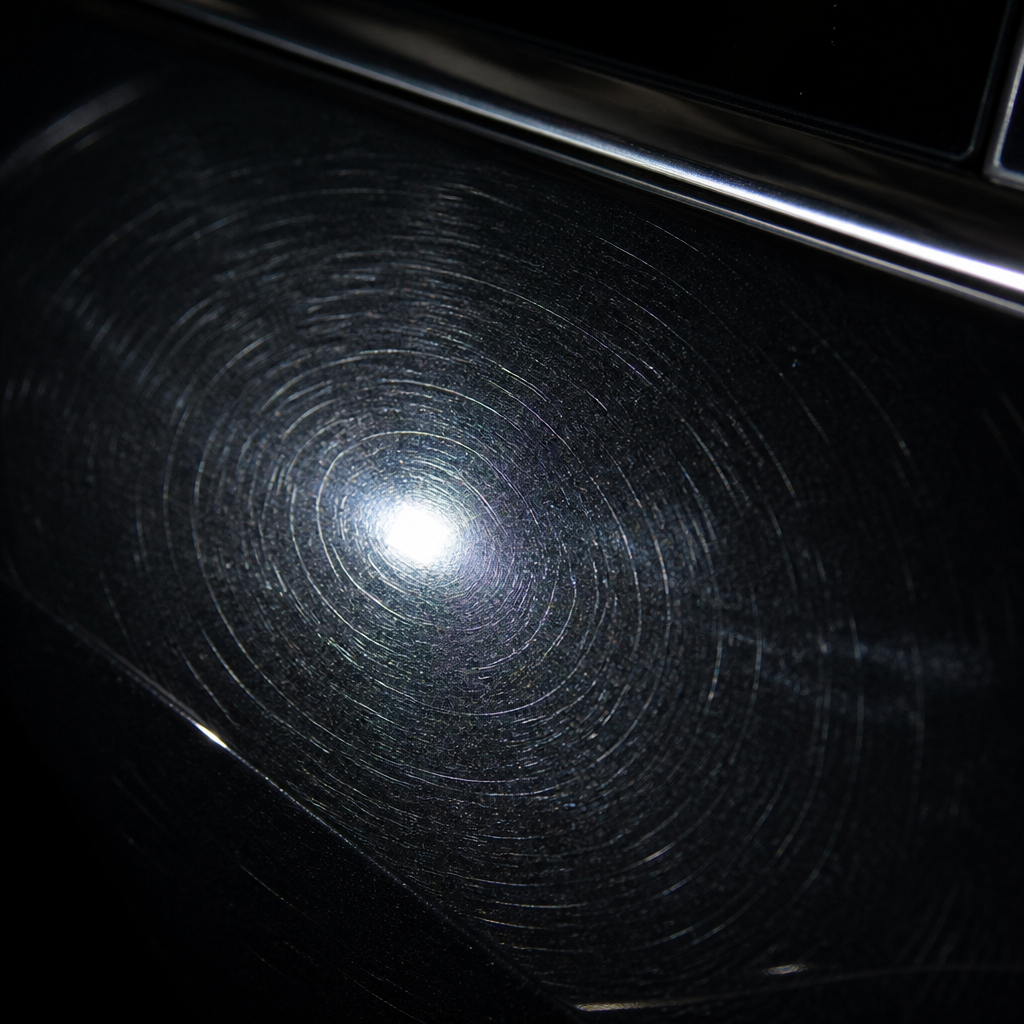
Look at your car under direct sunlight or a harsh fluorescent light and you will likely see a web of fine circular scratches swirling across the paint. These are swirl marks, and they are one of the most common paint defects on vehicles driven around the Chicago suburbs. Most owners have no idea how they got there, which means they keep making the same mistakes that caused them. If you are searching for swirl mark removal in Chicago, this guide covers everything you need to know: what causes them, why consumer products cannot fix them, and how professional paint correction permanently eliminates them.
Table of Contents
- What Are Swirl Marks and Why Do They Matter
- What Causes Swirl Marks on Cars
- Quick Takeaways
- Why DIY Products Fail to Remove Swirl Marks
- How Professional Paint Correction Permanently Removes Swirl Marks
- Swirl Mark Removal Methods Compared
- Protecting Your Paint After Swirl Mark Removal
- Choosing the Right Detailer for Swirl Mark Removal in Chicago
- Frequently Asked Questions
- References
What Are Swirl Marks and Why Do They Matter
Swirl marks are micro-scratches in the clear coat layer of your vehicle's paint. They appear as circular or arc-shaped patterns and are most visible under direct light. They are not optical illusions or dirt on the surface. They are physical damage to the clear coat, typically ranging from 0.5 to 2 microns in depth.
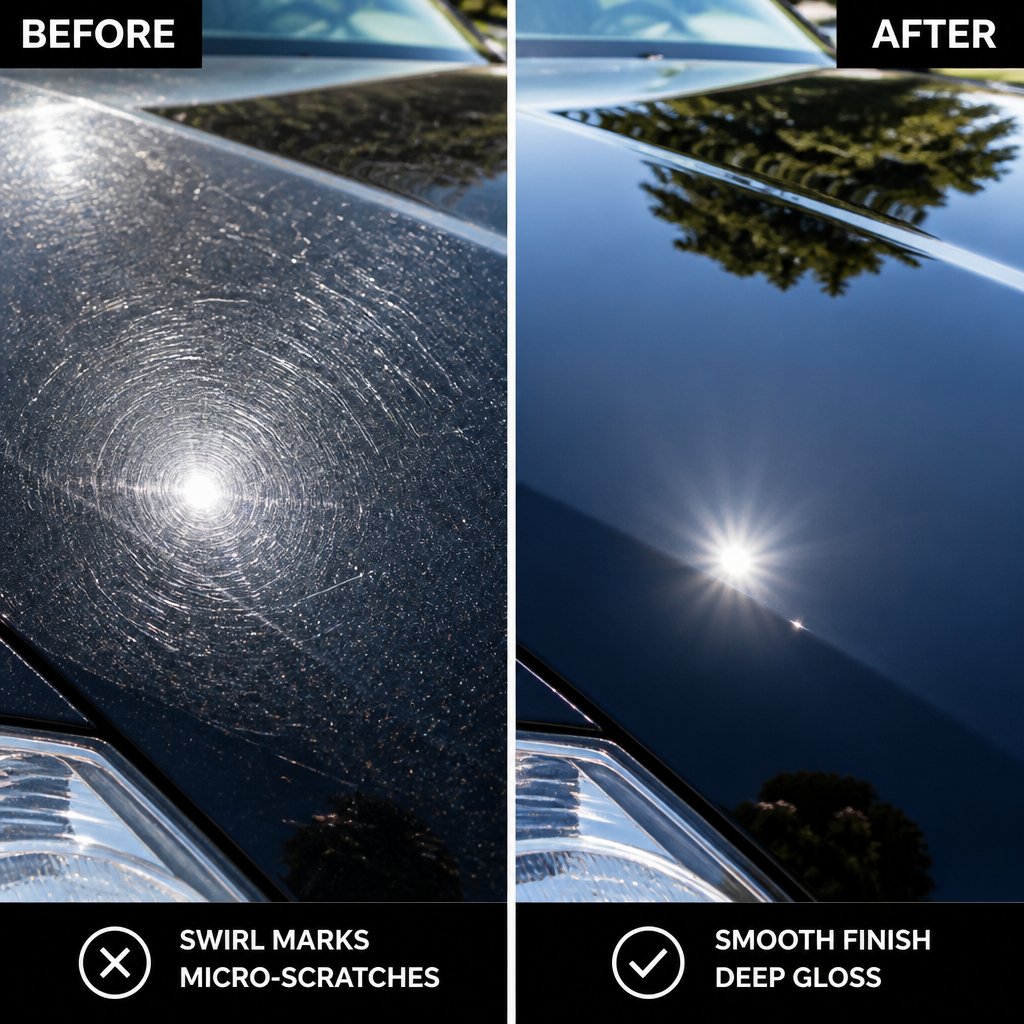
On a dark vehicle like a black BMW or midnight blue Audi, swirl marks are devastating to the car's appearance. On lighter colors they are still present but harder to see. Either way, they scatter light instead of reflecting it cleanly, which is what kills the deep gloss and mirror-like finish that makes a premium vehicle look its best.
For luxury vehicle owners in Wheaton, Bloomingdale, and Carol Stream, swirl marks are not a minor cosmetic issue. A heavily swirled finish can reduce perceived vehicle value at resale and signal to buyers that the car was not cared for properly, regardless of how mechanically sound it is.
What Causes Swirl Marks on Cars
The honest answer is that swirl marks are almost always caused by improper washing and drying techniques. Most vehicle owners are creating swirl marks every single time they wash their car without realizing it. Here are the specific causes.
Automatic Car Washes
Tunnel car washes are one of the primary causes of swirl marks in the Chicago suburbs. The spinning brushes and cloth strips drag grit and debris across the paint surface at high speed. Even so-called "brushless" washes use aggressive foam pads that trap contaminants between the pad and your clear coat. Repeated use of automatic washes will create severe swirling even on a brand-new vehicle within a year.
Improper Hand Washing Technique
A common mistake is using a single bucket of water for washing, dipping a dirty mitt back into the rinse water and then dragging grit across the paint. The correct method requires a two-bucket wash system, a dedicated grit guard at the bottom of each bucket, and a clean microfiber wash mitt. Circular scrubbing motions also create swirling. Straight-line strokes with the proper tools are far less damaging.
Dry Wiping and Improper Drying
Wiping a dusty car with a dry cloth or chamois is one of the fastest ways to create swirl marks. Even microfiber dragged across a dry, dusty surface will scratch the clear coat. The paint must be lubricated before any contact. Using a forced-air blower or a waffle-weave microfiber towel on a pre-rinsed surface is the correct approach.
Low-Quality or Contaminated Applicator Pads
Applying wax or polish with a foam applicator that has not been cleaned, or using a cheap terry cloth towel, introduces abrasive particles directly to the paint surface. Even well-intentioned detailing with the wrong tools causes cumulative swirl mark damage over months and years.
Pro tip: If you wash your own car, keep separate labeled buckets for shampoo and rinse water. Place a grit guard disc in the bottom of each bucket and never use the same mitt section twice before rinsing it out. This single habit change prevents most swirl mark accumulation between professional details.
Quick Takeaways
| Key Insight | Explanation |
|---|---|
| Swirl marks are physical clear coat damage | They cannot be washed away or hidden with a spray wax. They require abrasive correction to remove. |
| Automatic car washes are the leading cause | Brush and cloth tunnel washes drag grit across the paint at high speed, creating swirling with every visit. |
| Consumer polishes provide temporary results | Most store-bought swirl removers contain fillers that mask scratches temporarily. They return after the first wash. |
| Machine polishing is the only permanent fix | A dual-action or rotary polisher with the correct compound and pad combination physically removes damaged clear coat. |
| Paint thickness must be measured before correction | A professional uses a paint depth gauge to confirm there is enough clear coat to safely polish without burning through. |
| Ceramic coating locks in the corrected finish | Applying a SiO2 ceramic coating after paint correction preserves the swirl-free result for 5 to 8 years. |
| Not all detailers offer true paint correction | Many shops apply an all-in-one product and call it paint correction. Ask specifically about multi-stage machine polishing. |
Why DIY Products Fail to Remove Swirl Marks
Walk into any auto parts store and you will find a shelf full of products labeled "swirl remover" or "scratch and swirl eliminator." In practice, the vast majority of these products use silicone fillers and optical diffusers to temporarily fill and mask the scratches. They do not remove anything. The scratches are still there underneath. After one or two washes, the fillers dissolve and the swirls reappear, often looking worse than before.
Some consumer polishes do contain mild abrasives, but without the correct machine, correct pad, and correct technique, hand application delivers inconsistent and weak abrasive action. You might slightly improve the appearance in one area while creating new haze or buffer trails in another.
"The clear coat on modern automotive paint is typically 40 to 60 microns thick. Every aggressive polish or compound removes some of that thickness. Without measuring paint depth first, you risk burning through the clear coat entirely, which requires a full respray." - A guiding principle taught in professional detailing certification programs across the industry.
This is why professional results and consumer results are not even close to comparable. The difference is not the product alone. It is the equipment, the measurement process, and the trained hand controlling the machine.
How Professional Paint Correction Permanently Removes Swirl Marks
At Hersheys Detailing in Glendale Heights, paint correction for swirl mark removal follows a defined multi-stage process. Each stage is necessary. Skipping any one of them compromises the final result.
Stage 1: Decontamination Wash
The vehicle receives a thorough two-bucket hand wash followed by a chemical decontamination stage using an iron fallout remover and a clay bar treatment. Iron particles, rail dust, and bonded contaminants must be completely removed from the paint surface before any machine work begins. Polishing over contamination grinds those particles into the clear coat and creates new scratches.
Stage 2: Paint Thickness Measurement
A calibrated paint depth gauge is used across every panel of the vehicle. Factory clear coat on most vehicles ranges from 40 to 60 microns. If a panel reads significantly lower, that area either has prior body work or has been polished too aggressively before. This data determines which compound and pad combination is safe to use on each specific panel.
Stage 3: Machine Polishing
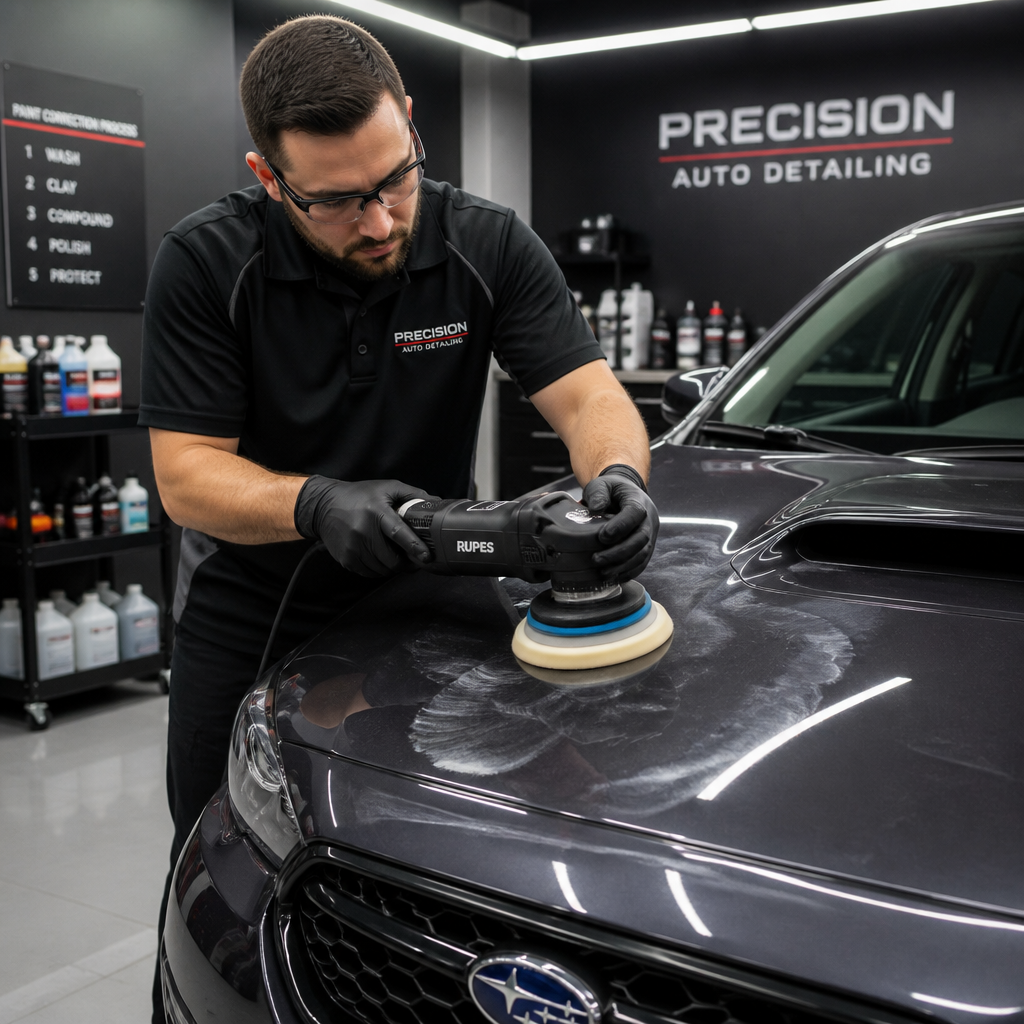
This is where the actual swirl mark removal happens. A dual-action orbital polisher or rotary polisher is used depending on the severity of the defects. The machine moves the polishing pad in a controlled pattern across the paint while the compound abrasive levels the clear coat surface, removing the micro-scratches that create swirl marks.
Multi-stage correction means running at least two rounds of polishing, starting with a more aggressive compound to remove defects and finishing with a fine polish to refine the surface and maximize gloss. Single-stage polishing is a shortcut that leaves haze or micro-marring behind.
Stage 4: Panel Wipe-Down and Inspection
After polishing, each panel is wiped with an IPA (isopropyl alcohol) solution to remove polish oils that temporarily mask any remaining defects. The panel is then inspected under multiple lighting conditions, including a high-intensity detailing light and direct sunlight, to confirm all swirl marks are eliminated before moving to the next stage.
Pro tip: Always ask a detailer whether they perform a post-polish IPA wipe-down and inspection before applying any coating or sealant. Skipping this step hides remaining defects under the product. You will not know the swirl marks are still there until the coating starts to degrade months later.
Swirl Mark Removal Methods Compared
Not all swirl mark removal approaches deliver the same outcome. The table below compares the three most common methods that vehicle owners in the Chicago area encounter, based on real-world results and durability.
| Method | How It Works | Result Durability |
|---|---|---|
| Consumer swirl remover spray or wax | Silicone fillers and optical diffusers temporarily mask scratches without removing them | 1 to 3 washes before defects return |
| Single-stage machine polish (one-step correction) | One pass with a compound or all-in-one product removes some defects but leaves haze and micro-marring | Several months, but finish is not fully refined |
| Multi-stage paint correction with ceramic coating | Two or more polishing stages remove all defects, IPA inspection confirms results, ceramic coating protects the corrected surface | 5 to 8 years with proper maintenance |
The data consistently shows that vehicle owners who invest in multi-stage paint correction followed by a professional-grade ceramic coating spend significantly less over five years than those who repeatedly purchase consumer products or pay for single-stage polishes that need repeating annually.
Protecting Your Paint After Swirl Mark Removal
Removing swirl marks through paint correction is only half the job. Without a durable protective layer applied immediately after, the corrected clear coat will develop new swirl marks within weeks from normal washing and environmental exposure in the Chicago area.
Ceramic Coatings vs. Wax and Paint Sealants
Traditional carnauba wax provides 4 to 8 weeks of protection in good conditions. Illinois winters, road salt, and UV exposure in the summer destroy wax protection even faster. Synthetic paint sealants last slightly longer, roughly 3 to 6 months, but they are still no match for the chemical bond conditions that Chicago-area vehicles face year-round.
Nano-ceramic SiO2 coatings chemically bond to the clear coat surface and create a semi-permanent layer that is far harder than the paint beneath it. Hersheys Detailing applies professional-grade ceramic coatings with 5 to 8 year warranties. These coatings resist swirl marks from normal washing, repel water, resist chemical etching from road salt and bird droppings, and make future maintenance washes dramatically easier.
Maintenance After Ceramic Coating
A ceramic-coated vehicle still requires proper washing technique. The coating is not scratch-proof. Automatic car washes will still damage it. A proper maintenance wash using a pH-neutral shampoo, a two-bucket method, and a clean microfiber mitt preserves the coating and keeps the paint looking corrected long-term. Annual ceramic coating maintenance services are also available to refresh the hydrophobic properties as needed.
Choosing the Right Detailer for Swirl Mark Removal in Chicago
The Chicago suburbs have no shortage of detailing shops, but genuine paint correction for swirl mark removal requires specific equipment, measurement tools, and training that most basic detail shops do not have. Here is what to evaluate before booking anyone for this work.
Questions to Ask Before Committing
Ask whether the detailer uses a paint depth gauge before polishing. If they do not know what that is, walk away. Ask specifically how many polishing stages they perform and whether they include an IPA wipe and inspection after each stage. Ask what ceramic coating brand they use and what warranty is provided in writing.
Hersheys Detailing has completed paint correction on over 500 vehicles across Glendale Heights, Carol Stream, Bloomingdale, and Wheaton over seven years of operation. Every paint correction service includes the full decontamination process, multi-stage machine polishing, and post-polish inspection before any coating is applied. No cutting corners. The results speak for themselves under direct sunlight.
If you are comparing detailers in the area, be specific about your expectations. A shop that quotes you a suspiciously low price for paint correction is almost certainly delivering a single-stage polish or an all-in-one product that will not produce a lasting result on a luxury vehicle with moderate to heavy swirling.
Frequently Asked Questions
Can swirl marks be fully removed without machine polishing?
No. Swirl marks are micro-scratches in the clear coat layer. No spray, wax, or hand-applied product removes them permanently. Machine polishing with the correct compound and pad is the only method that physically levels the clear coat surface and eliminates the scratches. Consumer products with fillers provide a temporary cosmetic improvement that disappears after washing.
How long does professional swirl mark removal take?
A full paint correction service for swirl mark removal on a standard sedan typically takes one to two full days depending on the severity of the defects and the number of polishing stages required. Larger vehicles like SUVs or trucks take longer. Do not trust any detailer who promises a complete paint correction in a few hours. That timeline is not physically possible with a proper multi-stage process.
Will swirl marks come back after paint correction?
They will return if the corrected paint is not protected and if improper washing habits continue. After professional paint correction, applying a nano-ceramic SiO2 coating immediately preserves the corrected surface and significantly reduces the risk of swirl mark accumulation from future maintenance washes. Proper washing technique with a two-bucket method and clean microfiber mitts is essential for maintaining results.
What does paint correction cost for swirl mark removal in the Chicago area?
Professional multi-stage paint correction in the Chicago suburbs typically ranges from $500 to $1,500 or more depending on vehicle size, paint condition, and whether ceramic coating is included. Any quote significantly below this range should raise questions about what stages are actually being performed. Investing in proper correction once costs far less than repeated partial treatments that never fully resolve the problem.
Is paint correction safe for all vehicles?
Paint correction is safe when performed by a trained professional who uses a paint depth gauge to measure clear coat thickness before polishing. Vehicles with prior body work or panels that have already been polished aggressively may have reduced clear coat and require a more conservative approach. This is exactly why paint thickness measurement is a non-negotiable step before any machine work begins.
How do I know if my car needs paint correction or just a good detail?
Inspect your paint under a single overhead light source in a dim environment or under direct sunlight at a low angle. If you see a web of fine circular scratches or an overall haze that does not disappear after washing, your paint has swirl marks and needs correction. A standard detail with a wash and wax will not fix them. A trained detailer can confirm the extent of the defects during an in-person inspection.
Have you dealt with swirl marks on your vehicle or had a paint correction done in the Chicago suburbs? Share your experience in the comments below so other owners in the area can learn from what worked and what did not.
References
- Forbes coverage of automotive detailing industry trends and consumer spending on vehicle care
- Statista automotive aftermarket data including detailing services market size and consumer behavior
- U.S. Department of Transportation resources on vehicle paint and surface standards
- Consumer Reports automotive section covering car care product testing and paint protection evaluations
- Popular Mechanics automotive care guides including paint correction and surface protection testing