Most owners judge a car's appearance by its paint and glass, but the tires frame every panel. Black, sleek sidewalls make a detailed vehicle look finished, while gray or streaky rubber makes the same paint look tired. Choosing the right tire dressing is one of the fastest ways to change how an entire vehicle reads, and it is also one of the easiest places to go wrong. Across the 500-plus vehicles we have detailed over seven years, the tire finish has been the detail that clients notice first in Glendale Heights, Carol Stream, Bloomingdale, and Wheaton. Here is how we choose tire dressing, where it usually fails, and how to keep it looking right through a Chicago-area winter.
Table of Contents
- Quick Takeaways
- Why Tires Set the Tone for the Whole Vehicle
- Water-Based Versus Solvent-Based Dressings
- Application Technique That Keeps the Shine Even
- Matching Sheen to Your Wheels and Paint
- Comparing the Main Options on the Market
- Protecting the Finish Through Chicago-Area Winters
- Common Mistakes That Undo a Good Finish
- Frequently Asked Questions
- References
Quick Takeaways
| Key Insight | Explanation |
|---|---|
| Tire finish sets the visual baseline | Sidewalls and wheel faces sit beside every body panel, so faded rubber can undo an otherwise flawless paint correction. |
| Water-based dressing suits most daily drivers | It is easier to apply, wipes off cleanly, and is less likely to sling onto paint and lower panels. |
| Solvent-based products last longer but demand prep | Clean and fully dry the tire first, or dust and grime bond into the surface and the finish turns blotchy. |
| Target a satin sheen on large luxury wheels | High gloss can look cheap on big wheels, while a deep, low-gloss black looks fresh and factory-correct. |
| Apply thin coats and let them cure | Heavy coats do not look darker. They sling more and set unevenly, so wait the full dry time before driving. |
| Plan for salt and slush in winter | Road salt strips dressing quickly, so expect shorter intervals and rinse the wheel wells regularly. |
Why Tires Set the Tone for the Whole Vehicle
Walk around a freshly washed car and your eye lands on the tires last, but it reads them first. Sidewalls sit at the bottom edge of every door and quarter panel, and wheel faces sit right beside brake calipers and lower trim. When the rubber looks chalky, the entire vehicle looks a step below its paint.
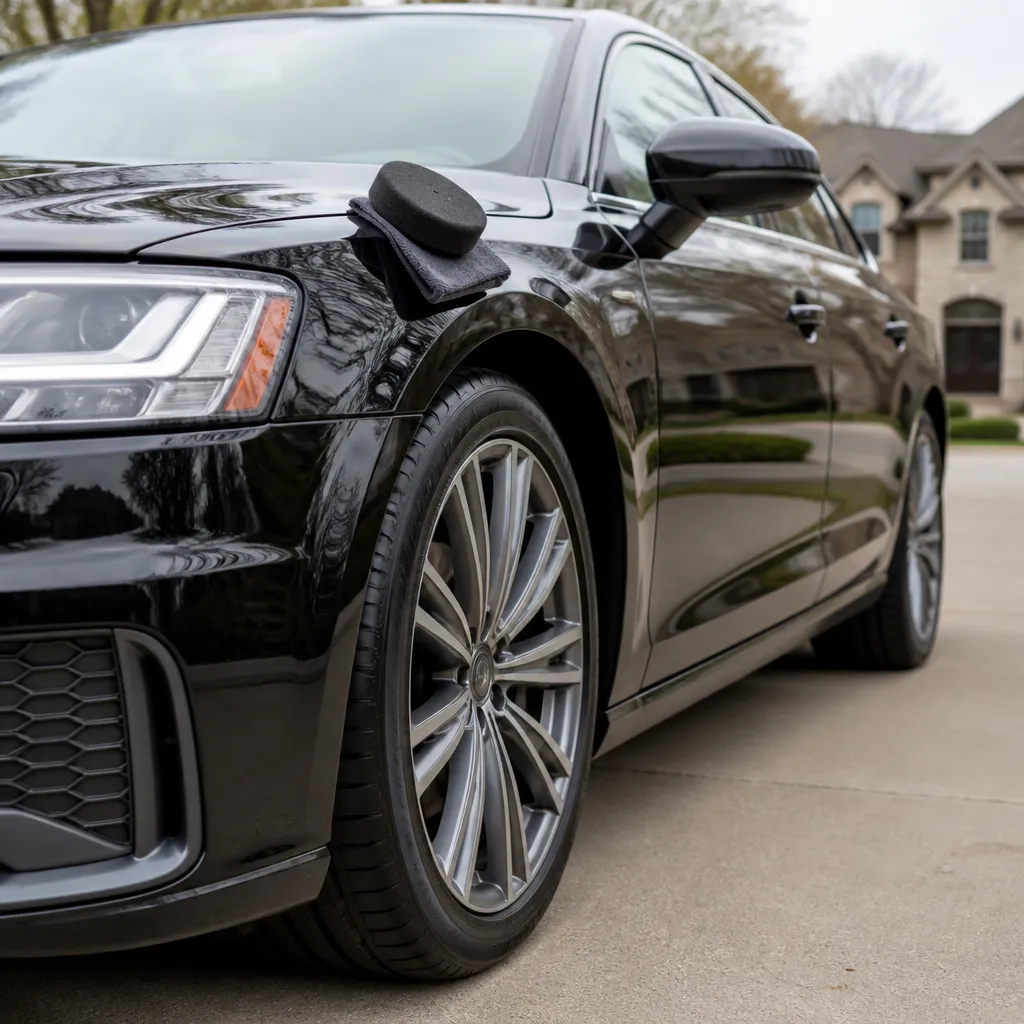
Early tire shines were mostly silicone or petroleum based. They produced a wet gloss, but they attracted dust and could dry out the rubber over time. Modern dressings are designed to do more than shine. A good product should keep the rubber dark and healthy without turning the sidewall into a dirt magnet within a day or two.
What Owners of Luxury Vehicles Notice First
Owners of higher-end vehicles tend to be more critical of tire appearance. A sedan with a dealership-fresh finish or an SUV with large-diameter wheels shows every brown residue line and every splash mark on the lower quarter panel. Low-profile tires leave less rubber between the wheel and the body, so the sidewall becomes a larger visible surface and the product choice matters more than it does on a compact commuter.
In practice, we judge a finish by three things. The color should look even across the whole tire, the shine should stay dark rather than milky, and the surface should still look clean after a week of driving. A dressing that passes all three makes the wheels look like they belong to the paint instead of looking like an afterthought.
Why Cleaning Comes Before Any Dressing
Tire dressing is not a substitute for cleaning. Brake dust, road film, and old dressing residue sit on the surface and stop new product from bonding evenly. Apply a fresh coat over that layer and you get patchy coverage, plus a finish that flakes within days.
Water-Based Versus Solvent-Based Dressings
Almost every tire dressing falls into one of two formulation families. The difference affects how long the finish lasts, how forgiving it is to apply, and how much of it ends up on the rest of the car. Understanding those trade-offs is more useful than chasing a single highly rated bottle.
How Water-Based Dressings Behave on the Road
Water-based dressings are the ones we reach for on most daily-driven vehicles. They can be applied to damp or dry tires, they wipe off cleanly if you want to change the look, and they are far less likely to sling onto paint. One long-running detailing forum comparison describes water-based products as the easiest to apply and the least durable, with protection measured in days to a week or two.
That short lifespan is the trade-off. A clean, water-based finish looks sharp for the first week, then fades faster if the car sees rain, road salt, or frequent highway miles. For a luxury vehicle that gets detailed on a schedule, that is not a flaw. It gives you control over the look every time.
When Solvent-Based Products Make Sense
Solvent-based dressings last longer and tend to produce a deeper, wetter black. They also demand more discipline. Apply them to a clean, fully dry tire, and keep them away from wheel faces and painted surfaces. Overspray and sling are the most common complaints, and they show up fastest on a car that is washed on a warm afternoon and driven straight out.
Pro tip: Mask or wipe the wheel face and lower panel with a dry microfiber before spraying solvent-based product. Overspray is far easier to prevent than to remove from clear coat.
Application Technique That Keeps the Shine Even
Most disappointing tire finishes come from application, not from the product itself. A dressing that looks patchy after one day was usually applied to a dirty tire, over old residue, or in a coat that was far too heavy.
Prep Steps That Make the Finish Last
Start with a dedicated tire cleaner or a mild degreaser. Scrub the sidewall with a stiff brush to lift embedded grime from the texture, then rinse thoroughly. Dry the tire completely before applying anything, because water trapped in the sidewall texture dilutes the product and causes uneven spots.
Thin Coats and Cure Time
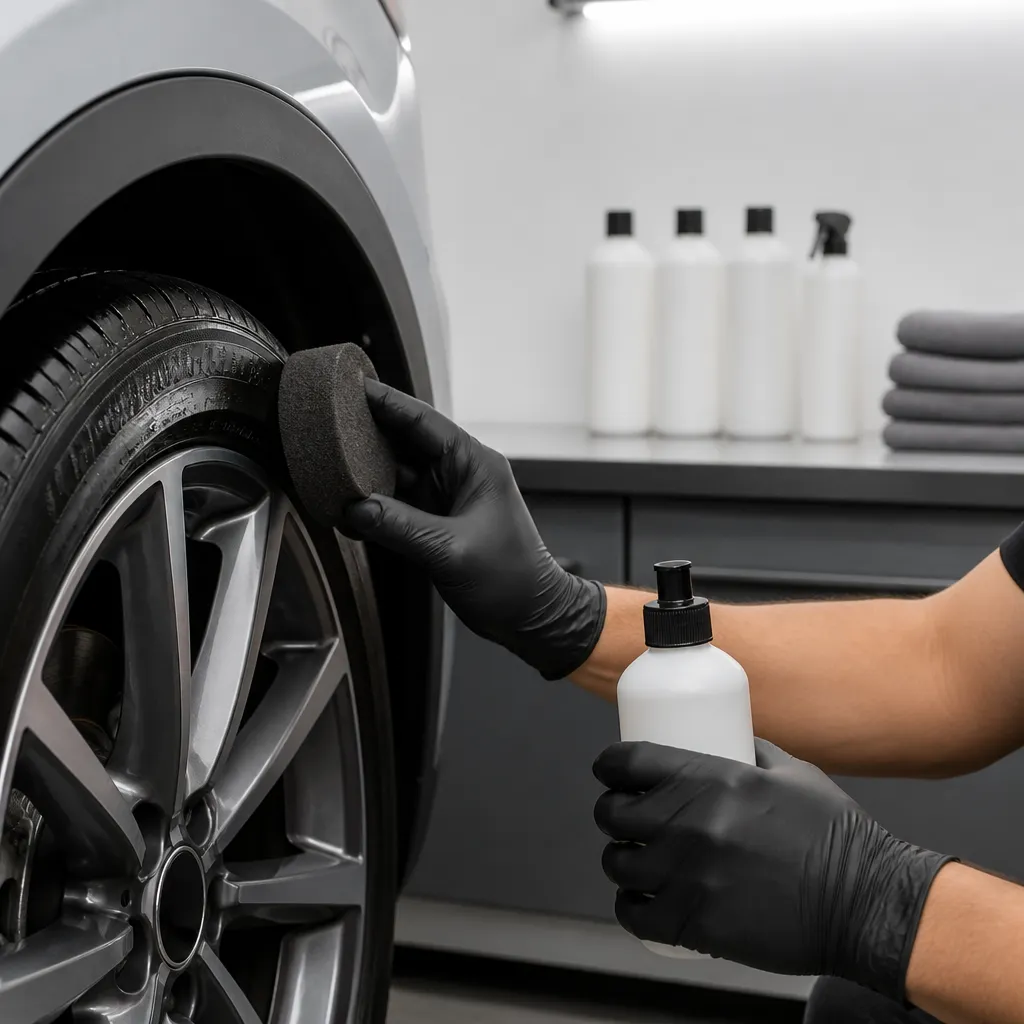
Apply a thin, even layer with an applicator pad, working in small sections so you can control the edges. Heavy coats do not look darker. They slide, sling, and take longer to set. Follow the stated dry time on the label, and avoid driving until it has passed, since a few minutes in a parking lot is not the same as a full cure.
After the product sets, wipe any excess from the wheel face and inner lip with a dry towel. This small step separates a finish that looks professionally applied from one that looks rushed.
Thin, even, and patient beats thick and fast every time. The tire does not reward more product. It rewards clean prep and a complete cure.
Matching Sheen to Your Wheels and Paint
Sheen is where tire dressing either complements a car or cheapens it. One detailing enthusiast who reports owning 23 different tire products describes the middle ground as a satin sheen, not the undressed look and not the wet, glossy look. That framing is useful when you are deciding how far to push the finish on a valuable vehicle.
Why High Gloss Can Look Cheap on Large Wheels
A glossy, wet tire can look excellent on a compact car with stock rubber. On a vehicle with 20 or 22 inch wheels and a dark paint color, the same gloss can pull attention to the tire rather than the whole car. For sedans and SUVs in the luxury segment, we usually recommend a deep, low-gloss finish that reads as black rather than wet.
Choosing a Finish for Dark, Light, and Metallic Paint
Light paint shows every gray streak on the lower panel, so a restrained shine helps keep the body color in charge. For white and silver vehicles, we favor a clean, dark tire with minimal gloss. Deep black or metallic paint can handle a slightly richer finish, as long as the product does not look wet in direct sun.
Comparing the Main Options on the Market
The table below compares three approaches we see most often, based on how long they last, how much effort they take, and what kind of owner they suit. Durations are rough, since climate, washing frequency, and driving habits change the results a lot.
| Approach | Typical Longevity | Best Use Case |
|---|---|---|
| Water-based dressing | Days to about two weeks | Daily drivers that need an easy, clean finish you can refresh often |
| Solvent-based dressing | Longer than water-based, with more variation by application | Owners who want a deeper, wetter black and will prep carefully |
| Sealant or long-life coating | Roughly one to six months, per detailing forum comparisons | Owners who want a set-and-forget finish and accept more prep and a higher upfront cost |
Longer-lasting products usually require more prep, and they are harder to correct if you do not like the result. For a vehicle that already sees a maintenance schedule, a water-based product refreshed every few weeks gives you more control over the look. Consumer tire products are also a different category from the professional coatings applied to paint and wheels, so compare durability claims carefully before you assume one replaces the other.
Protecting the Finish Through Chicago-Area Winters
Winter is where tire dressing either holds up or disappears. Road salt, slush, and repeated freeze-thaw cycles strip dressing quickly, and the gray film they leave can make fresh product look blotchy within a few drives.

Timing Your Last Application Before the Cold Sets In
If you plan to drive through the season, apply your best finish in early fall, before the first salt runs. Give it time to set, and avoid heavy coats right before a forecast storm. If you are reading this in November, the best window has mostly passed, so focus on maintenance and clean prep before the next application.
Washing Habits That Keep Rubber Looking Dark
Rinse the tires during every winter wash, especially the wheel wells and sidewalls where salt collects. A pH-balanced soap and a soft brush remove salt without stripping the surface more than needed. Plan a reapplication every few weeks instead of waiting until the finish looks gray, since by then the salt has already done its damage.
Common Mistakes That Undo a Good Finish
Most of the problems we correct on finished work come down to three habits. Owners dress dirty tires, overspray onto paint, or pick a sheen that does not suit the car. Each one is avoidable with a little discipline.
Dressing Over Old Residue
Old dressing that has gone dull and dusty will not take new product evenly. Strip it with a proper cleaner before refreshing the finish. Otherwise you trap grime under a fresh coat, and the result looks worse than the bare rubber did.
Ignoring Wheel Faces and Lower Panels
Overspray on wheel faces and the lower rocker area is the fastest way to make a car look under-detailed. Wipe those surfaces with a dry towel within a few minutes of application, before the product sets. Once it cures, removing it can take more effort than the whole original application.
Judging a Product by Showroom-Style Photos
Glossy photos make almost every product look dramatic. Judge a dressing by how it looks after a week of normal driving, not in the first hour in the driveway.
Pro tip: Check the finish the morning after a cold night. Dew and temperature swings reveal streaks and blotches that look fine in the afternoon sun.
Frequently Asked Questions
How often should tire dressing be reapplied on a daily driver?
For a daily driver, plan on refreshing water-based dressing roughly every one to two weeks during normal driving, and sooner after heavy rain or salt exposure. Solvent-based products can go longer, but check the finish weekly so you catch fading early.
Can tire dressing damage the rubber?
Heavy, petroleum-based products can dry out rubber over time, which is why modern formulas focus on conditioning. Clean the tire well, apply thin coats, and avoid any product that leaves a thick, tacky film.
Can I apply tire dressing to wet tires?
Water-based dressings can be applied to damp or dry tires, but we still recommend fully dry tires for a clean, even finish. Water dilutes the product and encourages streaking.
Why does tire dressing sling onto my paint?
Sling usually comes from too much product, a wet tire, or a solvent-based formula that has not fully set. Thin coats, dry tires, and a complete cure time solve most cases.
Is professional tire finishing worth it for a luxury vehicle?
For a luxury vehicle, professional application usually pays off in consistency, because the prep and wheel-face cleanup take the most time. Tire finishing can also be built into a regular maintenance routine so the look stays consistent between visits.
Which tire dressing has given you the best result on your own vehicle, and did changing your tire finish alter how the rest of the car looked to you?