If you drive a full-size truck or a three-row SUV through the Chicago suburbs, you already know your vehicle takes a punishment that a downtown compact car rarely faces. Road salt on the Eisenhower, mud slung from construction zones in Bloomingdale, brake dust coating 20-inch wheels, a cargo bed full of gear and dog hair - all of it demands a fundamentally different approach to detailing than what works on a midsize sedan. Truck detailing in Illinois is not simply detailing "but bigger." The geometry, surface area, and use patterns of large vehicles create specific challenges that require specific solutions, and shortcuts show up fast on panels this large.
Table of Contents
- Why Trucks and SUVs Are Harder to Detail Than Cars
- Illinois Road Salt and What It Does to Large Vehicles
- Exterior Detailing for Large Vehicles: Panel Size, Wheel Wells, and Running Boards
- Interior Detailing for Trucks and SUVs: Cargo Areas, Third Rows, and Utility Surfaces
- Paint Correction on Large Vehicle Panels: Why Machine Polishing Matters More
- Ceramic Coatings for Trucks and SUVs in the Chicago Suburbs
- Detailing Approach Comparison: DIY vs. Mobile vs. Professional Shop
- Frequently Asked Questions
- References
Why Trucks and SUVs Are Harder to Detail Than Cars
The surface area difference alone is significant. A full-size pickup truck or large SUV has considerably more painted panel area than a standard sedan, and every square foot needs the same level of attention during a paint correction or ceramic coating service. More panel area means more machine time, more product, and more precision required to avoid inconsistent results across large, flat hood and roof sections.
Beyond size, trucks and SUVs present structural challenges that sedans do not. Higher ground clearance means more exposed lower body panels, wheel arches, and undercarriage surfaces that collect road debris, salt, and mud. Running boards, step bars, and tow hitches create recessed areas that trap contamination. Cargo beds on pickup trucks have their own texture and coating chemistry entirely separate from the painted surfaces on the cab.
Then there is how these vehicles are actually used. Trucks and SUVs in the Chicago suburbs are frequently used for towing, hauling, school drop-offs, pet transport, and grocery runs - sometimes all in the same week. The interior takes a different kind of beating than a commuter car. Third-row seating, cargo liners, and rubberized utility surfaces require different cleaning agents and techniques than leather bolsters and trimmed door panels.
Illinois Road Salt and What It Does to Large Vehicles
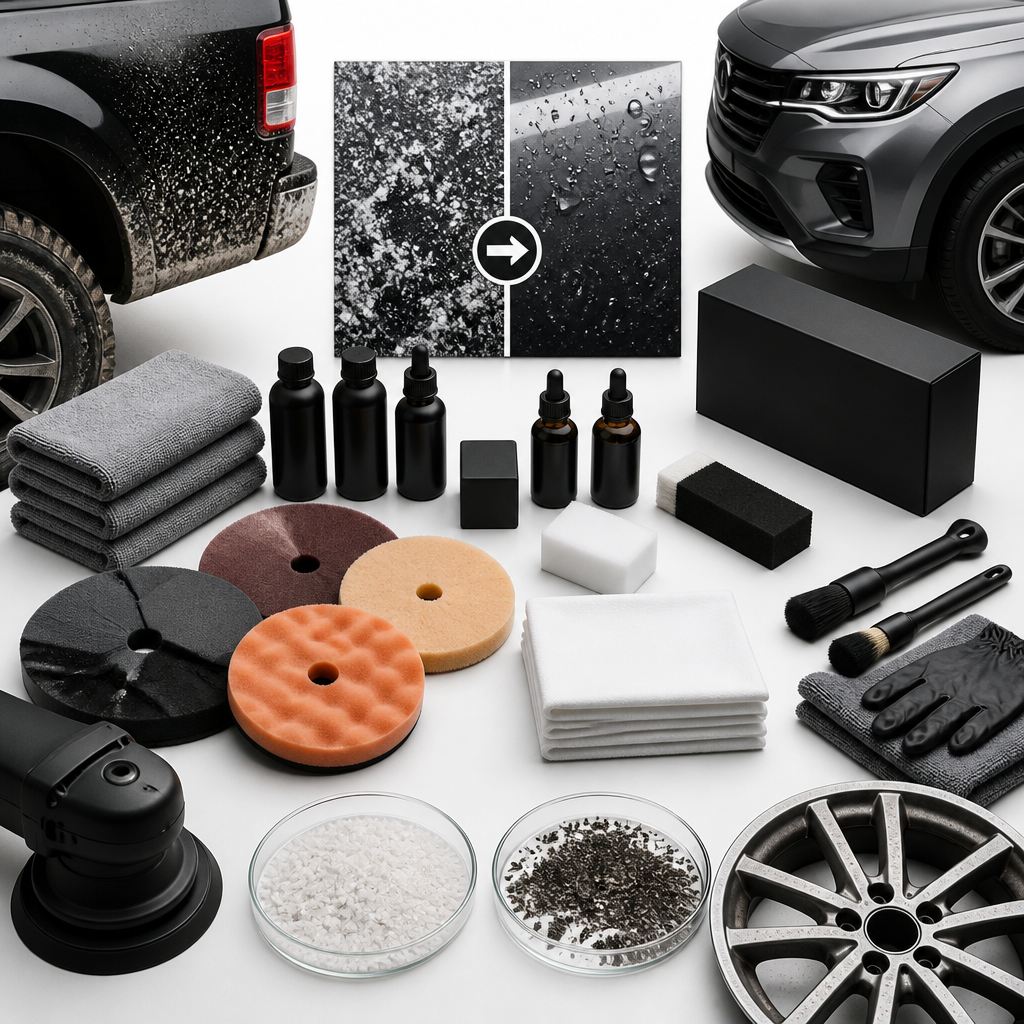
The Illinois Department of Transportation deploys road salt extensively across the state's highway and municipal road network from November through March. For suburban Chicago drivers, that means vehicles are exposed to sodium chloride residue for roughly five months out of the year. When sodium chloride mixes with moisture, it creates an electrolyte solution that accelerates oxidation on any exposed metal or compromised paint surface.
Factory clear coat holds up reasonably well against salt on its own - the real damage happens at chips, scratches, and panel edges where the paint system is already compromised. On trucks and large SUVs, the lower body panels, rocker panels, wheel wells, and undercarriage are closest to the road surface and receive the heaviest salt spray. A vehicle without proper paint protection in these zones can begin showing corrosion signs within a single Illinois winter season.
A common mistake among truck owners is assuming that a regular drive-through car wash removes salt effectively. It does not. Automated tunnels rarely reach wheel well interiors, door jambs, undercarriage channels, or the recessed areas behind running boards. Salt accumulates in these zones and sits against the metal through freeze-thaw cycles, which is when oxidation accelerates. A proper decontamination wash is the only way to actually clear these areas.
Pro tip: After any significant snowstorm or salt application event, rinse your truck's wheel wells and undercarriage with a pressure washer as soon as temperatures allow. This does not replace a professional decontamination detail, but it significantly reduces salt dwell time between service appointments.
Exterior Detailing for Large Vehicles: Panel Size, Wheel Wells, and Running Boards
A proper exterior detail on a full-size truck or SUV starts with a thorough pre-wash and decontamination phase. This means a foam cannon or citrus pre-soak to lift heavy surface contamination before any contact washing begins. Skipping pre-wash on a vehicle this size is how swirl marks get introduced - dragging un-lifted grit across a large hood panel with a wash mitt creates the kind of fine scratches that only machine polishing can remove.
Wheel Wells and Undercarriage
Wheel wells on trucks and large SUVs are significantly larger than on passenger cars, and they collect a distinct mix of mud, sand, brake dust, and salt that bonds to the plastic liner material. A dedicated wheel well brush and targeted degreaser application are required to properly clean these areas. The same applies to the undercarriage on vehicles with high ground clearance - accessible undercarriage sections should be rinsed and inspected for salt accumulation at every detail visit during winter and early spring.
Running Boards and Step Bars
Running boards are one of the most contaminated surfaces on any truck or large SUV and one of the most commonly overlooked. The horizontal surface collects road spray from below and shoe debris from above. On vehicles with tube-style step bars, the underside of the bar is a salt and grease trap. Thorough cleaning of these surfaces before any wax or sealant is applied prevents contamination from migrating back onto the lower door panels.
Larger Wheels and Tires
Many trucks and SUVs in the Chicago suburbs ride on 18-inch to 22-inch wheels, which have more surface area per wheel than a standard passenger car rim. Brake dust bonds aggressively to alloy wheel surfaces, and iron contamination from brake pads is particularly stubborn on larger rotors. A pH-neutral wheel cleaner followed by a dedicated iron fallout remover is the correct approach - acidic wheel cleaners will strip protective coatings and damage factory finishes on premium alloy wheels.
Interior Detailing for Trucks and SUVs: Cargo Areas, Third Rows, and Utility Surfaces
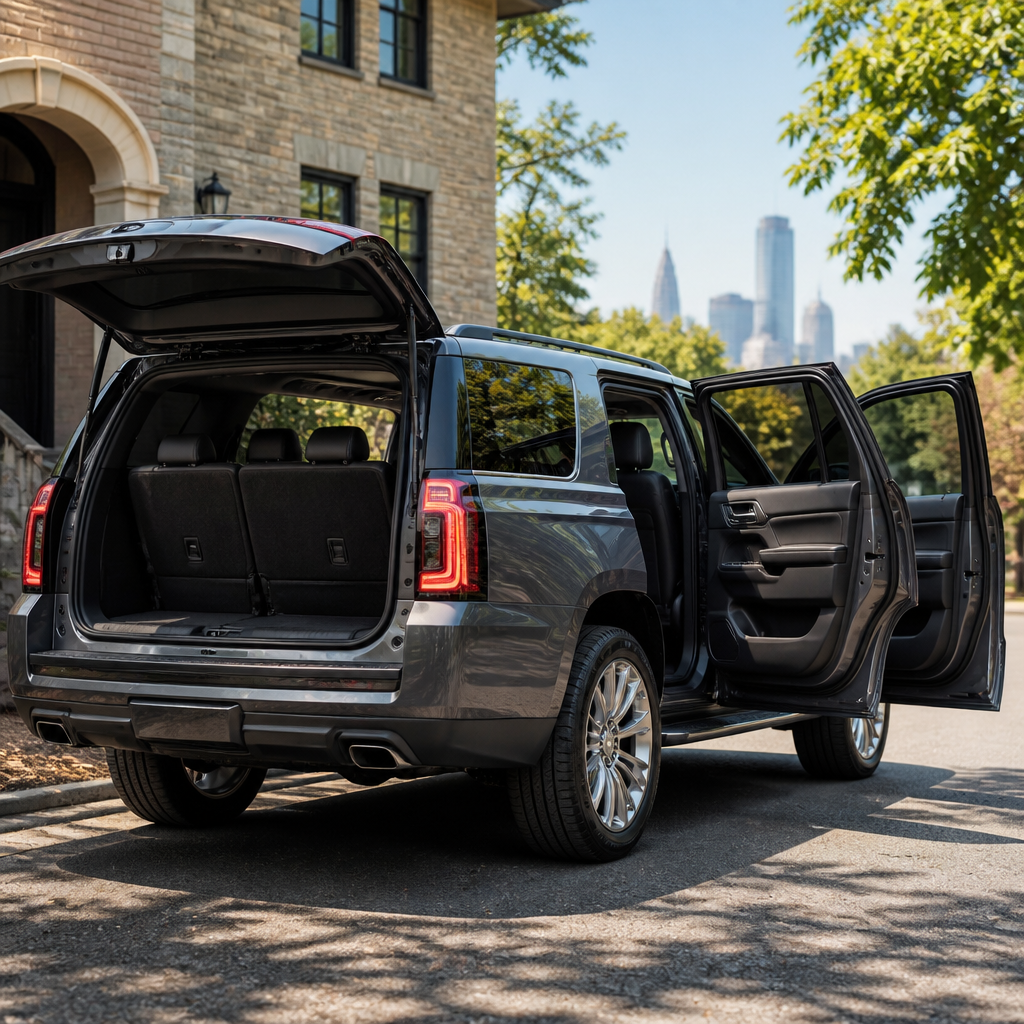
Interior detailing on a large SUV is a materially different job than cleaning a two-row crossover. A three-row SUV - a Chevy Suburban, Ford Expedition, or GMC Yukon XL - has more square footage of carpet, more seating surfaces, and a cargo area that often doubles as a pet carrier, sports equipment locker, or grocery transport. Each of those use cases leaves a different type of contamination that requires targeted treatment.
Third-row seats are consistently the most neglected area in any large SUV interior. They are used infrequently enough that owners stop noticing the accumulated crumbs, dirt, and moisture underneath the seat cushions. Properly detailing a third row requires removing or folding the seats entirely to access the floor channels beneath, which collect debris that ordinary vacuuming misses entirely.
Pro tip: If your SUV has a fold-flat third row, fold it before your detail appointment. It allows the technician to immediately inspect the cargo floor and under-seat areas rather than spending appointment time on setup, which means a more thorough result in the same service window.
Pickup Truck Beds and Cargo Liners
A pickup truck bed is its own detailing category. Spray-in bedliners, drop-in plastic liners, and bare painted beds each require different cleaning chemistry. Spray-in liners accumulate oil, grease, and embedded grit that degreasers must penetrate before any surface protection can be applied. Bare painted beds are susceptible to the same paint damage as the cab panels and benefit from a sealant or coating application specifically formulated for horizontal surfaces that see cargo contact.
Paint Correction on Large Vehicle Panels: Why Machine Polishing Matters More
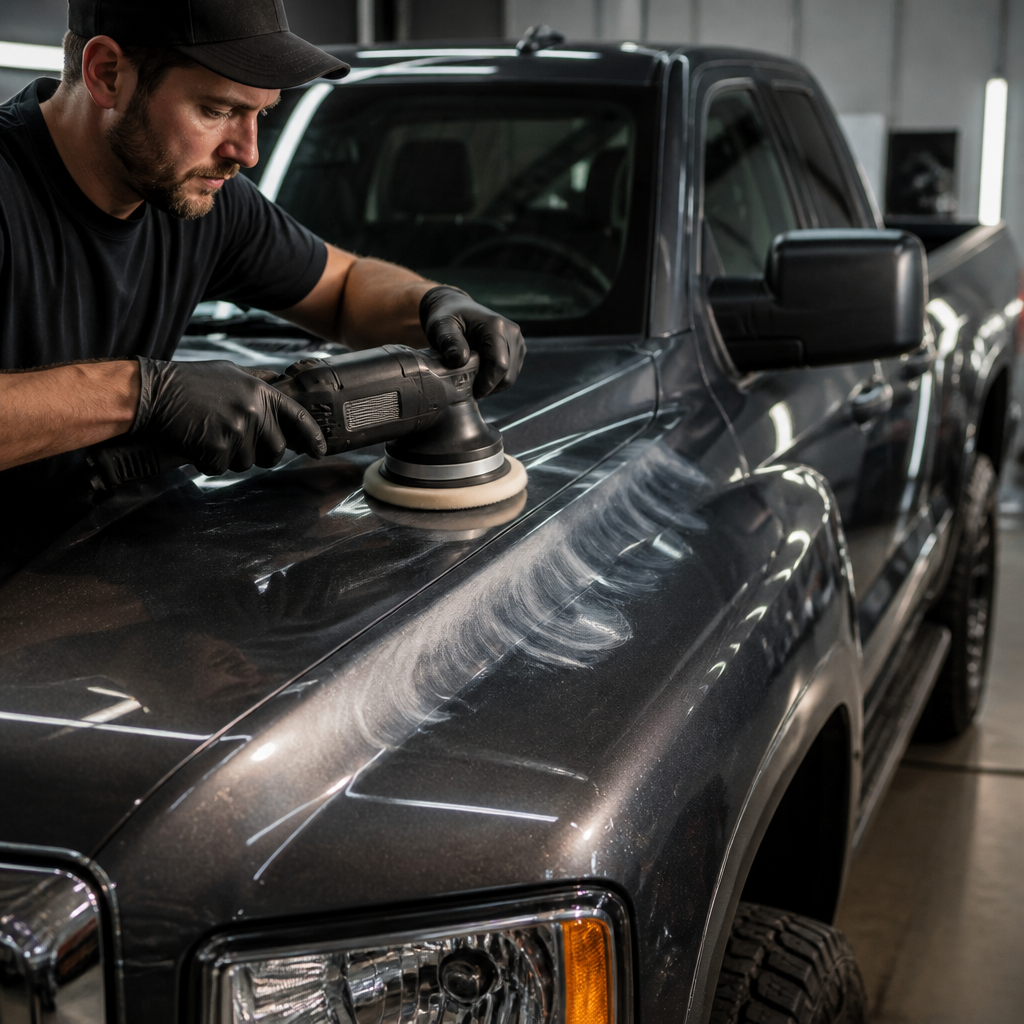
Paint correction is more consequential on a large vehicle than on a compact car, for one simple reason: defects are more visible. A swirl mark or water spot on a large, flat hood surface catches light across a much longer span than the same defect on a small car. When you look down the length of a truck hood in direct sunlight, any inconsistency in the polish work shows immediately.
Multi-stage machine polishing on a large vehicle is a time-intensive process. The hood alone on a full-size pickup truck is a substantial panel that requires careful compound and polish application in overlapping sections. The roof, which on a large SUV can be the single largest painted surface on the vehicle, requires a proper working setup - ladders or a step stool for technicians to reach the center without leaning on the paint. Any pressure on paint during polishing from an awkward angle introduces inconsistent correction results.
The size of a vehicle does not just change how long a detail takes. It changes the physical technique required at every step. A process designed for a compact sedan will produce inconsistent results on a truck hood - and the larger the panel, the more obvious those inconsistencies become.
A common mistake made in budget detailing operations is applying a single-stage all-in-one polish to large truck panels as a substitute for genuine multi-stage correction. An all-in-one leaves behind light hazing on dark finishes that becomes visible once the vehicle is moved into natural light. For trucks with black, dark gray, or navy paint - popular colors on premium trucks in the suburban Chicago market - this is especially problematic. Proper multi-stage correction using a dedicated cutting compound followed by a finishing polish is the only way to achieve a genuinely refined result.
Ceramic Coatings for Trucks and SUVs in the Chicago Suburbs
SUV detailing in the Chicago suburbs increasingly includes ceramic coating as a standard service for owners who want meaningful protection rather than a wax that washes off in two months. For large vehicles, the argument for ceramic coating is even stronger than for compact cars, because the surfaces exposed to Illinois road salt, UV radiation, rock chips from highway debris, and seasonal temperature swings are simply larger and more difficult to maintain manually.
A professional nano-ceramic SiO2 coating applied to a truck or large SUV creates a semi-permanent hydrophobic layer that bonds chemically to the clear coat. This is not a product that can be correctly applied as a weekend DIY project on a vehicle this size - surface preparation alone requires thorough decontamination and paint correction before coating, and any contamination left under the coating is permanently sealed in. The application itself requires working in a controlled environment, in sections, before the coating levels and begins to cure.
Warranty and Longevity for Large Vehicles
Professional ceramic coatings for trucks and SUVs, when applied correctly after proper paint correction and decontamination, carry warranties in the range of five to eight years. This is particularly relevant for high-use vehicles in the Chicago suburbs - a truck that commutes on salted roads every winter and sits in UV-intense summers gets far more return on a ceramic coating investment than a garage queen that rarely sees adverse conditions.
What Ceramic Coating Does Not Cover
Ceramic coating is not a substitute for paint protection film on high-impact zones. The front bumper, lower rocker panels, and leading edges of the hood on a truck that drives Illinois highways are exposed to rock chips and road debris that a coating alone cannot prevent. For complete protection on a high-value truck or SUV, a combination of paint protection film on impact zones and ceramic coating over the full vehicle provides the most durable result. This is an honest recommendation, not an upsell - the two products serve different functions.
Detailing Approach Comparison: DIY vs. Mobile vs. Professional Shop
Large vehicle owners in the Chicago suburbs often face a real decision between attempting maintenance details themselves, booking a mobile service, or bringing the vehicle to a professional detailing shop. Each approach has legitimate use cases and genuine limitations specific to trucks and SUVs.
| Approach | Best For | Limitations for Large Vehicles |
|---|---|---|
| DIY Maintenance Detail | Regular wash and interior vacuum between professional appointments; owners with proper equipment and time | Difficult to reach roof centers without risk of paint contact; wheel well and undercarriage access requires pressure washer; no substitute for decontamination or correction |
| Mobile Detailing Service | Convenience-focused maintenance washes and interior refreshes; locations without fixed shop access | Water supply and pressure limitations restrict decontamination quality; controlled environment requirements for ceramic coating and paint correction cannot be met outdoors; vehicle size compounds these limitations |
| Professional Shop Detail | Paint correction, ceramic coating, full decontamination, and any service where results and protection longevity matter; the correct choice for large vehicle protection | Requires scheduling and transport to shop; higher upfront cost, offset by longer protection intervals and genuinely superior results on large panels |
For owners of premium trucks, large luxury SUVs, and high-mileage work vehicles, the professional shop environment is not optional for services like paint correction and ceramic coating. A large vehicle exposes every shortcut in the detailing process on a larger canvas. The investment in professional large vehicle professional detailing is proportional to the vehicle's size, complexity, and the conditions it faces on Illinois roads.
Frequently Asked Questions
How much more does it cost to detail a truck or large SUV compared to a sedan?
Expect a meaningful price difference - typically reflecting the additional time, product volume, and physical effort required. A full-size pickup truck or three-row SUV can take 30 to 50 percent longer to detail thoroughly compared to a compact or midsize sedan. For paint correction and ceramic coating services specifically, the additional surface area translates directly into additional labor hours. Any shop quoting identical prices for a full-size Suburban and a compact car is cutting corners on the larger vehicle.
How often should a truck or SUV in the Chicago suburbs be professionally detailed?
At minimum, a full exterior decontamination detail twice per year - once at the end of winter to remove road salt accumulation and once at the end of summer before fall road conditions arrive. Interior details depend on use intensity: a truck used for work or a family SUV with kids and pets benefits from interior service every three to four months. Vehicles with ceramic coating can extend exterior detail intervals, but coating maintenance washes are still recommended every four to six months.
Is ceramic coating worth it on a truck used for work or towing?
Yes, and the argument is stronger for high-use vehicles than for showroom-condition vehicles rarely exposed to the elements. A work truck or towing vehicle faces more road debris, UV exposure, and contamination events per month than a garage-kept commuter. Ceramic coating reduces the effort required to maintain the paint between services and provides genuine chemical resistance to the salt and grime that high-use trucks encounter constantly. The key is ensuring proper paint correction and decontamination before coating - cutting that step on a work truck that already has swirl marks and minor paint defects will seal those defects permanently.
Can the truck bed be ceramic coated along with the cab and body?
It depends on the bed type. A bare painted truck bed can be ceramic coated with the same product used on the cab panels. A spray-in bedliner surface is a different substrate entirely and requires a specific product formulated for textured surfaces. Drop-in plastic liners are typically removed and detailed separately. Discuss your bed type and use case with your detailer before including the bed in any coating package - the correct answer depends on what your bed surface actually is.
What is the best way to protect a truck's lower panels and rocker panels from Illinois winter road salt?
The most effective approach combines paint protection film on the highest-impact lower body sections with ceramic coating over the full exterior. PPF provides physical impact resistance that ceramic coating alone cannot replicate on areas that take direct stone chip and road debris contact. For owners who want a single-product approach, a professional-grade ceramic coating applied after thorough decontamination and paint correction provides a meaningful improvement over wax or spray sealants for salt resistance and ease of cleaning. Whatever protection you use, remove salt accumulation promptly - protection products reduce damage but do not eliminate it if salt is allowed to sit for weeks at a time.
Does Hersheys Detailing service trucks and SUVs from Carol Stream, Bloomingdale, and Wheaton?
Yes. Hersheys Detailing is based in Glendale Heights and serves the surrounding Chicago suburbs including Carol Stream, Bloomingdale, and Wheaton. Large vehicle detailing, paint correction, ceramic coating, and maintenance programs are available for full-size trucks, SUVs, and other large vehicles. The shop's location on Bloomingdale Road makes it a convenient drop-off point for residents throughout the western suburban corridor.
If you own a truck or large SUV in the Chicago suburbs, share what detailing challenges you have run into - whether it is road salt damage, paint swirls on large panels, or interior wear - and what has or has not worked for you.
We would love your feedback and any insights you would share with others. What perspective would you add?