Most people who find swirl marks on their car blame the wash they used last week, but the damage usually started months earlier. Swirl marks are groups of fine circular scratches in the clear coat, the top layer of your paint. They rarely come from one bad wash. They build up from repeated habits, and Illinois drivers have a few that do more damage than they realize. This guide explains what causes swirl marks, which habits are most common in the Chicago suburbs, and what to change first.
Table of Contents
- Quick Takeaways
- What a Swirl Mark Actually Is
- Automatic Brush Washes and the Swirls They Leave Behind
- Drying and Dry-Wiping Habits That Scratch Paint
- Home Washing Habits in Illinois Driveways
- Wash Methods Compared: Where the Swirls Come From
- Seasonal Contaminants That Turn Into Swirls
- After-Wash Protection and Maintenance
- Frequently Asked Questions
- References
Quick Takeaways
| Key Insight | Explanation |
|---|---|
| Swirls are caused by abrasion, not age | Grit dragged across clear coat cuts tiny grooves. Every wash that uses dirty media adds new fine marks. |
| Tunnel brushes carry the last car's grit | Shared brushes pick up salt, sand, and road film. Ask for a heavy pre-rinse and skip the blower on a dirty car. |
| Dry wiping pollen and dust creates swirls | Pollen and dust should be rinsed off with water, not flicked away with a dry cloth or sleeve. |
| Dish soap strips the layer that protects paint | Wax and sealant absorb some abrasion. Once they are gone, every later wipe hits clear coat directly. |
| One bucket reloads your mitt with grit | Use two buckets with grit guards and rinse the mitt after each panel. |
| Winter salt on lower panels is the hidden source | Rinse the lower third first. Never scrub a salt film with a mitt that has been used on the upper body. |
| Ice scraping and freezing water mark paint directly | Never scrape ice from the finish. Wait for a thaw or use a warm rinse on frozen door seams. |
What a Swirl Mark Actually Is
A swirl mark is a group of very fine scratches in the clear coat. Each scratch is too small to feel with a fingernail, but together they scatter light in different directions. In direct sun or under a garage light, that scatter shows up as a web of circular lines that look like they were drawn with a fingertip.
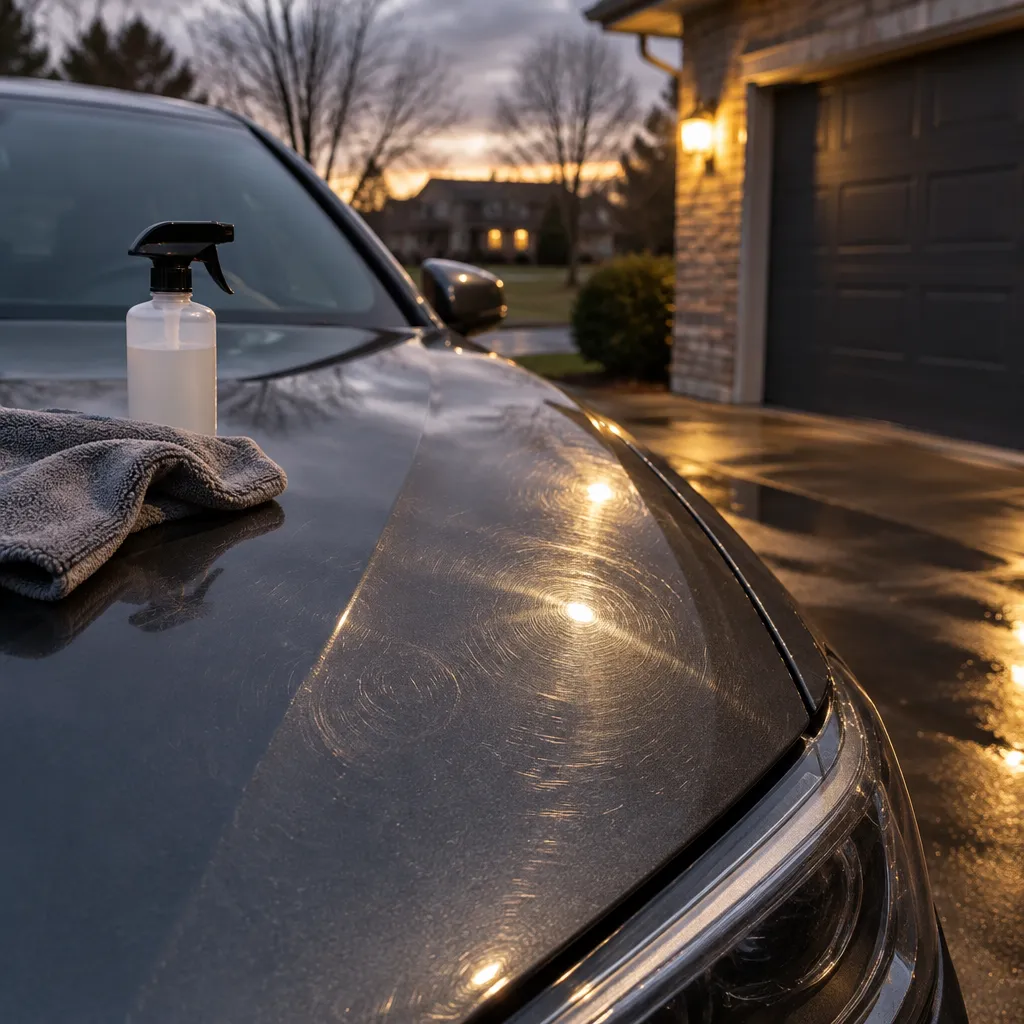
The reason they look circular is the motion that made them. Most swirls come from a wipe across the paint while dirt is trapped between the cloth and the surface. Hand washing and drying are done in arcs, so the grooves follow arcs. The pattern tells you a lot about what happened to the car.
Clear coat is soft enough to be cut by sand, grit, and dust that you cannot see with the naked eye. That is why swirls are a maintenance problem, not a one-time event. Each wash that uses dirty media or aggressive contact adds a few new scratches, and clear coat does not heal itself.
Why dark paint shows swirls first
Black, dark blue, and dark gray paints show swirls more clearly because there is less pigment to hide the light scatter. Many luxury vehicles are finished in these colors, so owners often notice swirls within months of their first few washes. Lighter paints hide the same damage better, but the scratches are still there. A paint that looks clean from across the driveway can still carry a dense network of fine marks.
Swirls versus deeper scratches
Swirls live in the clear coat and can usually be reduced with machine polishing. A scratch that catches a fingernail has gone deeper and may reach the color layer, which needs a different repair. Knowing which one you have tells you whether a polish will fix it or whether the panel needs more work.
Swirls are a record of your habits. If the marks keep coming back after correction, the process that made them has not changed yet.
Automatic Brush Washes and the Swirls They Leave Behind
The most common swirl source we hear about from owners is the tunnel wash with spinning brushes. Those brushes make contact with every car that passes through before yours. Each vehicle leaves behind road film, salt residue, and grit that gets pressed into the foam or cloth, and your car then receives that abrasive contact.
In Illinois, the problem gets worse in winter. Road salt and sand stick to lower panels, rocker areas, and the rear quarter panels. A brush wash that does not pre-rinse thoroughly turns that salt into an abrasive slurry. The heaviest concentration of fine circular marks after a winter of frequent tunnel washes usually sits on the lower doors and bumper areas.
Why brushes hold on to grit
Brush materials soak up water and dirt, and they rarely get fully cleaned between cars. A brush that looks clean to the eye can still carry sand picked up from a truck bed or pollen mixed with road grime. The contact is often light, but the scratches come from the grit trapped in the brush, not from the pressure of the brush itself.
Touchless is not automatically safe
Touchless washes avoid brush contact, but they rely on stronger chemicals to lift road film. Those chemicals can strip wax and sealant faster than a gentle hand wash would, which leaves clear coat more exposed the next time it is touched. Touchless is usually better than a dirty brush, but it is not a substitute for a controlled wash, especially on a dark or freshly corrected finish.
Pro tip: If you must use a tunnel wash in January, choose one with a strong pre-soak, skip the drying blower on a car that is still caked with salt, and rinse the lower third by hand when you get home.
Drying and Dry-Wiping Habits That Scratch Paint
Drying is where many owners undo a good wash in two minutes. A towel dragged across a wet panel is a contact event, and any grit still in the water is now sitting between the towel and the clear coat. Dragging a bath towel, a shop rag, or an old chamois in long strokes is one of the fastest ways to create swirls on a dark car.
Dry wiping is the other major habit. In spring, pollen coats the car in a yellow-green film. In fall, dust and leaf residue settle on the hood and roof. Many owners flick these off with a dry cloth or a sleeve, which drags particles across the clear coat with no lubrication at all. It feels harmless because the car looks cleaner, but the particles are doing the cutting.
Removing loose debris before any contact
Before any towel touches the car, rinse loose grit away with plenty of water. A dedicated blower or a leaf blower can clear dust from mirror housings, badge recesses, and trim. The goal is to remove particles without contact, so that the first pass of the towel moves only water and soap.
Microfiber drying: blot versus drag
A clean microfiber drying towel used with a blotting or pat motion lifts water with minimal friction. The same towel dragged in a long pass across a dirty surface can cut. Lay the towel flat, pull water toward you with light pressure, and swap to a fresh section as it fills. Never let a dropped towel go back on the paint without a full rinse.
Pro tip: Keep two drying towels in the car. When one touches the driveway, the garage floor, or a wheel, it goes into the laundry bag, not back onto the paint.
Home Washing Habits in Illinois Driveways
Many owners in Carol Stream, Bloomingdale, and Wheaton wash at home to avoid the tunnel line. That is a good instinct, but a home setup creates its own swirl problems. Sun-baked concrete dries soap in streaks, and a single bucket quickly becomes a reservoir of the dirt you just removed.
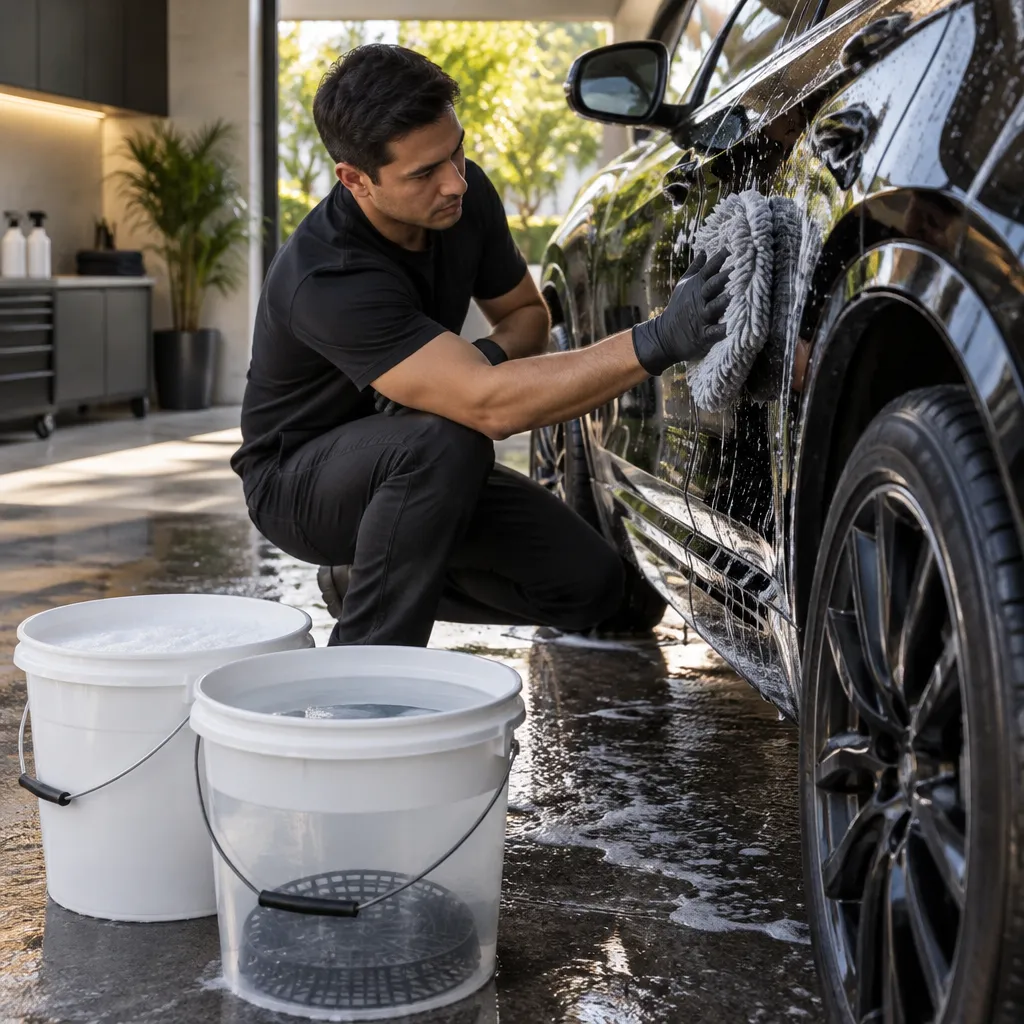
Dish soap is a habit we see often. It removes road film well, but it also strips wax and sealant quickly. Once that protective layer is gone, clear coat takes more abrasion from every later wipe. A paint surface that feels squeaky or grabby under the towel is a sign that it has lost its slickness and is working hard against the cloth.
The single-bucket wash
Dunking a mitt in one bucket puts the dirt you removed from the lower panels back onto the upper doors and hood. Each dip reloads the mitt with grit. That cycle of pick up and redistribute is how a wash that looks clean can add fresh swirls with every pass.
Cold weather and ice on paint
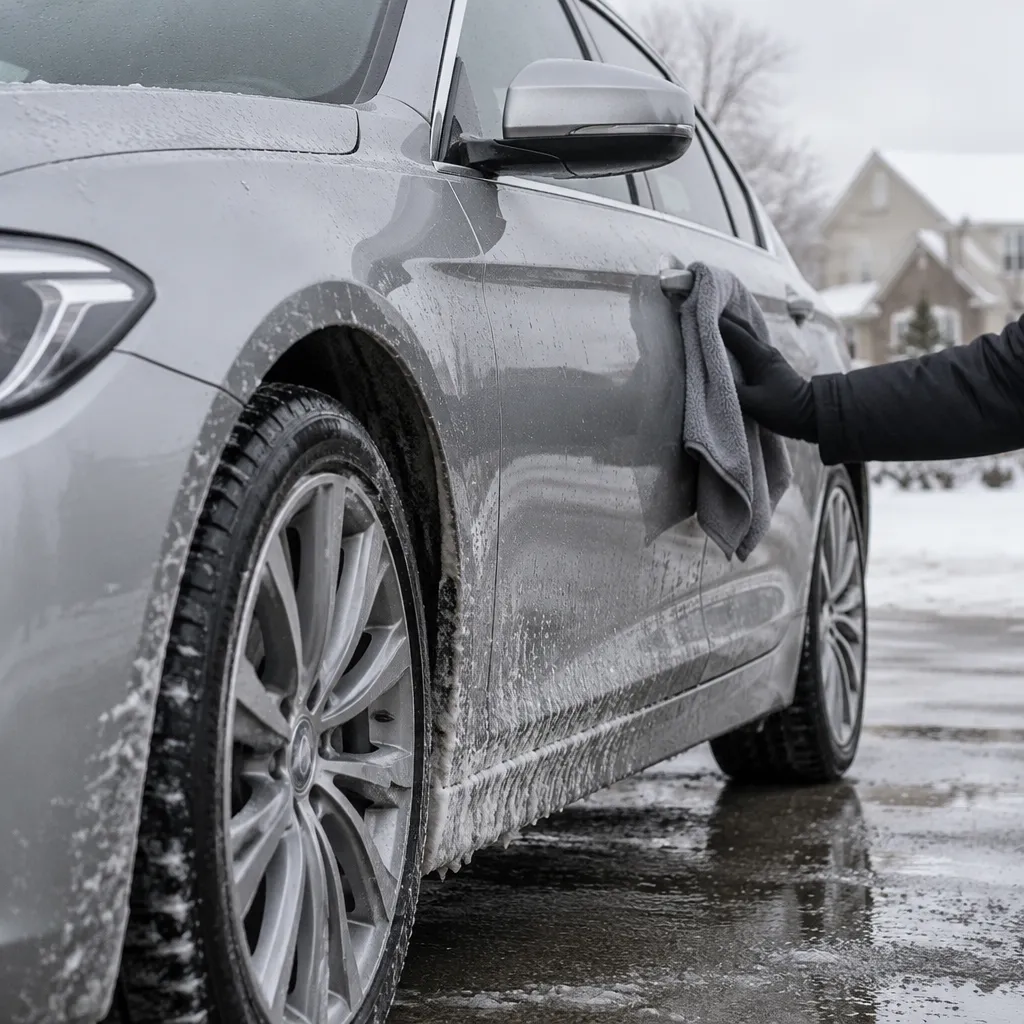
In late fall and early spring, the problem shifts to freezing water. Water collects in door seams, on mirror housings, and around badges, then freezes overnight. Owners who scrape that ice with plastic tools, or with a stiff brush, are dragging hard particles across the paint. Ice scraping is a direct path to swirls and chips. Wait for a warm afternoon, or use a gentle rinse on frozen areas and let the car thaw before you touch it.
Wash Methods Compared: Where the Swirls Come From
Not every wash method carries the same risk. The table below compares three approaches that many drivers in the Chicago suburbs use, along with the main swirl risk each one brings. The difference usually comes down to how much grit the wash media can hold and whether it is rinsed between panels.
| Wash Method | Main Swirl Risk | What to Do Instead |
|---|---|---|
| Tunnel wash with spinning brushes | Shared brushes carry grit and salt from previous cars into your paint | Choose a touchless or well-maintained tunnel, pre-rinse heavily, and skip the blower on a dirty car |
| Single-bucket hand wash with dish soap | The mitt reloads with grit on every dip, and the soap removes wax or sealant | Use a pH-balanced car shampoo and rinse the mitt in a separate bucket |
| Two-bucket hand wash with grit guards | Lowest risk when done properly, but dragging a dry towel afterward can undo the work | Wash top to bottom, rinse the mitt after each panel, and dry by blotting |
The two-bucket method works because the grit settles in the rinse bucket instead of returning to the wash water. A grit guard at the bottom of each bucket keeps the particles from being picked up again. The method is simple, but it only works if you actually rinse the mitt between panels, not just once at the start.
Grit guards and the rinse bucket
A grit guard is a plastic insert that sits at the bottom of a bucket and traps particles below the mesh. Without one, dirt that falls to the bottom gets stirred back into the wash water with each dip. The rinse bucket is where you clean the mitt before it returns to the soapy water. Skipping that step is the single most common reason a two-bucket wash still leaves swirls.
When a hand wash is still the wrong choice
Hand washing in a parking lot, or in a driveway with sand and grit on the surface, can introduce more contamination than it removes. If the car is visibly gritty, rinse it thoroughly first, then decide whether the wash can be done safely. A brief rinse and a return visit on a cleaner surface is often better than scrubbing grit into the finish.
Seasonal Contaminants That Turn Into Swirls
Illinois throws a different kind of grit at your car each season, and each one changes how the wash should be done. Winter salt and sand are the most aggressive, but spring pollen and fall leaf debris cause problems too, mostly because owners wipe them off dry.
Winter salt and sand
Road salt and sand build up on lower panels and wheel wells. A wash that only hits the upper body leaves that film behind, and a later wash that scrubs it with a dirty mitt is what creates the swirl. Rinse the lower third first, work up toward the roof, and never reuse the wash water on the lower panels for the upper body.
Spring pollen and summer dust
Pollen is fine and dry, so it settles onto the car and grinds in when you wipe it. Summer dust from construction and dry roads behaves the same way. A gentle rinse before any contact removes most of it. Dry dusting with a cloth is the habit to drop, even if it looks effective.
Fall leaves and wet debris
Wet leaves and tree sap sit on the hood and roofline and can etch the finish if they are left in place. Leaves also hold moisture against the paint. Remove them with a rinse and a soft pass, not with a hard brush or a scraper. The goal is to remove the debris in the same wash rather than letting it dry overnight.
After-Wash Protection and Maintenance
Protection reduces swirling because it gives every wipe a sacrificial layer to move across. A wax or sealant can wear down within weeks of regular washing, and once it is gone, even light contact can mark the clear coat. Keeping that layer intact is a practical part of swirl prevention, not an optional extra.
Our own process uses nano-ceramic SiO₂ coatings with 5-8 year warranties. A coating does not make the car immune to bad washing. It makes dirt release more easily and makes the surface slicker, which helps, but the wash method still decides whether new marks appear. In seven years of detailing more than 500 vehicles, the owners who keep swirl-free paint tend to be consistent about the same few habits.
A maintenance wash schedule that works
Wash on a schedule that matches the season rather than waiting for visible buildup. In winter, rinse the lower panels after salt events and do a proper wash when temperatures allow. In spring and summer, rinse off pollen and dust before every contact wash. The longer contaminants sit, the more likely they are to be dragged across the paint.
Paint correction is a repair, not a reset
Machine polishing removes swirls by leveling the clear coat around the fine grooves. It restores gloss and clarity, but it does not change what happens next. If the same brush wash, dry wipe, or single bucket continues, the swirls return. Correction works best when the owner changes the process at the same time.
Pro tip: Before paying for any correction, write down your last five washes. Mark where you used a tunnel, a bucket, a dry towel, or a sleeve. That list usually shows the habit that needs to change first.
Frequently Asked Questions
What causes swirl marks on a car?
Swirl marks are fine scratches in the clear coat caused by abrasive particles dragged across the paint during washing and drying. The most common sources are dirty wash media, shared tunnel brushes, dish soap that strips protection, and dry wiping of pollen or dust.
Are automatic car washes the main cause of swirl marks?
They are a common contributor, especially tunnel washes with shared brushes. Home washing with one bucket or dragging a dry towel across the paint causes plenty of swirls too, so the wash method matters more than the location alone.
Can swirl marks be removed completely?
Light swirls can usually be reduced with machine polishing. Deeper scratches that catch a fingernail may need more work, and the repair can only remove marks that have not gone through the clear coat. If the habits that caused the swirls stay the same, new ones will appear.
Does a ceramic coating prevent swirl marks?
A ceramic coating reduces how easily marks form and makes contamination easier to remove, but it does not stop abrasive contact. A coating helps most when the wash method is correct, and it makes any remaining marks easier to see and correct later.
Is dish soap bad for car paint?
Dish soap removes grease well, but it also strips wax and sealant quickly. A pH-balanced car shampoo cleans effectively while leaving more of the protective layer in place, which reduces how much abrasion the clear coat absorbs.
How should I wash my car in winter to avoid swirls in Illinois?
Rinse the lower panels after salt events instead of waiting for a heavy buildup. When you do a full wash, pre-rinse thoroughly, use two buckets, and dry by blotting. Never scrape ice from the paint with plastic tools or stiff brushes.
Tell us which habit from this list you recognized in your own routine, or share what finally stopped the swirls on your car.
We would love your feedback and any insights you would share with others. What perspective would you add?
References
- Community discussion on what exactly causes paint swirls
- Guide on how to wash a car without causing swirl marks
- Owner post describing swirl marks after a car wash