Walk through any parking lot in Glendale Heights in February and you will see the same three problems repeated across different wheel finishes: brake dust baked onto the face, white salt scale creeping up the lip, and a sheen that looked sharp in October and tired by March. Most owners treat wheels as one category and buy one product for all of them. That is the mistake. Chrome, satin, and gloss-black wheels behave like three different materials once road salt and brake dust arrive, so a sound wheel coating Illinois strategy starts with identifying the finish you already have.
Table of Contents
- Quick Takeaways
- Why Finish Type Sets the Protection Strategy
- Chrome Wheels: Protecting Mirror Plating From Salt
- Satin Wheels: Why Texture Hides Wear but Still Needs Care
- Gloss-Black Wheels: Every Swirl Shows
- Choosing Protection by Finish
- Winter Salt and Wheel Protection in Illinois
- Frequently Asked Questions
- References
Quick Takeaways
| Key Insight | Explanation |
|---|---|
| Chrome shows damage as pitting | Salt and magnesium chloride deicer attack chrome plating. Rinse chrome wheels after treated-road days, not once a month. |
| Chrome does not need a rust topcoat | The plating resists rust on its own, so your protection job is against chemistry and abrasion, not rust. |
| Satin hides light wear | Fine scratches and swirls are less visible on satin than on gloss, but brake dust still turns satin grey and flat. |
| Gloss-black exposes every defect | A high-gloss face reveals swirls, scuffs, and residue film, so it needs gentler washing and more frequent cleaning. |
| Acid and bleach are off limits on powder-coated faces | Tarnish and rust removers can dull or strip coatings that were never designed to handle them. |
| Salt season is its own maintenance phase | A coating buys time against salt, but it does not stop brine from sitting on the wheel. Rinse within a day of treated-road exposure when you can. |
Why Finish Type Sets the Protection Strategy
A wheel finish is not one thing. It is a stack of layers, and each stack fails in its own way. Chrome-plated wheels are built from several layers of copper, nickel, and chromium, while powder-coated wheels are a dry paint baked onto the metal. Clear-coated machined wheels rely on a thin sealant over shaved aluminum, so each construction has a different weak point.
In practice, we sort every wheel by what the owner can actually damage. On chrome, the risk is chemistry: salt and deicers that start pitting and corrosion in the plating. On satin and gloss paint, the risk is abrasion and film buildup from brake dust and dirty wash tools. On powder-coated wheels, the risk is the cleaner itself, because an aggressive product can strip or dull a finish that was never meant to handle acids.
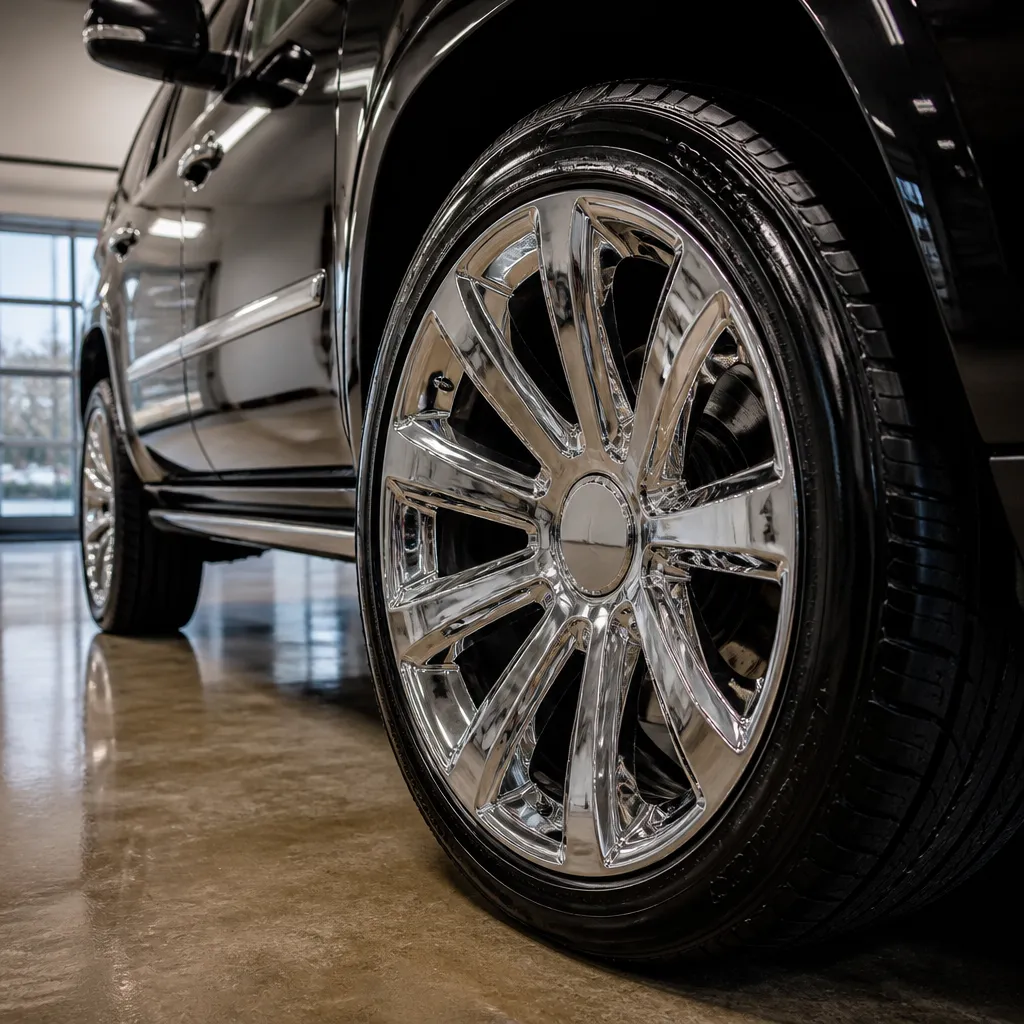
That sorting step matters more than the brand of coating you choose. A coating that looks excellent on a gloss-black set can add more shine than a satin owner wanted, and a sealant that works well on chrome may do little against brake dust on a painted face. Start with the finish, then pick the product.
Pro tip: Check your finish in direct sunlight before buying any wheel product. A mirror-like reflection points to plating, a flat or velvety sheen points to satin or matte paint, and a deep, wet shine points to gloss paint or a clear coat over metal.
Chrome Wheels: Protecting Mirror Plating From Salt
Chrome is the most reflective finish you can put on a car, and it is also the least forgiving once winter arrives. The plating is thin, and the surface is only as good as its last rinse. Once a pit forms in the plating, no polish brings back the original mirror.
Why Chrome Does Not Need a Topcoat to Stop Rust
Chrome plating does not rely on a topcoat to resist rust the way bare or painted aluminum does, which is why owners often assume they can skip protection entirely. That assumption is where the trouble starts. The plating resists rust on its own, but it does not resist road salt, magnesium chloride deicer, or acidic brake dust sitting on the surface.
The protection job on chrome is therefore about chemistry and cleanliness. A sealant or coating helps by putting a barrier between deicer residue and the plating, so each wash removes more of what would otherwise etch in. It will not make chrome immune, and anyone who tells you otherwise is selling something.
Winter Salt and Magnesium Chloride on Chrome
Published care guidance for chrome is consistent on one point: drivers in areas where deicers such as salt and magnesium chloride are used should clean their wheels frequently, because that is how pitting and corrosion get headed off. Chicago-area roads spend much of the winter under exactly that treatment. A chrome wheel rinsed once a month in January is already behind.
The habit that works is simple. Rinse the wheels after any day the roads were treated, and pay attention to the lip and the areas behind the spokes, where brine collects and dries. Those spots are where the first haze usually shows.
Cleaning Chrome Without Scratching It
Use mild soap, water, and soft microfiber. Never use steel wool or abrasive pads on chrome, because the fine scratches they leave catch light and turn the surface dull. Brake dust should come off on a regular schedule, not during a yearly deep clean, since residue that bakes on through a hot summer is much harder to lift.
The finish you can see is only as protected as the routine that keeps contaminants off it. On chrome, that routine matters more than the product you put on top.
Pro tip: Keep one bucket and one set of microfiber towels for wheels only. Brake dust carries grit, and a towel that cleaned a dirty rocker panel can leave fine scratches on plating.
Satin Wheels: Why Texture Hides Wear but Still Needs Care
Satin sits between matte and gloss, with a low sheen that looks deliberate on a modern wheel. Its biggest practical advantage is forgiveness. Comparisons from wheel retailers and owner forums generally agree that minor scratches and swirls show up less on satin than on gloss, and that satin tends to hide imperfections better.
That forgiveness has limits, and this is where owners get surprised. Satin still looks dirty with brake dust. A film of residue shows on a satin face as a flat grey haze, and once it bonds to the surface, the wheel loses the even texture that made it look expensive in the first place.
Where Satin Forgives and Where It Does Not
Satin is easier to live with on light scuffs, and some published comparisons describe it as tougher against chipping than gloss. The downside is that satin can polish unevenly. Aggressive buffing or a glossy coating applied unevenly can change the sheen in patches, which is exactly the look a satin owner wanted to avoid.
That is why we treat satin defects with restraint. Light decontamination, a gentle cleaner, and a coating designed to preserve the existing sheen keep the finish consistent. Heavy polishing is rarely the right answer on satin.
Keeping Satin Uniform Through Brake Dust
The routine for satin is less about shine and more about removing residue before it sets. Use a wheel cleaner that is pH-balanced, rinse thoroughly, and dry with a clean towel so water does not leave mineral spotting. In our experience, satin wheels that look best in spring are the ones rinsed weekly through winter, not the ones polished in April.
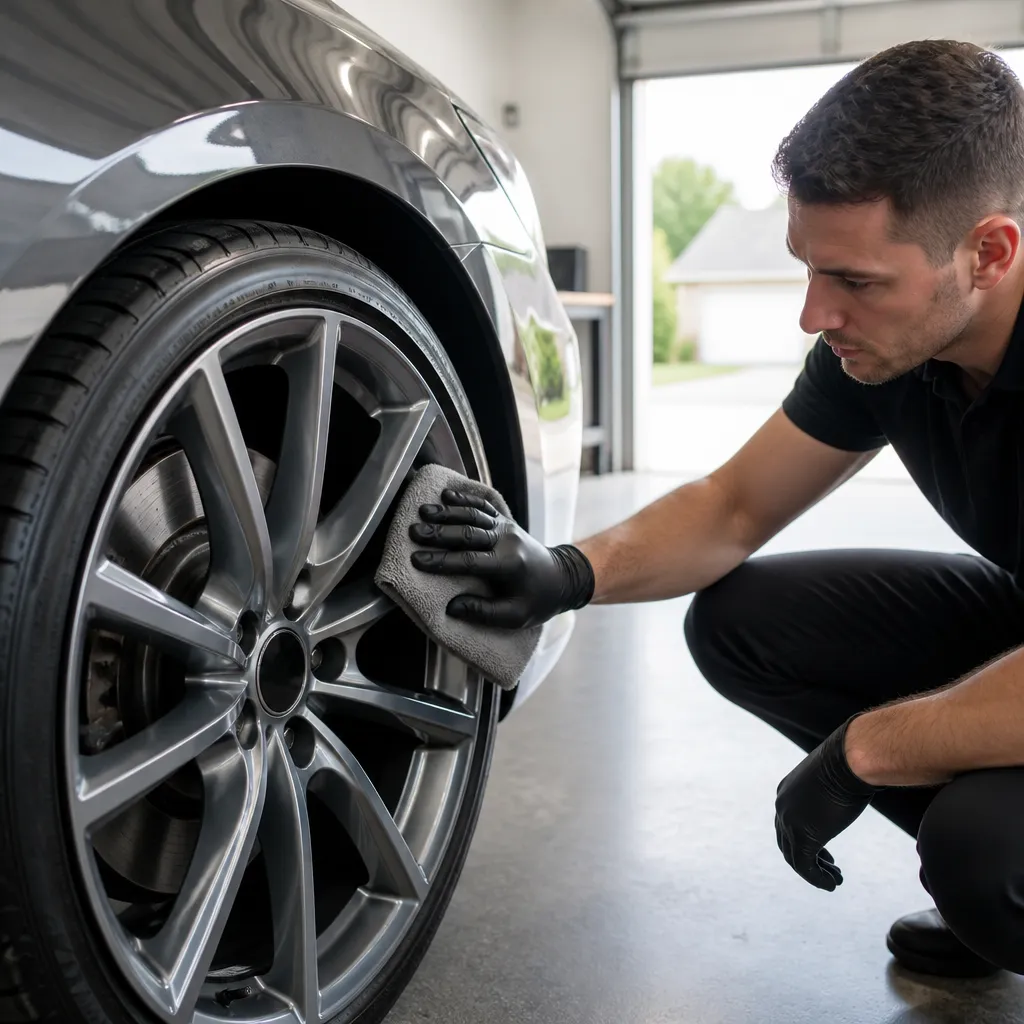
Keep the wash method consistent. Switching between a foam cannon, a bucket, and a dirty brush from a self-serve bay leads to uneven wear across the face. An even routine protects an even finish.
Gloss-Black Wheels: Every Swirl Shows
Gloss black is the dramatic choice, and it is the least forgiving of the three. A high-gloss paint or clear coat has nothing to hide behind. Minor scratches are more visible on gloss than on satin, and one owner discussion put it bluntly: gloss black shows everything.
Durability is the harder question. Some wheel retailers argue that matte and satin finishes hold up better in everyday driving because gloss scratches and scuffs more easily. That matches what we see in the shop. Gloss damage is often shallow, but it is visible from across a parking lot.
Scuffs, Swirls, and Why Gloss Reveals Every Wash
Gloss black picks up swirl marks from automatic wash brushes and from cleaning with a gritty mitt. The marks are fine, circular, and visible mostly in direct light, which is exactly when owners notice them. The fix is not aggressive compounding each season. It is a careful wash method that keeps grit off the surface in the first place.
Brake dust is harder on gloss, too. The dark, reflective surface makes a light film of residue look like a stain, so gloss owners end up cleaning more often than satin owners do.
Sealants and Coatings on Gloss Black
Gloss black benefits most from a sacrificial layer that makes each wash cleaner and slows the bonding of brake dust. A sealant or professional ceramic coating helps the surface shed contaminants and makes swirl marks less likely. It does not make the paint immune to scratches, and that distinction should be made clear before anyone pays for protection.
A coating makes gloss-black wheels easier to maintain, but it does not replace technique. One careless wash with a gritty mitt will still mark the face.
Pro tip: Before coating gloss-black wheels, confirm whether the face is clear coat over paint or paint alone. Painted faces often need a gentler decontamination step, and skipping it seals contamination under the new layer.
Choosing Protection by Finish
Once you know the finish, the product choice narrows quickly. The table below compares three common approaches. None is universally best, and the right answer depends on how much maintenance you will realistically do between seasons.
| Protection Option | Best Fit | Trade-off |
|---|---|---|
| Spray sealant topper | Chrome and satin wheels on a regular washing schedule | Quick to apply and easy to refresh, but it wears down faster in salt season and needs reapplication sooner |
| Professional nano-ceramic SiO₂ coating | Gloss-black and chrome wheels for owners who want easier long-term cleaning | Needs proper decontamination and prep first, and warranty coverage depends on following the maintenance schedule |
| Carnauba wax | Gloss-black wheels on show cars driven mostly in fair weather | Rich, warm shine, but it washes off quickly in road salt and needs frequent reapplication |
For a daily driver in the Chicago suburbs, we rarely recommend wax alone on wheels. The shine looks good in the driveway, but the winter months strip it fast. A sealant or coating does more useful work because it stays on through the cold.
Our nano-ceramic SiO₂ coatings carry 5 to 8 year warranties, and those warranties assume the maintenance program we set up at application. A coating that is neglected through salt season does not deliver the same result, no matter how well it was applied.
Winter Salt and Wheel Protection in Illinois
Illinois winters are hard on wheels for reasons beyond the cold. Road treatments put salt and liquid brine on the same surfaces you are trying to protect, and those residues do not care whether the finish is chrome, satin, or gloss. A wheel coating Illinois strategy has to treat salt season as a separate maintenance phase.
The timing matters as much as the product. Residue that sits for a week does far more damage than residue rinsed the same day. Every wheel owner in the area should plan around that simple fact.
A Salt Season Routine That Gets Done
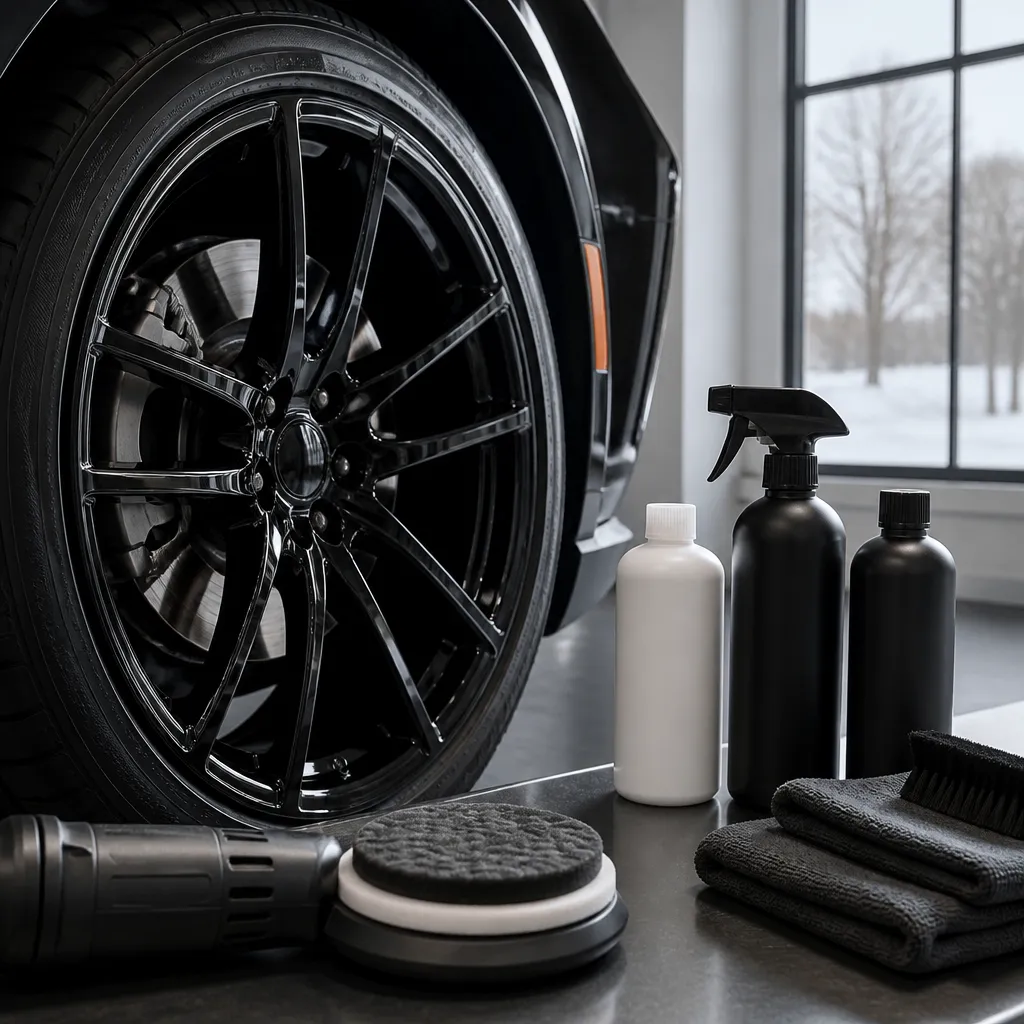
The routine that works is short enough to keep. Rinse the wheels after any day the roads were treated, then do a fuller wash after storms that leave brine behind. Focus on the lip, the inner barrel, and the spoke junctions, where residue collects and dries.
Add a monthly check on the brake caliper side of the wheel. Brake dust and salt mix there, and that combination dulls chrome and leaves a film on gloss faces faster than the outer face shows it.
Mistakes That Cost Wheel Finish
The most common mistake is waiting for spring to clean. By then, salt residue has been sitting for months, and the damage is no longer a cleaning problem. The second mistake is reaching for an acid-based wheel cleaner on powder-coated or painted faces, which can dull the finish in one application.
The third mistake is coating dirty wheels. Any contamination under a sealant or coating stays there, so a proper decontamination before application is the step that protects your investment.
Pro tip: Schedule a wheel rinse on the same day you wash the rest of the car during salt season. Pairing the two makes the habit easier to keep, and it stops wheels from falling behind the body.
Frequently Asked Questions
Can chrome wheels be coated?
Yes, chrome can be coated, and a properly applied coating makes winter cleaning easier. A coating does not repair existing pitting, though, so any pitted areas should be assessed before application.
Do satin wheels need a different wash than gloss-black wheels?
The basic steps are the same, but the tools and cleaners should be gentler on satin. Avoid abrasive polish on satin, since it can change the even sheen. Gloss-black wheels need the most careful contact, because every swirl is visible.
How often should wheels be cleaned during Illinois winters?
Rinse after any day the roads were treated, and do a fuller wash after storms that leave brine behind. A weekly routine is a sensible baseline during salt season, with extra attention to the lip and the spoke junctions.
Is it safe to use a tarnish remover on powder-coated wheels?
No. Published care guidance for powder-coated wheels says to avoid tarnish or rust removal products and bleach. Use soap, water, or a mild, non-acidic wheel cleaner with a microfiber or terry cloth instead.
Does a wheel coating stop brake dust?
A coating does not stop brake dust from being generated. It makes residue easier to rinse and reduces how firmly it bonds to the surface, which is why regular cleaning still matters.
Should wheels with swirl marks be coated right away?
Decontaminate and correct the defects first. Coating over swirls seals them in and makes them harder to address later, so the prep step is not optional.
Tell us in the comments which wheel finish you run and what winter did to it, because the problems Chicago-area drivers describe are the ones we want to cover in our next guide.
References
- Guide to six common wheel finishes and their basic care needs
- Guide to cleaning chrome, painted, and coated wheel finishes
- Owner discussion comparing satin and gloss black wheel upkeep
- Comparison of matte and gloss black wheel durability