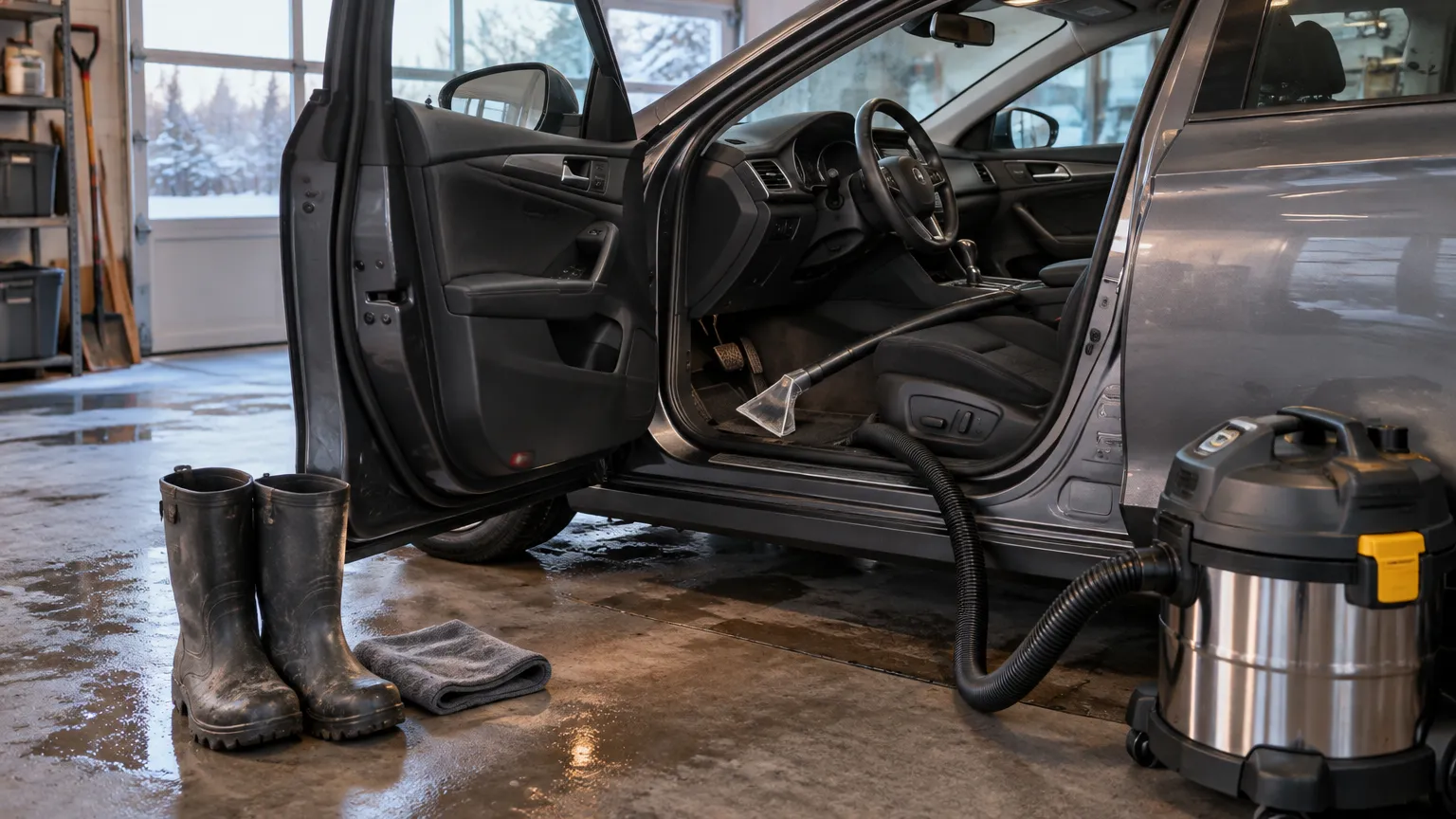
Car interior odor in winter is one of the most common complaints we hear from Illinois owners, and many of them garage their cars every night. You open the door on a cold morning and get a damp, sour smell that wasn't there in October. Garage parking keeps snow and wind off the paint, but it does nothing to stop what you carry inside. Road salt, slush from boots, and the constant swing between a cold car and a warm cabin all push moisture into carpet padding and seat foam. Air fresheners cover the top layer, but the source stays put. Here is what is happening inside the cabin, and why hot water extraction, done properly, is the fix that actually lasts.
Table of Contents
- Quick Takeaways
- Why Garage Parking Does Not Stop Winter Odors
- How Moisture Gets Trapped in Carpet and Seat Foam
- Where Winter Odors Hide in a Garage-Kept Car
- Why Extraction Fixes the Source, Not Just the Smell
- Comparing Odor Removal Methods
- Steps to Take Before and After a Winter Extraction
- What a Professional Extraction Visit Looks Like
- Frequently Asked Questions
- References
Quick Takeaways
| Key Insight | Explanation |
|---|---|
| Salt and slush are the main moisture source | Road salt and melted snow from boots and coats carry water deep into carpet padding, where it stays long after the floor looks dry. |
| A garage does not guarantee a dry cabin | A cold car that warms up in a heated garage can fog and collect condensation, and an unheated garage lets the cabin cool and hold dampness. |
| Air fresheners mask odor, they do not remove it | Scented products hide the smell for a few days, but the microbes feeding on damp fabric keep producing it. |
| Extraction removes what the smell feeds on | Hot water extraction pulls out the water, salt, and food residue that microbes need, rather than sitting on the surface. |
| Check the hidden spots first | Spare tire wells, areas under the front seats, and the space behind floor mats are where damp collects. Press a dry towel firmly into the carpet to test for moisture. |
| Drying is part of the fix | Carpets and seats must dry completely before the doors are shut again, or the same odor comes back within days. |
Winter odor problems rarely come from one big spill. They build up from small amounts of water and salt that never fully leave the car, and by February the padding has become a damp, enclosed sponge. The sections below explain where that moisture comes from, where it hides, and what a proper extraction changes compared with the quick fixes most owners try first.
Why Garage Parking Does Not Stop Winter Odors
Many owners assume a garage keeps the car sealed off from winter. In practice, a garage only changes which moisture sources matter. The car is protected from falling snow and wind, but it still gets driven on salted roads, and it still comes home with wet footwear and snow-covered coats.
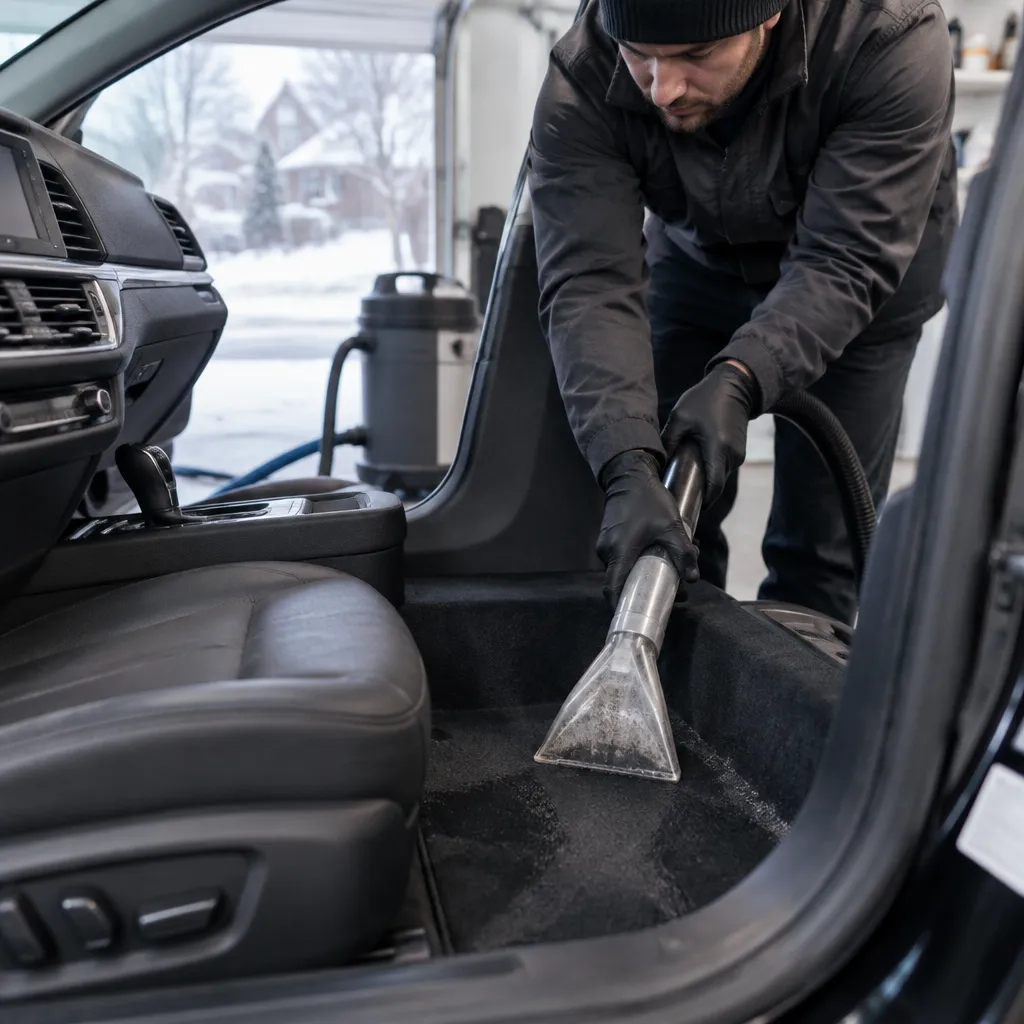
Temperature swings are the second problem. When you drive in from a cold morning, warm cabin air meets cold glass and fabric, and the windows fog. That moisture does not always evaporate. It settles into the carpet, the headliner edges, and the seat foam, and it stays there if the car is parked overnight with the doors shut. An unheated garage makes this worse because the cabin temperature drops and holds the dampness longer.
A common suggestion you will see online is to open the doors and let the car sit in direct sun for a couple of hours. That can help in July, but it does very little in a Glendale Heights January. Low sun, cold air, and the lack of real airflow mean the carpet stays damp underneath, and the odor returns as soon as the doors close again.
In practice, the owners who struggle most are the ones who keep their cars clean on the outside and assume the inside is fine. Salt and meltwater are invisible on dark carpet, so the floor looks dry while the padding underneath is still wet. That gap between what looks clean and what is wet is where winter odor starts.
How Moisture Gets Trapped in Carpet and Seat Foam
Carpet and cloth seats behave like sponges, and the foam underneath them behaves like a reservoir. Once water gets into that padding, it does not dry on its own in a closed cabin during cold months. Understanding the path the water takes is the key to fixing it properly.
Wet boots and salt carry water inward
Every trip in slush adds water and dissolved salt to the floor mats. The mats catch most of it, but the water runs to the edges and soaks through the carpet where the mat does not fully cover. Salt is the part that causes the lasting problem, because it attracts and holds moisture, so the damp area stays damp longer than plain water would.
Passengers do the same thing. A dripping umbrella, a wet dog, or a child's snow pants can leave enough water in one trip to saturate a rear floor section. If the car is then parked in a closed garage overnight, that water has nowhere to go.
Why the padding under the carpet holds the smell
The foam layer under the carpet is the real problem area. It absorbs water quickly, and it releases it slowly, which means the surface can feel dry while the middle of the pad is still wet. Microbes can grow in that damp, dark environment and feed on dust, skin cells, and spilled food. The musty smell is the byproduct of that activity.
This is why surface wiping and a quick vacuum rarely solve winter odor. The smell is coming from the layer you cannot see, and surface cleaning does not touch it.
Pro tip: After a snowy drive, pull the floor mats and lift a corner of the carpet near the door sill. If the carpet feels cool or damp to the touch, moisture has reached the padding, and the car needs more than a vacuum before it is closed up for the night.
Where Winter Odors Hide in a Garage-Kept Car
Winter odor is not evenly spread through the cabin. It concentrates in a few predictable places, and knowing them helps you explain to a detailer exactly what you are noticing. It also helps you spot problems early, before the smell becomes embedded.
Spare tire well and trunk floor
The spare tire well is one of the most common hiding spots in a sedan or SUV. Snow and salt drip off tires and wheel arches during loading, and the well is a shallow basin that collects water. If the trunk liner is not lifted for cleaning, the moisture can stay there for weeks.
Trunk odors often feel like a separate problem, but they can travel into the rear cabin when the seats are folded or when the trunk is opened in a closed garage. A musty trunk is a strong early warning sign.
Under the front seats and behind floor mats
Under the front seats gets dirt, gravel, and wet debris that falls off shoes and bags. Those particles hold moisture against the carpet, and they are hard to reach with a standard vacuum. Behind the floor mats is similar, because the mat sits on the carpet and traps any water that runs underneath it.
These spots also hold food residue, such as coffee, snack crumbs, and fast food packaging. Once those organic materials are damp, the odor becomes much harder to remove with spray products alone.
The HVAC system and cabin air filter
The climate system can add a second layer of odor. The evaporator behind the dashboard collects condensation during use, and in winter it can stay damp longer than owners expect. If the cabin air filter is old or clogged, dust and moisture reach that area and cause a musty smell when the fan runs.
Owners often blame the seats for a smell that is actually coming through the vents. If the odor is strongest when you turn on the fan or defrost, the climate system should be checked as part of the cleaning visit, not after.
Why Extraction Fixes the Source, Not Just the Smell
Hot water extraction is the most direct way to deal with winter moisture in carpet and cloth seats. The process applies heated water and cleaning solution under pressure, then pulls the liquid, along with the dirt, salt, and residue it carries, back out through a vacuum. The goal is to remove the material the microbes depend on, not to cover it with fragrance.
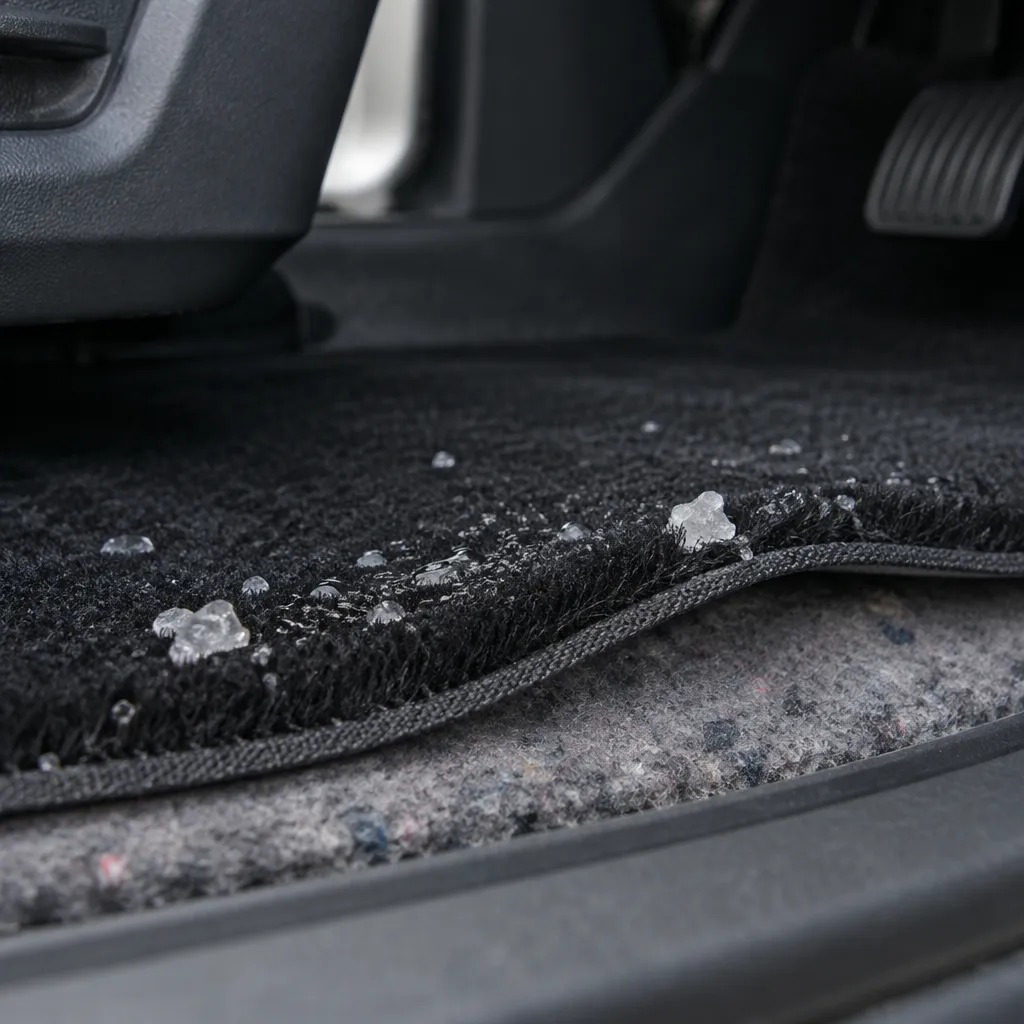
Extraction is only useful if the drying stage is handled properly. A carpet that is extracted but left damp can smell worse within days, because the moisture that remains is now cleaner and easier for microbes to use. The drying process is as important as the cleaning itself.
What hot water extraction actually removes
Extraction removes dissolved road salt, the dirt that holds moisture against the fibers, and the food and drink residue that feeds odor. It also pulls water out of the carpet and, when done correctly, reduces the amount of moisture left in the padding. Surface cleaning cannot reach any of this.
Steam cleaning complements extraction well. High-temperature steam reaches vents, seams, cup holders, and trim, where the odor often lives. Used together, the two processes clean the carpet from the surface down and address the areas that a vacuum or wipe-down misses.
Enzyme treatment and ozone for stubborn odor
Some odors need more than cleaning. When a car has a persistent musty or mildew smell, enzyme treatment can break down the organic material that microbes use as food. Enzymes work on the source, which is why they are effective where fragrance products fail.
Ozone therapy is another option for severe cases, such as strong mildew or lingering smoke or pet odor. It is a targeted tool, not a default step. A proper odor assessment decides which method fits the car, and a detailer who skips that assessment and sprays the same product everywhere is not solving the problem.
Pro tip: Ask whether the service includes a drying plan. A good extraction is followed by time with the doors open or fans running, and the car should not be closed up overnight while the carpet is still damp.
Comparing Odor Removal Methods
Most owners try a few methods before booking a professional visit. Each one has a use, but they solve different parts of the problem, and only one of them reaches the moisture in the padding.
| Method | What It Does | Where It Falls Short |
|---|---|---|
| Scented air fresheners and sprays | Covers the smell for a short time with fragrance | Does not remove water, salt, or microbes, so the odor returns once the scent fades or the car gets damp again |
| Home carpet shampoo or baking soda | Lifts surface dirt and absorbs some surface odor | Rarely reaches the padding, and leftover product can leave residue that holds moisture and attracts more dirt |
| Professional hot water extraction with drying and enzyme treatment | Removes water, salt, and residue from the carpet and seats, then targets the organic material that causes the smell | Requires the car to dry fully afterward, and it is a service, not a quick fix you can do in a driveway |
The practical lesson is that the right method depends on where the moisture went. If the smell is light and limited to the surface, a good cleaning may be enough. If the smell returns after a few days or gets stronger when the car warms up, the moisture has reached the padding, and only extraction with proper drying will address it.
Air fresheners are the most common mistake. They make the car smell better for a short time, which hides how serious the problem has become. By the time the owner calls a detailer, the odor has often moved deeper into the foam, and the job takes longer as a result.
Steps to Take Before and After a Winter Extraction
The results of an extraction depend on what happens before and after the appointment. A few simple steps make the difference between a car that smells clean for the rest of the season and one that is back to musty within a week.
Before you book: clear out the car
Remove personal items, trash, floor mats, and anything stored in the trunk. Bring your car to the appointment with the cabin as dry as possible, and note where you notice the smell most strongly. Those details help the detailer find the source faster, and they make the odor assessment more accurate.
If there is a known spill, tell the detailer about it. Coffee, sugary drinks, and pet accidents need to be identified early, because they change which products and steps are used.
After the service: keep moisture out
Keep the car closed only after the carpets and seats are fully dry. Avoid parking in a closed garage overnight immediately after the service, and do not reinstall damp floor mats. Use the mats that came with the car, and replace them if they are worn or cannot dry completely.
For the rest of the winter, keep a dry towel or floor mat in the car for snow and wet boots. Check the cabin air filter on schedule, and run the fan on a low setting for a few minutes after a wet drive to help clear condensation from the system.
Pro tip: Keep a small bag of dry towels in the trunk during winter. When you come in from snow, wipe the boots and blot the carpet at the door sill before you park. Ten minutes of this habit prevents most of the moisture that builds into odor.
What a Professional Extraction Visit Looks Like
At Hersheys Detailing, interior work is done at our studio at 2017 Bloomingdale Rd in Glendale Heights, by appointment only, Monday through Saturday. We serve Carol Stream, Bloomingdale, Wheaton, Villa Park, Lombard, Addison, Roselle, Glen Ellyn, and Hanover Park. Owners in those areas often bring in cars that have been garaged all winter and still carry a musty smell.
Our interior detailing includes deep extraction, steam cleaning, leather conditioning, odor neutralization, and trim restoration. Enzyme treatment and ozone therapy are available for severe smoke, pet, or mildew cases. Every odor job begins with an assessment so we can see where the moisture is before we choose a method.
Our refresher package, which starts at $249 for sedans, $299 for SUVs, and $349 for oversized vehicles and trucks, is designed as a light refresh for cars that are not heavily contaminated. It is not meant for a car with deep moisture or a strong odor. If your car smells damp or musty, request a full interior evaluation so the right process is quoted. Final pricing is confirmed after we review your vehicle.
To book, use the booking page or call (331) 231-0176. You can also email support@hersheysdetailing.com. Booking requests are reviewed and clients are contacted within one business day to confirm the appointment and finalize pricing. No payment is collected when you submit a request.
Pro tip: When you call, describe when the smell is strongest, such as after driving in snow, when the defroster runs, or only in the morning. That detail tells us whether the problem is in the carpet, the trunk, or the climate system.
Frequently Asked Questions
Why does my car smell musty after sitting in the garage all winter?
Moisture from snow, salt, and condensation gets into the carpet padding and seat foam during the winter, and a closed garage does not let it dry out. Microbes feed on that damp material and produce the musty smell. The odor is usually strongest in the morning or after the car warms up.
Can an air freshener fix winter car odor?
An air freshener covers the smell for a short time but does not remove the water, salt, or microbes causing it. Most owners find the odor returns once the scent fades. Fresheners are fine as a finishing touch after a proper cleaning, but they are not a fix on their own.
Does hot water extraction damage car carpets or seats?
Extraction can be done safely when the technician controls the water, the cleaning solution, and the drying process. The risk comes from leaving the carpet damp for too long, which is why drying is part of the service. Ask how the car will be dried before the appointment ends.
How long does a car take to dry after an extraction?
The drying time depends on how deep the water went, the humidity, and whether the car is in a heated space with airflow. The carpet and seats should be fully dry before the doors are closed for the night. Your detailer should tell you what to expect and when the car is ready.
Is the $249 interior and exterior package enough for a smelly car?
The $249 sedan package is a refresher for cars that are not heavily contaminated, and it is not designed for deep moisture or strong odor. If your car smells damp or musty, request a full interior evaluation. Final pricing is confirmed after we review your vehicle.
Tell us what finally got rid of the winter smell in your car, and which fixes did nothing for you.
We would love your feedback and any insights you would share with others. What perspective would you add?