Most Illinois owners treat winter storage as an afterthought. They pull the car into the garage in November, then discover in April that the battery is dead, the tires have flat spots, and road salt has etched the paint. A car that sits for four or five months does not stay the way you left it. Moisture, stale fuel, rodents, and slowly drying contaminants all work on it while it waits. Good winter car storage in Illinois is a single preparation routine done before the car goes quiet, and it costs far less than the repairs it prevents. Here is what we tell clients in the Chicago suburbs to do before the keys go on the hook.
Table of Contents
- Quick Takeaways
- Why Illinois Winters Are Hard on Stored Cars
- Pre-Storage Wash and Decontamination
- Paint Protection Before Storage
- Fuel, Fluids, and Stabilizer
- Battery, Tires, and Brakes
- Interior Prep: Moisture, Pests, and Odor
- Garage Setup: Floor, Airflow, and Covers
- Common Mistakes That Cost Owners
- Frequently Asked Questions
- References
Quick Takeaways
| Key Insight | Explanation |
|---|---|
| Decontaminate before you store | Road salt and brake dust left on paint for months can etch the clear coat. A rinse is not enough, so finish with a clay or iron decontamination. |
| Fill the tank and add stabilizer | A full tank limits condensation inside the fuel tank. Add stabilizer, then run the engine for a few minutes so treated fuel reaches the fuel system. |
| Decide on battery care early | Older vehicles can have the battery disconnected. Newer cars with constant electronic draw need a trickle charger or maintainer. |
| Set tire pressure carefully | A slight increase helps reduce flat spots, but never exceed the maximum pressure printed on the sidewall. |
| Dry and empty the cabin | Remove food, vacuum thoroughly, and place moisture absorbers inside. A damp cabin grows odor and mildew by spring. |
| Choose a dry, dark, clean garage | Pick a spot with limited access, room to walk around the car, and no water intrusion. Breathable covers beat plastic every time. |
Why Illinois Winters Are Hard on Stored Cars
Illinois winters combine cold snaps, freeze and thaw cycles, and long stretches of damp air, and a stored car feels all of it. An unheated garage in Glendale Heights or Wheaton can swing from well below freezing to mild within days. Each swing pulls moisture in and out of the car's materials, so the car never gets a stable rest.

Several problems show up on schedule. Batteries lose charge faster in the cold, rubber seals stiffen, tires develop flat spots where they bear weight, and condensation collects in the fuel tank and under the carpet. None of these problems is dramatic on its own, but together they turn a car that was ready in November into one that needs a tow in April.
What breaks down while the car sits
Fuel is the first thing to age. Gasoline left untreated for months can lose its volatility and leave varnish deposits in the fuel system, which is why hard starts and rough idling are common in spring. Oil that was never changed before storage carries combustion acids and contaminants directly into the engine's sealing surfaces while the car sits.
Rodents are the other quiet threat. They look for insulation, wiring harnesses, and cabin air filters, and a garage in the suburbs is an easy target. Mouse deterrents placed in the engine bay and air intake are a cheap step that many owners skip until they find chewed wiring.
Why the garage matters more than the car
Many owners assume the car is the variable, but the garage often decides the outcome. A damp garage with a dirt floor or a leaking gutter will undo careful preparation faster than any single fluid choice. Before you prep the car, check the space it will live in for water, temperature swings, and open access.
Pre-Storage Wash and Decontamination
The most important step in any winter storage plan happens before the car goes into the garage. Salt, brine residue, and industrial fallout sit on the paint and wheels, and they keep working while the car is parked. A car that is washed once and then stored will look worse in spring than one that was never washed at all.
Contamination left on a car for a season is not neutral. It turns into a finish problem that someone has to polish out later.
Why salt residue matters more before storage
Road salt does its damage in the presence of moisture, and a car stored in a humid garage stays damp in the crevices. Salt collects around rocker panels, wheel wells, door seams, and the underside of the hood. These spots need direct attention, not just a pass with a foam wash mitt.
Wheels deserve the same discipline. Brake dust is iron-rich and bonds to wheel finishes when it sits, which makes it harder to remove later. Clean the wheel faces, barrels, and tire sidewalls, and dress the tires so they are not carrying residue into storage.
Decontamination steps that actually matter
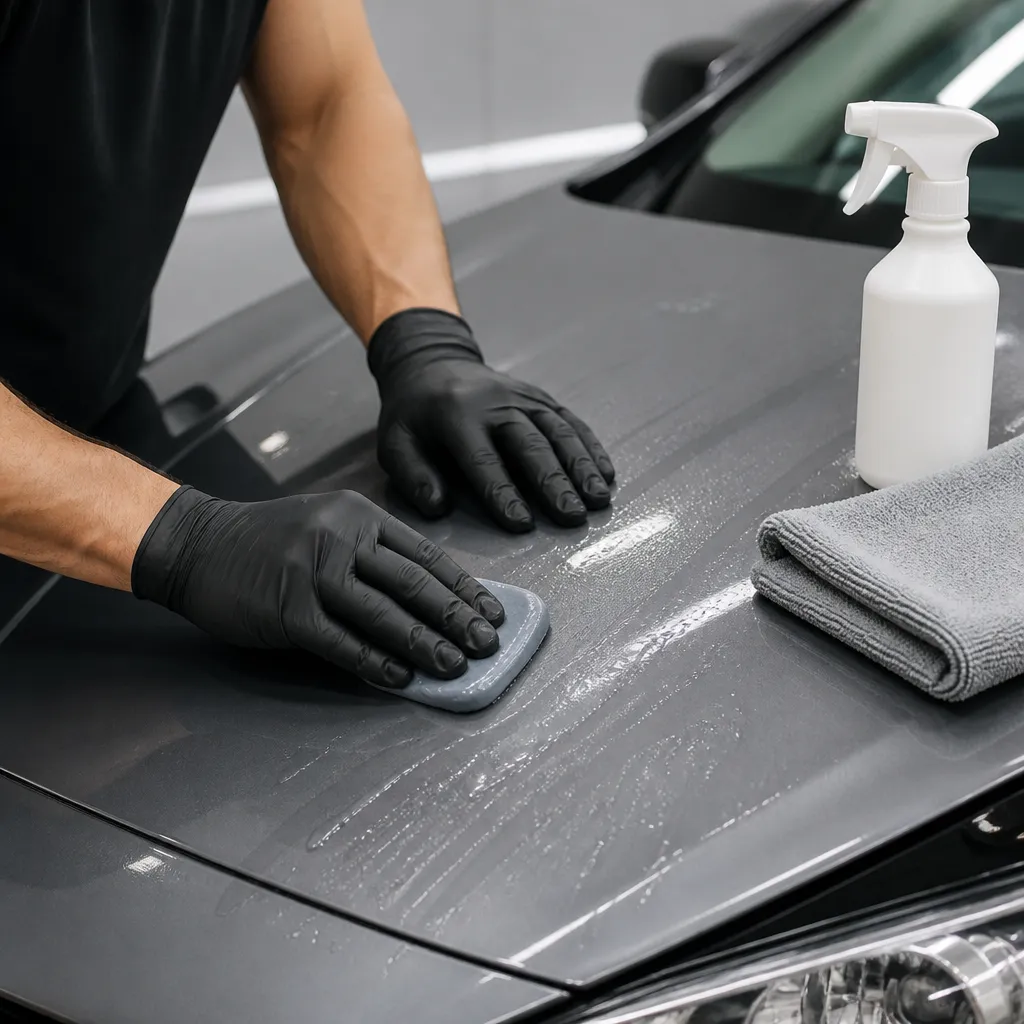
Once the car is clean and dry, run a chemical iron remover over the paint to dissolve embedded ferrous particles, then use a clay or synthetic clay mitt to pull out what remains. This step feels optional until you run a hand over the paint and feel grit that a wash never touched. Smooth paint also protects better, because the next layer bonds to a clean surface.
Dry the car completely before it goes into storage. Water trapped in door jambs, mirror housings, and trunk seals becomes a mildew and corrosion source over four months. Use a blower or a clean microfiber drying towel, and open the doors and trunk for a while in a dry area.
Pro tip: Wipe the door jambs, trunk lid gap, and hood channel with a damp microfiber towel after the final dry. Those areas hold residue that a normal wash misses, and they are the first places to show corrosion in spring.
Paint Protection Before Storage
Once the surface is clean, the question is what sits on top of it for the next several months. The right answer depends on how long the car will be stored, how often you plan to drive it in winter, and whether you want the finish protected through spring. We see owners make the same choice based on habit rather than the actual storage window, and that is where cost and results drift apart.
Protection before storage has one job: keep the clear coat sealed against moisture and contaminants while the car is idle. It does not need to be a show finish. It needs to be durable, bonded, and free of gaps where residue can sit.
Wax, sealant, or ceramic coating for a long sit
Traditional carnauba wax gives a warm finish and is simple to apply, but it breaks down in a few months and is not designed to hold through a long, damp storage period. Synthetic sealants last longer and resist the moisture that pools on surfaces in a cold garage. Professional ceramic coatings form a much harder, more durable layer that holds up to repeated exposure, which is why owners who store cars for winter often choose them when they want protection through spring and beyond.
Keep in mind that a fresh coating needs a cure window before it sees contamination or moisture. Applying a coating in late October gives it time to set before the car goes into the garage. Applying it on a car that is about to sit in salty slush is a waste of money.
Matching the protection to the storage window
If the car will be stored for three months and driven once a month, a quality sealant applied after a full decontamination is usually enough. If the car will be stored through spring, with only short weekend drives, a professional coating is worth the investment. Our ceramic coatings carry 5-8 year warranties, and the coating is the right move when the car will sit through several seasons of Illinois weather.
| Protection Option | What It Does During Storage | Best Fit |
|---|---|---|
| Carnauba wax | Adds gloss and a short-term barrier, but wears down within months and needs reapplication before spring. | Short storage periods and owners who enjoy hand application each season. |
| Synthetic paint sealant | Creates a longer-lasting moisture barrier and resists contaminants in a cold, damp garage. | Storage through one winter and owners who want protection without a multi-year commitment. |
| Professional ceramic coating | Forms a hard, durable layer that holds up well to repeated exposure and simplifies spring washes. | Luxury and high-end vehicles stored for multiple seasons or driven rarely through the year. |
Fuel, Fluids, and Stabilizer
Fluids are where most storage plans fall apart, because the damage is invisible until the car refuses to start. The goal is to leave every system in a stable state, with clean oil, treated fuel, and no water where it does not belong. Each fluid decision takes only a few minutes, and each one saves a repair bill in spring.
Fuel stabilizer and a full tank
Fill the tank close to full before storage. Less air space means less room for condensation to form, and condensation brings water into the fuel system. Add a fuel stabilizer at the rate printed on the bottle, then drive or idle the car for a few minutes so the treated fuel reaches the fuel lines and injectors.
Skip the temptation to run the tank nearly empty to avoid old gas. Running the tank low is the setup that invites moisture and fuel breakdown. A full tank with stabilizer is the simpler and more reliable method for a car that will sit for months.
Oil change timing before storage
Change the oil and filter before the car goes into storage, not after. Used oil carries combustion byproducts and moisture, and those contaminants sit against engine surfaces for the entire storage period. Starting spring with clean oil is one of the highest-value maintenance steps you can take.
Check the fill level after the change, then leave the car alone. Do not add extra oil to the top of the range just because the car will sit, because overfilling creates its own problems.
Coolant, washer fluid, and the rest
Confirm that the coolant mixture is rated for the coldest temperatures your garage will realistically see. A car stored in an unheated garage can see temperatures well below freezing, so a weak mixture is a real risk. Top off the washer reservoir with a freeze-rated fluid, or drain it entirely if you do not plan to use the washers until spring.
Pro tip: Put a small piece of painter's tape over the start button or key fob with a note that says "stored, fuel treated, battery maintained." It sounds silly until you come back in April and cannot remember what you did.
Battery, Tires, and Brakes
The battery, tires, and brakes are the parts most likely to create a problem the day you try to drive the car again. They fail in different ways, and each needs a specific approach. Getting the battery plan wrong is the most common reason a stored car does not start in spring.
Battery: disconnect or maintain
Older vehicles with simpler electronics can often have the battery disconnected for storage, which stops the slow drain entirely. Newer vehicles keep modules, security systems, and memory functions powered even when parked, so disconnecting can cause settings to reset and the car to behave oddly when you return. For those vehicles, a trickle charger or battery maintainer is the better choice, and it should stay connected for the whole storage period.
A battery that is already weak in October will not survive a Chicago winter stored unattended. Have it load tested before storage, and replace it if it fails. Replacing a dying battery in the fall is far less frustrating than a jump start on a frozen April morning.
Tire pressure and foam board
Tires develop flat spots when they bear the car's weight in one position for months. Raising pressure slightly before storage helps the tire hold its shape, but it must never exceed the maximum pressure printed on the sidewall. Overinflating a tire to fight flat spots creates a different problem and can damage the tire.
Parking the car on squares of two-inch foam board insulation is a practical way to reduce moisture contact and keep the tires off a cold concrete slab. Some owners also rotate the car a few feet every month or so, but that only works if the car can actually be moved safely.
Brakes and the parking brake question
Do not leave the parking brake engaged for a long storage period. Brake pads and rotors can bond to damp surfaces over time, and the brake can seize. Use wheel chocks instead, and make sure the car is in a secure position with the transmission set according to the manufacturer's guidance.
Interior Prep: Moisture, Pests, and Odor
The cabin is where a stored car gets its unpleasant surprises. Trapped moisture, food crumbs, and a closed environment create the perfect conditions for mildew and odor, and a musty interior can take hours of professional work to correct. Preparing the inside is quick compared with the cleanup it prevents.
Clean the cabin thoroughly before storage. Vacuum the carpets and seat cushions, remove trash and food, and clean any spills that have soaked into fabric, because residue attracts pests.
Moisture is the real enemy inside
Place moisture absorbers on the floor and in the trunk, and replace them as they fill. Leather and fabric need to be completely dry before storage, so do not close the car up after a rainy drive or a wet detail without airing it out first. Check the floor mats, the carpet under them, and the seals around the doors.
Cabin air filters are another easy target for mice and a source of odor when they absorb damp air. Replace the filter before storage if it is due, or remove it and store it in a dry place.
Pest control without making a mess
Skip loose poison and open bait inside the car, because pets and children can reach it and the residue can cause its own problems. Use mouse deterrents placed away from the cabin, such as in the engine bay near the air intake and in the trunk corners. Check these locations monthly, and clean out any droppings or nesting material you find.
Leather and upholstery before the cold sets in
Leather dries out when the cabin air is cold and dry, and a conditioner applied before storage helps prevent cracking. Use a product made for automotive leather, and follow the instructions to avoid leaving a greasy film. Upholstery and carpet should be fully dry and clean before any protectant goes on.
Garage Setup: Floor, Airflow, and Covers
The garage is the environment your prep work has to survive. A good storage space is dry, dark, clean, and has limited access and room to maneuver around the car. Those qualities protect the vehicle from moisture, light, theft, and the elements, and they are easy to check before you move anything in.
Choosing the right spot in the garage
Pick the driest, most protected spot in the garage, which is usually the side away from the overhead door and any exterior wall that gets wet from snowmelt. Keep the car off direct contact with a bare slab if possible, and use the foam board squares under the tires. Leave enough space to open the doors fully and walk around the car, because you will need access for checks throughout the winter.
Ventilation matters too. A fully sealed garage with no airflow can trap humidity, but an open garage can invite pests and wind-driven moisture. Aim for a space that stays dry and has a small amount of controlled airflow, and check for water intrusion after every heavy snowfall.
Covers: breathable only
A breathable car cover protects the paint from dust, debris, and accidental scratches while letting moisture escape. Plastic covers trap condensation against the paint, and that moisture can cause clouding, stains, and mildew under the cover. We recommend breathable covers for any vehicle stored in a garage in Illinois, and we recommend never covering a car that is still damp.
Power, trickle chargers, and garage access
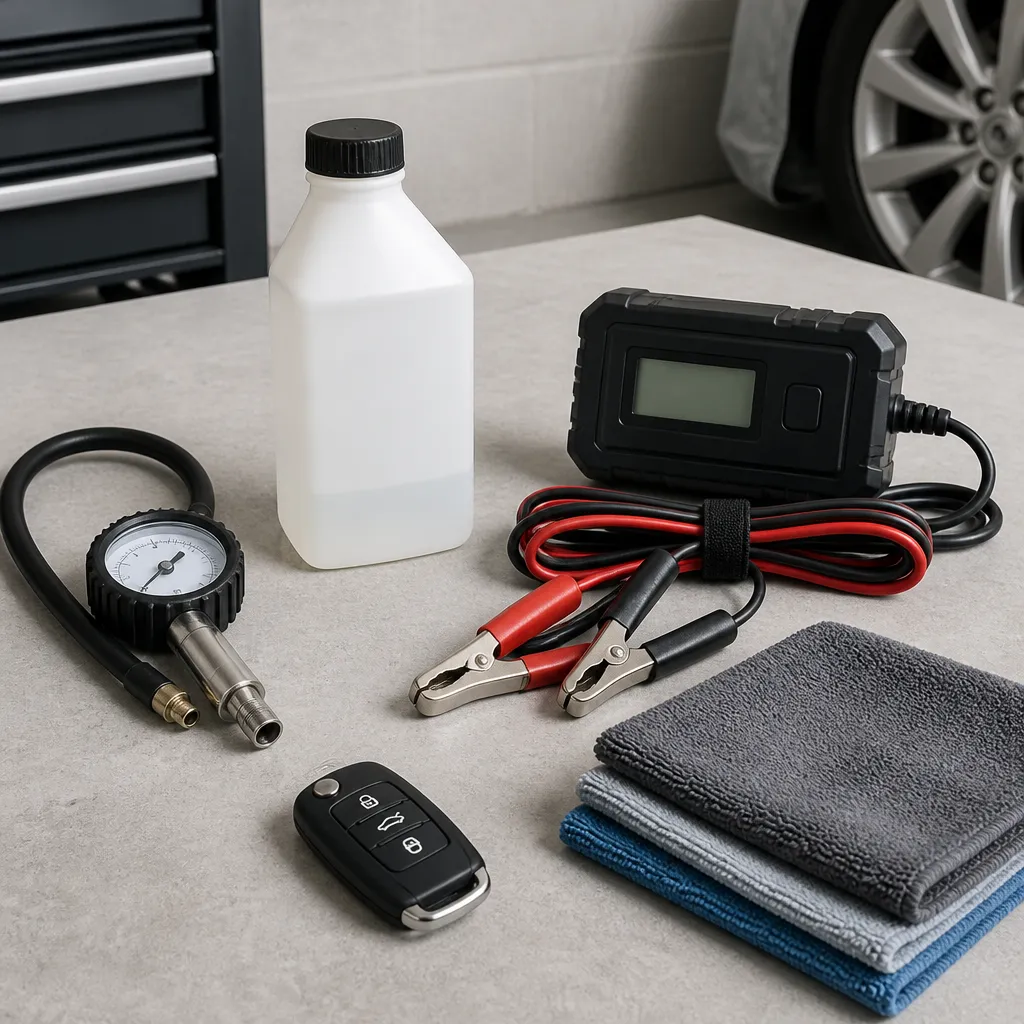
If you plan to use a trickle charger or maintainer, confirm that the outlet is reliable and protected. A tripped breaker or a loose extension cord can leave the battery to drain for weeks without anyone noticing. Set a monthly reminder to check the charger's status light and the outlet's condition.
Pro tip: Place a cheap hygrometer in the garage near the car and check it weekly. If humidity stays high for long stretches, add a dehumidifier or improve ventilation before the damp shows up on the paint and interior.
Common Mistakes That Cost Owners
Most storage problems come from a short list of mistakes, and most of them are easy to avoid. The owner usually means well, but the routine has a gap. These are the errors we see most often when clients bring a stored car in for spring service.
Starting the car every few weeks
Many owners start the car once a month to keep it alive, and that habit often causes more harm than good. A short run never gets the engine and exhaust hot enough to drive moisture out, and the cold start adds condensation. If the car is maintained with a charger and treated fuel, leave it alone until spring.
If you do start it, let it run long enough to reach temperature and then drive it or keep it idling for several minutes. A short idle in a closed garage is also a carbon monoxide risk, so never run the engine in a closed garage.
Covering a damp car with plastic
Plastic covers over a car that has not dried completely create a sauna for the paint. Water and trapped heat can cause staining and clouding that a detailer must correct with polishing. Dry the car fully, then use a breathable cover.
Skipping the spring wake-up
The car is not ready to drive the moment you pull it out. Check tire pressure, inspect the brakes, confirm the fluid levels, and look under the car and in the engine bay for signs of rodent activity or leaks. A fifteen-minute check before the first drive catches problems that would otherwise appear on the highway.
Inspect the paint too. A car that was properly prepared in the fall should come out of storage with a clean, protected finish. If it does not, the protection was missing or incomplete, and that is worth knowing before you plan next season's routine.
Frequently Asked Questions
Should I disconnect the battery for winter car storage in Illinois?
It depends on the vehicle. Older cars with simpler electronics can often have the battery disconnected, but many newer vehicles keep modules and memory powered even when parked. For those, use a trickle charger or battery maintainer for the whole storage period.
Is a full tank better than an empty one for storing a car in winter?
Yes, a full tank is the better choice. Less air space in the tank means less room for condensation, and a fuel stabilizer added before storage protects the fuel system from breakdown. Running the tank nearly empty invites moisture and stale fuel.
Can I store my car on a concrete garage floor without any barrier?
You can, but a barrier helps. Placing squares of two-inch foam board insulation under the tires reduces contact with the cold, damp slab and helps limit the moisture that reaches the tires. Keep the surface clean and dry either way.
Should I put a cover on my car during winter storage?
Yes, but use a breathable cover and only after the car is completely dry. Plastic covers trap moisture against the paint and can cause staining or mildew underneath. A breathable cover protects against dust and accidental scratches.
How often should I check a stored car in a Chicago suburb garage?
A monthly check works well for most owners. Look at the battery charger status, check for signs of rodent activity, and confirm that the garage is still dry. After heavy snow or rain, inspect the space again for water intrusion.
Tell us in the comments or by email how your winter storage routine has held up in Illinois, especially any surprises you found in spring.
We would love your feedback and any insights you would share with others. What perspective would you add?
References
- Guidance on choosing a dry, dark, clean car storage location with limited access
- Advice on when to disconnect a battery versus using a trickle charger during winter storage
- Tips on tire inflation limits and parking on foam board insulation for winter storage
- Chicago-focused winterization checklist covering fluids, batteries, and tires