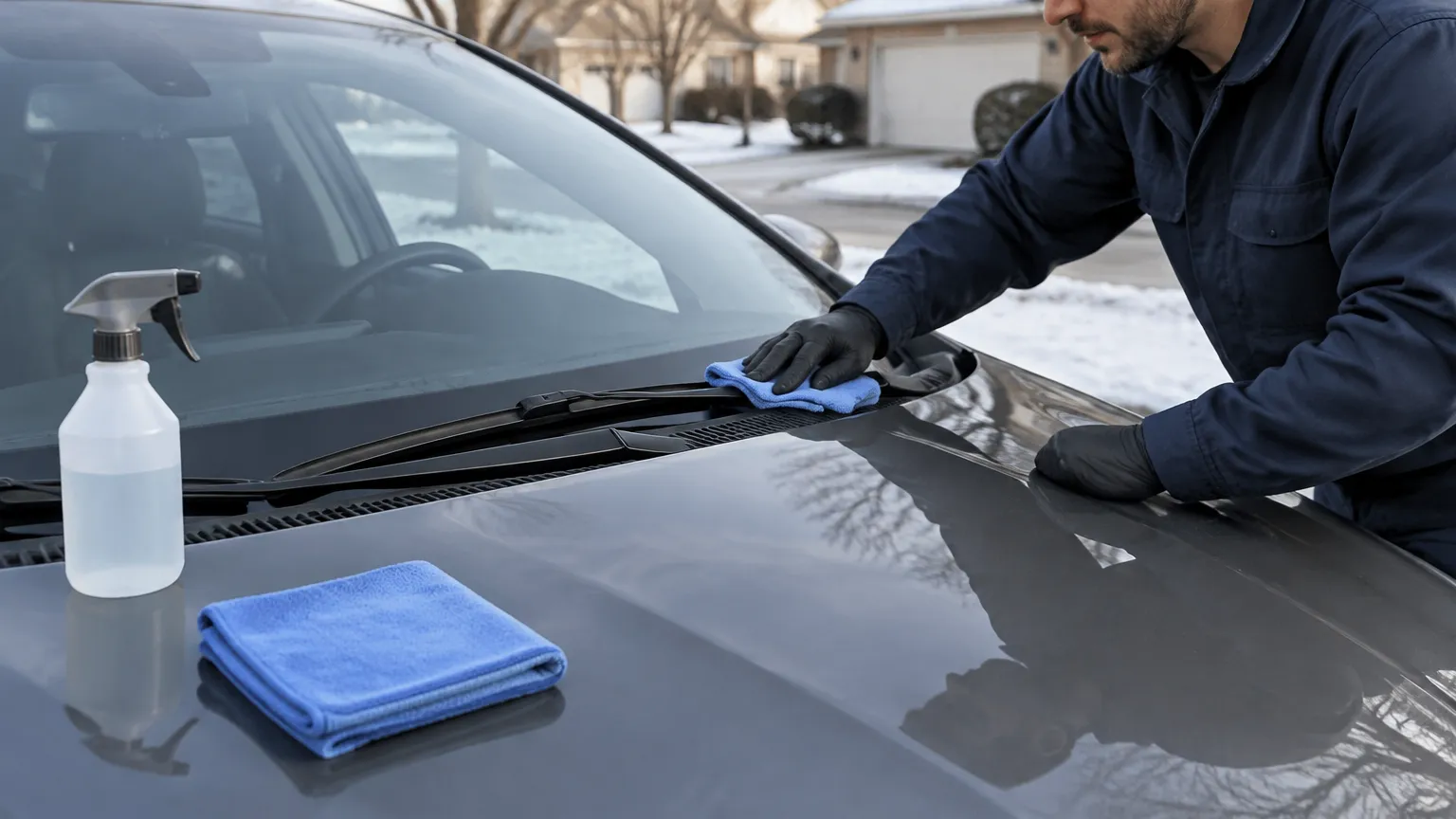
If you have ever pulled a car out of a Glendale Heights driveway after a snowy week and noticed a faint line across the hood paint, you have seen wiper contact damage. Most owners blame the car wash or assume the mark came from the road. In practice, many of these marks come from the small zone where the wipers sweep, park, and get flipped back down. Wiper blade paint scratches in Illinois are common because winter adds salt, grit, and frozen blades to the mix. This guide explains where the damage happens, how to tell a light mark from a deep one, and what actually fixes it.
Table of Contents
- Quick Takeaways
- Where the Wiper Contact Zone Actually Sits
- How Wiper Blades Scratch Paint and Glass
- Why Illinois Winters Make It Worse
- Hood and Cowl Damage Most Owners Miss
- Telling Light Marks From Deep Damage
- Fixing the Damage: Your Options Compared
- Protecting the Paint Along the Wiper Zone
- Maintenance Habits That Reduce the Risk
- When to Book a Correction Instead of Waiting
- Frequently Asked Questions
- References
Quick Takeaways
| Key Insight | Explanation |
|---|---|
| Damage concentrates in two zones | The glass swept by each blade and the cowl and hood edge where arms rest are the two places wiper marks usually appear. |
| Worn rubber is the first suspect | Hardened or torn blades can expose the metal edge, which drags grit across the glass and can mark paint on contact. |
| Frozen arms cause sudden marks | Yanking a frozen arm off the glass can snap it back down onto the cowl or hood paint with force. |
| Glass and paint need different repairs | Shallow glass marks may respond to polishing, while paint defects need a paint thickness check before any correction. |
| Replace blades every six to twelve months | Illinois cold snaps and summer heat both speed up rubber wear, so waiting for visible streaking usually means you are already late. |
| Light paint marks are often a one-session job | A 1-step paint correction starts from $399 and typically takes 4 to 6 hours, while a 2-step correction from $699 is a full-day service. |
Where the Wiper Contact Zone Actually Sits
When people say wiper scratches, they usually mean the arc on the windshield. That arc is only part of the story. The wiper contact zone includes the glass swept by each blade, the cowl at the base of the windshield where the arms rest, and the edge of the hood where a flipped arm can land. Each of those surfaces wears differently, and each one needs a different check.
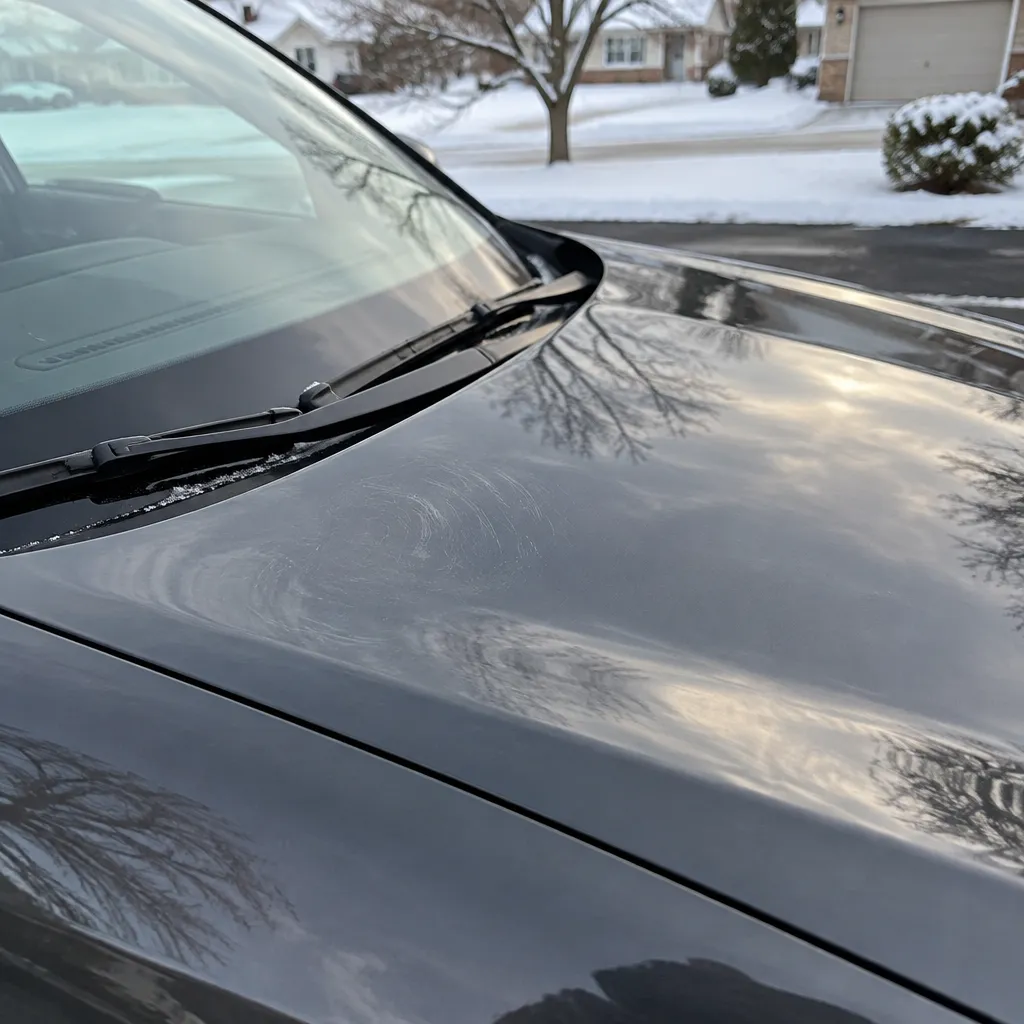
The glass arc is the easiest zone to spot because it shows up as fine parallel lines when low sun hits the windshield. The paint around the cowl is harder to see. Those marks are often short and shallow, and they hide under road film until the car is washed in good light.
The sweep path on the glass
The glass directly under each blade takes the most repeated contact. A blade that is worn, stiff, or missing rubber in spots drags grit across the same line over and over during a single storm. Safelite's guidance on wiper blade scratches names worn blades as the number one cause, because hardened rubber can expose the metal edge that rides against the glass.
In practice, a blade does not need to look destroyed to be doing damage. If it streaks, chatters, or leaves water behind after one pass, the rubber has already lost the edge it needs to clear grit cleanly. That is the point where the glass starts collecting marks.
The cowl and hood edge
The cowl is the panel at the base of the windshield where the wiper arms park. The paint there takes contact from arms that get lifted, dropped, or dragged across snow and ice. A mark on the hood directly in front of the windshield often means an arm was held away from the glass and then released, or that a loose refill slapped across the paint on its way back down.
Pro tip: Run a clean, dry microfiber cloth across the cowl and the hood edge after a snowfall. If the cloth catches on a spot, that spot has a defect you can feel even if you cannot see it yet.
How Wiper Blades Scratch Paint and Glass
Wiper damage is mechanical. Something hard, sharp, or trapped gets pushed across a surface under pressure, and the surface gives way a little at a time. The paint and the glass both respond to that pressure, but the causes are not always obvious. Knowing the usual culprits helps you stop the damage before it becomes a correction job.
Safelite lists four common causes of wiper blade scratches on windshields: worn or old blades, an improperly installed refill, debris trapped under the blade, and contact from an ice scraper. Three of those four can also reach your paint, because the same grit and hard contact that mark the glass will travel onto the cowl and hood whenever the arms move.
Worn rubber and exposed metal
Rubber wears from the edge inward. Once the edge is rounded, flattened, or cracked, the blade stops wiping and starts scraping. If the metal frame is exposed in spots, that metal rides directly on the glass and can leave lines that follow the arc of the sweep. The same exposed frame can scrape paint at the cowl when an arm is lifted and released.
Grit trapped under the blade
Sand, road salt residue, and dirt that collect under the blade act like sandpaper. Each pass pushes the grit forward, so the damage follows the blade's travel path. This is why a windshield with a clean-looking surface can still carry an arc of fine marks. A common mistake is running the wipers on a dry windshield, which drags debris across the glass with nothing to float it away.
Refill length and seating
A refill that is too short or seated incorrectly rubs unevenly. The result is a blade that touches the glass in one spot and skips in another, which creates a wear pattern that looks like a line rather than a clean wipe. Check that the refill locks fully into the frame and that the blade sits square against the glass before you drive off.
Why Illinois Winters Make It Worse
Illinois winters combine several things that accelerate wiper damage at once. Road salt and grit build up on the windshield, cold temperatures stiffen rubber, and freezing rain glues arms to the glass. Each of those problems is manageable on its own. Together, they create the conditions where a blade can mark both glass and paint in a single week.
Salt and grit in the wiper path
Salt spray from the road leaves a film that mixes with grime and turns into a gritty paste. When the wipers run across that film, the grit does the cutting. Moore Tires, a shop in Rock Falls, Illinois, notes that Illinois cold winters and hot summers can accelerate blade wear, which makes regular checks more important than most owners expect.
Frozen blades and sudden release
A blade frozen to the glass is one of the most common causes of cowl and hood marks we see. Owners pull the arm away with force, the rubber tears free with a snap, and the arm drops back onto the paint. Let the blade thaw or use a proper de-icer, then lift the arm gently. Forcing it is the fastest way to turn a blade problem into a paint problem.
Freeze-thaw wear on the rubber
Rubber that freezes and thaws repeatedly loses flexibility. It may still look fine from the driver's seat, yet it skips, chatters, or leaves streaks on the first cold morning. A blade that performed well in October can be a problem by the first real cold snap in January, which is why the calendar matters as much as the visible condition.
Hood and Cowl Damage Most Owners Miss
Glass scratches get attention because they sit right in the driver's sightline. Paint marks on the hood and cowl get ignored until the car is washed or sold. That delay matters because paint defects are easier to correct when they are light and fresh than when they have been baked under a summer of UV exposure.
An owner thread on a truck forum describes a paint scratch that was traced back to the wiper blades on a new vehicle. The details are anecdotal, but the pattern matches what detailers see in the field: the damage shows up on paint that is directly under or beside the blade's path, not randomly across the hood.
Snow piled on the cowl
Snow that builds up at the base of the windshield can freeze into a hard layer. When the wipers run, they push that layer against the glass and the paint. Brushing snow off the cowl before starting the car removes most of this risk. It takes two minutes and saves a lot of paint work.
Arms dropped onto the paint
Many owners lift the arms to clear snow or ice and let them drop back down. The metal arm and the blade frame strike the cowl or hood each time. Over a season, those small impacts leave swirl-like marks and tiny chips in the clear coat. Lower the arms slowly and place them down by hand, which costs nothing and avoids most of the impact damage.
Telling Light Marks From Deep Damage
Before you book any repair, separate glass damage from paint damage. They need different fixes, and mixing them up wastes time and money. Start with a clean surface, because road film and hard water spots can look like scratches until you wash them off.
The fingernail check for glass
Safelite's fingernail test is a useful starting point for windshield glass. Clean the glass thoroughly, then run a fingernail across the mark. If the nail glides over it with little resistance, the scratch is likely light and surface-level. If the nail catches or digs in, the scratch runs deeper and is less likely to respond to polishing.
Paint checks in direct light
For paint, the test is light, not touch. Wash the car, dry it, and examine the hood and cowl in direct sun or under a strong flashlight held at a low angle. Marks that appear only at one angle are often shallow. Marks that stay visible from every angle usually mean the defect has cut deeper into the clear coat.
A mark you can see clearly from the driver's seat in daylight is rarely fixed by another wash. Treat it as a defect to measure, not a stain to wipe off.
Once you know which surface is damaged, you can choose a repair. Guessing at depth is where most owners lose money, either by paying for an unnecessary service or by trying a DIY fix that makes the paint look worse.
Fixing the Damage: Your Options Compared
There are three realistic paths for wiper damage, and each suits a different level of marking. The right one depends on whether the problem is the blade, the glass, or the paint. The table below compares them using the figures we quote for paint work.
| Approach | Best For | Typical Cost or Time |
|---|---|---|
| Replacing the wiper blades | Streaking, skipping, or worn rubber that is causing new marks, with no visible paint defect yet | A quick maintenance task you can do yourself, and it should be the first step in any case |
| 1-step paint correction | Light swirls and fine marks on the hood and cowl, plus light haze from repeated wiper contact | From $399, typically 4 to 6 hours |
| 2-step paint correction | Deeper marks, buffer trails, and defects that stay visible from every angle | From $699, a full-day service |
Glass and paint are two different repairs
Glass scratches and paint marks look similar in a photo, but they are not the same job. Glass is harder than paint, so it resists scratching but holds deep marks longer. Polishing glass with a compound can improve shallow marks, but a deep scratch would require removing more glass than is safe. Safelite also notes that DIY glass polishing can interfere with ADAS cameras on some windshields, so a cautious approach matters.
Paint is softer and more forgiving, but it is also thinner. That is why every correction on our side starts with a pre-service paint thickness measurement and documentation. Knowing how much clear coat is left tells you how aggressive the correction can be.
Choosing between a blade swap and a correction
If the marks are fresh and the blades are worn, replace the blades first and re-inspect the paint after two or three weeks of normal driving. If the marks remain, a 1-step correction usually handles light defects. Deeper marks and buffer trails generally need the 2-step process, and that is where a full-day booking makes sense.
Protecting the Paint Along the Wiper Zone
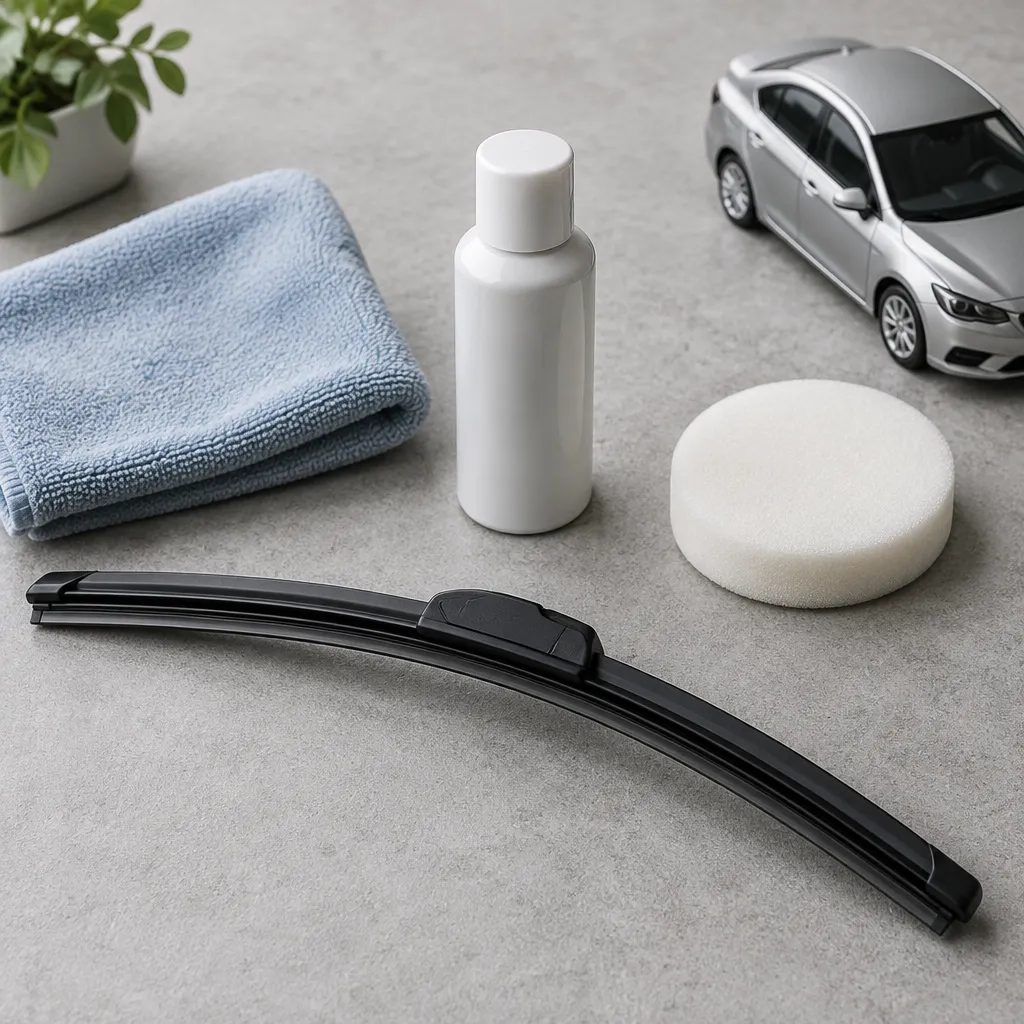
Correction removes the damage, but it does not stop the next pass of the blade. Protection is the second half of the job. A good sealant or ceramic coating adds a sacrificial layer that makes contact less aggressive and makes winter grime easier to rinse off before it becomes an abrasive.
What a coating does and does not stop
A ceramic coating does not make paint immune to wiper contact. The blade still moves across the surface, and a hard particle can still scratch a coating. What the coating does is reduce how tightly grit bonds to the surface, so debris rinses away more easily and does less work between washes. That matters most on the cowl and hood edge, where salt and slush collect.
Our ceramic coating packages start at $999 for a 5-year coating and $1,099 for an 8-year coating. Both include a full 2-step paint correction at no extra charge, which means the paint is corrected before the coating is applied. Coverage is 5 to 8 Year Limited Coverage, and the warranty depends on maintenance.
Choosing between the winter promo and a full coating
Our winter promo pairs a Gtechniq 5-year ceramic coating with one-step paint correction. The promo starts at $699 for a sedan, $799 for an SUV, and $899 for an oversized vehicle. Upgrading to two-step correction adds $300, and the total then matches our standard two-step package pricing: $999 for a sedan, $1,099 for an SUV, and $1,199 for an oversized vehicle. The promo suits owners who want a clean, protected finish before winter, while the full coating suits those who want the most thorough preparation.
Pro tip: Before a winter coating, ask whether the correction includes the cowl and the hood edge. Those areas get wiper contact, and they are often skipped in quick jobs.
Maintenance Habits That Reduce the Risk
Most wiper damage is preventable. The habits that protect the paint are simple, and none of them require special tools. What they require is consistency, especially in the months when salt and freezing rain are on the road.
Replacing blades on a schedule
Wiper blades typically need replacement every six to twelve months, or sooner when performance drops. Waiting for visible streaking means the rubber has already been scraping the glass for a while. Set a reminder at the start of each winter and check the blades after the first hard freeze.
Clearing snow before the wipers move
Brush snow and ice off the windshield and the cowl before you turn the wipers on. Start the car, let the defroster clear the glass, and then run the wipers. This sequence keeps the blades from dragging frozen debris across both glass and paint.
Washing the cowl and the blade rubber
Dirty wash tools cause their own damage. Washing incorrectly can create fine scratches and swirl marks across the paint, and dirty sponges and abrasive cleaning materials are a common source. Use clean microfiber, rinse the blades and the cowl with the rest of the car, and avoid wiping a dry, gritty windshield with a towel.
Pro tip: Wipe the rubber edge of each blade with a damp cloth once a month. Grit that clings to the edge is what turns a normal sweep into a cutting pass.
When to Book a Correction Instead of Waiting
Some wiper marks are not worth correcting, and some should not wait. If the blades have been replaced and the marks are still visible after a few weeks of normal driving, the paint is telling you it needs professional attention. The earlier you act, the fewer steps the correction usually requires.
What a paint correction involves
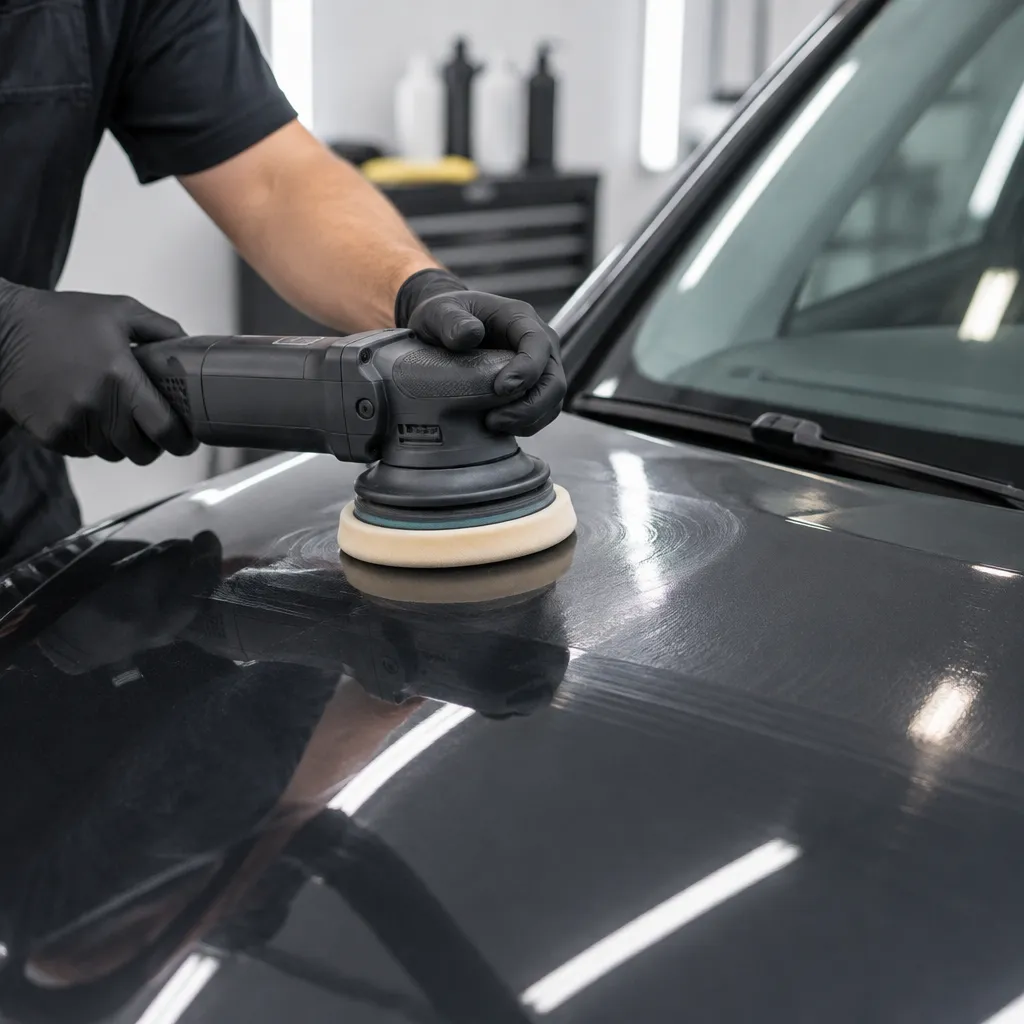
Every correction starts with a pre-service paint thickness measurement and documentation, so you know what the paint can take before any polishing begins. A 1-step correction typically takes 4 to 6 hours and focuses on light to moderate swirls and haze. A 2-step correction is a full-day service that targets deeper marks and buffer trails. Both include a clay bar treatment, an iron remover treatment, and a 3-month paint protection sealant.
How booking works
Our studio is by appointment only, located at 2017 Bloomingdale Rd, Glendale Heights, IL 60139, and open Monday through Saturday. No payment is collected when you submit a booking request. We review each request and contact you within one business day to confirm the appointment and finalize pricing, since final pricing depends on vehicle size and paint condition. You can reach us at (331) 231-0176 or support@hersheysdetailing.com.
If you want to see the options before booking, our paint correction page for Glendale Heights lays out each level. Owners who want protection after correction can review our ceramic coating options, and the current winter ceramic coating promo is listed separately.
Frequently Asked Questions
Can wiper blade scratches on paint be buffed out?
Light marks often can, especially when they are fresh and the paint has enough clear coat left to work with. A 1-step paint correction from $399 typically handles light swirls and haze in 4 to 6 hours. Deeper marks may need the 2-step process, which starts from $699 and is a full-day service.
Are wiper blade scratches on the windshield glass the same as paint scratches?
No. Glass scratches sit in the glass itself, and paint scratches sit in the clear coat on the car's body. Glass responds to a fingernail check and sometimes to polishing, while paint needs a thickness measurement and a light inspection before any correction is chosen.
How often should I replace my wiper blades in Illinois?
Most blades need replacement every six to twelve months. Cold winters and hot summers in Illinois speed up rubber wear, so check the blades after the first hard freeze and replace them at the first sign of streaking, skipping, or chatter.
Why are there marks on my hood near the windshield?
The most likely cause is the wiper arms. An arm that was lifted off a frozen windshield and then dropped, or a blade with exposed metal or a loose refill, can strike or drag across the cowl and the hood edge. Brushing snow off first and lowering the arms by hand prevents most of this.
Does a ceramic coating stop wiper scratches?
A ceramic coating cannot make paint immune to wiper contact. It can make grit rinse away more easily and reduce how much debris bonds to the surface, which helps most on the cowl and hood edge. Our coatings carry 5 to 8 Year Limited Coverage, and the warranty requires maintenance and annual inspections.
Have you noticed wiper marks on your hood or cowl this winter, and did you find a fix that actually worked? Tell us what you saw and what you tried, because the details from real driveways help us refine how we check these zones.