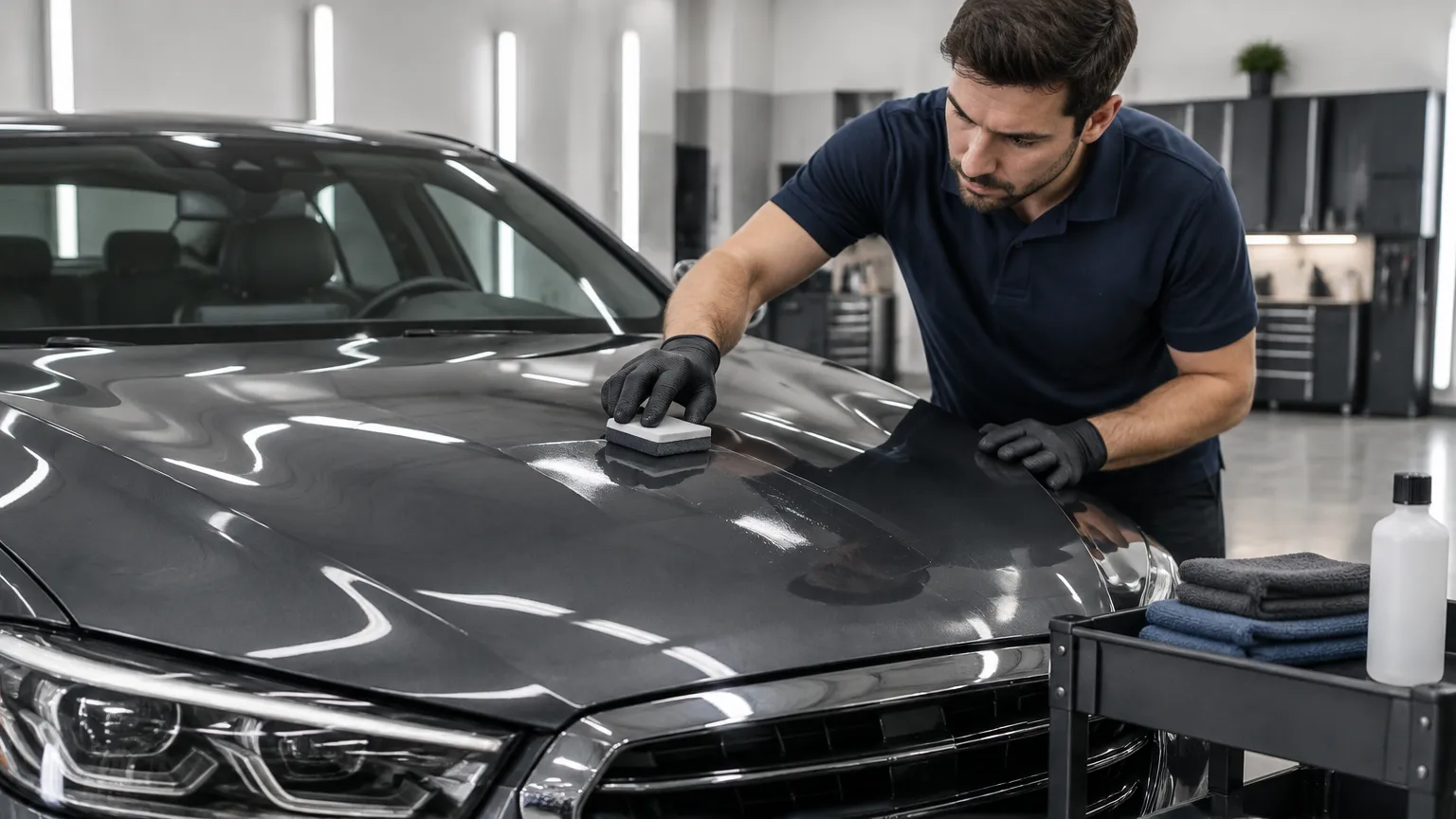
Ask three detailers about ceramic coating and you will likely hear three different answers about how many coats a car needs. Some shops spray one pass and call the job finished. Others build several thin layers and price the work accordingly. For owners in Glendale Heights, Carol Stream, and Wheaton who are paying for long-term protection, the layer count matters less than whether the coating went over properly prepared paint. This guide explains how a multi-layer ceramic coating system works, why professional application uses more than one layer, and where the extra coats actually earn their place across Illinois.
Table of Contents
- Quick Takeaways
- What a Multi-Layer Ceramic Coating System Actually Is
- Why One Coat Often Falls Short
- How Each Layer Builds Protection
- Prep Work Before the First Layer
- Single Coat, Two Coats, and Full Multi-Layer Builds Compared
- Application Mistakes That Undermine Layers
- What Multi-Layer Coating Costs in Glendale Heights
- Aftercare That Protects Every Layer
- Frequently Asked Questions
- References
Quick Takeaways
| Key Insight | Explanation |
|---|---|
| Layers are built, not sprayed on | Each thin coat cures into a bonded film, so thickness only accumulates when every pass is applied and leveled correctly. |
| Correction comes first | A coat sealed over swirls and holograms locks those defects under the most durable film on the car. |
| Flash time decides the result | Applying the next pass before the previous one has set can cause streaking, high spots, and removal headaches. |
| Paint thickness should be measured | Every correction at our studio starts with a pre-service paint thickness measurement and documentation, so layer planning reflects the paint that is actually there. |
| Two-step correction is the layering foundation | Our standard packages include a full 2-step paint correction at no extra charge, giving a multi-coat build a clean, level base. |
| More layers is not automatically better | Past the point the product's application guidance calls for, extra passes add cost and risk without matching gains in protection. |
What a Multi-Layer Ceramic Coating System Actually Is
A ceramic coating is a liquid, typically based on silicon dioxide (SiO2), that cures into a hard, bonded film on the clear coat. A multi-layer system means the installer applies that film in a planned sequence of passes, with each pass curing before the next one goes on. The goal is a thicker, more uniform barrier than a single pass can reliably produce.
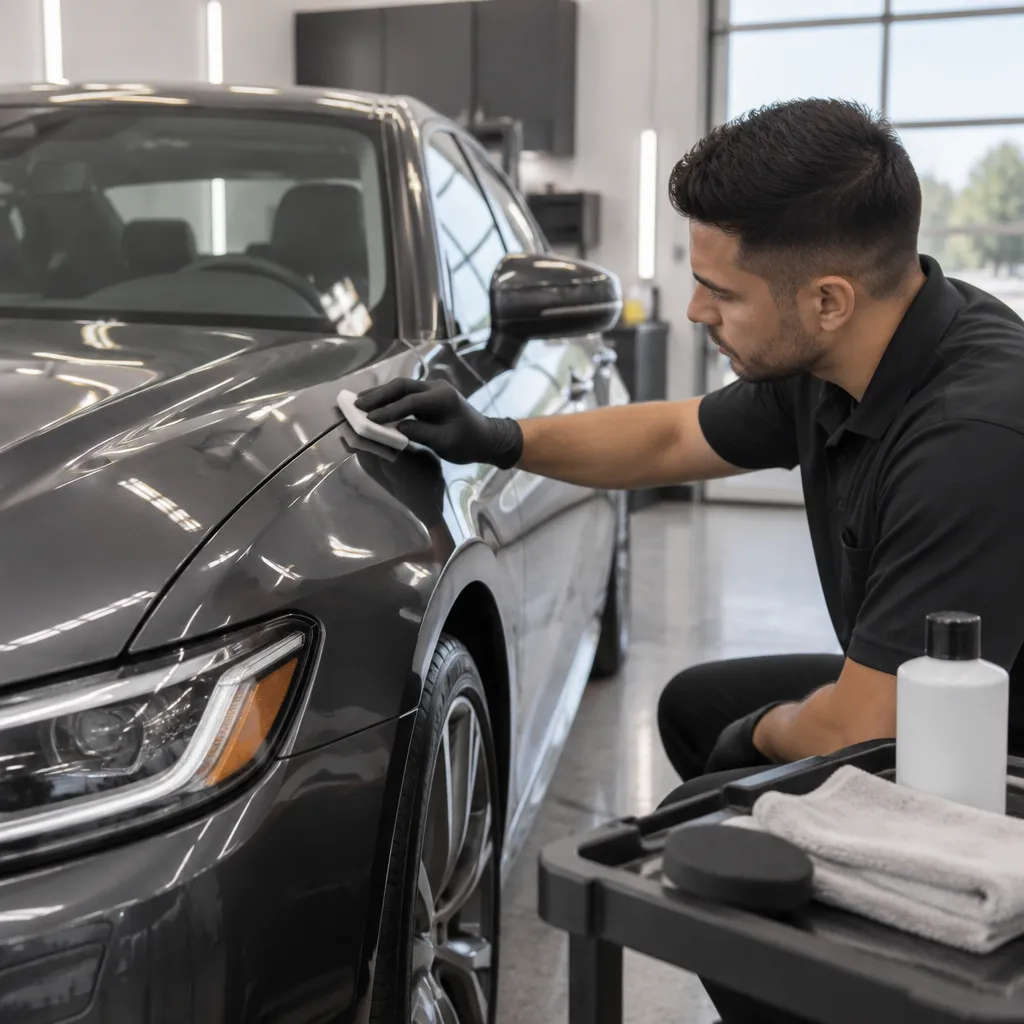
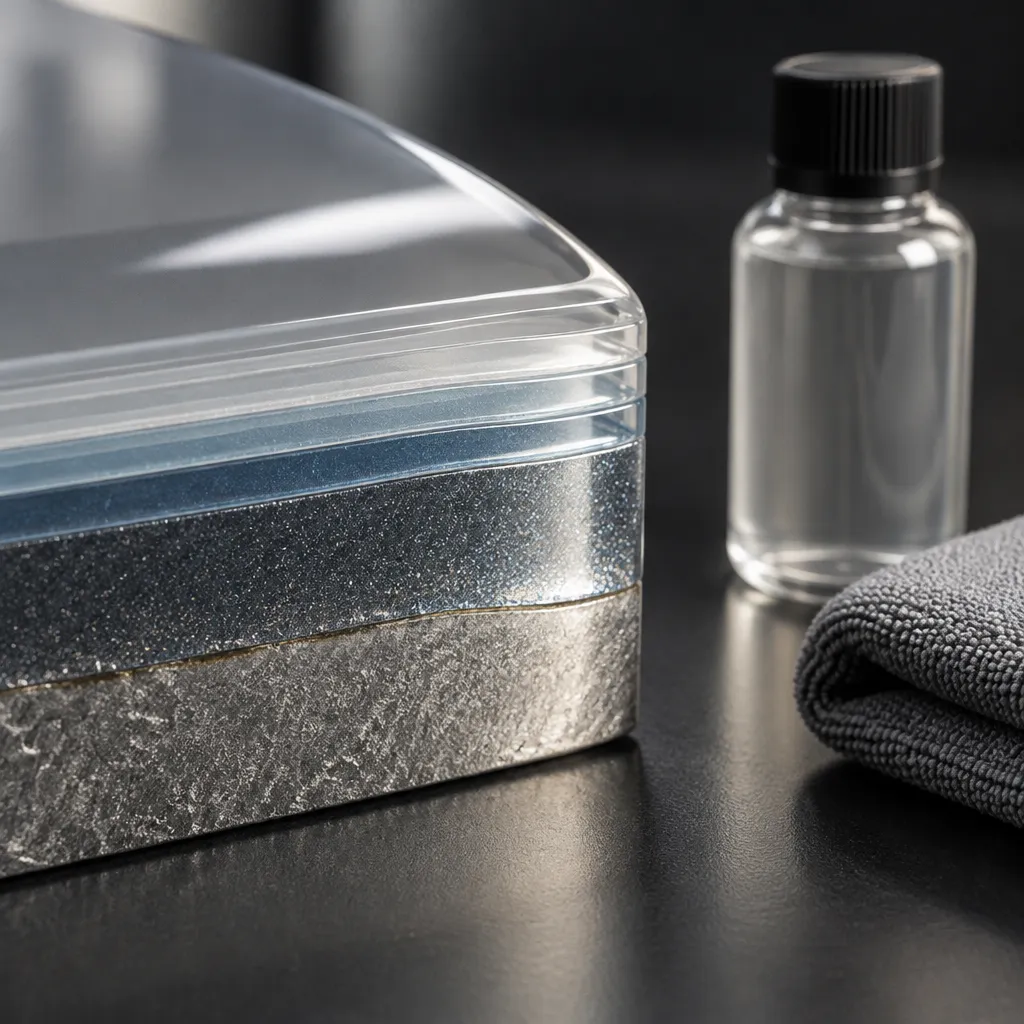
Think of the coating as a stack, not a single skin. The bottom layer bonds to the paint and fills the microscopic valleys that make a surface look dull. The upper layers add thickness, gloss depth, and more consistent slickness from panel to panel. Each layer does a slightly different job, which is why the sequence matters as much as the count.
Single Pass Versus Built Film
Many people use the word "layer" to mean any wipe-on or spray pass, but a pass is not the same as a finished layer. A pass that is over-applied, left to dwell too long, or buffed before it sets can leave high spots that look like protection but behave like a weak point. A proper layer is applied thin, leveled, and allowed to cure on the product's timeline.
What the Protection Really Depends On
The durability a customer buys is measured in years, not coats. The coating's real job is to keep UV exposure, oxidation, and chemical contamination away from the clear coat. Extra layers help that job when they increase thickness evenly across the whole vehicle. They do little for a car whose paint underneath is contaminated or unevenly corrected.
Why One Coat Often Falls Short
Single-coat jobs are common because they are quick and easy to quote. The trouble is that one pass leaves an installer very little room to fix mistakes, and it rarely builds the thickness that a multi-year coverage term implies. A car that spends five winters in the Chicago suburbs, with road salt, slush, and freeze-thaw cycles, deserves more margin than a single pass can offer.
Coverage Gaps on Edges and Body Lines
Door shuts, roof edges, hood lips, and rocker panels collect coating differently than flat panels do. A single pass often runs thin at those points, and thin spots are where chips, water spotting, and contamination start first. A second pass, applied with those edges in mind, evens out coverage where the car takes the most abuse.
Where a Single Coat Makes Sense
A single well-applied coat is a legitimate choice for a lightly driven, garaged vehicle with excellent paint and a disciplined wash routine. We would rather say that plainly than sell a third layer the paint does not need. The decision should follow the car, not the upsell.
Layer count is a decision about the paint, how the car lives, and the product's cure requirements. It should never be a decision about padding the invoice.
Owners often ask whether a second pass is "insurance." It is closer to a margin of safety. Its value shows up in edge coverage, in consistency across panels, and in how forgiving the finish is when a wash goes slightly wrong.
How Each Layer Builds Protection
Every pass of coating does two things at once. It adds a film that bonds to the surface, and it changes how that surface behaves when it is wet, dirty, or exposed to sun. The first pass establishes contact and gloss. Later passes add thickness and make the finish more uniform, so water beading and self-cleaning behavior hold up across the whole vehicle.
The important detail is that each layer must be fully set before the next one lands. A pass laid over a half-set layer can blend into a soft film that wipes off unevenly. A careful installer works one section at a time and levels each pass before moving on to the next.
Flash Time Between Passes
Flash time is the window in which the carrier solvents evaporate enough for the film to set. Rushing it is the most common way a multi-layer job goes wrong. We follow the product's published flash and cure guidance rather than a feel-based timer, and we do not stack a new pass on a panel that still looks wet.
Leveling Each Pass Before the Next
Leveling means removing excess coating while it is still workable, so the film stays thin and even. Left too heavy, a pass can haze, streak, or leave ridges that catch light in the wrong way. This is slow work, and it is the main reason a multi-layer build takes the time it takes.
Pro tip: Ask your installer how many passes the product calls for on your paint and how they confirm each pass has leveled. A clear, specific answer is a good sign. A vague one usually means the layers are being rushed.
Prep Work Before the First Layer
Every layer sits on top of whatever the paint looks like the moment the coating goes on. If the clear coat is carrying swirls, water spots, or bonded iron fallout, those defects get sealed under the most durable film on the car. That is why our process starts with the paint, not the product.
Decontamination Before Correction
Before any machine touches the paint, the surface needs to be clean both chemically and mechanically. Iron fallout, tar, and old sealant residue can survive a regular wash and then interfere with bonding if they are left behind. Decontamination removes those contaminants so the correction and the coating start from a clean surface.
Paint Thickness Measurement and Correction Planning
Every correction we perform begins with a pre-service paint thickness measurement, and we document the readings. That number tells us how much clear coat is available for removing defects without thinning it dangerously. It also shapes how many coating passes make sense, because a panel with little remaining clear has less room for aggressive correction.
Why Two-Step Correction Is the Right Foundation
A 1-step paint correction typically takes 4 to 6 hours. A 2-step paint correction is a full-day service, and it is the foundation our standard ceramic coating packages build on. For a multi-layer system, a clean, level base means every new layer bonds to a predictable surface, which makes the finished build more even and easier to inspect.
Single Coat, Two Coats, and Full Multi-Layer Builds Compared
Most quotes fall into one of three categories. The differences are not about marketing language. They come down to what gets corrected first, how many passes are applied, and how carefully each pass is leveled. The table below shows where each approach fits.
| Approach | What It Delivers | Best Fit |
|---|---|---|
| Single pass over uncorrected paint | Fast application, but swirls and holograms are sealed under the coating and edges may run thin | Budget jobs where the owner accepts visible defects. We do not recommend it for high-gloss paint. |
| Single pass over two-step correction | A clean, level base with strong gloss and hydrophobic behavior from one bonded layer | Garaged cars and careful owners in milder driving conditions |
| Multiple passes over two-step correction | Greater, more uniform thickness, better edge coverage, and controlled cure between passes | Dark or high-gloss paint, daily drivers facing harsh winters, long-term ownership |
The middle row is where many well-kept cars land. A single pass over corrected paint gives strong gloss and water behavior, and it is a sensible choice for a car that is garaged, washed carefully, and driven in mild conditions. The price difference between that approach and a multi-pass build is real, but so is the gap in edge coverage and thickness.
The bottom row is what we recommend for vehicles that face harsh weather, dark or high-gloss paint where every flaw shows, or owners who plan to keep the car long enough to use the full coverage term. It takes more work and more studio time, which is why the scheduling and pricing conversation happens after we have measured the paint.
When you compare quotes, ask what correction is included, whether the number of passes is stated, and how long the coating needs to cure before it sees water. A quote that answers none of those questions is hard to evaluate, no matter how low the number looks.
Application Mistakes That Undermine Layers
Multi-layer systems fail in predictable ways. Most failures trace back to a handful of errors that look minor at the time. Knowing them makes it easier to ask the right questions before the car is in the bay.
Applying Over Contamination
A layer applied over dust, polish oil, or leftover sealant does not bond the way the product intends. The finish can look fine on day one and then show uneven beading or spotting months later. A proper prep wipe right before application is non-negotiable, and it should be done on every panel, not just the visible ones.
Skipping the Flash Window
Impatience is the second common error. Stacking a new pass before the previous one has set can lift the layer below, leave streaks, or trap solvent in the film. The fix is procedural: work in small sections, track which panels are on which pass, and do not move on until each one has set.
Overloading Edges and Body Lines
Too much product on a body line or panel edge pools in the crease and dries heavy, sometimes with visible ridges. Those spots are hard to remove after cure without marring the surrounding finish. Thin, controlled application matters most where the paint turns sharply.
Pro tip: Before you approve a multi-layer job, ask to see the edges and lower body lines after leveling and before final cure. Those areas show overapplication fastest, and a shop that is confident in its process will be happy to show you.
What Multi-Layer Coating Costs in Glendale Heights
Our standard ceramic coating packages start at $999 for a 5-year coating and $1,099 for an 8-year coating. Both include a full 2-step paint correction at no extra charge, so the correction a multi-layer build depends on is already part of the quote. Final pricing depends on vehicle size and paint condition, and we confirm the number after reviewing the car.
What the Standard Packages Include
The standard packages are built around a complete 2-step paint correction followed by the coating application. The 5-year option suits owners who want strong protection on a daily driver. The 8-year option adds coverage length, and it is the one we point most owners toward for cars they plan to keep through several Illinois winters. Our coatings carry 5 to 8 year limited coverage, and each qualifying installation includes a separate 1-year workmanship warranty.
The Winter Promo and Its Trade-Offs
Our winter promo uses a Gtechniq 5-year ceramic coating with one-step paint correction. Pricing is $699 for a sedan, $799 for an SUV, and $899 for an oversized vehicle. Upgrading to two-step correction adds $300 and brings totals to $999 for a sedan, $1,099 for an SUV, and $1,199 for an oversized vehicle. The promo's 5-year warranty requires maintenance and annual inspections, so read the terms before you book. You can review the full promo details on our winter ceramic coating promo page.
Booking Without Paying Up Front
A booking request does not collect payment. Our team reviews each request and contacts you within one business day to confirm the appointment and finalize pricing. Studio visits are by appointment, Monday through Saturday, at 2017 Bloomingdale Rd, Glendale Heights, IL 60139. You can also book your detailing appointment online or call (331) 231-0176.
Aftercare That Protects Every Layer
A multi-layer system performs only as well as the care it gets after cure. Coatings are durable, not indestructible, and the first weeks matter more than most owners expect. Our ceramic coating aftercare guide covers what to avoid during cure, how to wash, and what to watch for in the months after installation.
The First Weeks After Application
During cure, keep the car out of tunnel washes with aggressive brushes, and do not apply wax or sealant over the coating. Follow the cure window we give at pickup, because the film needs that time to reach full hardness. Light rain during cure is not a disaster, but it is best avoided until the window closes.
Annual Inspections and Maintenance Washes
Annual inspections catch small issues before they become warranty questions, and they matter directly for the promo's warranty requirements. Regular maintenance washes with pH-neutral products keep contamination from building up on the surface. In Illinois, road salt and winter grime are the most common reasons owners notice early dulling, so spring is a good time to schedule a check.
Pro tip: Book your first inspection before winter rather than after the first salt storm. Early findings are easier to address, and you will know how the coating is holding before the season tests it hardest.
Frequently Asked Questions
How many layers of ceramic coating does my car need?
The right count depends on paint condition, how the car is driven and stored, and what the product's application guidance specifies. On a corrected daily driver, a well-applied system often performs well with the layer count the product calls for. Dark or high-gloss paint and cars exposed to harsh winters are the usual cases where we add passes, and only after measuring the paint.
Can I add another layer to a ceramic coating I already have?
In many cases, yes, but it starts with an inspection. We check how the existing coating has aged, look for contamination or high spots, and confirm the paint underneath has enough clear coat left for correction. Adding a layer over a worn coating without that check can trap problems under the new film.
Does a multi-layer coating need paint correction first?
It should. Layers bond to whatever surface is underneath, so swirls, oxidation, and contamination get sealed in. Our standard packages include a full 2-step paint correction at no extra charge, and every correction starts with a pre-service paint thickness measurement and documentation.
How long does a multi-layer ceramic coating appointment take?
Correction is the biggest time factor. A 1-step paint correction typically takes 4 to 6 hours, and a 2-step paint correction is a full-day service. Coating passes and cure time come on top of that, so ask for the full timeline when you book.
Is a multi-layer ceramic coating worth it for Illinois winters?
For many owners, yes. Road salt, slush, and freeze-thaw cycles put more stress on paint than milder climates do. Extra thickness and better edge coverage from a careful multi-pass build help, but only if the paint was properly corrected and the coating is maintained afterward.
Have you had your ceramic coating applied in one pass or several, and how has it held up through your first Illinois winter? Share your experience in the comments or email us at support@hersheysdetailing.com.
References
- Community discussion thread on whether two layers of ceramic coating are worth the cost
- Enthusiast forum thread on finding a trusted ceramic coating shop in the Chicago western suburbs
- Group post discussing the benefits and necessity of multi-layer ceramic coating
- Overview of ceramic coating purpose, mechanism, benefits, and downsides